





— Blogs —
—Products—
 Consumer hotline +8618073152920
 WhatsApp:+8615367865107
Address:Room 102, District D, Houhu Industrial Park, Yuelu District, Changsha City, Hunan Province, China
Product knowledge
Time:2025-12-07 16:47:29 Popularity:17
Intelligent Farming Assistant: How NiuBoL Smart Agricultural Weather Station Achieves “Zero-Distance” Monitoring of Field Microclimate
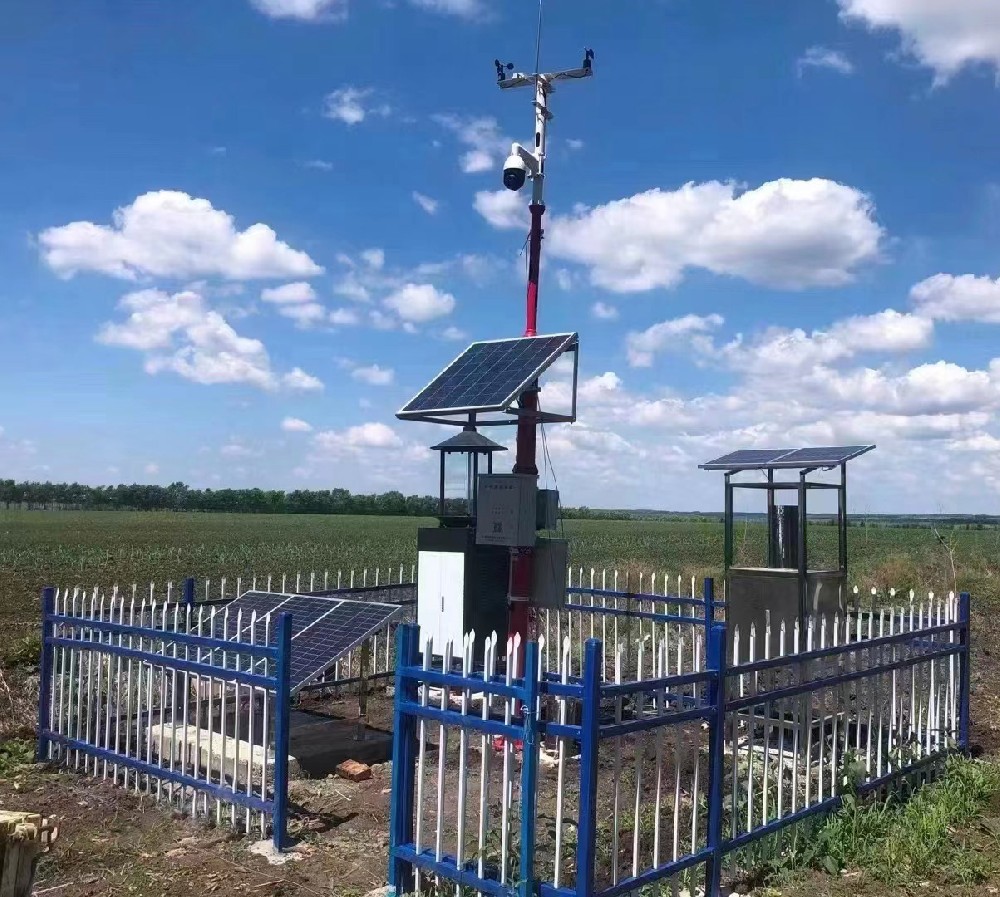
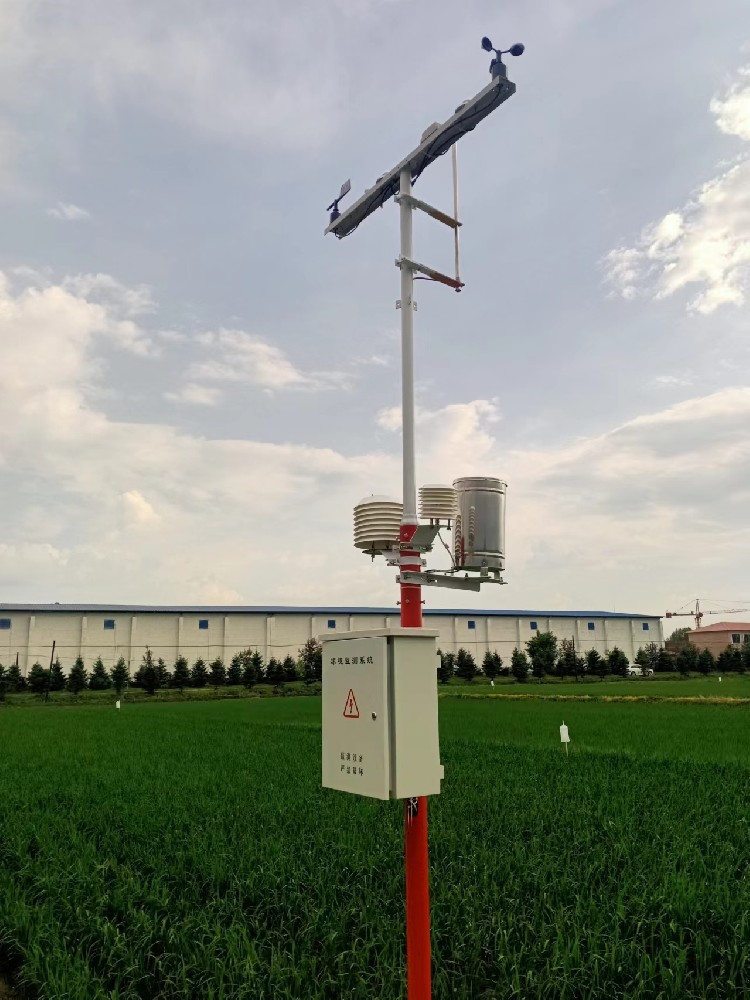
A smart agricultural weather station is an automated meteorological monitoring system specifically designed for agricultural applications, integrating data acquisition, processing, transmission, and remote monitoring. It provides real-time, continuous monitoring of critical climatic parameters in the field microclimate zone, including air temperature, humidity, solar radiation, precipitation, and more.
Core Value: Data-Driven Agricultural Decision-Making
• Optimize Farming Activities: Farmers can optimize planting plans, scientifically schedule irrigation and fertilization, and determine the best harvest timing based on accurate meteorological data.
• Enhance Crop Resilience: Real-time field dynamics enable agricultural practitioners to predict weather changes more effectively and take protective measures in advance.
• Economic Benefits: Compared with expensive traditional monitoring equipment, compact weather stations offer cost-effective pricing, simple installation, significantly reduced monitoring costs, and improved crop quality and yield.
NiuBoL Smart Agricultural Weather Station adopts a modular, highly integrated design, ensuring high stability and ease of use.
Core Structural Components
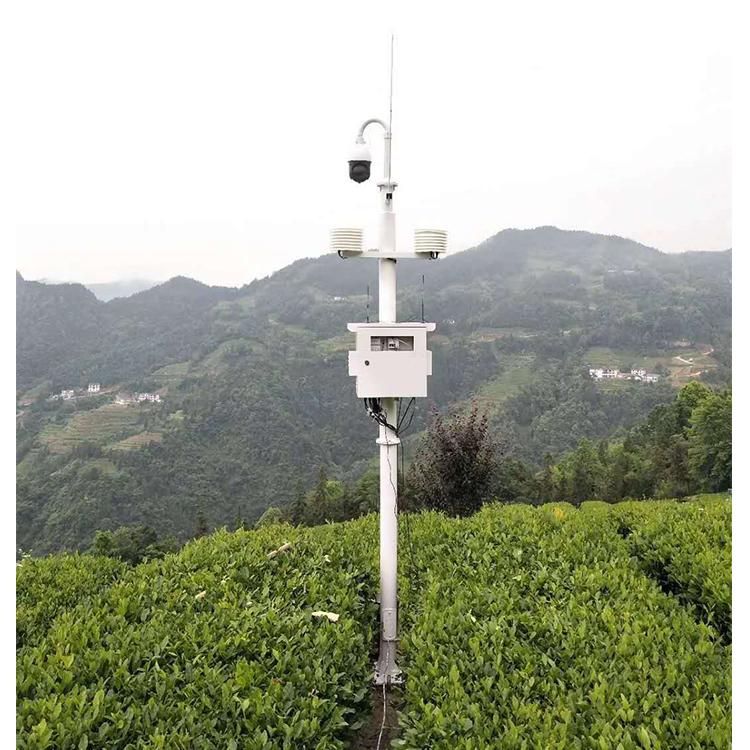
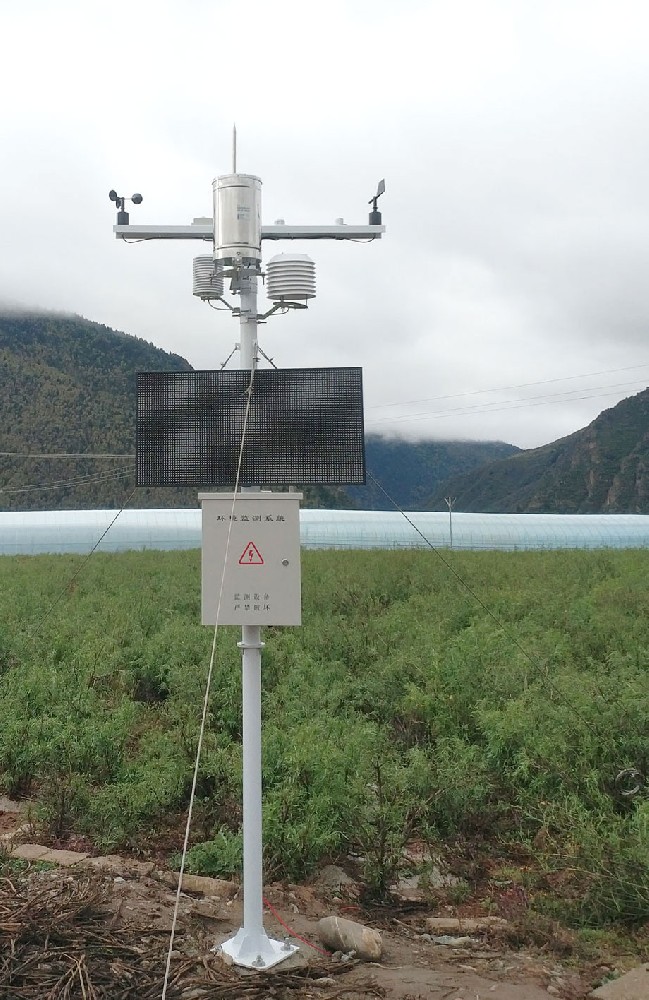
The smart agricultural weather station consists of the following five core components working synergistically:
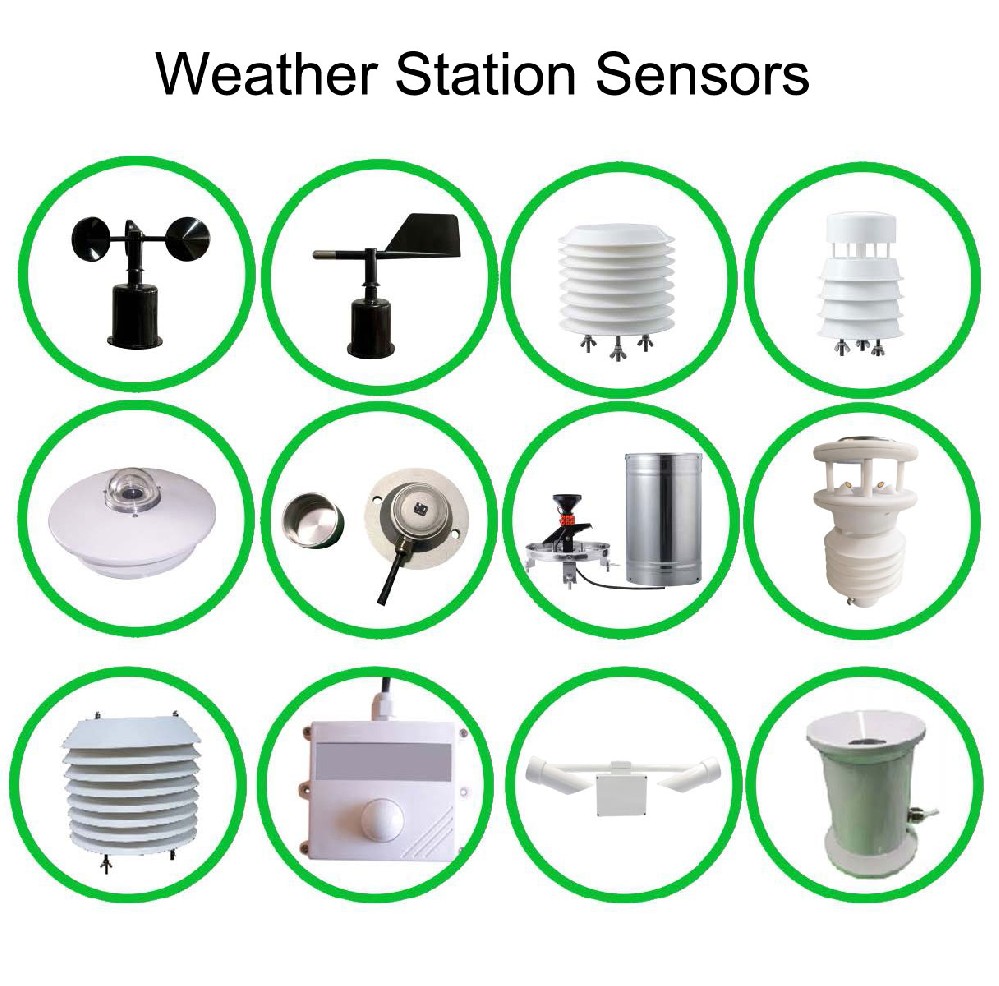
1. Sensor Cluster: The core for environmental perception
2. Data Logger: The “brain” responsible for data processing and storage
3. Pole & Mounting Bracket: Supports sensors and ensures compliance with observation height standards
4. Battery System (with Solar Panel): Guarantees long-term power supply in off-grid field environments
5. Cloud Platform & User Interface: Terminal for data analysis, visualization, storage, and alerting
| Meteorological Parameter | Sensor Function & Agricultural Impact | Typical Measurement Technology |
|---|---|---|
| Air Temperature | Affects photosynthesis, transpiration rate, and phenological stages | High-precision digital or thermistor sensor |
| Humidity | Influences crop water balance and pathogen proliferation | Capacitive sensor |
| Wind Speed | Affects heat exchange, evaporation, and pesticide droplet drift | Anemometer cups or ultrasonic sensor |
| Wind Direction | Critical for pest, disease, and pollutant dispersion warning | Wind vane or ultrasonic sensor |
| Rainfall | Directly affects soil moisture replenishment and flood risk | Tipping-bucket rain gauge |
| Solar Radiation | Primary driver of photosynthesis efficiency and surface temperature | Thermopile or photocell sensor |
| Atmospheric Pressure | Fundamental parameter for weather system change prediction | Piezoresistive sensor |
NiuBoL stations are designed for simple, fast field deployment.
Installation Guide
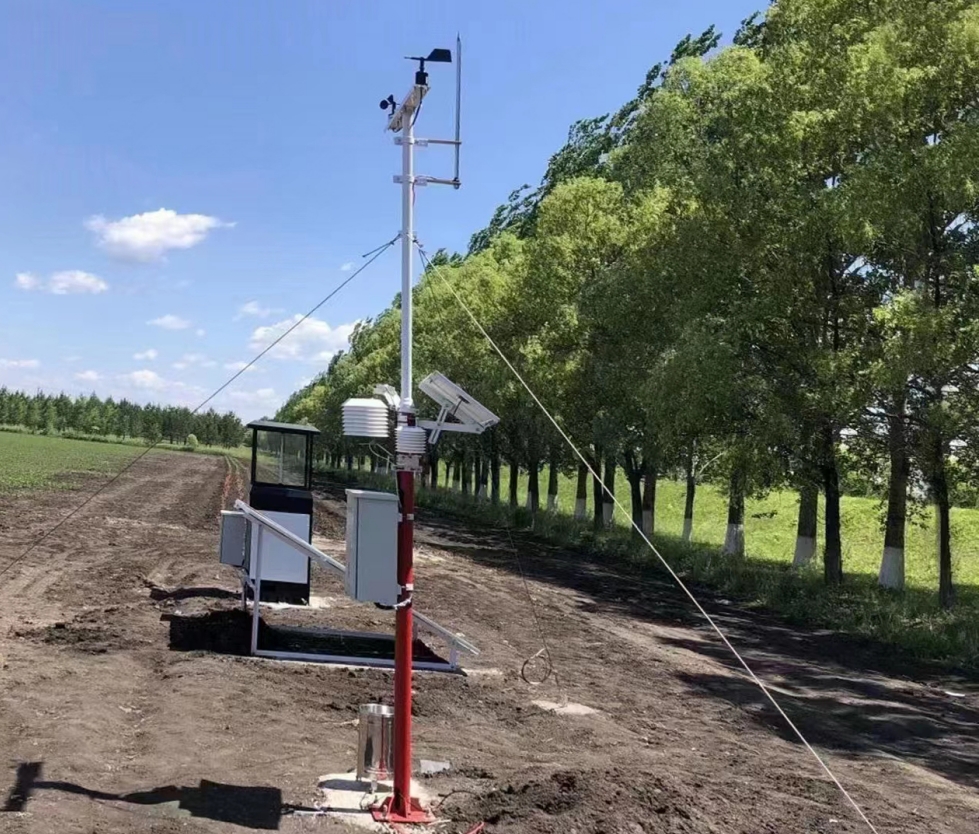
• Site selection: Representative, open area away from buildings/trees
• Concrete foundation → Erect pole → Mount brackets → Install & calibrate sensors (wind direction north-aligned)
• Wiring & waterproof sealing → Connect solar panel (angle = local latitude) → Commission system
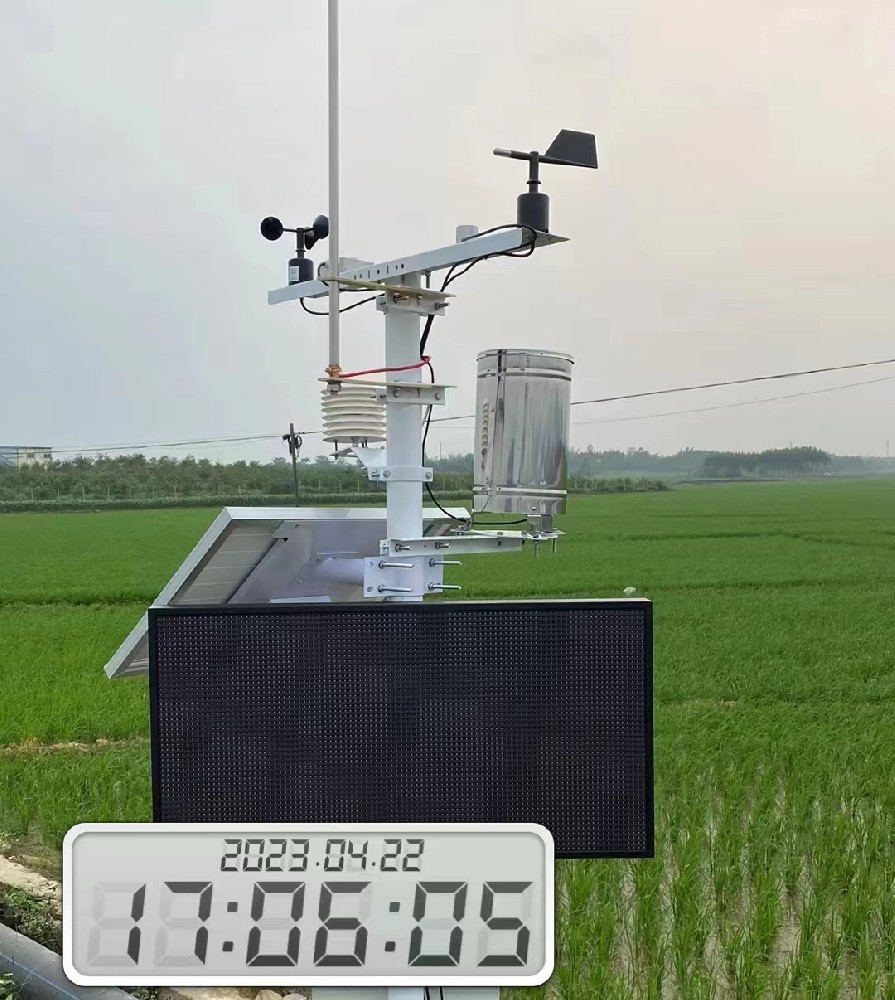
The monitoring area should be representative, avoiding obstructions from large buildings, trees, or high-voltage power lines. It is especially important to ensure that the wind speed and direction sensors are placed in an open area.
Prefabricated or on-site poured concrete bases should be used to ensure the stability and vertical alignment of the support poles.
Secure the support poles to the foundation and install cross-arm brackets for the sensors. Ensure that the temperature and humidity sensors are at the standard observation height (usually 1.5 meters).
Fix the sensors onto the brackets according to the instructions. Special care should be taken to calibrate the wind direction sensor to face true north during installation.
Connect the sensor cables to the data collector, ensuring that the cable ports are sealed and waterproof. Attach the solar panel, adjust its tilt angle (usually corresponding to the local latitude), and connect it to the battery system.
Connect the system to the cloud platform, check if the data from each sensor is displayed correctly, and set the communication parameters.
| Symptom | Possible Cause | Quick Troubleshooting & Solution |
|---|---|---|
| No data update | 1. Communication failure (weak/no signal) 2. Battery depleted | 1. Check SIM card and signal indicator 2. Check solar panel shading and wait for charging |
| Wind speed/direction abnormal | Cups/vane blocked or loose wiring | Power off, clean debris, ensure free rotation |
| Rainfall inaccurate | Debris or dust in tipping bucket | Clean interior of rain gauge |
| Large temp/humidity deviation | Poor ventilation in radiation shield | Clean shield exterior and ensure unobstructed airflow |
| Cannot log in remotely | Network issue or wrong credentials | Check local network; retry login or contact support |
Wide-Ranging Applications
• Precision agriculture: Irrigation, fertilization, sowing/harvest timing
• Disaster early warning: Heavy rain, typhoon, frost
• Agricultural research & teaching
• Facility agriculture (greenhouses) – CO₂, PAR integration for automation
NiuBoL Selection Recommendations
1. Precision & Reliability: Industrial-grade sensors with national certification, supports 4G/5G/LoRa for stable transmission even in extreme weather
2. Expandability: Open interfaces compatible with soil moisture/EC/pH, water quality, leaf wetness, pest cameras, spore traps – one-stop multi-element monitoring
3. Power Supply: Standard solar + large-capacity battery
4. Software & Service: Professional IoT cloud platform with mobile/PC access, intelligent alerts (SMS/WeChat/call), historical comparison, one-click reports, 7×24 support, lifetime free upgrades
5. Cost-Effectiveness: Total cost only 1/3 to 1/5 of traditional large stations, unattended, near-zero maintenance for 5 years – outstanding ROI
A1: Default every 1 or 10 minutes, fully customizable via cloud platform.
A2: 3–7 days when fully charged.
A3: Frost, heat stress, heavy rain/flooding, strong wind – customizable thresholds and notification methods.
A4: Yes – optional relay outputs enable automatic control of pumps/valves based on conditions (e.g., soil moisture<40%).
A5: No – modular plug-and-play design allows farmers to install with basic tools following the manual.
A6: Recommend calibration/comparison every 1–2 years for key sensors.
A7: Yes – one-click Excel/CSV export from the cloud platform.
A8: GPRS/4G/5G, RS485, LoRa.
A9: Yes – supports NPK, pH, EC sensors for scientific fertilization guidance.
A10: Built-in surge protection + recommended independent grounding system.
A11: CE, ISO9001, RoHS, and nationally recognized meteorological calibration certificates.
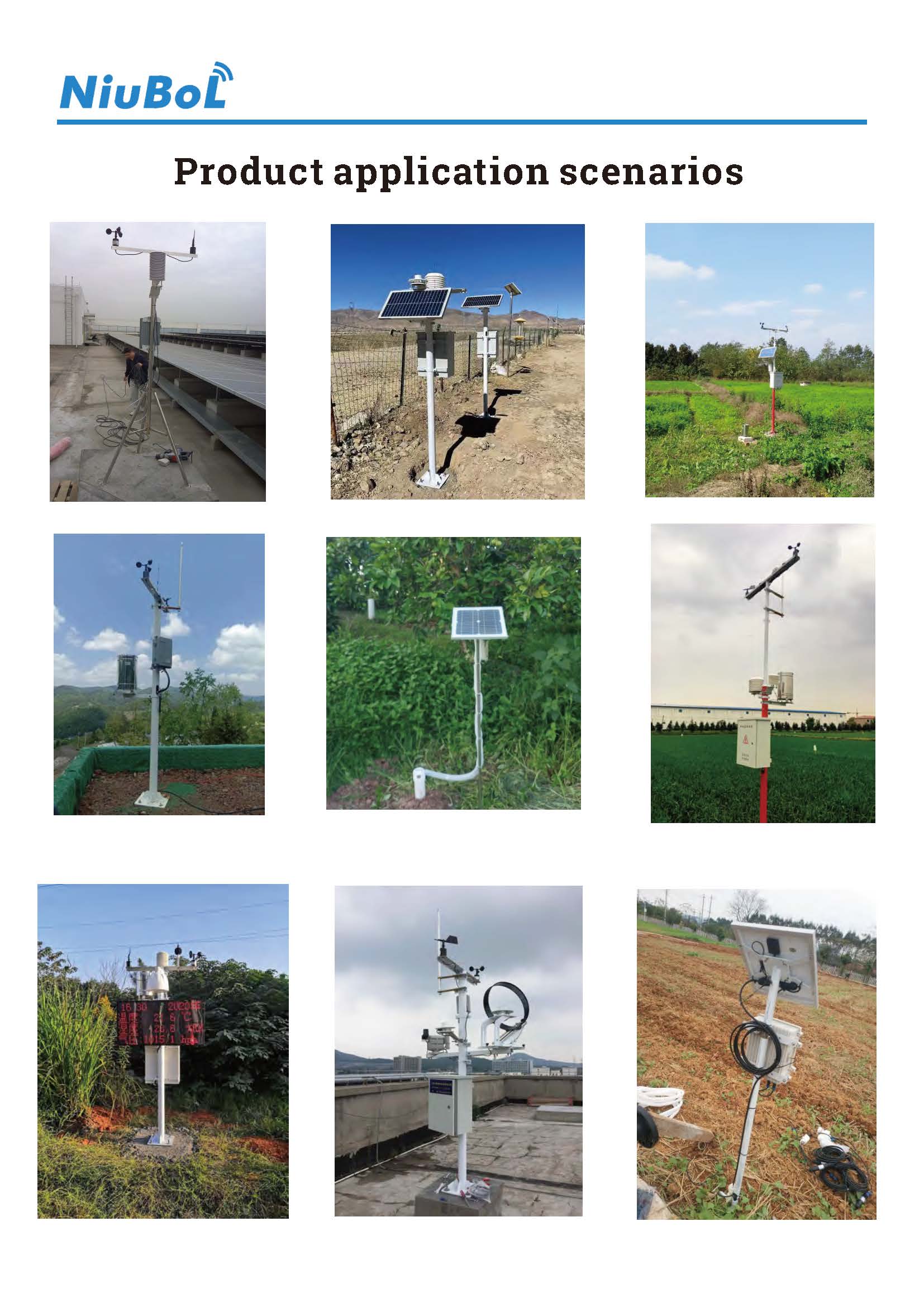
NiuBoL Smart Agricultural Weather Station, with its high integration, ease of operation, powerful data analytics, and exceptional cost-effectiveness, delivers the ideal meteorological monitoring solution for modern agriculture.
We transform real-time, accurate field microclimate data into actionable decision-making tools via cloud platform and early warning mechanisms — helping farmers predict weather changes, optimize operations, improve crop quality, and boost yields.
Contact NiuBoL now to equip your farm with the most professional “meteorological brain” and usher in a new era of intelligent planting!
Related recommendations
Sensors & Weather Stations Catalog
 Agriculture Sensors and Weather Stations Catalog-NiuBoL.pdf
Weather Stations Catalog-NiuBoL.pdf
Agriculture Sensors Catalog-NiuBoL.pdf
Related products
 Combined air temperature and relative humidity sensor
 Soil Moisture Temperature sensor for irrigation
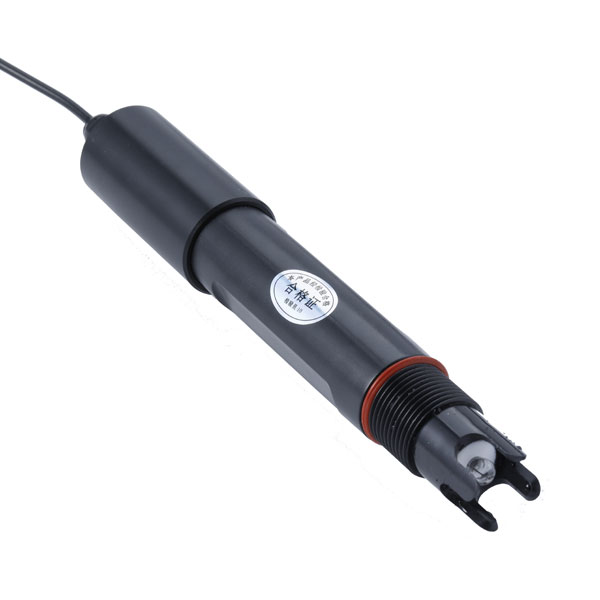 Soil pH sensor RS485 soil Testing instrument soil ph meter for agriculture
 Wind Speed sensor Output Modbus/RS485/Analog/0-5V/4-20mA
 Tipping bucket rain gauge for weather monitoring auto rainfall sensor RS485/Outdoor/stainless steel
 Pyranometer Solar Radiation Sensor 4-20mA/RS485

Screenshot, WhatsApp to identify the QR code
WhatsApp number:+8615367865107
(Click on WhatsApp to copy and add friends)

