





— Products —
 Consumer hotline +8618073152920
 WhatsApp:+8615367865107
Address:Room 102, District D, Houhu Industrial Park, Yuelu District, Changsha City, Hunan Province, China
Water Quality Sensors
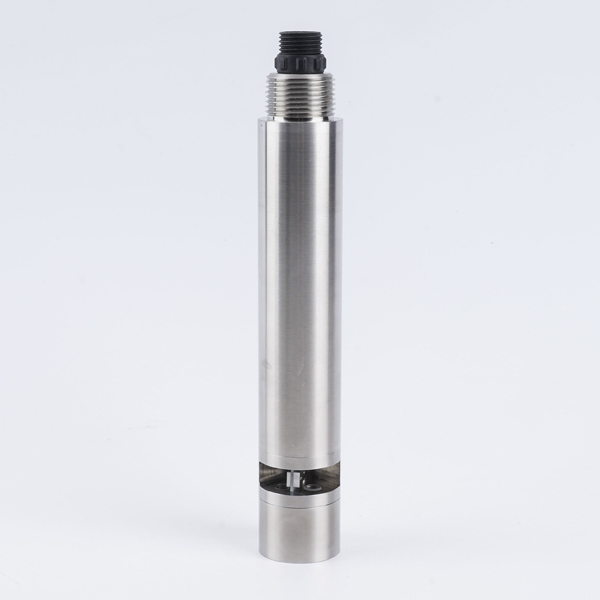
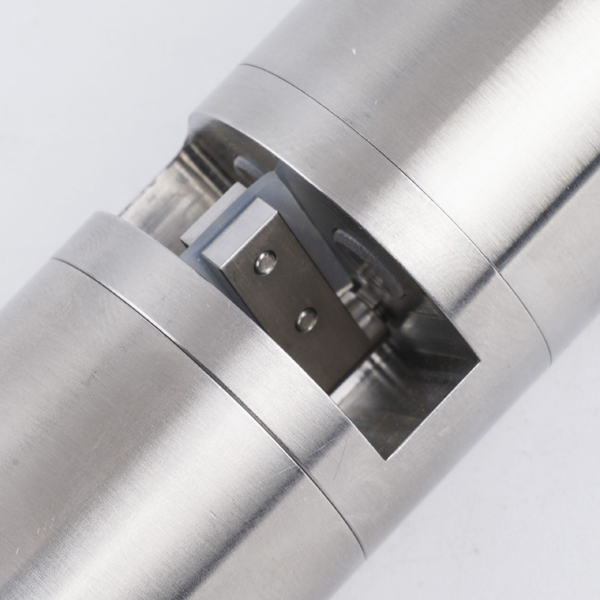
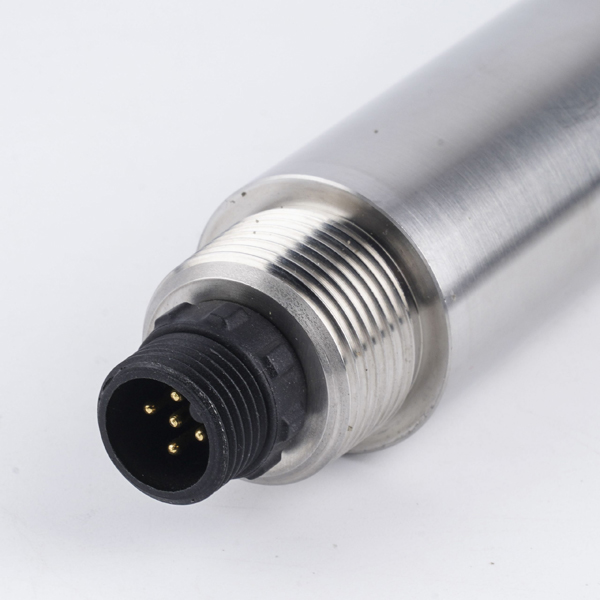
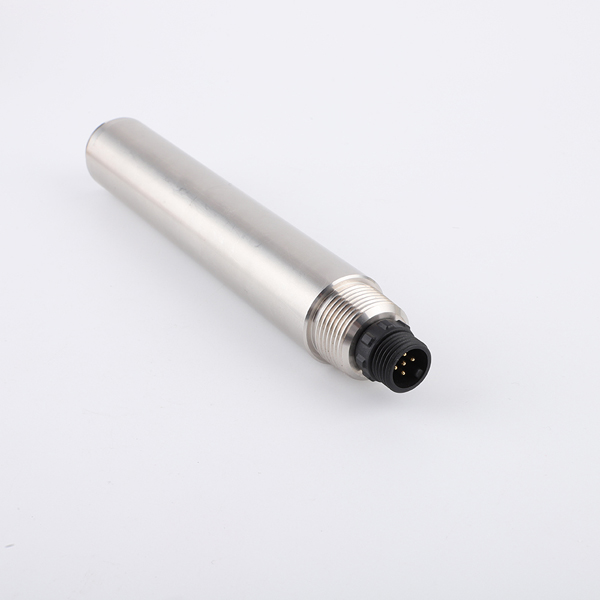
NiuBoL NBL-COD-308 online COD sensor adopts dual-wavelength ultraviolet absorption method (254nm measuring light + reference light), simultaneously detecting COD, turbidity and temperature in water, realizing reagent-free real-time monitoring. It effectively compensates for turbidity interference, with a built-in self-cleaning brush to prevent biological attachment. It is specially designed for industrial wastewater treatment, environmental online monitoring and other scenari···
Tel/WhatsApp:+8615367865107
Email:Arvin@niubol.com +Nearly 100 partner companies in more than 68 countries. We are committed to providing high-quality, practical products to meet your needs and help you solve problems. Our products comply with international standards and are certified with ISO, CE and RoHS.Product Details
The NiuBoL NBL-COD-308 online COD sensor is based on the dual-wavelength ultraviolet absorption principle. It measures the absorption degree of 254nm ultraviolet light by organic matter in water, combined with a reference light source to compensate for turbidity interference, achieving accurate and continuous detection of COD concentration. At the same time, it integrates turbidity and temperature parameter measurement to meet the needs of multi-parameter water quality online monitoring.
This sensor does not require the addition of chemical reagents, avoids secondary pollution, is compact in size and easy to install. It is especially suitable for system integrators and engineering contractors to build environmental monitoring platforms or process control systems. NiuBoL focuses on the research and development of industrial IoT sensors, providing stable and reliable solutions to help users reduce operation and maintenance costs and improve data real-time performance.
NBL-COD-308 focuses on long-term reliability and integration convenience in industrial field design. The main technical advantages are as follows:
Dual-wavelength ultraviolet absorption method and algorithm optimization: It adopts a dual-light source design of measuring light and reference light, and compensates for optical path attenuation and suspended particle interference through specific algorithms, improving measurement stability. Even in water bodies with large turbidity changes, it can still maintain accurate COD readings.
High precision and multi-parameter synchronous measurement: COD measurement range 0~200mg/L or 0~500mg/L (KHP equivalent), resolution 0.1mg/L, accuracy ±5%; simultaneous turbidity monitoring, range 0~100NTU or 0~200NTU, resolution 0.1NTU. Supports two-point calibration, fast response speed, small drift, suitable for long-term continuous monitoring.
Self-cleaning and low-maintenance design: Built-in cleaning brush effectively prevents biofilm attachment and extends maintenance cycle. 316L stainless steel housing with strong corrosion resistance, IP68 protection rating, supports submerged installation, maximum working pressure 0.1MPa.
Strong anti-interference and low power consumption: Low power consumption design (0.3W@12V), outstanding anti-interference ability. Digital sensor output follows Modbus/RTU protocol, easy to seamlessly integrate with existing automation systems without additional conversion modules.
Stability and economic use: No reagent consumption, low operating cost. The sensor has undergone strict aging tests and has excellent long-term stability, suitable for deployment in outdoor or harsh industrial environments.
These features enable the NBL-COD-308 to maintain data consistency under complex water quality conditions, significantly reducing on-site maintenance workload, and meeting the requirements of engineering projects for reliability and integration.
| Parameter | Specification |
|---|---|
| Model | NBL-COD-308 |
| Measurement Principle | Dual-wavelength ultraviolet absorption method |
| Measurement Range (COD) | 0~200mg/L equiv. KHP or 0~500mg/L equiv. KHP |
| Measurement Range (Turbidity) | 0~100NTU or 0~200NTU |
| COD Accuracy | ±5% |
| COD Resolution | 0.1mg/L |
| Turbidity Accuracy | ±5%F.S. |
| Turbidity Resolution | 0.1NTU |
| Calibration Method | Two-point calibration |
| Output Method | RS-485 (Modbus/RTU protocol) |
| Power Supply Voltage | 12~24VDC |
| Power Consumption | 0.3W@12V |
| Working Conditions | 0~45℃, <0.1MPa |
| Storage Temperature | -5~65℃ |
| Protection Rating | IP68 |
| Installation Method | Submerged installation |
| Cable Length | 5 meters (customizable) |
| Housing Material | 316L stainless steel |
Note: The sensor simultaneously outputs COD, turbidity and temperature parameters. The cable is 4-core shielded twisted pair, and the interface has been waterproofed.
The NBL-COD-308 online COD sensor is widely used in industrial and environmental protection fields that require real-time monitoring of organic pollution:
Industrial Wastewater Treatment Plants: Online COD monitoring of inlet, outlet and each treatment unit to optimize process parameters and ensure compliance with discharge standards.
Petrochemical and Pharmaceutical Wastewater Treatment: Monitoring of high organic load wastewater to assist process control and prevent excessive discharge.
Municipal Sewage and River & Lake Water Quality Monitoring: Deployment in environmental automatic stations to grasp the organic pollution status of water bodies in real time and support early warning and governance decisions.
Food Processing and Papermaking Industry: Monitoring of production wastewater treatment systems to control organic pollutant concentration and reduce environmental risks.
Surface Water and Drinking Water Source Protection: Emergency monitoring of sudden pollution incidents and long-term water quality trend analysis.
Aquaculture Water and Industrial Circulating Cooling Water: Multi-parameter joint monitoring to ensure water quality safety and equipment operation efficiency.
It can be combined with other NiuBoL water quality sensors (such as pH, dissolved oxygen, conductivity) to form a complete water quality monitoring solution.
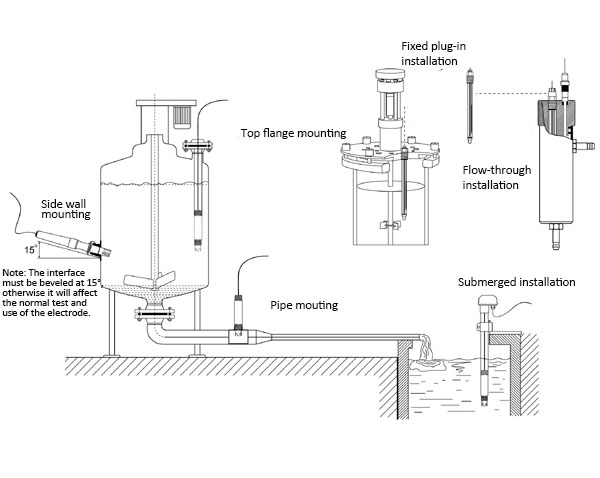
Recommended horizontal installation and firm fixation. The measurement area should face the water flow direction to ensure the optical path is completely submerged in water without air bubbles.
The sensor can be placed in water in any direction, but horizontal placement is recommended to optimize the self-cleaning brush effect.
It is recommended to install a protective sleeve outside the cable during installation to prevent mechanical damage.
Red wire: Power positive (12~24VDC)
Black wire: Ground (GND)
Blue wire: RS-485 A
White wire: RS-485 B
After wiring, please carefully check to avoid incorrect connections. When the cable is immersed in water or exposed for a long time, corrosion-resistant materials should be selected. All interfaces already have waterproof performance. Confirm the wiring is correct before powering on to ensure equipment safety.
To ensure measurement accuracy, regularly check the cleanliness of the measurement window and the working status of the self-cleaning brush. The sensor outer surface can be rinsed with tap water. Stubborn dirt can be wiped with a soft cloth dipped in mild detergent. Avoid excessive tension on the cable. The built-in cleaning brush can effectively reduce the frequency of manual cleaning. It is recommended to return to the factory for inspection and replacement of dynamic sealing devices every 18 months.
Calibration Method:
Turbidity calibration: Use low-turbidity solution for zero point and 100NTU standard solution for slope.
COD calibration: Use KHP standard solution (pay attention to safe operation and wear gloves). Calibrate temperature first, then turbidity, and finally COD. For 0~200mg/L range, use 5mg/L zero point and 200mg/L slope; for 0~500mg/L range, use 20mg/L zero point and 400mg/L slope.
Specific steps please refer to the operation manual attached randomly. Before calibration, ensure the optical path is submerged ≥2cm and there are no air bubbles.
Q1: Does the NBL-COD-308 require the addition of chemical reagents?
A: No. This sensor adopts ultraviolet absorption method, with no reagent consumption, avoiding secondary pollution and lower operating costs.
Q2: Does turbidity affect COD measurement?
A: The sensor has a built-in reference light source and algorithm, which can automatically compensate for turbidity interference and still provide reliable COD data under certain suspended solids concentrations.
Q3: How to maintain the self-cleaning brush?
A: Under normal use, the cleaning brush can effectively prevent biological attachment. It is recommended to return to the factory for inspection and replacement of dynamic sealing devices every 18 months. Daily inspection to check whether the brush is damaged is sufficient.
Q4: How to integrate with PLC or SCADA system?
A: The sensor outputs standard RS-485 Modbus/RTU protocol and can be directly connected to most industrial controllers. NiuBoL provides protocol documents and technical support for quick integration.
Q5: Is it suitable for seawater or high salinity environments?
A: The 316L stainless steel housing has good corrosion resistance and is suitable for most industrial wastewater and surface water. However, in high salinity environments, it is recommended to strengthen window cleaning checks.
Q6: What to do when the measured value is unstable or has large deviation?
A: First clean the surface of the measurement window and check whether the self-cleaning brush is working normally; confirm that the cable connection is reliable and the power supply voltage is stable. If the problem persists, please contact technical support.
Q7: Does the cable length support customization?
A: Yes, the standard length is 5 meters and can be customized according to project requirements. Please specify the length requirement when ordering, and pay attention to waterproof and corrosion-resistant specifications.
Q8: What is the sensor calibration frequency?
A: Perform two-point calibration according to the requirements of the competent authority or actual use conditions. The sensor has small drift and low maintenance frequency in conventional environments. It is recommended to arrange flexibly according to on-site water quality conditions.
The NiuBoL NBL-COD-308 online COD sensor takes dual-wavelength ultraviolet absorption technology as the core, featuring high precision, strong anti-interference, low maintenance and easy integration. It provides a stable and reliable online detection method for industrial water treatment and environmental monitoring projects. It helps system integrators and engineering contractors achieve real-time data collection, process optimization and compliance management, effectively controlling operating costs.
If your project involves online monitoring of wastewater treatment, environmental water quality station construction, industrial wastewater process control or other multi-parameter water quality requirements, please feel free to contact the NiuBoL professional team. We can provide detailed selection guidance, integration solution support and on-site debugging assistance. Scan the contact information on the page or visit the NiuBoL official website to obtain the complete product manual, case references and the latest technical materials, and jointly build an efficient and intelligent industrial IoT water quality monitoring system.
Sensors & Weather Stations Catalog
 Agriculture Sensors and Weather Stations Catalog-NiuBoL.pdf
Weather Stations Catalog-NiuBoL.pdf
Agriculture Sensors Catalog-NiuBoL.pdf
Related recommendations
 NBL-CDOM-406-S Colored Dissolved Organic Matter Sensor by Fluorescence Method: IoT Water Quality Monitoring
 NBL-CL-406 Industrial-grade Online Residual Chlorine Sensor RS485 Modbus-RTU/4-20mA: For Water Treatment Plant···
 NBL-CLI-206A Online Chloride Ion Sensor: Solid-state Membrane Ion Selective Electrode, RS-485 Modbus/RTU
 NBL-BGA-408-S Blue-Green Algae Sensor by Fluorescence Method: Industrial IoT Water Quality Monitoring, RS-485/···
 NBL-BGA-406-S Professional Blue-Green Algae Sensor for Seawater Aquaculture, Inland Rivers, Lake Ecological Ma···
 NBL-CHLO-406-S Optical Fluorescence Method Online Chlorophyll Sensor: For Lake and River Monitoring, Aquacultu···

Screenshot, WhatsApp to identify the QR code
WhatsApp number:+8615367865107
(Click on WhatsApp to copy and add friends)


