





— Blogs —
—Products—
 Consumer hotline +8618073152920
 WhatsApp:+8615367865107
Address:Room 102, District D, Houhu Industrial Park, Yuelu District, Changsha City, Hunan Province, China
Product knowledge
Time:2026-04-15 14:58:16 Popularity:60
In industrial scenarios such as chemical production, wastewater treatment, pharmaceutical, food processing, and environmental monitoring, pH value, as a key process parameter, directly affects reaction efficiency, product quality, and discharge compliance. Industrial online pH meters achieve continuous real-time monitoring through the glass electrode method. However, electrode performance changes during long-term operation, leading to measurement drift. If not calibrated in time, data deviation will affect process optimization and even cause safety hazards. NiuBoL NBL-PHG-206 online water quality pH sensor adopts patented long-life reference technology and RS-485 digital output. Combined with standardized calibration procedures, it can effectively maintain high-precision operation and meet the continuous monitoring needs of industrial sites.
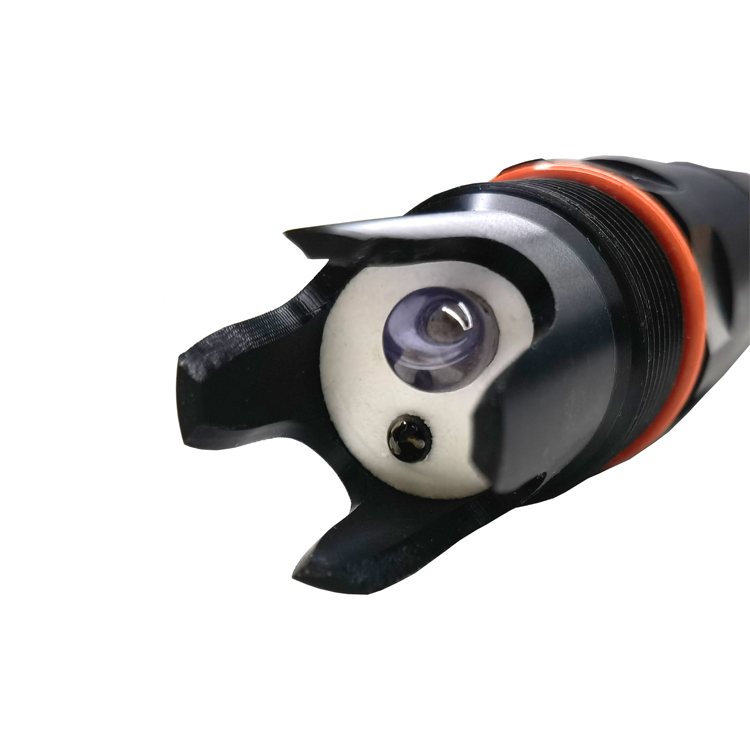
The measurement accuracy of industrial online pH meters depends on the stability and response characteristics of the pH composite electrode. The electrode consists of hydrogen-sensitive lithium glass membrane, internal reference system, external reference solution (usually 3.3 mol/L KCl), and liquid junction. During use, the following factors will cause potential changes and measurement deviations:
Glass membrane surface changes: The hydrated gel layer of the glass membrane is affected by temperature, pH, and pollutants, resulting in minor physical and chemical changes that alter the H⁺ response characteristics.
Asymmetric potential drift: The asymmetry between the inner and outer interfaces of the glass membrane increases with use time, producing offsets of several mV to tens of mV, affecting the zero-point potential.
Unstable liquid junction potential: The liquid junction (ceramic sand core or porous material) is easily blocked by suspended solids, grease, or crystals, or diffusion potential fluctuates due to decreased KCl concentration.
Reference electrode aging: Contamination of the Ag/AgCl reference system or external reference solution leads to decreased potential reproducibility.
Temperature and medium interference: Large temperature differences between the measured medium and calibration buffer solution, or contact with concentrated acid (pH<2), concentrated alkali (pH>12), fluoride-containing, or organic solvents cause the electrode response to deviate from linearity.
These changes cause the electrode slope to deviate from the theoretical value (ideal Nernst slope is approximately 59.16 mV/pH at 25℃), resulting in reading deviation. High-precision applications (±0.03 pH) require more frequent intervention, while general precision (±0.1 pH) can appropriately extend the cycle, but continuous monitoring of reading accuracy remains the primary principle.
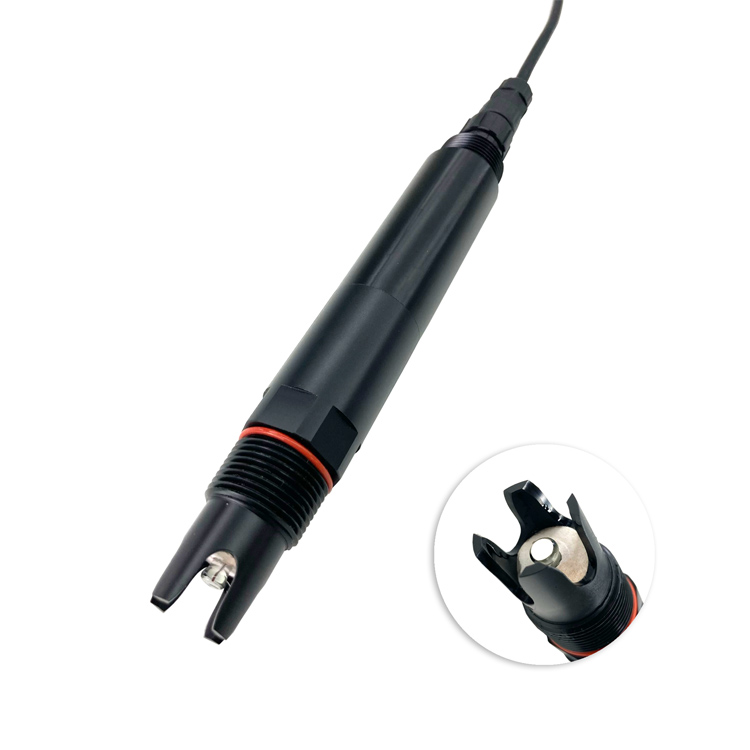
pH measurement is a relative measurement and must be traced to the pHs value of the reference buffer solution. Industrial online pH meters have completed initial calibration before leaving the factory, but after on-site installation and during operation, the electrode asymmetric potential and slope will change over time, so regular recalibration is necessary.
Calibration frequency mainly depends on the following factors:
Measured medium characteristics: Strong acid, strong alkali, fluoride-containing, or high organic matter media will accelerate electrode aging.
Usage intensity: Continuous operation vs. intermittent monitoring.
Accuracy requirements: High-precision process control requires higher frequency.
Environmental conditions: Large temperature fluctuations and severely polluted conditions require enhanced maintenance.
General recommendations:
Conventional industrial processes: Calibrate once a week to every two weeks.
Harsh conditions or high-precision requirements: Calibrate daily or before each batch.
After new electrode installation, after long-term shutdown, or when abnormal drift occurs in measured values, calibration must be performed immediately.
In actual operation, first insert the electrode into a standard buffer solution close to the pH of the measured solution to evaluate the error size. If the deviation exceeds the allowable range, perform a complete calibration process. This is similar to piano tuning — regular adjustment is required to maintain optimal performance and avoid cumulative errors affecting overall system reliability.
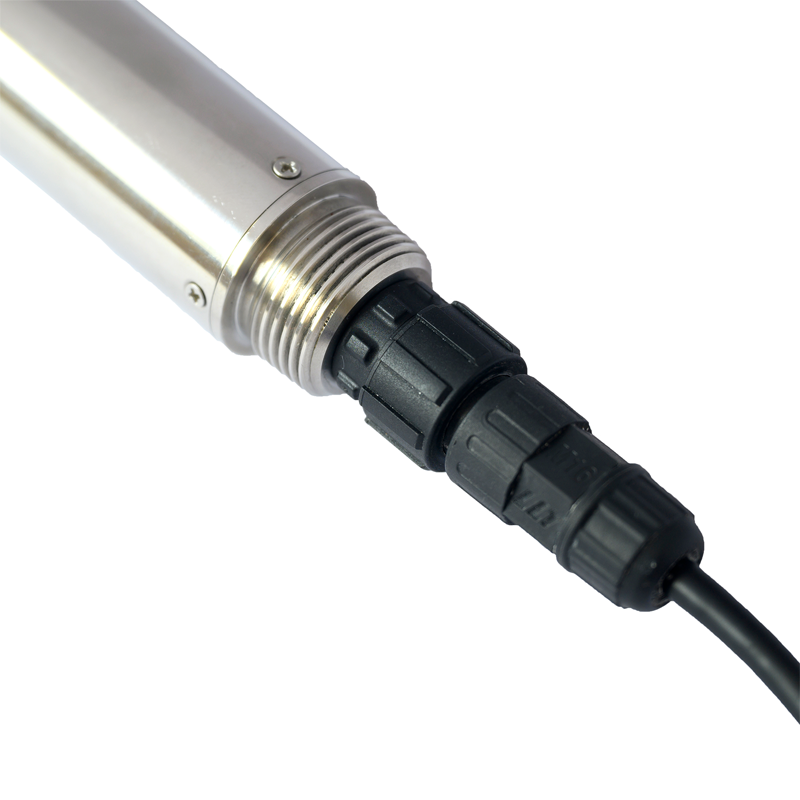
Industrial online pH meter calibration usually adopts the two-point calibration method (zero point + slope). If necessary, three-point calibration can be performed to cover a wider range and verify linearity.
Zero-point calibration: Corresponds to pH 6.86 or 7.00 buffer solution, adjust the instrument positioning (offset) to compensate for asymmetric potential.
Slope calibration: Use acidic (pH 4.00) or alkaline (pH 9.18) buffer solution to adjust the slope coefficient so that the response conforms to the Nernst equation.
When selecting buffer solutions, priority should be given to points that closely surround the expected process pH range. Buffer solutions should be freshly prepared or use bottled pre-made solutions, ensure temperature equilibrium (25℃ standard value), and perform temperature compensation. When nonlinearity is obvious, the two-point close-surrounding method can effectively offset deviations.
After calibration, it is recommended to record the slope percentage (ideal 95%~105%) and offset value as the basis for long-term tracking of electrode health. If the slope continues to decline, it indicates that the electrode needs cleaning or replacement.
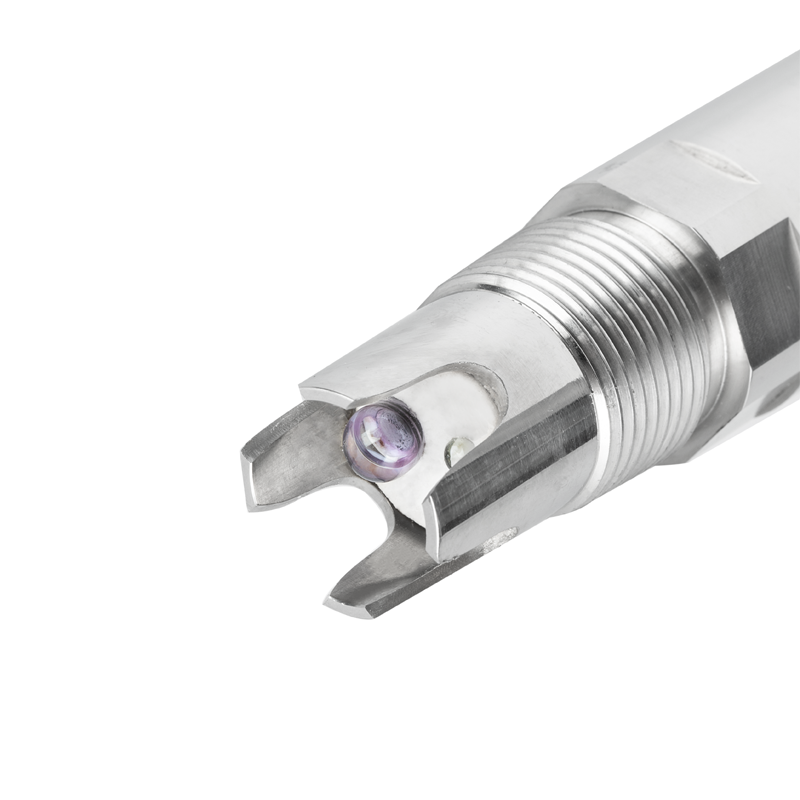
The NiuBoL NBL-PHG-206 series online water quality pH sensor is suitable for environmental water quality monitoring, acid-base salt solutions, and industrial production processes. It has a measurement range of 0~14 pH, resolution of 0.01 pH, supports RS-485 Modbus protocol, IP68 protection level, and is suitable for continuous installation under harsh conditions. The sensor has been calibrated before leaving the factory. Non-essential operations are not recommended to avoid introducing human error.
1. Measure 250 mL of distilled water (or deionized water) with a graduated cylinder and pour it into a clean beaker.
2. Add one pack of pH 6.86 calibration powder and stir with a glass rod until completely dissolved.
3. Completely immerse the sensor bulb in the solution, gently shake to remove bubbles, and wait 3–5 minutes until the value stabilizes.
4. Observe whether the displayed value is 6.86. If there is deviation, input the corresponding zero-point calibration command according to the device manual to adjust.
For acidic medium applications:
Measure 250 mL of distilled water, add one pack of pH 4.00 calibration powder, and stir to dissolve.
Immerse the sensor and check whether the value is 4.00 after stabilization.
Perform slope calibration command if there is deviation.
For alkaline medium applications:
Measure 250 mL of distilled water, add one pack of pH 9.18 calibration powder, and stir to dissolve.
Immerse the sensor and check whether the value is 9.18 after stabilization.
Perform slope calibration command if there is deviation.
Precautions:
The calibration environment temperature should be as close as possible to the process medium temperature.
Use fresh buffer solutions to avoid cross-contamination.
After calibration, rinse the sensor with deionized water and immerse it in the correct storage solution (pH 4 buffer solution containing KCl) for activation.
Record the slope and offset values for each calibration to facilitate trend analysis.
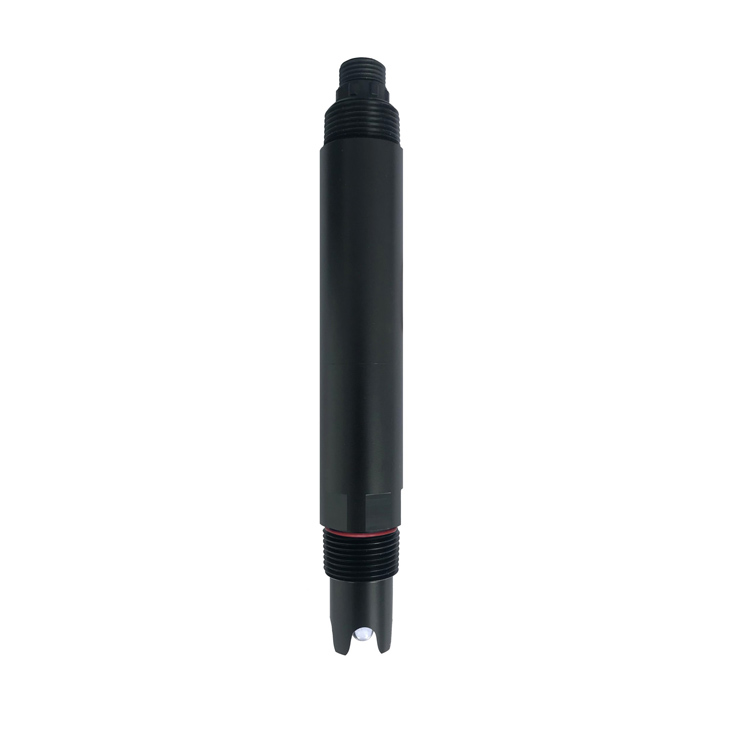
| Parameter | Specification |
|---|---|
| Measurement Range | 0~14.00 pH |
| Resolution | 0.01 pH |
| Measurement Principle | Glass electrode method |
| Output Signal | RS-485 (Modbus protocol) |
| Operating Temperature | 0~60℃ (standard type) |
| Protection Level | IP68 |
| Reference System | Patented slow-permeation salt bridge, long-life design |
| Installation Method | Submerged / flow-through / pipeline type |
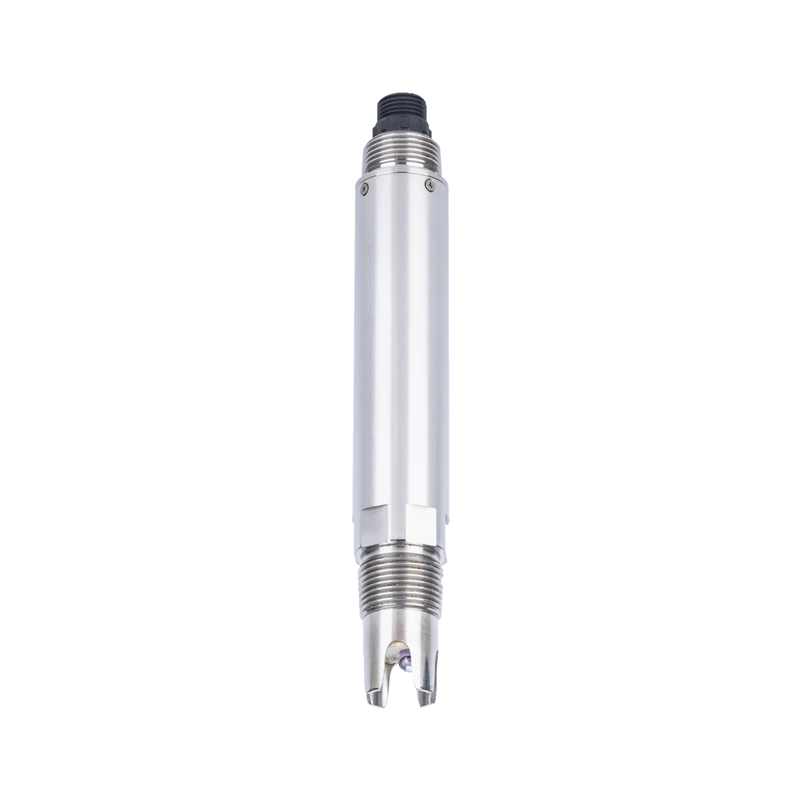
To extend electrode life and maintain measurement accuracy, pay attention to the following practices:
Pretreatment: After new electrode installation or long-term storage, soak in pH 4 buffer solution containing KCl for 8–24 hours to activate the glass membrane and liquid junction.
Cleaning: After measuring viscous, oily, or high-suspended solids media, rinse repeatedly with deionized water. Use mild solvents if necessary, avoiding damage to the glass membrane.
Avoid damage: Strictly prohibit contact with strong dehydrating media (such as concentrated sulfuric acid, absolute ethanol), severe temperature shocks, or mechanical collisions. Pay attention to solvent compatibility for plastic shell electrodes.
Refillable vs. Non-refillable: Refillable electrodes should regularly replenish KCl solution and open the filling hole to increase hydraulic pressure; non-refillable electrodes rely on gel electrolyte, which is easy to maintain but requires monitoring of the liquid junction status during long-term continuous use.
Double liquid junction reference: In media containing polluting ions such as S²⁻ and I⁻, prioritize double liquid junction structure to reduce liquid junction blockage and chemical reactions.
Document management: Establish a calibration record sheet including date, buffer solution batch number, slope value, offset value, and operator for quality traceability and preventive maintenance.
When the slope is continuously below 90% or the response time is significantly extended, electrode cleaning, regeneration, or replacement should be considered. The NiuBoL series sensors adopt patented reference technology. The slow-permeation salt bridge design maintains stable reference liquid leakage under ≥100 kPa pressure, effectively extending the maintenance cycle.
Q1. Why must industrial online pH meters be calibrated regularly?
Electrode glass membrane aging, asymmetric potential drift, and liquid junction contamination will cause changes in measurement potential. Regular calibration can compensate for these deviations and ensure data consistency with the reference pHs value.
Q2. How to determine the calibration frequency?
It depends on medium corrosiveness, usage intensity, and accuracy requirements. Generally once a week to every two weeks. Daily calibration is required for harsh conditions or high-precision applications. Perform immediately after new electrode installation or when abnormal measurement values occur.
Q3. What is the difference between two-point calibration and three-point calibration?
Two-point calibration (zero point + slope) is suitable for most industrial scenarios; three-point calibration can verify linearity and is suitable for wide-range or high-precision requirements, better offsetting nonlinear errors.
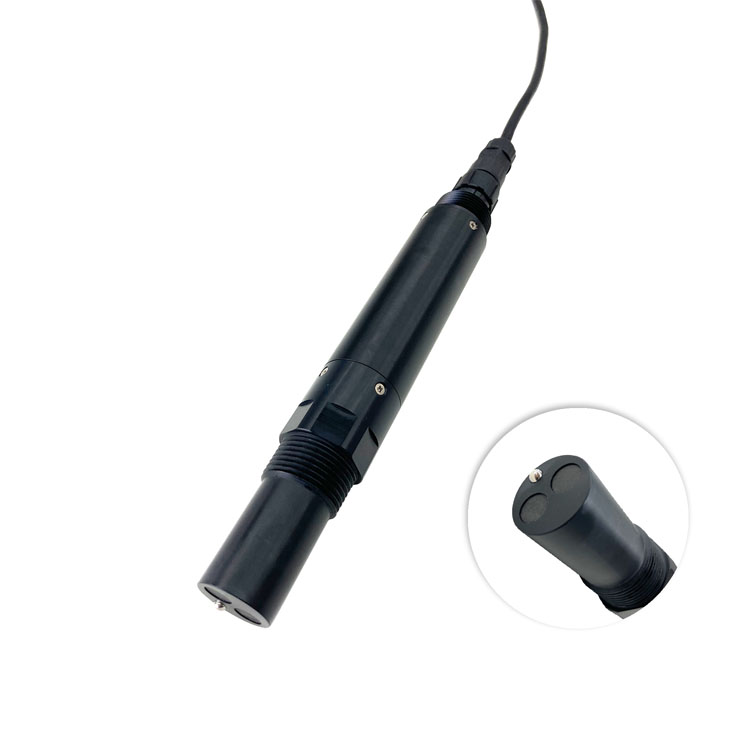
Q4. The NBL-PHG-206 sensor has been calibrated at the factory. Is on-site operation still needed?
Factory calibration is suitable for standard conditions. After on-site installation, due to the influence of medium and temperature, it is recommended to verify and make necessary adjustments according to actual operation. Do not operate frequently when the error is within the allowable range.
Q5. Why must recalibration be performed after measuring concentrated acid or alkali?
Strong acids and alkalis will accelerate glass membrane erosion or change surface characteristics, causing significant shifts in slope and zero point. Immediate calibration is required to restore accuracy.
Q6. How to determine if a pH electrode needs replacement?
When the slope after calibration is continuously below 95% or above 105%, response time slows down, repeatability is poor, or the liquid junction is severely blocked, it is recommended to replace the electrode.
Q7. What is the impact of large temperature differences between buffer solution and process temperature during calibration?
It will introduce additional errors. It is recommended to make the buffer solution temperature close to the process temperature or enable the instrument’s automatic temperature compensation function.
Q8. What is the difference between industrial online pH meter calibration and laboratory pH meter calibration?
Industrial online emphasizes long-term stability, anti-interference, and installation convenience; calibration operations need to adapt to on-site conditions. Laboratory focuses on fast response and high repeatability. NiuBoL sensors combine the advantages of both and are suitable for continuous process monitoring.
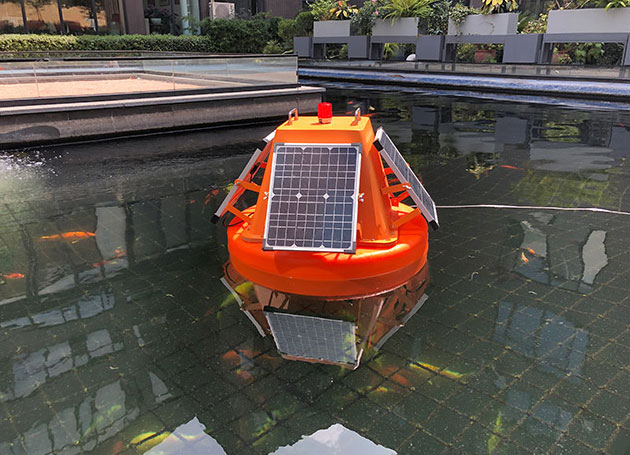
Regular calibration of industrial online pH meters is a core measure to maintain measurement accuracy, extend equipment life, and ensure process safety. By understanding principles such as electrode asymmetric potential and liquid junction potential, combined with standardized zero-point and slope calibration operations, enterprises can effectively control measurement errors. The NiuBoL NBL-PHG-206 online water quality pH sensor provides stable solutions for industries such as chemical and environmental protection with reliable patented technology and digital output. In practical applications, establishing a sound calibration record and preventive maintenance system can significantly improve system reliability and data credibility. If you need model selection advice for specific process media, calibration scheme optimization, or sensor technical parameter support, please communicate in depth based on on-site working condition parameters to achieve the best process control effect.
 NBL-PHG-406-S online Water Quality pH Sensor.pdf
Related recommendations
Sensors & Weather Stations Catalog
Agriculture Sensors and Weather Stations Catalog-NiuBoL.pdf
Weather Stations Catalog-NiuBoL.pdf
Agriculture Sensors Catalog-NiuBoL.pdf
Water Quality Sensor Catalog-NiuBoL.pdf
Related products
 Combined air temperature and relative humidity sensor
 Soil Moisture Temperature sensor for irrigation
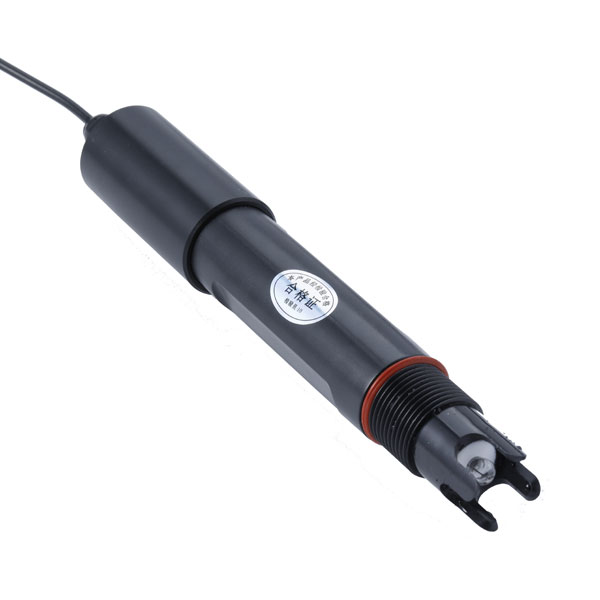 Soil pH sensor RS485 soil Testing instrument soil ph meter for agriculture
 Wind Speed sensor Output Modbus/RS485/Analog/0-5V/4-20mA
 Tipping bucket rain gauge for weather monitoring auto rainfall sensor RS485/Outdoor/stainless steel
 Pyranometer Solar Radiation Sensor 4-20mA/RS485

Screenshot, WhatsApp to identify the QR code
WhatsApp number:+8615367865107
(Click on WhatsApp to copy and add friends)

