






— Blogs —
—Products—
 Consumer hotline +8618073152920
 WhatsApp:+8615367865107
Address:Room 102, District D, Houhu Industrial Park, Yuelu District, Changsha City, Hunan Province, China
Product knowledge
Time:2026-02-18 10:45:55 Popularity:14
In modern agricultural engineering projects, crop microclimate monitoring has become a core component for ensuring production stability and disaster prevention. Microclimate refers to environmental elements near the crop canopy, including air temperature, relative humidity, photosynthetically active radiation, wind speed and direction, rainfall, etc. These parameters directly affect crop physiological processes and the probability of disaster occurrence. The NiuBoL compact automatic weather station (field microclimate observer), as a modular industrial-grade device, supports multi-sensor integration, wireless data transmission, and cloud analysis, helping system integrators, IoT solution providers, and project contractors achieve real-time environmental perception and automated early warning.
The system emphasizes high-automation acquisition, long-distance transmission, and protocol compatibility, suitable for distributed farmland, orchards, and facility agriculture projects. Through precise data support for frost warning, irrigation optimization, and pest & disease risk assessment, engineering teams can significantly reduce meteorological disaster losses and improve overall project ROI.
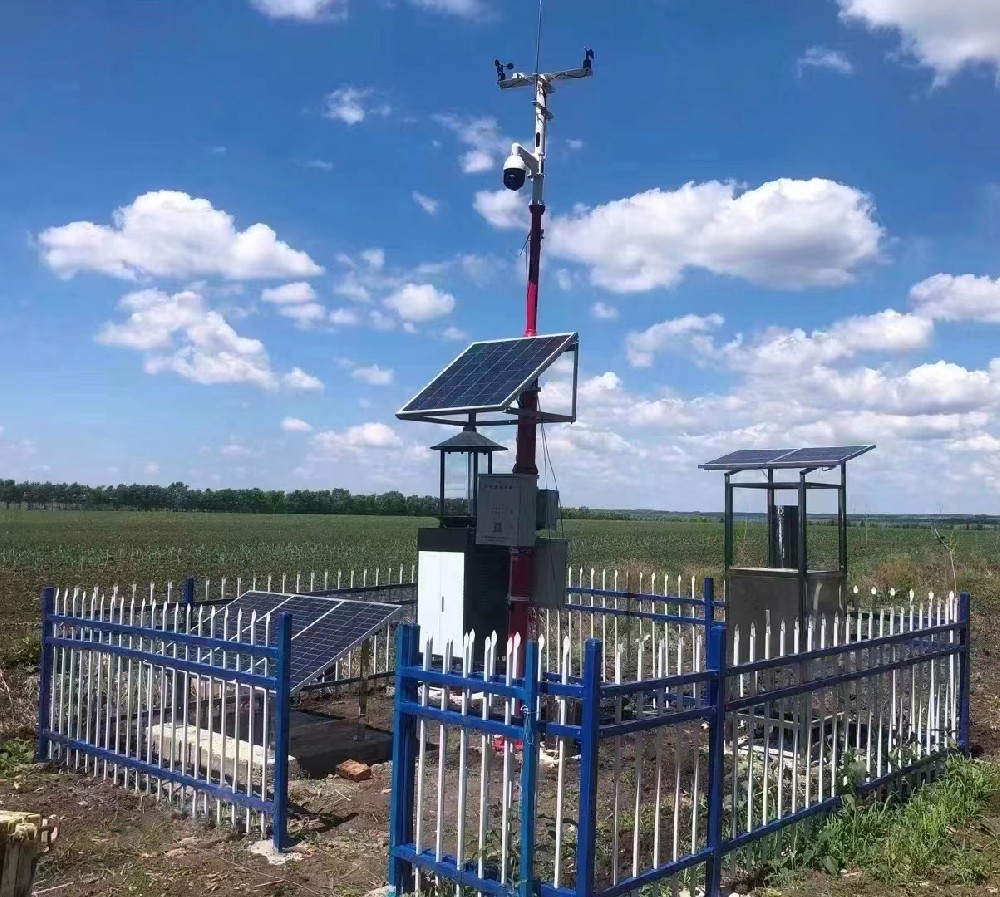
The NiuBoL compact automatic weather station integrates a high-precision sensor array, data acquisition terminal, protective enclosure, and communication module, supporting on-site installation and long-term unattended operation. The system adopts a low-power design combined with solar/mains dual power supply to ensure continuity in remote agricultural areas. Data is uploaded to the cloud platform wirelessly (4G/LoRa optional), supporting multi-terminal access and API integration.
Core functions of the automatic weather station include:
Multi-element real-time acquisition: air temperature, humidity, atmospheric pressure, wind speed, wind direction, rainfall, light intensity, etc.
Automatic data processing: threshold judgment, trend analysis, alarm push
Wireless transmission and storage: supports Modbus RTU/TCP, MQTT protocols, facilitating edge-cloud collaboration
Expansion interfaces: reserved RS485, analog input, supports adding soil temperature/humidity or CO₂ sensors
This station is particularly suitable for scenarios requiring high timeliness monitoring, such as frost-sensitive crop areas, helping engineering companies build reliable agricultural IoT architecture from the perception layer.
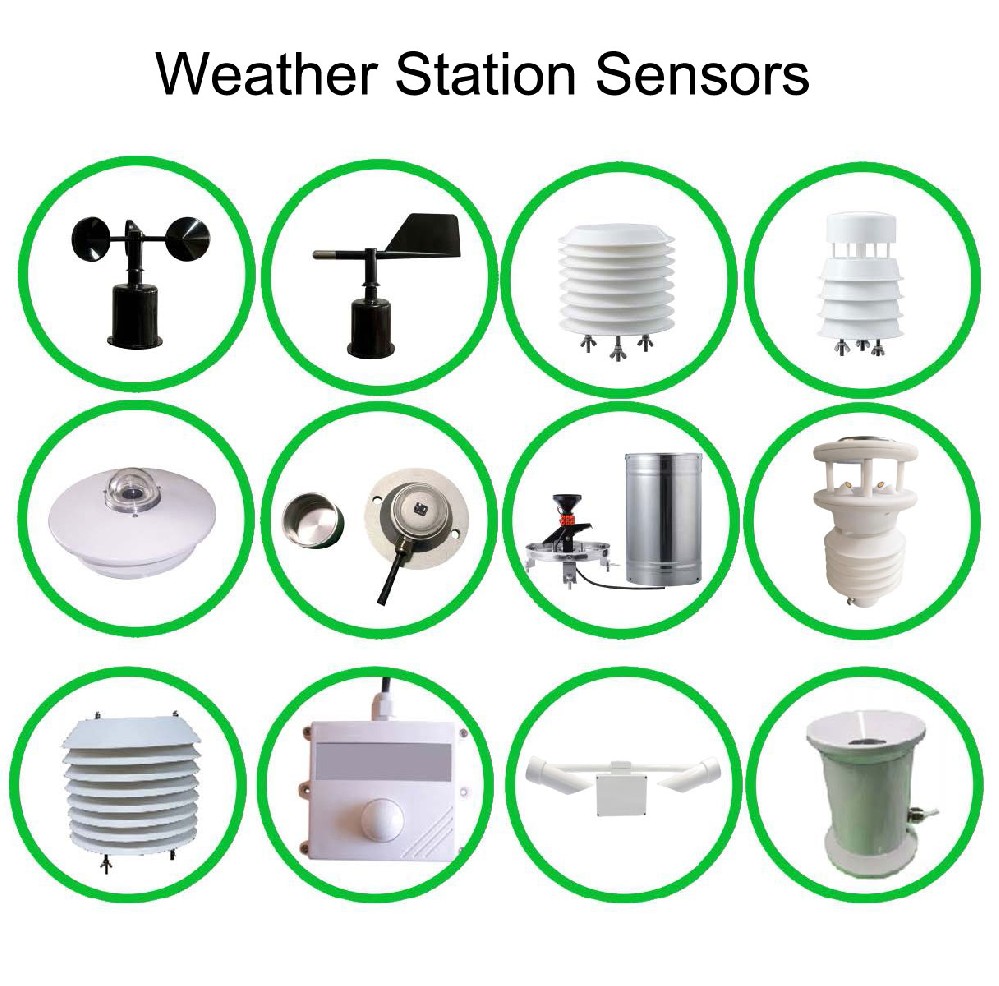
The NiuBoL system integrates various professional meteorological sensors, each designed with emphasis on accuracy, durability, and interchangeability. The following table summarizes the main sensor technical parameters and application characteristics:
| Sensor Type | Range | Measurement Principle/Features | Typical Engineering Application |
|---|---|---|---|
| Temperature Sensor | -40~80℃ | PT100 or NTC thermistor, high stability | Frost warning, crop growing degree days calculation |
| Humidity Sensor | 0~100% RH | Capacitive type, high response speed | Pest & disease risk assessment, evapotranspiration estimation |
| Wind Speed Sensor | 0~60 m/s | Three-cup or ultrasonic, no mechanical wear | Dry hot wind warning, spray drift control |
| Wind Direction Sensor | 0~360° | Wind vane + potentiometer or ultrasonic, 360° no dead zone | Frost radiation cooling prediction, wind-related disasters |
| Rainfall Sensor | 0~∞ mm | Tipping bucket or optical type, anti-clogging design | Flood/drought warning, irrigation scheduling basis |
| Light Sensor | 0~2000 μmol/m²/s or 0~200 klx | Silicon photocell or photodiode, cosine correction | Photosynthesis estimation, supplemental lighting strategy optimization |
These sensors support interchangeable interfaces and automatic identification of access type, ensuring flexible system configuration. In engineering projects, temperature + humidity + wind direction combinations can be prioritized based on crop-sensitive elements (e.g., apples are highly sensitive to low-temperature thresholds).
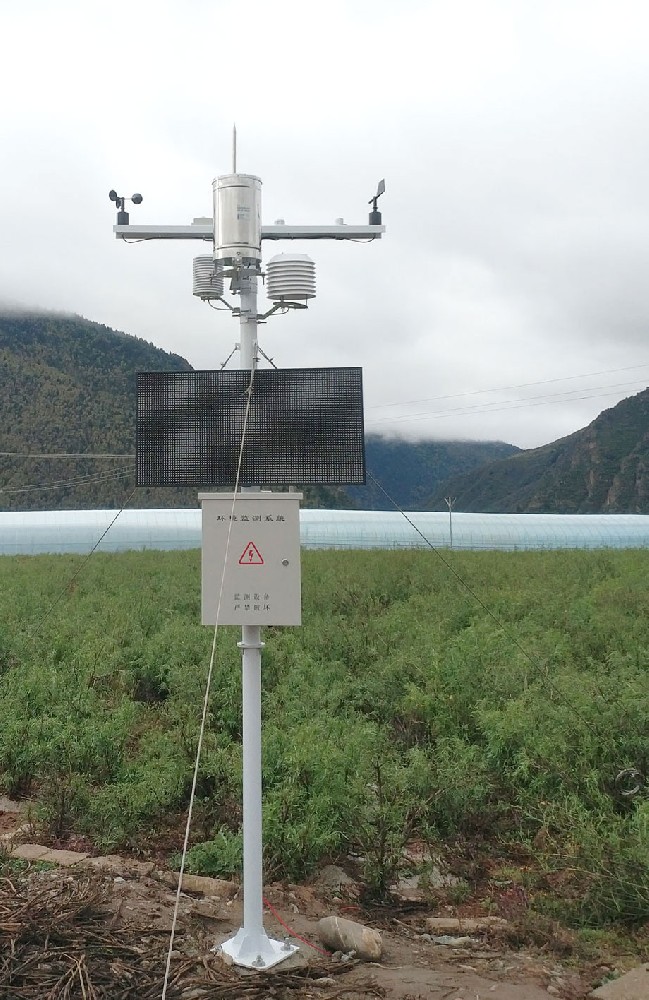
The design of the NiuBoL compact automatic weather station focuses on engineering-grade integration, supporting mainstream industrial protocols and architectures:
Communication protocols: standard RS485 Modbus RTU/TCP for easy access to PLC or industrial gateways; optional MQTT over TLS, supporting cloud platforms such as Alibaba Cloud IoT, akenza, Thinger.
Network options: 4G LTE backhaul (for wide-area coverage), LoRaWAN (low-power long-distance, suitable for ten-thousand-mu orchards), Ethernet (fixed sites).
Edge integration: reserved interfaces for linking actuators (e.g., frost protection fans, sprinkler pumps) to achieve local closed-loop control and reduce cloud latency.
Power and protection: IP65/IP67 enclosure, -40~85℃ operating range, solar power configuration supports remote deployment.
In project architecture, the station often serves as a perception-layer node, combined with edge gateways to form star or mesh topology, ensuring reliable data upload. System integrators can leverage its modular features for quick expansion to multi-site networks, supporting OTA firmware upgrades and remote diagnostics.
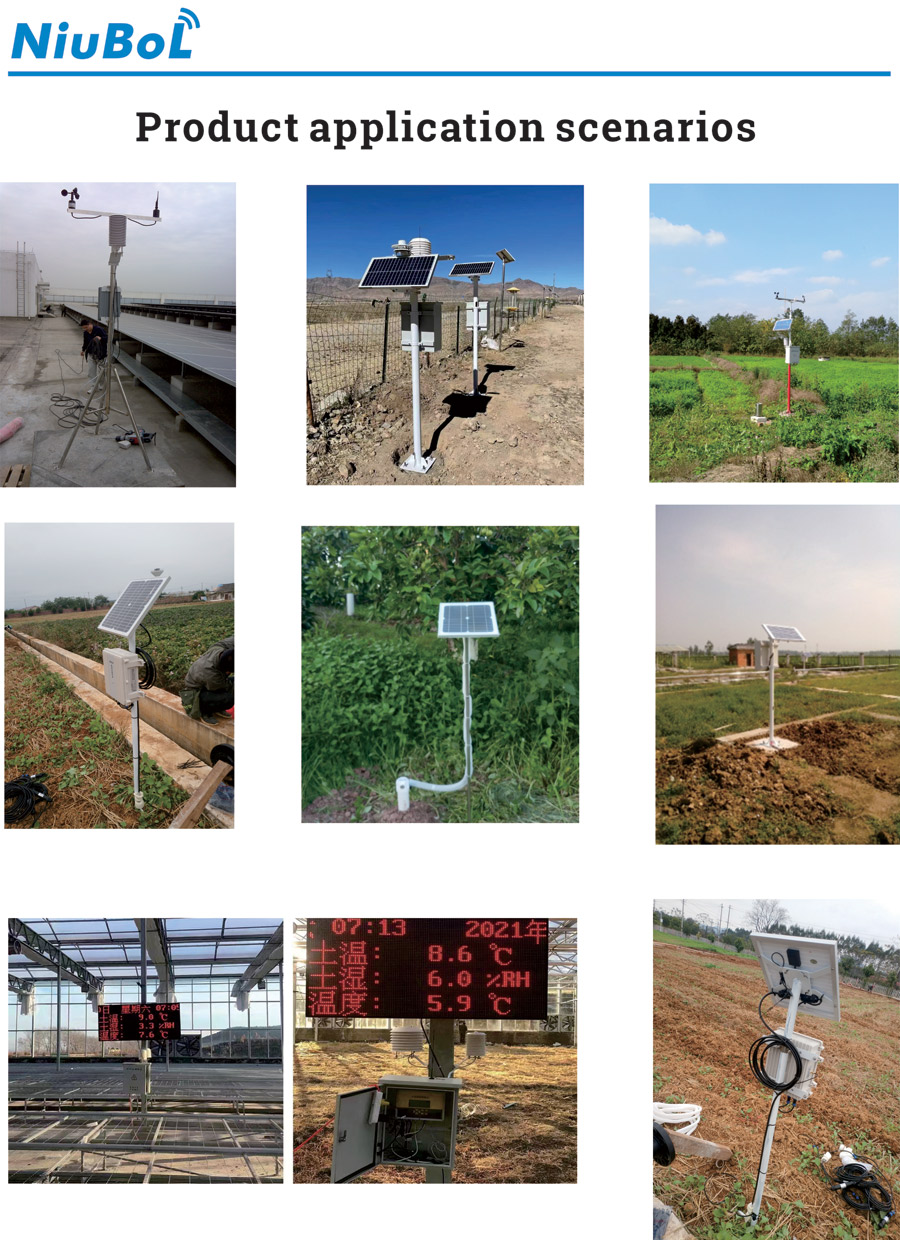
The NiuBoL compact automatic weather station is suitable for various smart agriculture engineering scenarios:
Orchard frost protection: deciduous fruit tree areas such as apples and pears, monitoring canopy temperature and radiation cooling conditions, supporting low-temperature warning models and linkage with fans/sprinklers.
Facility agriculture microclimate regulation: greenhouse/hoop house projects, real-time tracking of temperature, humidity, and light for automatic ventilation, shading, and supplemental lighting control.
Field crop environment monitoring: corn, rice, etc., combined with rainfall and wind speed data for drought/flood warning and pest & disease occurrence prediction.
Research and demonstration bases: long-term fixed observation, providing high-resolution datasets to support crop model validation and climate adaptation research.
Specialty planting areas: flowers, tea, Chinese medicinal herbs, etc., finely monitoring microclimate change patterns to optimize cultivation plans.
Disaster prevention and mitigation systems: regional deployment to form meteorological disaster monitoring networks, supporting risk assessment by government or insurance institutions.
These scenarios highlight the equipment’s durability and data accuracy, helping project contractors meet the technical requirements of high-quality agricultural development.
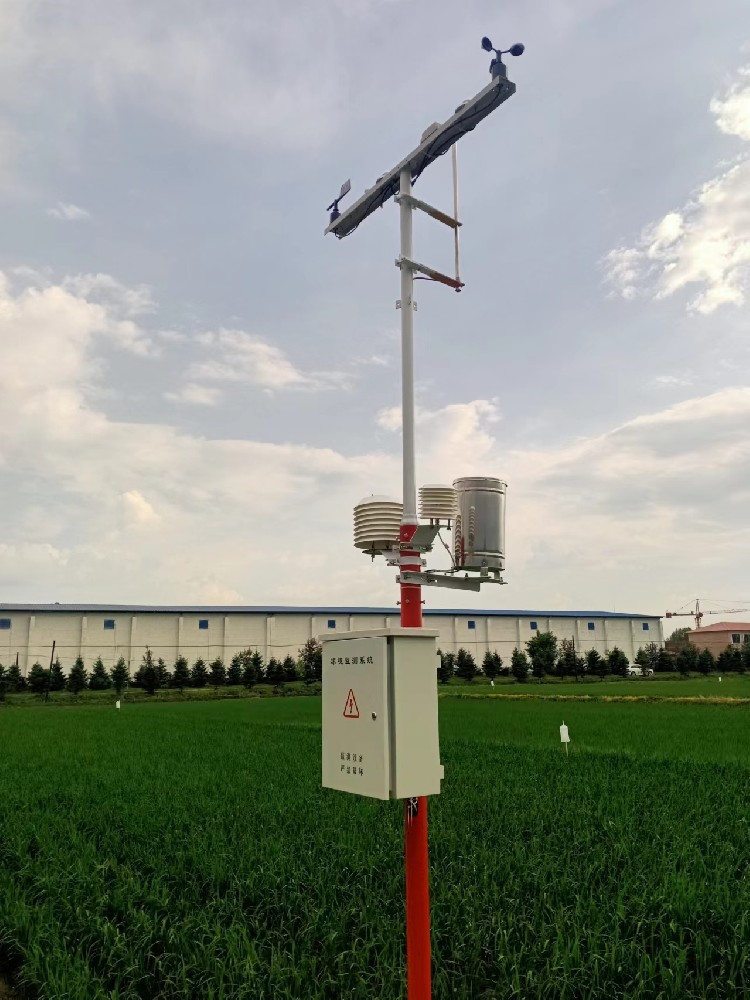
When selecting for engineering, consider the following factors:
1. Monitoring element combination: frost-sensitive crops prioritize temperature + humidity + wind direction; photosynthesis research requires adding PAR.
2. Site density and coverage: large orchards suggest 1 station per 50–100 mu; multi-point deployment improves spatial resolution.
3. Communication and power: remote areas prioritize LoRa + solar; grid-accessible areas optional 4G + mains.
4. Maintenance strategy: modular sensors facilitate on-site replacement; combined with cloud platform remote monitoring to reduce O&M costs.
Through these guidelines, system integrators can optimize configurations to match project budget and performance needs.
| Question | Answer |
|---|---|
| Q1. What communication protocols does the NiuBoL compact automatic weather station support? | Supports RS485 Modbus RTU/TCP and MQTT, compatible with mainstream industrial IoT platforms. |
| Q2. How does the system achieve frost warning? | Through temperature thresholds combined with humidity/wind direction data, triggering cloud or edge alarms, supporting linkage with frost protection equipment. |
| Q3. How is sensor accuracy guaranteed during long-term outdoor operation? | Uses industrial-grade components, IP65+ protection, supports periodic calibration to maintain ±0.5℃ temperature accuracy, etc. |
| Q4. Does it support multi-site network deployment? | Yes, distributed networking via LoRaWAN or 4G, with unified cloud platform management. |
| Q5. What are the ways to access cloud platform data? | Web portal, mobile App, visualization dashboard, supporting real-time curves, report export, and API integration. |
| Q6. Does the device support solar power supply? | Yes, dual power design; solar configuration is suitable for off-grid areas to ensure continuous operation. |
| Q7. How to expand additional sensors? | Reserved interfaces support soil temperature/humidity, CO₂, etc., with automatic identification of access type. |
| Q8. What is the typical project deployment cycle? | Single station installation and commissioning 1–2 days; large-scale networks depend on the number of sites, usually 2–6 weeks to complete. |
As the core infrastructure for agricultural microclimate monitoring, compact automatic weather stations play a key role in frost control, precision production, and disaster loss reduction. The NiuBoL system, with high-precision sensors, flexible integration, and reliable transmission, provides professional-grade solutions for system integrators and engineering companies. In the context of climate change, selecting equipment with strong compatibility, durability, and reliability is a strategic choice to promote agricultural modernization and sustainable development. By driving decisions with precise environmental data, project teams can effectively safeguard crop safety, enhance industry resilience, and increase economic value.
Related recommendations
Sensors & Weather Stations Catalog
 Agriculture Sensors and Weather Stations Catalog-NiuBoL.pdf
Weather Stations Catalog-NiuBoL.pdf
Agriculture Sensors Catalog-NiuBoL.pdf
Related products
 Combined air temperature and relative humidity sensor
 Soil Moisture Temperature sensor for irrigation
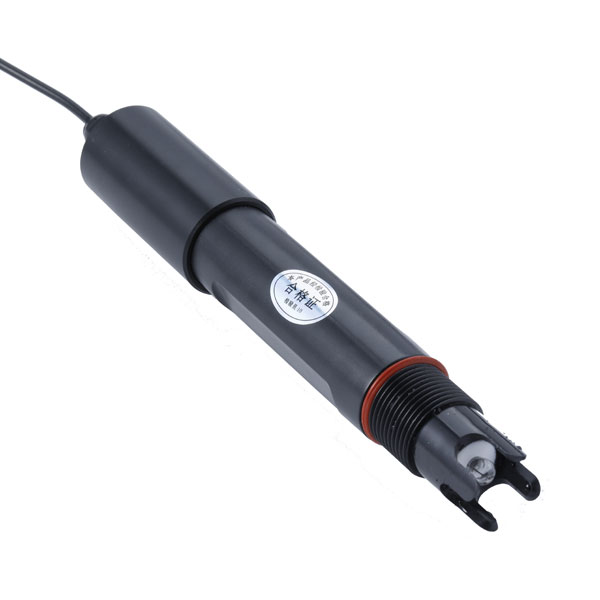 Soil pH sensor RS485 soil Testing instrument soil ph meter for agriculture
 Wind Speed sensor Output Modbus/RS485/Analog/0-5V/4-20mA
 Tipping bucket rain gauge for weather monitoring auto rainfall sensor RS485/Outdoor/stainless steel
 Pyranometer Solar Radiation Sensor 4-20mA/RS485

Screenshot, WhatsApp to identify the QR code
WhatsApp number:+8615367865107
(Click on WhatsApp to copy and add friends)

