






— Blogs —
—Products—
 Consumer hotline +8618073152920
 WhatsApp:+8615367865107
Address:Room 102, District D, Houhu Industrial Park, Yuelu District, Changsha City, Hunan Province, China
Product knowledge
Time:2026-02-18 11:10:17 Popularity:8
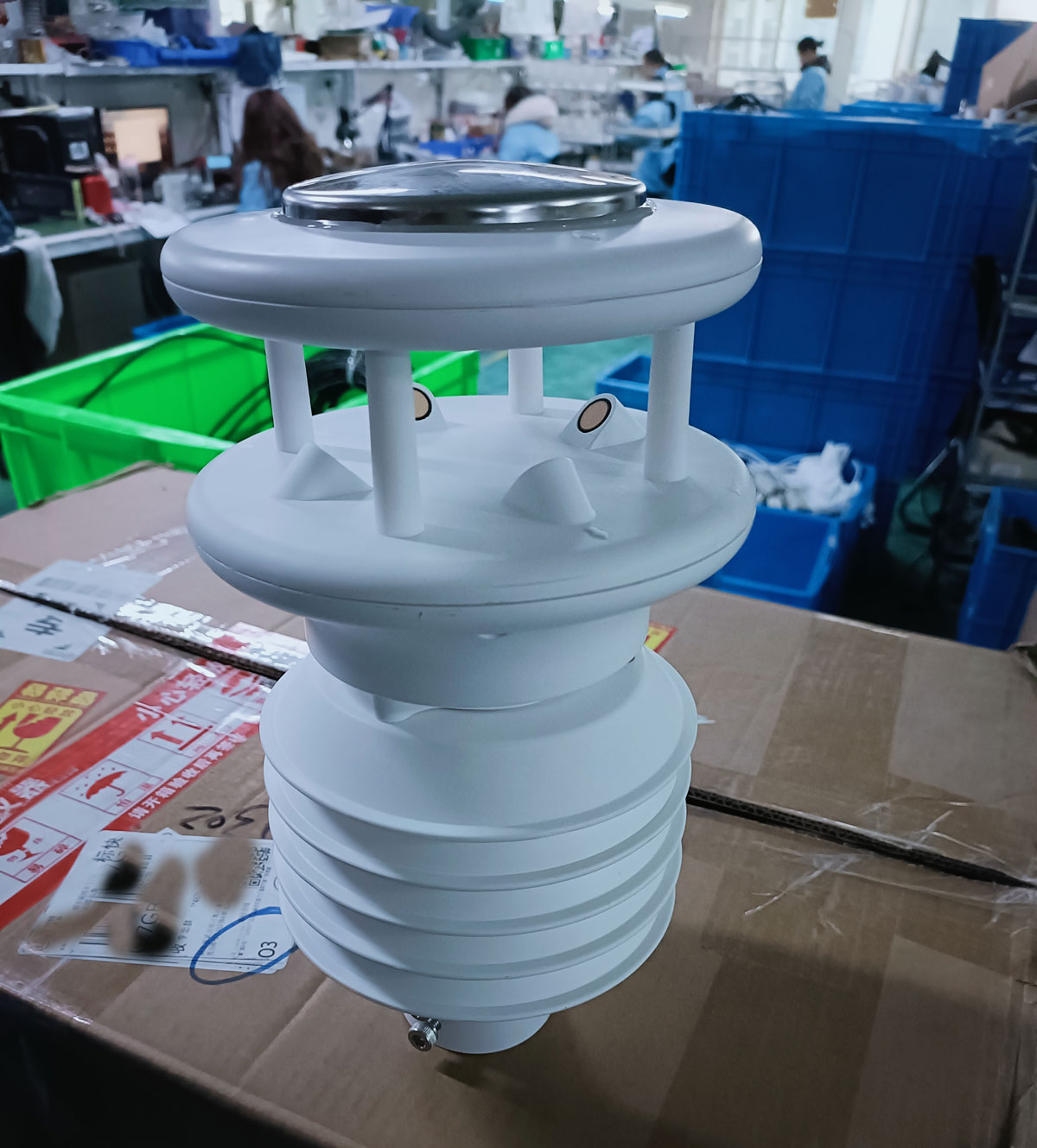
In the context of the refined transformation of environmental monitoring, traditional meteorological monitoring methods are facing challenges such as high maintenance costs and poor adaptability to complex environments. Atmospheric grid monitoring, as a core means to accurately grasp regional environmental conditions, imposes almost stringent requirements on the stability and integration of monitoring equipment. The NiuBoL ultrasonic weather station, with its unique technical core, is becoming an indispensable “nerve ending” in monitoring systems for cities, parks, traffic arteries, and special areas.
As a professional IoT sensor manufacturer, NiuBoL is committed to providing one-stop, highly reliable meteorological data solutions for global integrators and project contractors through non-mechanical wear acoustic detection technology.
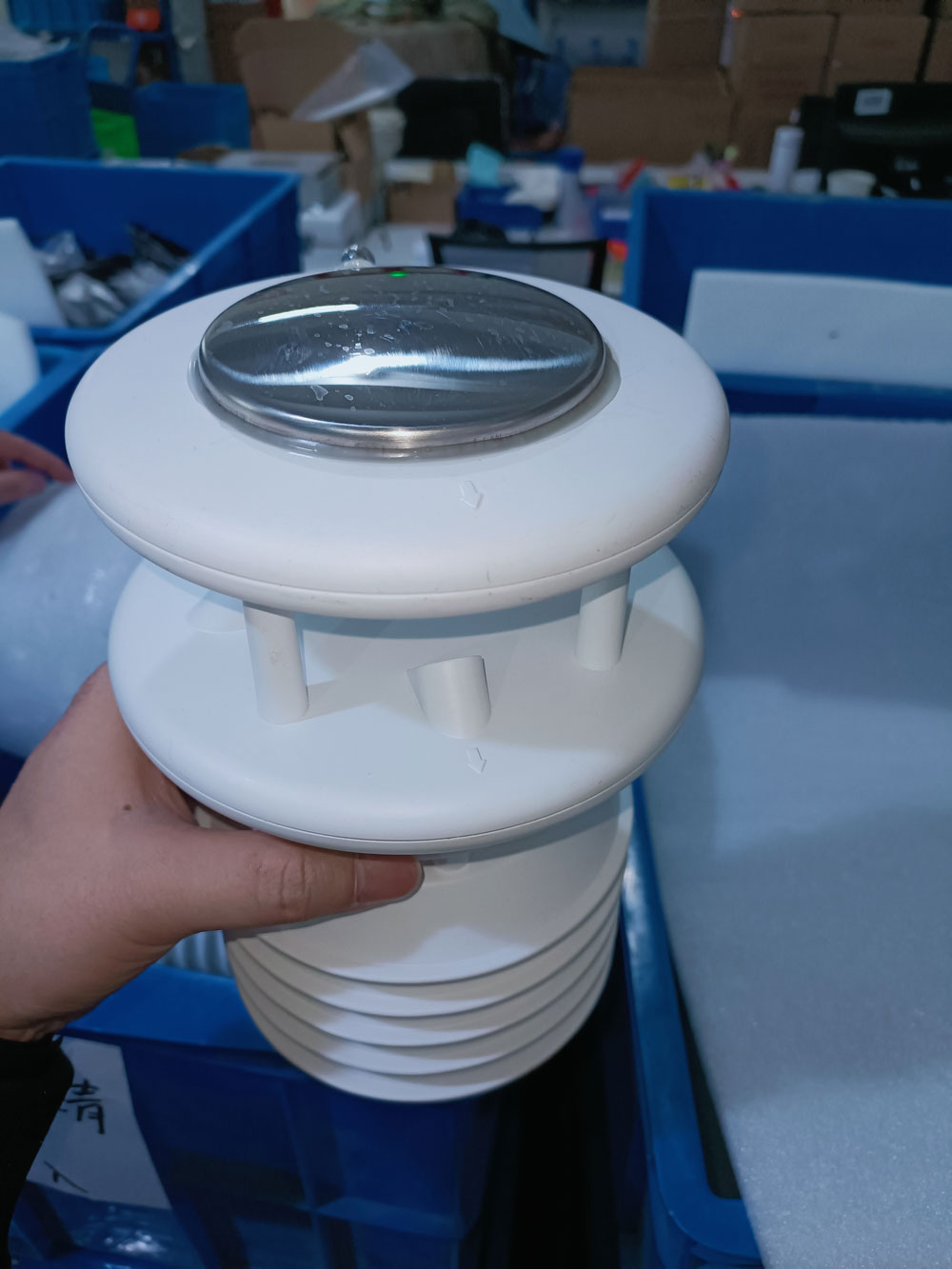
Traditional mechanical anemometers rely on cup rotation or tail vane swing, which are prone to failure due to bearing wear, sand blockage, or icing during long-term field operation. The NiuBoL ultrasonic weather station fundamentally subverts this logic.
1. Ultrasonic Time-Difference Measurement Principle
The ultrasonic meteorological sensor (such as NBL-W-10GUWS series) uses the time difference of ultrasonic wave propagation in air to calculate wind speed and direction. Through pairs of opposing ultrasonic probes inside, the system precisely compares the transmission time of sound waves from north to south and south to north. Changes in wind speed directly affect the relative speed of sound waves. This calculation method based on acoustic Doppler effect and time difference completely does not rely on any rotating parts, not only has fast response speed, but also has no starting wind speed limitation.
2. Piezoelectric Ceramic Kinetic Rainfall Monitoring
In addition to conventional meteorological parameters, NiuBoL integrates advanced piezoelectric ceramic rainfall sensors. The working principle is to identify the weight of individual raindrops and calculate total rainfall by monitoring the impact force of raindrops falling on the ceramic plate. This non-contact measurement method solves the pain points of traditional tipping bucket rain gauges, such as easy blockage by fallen leaves and frequent maintenance.
3. ASA Engineering Plastic and Harsh Environment Adaptability
The equipment housing is made of high-strength ASA engineering plastic, with excellent corrosion resistance and UV resistance. Whether in high-temperature, high-humidity coastal areas or dust-prone arid regions, its physical structure remains stable for a long time, with a protection rating of IP65, ensuring continuity of atmospheric monitoring.
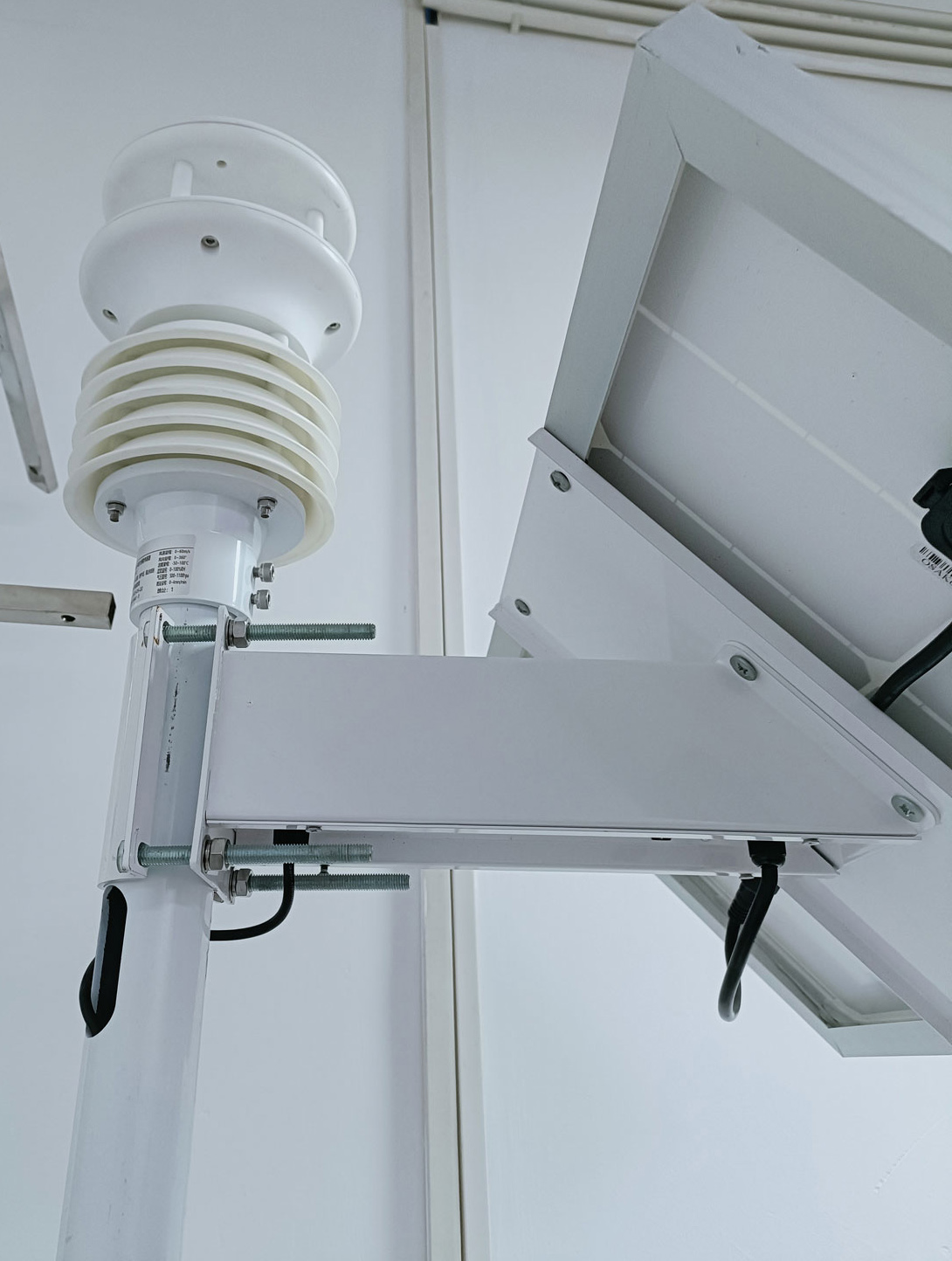
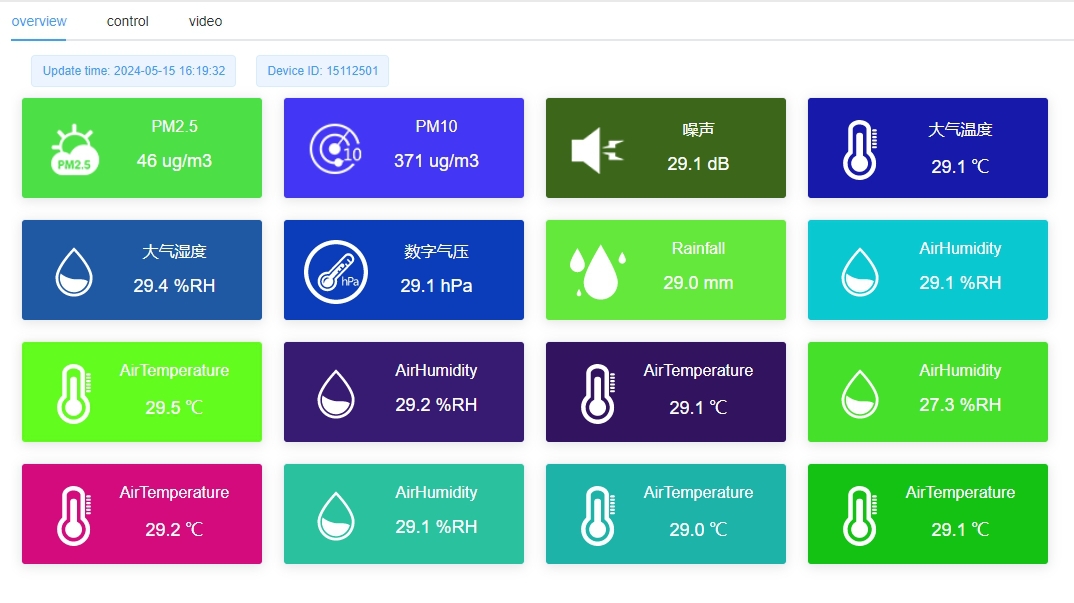
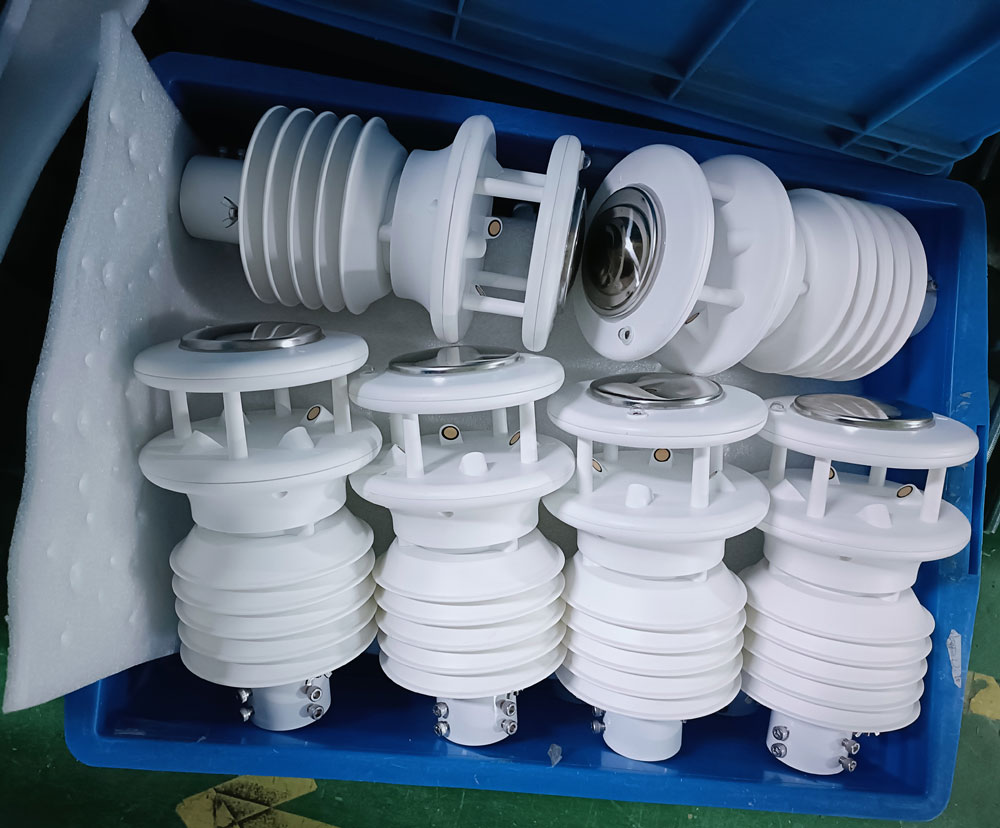
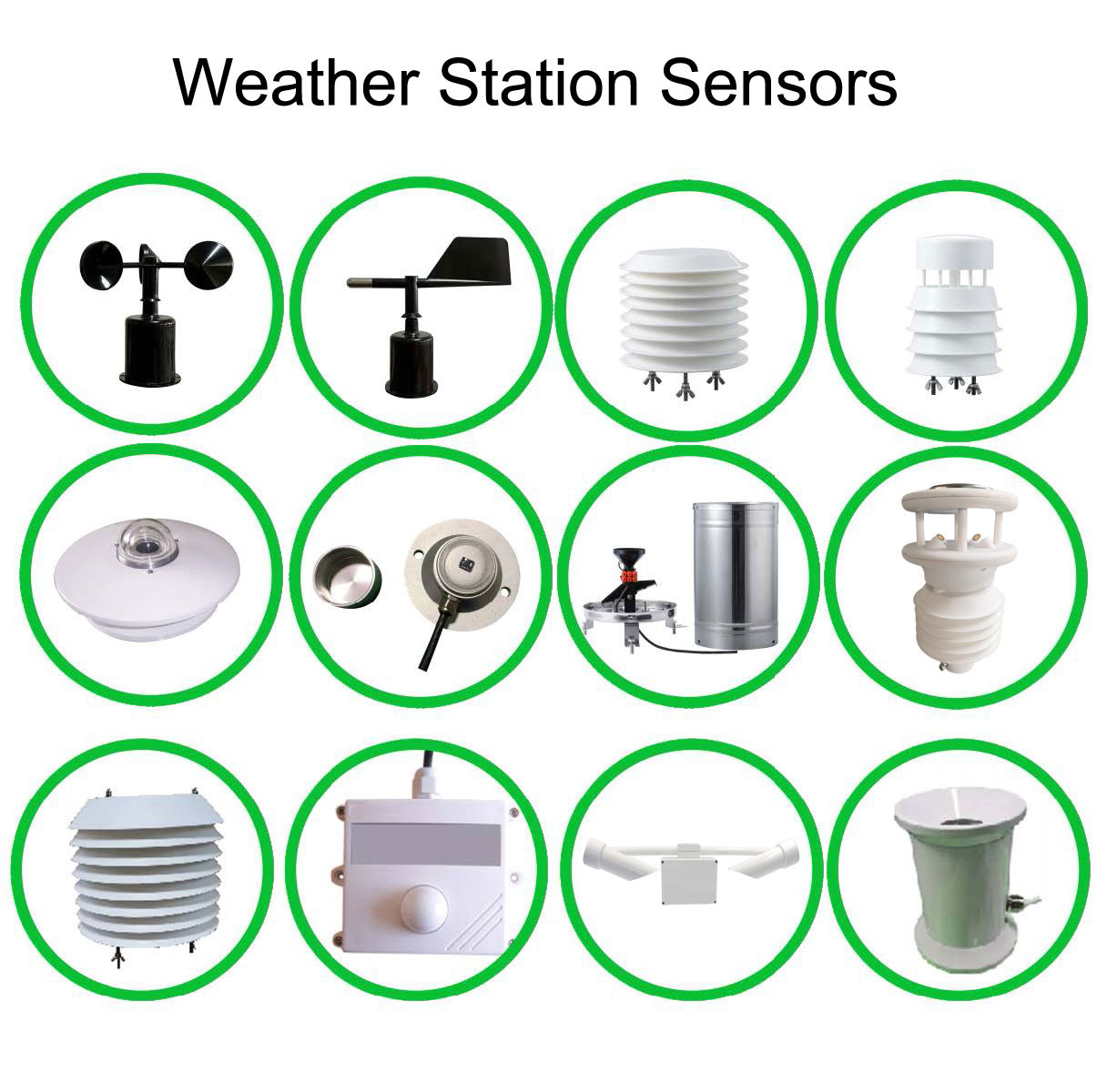
To meet the “one-stop” demand of grid monitoring, the NiuBoL ultrasonic weather station achieves a high degree of element integration. In a very small space, it can synchronously collect multiple key indicators including wind speed, wind direction, temperature and humidity, barometric pressure, particulate matter (PM2.5/PM10), noise, illuminance, rainfall, and radiation.
| Core Component | Technical Specification / Advantage Description |
|---|---|
| Sensing Principle | Ultrasonic time-difference method (no starting wind speed limitation) |
| Material Process | High-strength ASA engineering plastic (UV resistant, salt spray corrosion resistant) |
| Communication Security | Isolated RS485 interface, built-in bidirectional overvoltage protection |
| Power Management | Static power consumption only 0.4W, perfectly adapted to off-grid solar power systems |
| Rainfall Monitoring | Piezoelectric ceramic kinetic identification (anti-impurity interference, zero clogging risk) |
| Protection Standard | IP65/IP66 optional, meets industrial-grade long-term field operation requirements |
| Monitoring Item | Measurement Range | Accuracy Level |
|---|---|---|
| Wind Speed | 0~60 m/s | ±0.3 + 3% FS |
| Wind Direction | 0~359° | ±3° |
| Temperature | -40~80℃ | ±0.5℃ |
| Humidity | 0~100% RH | ±5% RH |
| Barometric Pressure | 10~1100 hPa | ±1.5 hPa |
| PM2.5 | 0~1000 μg/m³ | ±10% |
| Noise | 30~130 dB | ±5 dB |
| Rainfall | 0~8 mm/min | ±10% |
Through standard RS485 interface and Modbus communication protocol, these data can be transmitted to edge gateways or cloud management platforms with extremely low power consumption (average power consumption 0.4W–1W).
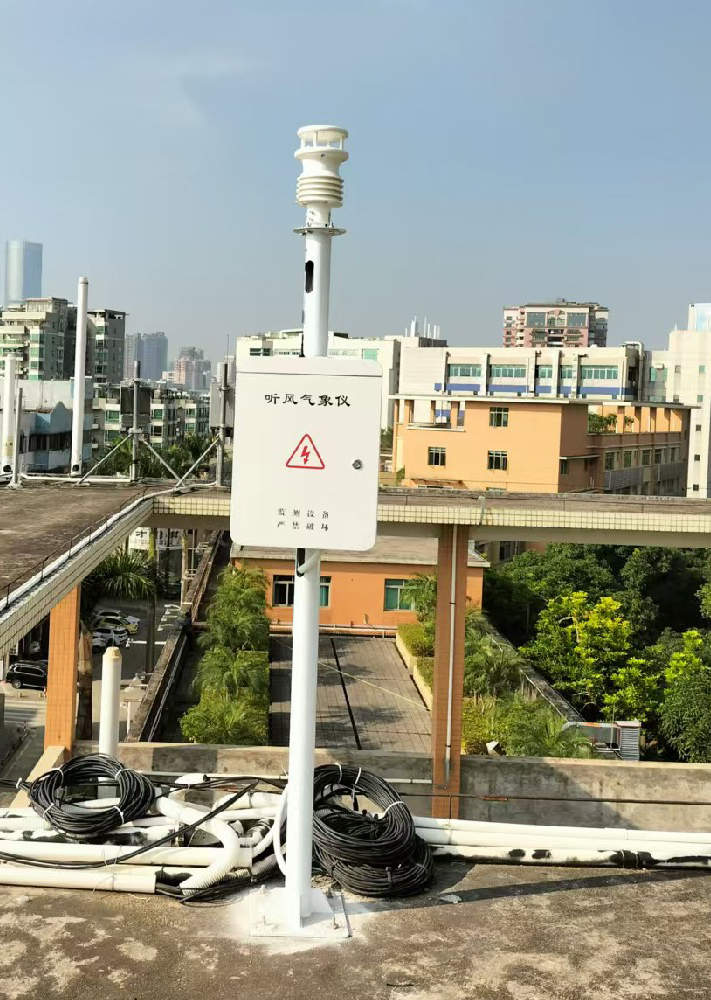
1. Urban Air Quality Grid Monitoring
The key to urban pollution control lies in “precise traceability”. Deploying NiuBoL ultrasonic weather stations on urban streets can capture wind field fluctuations in micro-spaces. Combined with PM2.5 and PM10 data, environmental protection departments can deeply analyze pollutant diffusion patterns under calm wind or high-humidity conditions, quickly identify construction dust or illegal industrial emission sources, and achieve the shift from “extensive governance” to “targeted pollution control”.
2. Industrial Park Environmental Compliance Supervision
Industrial parks have dense enterprises, and once encountering inversion meteorological conditions, regional pollution is easily triggered. Ultrasonic weather stations can issue real-time warnings to assist managers in intervening production processes in advance under adverse meteorological conditions. Through wind direction backtracking technology, it provides precise clues for environmental law enforcement, assisting parks in green production.
3. Smart Transportation and Road Assurance
Exhaust emissions from traffic arteries have a huge impact on the surrounding environment. Deploying monitoring stations along roads can real-time link with traffic control systems. For example, during periods of low wind speed and easy pollutant accumulation, traffic diversion is used to alleviate exhaust pressure; in heavy rain or strong wind weather, real-time meteorological data is fed back to the monitoring center to ensure driving safety.
4. Aviation, Ports, and Construction Safety
Airports and ports: Rely on high-precision wind speed data to ensure aircraft takeoff and landing and ship berthing, avoiding safety accidents caused by crosswinds.
Construction sites: Automatically trigger mist cannon systems based on wind speed and humidity to achieve automated dust suppression, ensuring construction safety and environmental compliance.
| Question | Answer |
|---|---|
| Q1. What is the biggest advantage of ultrasonic wind speed measurement compared to mechanical type? | The biggest advantage is no starting wind speed limitation and no need for daily lubrication. Mechanical anemometers often fail to start at very low wind speeds (e.g.,<0.5 m/s), and mechanical bearings are prone to wear, icing, or sand dust influence. The NiuBoL ultrasonic sensor maintains extremely high accuracy of ±0.3 m/s across the full range of 0–60 m/s, with nearly zero maintenance. |
| Q2. Can this weather station integrate PM2.5 and PM10 sensors? | Absolutely. Our PH-UWS-NPro series supports modular integration. The sensor interior can embed laser scattering principle dust monitoring modules, combined with ultrasonic wind direction data, perfectly achieving dynamic monitoring and source tracing of pollutants. |
| Q3. How does the equipment perform in extreme low-temperature or high-humidity environments? | The operating temperature covers -40℃ to 80℃, and corrosion-resistant ASA material is used. The built-in signal processing unit has temperature compensation logic to eliminate the impact of ambient temperature differences on ultrasonic sound speed, ensuring reading consistency. |
| Q4. Is the installation and commissioning of the system complicated? | Very simple. The equipment supports pole installation. Since there are no rotating parts, unlike mechanical anemometers, there is no need for strict physical alignment to north (software can configure offset). Using standard Modbus-RTU protocol, common PLC or DTU can directly read data. |
| Q5. What are the advantages of piezoelectric rainfall monitoring over traditional tipping bucket type? | Tipping bucket rain gauges are prone to clogging, severe mechanical wear, and large volume. Piezoelectric rain gauges are compact, have no mechanical movement, are unaffected by fallen leaves, and can filter non-raindrop impacts (such as wind force) through algorithms, with more reliable accuracy. |
| Q6. What are the power supply requirements for NiuBoL weather station? | The system supports DC 9–24V wide voltage power supply. Due to its extremely low average power consumption (only 1W including dust sensor), it is very suitable for “solar panel + battery” off-grid power supply scheme, reducing wiring costs. |
| Q7. What are the communication interface and protocol? | Standard output is RS485 signal, following the internationally common Modbus protocol. This makes the system highly compatible in smart city, smart agriculture, and traffic monitoring platforms. |
| Q8. What is the approximate maintenance cycle of the equipment? | Due to the elimination of mechanical rotating parts, the NiuBoL ultrasonic weather station basically achieves “maintenance-free”. It is recommended to only check every six months to one year whether there are foreign objects (such as bird nests or snow cover) at the ultrasonic probe. |
From micro-level urban street monitoring to macro-level port safety assurance, the NiuBoL ultrasonic weather station is redefining the benchmark for atmospheric environmental monitoring with its advanced acoustic principles, modular multi-parameter integration, and industrial-grade environmental adaptability. It not only provides a precise digital foundation for environmental governance but also promotes the construction of smart cities toward more efficient and greener directions.
In the journey toward blue skies and white clouds, NiuBoL will continue to deeply cultivate precision sensing technology, providing more stable and intelligent meteorological monitoring solutions for global customers.
Do you need me to provide sensor configuration recommendations for specific projects (such as chemical park monitoring or smart highway), or obtain detailed communication protocol descriptions for the NiuBoL NBL-W-10GUWS series?
 NBL-W-21GUWS-Ultrasonic-Wind-speed-and-direction-Sensor.pdf
NBL-W-61MUWS-Ultrasonic-Weather-Station-Instruction-Manual.pdf
NBL-W-71MUWS-Micrometeorological-Sensor-Operating-Instructions.pdf
Prev:Automatic Weather Station in Agricultural Microclimate Monitoring: Engineering Applications
Next:no more
Related recommendations
Sensors & Weather Stations Catalog
 Agriculture Sensors and Weather Stations Catalog-NiuBoL.pdf
Weather Stations Catalog-NiuBoL.pdf
Agriculture Sensors Catalog-NiuBoL.pdf
Related products
 Combined air temperature and relative humidity sensor
 Soil Moisture Temperature sensor for irrigation
 Soil pH sensor RS485 soil Testing instrument soil ph meter for agriculture
 Wind Speed sensor Output Modbus/RS485/Analog/0-5V/4-20mA
 Tipping bucket rain gauge for weather monitoring auto rainfall sensor RS485/Outdoor/stainless steel
 Pyranometer Solar Radiation Sensor 4-20mA/RS485

Screenshot, WhatsApp to identify the QR code
WhatsApp number:+8615367865107
(Click on WhatsApp to copy and add friends)

