






— Blogs —
—Products—
 Consumer hotline +8618073152920
 WhatsApp:+8615367865107
Address:Room 102, District D, Houhu Industrial Park, Yuelu District, Changsha City, Hunan Province, China
Product knowledge
Time:2026-02-18 10:39:36 Popularity:11
In education and scientific research, campus science popularization, agricultural demonstration zones, ecological environment monitoring, and small-to-medium industrial projects, compact weather stations serve as lightweight, cost-effective environmental perception nodes and are gradually becoming a standard selection option for system integrators and engineering contractors. The NiuBoL compact weather station is built around modular design, flexible configuration, and industrial-grade stability, supporting multiple communication protocols such as RS485, 4G/5G, and seamlessly integrating with smart campus platforms, research data centers, or regional environmental monitoring networks. This article focuses on its core components, technical features, integration compatibility, typical project applications, selection guide, and precautions to provide reference for weather station procurement decisions.
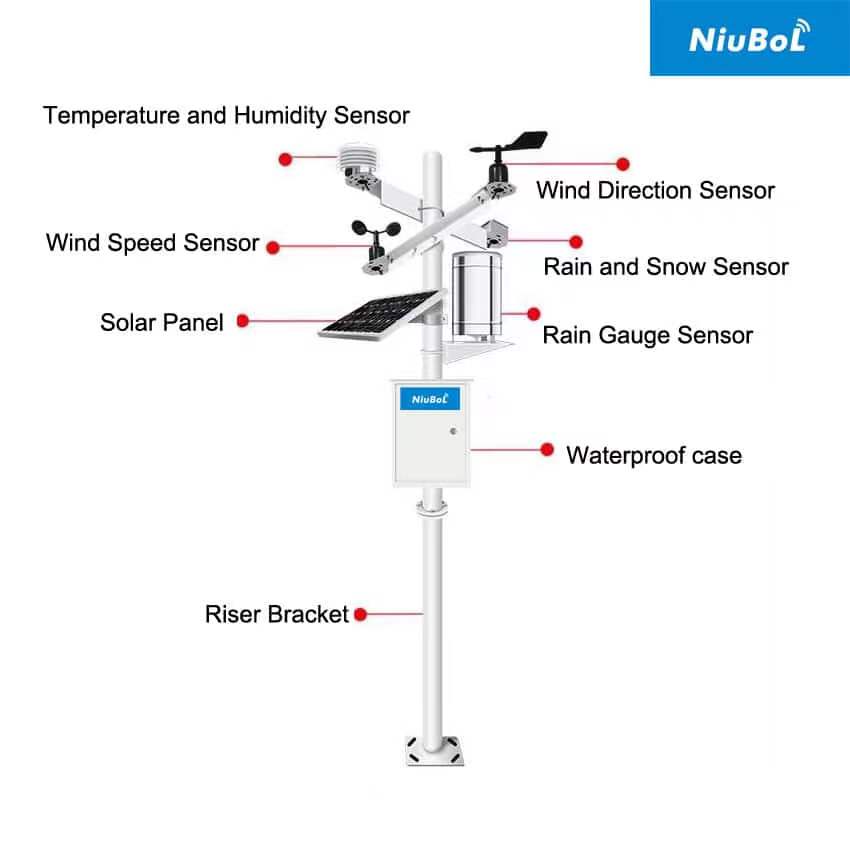
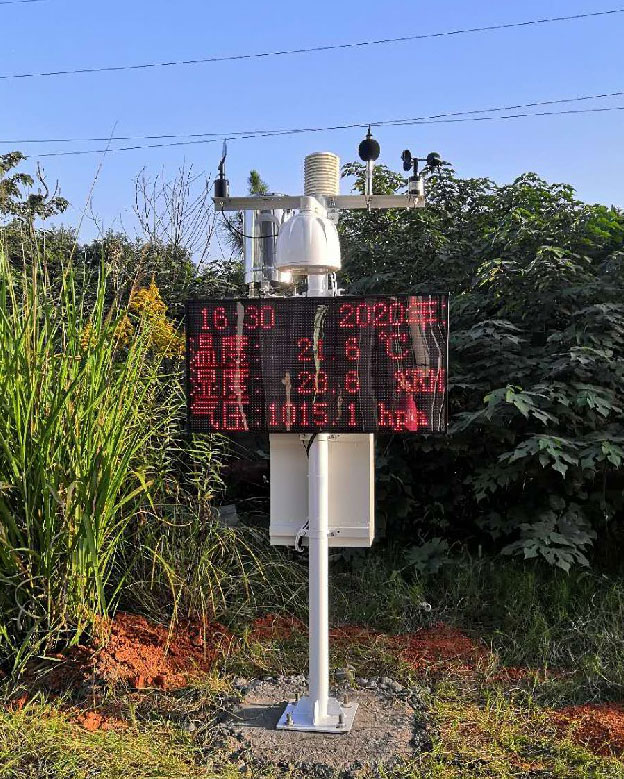
The NiuBoL compact weather station adopts a modular architecture, facilitating quick on-site assembly and future upgrades. The system mainly consists of the following parts:
Mast System: Includes bottom fixed base, vertical pole (standard 2–4 m height, optional stainless steel or galvanized steel material), and top crossbeam. The mast design considers wind load resistance and installation convenience, supporting ground cement foundation fixation or rooftop flange connection, compatible with wind-resistant guy wires and lightning rod extensions.
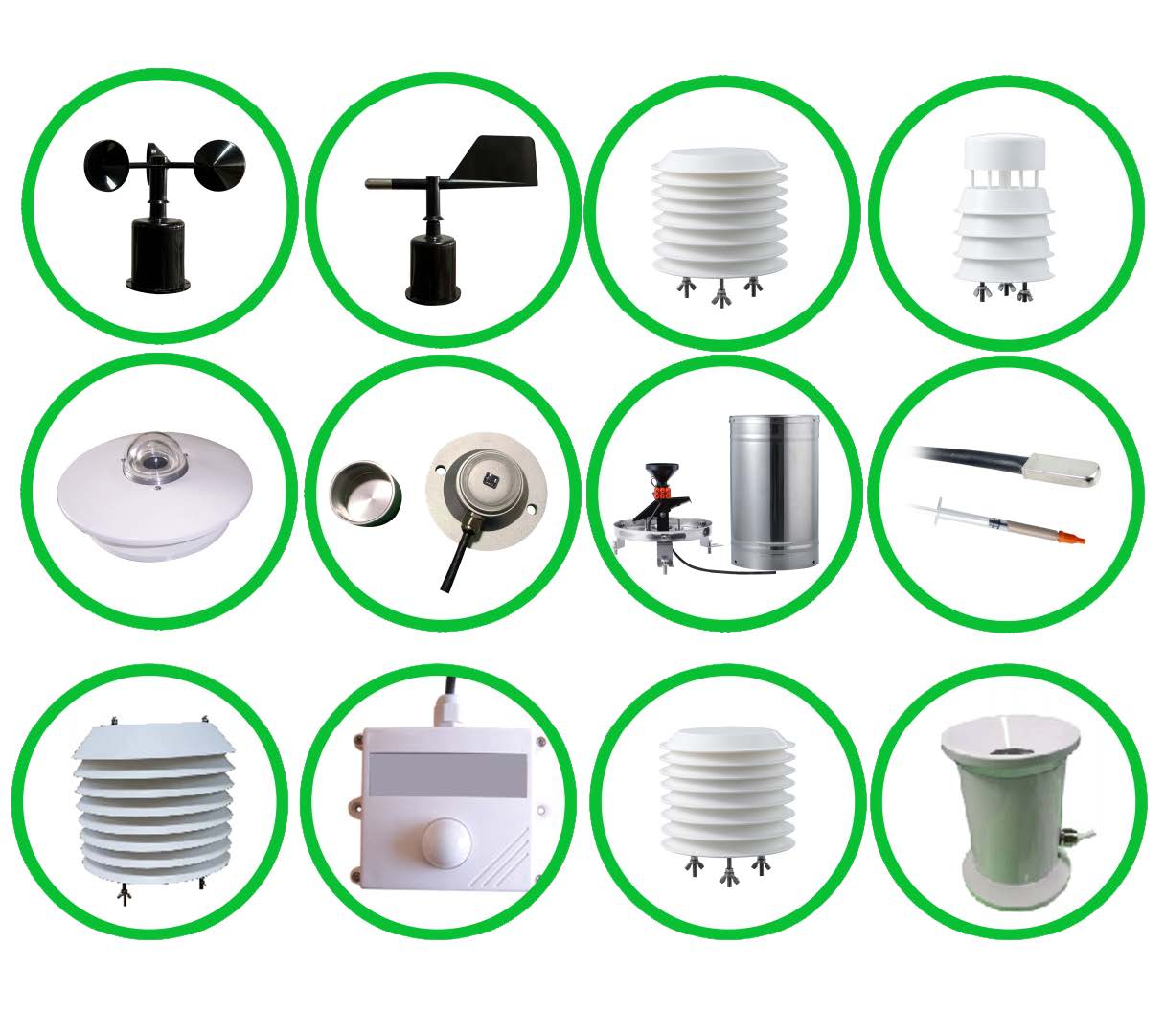
Sensor Array: Core perception layer, supports on-demand configuration of seven elements or simplified version (commonly temperature, humidity, wind speed, wind direction, rainfall, total radiation sensors). All sensors use industrial-grade encapsulation with protection rating IP65 or above, integrated into a louvered box or dedicated mounting arm to avoid mutual interference.
Data Acquisition and Processing Unit: Built-in low-power collector (data logger), equipped with LCD real-time display, built-in clock, standard ≥20,000 records storage (supports SD card expansion), RS485/RS232 interfaces, and Modbus RTU protocol support. The collector handles sensor data sampling, preprocessing, and local caching.
Communication Module: Supports 4G/5G wireless transmission (mainstream), WiFi, LoRa, or wired RS485; data can be uploaded to the cloud in real time or exported locally (USB/SD card/U disk).
Power Supply System: Integrated solar power (typical 60–100W monocrystalline silicon panel + 12V lithium iron phosphate battery), also compatible with AC220V/DC12V, standby power consumption<1W, ≥7 days endurance under continuous cloudy/rainy conditions.
Protection and Auxiliary: Lightweight louvered box for temperature and humidity sensor protection, dedicated protective enclosure integrating collector, communication module, and power supply; overall structure is anti-theft, dustproof, and rainproof.
This composition ensures the system is small in size (footprint<1 m²), lightweight (whole unit <30 kg), and suitable for rapid deployment on campus rooftops, research experimental fields, or remote monitoring points.
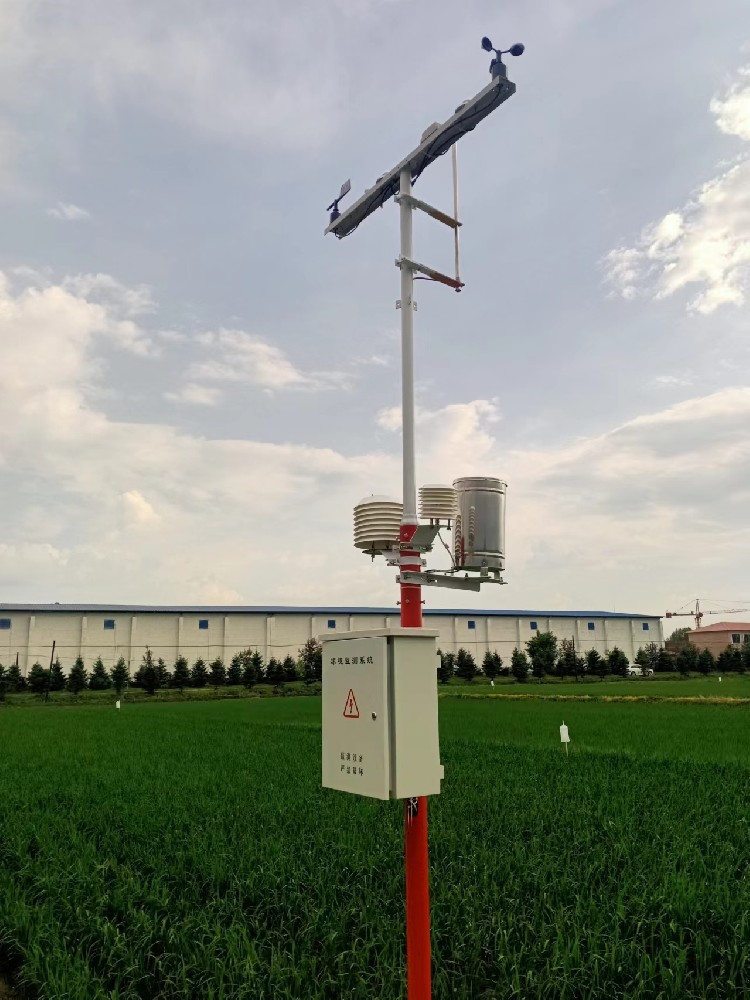
The NiuBoL compact weather station offers flexible sensor configuration. Below are common elements and their engineering roles:
Temperature Sensor: PT100 or digital integrated, range -40~+80℃, accuracy ±0.2℃. Used for heat/cold damage threshold monitoring, supporting accumulated temperature calculation for crop growth periods and greenhouse environment control.
Humidity Sensor: Digital capacitive type, range 0–100%RH, accuracy ±2%RH. Assesses condensation risk and humidity windows for disease occurrence, guiding irrigation and ventilation scheduling.
Photosynthetically Active Radiation Sensor (PAR Sensor): Silicon photocell, range 0–2000 W/m², accuracy ±5%. Measures photosynthetically active radiation (PAR), supporting crop photoperiod management and photovoltaic power generation reference.
Wind Speed Sensor: Three-cup or ultrasonic type, range 0–60 m/s, accuracy ±(0.3+0.03V) m/s. Assesses pesticide drift risk and wind disaster impact.
Wind Direction Sensor: Wind vane or ultrasonic type, range 0–360°, accuracy ±3°. Analyzes correlation between wind direction and pollutant/pest migration paths.
Rainfall Sensor: Tipping bucket rain gauge, accuracy ±3%. Real-time recording of precipitation process, supporting flood warning and soil moisture correction.
These sensors are uniformly connected to the collector via RS485 bus, with adjustable sampling intervals from 1–60 minutes, and data accuracy meets the requirements of education, research, and small-to-medium industrial monitoring.
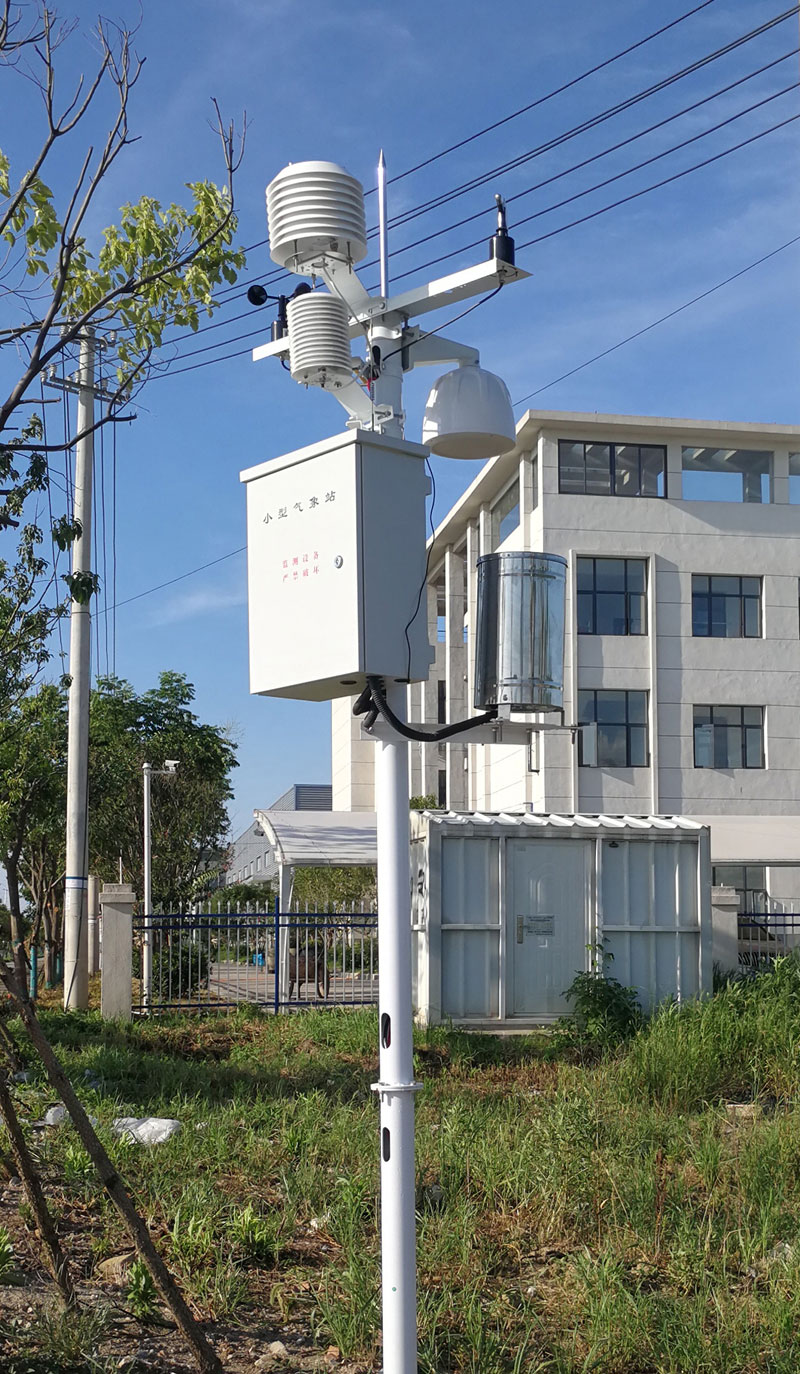
For convenient project selection, the following table summarizes key technical parameters:
| Parameter Category | Specification/Value | Engineering Value Description |
|---|---|---|
| Mechanical Structure | Mast Height: 2–4 m (customizable) | Optimizes wind and rain measurement height, compatible with rooftop/ground installation |
| Protection Rating | IP65 | All-weather outdoor durability, dustproof and waterproof |
| Power Supply | Solar + 12V lithium battery / AC220V | Unattended field operation, ≥7 days endurance under continuous cloudy/rainy conditions |
| Whole System Power Consumption | <5W (operating) / <1W (standby) | Low power consumption, reduces energy input |
| Data Processing | ≥20,000 records (standard), SD card expandable | Offline caching ensures data continuity |
| Interface Protocol | RS485/RS232 (Modbus RTU) | Standard industrial protocol, facilitates system integration |
| Communication | 4G/5G / WiFi / LoRa (optional) | Remote real-time cloud upload, supports multi-station networking |
| Operating Temperature Range | -40℃~+80℃ | Covers various climate conditions in north and south |
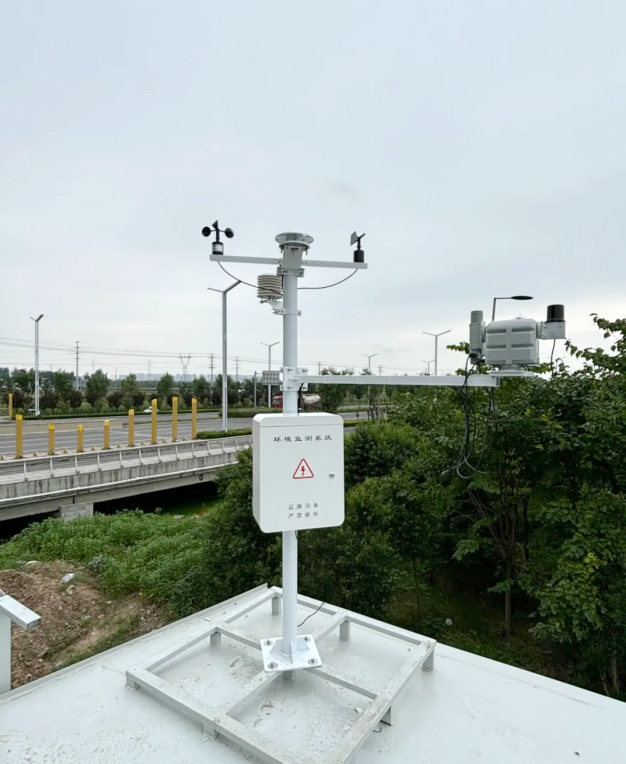
The NiuBoL compact weather station is optimized for B2B projects and supports flexible integration:
Open protocol: Modbus RTU via RS485/RS232, easy connection to Alibaba Cloud IoT, Huawei Cloud, or private servers.
Data interfaces: Open SDK/API, supports MQTT uplink, compatible with GIS platforms and data visualization dashboards.
Networking expansion: Single station independent or multi-point grid deployment, centralized software for unified data aggregation and analysis.
Power compatibility: Solar primary + mains backup, built-in UPS switching.
Scalability: Reserved interfaces for adding soil sensors, CO₂ modules, or cameras to form multi-element monitoring stations.
Easy installation: Non-professionals can complete basic fixation and sensor connection following the manual; engineering teams are recommended for electrical safety and lightning protection measures.
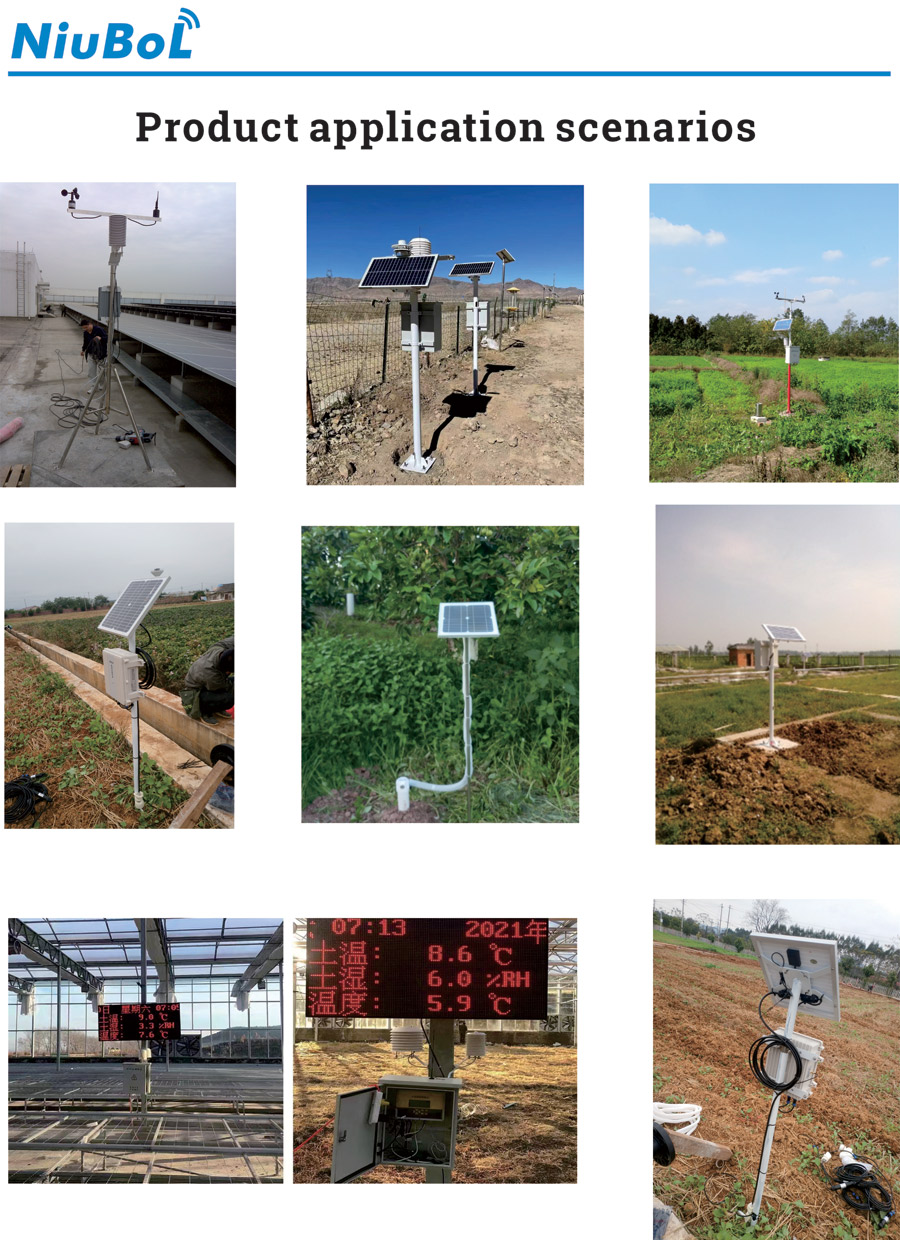
Campus science popularization and education: University/primary and secondary school meteorological science bases, 2–3 m mast + temperature/humidity/rainfall configuration, supports LCD display and WeChat mini-program viewing, used for geography/science courses and club activities.
Research experimental fields: Small climate observation in agricultural research institutes, integrated radiation/wind elements, providing long-term continuous data to support crop model validation.
Ecological environment monitoring: Nature reserves or wetland projects, lightweight solar version + 4G transmission for real-time cloud upload at remote sites.
Small agricultural demonstration zones: Family farms or cooperatives, extended with soil moisture for guiding precision irrigation and pest & disease warning.
Industrial auxiliary monitoring: Perimeter environmental stations in chemical parks, monitoring wind direction/pressure changes to support diffusion simulation.
In these scenarios, the system’s small size, fast deployment, and low maintenance significantly reduce project cycles and costs.
Selection guide:
Scenario orientation: Campus/teaching selects LCD + solar basic version; research/environmental monitoring prioritizes expanded storage and multi-elements.
Communication needs: Remote areas choose 4G/5G; industrial integration chooses RS485 Modbus.
Height and protection: Rooftop installation selects 3–4 m + wind-resistant guy wires; ground selects 2 m + cement foundation.
Budget consideration: Standard configuration covers 80% of scenarios; SD card or 5G module added as needed.
Integration precautions:
Site selection should be open and unobstructed, avoiding heat islands and reflection interference.
Foundation fixation: Pour cement base on ground + expansion bolts; add lightning rod and guy wires on rooftops.
Electrical safety: Wiring protected with PVC conduit, install air switch.
Test verification: After deployment, calibrate sensors and simulate offline/extreme weather conditions.
Maintenance planning: Clean sensors quarterly, inspect battery and mast annually.
| Question | Answer |
|---|---|
| Q1. What are the main differences between a compact weather station and a standard seven-element station? | Smaller size, more flexible configuration, lower cost, suitable for education, research, and small-to-medium projects; elements can be simplified or expanded. |
| Q2. What communication protocols and cloud platforms does the system support? | Supports Modbus RTU via RS485/RS232, provides MQTT/API, compatible with IoT platforms and private platforms. |
| Q3. How reliable is solar power in winter or during prolonged cloudy/rainy periods? | 12V lithium iron phosphate battery + 60–100W panel, ≥7 days under continuous cloudy/rainy conditions, supports low-power mode adjustment. |
| Q4. What are the data storage and export methods? | Built-in ≥20,000 records + SD card expansion, supports direct USB/U disk reading or automatic cloud synchronization. |
| Q5. How to choose the installation height? | Teaching/campus recommends 2–3 m; high requirements for wind speed/rainfall accuracy select 3–4 m, considering wind load and obstruction. |
| Q6. Does it support multi-station networking and centralized management? | Yes, through central station software for unified data aggregation, generating regional dashboards and reports. |
| Q7. How is long-term stability of sensor accuracy ensured? | Factory calibration + periodic on-site verification, industrial-grade encapsulation, anti-polarization and anti-drift design. |
| Q8. What delivery items are typically included in project acceptance? | Installation and commissioning report, sensor calibration certificate, communication test log, software operation manual, and 1-year warranty. |
With modularity, lightweight design, and high compatibility as its core, the NiuBoL compact weather station provides efficient environmental monitoring infrastructure for system integrators, IoT solution providers, and engineering contractors. It demonstrates significant advantages in education and scientific research, campus science popularization, ecological monitoring, and small agricultural projects: fast deployment, low maintenance, reliable data, and flexible expansion. As the demand for smart agriculture and environmental monitoring continues to grow, such solutions are becoming the preferred perception-layer equipment for more and more projects, driving the implementation of data-driven refined management and providing solid support for the digital transformation of the industry.
Related recommendations
Sensors & Weather Stations Catalog
 Agriculture Sensors and Weather Stations Catalog-NiuBoL.pdf
Weather Stations Catalog-NiuBoL.pdf
Agriculture Sensors Catalog-NiuBoL.pdf
Related products
 Combined air temperature and relative humidity sensor
 Soil Moisture Temperature sensor for irrigation
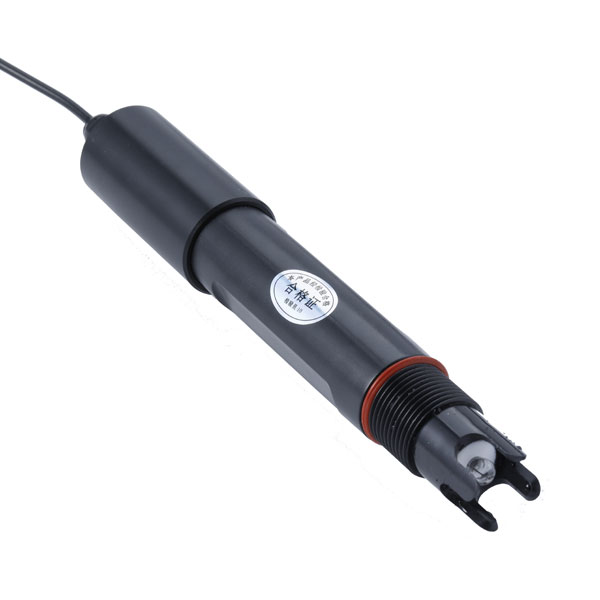 Soil pH sensor RS485 soil Testing instrument soil ph meter for agriculture
 Wind Speed sensor Output Modbus/RS485/Analog/0-5V/4-20mA
 Tipping bucket rain gauge for weather monitoring auto rainfall sensor RS485/Outdoor/stainless steel
 Pyranometer Solar Radiation Sensor 4-20mA/RS485

Screenshot, WhatsApp to identify the QR code
WhatsApp number:+8615367865107
(Click on WhatsApp to copy and add friends)

