






— Blogs —
—Products—
 Consumer hotline +8618073152920
 WhatsApp:+8615367865107
Address:Room 102, District D, Houhu Industrial Park, Yuelu District, Changsha City, Hunan Province, China
Product knowledge
Time:2026-02-02 10:35:18 Popularity:269
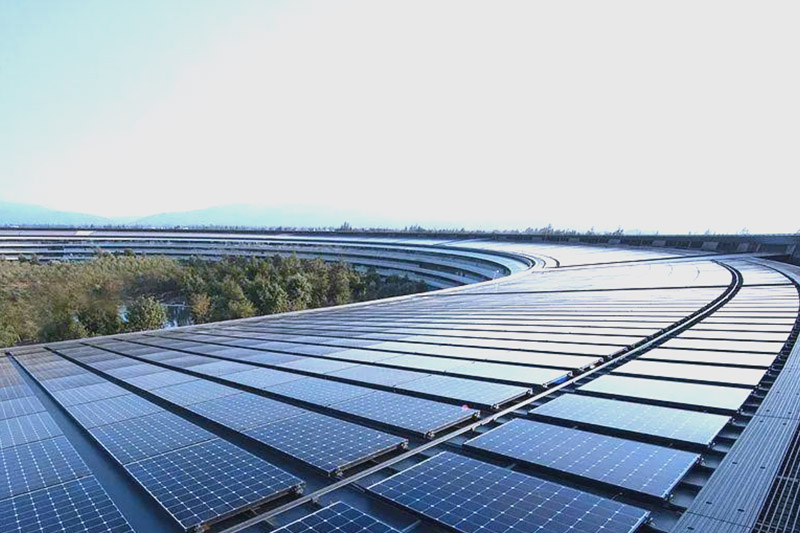
In the development and construction of large-scale photovoltaic power plants (Utility-scale PV) and commercial & industrial distributed power plants, the role of meteorological monitoring systems has long risen from “auxiliary supporting” to “core decision-making unit.” Precise environmental monitoring is not only related to the calculation of Performance Ratio (PR) but also the underlying basis for inverter dispatching, tracker logic optimization, and power plant asset evaluation.
As a professional environmental monitoring hardware manufacturer, NiuBoL deeply understands the technical pain points system integrators face in complex engineering environments. This article deeply analyzes the product matrix, integration principles, and B2B procurement selection logic of photovoltaic meteorological monitoring instruments from a professional engineering perspective.
Radiation data is the core parameter for evaluating photovoltaic resource endowment and system efficiency (System Efficiency). To meet different monitoring needs, NiuBoL provides a tiered radiation monitoring solution.
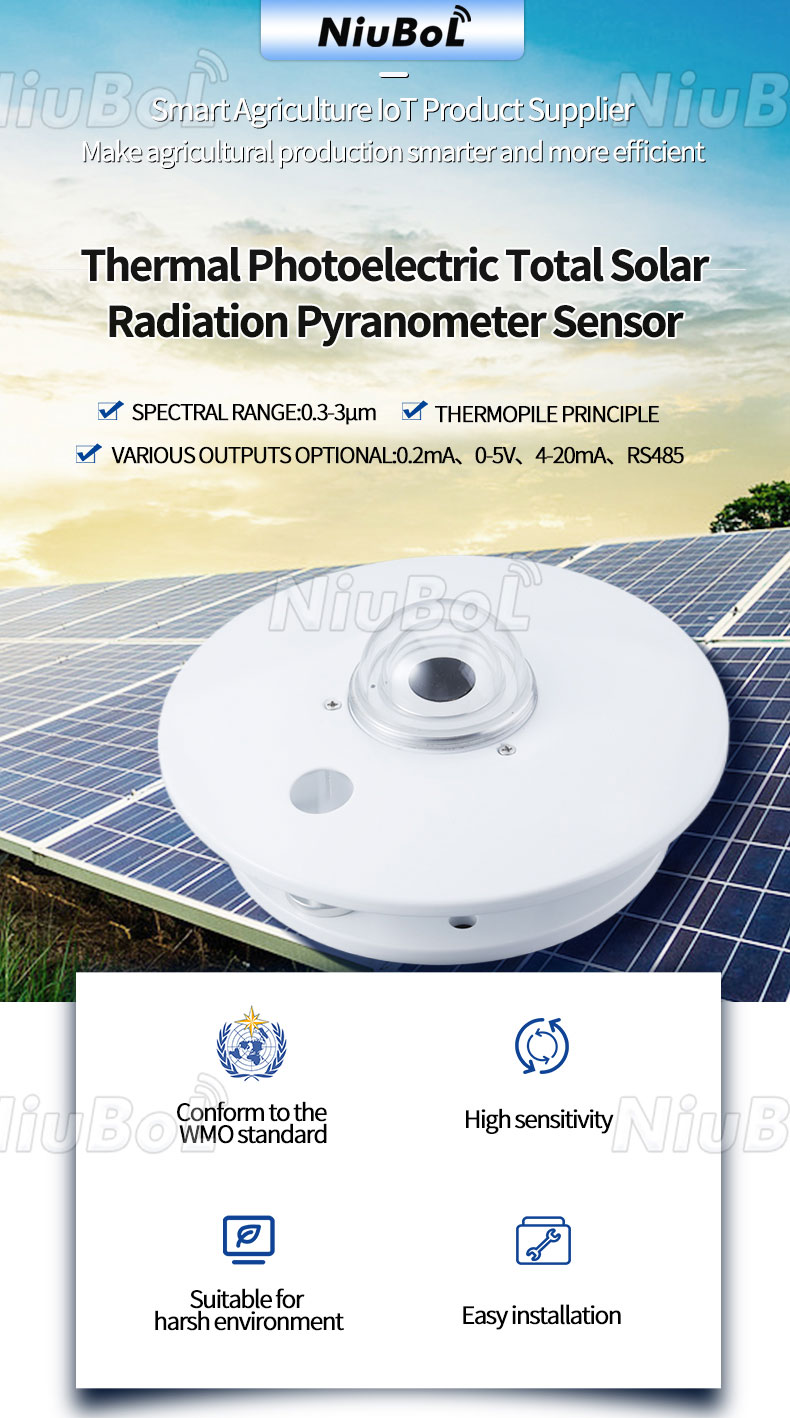
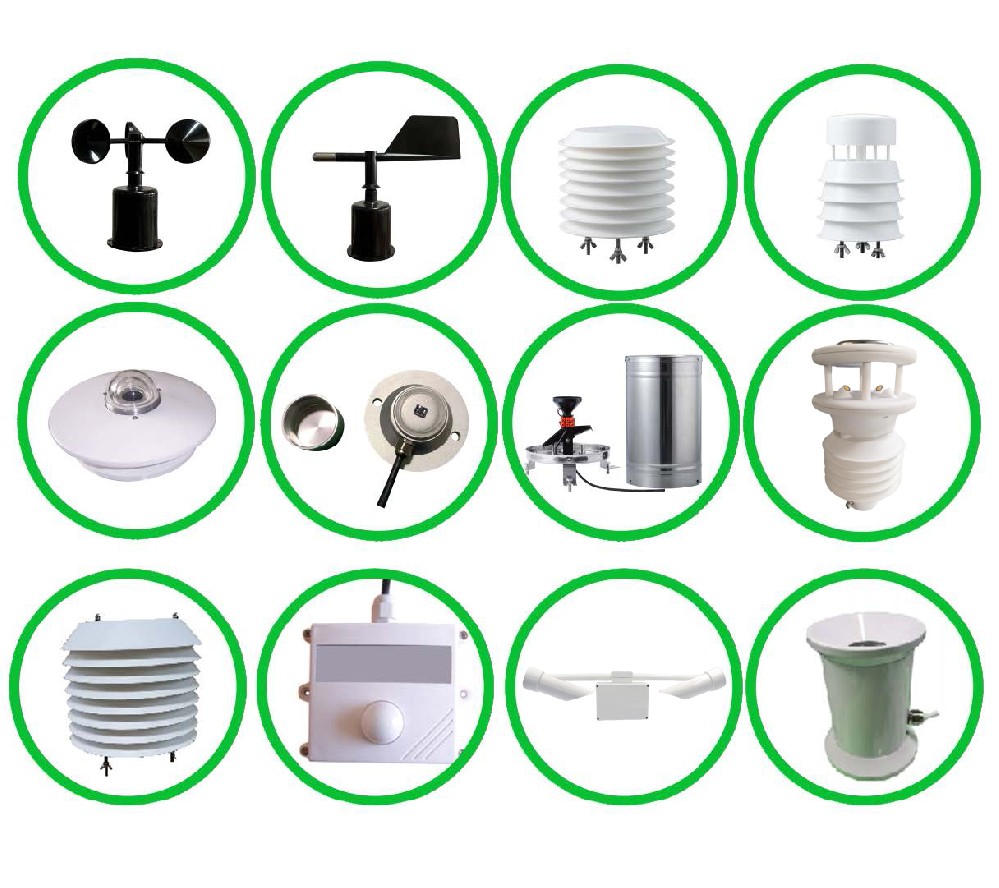
The pyranometer is the “heart” of the monitoring system. NiuBoL adopts high-stability thermopile principle to measure total solar radiation in the 0.3μm to 3μm spectral range. Its core advantages lie in extremely low nonlinearity error and excellent long-term stability. For EPC contractors, deploying high-grade pyranometers is a prerequisite to ensure power plant performance evaluation complies with IEC 61724-1 standards.
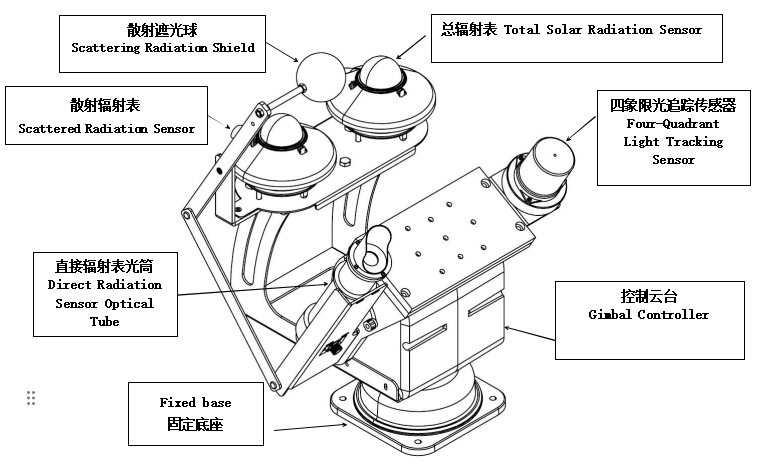
In concentrating photovoltaic (CPV) or power plants equipped with high-precision solar tracking systems, the direct radiation meter maintains perpendicularity to the optical axis through a fully automatic solar tracker. It can filter out atmospheric scattering, providing the purest direct energy data and real measured support for concentration ratio optimization in high-concentration systems.
By configuring a shadow ring or shadow disk to filter out direct solar components, it focuses on measuring scattered energy produced by atmospheric molecules and aerosols. The linkage monitoring of global, direct, and diffuse radiation constitutes a complete “light resource fingerprint library” for the power plant, greatly improving the fitting accuracy of meteorological forecast models.
In addition to core radiation data, environmental parameters have a decisive impact on the output characteristics of semiconductor devices and the structural safety of brackets.
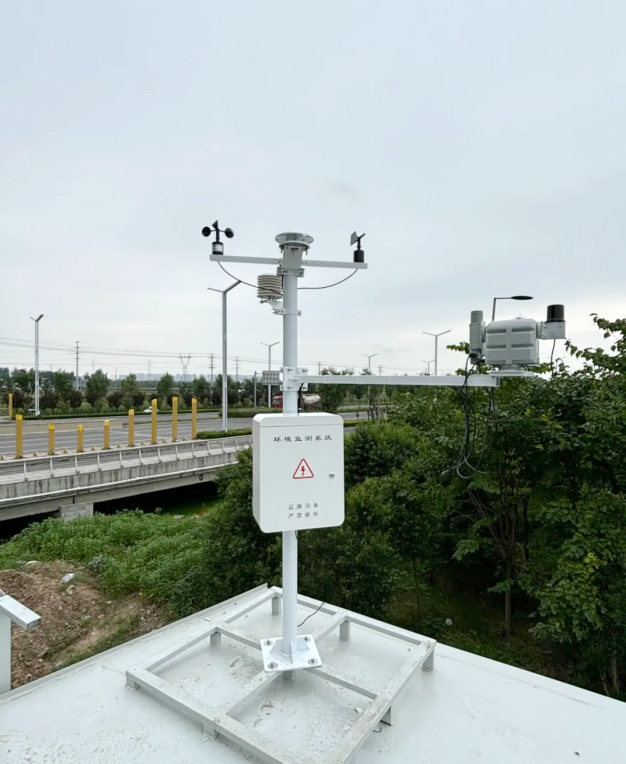
Wind speed is not only a key factor affecting the convective heat transfer coefficient (Heat Transfer Coefficient) of photovoltaic modules but also an alarm source for structural safety. NiuBoL’s industrial-grade wind speed and direction instruments support Modbus protocol output and can directly link with bracket control systems to automatically execute “return-to-zero avoidance” commands under strong wind conditions.
The P-V characteristics of photovoltaic modules are significantly affected by temperature. NiuBoL uses high-grade protective enclosures (such as lightweight Stevenson screens) combined with platinum resistance temperature elements to capture ambient temperature in real time. At the same time, humidity monitoring is crucial for predicting module backsheet condensation, evaluating electrical insulation performance, and preventing PID (Potential Induced Degradation) effects.
Precipitation data directly affects the scheduling of O&M cleaning frequency, while air pressure monitoring provides necessary compensation for heat dissipation efficiency correction of inverters in high-altitude power plants and air quality models.
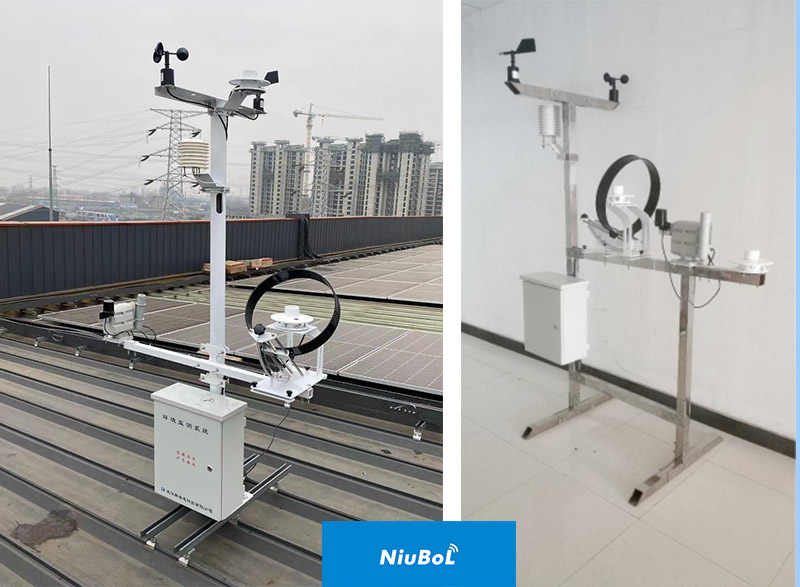
In B2B business scenarios, integrators focus not only on single sensor performance but also on the overall robustness and integrability of the system.
Such projects have extremely high requirements for data consistency. Integrators typically need to aggregate meteorological data via RS485 fieldbus to data loggers, then transmit it to the main control room SCADA system through optical fiber ring networks. NiuBoL’s digital sensors support high baud rate communication, ensuring real-time data in large-capacity node networking.
Such scenarios emphasize “easy deployment” and “low maintenance costs.” NiuBoL’s all-in-one integrated weather station integrates wind, temperature, humidity, pressure, irradiance, and other elements in a single hardware structure, greatly simplifying rooftop wiring and bracket fixation difficulty.
Data Traceability: Radiation sensors must have calibration certificates compliant with international standards (such as ISO 9060) to ensure legal validity during third-party audits or PR settlements.
Protocol Standardization: Prioritize devices supporting Modbus RTU or Modbus TCP to avoid increased secondary development costs due to proprietary protocols.
Electromagnetic Compatibility (EMC): Photovoltaic sites have strong electromagnetic interference; sensors should have excellent anti-interference capabilities and multi-level lightning protection design.
Calibration Cycle and O&M: Consider the sensor’s annual drift rate. NiuBoL products are designed with long-cycle maintenance-free characteristics from the beginning, reducing after-sales maintenance burden for integrators.
Q1. What ISO 9060 class do NiuBoL pyranometers comply with?
We offer products in different classes, covering “Secondary Standard” to “Second Class,” to meet performance monitoring budget requirements for various scale power plants.
Q2. How to connect multiple meteorological sensors on the same RS485 bus?
Our sensors support Modbus addressing. Integrators can configure different slave IDs to achieve multi-node data acquisition on the same twisted pair.
Q3. Does the direct radiation meter include an automatic tracking system?
NiuBoL provides complete sets, including high-precision solar trackers, direct radiometers, and mounting brackets, ensuring perpendicular illumination throughout the day.
Q4. How is the corrosion resistance of instruments in salt fog environments (e.g., coastal power plants)?
Our industrial-grade sensor housings use special aluminum alloy anodizing or 304 stainless steel, with high-transmittance quartz glass windows, capable of long-term resistance to salt fog erosion.
Q5. Is the precipitation sensor tipping bucket or piezoelectric?
Selectable based on integration needs. Tipping bucket offers high accuracy for conventional precipitation measurement; piezoelectric has no mechanical moving parts, suitable for high-cold or maintenance-free automated scenarios.
Q6. What is the maximum transmission distance of the data logger?
Using RS485 physical interface, standard transmission distance reaches 1200 meters. For longer distances or complex terrain, integrate NiuBoL’s LoRa protocol wireless modules for relaying.
Q7. Can NiuBoL meteorological stations directly interface with mainstream brand inverter data loggers?
As long as the inverter data logger supports standard Modbus communication protocol, data can be docked by reading our register address table without additional protocol converters.
Q8. Is an air pressure sensor necessary for high-altitude areas?
Yes. Thin air in high-altitude areas affects heat dissipation coefficients. Air pressure data is crucial for calibrating environmental thermal models and ensuring long-term full-load inverter operation.
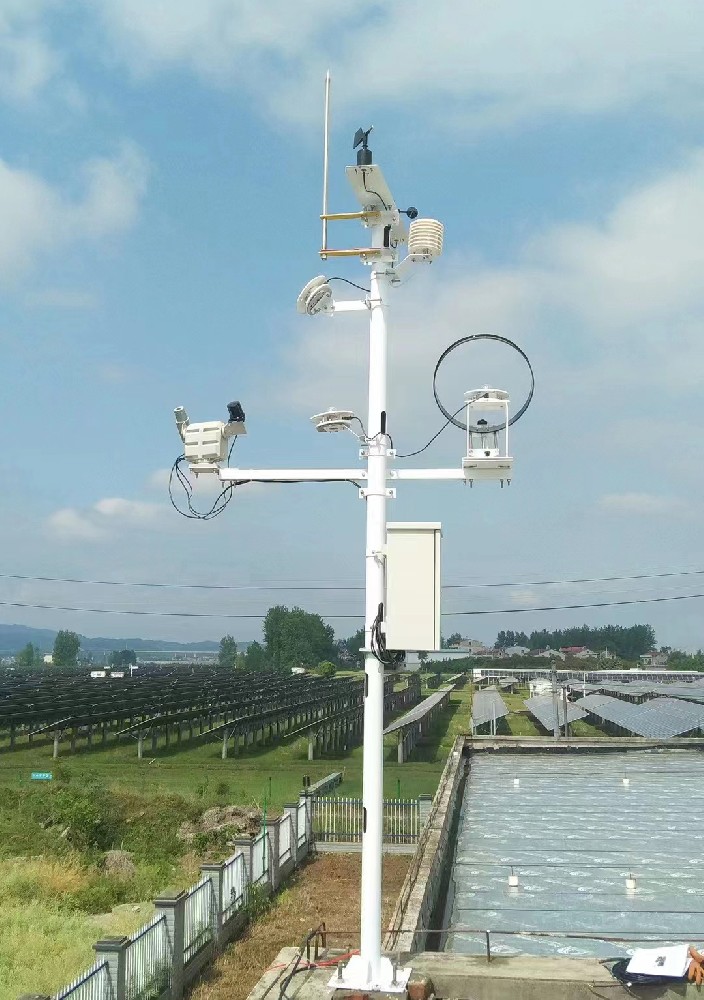
In the lifecycle management of photovoltaic power plants, meteorological monitoring instruments are not just hardware but generators of digital assets. NiuBoL is committed to providing global system integrators with high-precision, high-stability hardware foundations. Through standardized industrial communication interfaces and excellent underlying algorithms, every ray of sunlight can be precisely measured.
If you are an EPC project party, IoT solution integrator, or energy management software developer, NiuBoL sincerely invites you to collaborate deeply. We provide detailed OEM customization services, technical document support, and competitive tiered pricing strategies.
Contact the NiuBoL Engineering Technology Department immediately to obtain your customized photovoltaic meteorological monitoring solution manual.
 NBL-W-SRS-Solar-radiation-sensor-instruction-manual-V4.0.pdf
NBL-W-HPRS-Solar-Radiation-Sensor-Instruction-Manual-V3.0.pdf
NBL-W-PSS Soiling Sensor Photovoltaic Dust Monitoring Instrument Data Sheet.pdf
Related recommendations
Sensors & Weather Stations Catalog
 Agriculture Sensors and Weather Stations Catalog-NiuBoL.pdf
Weather Stations Catalog-NiuBoL.pdf
Agriculture Sensors Catalog-NiuBoL.pdf
Related products
 Combined air temperature and relative humidity sensor
 Soil Moisture Temperature sensor for irrigation
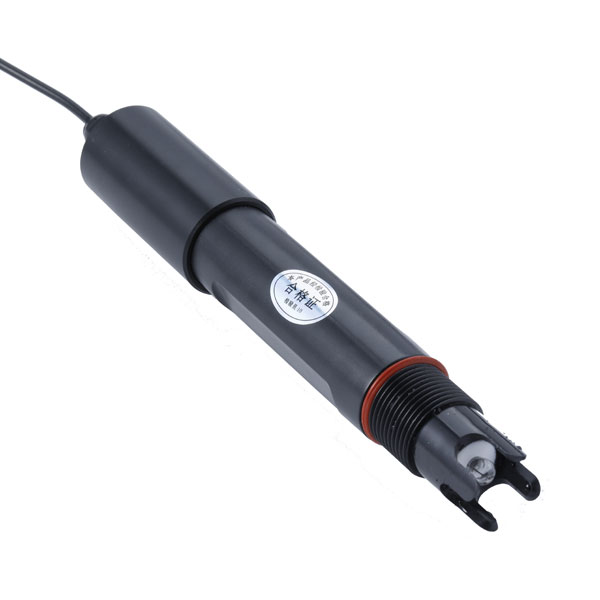 Soil pH sensor RS485 soil Testing instrument soil ph meter for agriculture
 Wind Speed sensor Output Modbus/RS485/Analog/0-5V/4-20mA
 Tipping bucket rain gauge for weather monitoring auto rainfall sensor RS485/Outdoor/stainless steel
 Pyranometer Solar Radiation Sensor 4-20mA/RS485

Screenshot, WhatsApp to identify the QR code
WhatsApp number:+8615367865107
(Click on WhatsApp to copy and add friends)

