





— Blogs —
—Products—
 Consumer hotline +8618073152920
 WhatsApp:+8615367865107
Address:Room 102, District D, Houhu Industrial Park, Yuelu District, Changsha City, Hunan Province, China
Product knowledge
Time:2026-02-02 10:39:21 Popularity:9
In fields such as drinking water production, wastewater treatment, surface water environmental monitoring, and industrial circulating water treatment, turbidity, as a key optical parameter characterizing the concentration of suspended particulate matter in water, directly affects disinfection effectiveness, filtration efficiency, microbial safety, and effluent compliance. When building water quality online monitoring stations, smart water management platforms, or river and lake chief system monitoring networks, system integrators need an optical turbidity sensor capable of long-term stable operation, resistant to biofouling and bubble interference.
The NiuBoL NBL-ZS-206 integrated online turbidity sensor is based on the classic 90° scattered light principle, integrating an infrared LED light source and Pt1000 temperature compensation. It supports RS-485 Modbus RTU protocol and has an IP68 protection rating, suitable for submersible long-term immersion installation.
From the perspective of system integrators, this sensor is not merely a single optical probe but the sensing frontend for building highly reliable water quality continuous monitoring systems. Through its fiber-optic structure, it effectively suppresses external stray light interference. Combined with automatic temperature compensation and wide-range design, it meets diverse engineering needs from low-turbidity drinking water source monitoring to high-turbidity sewage/river flood peak monitoring.
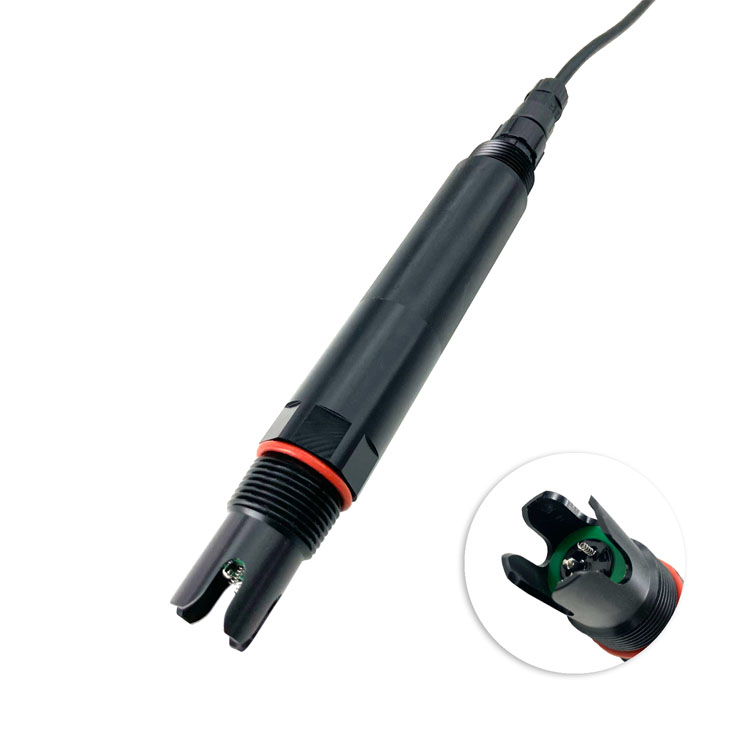
The NBL-ZS-206 turbidity sensor adopts the classic 90° scattered light method: an infrared LED light source emits a collimated beam into the water sample, where suspended particles cause Rayleigh and Mie scattering. The sensor collects scattered light intensity in the direction perpendicular (90°) to the incident light. Scattered light intensity has an approximately linear relationship with turbidity, and after internal calibration curve linearization, the NTU value is output.
Compared to transmission light method or surface scattering method, this solution demonstrates significant advantages in the following engineering characteristics:
Strong resistance to external light interference; fiber-optic transmission + infrared light source effectively reduces the impact of sunlight and artificial light sources.
Good robustness against bubbles, attachments, and biofilms, suitable for long-term unattended scenarios.
Built-in Pt1000 temperature compensation eliminates the effect of temperature on scattering coefficient.
Low power consumption (0.2 W @ 12 V), compatible with solar-powered remote sites.
IP68 protection, supports long-term immersion up to 20 m water depth, suitable for open water bodies such as rivers, lakes, and reservoirs.
| Parameter Category | Parameter Item | Specification Value |
|---|---|---|
| Measurement Principle | 90° scattered light method | |
| Range Options | 0~20.00 NTU / 0~200.0 NTU / 0~1000.0 NTU | |
| Resolution | 0.01 NTU (0-20/200) / 0.1 NTU (0-1000) / 0.1℃ | |
| Accuracy | ±5% or ±3 NTU (0-1000) ±3% or ±2 NTU (0-200) ±3% or ±1.5 NTU (0-20) Temperature ±0.3℃ | |
| Response Time | T90 | <30 s |
| Minimum Detection Limit | 0.01 NTU (0-20 range) | |
| Calibration Method | Two-point calibration (0 NTU + standard turbidity solution) | |
| Temperature Compensation | Automatic (Pt1000) | |
| Output Method | RS-485 (Modbus RTU protocol) | |
| Power Supply Voltage | 12~24 VDC | |
| Power Consumption | 0.2 W @ 12 V | |
| Operating Conditions | 0~50℃, pressure<0.2 MPa | |
| Protection Level | IP68 (water depth 20 m) | |
| Installation Method | Submersible, 3/4" NPT thread | |
| Housing Material | POM + ABS | |
| Cable Length | Standard | 5 m (customizable) |
1. Drinking Water Plant Source Water and Process Water Monitoring
Deploy NBL-ZS-206 turbidity sensors at key nodes such as water intake, post-coagulation sedimentation tank, and post-filtration water. Integrators can build multi-point turbidity trend monitoring networks. Data accesses PLC or edge gateways via RS-485; when turbidity exceeds process thresholds (typically<1 NTU for finished water), trigger automatic adjustment of dosing or backwashing commands to ensure filter operation efficiency and effluent compliance.
2. Wastewater Treatment Plant Effluent and River/Lake Ecological Monitoring
Secondary treatment effluent or tailwater discharge outlets in wastewater treatment plants often require continuous turbidity monitoring to evaluate suspended solids removal efficiency. Integrators can install sensors submersibly in aeration tank effluent channels or river cross-sections, combining with flowmeters for load calculation. In river/lake chief system projects, multi-site deployment forms spatiotemporal turbidity distribution maps, supporting pollution tracing and assessment.
3. Surface Water Automatic Monitoring Stations and Smart Water Management Platforms
Deploy at national/provincial control sections, drinking water source protection zones. Integrators integrate turbidity data with pH, dissolved oxygen, conductivity, etc., via Modbus RTU protocol and upload to water environment quality monitoring platforms. During flood periods with high turbidity, the sensor's fast response (T90<30 s) provides early warning for raw water mutations in water plants.
4. Industrial Circulating Water and Cooling Tower Water Quality Control
Cooling tower makeup and circulating water turbidity directly affect heat exchange efficiency and microbial growth risk. The NBL-ZS-206's anti-fouling capability suits long-term immersion in circulating water pools, with data linking to side filtration or dosing systems to achieve stable control at turbidity<5-10 NTU.
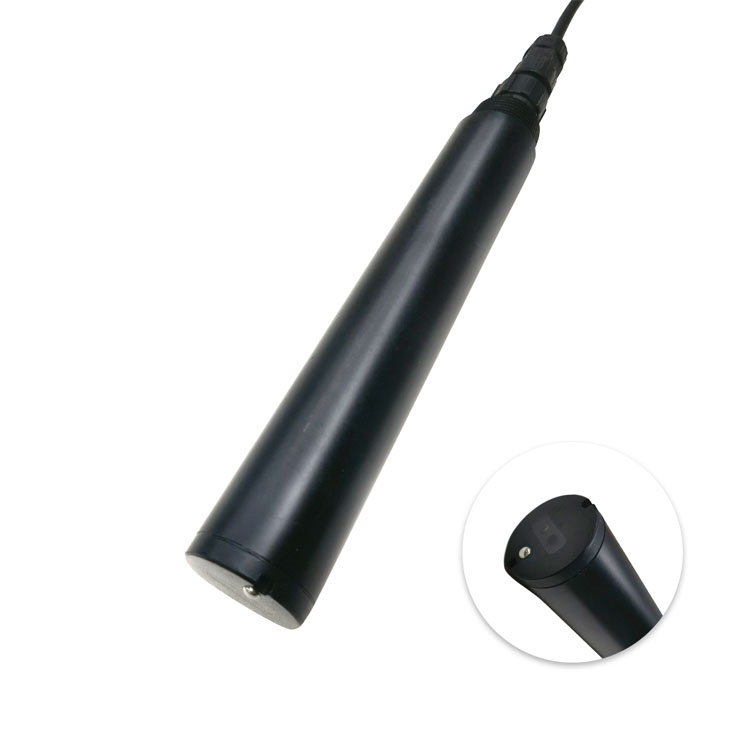
1. Range Selection
• Drinking water source/filtrate: Prioritize 0~20 NTU range, resolution 0.01 NTU.
• Wastewater treatment effluent/river routine monitoring: 0~200 NTU.
• Flood periods or high-turbidity rivers/lakes: 0~1000 NTU.
2. Installation Method
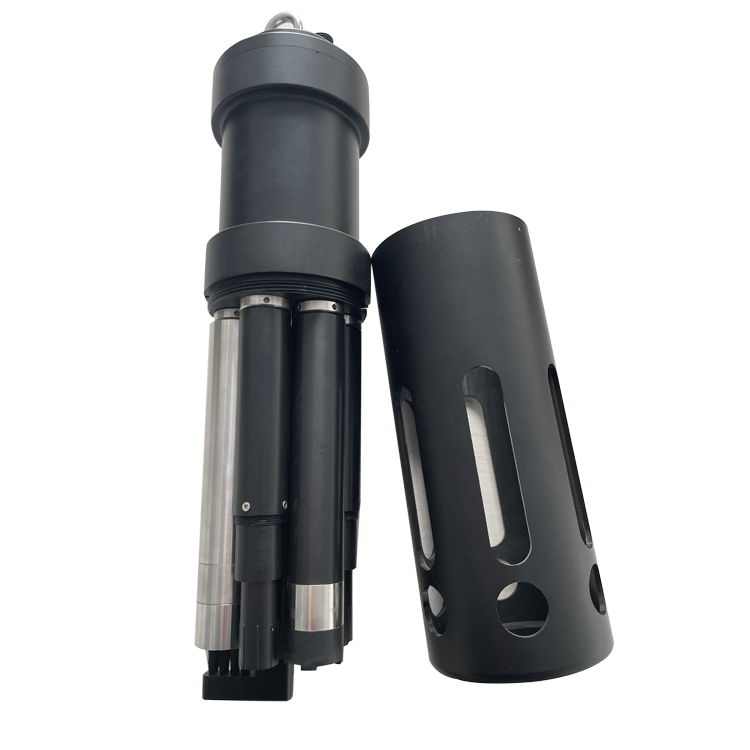
Mainly submersible, 3/4" NPT interface compatible with standard floats or fixed brackets; for open water bodies, recommend adding protective cages against floating debris impact.
3. Communication and Power Supply
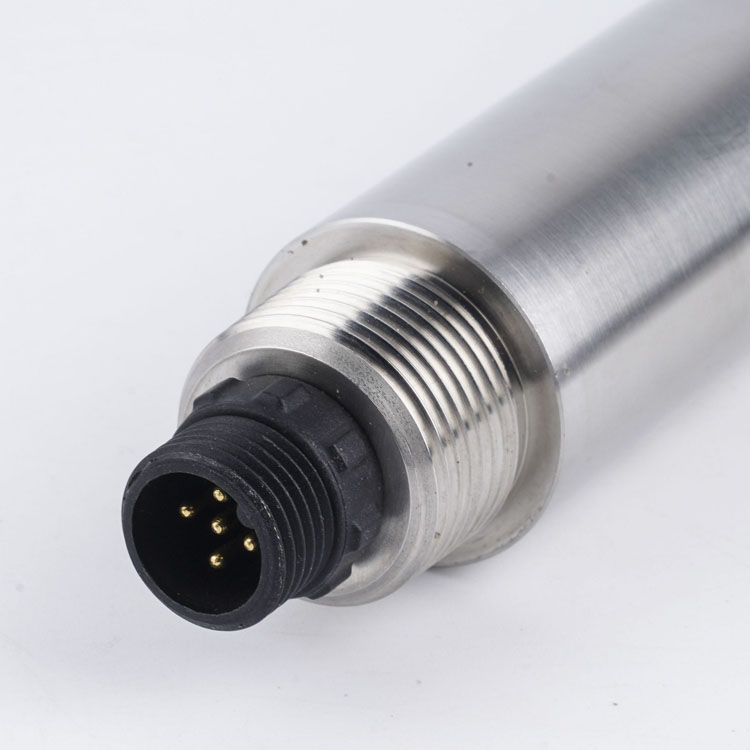
RS-485 Modbus RTU as standard configuration, default baud rate 9600 bps; 12-24 VDC wide voltage input, suitable for solar + battery remote sites.
4. Calibration Cycle
Recommended two-point calibration every 3-6 months (0 NTU deionized water + standard formazin turbidity solution); high-turbidity scenarios may add intermediate point verification for linearity.
5. Environmental Adaptation
Water temperature 0~50℃, pressure<0.2 MPa; confirm cable waterproof sealing before long-term immersion.

1. Calibration Environment Preparation
Use NIST-traceable formazin standard turbidity solutions, recommended three points: 0-1 NTU (deionized water), 5-200 NTU, 400-4200 NTU (depending on range). Calibration cup and sensor cover inner surface must be matte black to avoid stray light reflection.
2. Calibration Operation Specifications
• Slowly pour standard solution along cup wall to minimize bubble formation.
• Tilt sensor 45° and slowly insert into calibration cup to avoid trapping bubbles.
• Wait for stabilization (recommended 2-5 min) at each point before accepting reading.
• Rinse sensor and cup wall with next-level standard solution between points.
• Calibration automatically completes after three points; manually select completion for 1-2 points only.
3. Installation Location
Avoid bubble concentration zones, direct strong light areas, and turbulent zones; recommended immersion depth 0.3-1.0 m to avoid surface floating debris interference.
4. Electrical Connection
Use shielded twisted pair for RS-485 bus, add 120 Ω terminating resistor at the end; separate power and signal lines to prevent electromagnetic interference.
5. Routine Maintenance
Monthly check optical window cleanliness; gently wipe biofilm or algae with soft brush + neutral cleaner; avoid direct high-pressure water gun on optical surface.
6. Data Validation
After deployment, compare with portable turbidity meter; set platform anomaly threshold alarms (e.g., reading sudden change >50% or continuous zero value).
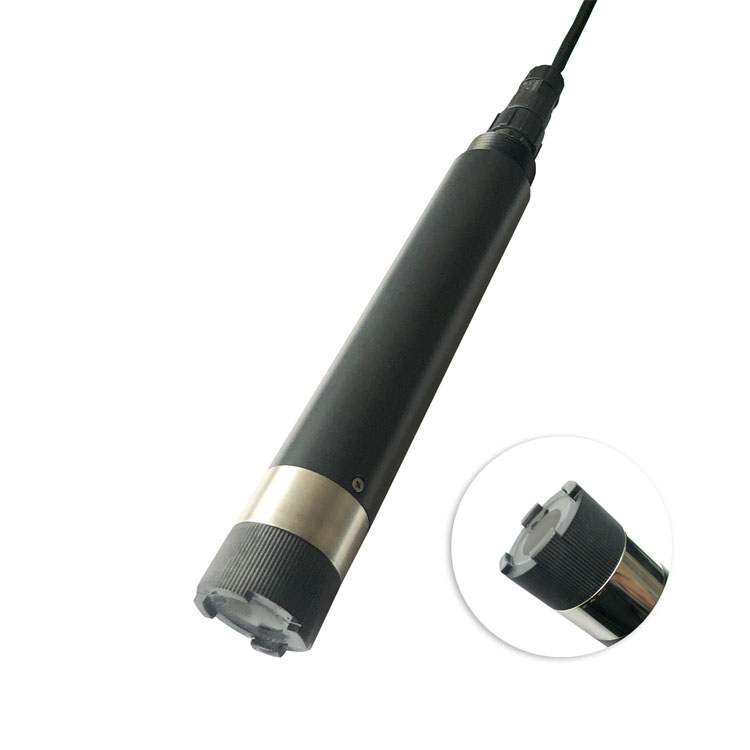
1. What measurement principle does the NBL-ZS-206 use?
90° scattered light method, using infrared LED light source with built-in fiber-optic structure to effectively suppress external light interference.
2. How is accuracy ensured across different ranges?
Segmented optimization: 0-20 NTU ±3% or ±1.5 NTU, 0-200 NTU ±3% or ±2 NTU, 0-1000 NTU ±5% or ±3 NTU.
3. Is three-point calibration mandatory?
Recommended two-point (0 NTU + working point); for high accuracy requirements or large range spans, three-point calibration is suggested to optimize linearity.
4. How does the sensor handle bubble and biofouling interference?
90° scattered light has lower sensitivity to bubbles; for long-term immersion, regular optical surface cleaning is recommended, with optional self-cleaning brush or ultrasonic assistance if needed.
5. What functions does RS-485 Modbus RTU support?
Standard Modbus RTU protocol, supports reading concentration, temperature, and device status registers; default baud rate 9600 bps, configurable.
6. Does IP68 protection support long-term underwater installation?
Yes, supports long-term immersion up to 20 m water depth; cable connectors require additional waterproof sealing.
7. How is temperature compensation achieved?
Built-in Pt1000 thermistor automatically compensates for the effect of temperature changes on scattering coefficient, ensuring full-temperature range accuracy.
8. What could cause unstable readings after calibration?
Common causes include optical surface contamination, residual bubbles, or inaccurate standard solution; recommend re-cleaning, degassing bubbles, and verifying standard solution expiration date.
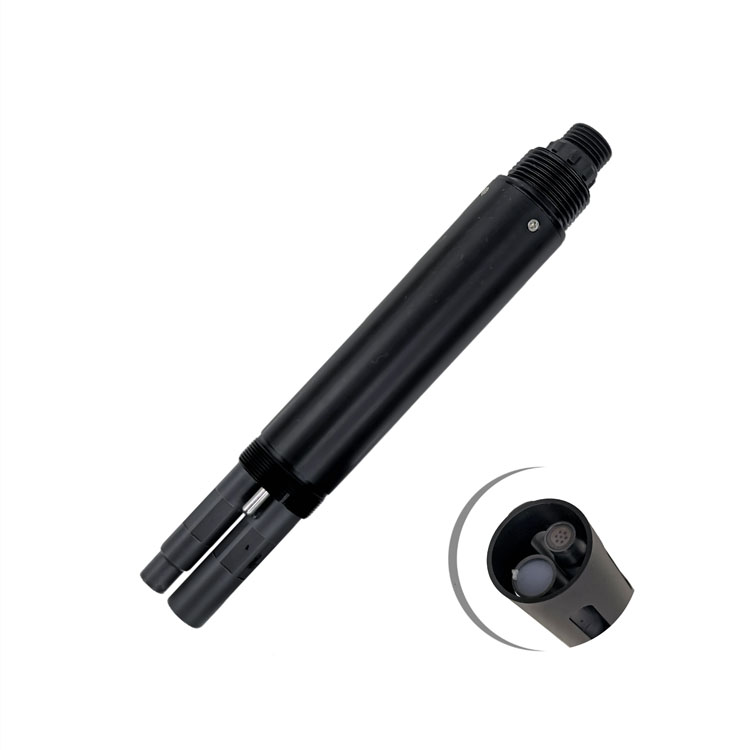
The NiuBoL NBL-ZS-206 integrated online turbidity sensor, with 90° scattered light method as the core, combined with IP68 protection, Modbus RTU communication, and automatic temperature compensation, provides system integrators with a reliable optical sensing solution suitable for drinking water, wastewater treatment, surface water monitoring, and industrial water treatment. Its wide range coverage, anti-interference design, and convenient calibration process make it outstanding in unattended, long-term online monitoring scenarios, having demonstrated stability and engineering applicability in multiple water environment monitoring projects.
If you are a system integrator, IoT solution provider, or water environment monitoring engineering contractor planning or upgrading water quality automatic monitoring stations, river/lake ecological monitoring networks, or industrial water treatment control systems, welcome to contact the NiuBoL team for complete technical specification sheets, Modbus register mapping, calibration operation videos, or on-site testing support. We provide full-chain technical coordination from selection consultation to system commissioning to help you efficiently deliver highly reliable water quality monitoring projects.
 NBL-RDO-206 Online Fluorescence Dissolved Oxygen Sensor.pdf
NBL-COD-208 Online COD Water Quality Sensor.pdf
NBL-CL-206 Water Quality Sensor Online Residual Chlorine Sensor.pdf
Prev:Industrial-Grade Photovoltaic Meteorological Monitoring Instrument Selection Full Analysis
Next:Industrial-Grade Online Turbidity Sensor Selection and Integration Guide
Related recommendations
Sensors & Weather Stations Catalog
 Agriculture Sensors and Weather Stations Catalog-NiuBoL.pdf
Weather Stations Catalog-NiuBoL.pdf
Agriculture Sensors Catalog-NiuBoL.pdf
Related products
 Combined air temperature and relative humidity sensor
 Soil Moisture Temperature sensor for irrigation
 Soil pH sensor RS485 soil Testing instrument soil ph meter for agriculture
 Wind Speed sensor Output Modbus/RS485/Analog/0-5V/4-20mA
 Tipping bucket rain gauge for weather monitoring auto rainfall sensor RS485/Outdoor/stainless steel
 Pyranometer Solar Radiation Sensor 4-20mA/RS485

Screenshot, WhatsApp to identify the QR code
WhatsApp number:+8615367865107
(Click on WhatsApp to copy and add friends)

