





— Blogs —
—Products—
 Consumer hotline +8618073152920
 WhatsApp:+8615367865107
Address:Room 102, District D, Houhu Industrial Park, Yuelu District, Changsha City, Hunan Province, China
Product knowledge
Time:2026-02-02 10:49:13 Popularity:10
In modern process flows, wastewater treatment, and fermentation engineering, continuous monitoring of suspended particle concentration is a core link to ensure compliant output and process stability. Turbidity, as a key indicator characterizing liquid clarity, its monitoring accuracy is directly constrained by the physical selection of sensors and on-site integration logic.
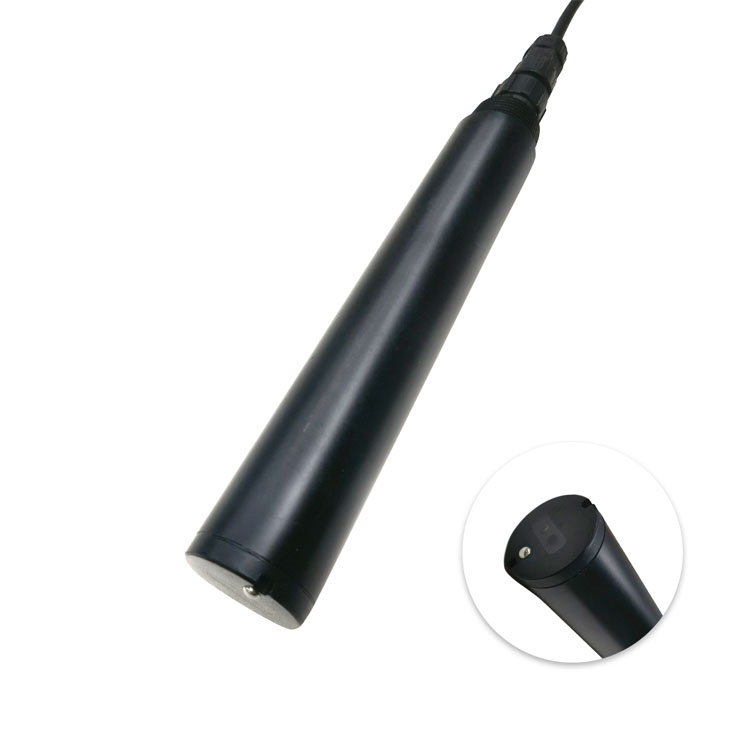
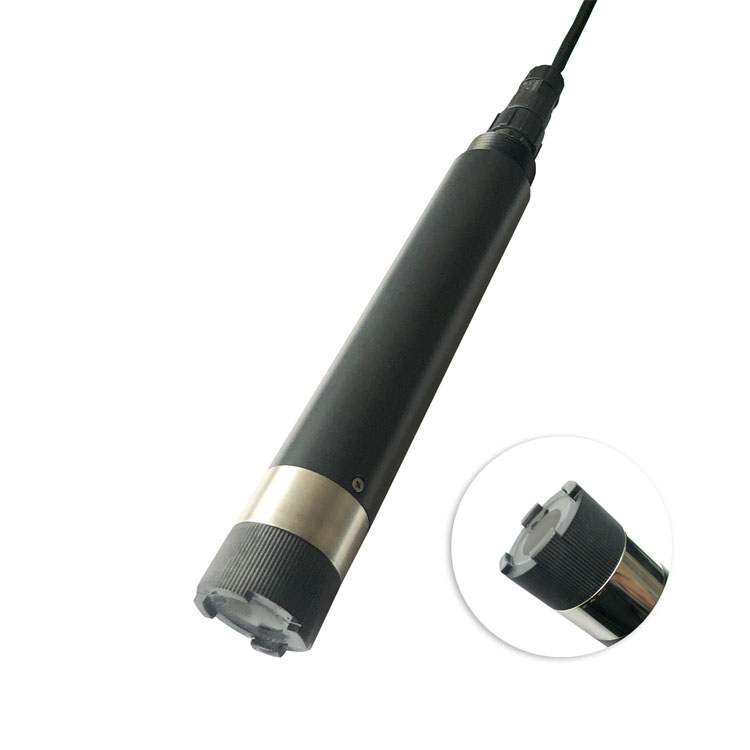
NiuBoL, as a professional environmental sensor manufacturer, has launched the NBL-ZS-206 integrated online turbidity sensor based on the 90° scattered light principle. It aims to provide system integrators, IoT solution providers, and engineering contractors with a stable, precise, and easily secondary-developable sensing terminal.
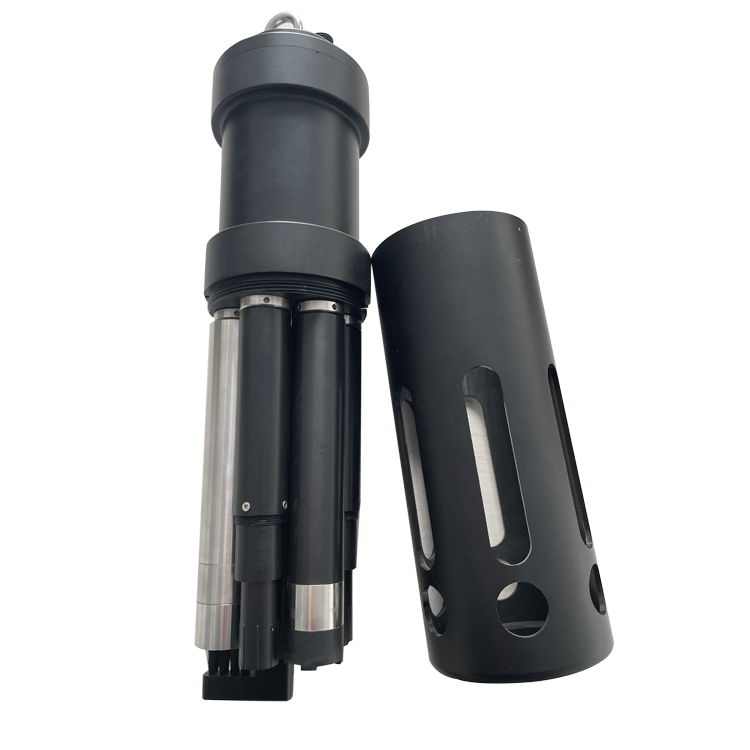
The NiuBoL online turbidity sensor is designed based on the Scattered Light Method. Its technical core lies in the fact that when an infrared LED beam enters the water sample, suspended particles in the water cause light scattering effects.
Through a precise optical system, scattered light intensity at 90° to the incident light is captured and compared with the internally stored calibration values for calculation. This technology uses a fiber-optic structure and infrared LED (850nm) light source, effectively filtering interference from ambient visible light and ensuring data consistency under different chromaticity backgrounds.
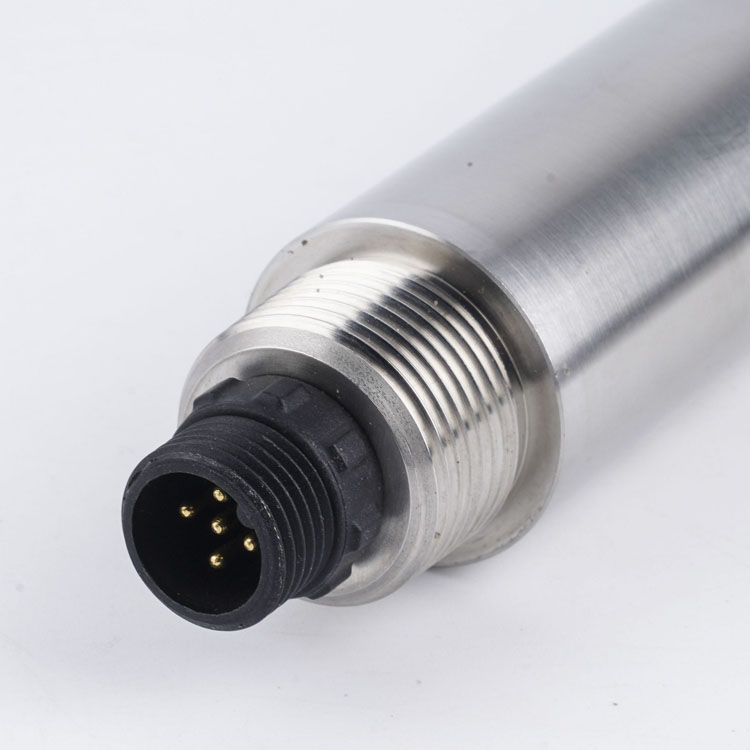
For B2B engineering projects, selection is not merely stacking performance indicators but precise adaptation to operating conditions. Integrators should focus on the following four dimensions:
1. Range Adaptation and Resolution Accuracy Benchmarking
Turbidity sensor range selection should follow the “high resolution priority” principle.
Low range (0~20.00 NTU): Suitable for terminal filtration, tap water plant effluent, and pure water treatment. Selecting a high-range sensor in this scenario will lead to decreased signal-to-noise ratio and unacceptable measurement errors.
Medium-high range (0~200 / 0~1000 NTU): Suitable for wastewater treatment inlets, phase separation processes, and natural river monitoring.
NiuBoL offers multi-range selection to ensure resolution up to 0.01 NTU, meeting monitoring needs from fine filtration to heavy pollution.
2. Physical Installation Mode and Optical Environment Control
Installation mode directly affects the purity of the optical path.
Submersible/immersed: Suitable for open tanks or slow-flow pools. Fixed using 3/4 NPT pipe thread.
Low-range closed measurement: For low-range projects, integrators must build a completely sealed, opaque measurement environment (e.g., installed in a black opaque beaker or dedicated detection tank) to eliminate background noise caused by stray light radiation.
3. Process Pipeline Integration and Bubble Elimination
In pressurized pipeline environments, microbubbles are the biggest “false signal” for turbidity measurement.
Bypass system design: For pressurized pipelines on site, integrators should design a “main pipeline + bypass” structure. Install pressure-reducing valves and slow-flow tanks in the bypass.
Slow-flow tank logic: The slow-flow tank not only reduces flow velocity to protect the sensor but, more importantly, achieves physical degassing to ensure the scattered light path is not interfered with by tiny bubbles, thus obtaining real suspended particle readings.
4. Signal Chain and Protocol Standardization
In industrial IoT (IIoT) architectures, compatibility is key to reducing delivery costs.
Output protocol: NBL-ZS-206 adopts RS-485 (Modbus RTU) standard protocol.
Integration advantages: Digital output avoids attenuation and common-mode interference of analog signals during long-distance transmission, supports multi-node networking, and facilitates direct docking by integrators with PLC, DCS, or cloud gateways.

| Parameter Item | Technical Indicator |
|---|---|
| Measurement Principle | 90° scattered light method (infrared LED light source) |
| Housing Material | POM, ABS (industrial-grade corrosion resistance) |
| Accuracy | ±3% or ±5% (segmented by range) |
| Output Interface | RS-485 (Modbus RTU) |
| Temperature Compensation | Automatic temperature compensation (built-in Pt1000) |
| Protection Level | IP68 (supports deployment at 20 m water depth) |
| Power Consumption | ≤ 0.2W @ 12V (extremely low power design) |
1. Why must the container bottom be black during sensor calibration?
The scattered light principle is extremely sensitive. If the container bottom reflects light, incident light will produce secondary reflection into the receiver, causing zero drift. A black matte bottom effectively absorbs transmitted light, ensuring measurement data purity.
2. What is the recommended calibration cycle for turbidity sensors?
Considering sensor optical element aging and environmental scaling, we recommend calibration once every six months. In harsh water quality conditions, shorten to quarterly calibration.
3. How significant is the impact of bubbles on measurement results?
Microbubbles form interfaces in water that produce strong light scattering. Even in extremely clear water, if bubbles are present, readings may jump from 0.1 NTU to tens of NTU. Therefore, slow-flow degassing devices are essential in pipeline integration.
4. Does the NiuBoL sensor support automatic cleaning?
This series supports periodic manual cleaning. For scenarios with severe biofouling, it is recommended to integrate self-cleaning brush modules during integration, or use moist soft cloth to wipe the measurement window regularly during maintenance to prevent debris accumulation from affecting transmittance.
5. What is the RS-485 signal transmission distance limit?
Under standard conditions, RS-485 can stably transmit up to 1200 meters. For longer-distance projects, it is recommended to pair with NiuBoL wireless gateways for conversion to LoRaWAN or 4G signals.
6. How to determine if the sensor needs cleaning?
When readings show illogical continuous slow increases, or zero point is significantly high in clean water, it usually indicates fouling or microbial film on the optical window. Perform maintenance as described in section 1.2 at this time.
7. Can the equipment operate in wastewater containing corrosive chemicals?
The sensor housing uses POM and ABS materials with good chemical stability. However, for strong acids, strong alkalis, or specific organic solvents, inform the technical engineer before selection for material compatibility assessment.
8. Why does calibration require suspending the sensor more than 10cm above the bottom?
This is to eliminate near-field interference from the container bottom. The light beam needs sufficient propagation space in the liquid; too close to the bottom causes reflected light to interfere with scattered light collection.
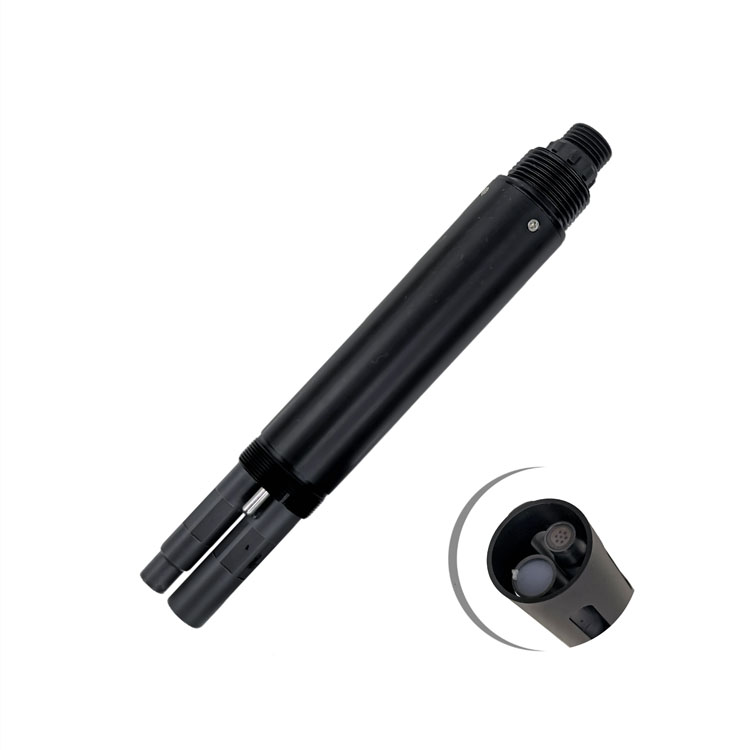
The success of turbidity sensor applications depends 30% on hardware quality and 70% on integration solutions. The NiuBoL NBL-ZS-206, through high-stability infrared scattered light technology, solves optical interference problems in industrial sites. For integrators, mastering the three cores of range matching, bubble elimination, and standardized calibration can significantly reduce O&M costs and improve data confidence.
NiuBoL provides complete Modbus register tables, installation drawings, and selection recommendation books for engineering partners.
Contact our technical consultant to obtain exclusive B2B industrial procurement quotes and help your water quality monitoring projects achieve precise delivery!
 NBL-RDO-206 Online Fluorescence Dissolved Oxygen Sensor.pdf
NBL-COD-208 Online COD Water Quality Sensor.pdf
NBL-CL-206 Water Quality Sensor Online Residual Chlorine Sensor.pdf
Related recommendations
Sensors & Weather Stations Catalog
 Agriculture Sensors and Weather Stations Catalog-NiuBoL.pdf
Weather Stations Catalog-NiuBoL.pdf
Agriculture Sensors Catalog-NiuBoL.pdf
Related products
 Combined air temperature and relative humidity sensor
 Soil Moisture Temperature sensor for irrigation
 Soil pH sensor RS485 soil Testing instrument soil ph meter for agriculture
 Wind Speed sensor Output Modbus/RS485/Analog/0-5V/4-20mA
 Tipping bucket rain gauge for weather monitoring auto rainfall sensor RS485/Outdoor/stainless steel
 Pyranometer Solar Radiation Sensor 4-20mA/RS485

Screenshot, WhatsApp to identify the QR code
WhatsApp number:+8615367865107
(Click on WhatsApp to copy and add friends)

