





— Blogs —
—Products—
 Consumer hotline +8618073152920
 WhatsApp:+8615367865107
Address:Room 102, District D, Houhu Industrial Park, Yuelu District, Changsha City, Hunan Province, China
Product knowledge
Time:2026-04-20 15:35:46 Popularity:16
For environmental engineering contractors and system integrators, understanding and precisely regulating the boundary conditions of the nitrification reaction is the key to ensuring stable operation of wastewater treatment plants (WWTP). Based on engineering practice, this article deeply discusses the eight core factors affecting nitrification efficiency and proposes digital operation and maintenance pathways in combination with NiuBoL intelligent sensing technology.
Biological nitrification is a typical low-load process. The proliferation rate of nitrifying bacteria is much lower than that of carbon-oxidizing bacteria, so organic load F/M must be strictly controlled. Generally, F/M should be kept below 0.15 kgBOD/(kgMLVSS·d). In refined projects pursuing extremely low effluent ammonia nitrogen, ultra-low load (0.05 kgBOD/(kgMLVSS·d)) is often a necessary choice to ensure complete nitrification conversion.
Because nitrifying bacteria have a long generation time, the system must maintain a sufficiently long sludge age (SRT) to prevent microbial population washout. In actual engineering, SRT should be at least 15 days or more.
High-temperature season: Nitrifying bacteria activity is high, and SRT can be appropriately shortened.
Low-temperature season: Nitrifying bacteria proliferate slowly, and SRT must be increased to compensate for insufficient biomass.
The reflux ratio of biological nitrification systems is higher than that of traditional activated sludge processes. This is because nitrification liquid contains high concentrations of nitrate nitrogen. If the reflux ratio is too small, the sludge stays too long in the secondary sedimentation tank, inducing denitrification that produces nitrogen gas, causing sludge flocs to float and be lost with the effluent, destroying the stability of the nitrification system.
The nitrification rate is significantly lower than the organic matter removal rate, so the hydraulic retention time (Ta) of the aeration tank is usually required to be more than 8 hours. This design ensures that nitrifying bacteria have sufficient time to convert ammonia nitrogen into nitrate nitrogen, especially when treating high-concentration TKN wastewater.
Dissolved oxygen is a key limiting factor in the nitrification reaction. Since nitrifying bacteria are obligate aerobes and their oxygen uptake competitiveness is weaker than that of heterotrophic bacteria, the system must maintain a high DO level.
Standard Range: Mixed liquor DO should be controlled between 2.0 mg/L and 3.0 mg/L.
Critical Point: When DO < 2.0 mg/L, nitrification is inhibited; when DO < 1.0 mg/L, the nitrification reaction will tend to stop.
Oxygen Consumption: Theoretically, 4.57 g of oxygen is consumed for every 1 g of NH₃-N converted.
Nitrification rate (NR) is an intuitive parameter for measuring system biological activity. The typical value is 0.02 gNH₃-N/(gMLVSS·d). NR is comprehensively affected by temperature, pH, DO, and toxic substances. By monitoring NR, operation and maintenance personnel can predict system carrying capacity and prevent effluent exceedance caused by influent shock loads.
Influent nutrient ratio determines the microbial community abundance in activated sludge:
High ratio (>9): Heterotrophic bacteria dominate absolutely, and the proportion of nitrifying bacteria drops below 3%, resulting in a sharp decline in nitrification efficiency.
Low ratio (<3): The proportion of nitrifying bacteria can rise above 9%.
Engineering Balance Point: The optimal BOD₅/TKN range is usually 2–3. At this point, high nitrification efficiency is ensured while maintaining good sludge settling performance and effluent clarity.
The optimal pH range for nitrifying bacteria is 8.0–9.0. When pH drops below 7.0, the nitrification rate decreases significantly; if pH < 6.0, the reaction will completely stop.
Nitrification is an acid-producing process. For every 1 g of NH₃-N converted, 7.14 g of alkalinity (as CaCO₃) is consumed. If influent alkalinity is insufficient, the system pH will rapidly lose balance. Therefore, when treating high-ammonia nitrogen wastewater, an alkalinity dosing device must be equipped, and closed-loop control is performed through real-time pH monitoring.
Nitrifying bacteria are extremely sensitive to chemical substances. The table below lists concentration thresholds for common inhibitors:
| Toxic Substance Category | Substance Name | Inhibition Concentration Threshold (mg/L) | Effect Description |
|---|---|---|---|
| Heavy Metal Ions | Lead (Pb) | > 0.5 | Enzyme activity inactivation |
| Organic Compounds | Phenol | > 5.6 | Cell membrane damage |
| Sulfur-Containing Compounds | Thiourea | > 0.076 | Strong inhibition even at extremely low concentrations |
| High-Concentration Substrate | Ammonia Nitrogen (NH₃-N) | > 200 | Substrate self-inhibition effect |
Temperature directly affects enzyme catalytic activity.
Around 30°C: Nitrifying bacteria activity is strongest.
< 5°C: Physiological activity basically stops.
In winter operation management, when water temperature drops below 10°C, SRT must be increased to 12–20 days or mixed liquor reflux ratio must be regulated to maintain the system’s nitrification capacity.
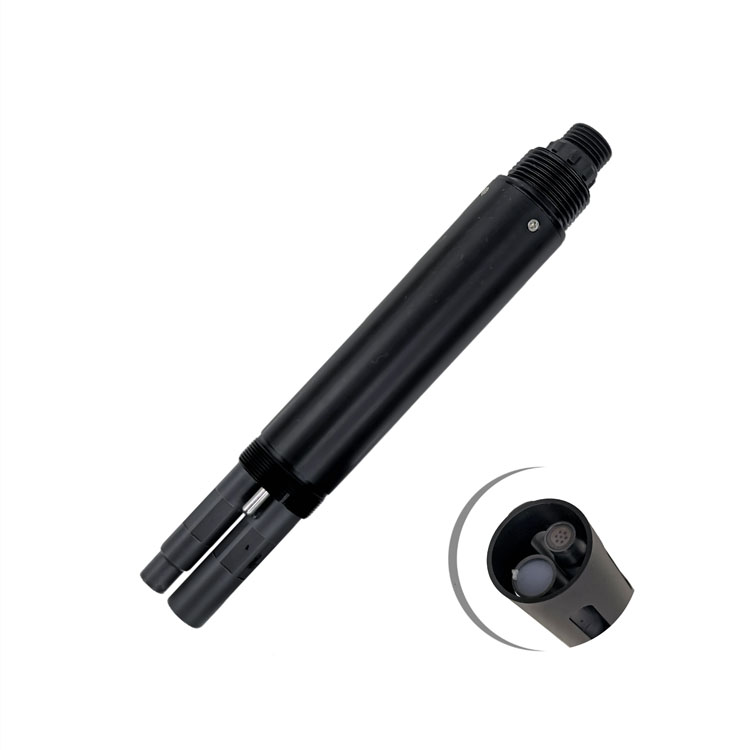
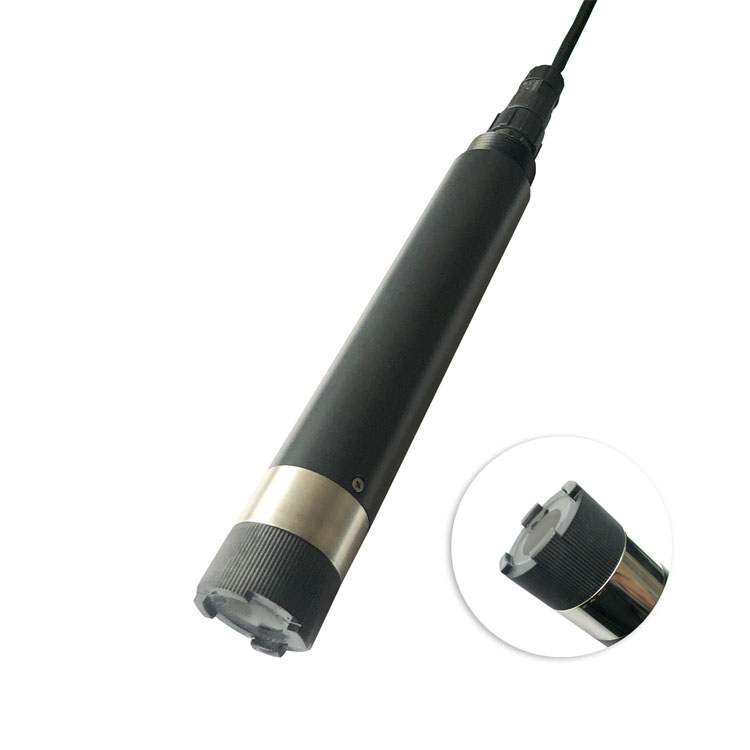
To cope with the above complex process variables, NiuBoL has developed a multi-parameter online monitoring platform to empower environmental protection engineering through digital means.
| Sensor Model | Monitoring Parameter | Measurement Range | Output Protocol |
|---|---|---|---|
| NBL-NHN-206 | Ammonia Nitrogen (NH₃-N) | 0.1–1000 mg/L | RS485 (Modbus RTU) |
| NBL-RDO-206 | Dissolved Oxygen (DO) | 0–20 mg/L | RS485 (Modbus RTU) |
| NBL-PHG-206 | pH Value | 0–14 pH | RS485 (Modbus RTU) |
| NBL-DDM-206 | Water Temperature | -10 to 60°C | RS485 (Modbus RTU) |

A: This is usually because the pH value deviates from the optimal range or alkalinity is insufficient, limiting nitrifying bacteria activity. It is recommended to check whether the mixed liquor pH is above 7.5.
A: Yes. High BOD₅ promotes massive proliferation of heterotrophic bacteria, “squeezing out” the living space and oxygen resources of nitrifying bacteria, resulting in a decline in the nitrification ratio.
A: The most effective method is to increase sludge concentration (MLSS) and extend sludge age (SRT) to compensate for the kinetic rate decline caused by low temperature with biomass.
A: NiuBoL industrial-grade ammonia nitrogen sensors are designed with corrosion-resistant housings, but in extremely high pH environments, a pretreatment system is recommended to extend probe life.
A: “Dead sludge” refers to sludge aging or poisoning that causes loss of activity. Because nitrifying bacteria grow slowly, the recovery period usually takes more than 2 weeks once sludge is damaged.
A: Alkalinity dosing amount = (Influent TKN – Effluent TKN) × 7.14 – Original influent alkalinity. It is recommended to maintain effluent residual alkalinity above 50 mg/L.
A: No. An excessively large reflux ratio will shorten the effective retention time of the aeration tank and may cause fluctuations in sludge concentration in the aeration tank. It is usually reasonable to maintain it at 50%–100%.
A: First cut off the toxin source, then perform large-scale sludge discharge and replace with fresh activated sludge, while appropriately increasing DO levels to induce reactivation of residual nitrifying bacteria.
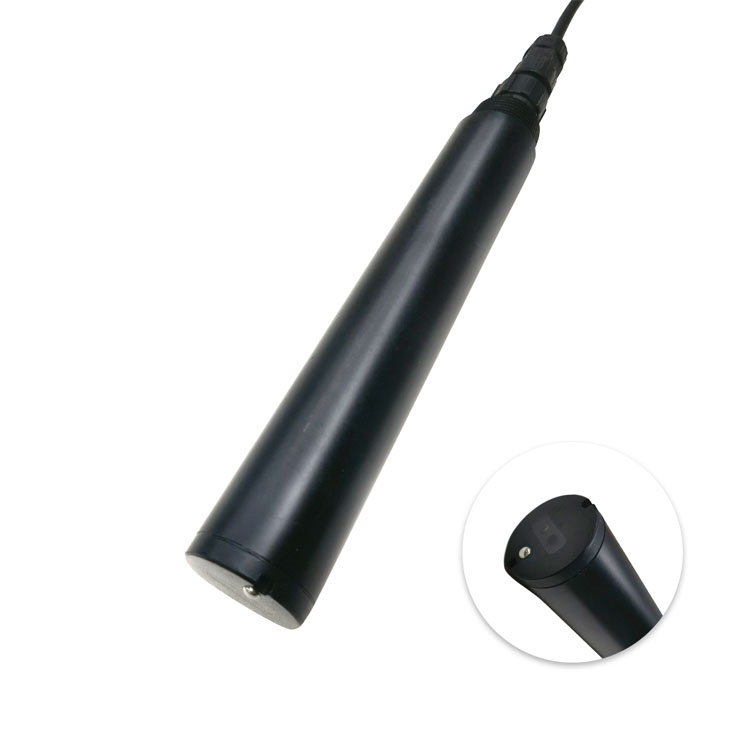
Ammonia nitrogen compliant discharge not only depends on scientific process design but also on refined management during operation. By real-time monitoring of core indicators such as sludge load, SRT, DO, and pH, system integrators can build a self-adaptive biological nitrification control strategy.
NiuBoL is committed to providing high-precision online sensing technology for global water treatment engineering. Whether it is energy saving and consumption reduction in urban sewage plants or stable compliance in industrial parks, NiuBoL sensors can provide real-time and accurate data support.
 NBL-RDO-206 Online Fluorescence Dissolved Oxygen Sensor.pdf
NBL-COD-208 Online COD Water Quality Sensor.pdf
NBL-CL-206 Water Quality Sensor Online Residual Chlorine Sensor.pdf
Next:no more
Related recommendations
Sensors & Weather Stations Catalog
Agriculture Sensors and Weather Stations Catalog-NiuBoL.pdf
Weather Stations Catalog-NiuBoL.pdf
Agriculture Sensors Catalog-NiuBoL.pdf
Water Quality Sensor Catalog-NiuBoL.pdf
Related products
 Combined air temperature and relative humidity sensor
 Soil Moisture Temperature sensor for irrigation
 Soil pH sensor RS485 soil Testing instrument soil ph meter for agriculture
 Wind Speed sensor Output Modbus/RS485/Analog/0-5V/4-20mA
 Tipping bucket rain gauge for weather monitoring auto rainfall sensor RS485/Outdoor/stainless steel
 Pyranometer Solar Radiation Sensor 4-20mA/RS485

Screenshot, WhatsApp to identify the QR code
WhatsApp number:+8615367865107
(Click on WhatsApp to copy and add friends)

