





— Blogs —
—Products—
 Consumer hotline +8618073152920
 WhatsApp:+8615367865107
Address:Room 102, District D, Houhu Industrial Park, Yuelu District, Changsha City, Hunan Province, China
Product knowledge
Time:2026-04-19 19:42:22 Popularity:11
In the context of water environment governance entering the era of “refined control”, traditional intermittent manual sampling can no longer meet the modern industry’s demand for real-time, continuous, and data traceability. For system integrators and engineering contractors, how to build a water quality monitoring system with both high sensing accuracy and low operation and maintenance costs under a big data framework is the key to enhancing project premium capability.
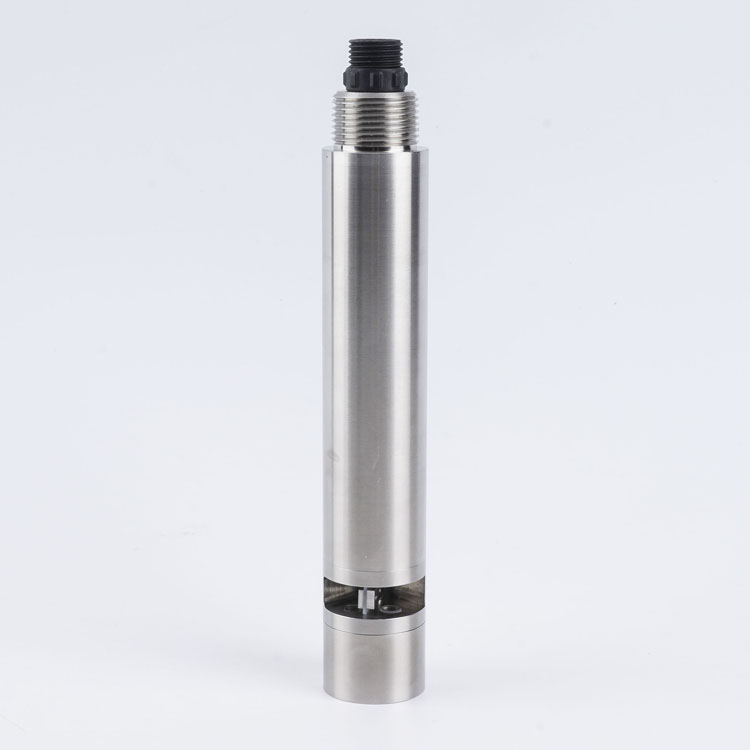
A mature NiuBoL water quality online monitoring system usually consists of four core layers. This structure ensures the integrity of data in industrial electromagnetic interference environments.
High-performance electrochemical or optical sensors (such as UV254 COD, potentiometric ammonia nitrogen, etc.) are used to convert the concentration of chemical components in water into standard digital signals.
Anti-interference design: For high-salt and highly corrosive environments in pharmaceutical and chemical wastewater, the probe must have a titanium alloy or POM corrosion-resistant housing.
Communication protocol: All products support the industrial standard RS485 (Modbus-RTU) protocol to ensure seamless docking with mainstream PLCs (Siemens, Schneider, etc.) and RTU equipment.
Wireless link: In river chief system monitoring projects with complex geographical environments, GPRS/4G/5G modules are integrated to realize data transparent transmission.
The big data platform cleans, compensates (such as temperature compensation, turbidity compensation), and performs trend analysis on raw monitoring values to provide early warning and forecast for downstream pollution prevention.
It provides visualization dashboards, abnormal alarms, automatic generation of monthly reports, and cross-regional assessment basis.
In B2B procurement, the accuracy of parameters and the adaptability of the range are core indicators for evaluating suppliers.
| Monitoring Factor | Measurement Principle | Measurement Range | Application Value |
|---|---|---|---|
| COD (Chemical Oxygen Demand) | Potassium Dichromate Digestion/UV | 0–5000 mg/L | Core indicator for organic pollution discharge compliance |
| Ammonia Nitrogen (NH3-N) | Ion Selective Electrode/Salicylic Acid | 0.01–1000 mg/L | Evaluate denitrification efficiency in biological treatment section |
| Total Phosphorus (TP) | Ammonium Molybdate Spectrophotometry | 0.01–50 mg/L | Monitor eutrophication in lakes/landscape water bodies |
| Total Nitrogen (TN) | Potassium Persulfate Digestion-Ultraviolet | 0–100 mg/L | Key parameter for cross-section water quality assessment |
| ORP (Oxidation-Reduction Potential) | Noble Metal Electrode Method | -2000–2000 mV | Control Fenton oxidation and decolorization reactions |
Different industries have significantly different sensitivities to water quality parameters. Engineering companies should treat them differently in scheme design.
Pain point: Influent COD fluctuations lead to death of activated sludge.
Solution: Integrate NiuBoL multi-parameter online monitor at the inlet. When abnormally high load is detected, automatically link to switch the pumping station to the accident regulation tank to protect the biochemical system.
Pain point: Imbalance of ammonia nitrogen and dissolved oxygen (DO) leads to “pond turnover”.
Solution: Deploy low-power online monitoring buoys to monitor pH, DO, and ammonia nitrogen in real time. The big data platform automatically triggers aerator startup based on climate prediction and water quality trends to achieve smart farming.
Pain point: Wastewater contains toxic substances that interfere with ordinary sensors.
Solution: Use analyzers with automatic dilution function and automatic cleaning system. Use ORP to monitor the oxidation reaction process to ensure that toxic and harmful substances are completely degraded before entering the discharge outlet.
Range matching principle: Avoid “over-specification”. For example, surface water monitoring should use high-sensitivity low-range analyzers, while discharge outlet monitoring requires high-concentration resistant models.
Data security: Ensure that the monitoring terminal has data breakpoint resume function and can locally store more than 30 days of data during network failures.
Secondary development friendliness: Select equipment that supports standard instruction sets to facilitate system integrators to perform deep secondary development on their own IoT platforms.
Environmental tolerance: For humid southern and cold northern climates, configure constant temperature cabinets and lightning surge protection devices.
A: The UV method (UV254) reacts extremely fast (second level) without reagents and is suitable for process control. The chemical method (potassium dichromate) takes about 30-40 minutes but complies with national standard methods and is suitable for environmental protection data networking and uploading.
A: Since the ion selective electrode is greatly affected by water temperature, NiuBoL sensors have a built-in high-precision NTC temperature compensation algorithm to ensure the consistency of measurement values in the 0–50°C range.
A: High-performance total nitrogen analyzers are equipped with a precision filtration sampling system at the front end, which can effectively remove the interference of suspended particles on absorbance and ensure the accuracy of analysis results.
A: Through baseline modeling of historical data, once the real-time monitoring curve shows abnormal peaks outside the production cycle, the system will automatically trigger a traceability alarm to track the pollution source.
A: Check whether the terminal resistance matches and ensure single-point grounding of the shield layer. NiuBoL sensors support standard Modbus-RTU and have extremely strong bus stability.
A: The key is to choose “low consumables” or “maintenance-free” designs. For example, using the fluorescence method for dissolved oxygen (DO) instead of the membrane method can eliminate the trouble of replacing membranes and electrolyte.
A: Yes. Through the 4–20mA signal or Modbus command output by the NiuBoL monitoring terminal, it can directly link with PLC or frequency converter to realize automatic adjustment of dosing pumps or aerators.
A: It is recommended to use submersible installation with stainless steel protective cover, or use sensors with self-cleaning scrapers, which can effectively prevent debris such as aquatic plants and plastic bags from entangling and affecting monitoring results.
Water quality online monitoring is not only a tool for environmental supervision but also a core sensor node for industrial digital transformation. By integrating online monitoring systems for key indicators such as COD, total nitrogen, and ammonia nitrogen, NiuBoL helps system integrators build a full-chain closed-loop solution from “perception” to “early warning” and then to “control” for end customers. In today’s increasingly scarce resources, precise water quality big data will become the core competitiveness for enterprises to achieve sustainable development and green production.
 NBL-NHN-302 Industrial-grade Multi-parameter Online Ammonia Nitrogen Sensor.pdf
NBL-RDO-206 Online Fluorescence Dissolved Oxygen Sensor.pdf
NBL-COD-208 Online COD Water Quality Sensor.pdf
NBL-CL-206 Water Quality Sensor Online Residual Chlorine Sensor.pdf
Related recommendations
Sensors & Weather Stations Catalog
Agriculture Sensors and Weather Stations Catalog-NiuBoL.pdf
Weather Stations Catalog-NiuBoL.pdf
Agriculture Sensors Catalog-NiuBoL.pdf
Water Quality Sensor Catalog-NiuBoL.pdf
Related products
 Combined air temperature and relative humidity sensor
 Soil Moisture Temperature sensor for irrigation
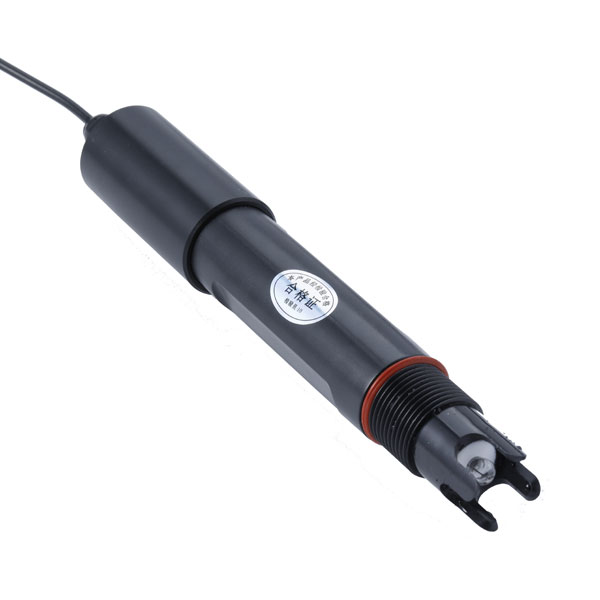 Soil pH sensor RS485 soil Testing instrument soil ph meter for agriculture
 Wind Speed sensor Output Modbus/RS485/Analog/0-5V/4-20mA
 Tipping bucket rain gauge for weather monitoring auto rainfall sensor RS485/Outdoor/stainless steel
 Pyranometer Solar Radiation Sensor 4-20mA/RS485

Screenshot, WhatsApp to identify the QR code
WhatsApp number:+8615367865107
(Click on WhatsApp to copy and add friends)

