





— Products —
 Consumer hotline +8618073152920
WhatsApp:+8615367865107
Address:Room 102, District D, Houhu Industrial Park, Yuelu District, Changsha City, Hunan Province, China
Weather Stations


NBL-W-DS Wind direction sensor adopts high-precision magnetic sensitive response chip inside, and chooses low inertia ABS wind vane to respond to the wind direction, with good dynamic characteristics. The product has the advantages of large range, good linearity, strong resistance to lightning strikes, convenient observation, stable and reliable, etc. It can be widely used in meteorology, ocean, environment, airports, ports, laboratories, industry and agriculture, and transpo···
Tel/WhatsApp:+8615367865107
Email:Arvin@niubol.com +Nearly 100 partner companies in more than 75 countries. We are committed to providing high-quality, practical products to meet your needs and help you solve problems. Our products comply with international standards and are certified with ISO, CE and RoHS.Product Details
The NiuBoL NBL-W-DS Wind Direction Sensor is a wind vane sensor designed to measure horizontal wind direction from 0 to 360° for automatic weather stations, agricultural monitoring, environmental monitoring, ports, airports, marine observation and industrial meteorological systems.
The sensor uses a high-precision magnetic sensing chip together with a low-inertia ABS wind vane. The lightweight vane follows changes in airflow direction, while the internal electronics convert the vane position into an electrical or digital wind-direction signal.
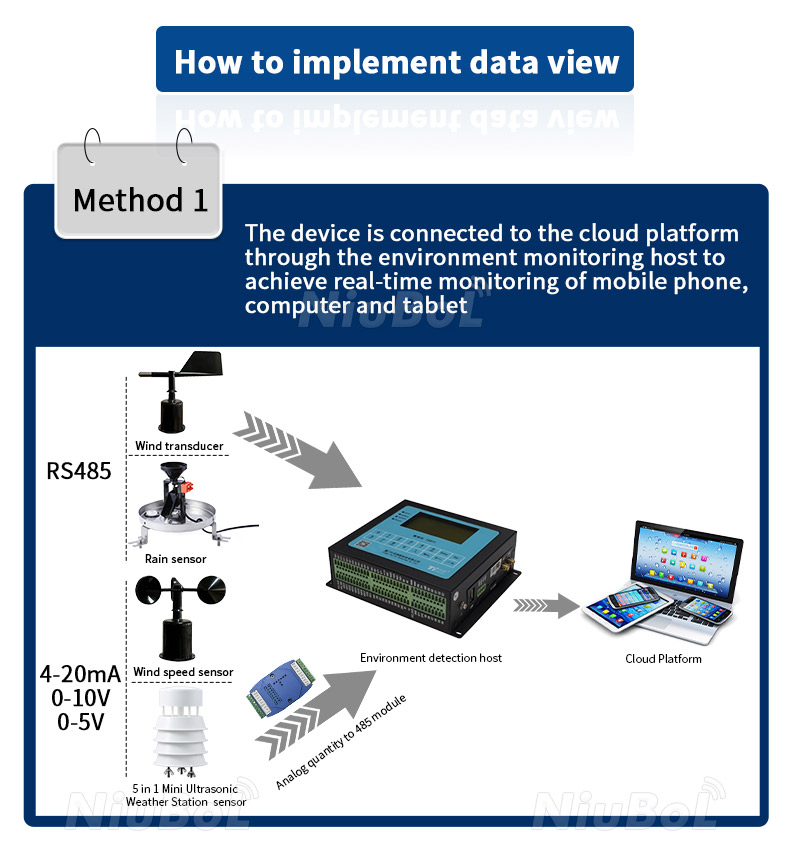
Output options include RS485 Modbus RTU, 4–20 mA and 0–5 V, allowing the NBL-W-DS to connect directly to weather-station data loggers, PLCs, RTUs, environmental monitoring hosts and IoT gateways.
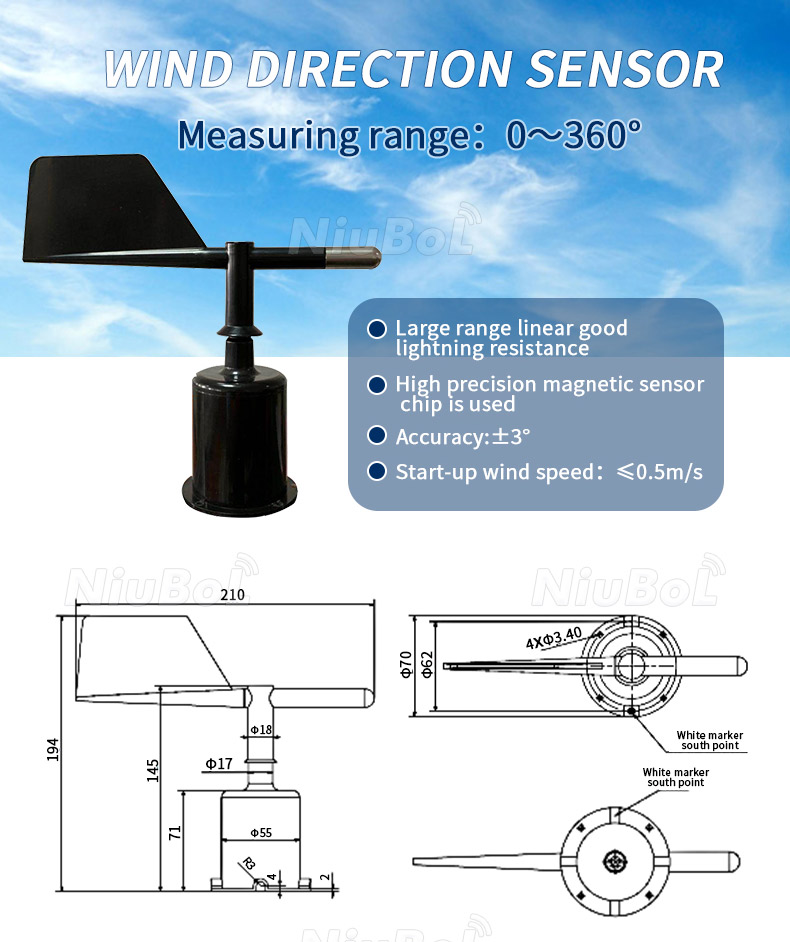
| Model | NBL-W-DS |
| Product Name | Wind Direction Sensor / Wind Vane Sensor |
| Measurement Range | 0–360° |
| Accuracy | ±3° |
| Starting Wind Speed | ≤0.5 m/s |
| Sensing Principle | Magnetic position sensing |
| Wind Vane Material | Low-inertia ABS |
| Power Supply | DC 5 V or DC 12–24 V depending on configuration |
| Output Options | RS485 / 4–20 mA / 0–5 V |
| Current Output Load | ≤250 Ω |
| Voltage Output Load | ≥1 kΩ |
| Standard Cable Length | 2.5 m, customizable |
| Operating Temperature | -40 to 80°C |
| Operating Humidity | ≤100%RH |
| Protection Rating | IP45 |
| Power Consumption | Approx. 0.15 W |
| Product Weight | Approx. 210 g |
The wind vane aligns itself with the airflow as wind direction changes. The vane rotates the internal shaft, and the magnetic sensing element detects its angular position.
The sensor electronics convert this angular position into a 0–360° wind-direction value. Depending on the selected version, the measured direction is transmitted as RS485 Modbus data, a 4–20 mA current signal or a 0–5 V voltage signal.
| Wind Vane | Responds mechanically to the horizontal direction of airflow. |
| Magnetic Sensor | Detects the angular position of the wind vane. |
| Signal Processing | Converts vane position into a 0–360° wind-direction measurement. |
| Output Interface | Provides RS485, current or voltage output according to the ordered model. |

| Output | Typical Connection | Recommended Use |
|---|---|---|
| RS485 Modbus | PLC / RTU / data logger / IoT gateway | Automatic weather stations and digital multi-sensor networks |
| 4–20 mA | Industrial analog input module | Industrial systems and longer cable runs |
| 0–5 V | Analog voltage input | Controllers and acquisition modules supporting 0–5 V input |
For analog-output versions, wind direction can be calculated directly from the measured current or voltage signal.
| Output Type | Formula |
|---|---|
| 0–5 V | D = 360° × V / 5 |
| 4–20 mA | D = 360° × (I − 4) / 16 |
In these formulas, D is wind direction in degrees, V is the measured voltage in volts and I is the measured current in milliamps.
For a 0–5 V sensor, an output of 2.5 V corresponds to:
360 × 2.5 / 5 = 180°
| Interface | RS485 |
| Protocol | Modbus RTU |
| Default Baud Rate | 9600 bps |
| Data Bits | 8 |
| Parity | None |
| Stop Bits | 1 or 2 |
| Device Address | 0–255 configurable |
| Read Function | Function Code 03 |
| Communication Interval | At least 1000 ms |
For a sensor with device address 01, the manual gives the following example:
Request: 01 03 00 00 00 01 84 0A
Response: 01 03 02 00 B4 44 09
| Returned HEX Data | 00 B4 |
| Decimal Value | 180 |
| Wind Direction | 180° |
| Wire Color | Voltage Version | Current Version | RS485 Version |
|---|---|---|---|
| Red | Power + | Power + | Power + |
| Black / Green | Power - | Power - | Power - |
| Yellow | Voltage Signal | Current Signal | RS485 A |
| Blue | — | — | RS485 B |
Wiring note: Confirm the actual output configuration and wire identification supplied with the sensor before installation.
Correct orientation is essential. Even an accurate wind direction sensor will report an incorrect compass direction if the reference mark is not aligned correctly during installation.
| Step | Installation Requirement |
|---|---|
| 1 | Install the mounting bracket so that it is approximately parallel to the ground. |
| 2 | Use the four mounting holes to secure the wind direction sensor to the bracket. |
| 3 | Point the white south reference mark on the sensor housing toward geographic south. |
| 4 | Connect the sensor cable and verify power and signal wiring before energizing the system. |
| 5 | Verify that the wind vane rotates freely without contacting brackets, cables or nearby equipment. |

tbody>
| Open Exposure | Choose a location where nearby buildings, trees and structures do not unnecessarily distort airflow. |
| Level Mounting | Keep the mounting bracket level so the vane can rotate freely around the vertical axis. |
| Compass Alignment | Align the south reference mark accurately before tightening the mounting hardware. |
| Mechanical Clearance | Leave sufficient clearance around the complete rotation path of the vane. |
| Cable Protection | Secure the cable to the mast to prevent wind movement from pulling on the sensor connector. |
| Automatic Weather Stations | Agricultural Monitoring | Environmental Monitoring |
| Ports & Harbors | Airport Weather Monitoring | Marine Observation |
| Industrial Meteorology | Air Pollution Studies | Scientific Research |

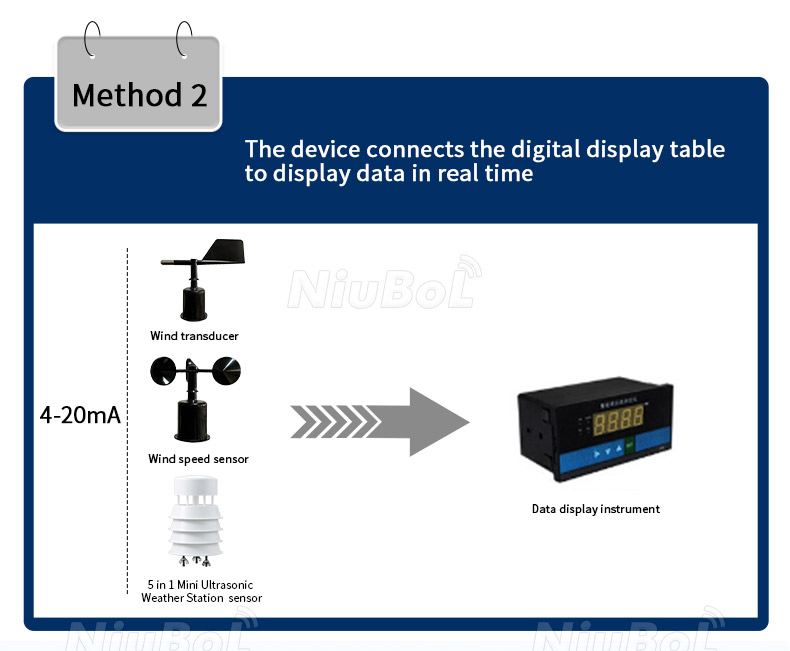
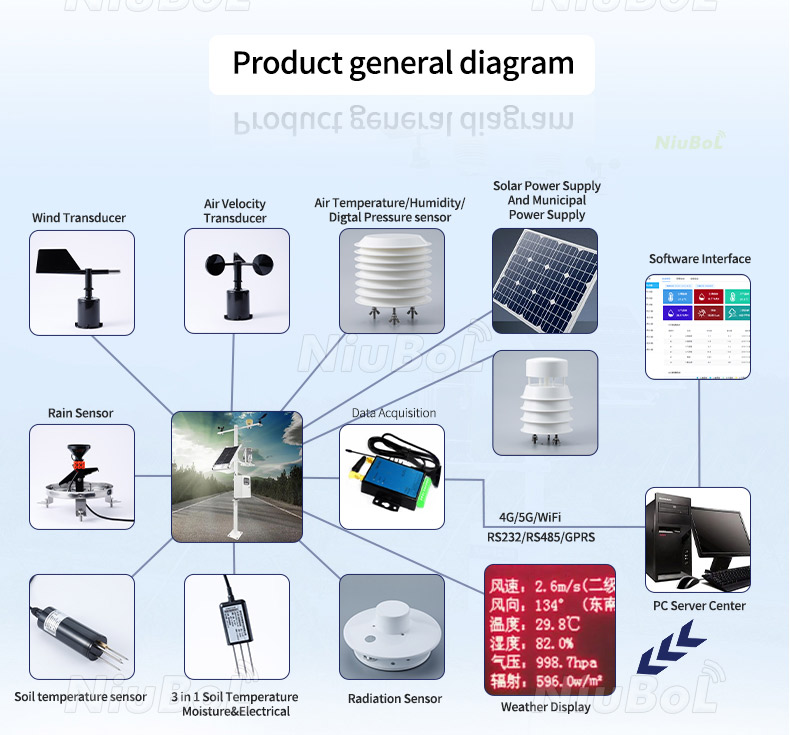
Wind direction is normally monitored together with wind speed and other meteorological parameters. The NBL-W-DS can be combined with the NBL-W-SS wind speed sensor to form a conventional mechanical wind measurement system.
| Component | Measurement |
|---|---|
| NBL-W-DS Wind Direction Sensor | 0–360° wind direction |
| NBL-W-SS Wind Speed Sensor | Wind speed in m/s |
| Temperature & Humidity Sensor | Air temperature and relative humidity |
| Rain Gauge | Rainfall |
| Solar Radiation Sensor | Solar irradiance |
| Data Logger / IoT Gateway | Data collection, storage and remote transmission |
| Comparison | NBL-W-DS Wind Direction Sensor | NBL-W-SS Wind Speed Sensor |
|---|---|---|
| Measurement | Wind direction | Wind speed |
| Measurement Unit | Degrees (°) | m/s |
| Mechanical Structure | Wind vane | Three wind cups |
| RS485 | Available | Available |
| 4–20 mA | Available | Available |
| Typical Use | The two sensors are commonly installed together when both wind speed and wind direction are required. | |
For wind speed measurement, see the NBL-W-SS Wind Speed Sensor.
| Problem / Check | Recommended Action |
|---|---|
| Wind Vane Does Not Rotate Freely | Check for foreign material or increased bearing friction. Service the bearing according to the maintenance instructions if required. |
| Analog Output Is Zero | Check power supply, signal wiring and the receiving analog-input configuration. |
| RS485 Has No Response | Check A/B wiring, device address, baud rate and communication settings. |
| Direction Offset | Check whether the south reference mark was aligned correctly during installation. |
| Physical Damage | Inspect the vane, shaft, housing, cable and mounting hardware after severe weather or maintenance work. |
A1. The NBL-W-DS measures horizontal wind direction over a 0–360° range.
A2. The specified accuracy is ±3°.
A3. The specified starting wind speed is ≤0.5 m/s.
A4. Yes. The RS485 version uses Modbus communication and has a default baud rate of 9600 bps.
A5. Yes. RS485, 4–20 mA and 0–5 V output versions are available.
A6. The wind vane measures angle relative to the sensor's installed reference position. The white south reference mark must therefore be correctly aligned with geographic south for the reported wind direction to correspond to the correct compass direction.
A7. Yes. Each Modbus device should use a unique address, and the RS485 bus, power supply and polling intervals should be designed correctly.
A8. No. NBL-W-DS measures wind direction only. Use it together with a wind speed sensor such as NBL-W-SS when both parameters are required.
A9. Yes. The RS485 sensor can connect to a compatible data logger or IoT gateway, which can transmit data to a private server through supported communication protocols.
 NBL-W-DS-wind-direction-sensor-Manual.pdf
The NBL-W-DS Wind Direction Sensor provides 0–360° wind direction measurement with RS485 Modbus, 4–20 mA or 0–5 V output options. It can be used as an individual wind vane sensor or combined with wind speed, rainfall, temperature, humidity, pressure and radiation sensors to build a complete automatic weather station.
For quotation and model selection, specify the required output signal, power supply, cable length, quantity and the data logger, PLC or monitoring system that will receive the wind-direction data.
Prev:5-in-1 Ultrasonic Weather Station Sensor RS485 | NBL-W-51MUWS
Next:Wind Speed sensor Output Modbus/RS485/Analog/0-5V/4-20mA
Sensors & Weather Stations Catalog
Agriculture Sensors and Weather Stations Catalog-NiuBoL.pdf
Weather Stations Catalog-NiuBoL.pdf
Agriculture Sensors Catalog-NiuBoL.pdf
Water Quality Sensor Catalog-NiuBoL.pdf
Related recommendations
 Wind Speed sensor Output Modbus/RS485/Analog/0-5V/4-20mA
 Tipping bucket rain gauge for weather monitoring auto rainfall sensor RS485/Outdoor/stainless steel
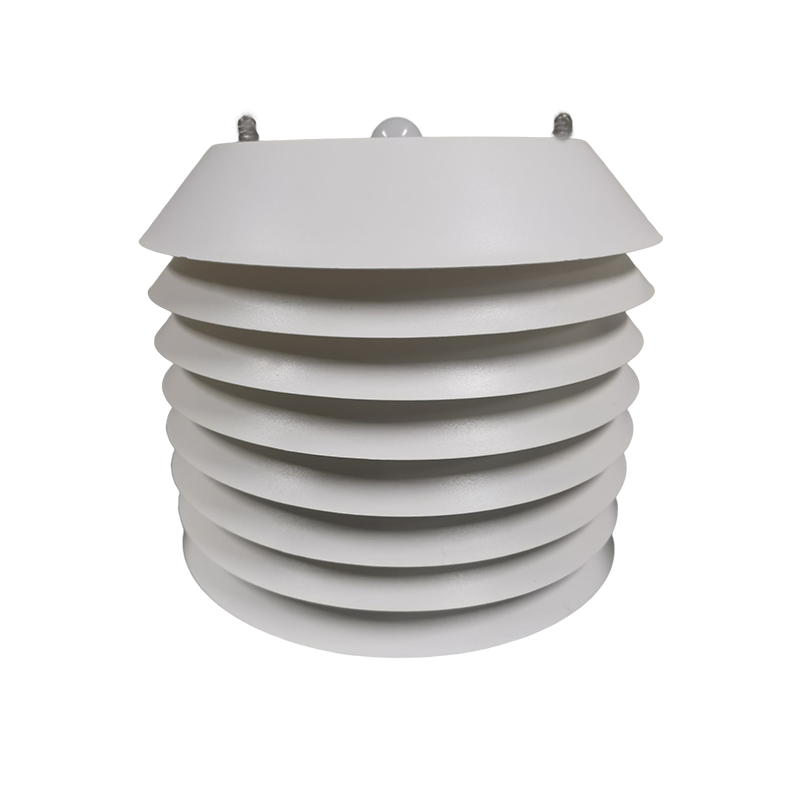 5-in-1 Temperature, Humidity, Air Pressure, Illumination, CO2 Sensor
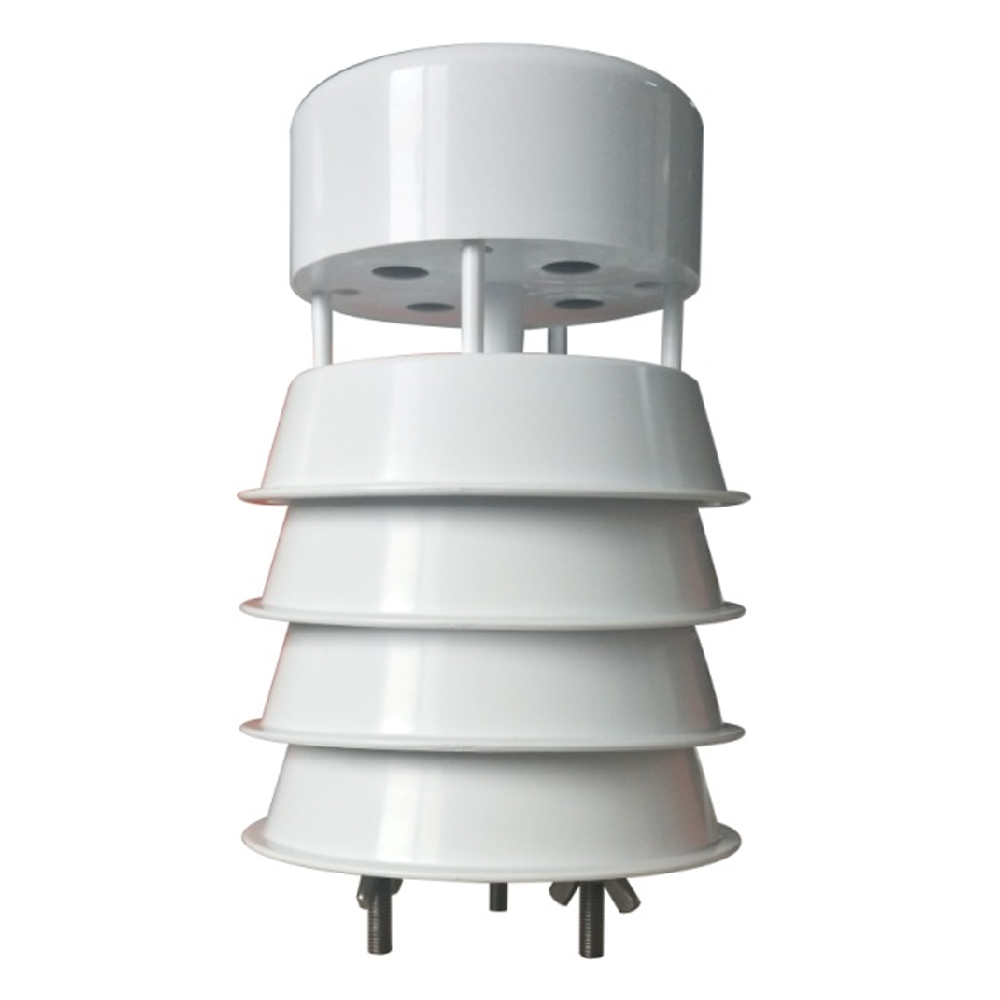 5-in-1 Ultrasonic Weather Station Sensor RS485 | NBL-W-51MUWS
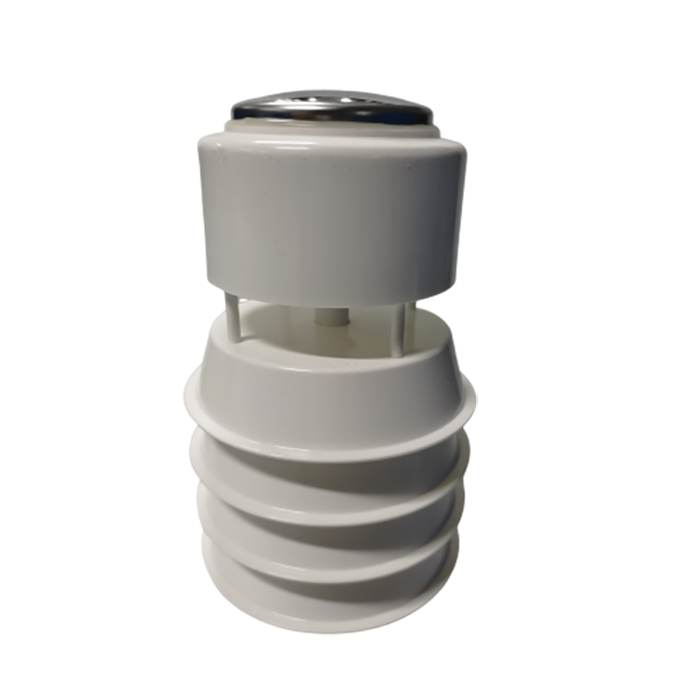 6-in-1 Ultrasonic Weather Station Sensor with Rainfall | NBL-W-61MUWS 7-in-1 Ultrasonic Weather Sensor with Rainfall & illuminance | NBL-W-71MUWS


Screenshot, WhatsApp to identify the QR code
WhatsApp number:+8615367865107
(Click on WhatsApp to copy and add friends)

