





— Products —
 Consumer hotline +8618073152920
WhatsApp:+8615367865107
Address:Room 102, District D, Houhu Industrial Park, Yuelu District, Changsha City, Hunan Province, China
Pyranometers
NiuBoL provides pyranometers and solar radiation sensors for measuring solar irradiance in meteorology, photovoltaic power plants, automatic weather stations, solar-resource assessment, agriculture and research.
A pyranometer normally measures broadband shortwave irradiance incident on its sensing plane, typically expressed in W/m². Depending on sensor type and installation, a system can be configured for global horizontal irradiance (GHI), plane-of-array irradiance (POA), reflected radiation or diffuse horizontal irradiance (DHI). Direct normal irradiance (DNI) requires a dedicated direct-radiation instrument with solar tracking.
Select the instrument according to the required radiation component, accuracy class, spectral response, measurement range, response time, output signal, installation method and the data logger or monitoring platform used by the project.
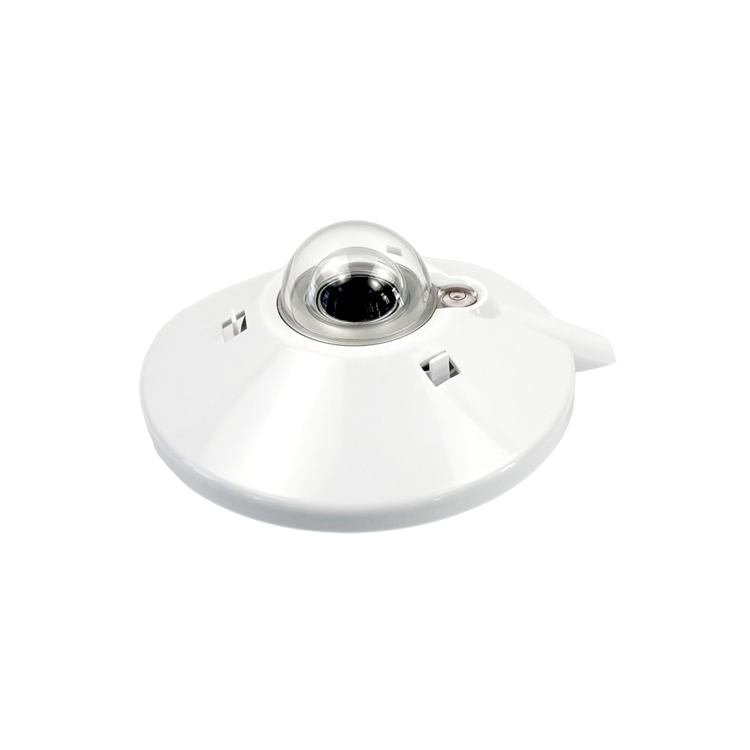 Solar Radiation Sensor (Pyranometer) A-Class
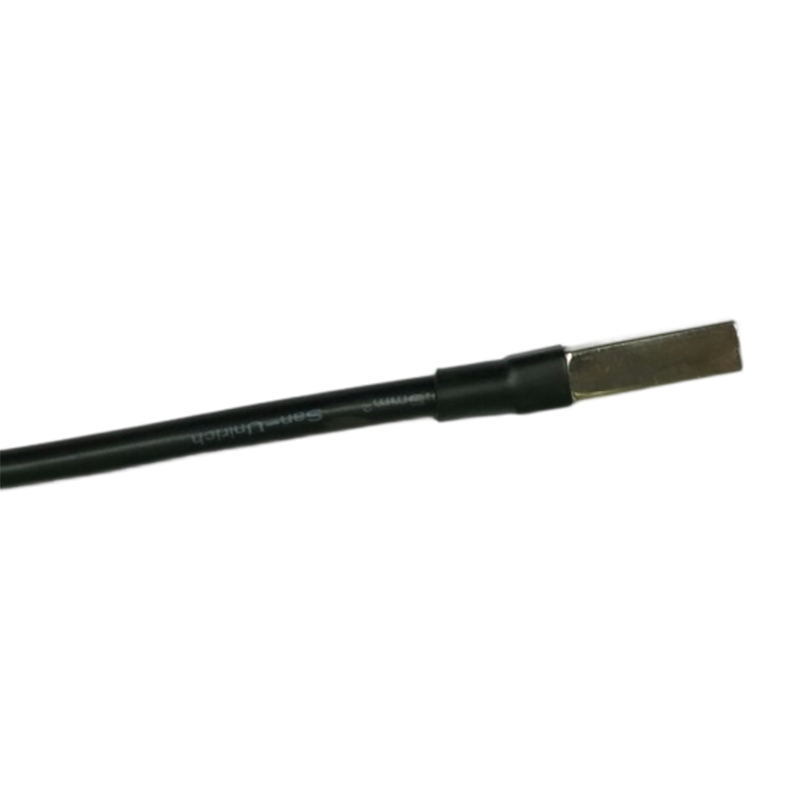 PT1000 Temperature Sensor for PV Modules
PT100 Solar Module Temperature Sensor
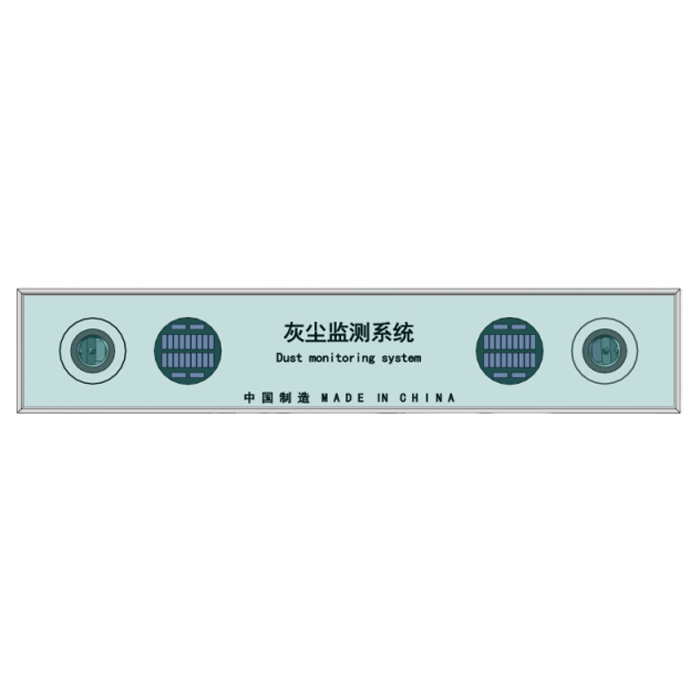 Soiling Sensor Photovoltaic Dust Monitoring Instruments
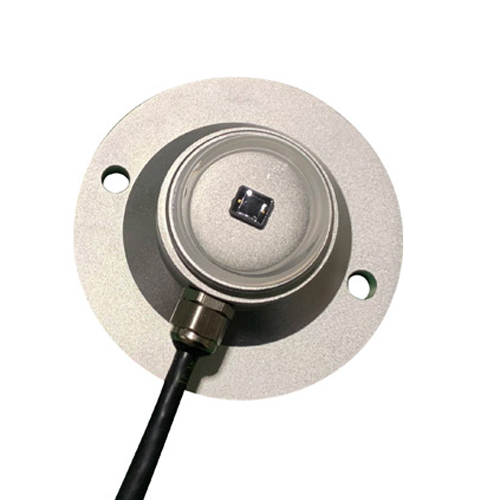 Pyranometer Solar Radiation Sensor for solar energy utilisation, meteorology, agriculture
 Pyranometer Solar Radiation Sensor 4-20mA/RS485
 3-in-1 Fully Automatic Tracking Solar Radiation Instrument
 Scattering Radiometer Solar Radiation Sensor Pyranometer 4-20mA/RS485 For Solar Power Generation Sys···
 Automatic direct radiation Sensor Pyranometer for Photovoltaic Sun Solar Tracking System Weather Sta···
Solar Panel Temp Sensor PV Module Temperature Sensor for Photovoltaic Weather Station
The first selection step is to identify which solar-radiation component the project needs. A standard pyranometer does not independently output every radiation component; the required measurement depends on the instrument type, orientation and any shading or tracking equipment used with it.
| Measurement | Typical Instrument / Setup | Typical Application |
| GHI | Pyranometer installed horizontally | Weather stations, climate monitoring and solar-resource assessment |
| POA | Pyranometer mounted in the same plane as the PV array | Photovoltaic plant performance monitoring |
| DHI | Pyranometer with suitable shading system | Diffuse solar-radiation measurement and research |
| DNI | Direct-radiation sensor with solar tracking | Solar-resource assessment and high-precision radiation stations |
| Reflected Irradiance | Pyranometer oriented toward the reflecting surface | Albedo and surface-reflectance studies |
A pyranometer measures irradiance over a broad field of view on its sensing plane. A direct-radiation instrument measures radiation coming from the solar disk and therefore requires accurate solar tracking. Diffuse radiation is measured by preventing direct sunlight from reaching the pyranometer while allowing the sensor to view the rest of the sky.
For global or plane-of-array measurements, see the pyranometer solar radiation sensor. For high-accuracy projects, see the Class A pyranometer. For diffuse radiation, see the scattering / diffuse radiation sensor. For direct radiation, see the direct radiation sensor.
These instruments measure different physical quantities and should not be treated as interchangeable.
| Instrument | What It Measures | Typical Unit / Use |
| Pyranometer | Broadband solar irradiance over the sensor's spectral response | W/m²; meteorology and PV monitoring |
| PAR Sensor | Photosynthetically active photon flux | µmol/m²/s; crop and plant-light studies |
| Lux Sensor | Illuminance weighted to human visual response | lux; lighting and building applications |
| UV Sensor | Ultraviolet radiation within the sensor's specified UV band | UV monitoring and research |
A broadband pyranometer should therefore not be described as a dedicated UV, infrared or PAR sensor. Its output represents the solar irradiance integrated over its specified spectral response.
Thermopile pyranometers convert absorbed solar radiation into a small electrical signal related to irradiance. Higher-performance models are selected when projects require tighter limits for response time, directional response, temperature response, stability and measurement uncertainty.
NiuBoL offers different pyranometer configurations, including a Class A pyranometer for higher-demand meteorological and photovoltaic monitoring, as well as standard solar-radiation sensors for general weather, agricultural and solar-energy applications.
Output type depends on the selected model. Pyranometers may provide a low-level millivolt signal directly from the thermopile or use signal-conditioning electronics to provide RS485 Modbus, 4–20mA or voltage outputs.
| Output | Typical Receiving Device | Typical Use |
| mV | Precision data logger / differential voltage input | Thermopile measurement and research-grade acquisition |
| RS485 Modbus | PLC / RTU / Data Logger / IoT Gateway | Digital monitoring and multi-sensor systems |
| 4–20mA | PLC Analog Input / Industrial Data Logger | Industrial and long-cable analog monitoring |
Installation has a direct effect on solar-radiation data quality. For GHI measurement, the sensing surface should be level and have an unobstructed view of the sky. For POA measurement, the sensor should be mounted in the same plane as the photovoltaic array.
Avoid permanent shadows from poles, antennas, nearby buildings or other equipment. Keep the optical surface clean and periodically check sensor leveling, cable condition and mounting stability. For high-accuracy projects, follow the calibration and maintenance interval specified for the selected sensor.
Irradiance is only one part of photovoltaic performance monitoring. PV projects may also use module-temperature sensors and soiling sensors to help interpret changes in power output. These are related PV monitoring instruments, but they measure different physical parameters and should not be treated as pyranometers.
Pyranometer / PV Temperature / Soiling Sensor → Data Logger / RTU → 4G / Ethernet → SCADA / Cloud Platform / Private Server
Photovoltaic Power Plants
•
Automatic Weather Stations
•
Solar Resource Assessment
•
Climate Research
Agricultural Research
•
Building Energy Studies
•
Environmental Monitoring
•
Research & Education
| Selection Item | Information to Provide |
| Radiation Component | GHI, POA, DHI, DNI or reflected radiation |
| Application | PV plant, meteorology, agriculture, research or solar-resource assessment |
| Accuracy / Class | Required performance level or project standard |
| Output Signal | mV, RS485 Modbus, 4–20mA or other required output |
| Installation | Horizontal, PV plane, reflected-radiation, shading or tracking installation |
| Data Acquisition | Data logger, PLC, RTU, weather station or private monitoring system |
| Quantity | Sample, pilot station or project quantity |
A1. A pyranometer measures broadband solar irradiance incident on its sensing plane, normally expressed in W/m².
A2. Not by itself. GHI can be measured with a horizontal pyranometer, DHI requires direct sunlight to be shaded from the pyranometer, and DNI requires a dedicated direct-radiation instrument with solar tracking.
A3. Yes. A suitable pyranometer can be mounted in the same plane as the PV modules to measure plane-of-array irradiance.
A4. No. A pyranometer measures broadband irradiance in W/m², a PAR sensor measures photosynthetically active photon flux, and a lux sensor measures illuminance according to human visual response.
A5. No. A broadband pyranometer integrates radiation over its specified spectral response. Dedicated UV or other spectral sensors are required when separate spectral-band measurements are needed.
A6. Output depends on the selected model and may include low-level mV, RS485 Modbus, 4–20mA or voltage outputs.
A7. Leveling is important for horizontal irradiance measurement because sensor tilt changes the incident geometry and can create measurement bias. For POA monitoring, the sensor should match the PV array plane instead.
A8. Provide the required radiation component, application, required class or accuracy, output signal, installation method, data logger or controller, cable requirement and quantity.
For model selection and quotation, provide the required radiation component, application, accuracy or class requirement, measurement range, output signal, installation method, data logger / PLC / RTU, cable requirement and quantity.
For photovoltaic monitoring systems, also specify whether module-temperature sensors, soiling sensors, a data logger, 4G communication, SCADA, cloud monitoring or private-server integration is required.


Screenshot, WhatsApp to identify the QR code
WhatsApp number:+8615367865107
(Click on WhatsApp to copy and add friends)

