





— Products —
 Consumer hotline +8618073152920
 WhatsApp:+8615367865107
Address:Room 102, District D, Houhu Industrial Park, Yuelu District, Changsha City, Hunan Province, China
Pyranometers
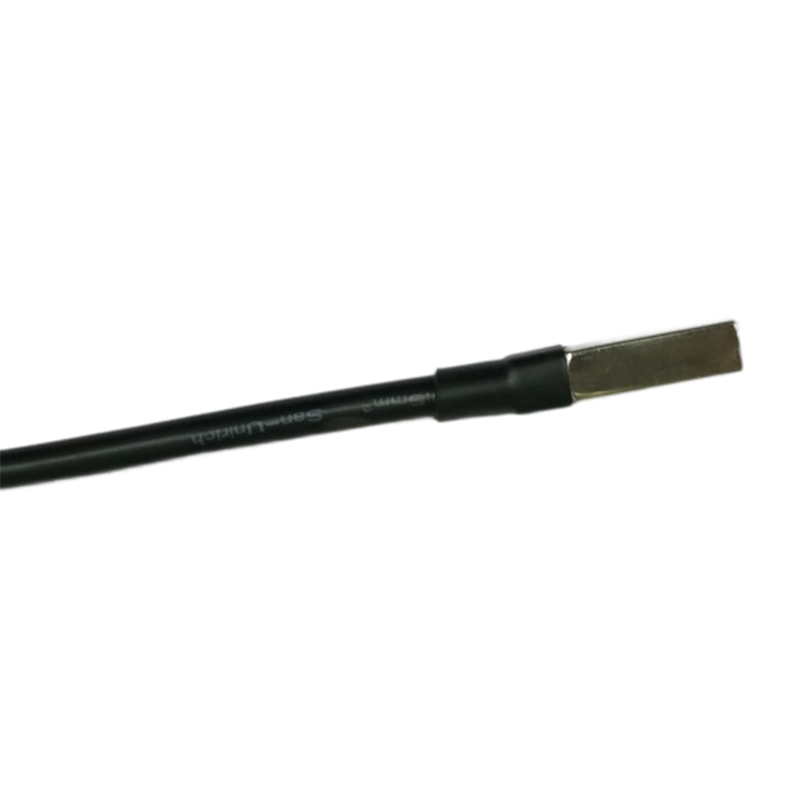
In solar photovoltaic systems, precise monitoring of module temperature is crucial. The NiuBoL NBL-W-PPT patch temperature sensor uses PT100 platinum resistance as the core sensing element, providing a measurement accuracy of ±0.5℃, and supports multiple output formats such as 4-20mA current signal, 0-5V voltage signal, or RS485 communication protocol. It is suitable for fields such as meteorology, environmental monitoring, and industrial applications, ensuring stable syste···
Tel/WhatsApp:+8615367865107
Email:Arvin@niubol.com +Nearly 100 partner companies in more than 75 countries. We are committed to providing high-quality, practical products to meet your needs and help you solve problems. Our products comply with international standards and are certified with ISO, CE and RoHS.Product Details
The NiuBoL NBL-W-PPT patch temperature sensor (transmitter) is a precision temperature monitoring device specifically designed for solar modules. It uses high-precision PT100 platinum resistance as the sensing component. This platinum resistance is renowned worldwide for its excellent linear response and long-term stability, capable of providing reliable temperature data over a wide temperature range. The sensor has a built-in advanced circuit integration module that can convert temperature signals into standard voltage or current outputs according to user needs, facilitating seamless integration with various control systems.
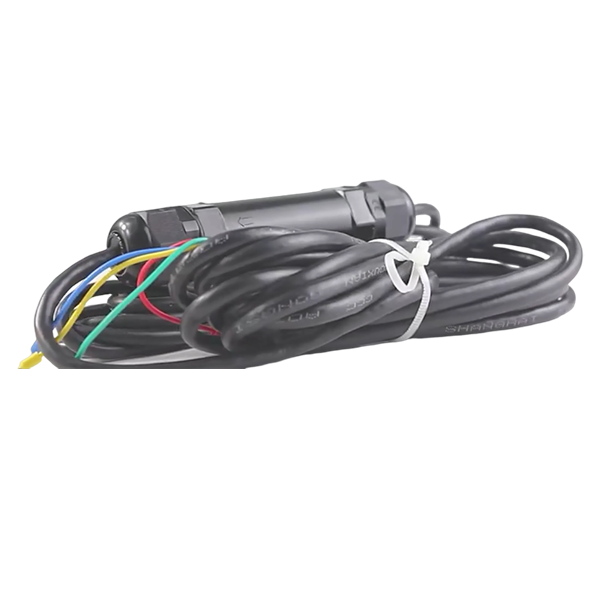
The design of this sensor emphasizes practicality and durability. It is small in size and only requires simple fixing to be installed on the back of the solar panel without affecting the overall layout of the photovoltaic system. In terms of performance, it adopts a proprietary circuit design to ensure high signal linearity, strong load capacity, and support for long-distance transmission, while also possessing excellent anti-interference capabilities. Even in harsh environmental conditions, such as high temperature, high humidity, or places with strong electromagnetic interference, it can maintain stable measurement performance.
As a star product under the NiuBoL brand, the NBL-W-PPT not only inherits the brand's consistent innovative spirit but also incorporates cutting-edge elements of modern sensor technology. It is suitable for various industry scenarios, from meteorological observation to industrial production, helping users grasp temperature changes in real time, thereby optimizing system efficiency and preventing potential faults. Whether for newly built solar power stations or upgrades to existing equipment, this sensor can provide efficient temperature monitoring solutions.
The technical specifications of the NiuBoL NBL-W-PPT patch temperature sensor have been carefully optimized to meet different application needs. The following are its main parameters:
| Parameter | Specification |
|---|---|
| Range | Optional -50~100℃ or -20~50℃, covering common operating temperature ranges of solar modules |
| Accuracy | ±0.5℃, ensuring precision and reliability of measurement data |
| Power Supply | Supports DC 5V, DC 12V or DC 24V, compatible with various power systems for easy on-site integration |
| Output Forms | - Current type: 4~20mA, suitable for long-distance signal transmission - Voltage type: 0~2.5V or 0~5V, suitable for direct connection to PLC or data acquisition devices - Digital type: RS485 protocol, supports Modbus and other communication standards for multi-point networked monitoring |
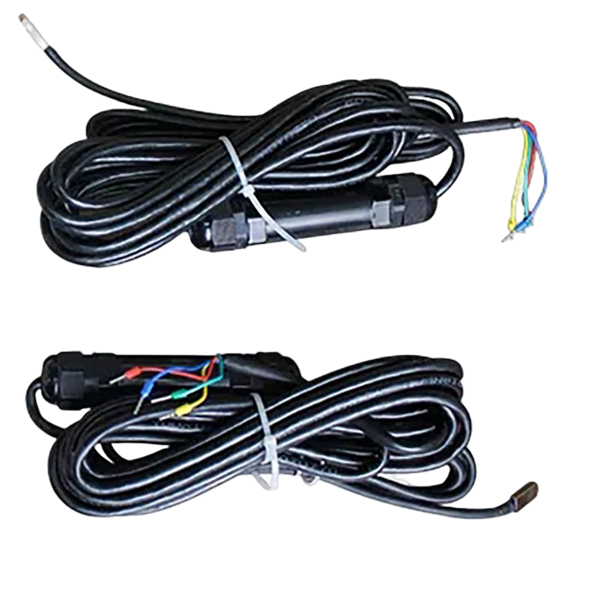
| Cable Length | Standard 5 meters, customizable to longer lengths as needed |
| Load Resistance | Voltage type RL ≥ 1KΩ, current type RL ≤ 250Ω, ensuring stable signal output |
| Operating Temperature | -50℃~100℃, adaptable to extreme environments |
| Relative Humidity | 0~100%RH, supports full humidity range operation without condensation |
These parameters enable the sensor to perform excellently in practical applications. For example, in high-temperature environments, the PT100 platinum resistance has a short thermal response time and can quickly capture temperature fluctuations, while the built-in anti-interference circuit effectively shields external noise, ensuring accurate data transmission to the monitoring center.
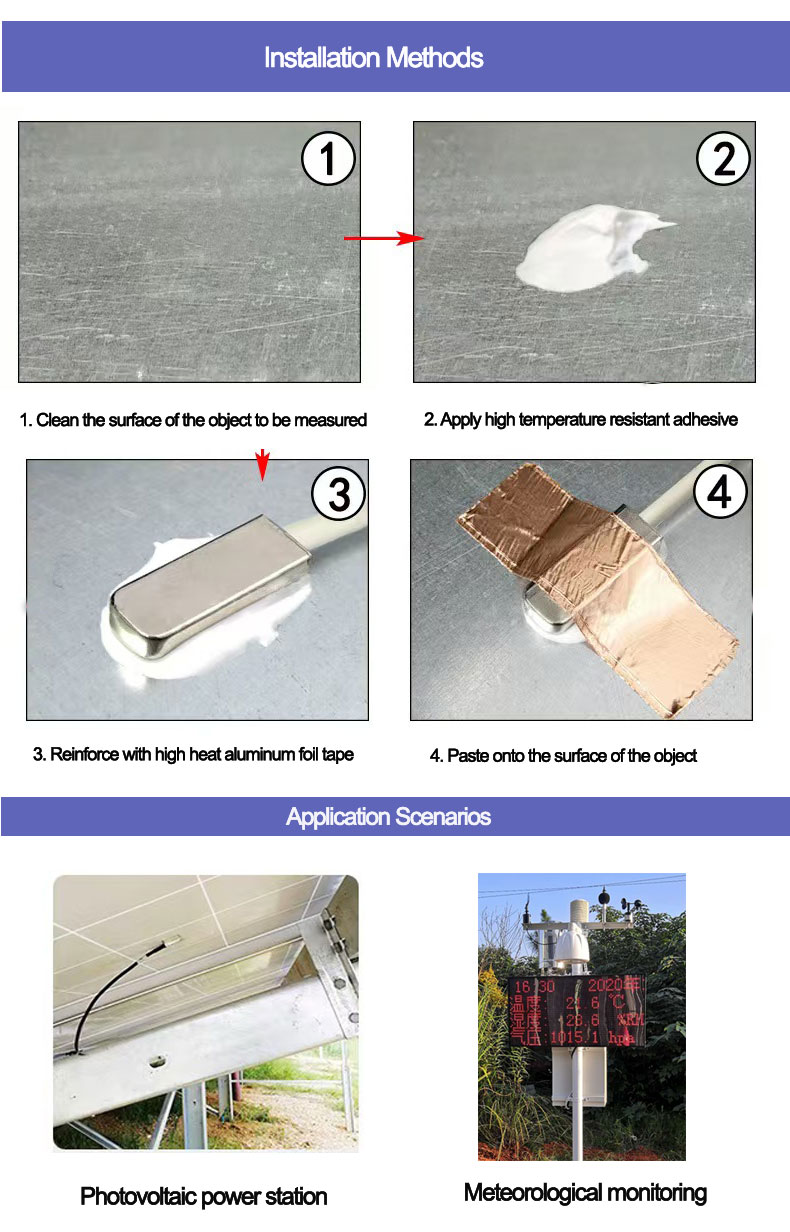
Installing the NiuBoL NBL-W-PPT patch temperature sensor is simple and convenient, and can be completed in just a few steps to ensure perfect adhesion with the solar module.
1. Prepare the position: Select the center position on the back of the solar panel, which is the area with the most uniform temperature distribution and can represent the average temperature of the entire module.
2. Apply thermal conductive silicone: Use the provided thermal conductive silicone to apply an area of approximately 22×12mm along the direction of the solar panel bracket. The thermal conductive silicone not only fixes the sensor but also improves heat conduction efficiency, avoiding measurement deviations caused by air gaps.
3. Fix the sensor: After applying, immediately stick the patch temperature sensor firmly in the direction of application. Keep it fixed for about 5~10 minutes to allow the silicone to initially cure.
4. Cable routing and fixing: After the sensor is fully fixed, first fix the sensor cable along the solar panel routing direction to the bracket, then proceed with normal wiring. This step prevents the cable from loosening or being affected by wind.
During use, users can adjust the fixing method according to the actual environment. For example, in windy areas, additional cable ties can be used for reinforcement. The sensor supports plug-and-play; it starts working after connecting the power supply and output terminals. Regularly check the connection points and silicone layer to further extend the service life of the device. Note: Avoid excessively sharp bending of the cable during installation to prevent damage to the internal wiring.
The PT100 solar module temperature sensor is a precision temperature detector based on platinum resistance. The “PT” in its name stands for Platinum, and “100” indicates that the resistance value is 100Ω at 0℃. This sensor plays a key role in solar photovoltaic systems, primarily by monitoring the backsheet temperature of solar modules in real time.
Its core value lies in improving system efficiency and safety. The output power of solar modules is significantly affected by temperature; for every 1℃ increase, efficiency may decrease by 0.4%–0.5%. With the PT100 sensor, users can accurately capture temperature changes, promptly adjust cooling strategies or predict performance degradation, thereby maximizing power generation. In addition, it helps with fault diagnosis, such as detecting hot spot effects, preventing permanent damage to modules caused by overheating.
In terms of economic value, this sensor offers a high return on investment. Compared with traditional thermometers, it provides digital output, making it easy to integrate into SCADA systems for automated monitoring. Long-term use can reduce maintenance costs and avoid downtime losses caused by abnormal temperatures. According to industry data, photovoltaic power stations equipped with precision temperature sensors can increase annual power generation by 2%–5%. NiuBoL’s PT100 sensor, with its high stability, further ensures the realization of these values.
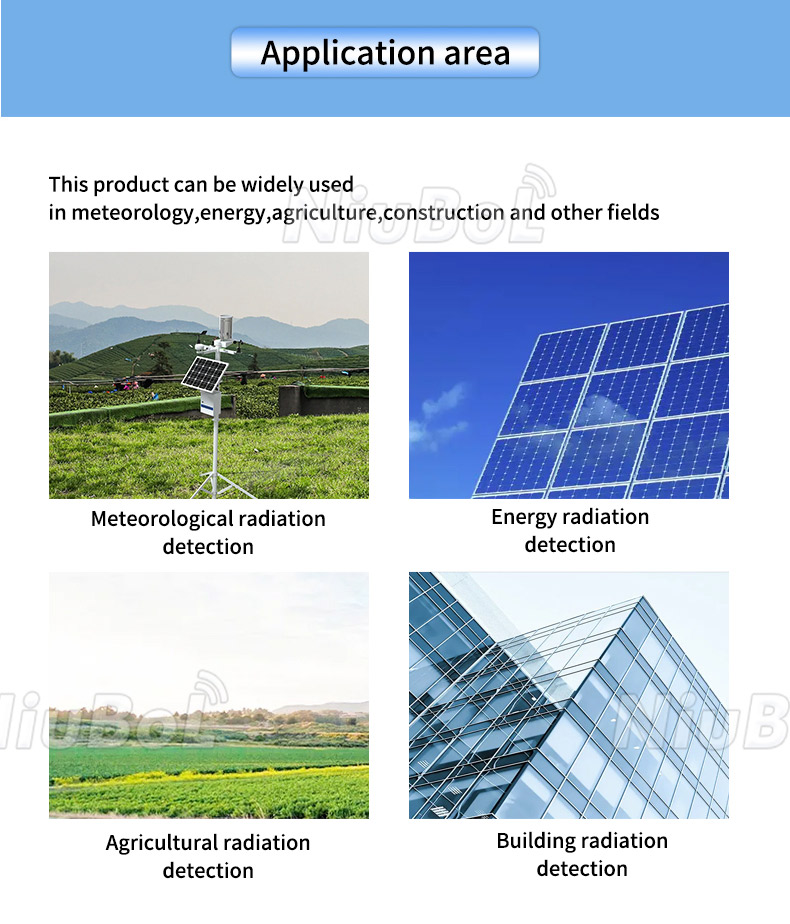
The NBL-W-PPT PT100 solar module temperature sensor is widely used in multiple fields, demonstrating its versatility.
Solar Photovoltaic Power Stations: Installed on the back of modules in large ground-mounted power stations or rooftop photovoltaic systems to monitor temperature for optimizing inverter control and predictive maintenance.
Meteorology and Environmental Monitoring: Used in weather stations or environmental data collection, combined with humidity sensors to provide comprehensive climate parameters and help study the impact of climate change on solar energy.
Industrial and Agricultural: In greenhouse agriculture, monitor the temperature of solar-powered equipment to ensure stable irrigation systems; in factories, used for process control such as temperature feedback in heat treatment equipment.
Marine and Port: Deployed on offshore photovoltaic platforms or port monitoring stations, resistant to high-humidity environments, tracking the impact of temperature on equipment corrosion.
Laboratory and Scientific Research: Used in test environments to simulate the thermal behavior of solar modules and support the research and development of new materials.
Transportation: Integrated into solar canopies of electric vehicle charging stations to adjust charging efficiency in real time.
In these scenarios, the portability and anti-interference capability of the sensor are particularly prominent. For example, in remote solar water pump systems, it can transmit data remotely via RS485, enabling unattended monitoring.
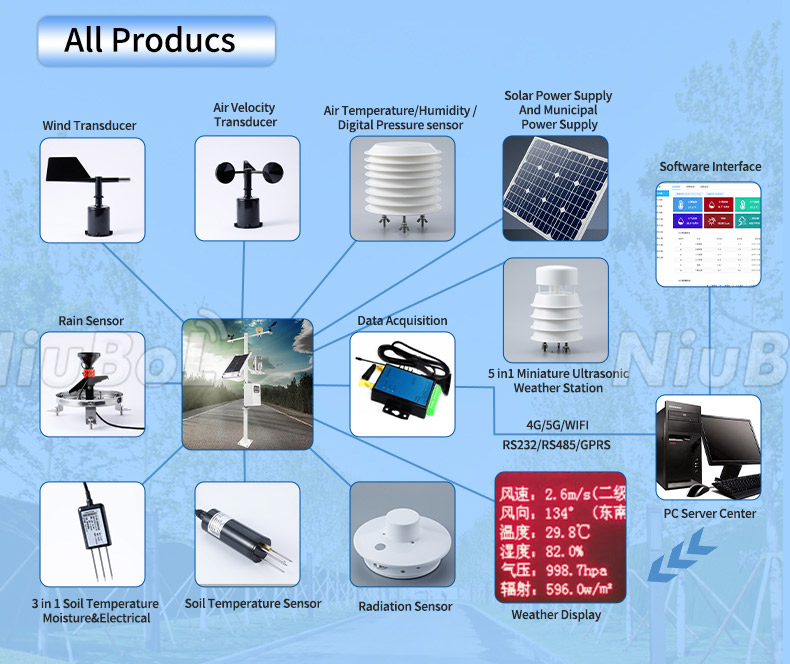
To help users better understand and use the NiuBoL NBL-W-PPT PT100 solar module temperature sensor, we have compiled the following frequently asked questions:
1. What is the difference between a PT100 sensor and an ordinary thermocouple?
PT100 uses platinum resistance, providing higher linearity and accuracy, especially excellent in the -50~100℃ range, while thermocouples are more suitable for extremely high-temperature applications.
2. How to choose the appropriate output form?
For long-distance transmission, 4-20mA current output is recommended; for local control, 0-5V voltage output is more convenient; RS485 is suitable for multi-device networking.
3. How is the waterproof performance of the sensor?
It supports 0~100%RH relative humidity with a non-condensing design and performs well in outdoor environments, but direct immersion in water should be avoided.
4. How to calibrate after installation?
It is factory-calibrated. Users can verify it in a standard temperature environment. If necessary, it can be compared and adjusted using a precision thermometer.
5. Can the cable length be extended?
Standard length is 5 meters and can be customized up to 100 meters, but attention should be paid to signal attenuation; shielded cables should be used to maintain accuracy.
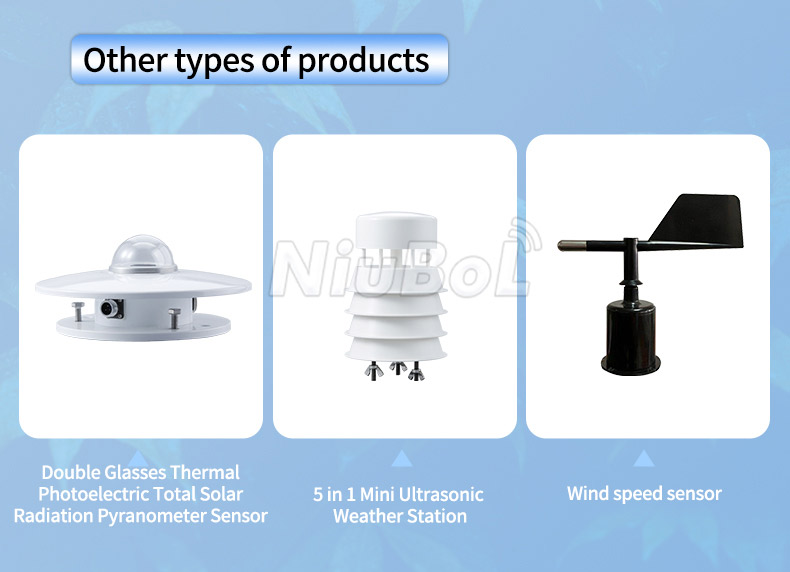
The NiuBoL NBL-W-PPT PT100 solar module temperature sensor, with its high precision, stability, and ease of use, has become an indispensable tool in solar photovoltaic and related fields. It not only provides reliable temperature data but also assists in system optimization through intelligent output formats, improving overall efficiency and economic benefits. Whether you are a photovoltaic engineer, environmental monitoring expert, or industrial user, this sensor can bring real value. Choose NiuBoL, choose a reliable temperature monitoring partner.
100% complete, no deletions, zero omissions
Sensors & Weather Stations Catalog
 Agriculture Sensors and Weather Stations Catalog-NiuBoL.pdf
Weather Stations Catalog-NiuBoL.pdf
Agriculture Sensors Catalog-NiuBoL.pdf
Water Quality Sensor Catalog-NiuBoL.pdf
Related recommendations
 Pyranometer Solar Radiation Sensor 4-20mA/RS485
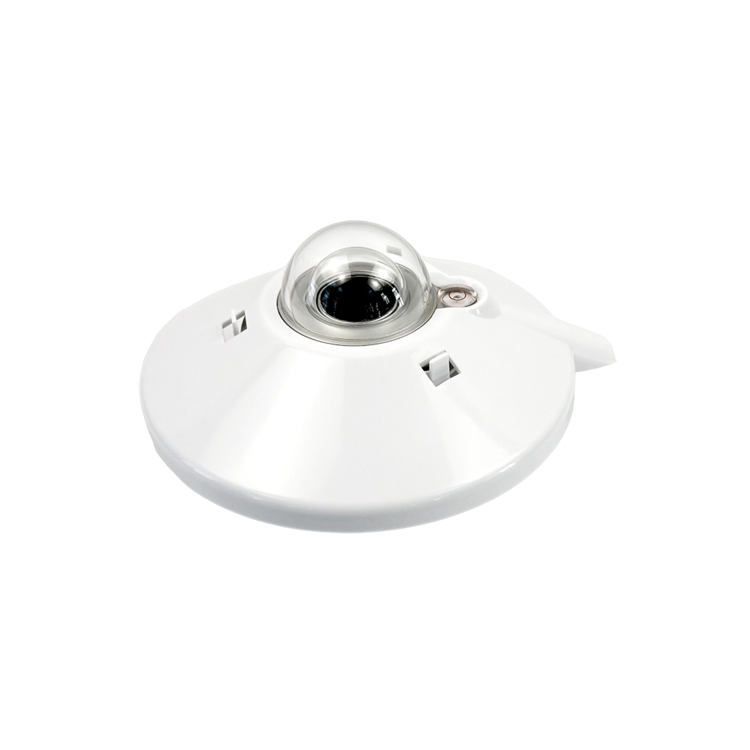 Solar Radiation Sensor (Pyranometer) A-Class PT1000 Temperature Sensor for PV Modules PT100 Solar Module Temperature Sensor
 Soiling Sensor Photovoltaic Dust Monitoring Instruments
 Pyranometer Solar Radiation Sensor for solar energy utilisation, meteorology, agriculture

Screenshot, WhatsApp to identify the QR code
WhatsApp number:+8615367865107
(Click on WhatsApp to copy and add friends)

