





— Blogs —
—Products—
 Consumer hotline +8618073152920
WhatsApp:+8615367865107
Address:Room 102, District D, Houhu Industrial Park, Yuelu District, Changsha City, Hunan Province, China
Product knowledge
Time:2025-07-10 20:59:51 Popularity:2052
PM2.5 PM10 sensor accuracy must be evaluated with the concentration range, absolute and relative error terms, test conditions and sampling arrangement. The NiuBoL NBL-W-PM uses laser scattering and reports particulate mass concentrations. It does not measure every air pollutant or establish that a site is safe merely because readings are available.
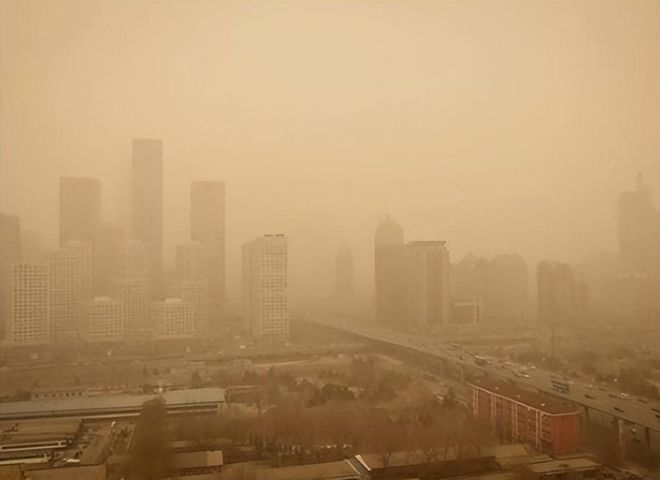
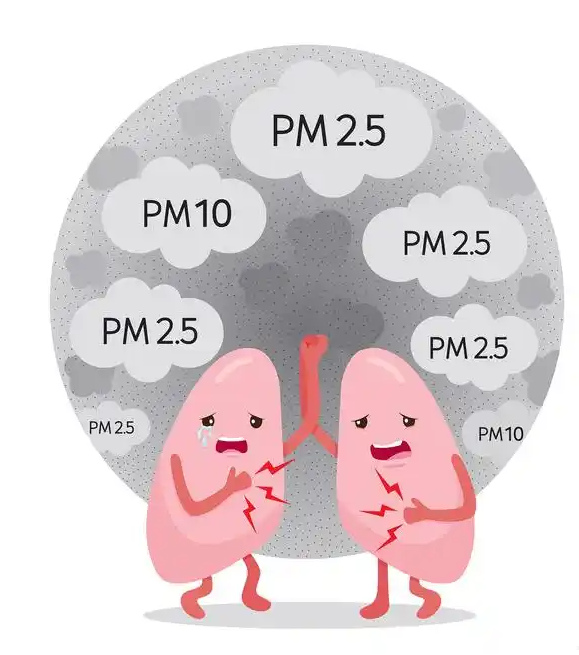
PM2.5 and PM10 describe particulate size fractions, not two chemical species. An optical sensor estimates particulate concentration from the response to particles in its sampled air. A value in ug/m3 is not a direct count of every particle, and it does not identify the chemical composition of the dust.
A project requiring gases, pollutant composition or another dust fraction needs the corresponding measurements. A PM2.5/PM10 channel should not be relabelled as a complete air-quality assessment. Decide whether the intended use is local trend monitoring, a comparison between locations or a measurement with a specific regulatory or contractual method.
| Parameter | NBL-W-PM specification | Procurement implication |
|---|---|---|
| Measurement principle | Laser scattering with internal fan | The sampled aerosol and inlet condition affect the result. |
| PM2.5 range | 0-1000 ug/m3 | Select for the expected concentrations, not only the maximum range. |
| PM10 range | 0-2000 ug/m3 | Confirm which channel is used in each exported field. |
| Error terms | +/-15% and +/-10 ug/m3 at 25 degree C, 50%RH | Confirm the combined tolerance rule and test method for the ordered configuration. |
| Minimum detectable particle diameter | 0.3 um | This is not a PM0.3 output or a guarantee for all smaller particles. |
| Supply / consumption | 12-24 V DC / 350 mW | Include the logger and communication equipment separately in station power. |
| Output / standard cable | RS485; 2.5 m | Confirm the supplied protocol, wiring and any cable change. |
| Operating temperature / humidity | -20 to 60 degree C / 0-99%RH | Avoid wetting and condensation; an RH range is not an immersion rating. |
The relative and absolute terms matter differently at different concentrations. At 20 ug/m3, 15% is 3 ug/m3; at 100 ug/m3, 15% is 15 ug/m3. The listed 10 ug/m3 absolute term therefore cannot be ignored when defining a low-concentration acceptance limit. These calculations explain the units; they are not field test results.
Do not silently turn the two terms into a different error formula. Have the quotation or acceptance specification state how they are applied together. Also distinguish these specified conditions from the full outdoor operating range: a rating at 25 degree C and 50%RH does not quantify every humidity or particle-composition effect.
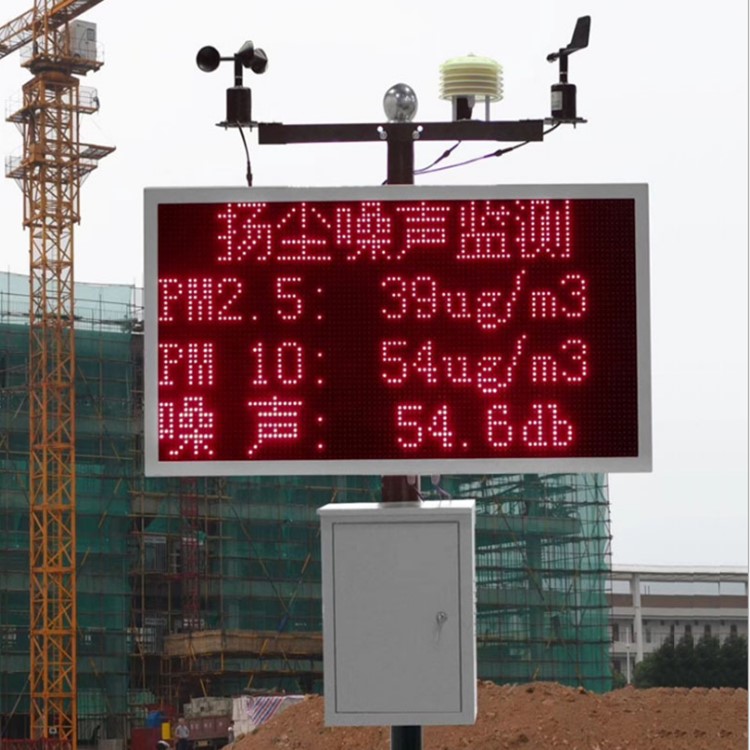
A sensor can repeat a result consistently while remaining offset from a comparison instrument. Conversely, a short sequence of variable readings may reflect changing local particles rather than poor repeatability. Evaluate the time-matched record and the measurement conditions instead of judging accuracy from a stable display.
The US EPA air-sensor performance resources distinguish sensor evaluation for non-regulatory supplemental monitoring from regulatory monitoring requirements. A range and error line do not establish reference-method equivalence. Where a project requires a particular approval or method, name it before selecting the equipment.
The NBL-W-PM requires vertical installation and an appropriate air path. Avoid positioning it directly in a fan jet or where a cabinet exhaust dominates the sample. The instrument's internal fan does not make every external airflow arrangement equivalent.
Weather protection should prevent rain entry while allowing the intended ambient air to reach the inlet. A sealed cabinet can protect electronics but isolate the sampling path. Record the final inlet arrangement with the station configuration so a later enclosure change is not treated as an inconsequential accessory swap.
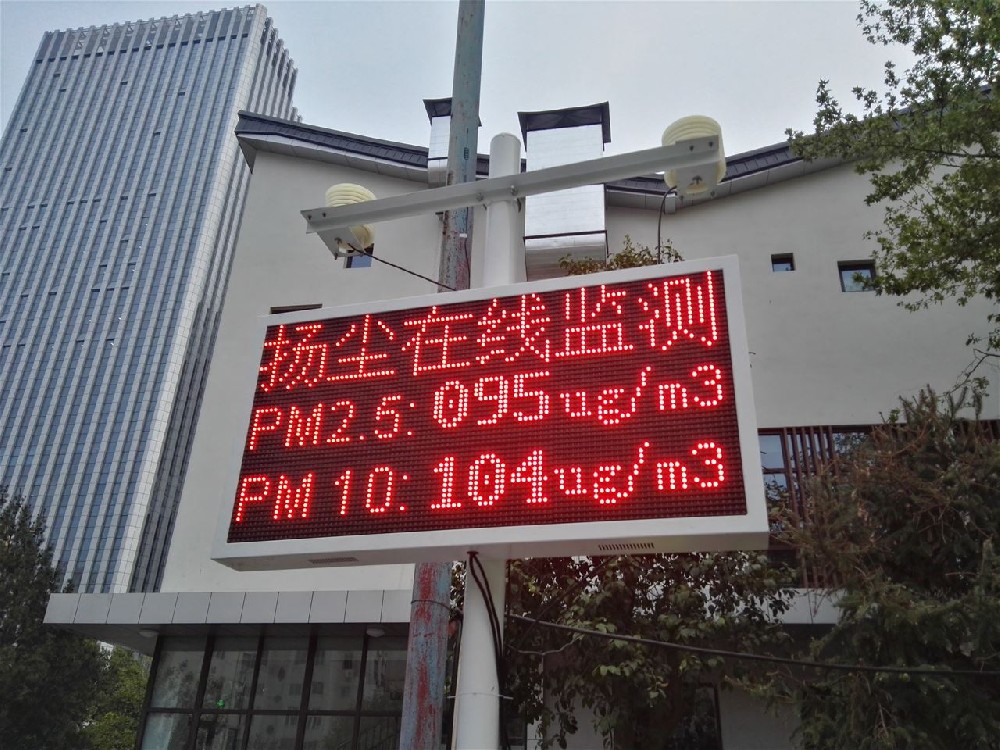
Wet optical components and sticky deposits can disturb measurement. Avoid oil mist and fibrous debris entering the module, and investigate whether an abnormal response coincides with moisture or a contaminated inlet. Do not infer that a high displayed concentration uniquely identifies either a real dust event or a sensor fault.
Preserve temperature, humidity, observation time and maintenance notes where those channels are available. The EPA Air Sensor Guidebook provides a framework for planning measurements and interpreting performance. For a site trial, include the conditions relevant to the project rather than only a convenient dry-weather period.
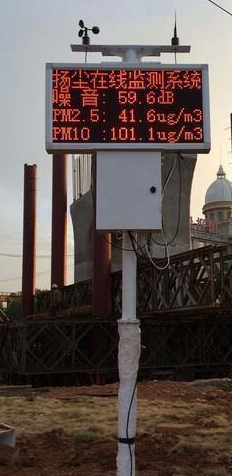
For the standalone RS485 version, NBL-W-PM provides Modbus RTU data acquisition at 9600 bps, eight data bits, no parity and one stop bit, with at least 1000 ms between communications. Confirm the supplied version and settings before connecting it to a PLC, RTU or data logger.
The two returned data words represent PM2.5 followed by PM10. For example, data words 00 B4 and 01 10 represent 180 and 272 ug/m3 respectively. They should not be decoded as 18.0 and 27.2 by copying a temperature sensor's scale factor. This is a protocol example, not an environmental test of a particular installation.
Keep a failed response distinguishable from a genuine zero concentration. Check the exported record as well as the local display, particularly after a sensor replacement or decoder change. A successful RS485 transaction does not verify sampling or environmental accuracy.

State the concentration conditions, comparison instrument, time matching, averaging and required data completeness. Compare PM2.5 and PM10 separately. An average difference across a trial can hide concentration-dependent errors or problems confined to humid conditions.
For a NiuBoL inquiry, provide the intended application, expected particulate conditions, outdoor protection, receiving interface and acceptance method. Ask for the model-specific configuration and error interpretation. Price the sensing unit separately from the station, communications and field comparison work rather than assuming every installation has the same scope.
No. The specification also includes a +/-10 ug/m3 term at 25 degree C and 50%RH. Confirm how the terms are combined in the acceptance requirement instead of dropping the absolute term at low concentrations.
No. A particle-detection characteristic is not a separate reported mass fraction. Order and decode the documented PM2.5 and PM10 channels; do not create a PM0.3 value by relabelling them.
Not if the arrangement prevents the intended sample air from reaching the sensor. Specify weather protection together with the inlet and airflow path, and follow the vertical mounting requirement.
No. Communication and measurement-method approval are separate matters. A compliance project needs the required method, performance evidence and applicable approval specified before procurement.
Check units, scaling, time matching, inlet condition and the comparison method first. Keep the uncorrected data and document any approved correction and its valid conditions so future changes can be evaluated.
 NBL-W-PM25-PM10-Integrated-sensors-Manual.pdf
Judge PM2.5 PM10 sensor accuracy through a defined concentration and sampling task. Keep absolute and relative error terms visible, protect the air path, and verify decoding before judging small differences. Retain the agreed error rule, comparison results and valid operating conditions with the project record.
Prev:Compact Weather Sensor: When to Separate Measurement Positions
Next:Tipping Bucket Rainfall Sensor: Cold-Weather Operating Limits
Related recommendations
Sensors & Weather Stations Catalog
Agriculture Sensors and Weather Stations Catalog-NiuBoL.pdf
Weather Stations Catalog-NiuBoL.pdf
Agriculture Sensors Catalog-NiuBoL.pdf
Water Quality Sensor Catalog-NiuBoL.pdf
Related products
 Combined air temperature and relative humidity sensor
 TDR Soil Moisture & Temperature Sensor for irrigation| RS485 |4-20mA| NBL-S-THR
 Soil pH sensor RS485 soil Testing instrument soil ph meter for agriculture |NBL-S-PH
 Wind Speed sensor Output Modbus/RS485/Analog/0-5V/4-20mA
 Tipping bucket rain gauge for weather monitoring auto rainfall sensor RS485/Outdoor/stainless steel
 Pyranometer Solar Radiation Sensor 4-20mA/RS485


Screenshot, WhatsApp to identify the QR code
WhatsApp number:+8615367865107
(Click on WhatsApp to copy and add friends)

