

— Download —
 Consumer hotline +8618073152920
 WhatsApp:+8615367865107
Address:Room 102, District D, Houhu Industrial Park, Yuelu District, Changsha City, Hunan Province, China
All products
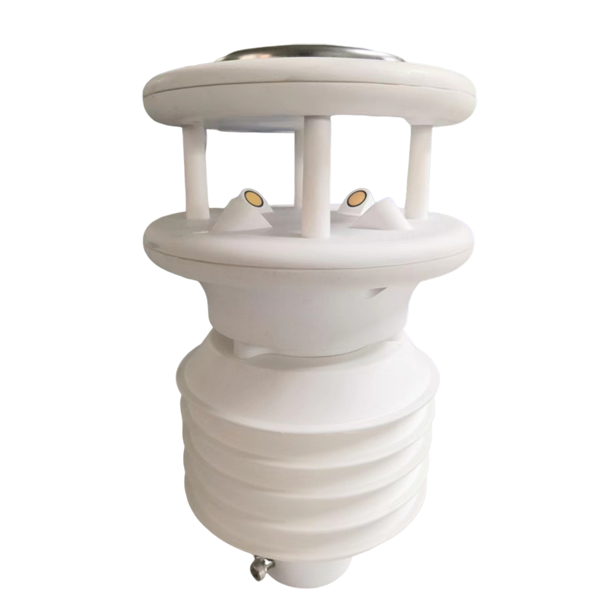
Configure a 7-in-1 ultrasonic weather station for wind, temperature, humidity, pressure, rainfall and either solar radiation or illuminance through RS485 Modbus output.
Tel/WhatsApp:+8615367865107
Email:Arvin@niubol.com +Nearly 100 partner companies in more than 75 countries. We are committed to providing high-quality, practical products to meet your needs and help you solve problems. Our products comply with international standards and are certified with ISO, CE and RoHS.Product Details
Quick Answer: This 7-in-1 weather station combines ultrasonic wind, air temperature, humidity, pressure, piezoelectric rainfall and one light channel in an IP65 RS485 Modbus device. The seventh channel is solar radiation or illuminance; the current page states that both cannot be used together. Buyers must name the required light quantity, register map and optional particle or noise modules before ordering.
Solar radiation in W/m2 and illuminance in Lux are different measurements. Photovoltaic or energy-balance work normally needs radiation; visible-light assessment may need Lux. The product page states these options are mutually exclusive in this configuration. Put the selected channel in the purchase model and register schedule.
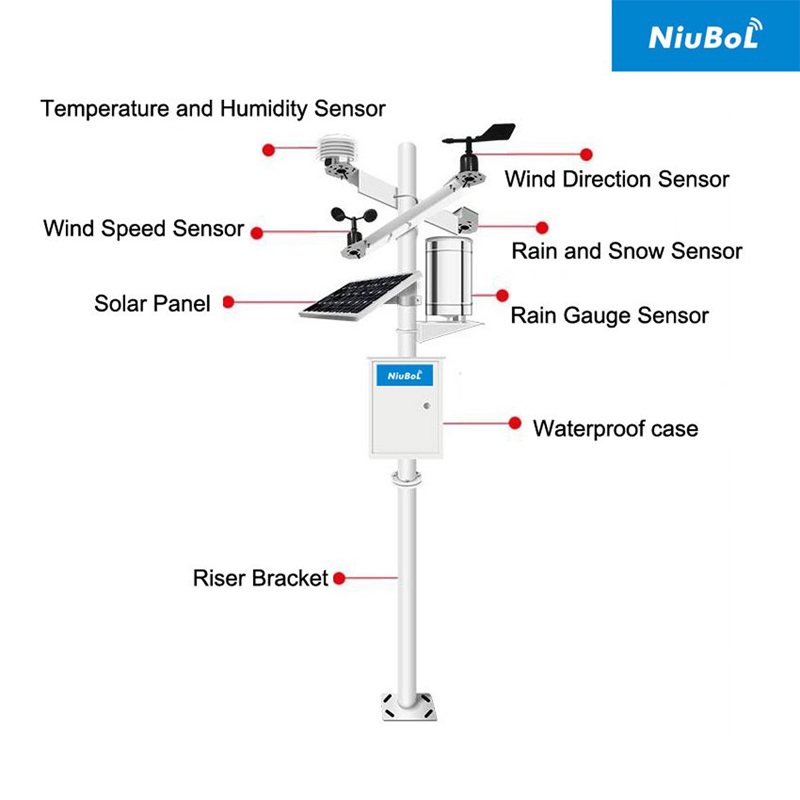
One housing simplifies the mast and RS485 connection. Wind needs open flow, rainfall needs unobstructed exposure and light needs a clear view. Air channels should avoid heated surfaces. Choose a location that supports the project's priority variable and document unavoidable compromises.
Impact rainfall avoids a collecting bucket and can suit compact installations, but it uses a different measurement principle. Do not assume identical response in every rain type. Where precipitation method is contractual, compare the required standard and run a colocated field evaluation.
| Item | Published specification or project condition |
|---|---|
| Supply / output | 9-24 VDC; RS485 Modbus; 9600 baud |
| Power | 0.4 W without particulate sensors; 1 W with particulate sensors |
| Environment | -40 to 80 degrees C; 0-95% RH; IP65 |
| Wind | 0-60 m/s and 0-359 degrees |
| Air temperature / humidity | -40 to 80 degrees C; 0-100% RH |
| Pressure | 10-1100 hPa |
| Rainfall | 0-8 mm/min; 0.01 mm resolution; +/-10% stated accuracy |
| Solar radiation option | 0-1500 W/m2; 1 W/m2 resolution; +/-10% |
| Illuminance option | 0-200000 Lux; 10 Lux resolution; +/-7% |
| Optional additions | PM2.5, PM10 and noise, up to the configured system scope |
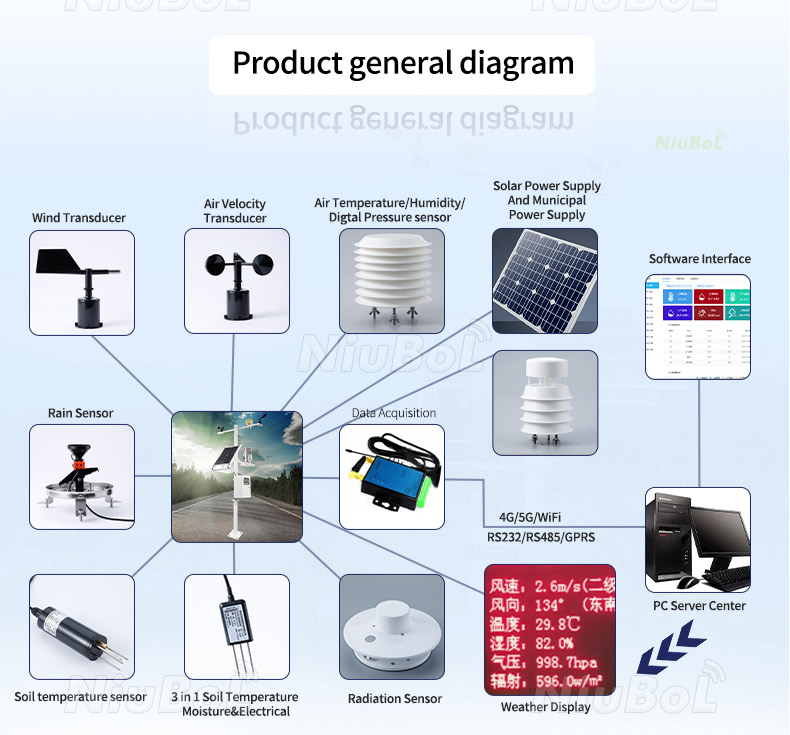
Particulate channels raise stated power from 0.4 W to 1 W and need airflow and contamination checks. Noise also needs a defensible acoustic location. Order optional channels only when the project has a use, acceptance method and maintenance plan.
Confirm the register map matches the chosen radiation or Lux channel and any optional modules. Assign address, serial format and poll interval, then verify units at the logger and platform. Reserve bandwidth and power before adding stations to the same bus.
Check north reference and wind response, compare temperature and humidity in representative air, observe rain response, and verify the selected light channel against a suitable reference. A single communications test does not accept seven different physical measurements.
Field challenge: The project needs wind, ambient weather, rain and radiation near solar arrays.
Integration approach: Order the radiation version, document mast exposure and synchronize data with module temperature and plant output.
Project value: Performance teams receive weather context in one digital package.
Field challenge: Crop management needs weather and visible-light or radiation context with remote access.
Integration approach: Choose the light quantity from the agronomic decision and use a local logger plus gateway.
Project value: The farm can trend several variables without a large sensor crossarm.
Field challenge: Limited mounting space favours an integrated device, while particles may also be requested.
Integration approach: Survey traffic wake and exhaust, size power for options and use channel-specific acceptance.
Project value: Operators gain a compact station with documented limits rather than an undefined all-in-one reading.
Begin the seven-parameter compact weather station RFQ with the measurement decision and normal operating condition. Then state solar radiation or illuminance as the seventh channel, required core and optional measurements, 9-24 VDC power and 0.4 or 1 W load and RS485 Modbus map and address. A supplier cannot make two quotations comparable when one includes only the sensing head and another includes cable, mounting, logger, gateway and commissioning.
Request the datasheet, wiring document and communication information for the exact ordered seven-parameter compact weather station. Family pages can describe optional ranges or outputs. The purchase order, packing list, field drawing and controller schedule should identify the same configuration. Mark required, optional and contractor-supplied items separately.
Before connecting the seven-parameter compact weather station, check polarity, field voltage under load, cable identity, shielding, grounding and enclosure entries. For RS485, record address, baud rate, parity, register type, units and scaling. Use a bus topology with suitable termination. For analog or pulse output, document the electrical-to-engineering conversion and receiving input.
Review access for inspection and replacement of the seven-parameter compact weather station. A point that can be installed but not safely cleaned, levelled, compared or replaced will create avoidable lifecycle cost. Protect cable and joints from water, UV, tools, animals, vehicle movement and surge exposure according to the site rather than relying on the sensor housing rating alone.
A 7-in-1 weather station quotation should identify the sensing unit, ordered range, electrical output, standard cable and included mounting parts. List the logger, gateway, solar supply, enclosure and field installation separately. This makes omissions visible and prevents a low sensor-only price from being mistaken for a complete operating system.
Ask for the exact seven-parameter compact weather station datasheet, wiring information and, where applicable, the Modbus register table or analog scaling. Review them against the controller before equipment reaches site. Resolving an input mismatch in the office is cheaper than replacing interfaces after the mast, greenhouse or control panel has been installed.
Name who supplies power, mounting, cable protection, grounding, surge devices, data acquisition and network service for the seven-parameter compact weather station. Also identify who sets addresses, engineering units, alarm logic and platform tags. Unassigned interface work is a common reason a sensor is physically installed but produces no usable project data.
Turn solar radiation or illuminance as the seventh channel into an observable acceptance item. Add a tolerance, comparison method or expected response where the product evidence supports one. For the rest of the chain, check channel identity, units, timestamp, storage interval and recovery after interruption. A green communication indicator alone is not an acceptance test.
Review likely damage and maintenance points: exposed cable, optical surfaces, moving mechanisms, probes, fans, desiccant, connectors or surge modules as relevant. A spare 7-in-1 weather station is useful only when its range, output and configuration match the installed channel. Keep replacement settings with the asset record.
Provide quantity, destination environment, required delivery scope and channel-specific inspection and acceptance. Attach a controller input list or simple system diagram when available. These details let NiuBoL identify a compatible configuration and return a quotation that the engineering and purchasing teams can evaluate on the same basis.
The seven-parameter compact weather station describes conditions at its own sensing point and under its stated method. It does not prove that every location in a field, room, duct or plant has the same condition. The design file should explain why the point is representative, what time interval is used and which independent method applies when a safety, contractual or research conclusion needs stronger evidence.
Store the original seven-parameter compact weather station channel value where practical, together with engineering units, timestamp and status. Keep configuration changes, calibrations and maintenance events in the same time reference. A clean-looking graph can still be wrong when scaling, time zone or sensor identity changes without a record.
Decide how the system identifies missing, stale, frozen, out-of-range or implausible data from the seven-parameter compact weather station. An automation system should not convert every communication loss into a genuine zero. Define alarms, fallback control and operator response before commissioning, then test those states deliberately.
If the project may grow beyond pv site weather point, reserve realistic power, addresses, inputs, enclosure space and communication capacity. Expansion planning does not mean purchasing unused instruments. It means documenting how another point can be added without changing the scaling or polling of channels already accepted.
The cost balance can differ between pv site weather point and agricultural station. Include mounting, cable, protection, logger input, communications, calibration, field labour and replacement access. A fixed sensor price is not a meaningful project comparison when these items or the ordered range and output differ.
Collect the approved seven-parameter compact weather station datasheet, serial or channel list, wiring, register map or scaling, installation photographs, commissioning values and maintenance instructions. These records let another engineer reproduce the point and distinguish sensor change from environmental change months or years later.
No. The current page states that the configuration uses solar radiation or illuminance, not both simultaneously.
No. One measures impact and the other counts calibrated bucket tips. Their field response and maintenance differ.
Only if the ordered hardware, registers, power and system scope support it. Confirm before assuming field expansion.
The published average is 0.4 W without particulate sensors and 1 W with them because particle measurement adds active components.
Rarely. Integrated stations trade separate ideal exposures for compact deployment. Document the chosen priority and surroundings.
Verify each physical channel, units, registers, timestamp, storage, restart and the selected radiation or Lux option.
List all seven channels, options, output, power, cable, Modbus document, mounting and accessories so the delivered configuration is unambiguous.
Select the 7-in-1 weather station as one part of a documented measurement chain. Match the range and output to the application, choose a representative location, verify the receiving system and accept the complete path from the physical condition to the exported record. NiuBoL can review the listed project inputs and identify the appropriate product configuration without assuming requirements that have not been stated.
Sensors & Weather Stations Catalog
 Agriculture Sensors and Weather Stations Catalog-NiuBoL.pdf
Weather Stations Catalog-NiuBoL.pdf
Agriculture Sensors Catalog-NiuBoL.pdf
Water Quality Sensor Catalog-NiuBoL.pdf
Related recommendations
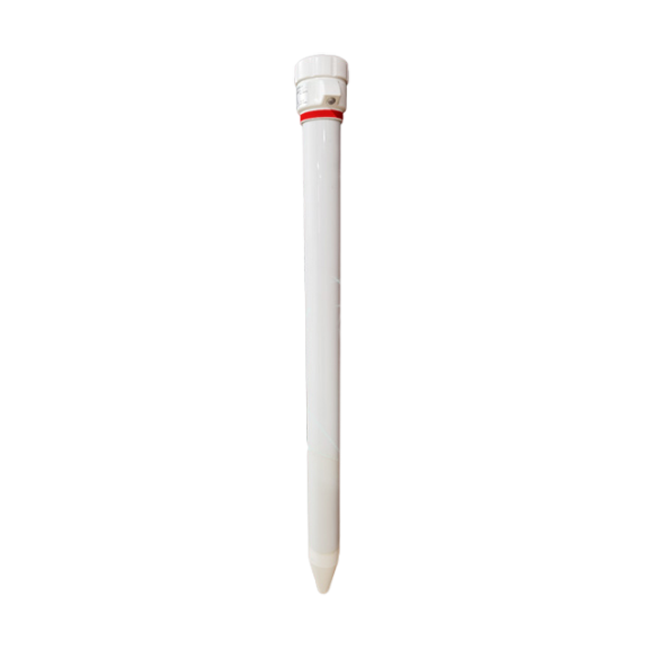 Multi-Depth Soil Sensor RS485
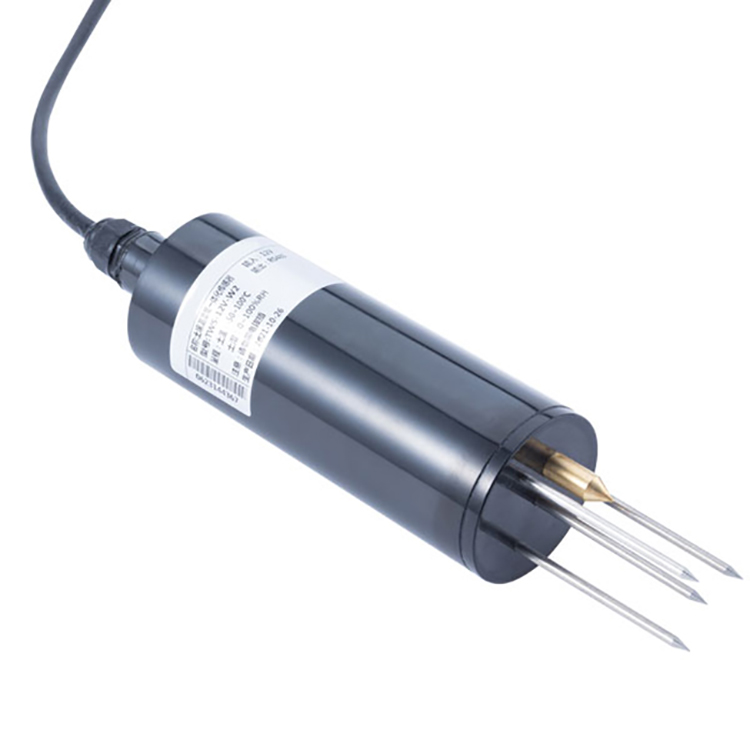 TDR Soil Moisture Sensor
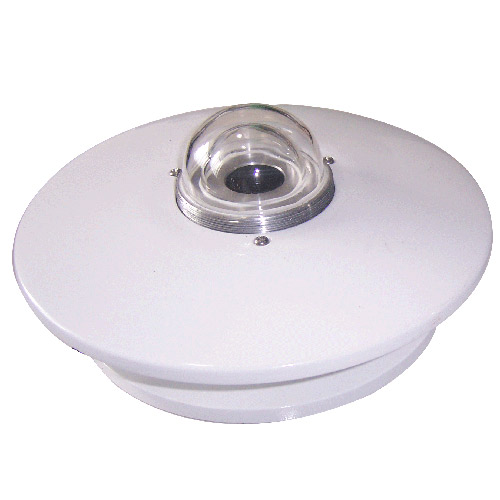 Pyranometer Solar Radiation Sensors
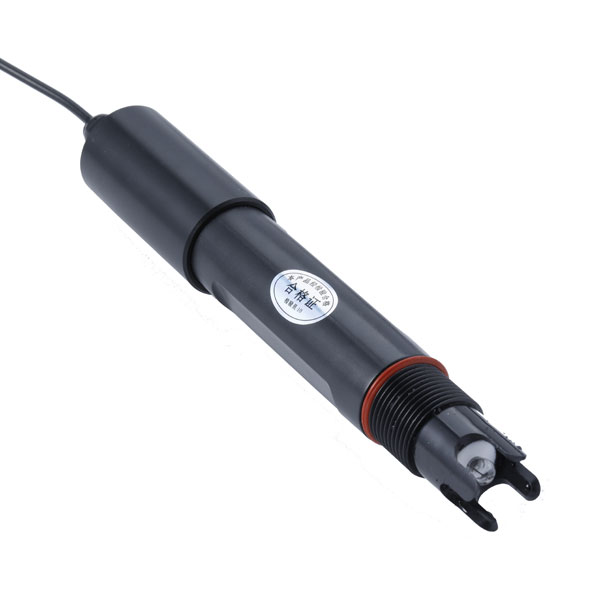 Soil ph sensor
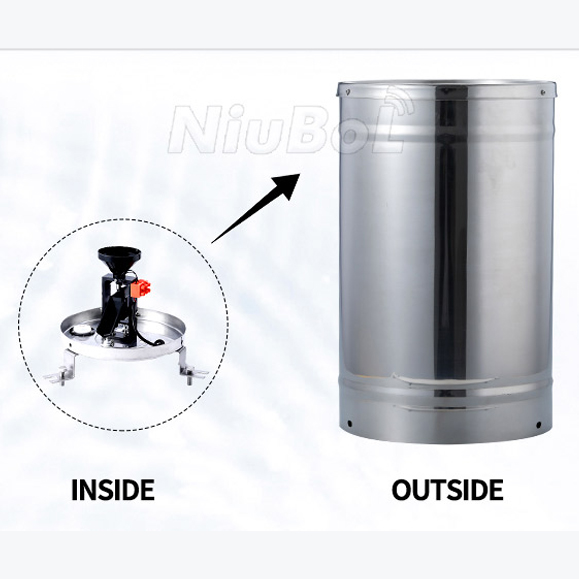 Tipping Bucket Rain Gauge
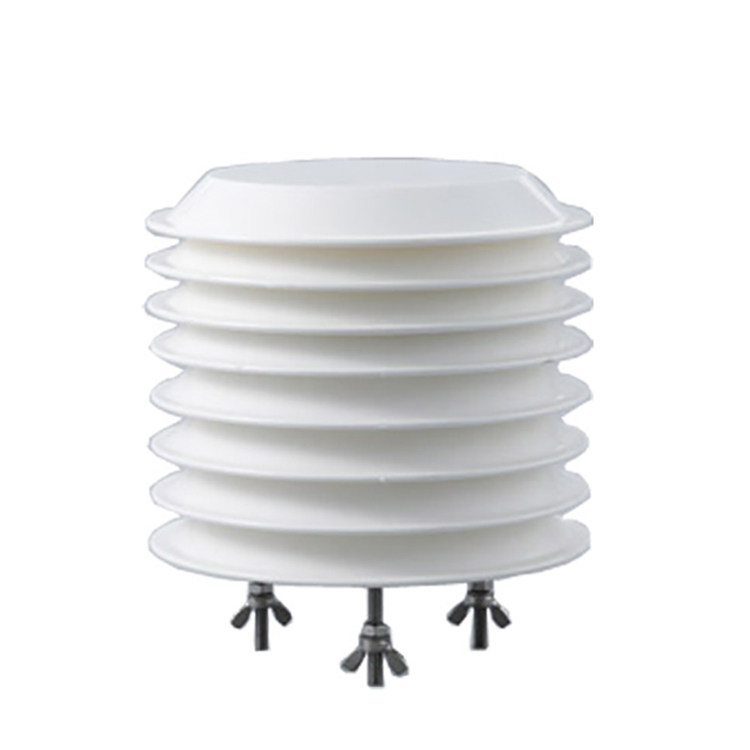 Air Temperature and Humidity Sensor

Screenshot, WhatsApp to identify the QR code
WhatsApp number:+8615367865107
(Click on WhatsApp to copy and add friends)