





— Download —
 Consumer hotline +8618073152920
WhatsApp:+8615367865107
Address:Room 102, District D, Houhu Industrial Park, Yuelu District, Changsha City, Hunan Province, China
All products


Configure a NiuBoL integrated ultrasonic weather station for field monitoring. Compare optional channels, Modbus mapping and power requirements before requesting a quote.
Tel/WhatsApp:+8615367865107
Email:Arvin@niubol.com +Nearly 100 partner companies in more than 75 countries. We are committed to providing high-quality, practical products to meet your needs and help you solve problems. Our products comply with international standards and are certified with ISO, CE and RoHS.Product Details
Quick Answer: The NiuBoL integrated ultrasonic weather station combines wind speed, wind direction, air temperature, relative humidity and atmospheric pressure in one sensing assembly. Optional channels change the measurement package and its power demand. Specify the installed channels before designing the logger: this family supports up to ten measured parameters, solar radiation and illuminance are alternative options, and a twelve-register response does not mean twelve independent sensors are fitted.
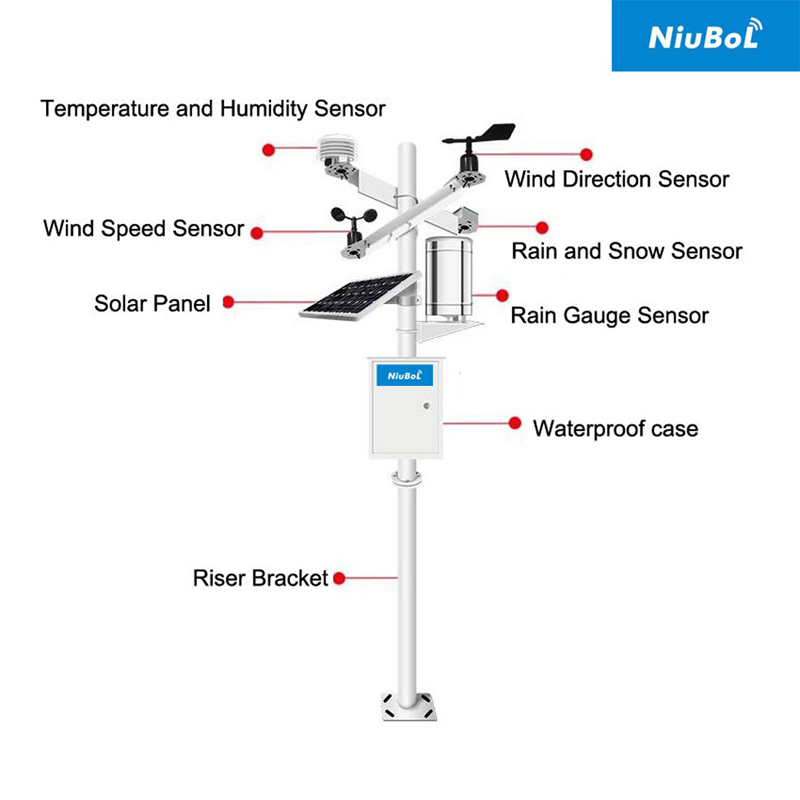
The product family can combine several channels, but a quotation and Modbus map must identify the ordered set. A five-parameter station and a unit with particles, rainfall and radiation have different power and register requirements. Put each required parameter, range and acceptance method in the schedule.
For an agricultural weather network, the five core channels may be sufficient for a common meteorological record, while rainfall or solar radiation serves a separate agronomic calculation. At an industrial boundary, particulate matter or noise may be more relevant than radiation. Adding every available option is not a substitute for deciding which measurements the receiving application will actually use.
The illustrations include separate-sensor layouts as well as compact assemblies. They show possible station arrangements, not a guarantee that every pictured instrument, mast, solar panel or enclosure is included. Specify the integrated sensing head and the surrounding station hardware as separate quotation items so a contractor can compare equivalent packages.
| Channel | Range and resolution | Stated accuracy |
|---|---|---|
| Wind speed | 0-60 m/s; 0.01 m/s | +/-(0.3 m/s + 3% FS) |
| Wind direction | 0-359 degrees; 1 degree | +/-3 degrees |
| Air temperature | -40 to 80 degrees C; 0.1 degree C | +/-0.5 degrees C |
| Relative humidity | 0-100% RH; 0.1% RH | +/-5% RH |
| Atmospheric pressure | 10-1100 hPa; 0.1 hPa | +/-1.5 hPa |
Resolution is the smallest reported increment, not the expected error. In particular, the wind-speed accuracy includes a full-scale component; it is not simply 3% of the current reading. A project requiring a specified uncertainty at low wind speeds should evaluate that requirement against the complete accuracy expression, rather than selecting the station because its display resolves 0.01 m/s.
| Electrical or environmental item | Specification | Design consequence |
|---|---|---|
| Supply | 9-24 VDC | Check voltage at the sensor under the installed cable load. |
| Output | RS485, Modbus RTU; 9600 bps | A PLC, RTU or logger must decode the selected channel map. |
| Average sensor power | 0.4 W without particulate sensing; 1 W with particulate sensing | Do not use the lower figure for a particle-equipped configuration. |
| Operating environment | -40 to 80 degrees C; 0-95% RH | Distinguish operating humidity from the RH measurement span. |
| Housing protection | IP65 | External cable joints and acquisition equipment need their own protection. |
| Heating and cable material | Heating is optional; heater demand and cable material require configuration confirmation | Do not assume anti-icing capability or a particular jacket from the base specification. |
| Option | Range / stated accuracy | Question to resolve |
|---|---|---|
| PM2.5 / PM10 | 0-1000 / 0-2000 micrograms/m3; +/-10% | Does the site allow suitable airflow and service access? |
| Noise | 30-130 dB; +/-5 dB | Are the acoustic weighting and reporting statistic suitable for the intended assessment? |
| Illuminance | 0-200000 lux; +/-7% | Is visible-light illumination the required quantity? |
| Solar radiation | 0-1500 W/m2; +/-10% | Is this performance suitable, or is a separate classified pyranometer required? |
| Rainfall | 0-8 mm/min; +/-10% | Is impact-based rain measurement appropriate for the rainfall task? |
Solar radiation in W/m2 and illuminance in lux describe different physical quantities. This configuration provides one or the other; do not create both tags and convert one value with a fixed factor. A radiation-dependent energy model needs the radiation option, while an outdoor lighting application may need illuminance. Likewise, the rainfall intensity range is not a statement of daily accumulation capacity.
PM sensors need airflow and contamination control. Noise needs a defensible acoustic position. Their data should not be accepted merely because they appear in the same Modbus packet as weather values. Define cleaning, comparison and siting procedures for each optional channel.
A noise value in a shared weather packet is not, by itself, evidence of compliance with an acoustic survey method. Obtain the required weighting, averaging period and instrument classification before specifying that use. For particles, arrange cleaning access and a comparison suitable for the local aerosol conditions. Neither channel should inherit the acceptance criteria used for wind or temperature.
The integrated ultrasonic weather station uses a fixed sequence of register positions. Core measurements occupy the first five positions; optional measurements follow in assigned positions. Unselected channels do not make the later channels move forward. Reading only seven registers because seven quantities were ordered can therefore omit a radiation value near the end of the response.
| Zero-based register position | Quantity | Conversion |
|---|---|---|
| 0 / 1 | Wind speed / direction | Integer x 0.01 m/s / integer x 1 degree |
| 2 / 3 / 4 | Temperature / humidity / pressure | Integer x 0.1 in degrees C / % RH / hPa |
| 5 / 6 / 7 | PM2.5 / PM10 / noise | Integer x 1 microgram/m3 / 1 microgram/m3 / 0.1 dB |
| 8 | Illuminance | Integer x 10 lux |
| 9 / 10 | Accumulated / one-minute rainfall | Integer x 0.01 mm |
| 11 | Solar radiation | Integer x 1 W/m2 |
Function 03 reads the measurement registers. For the full sequence, the start address is 0x0000 and the quantity is 0x000C. The example device address is 0x01, not an instruction to give every station the same address. Confirm the delivered firmware map before configuring the PLC; some drivers display register labels using a one-based convention even though the transmitted offset is zero-based.
Temperature needs signed decoding. A raw 0xFF65 represents -155 as a signed 16-bit value and therefore -15.5 degrees C after the 0.1 scale. By contrast, 0x0110 for wind speed is 272 and becomes 2.72 m/s. Check these conversions in the receiving software, not only on a vendor demonstration screen. Establish how the delivered unit represents an unfitted channel and exclude it from alarms and calculations.
The rainfall output distinguishes accumulation from the amount reported for a one-minute period. Do not sum repeated accumulated values to obtain a daily total. Store the cumulative channel with its reset events, or use the interval quantity according to the agreed reporting method. An unexplained reset can otherwise look like negative rainfall when the historian calculates a difference.
For a solar-powered installation, the average sensor demand alone corresponds to 9.6 Wh/day at 0.4 W, or 24 Wh/day at 1 W. These are arithmetic energy estimates for continuous sensor operation, not complete station budgets. Add the logger, modem, conversion losses and any selected heater. Battery autonomy also depends on the minimum site temperature and available charging conditions.
Do not switch sensor power off between every communication request merely to meet a battery target. Confirm startup and stabilization behavior for the ordered channels first. Particulate sensing and an always-available weather record may require a different operating strategy from a simple periodically powered temperature probe.
Open exposure helps wind, while air temperature and humidity benefit from representative ventilation and freedom from heated surfaces. Rain and radiation also have their own view requirements. Decide which variables have priority, document mounting height and avoid presenting one compact location as universally ideal.
A compact assembly can reduce brackets and field wiring, especially where one mast must support a common monitoring point. Separate instruments offer more freedom when wind exposure, rainfall catch, radiation horizon and noise location cannot share the same position. The system layout should follow the measurement task rather than forcing every variable into the available enclosure.
At a port or industrial yard, inspect nearby cranes, buildings and hot exhaust paths before accepting the mounting point. At a research site, decide whether the compact station is a contextual weather source or a reference instrument for a defined method. At a farm, make sure the selected rain and radiation options match the actual agronomic calculation. These distinctions determine whether integration saves work or merely combines unsuitable measurements.
Send NiuBoL a channel list, required measurement performance, mast location and logger interface. Identify whether radiation or illuminance is needed, whether particle or noise channels are required, and whether winter operation needs heating. Request the matching register map, cable arrangement and sensor power figures with the quotation. If the station must report remotely, specify the gateway and local storage separately; an RS485 sensor is not a cellular terminal.
During acceptance, check the fitted channel list against the purchase order and the tags actually being archived. Verify a negative temperature, an unfitted option and both rainfall quantities. These checks find channel-selection and decoding errors that a screen full of plausible positive weather values can conceal.
No. Register positions include optional quantities and two rainfall outputs. The configured family supports up to ten measured parameters, and radiation and illuminance are alternatives. Use the order configuration to identify which positions contain usable measurements.
Not through both optional channels in this configuration. Select illuminance or solar radiation. If the project needs both quantities, request a system with a separate suitable instrument rather than converting between the two units with a fixed factor.
Only if the integrated radiation channel satisfies the project's performance requirements. Its stated range is 0-1500 W/m2 with +/-10% accuracy. That does not establish a pyranometer classification or compliance with a particular PV monitoring specification.
First check signed 16-bit interpretation and the 0.1 degree C multiplier. A driver treating 0xFF65 as an unsigned integer will produce an incorrect positive result even when communication and the sensor are functioning.
Only for the average demand of the non-particle sensor configuration. Particle-equipped sensing is specified at 1 W average. The logger, modem and optional heating require additional allowances, with heater demand confirmed for the supplied version.
It removes cup and vane bearings from the wind measurement. Inspection is still needed for contamination, obstructions, cable damage, mounting movement and any optional particle, rain or radiation sensing surfaces.
Provide the exact channels, required accuracy, site exposure, supply source, cable length and receiving controller. Request the matching firmware register map and identify all station accessories separately. This avoids comparing a sensing head with a complete powered station.
An integrated ultrasonic weather station is useful when the required measurements can share one exposure and one digital acquisition path. Select the channel combination first, then verify optional-channel limits, register positions and configured power. NiuBoL can configure the sensing and acquisition package around those requirements without treating every available option as a mandatory part of the station.
Sensors & Weather Stations Catalog
 Agriculture Sensors and Weather Stations Catalog-NiuBoL.pdf
Weather Stations Catalog-NiuBoL.pdf
Agriculture Sensors Catalog-NiuBoL.pdf
Water Quality Sensor Catalog-NiuBoL.pdf
Related recommendations
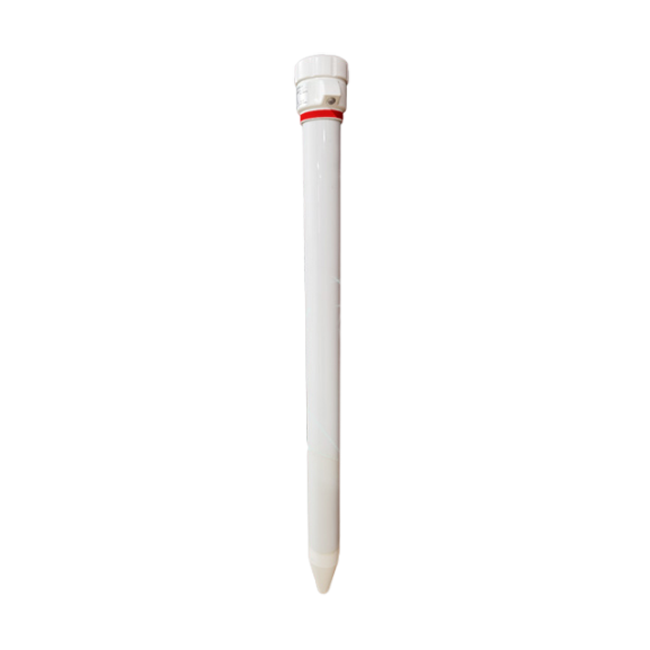 Multi-Depth Soil Sensor RS485
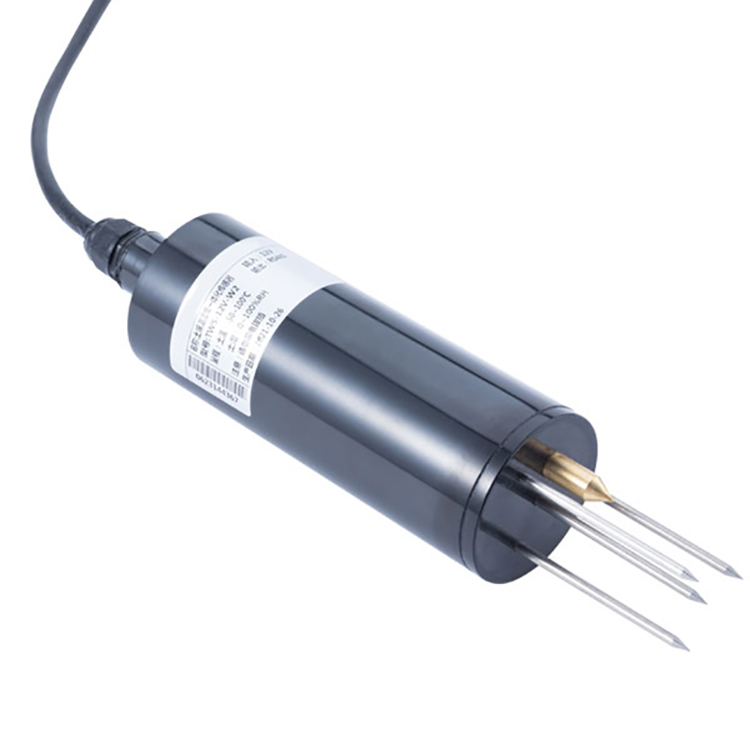 TDR Soil Moisture Sensor
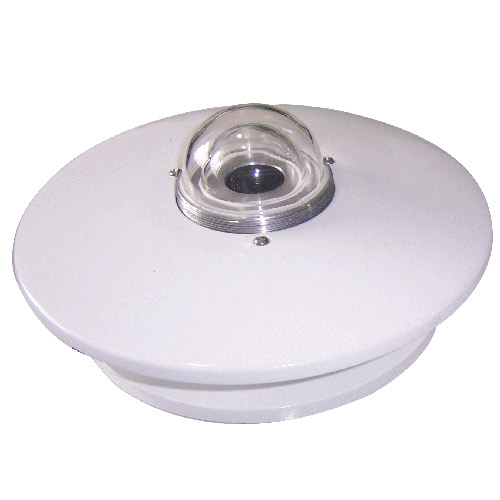 Pyranometer Solar Radiation Sensors
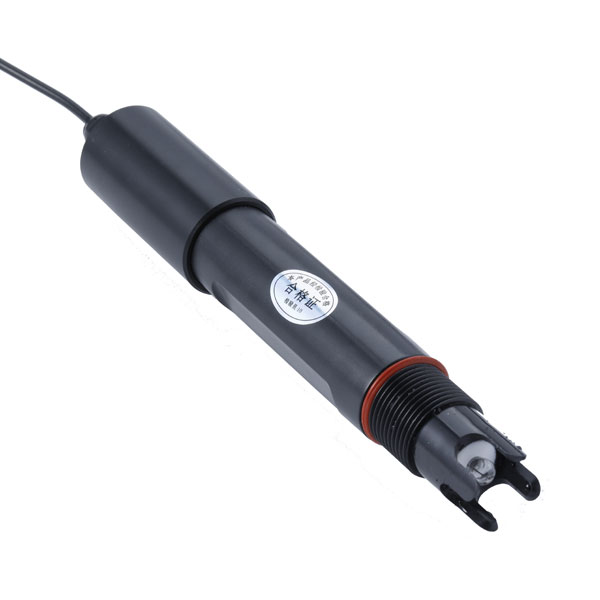 Soil ph sensor
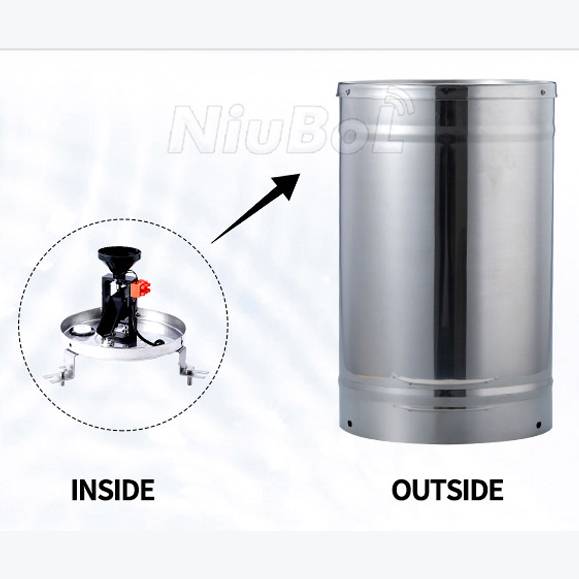 Tipping Bucket Rain Gauge
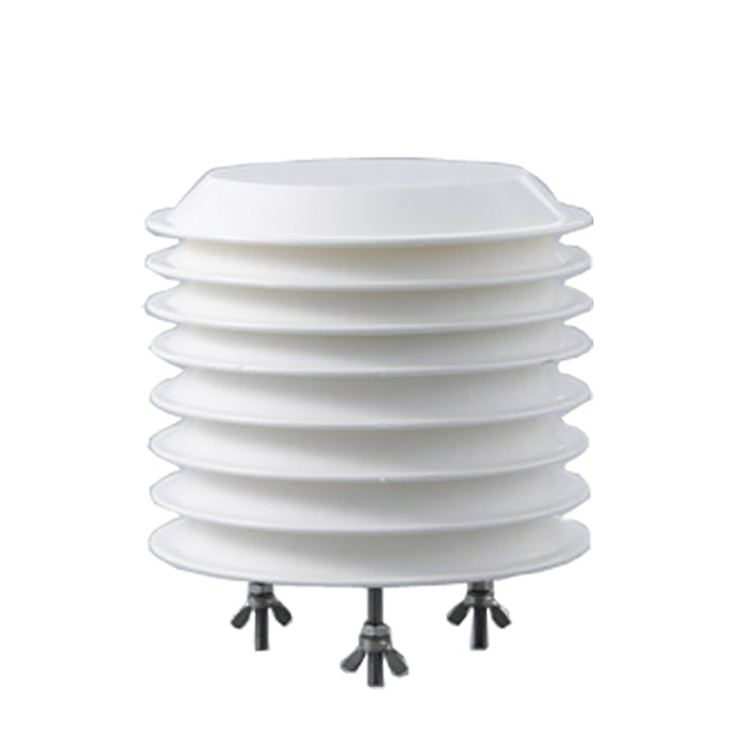 Air Temperature and Humidity Sensor


Screenshot, WhatsApp to identify the QR code
WhatsApp number:+8615367865107
(Click on WhatsApp to copy and add friends)

