

— Download —
 Consumer hotline +8618073152920
WhatsApp:+8615367865107
Address:Room 102, District D, Houhu Industrial Park, Yuelu District, Changsha City, Hunan Province, China
All products
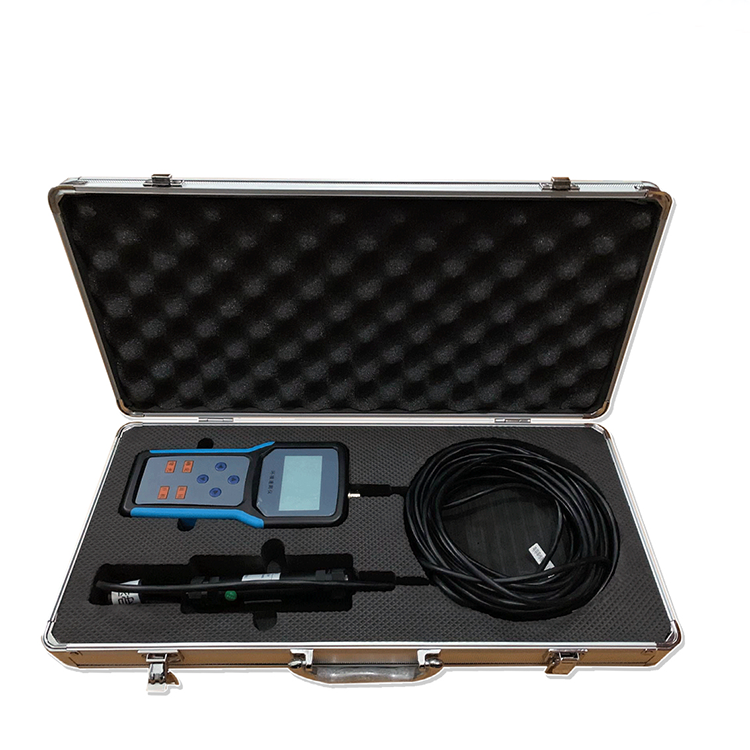
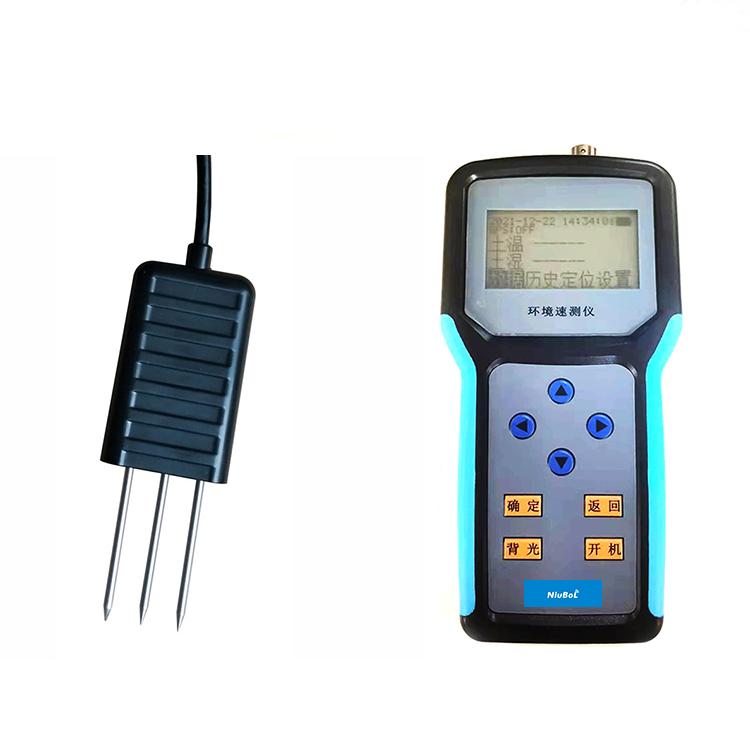
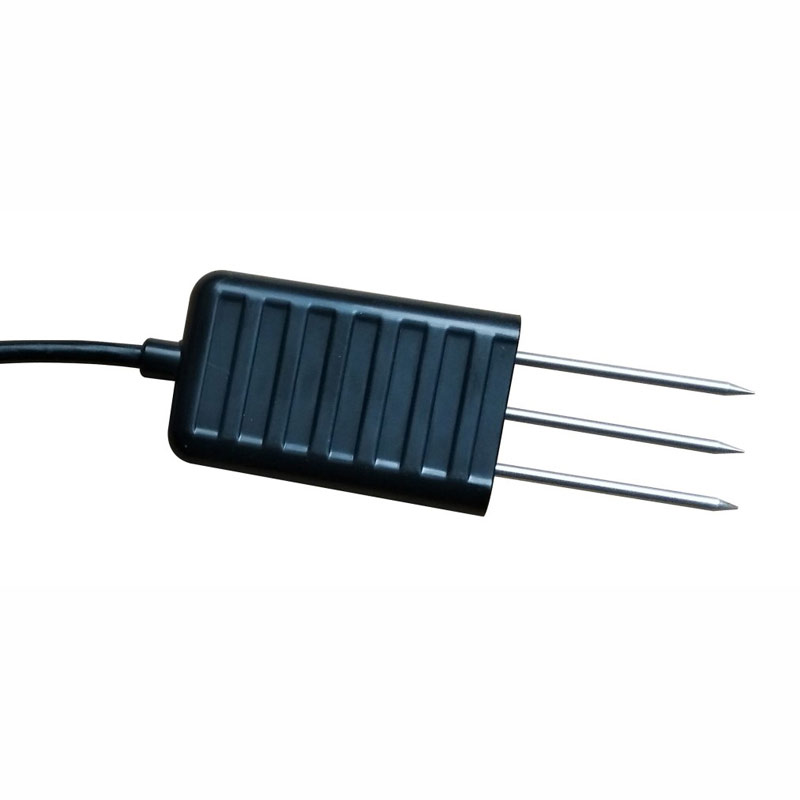
Compare soil conductivity with a NiuBoL portable soil EC meter. Check sampling conditions, units, probe accuracy and USB records before specifying your field survey kit.
Tel/WhatsApp:+8615367865107
Email:Arvin@niubol.com +Nearly 100 partner companies in more than 75 countries. We are committed to providing high-quality, practical products to meet your needs and help you solve problems. Our products comply with international standards and are certified with ISO, CE and RoHS.Product Details
Quick Answer: The NiuBoL portable soil EC meter supports conductivity surveys over a 0-20 mS/cm range, with 0.01 mS/cm resolution, a handheld display and USB record transfer. The stated accuracy is within +/-5%; agree its reference basis and the ordered probe's calibration requirements before acceptance. Its value is in repeatable comparisons between identified points, not a direct reading of individual salts, fertilizer composition or a laboratory salinity index.
| Item | Specification |
|---|---|
| Measured quantity | Soil electrical conductivity |
| Range | 0-20 mS/cm |
| Specified accuracy | Within +/-5%; confirm the reference basis for the ordered probe |
| Resolution | 0.01 mS/cm |
| Battery | 4000 mAh lithium-ion |
| Record transfer | USB |
| Storage | Up to 40,960 records; confirm capacity for the selected handheld version |
| Display | 128 x 64 LCD |
| Host dimensions and weight | 200 x 105 x 28 mm; 0.5 kg |
| Operating environment | -20 to 80 degrees C; 5-95% RH |
Specify the host and EC probe as a matched combination. A host capable of displaying a particular span does not extend a connected probe's calibrated range. Confirm the delivered sensor identity and usable record capacity when accessories or another handheld version are selected.
EC can screen soluble-salt variation and support fertilizer or salinity investigation, but it does not identify the ions. State whether the project maps zones, checks fertigation, compares treatments or selects laboratory samples.
A field technician investigating an unusual bed needs measurements connected to that bed's watering and treatment history. A salinity-mapping project needs locations that cover the site's soil and topographic variation. A service visit to a buried probe needs a local comparison made under comparable measurement conditions. The same handheld kit can assist those tasks, but the sampling plan and interpretation differ.
State whether results are direct soil readings or measurements on a prepared sample. A laboratory saturated-paste extract, a diluted extract and an in-situ probe do not become the same method because every result uses conductivity units. Use the method associated with the crop or project limit before judging a point against it.
Likewise, a soil EC range does not establish accuracy in irrigation water or a nutrient tank. If both media need measurement, identify them in the inquiry and confirm the probe's approved use and checking procedure for each.
Conductivity changes with moisture, temperature, texture and contact. Compare points using a consistent depth and moisture condition, or record those differences explicitly. A wet point and a dry point cannot be interpreted as salt concentration alone.
Record the interval since irrigation or rain and the position relative to an emitter or fertilizer band. Water changes both dissolved-ion distribution and the conducting pathways around the electrodes. A higher reading immediately after wetting is therefore not, by itself, evidence that salt mass increased.
Use comparable moisture conditions for repeat visits where the method permits, or retain the difference in the field record. Do not add water arbitrarily to make every point settle. If preparation requires added liquid, standardize the liquid and preparation procedure rather than mixing those results with unprepared insertions.
Divide the site by soil, crop, slope and management history. Assign point IDs and coordinates, then measure in a repeatable order. Add recent irrigation, rain and fertilizer notes to the export.
For a greenhouse investigation, revisit the same root-zone position at a defined stage of the irrigation cycle. For a field map, keep management zones distinguishable rather than averaging a wet depression and a dry slope into one apparent conductivity class. Repeat unexpected results before assigning them to a treatment decision.
| Displayed quantity | Equivalent quantity |
|---|---|
| 1 mS/cm | 1000 microSiemens/cm; 1 dS/m |
| 1.80 mS/cm | 1800 microSiemens/cm; 1.80 dS/m |
| 0.01 mS/cm display increment | 10 microSiemens/cm |
| 20 mS/cm upper range | 20000 microSiemens/cm |
These are unit conversions, not conversions between soil methods. Label a laboratory extraction and a direct probe result separately even after their units have been aligned. Do not apply a universal EC-to-TDS or EC-to-fertilizer factor to infer chemical composition.
Confirm whether the supplied measurement is temperature-compensated, the reference temperature and the conditions for that compensation. Keep this information with the comparison. A host environmental range does not define the probe's compensation range, and a unit label alone does not identify the temperature basis.
The 0.01 mS/cm display increment is not an absolute accuracy tolerance. Ask whether the percentage specification refers to a reading, span or another defined basis before calculating the allowed comparison difference. The relevant reference and soil procedure also contribute to acceptance uncertainty.
Do not force the sensor into stones or hard dry soil. Prepare a close-fitting pilot hole where needed and clean the measurement surface between points to avoid carryover.
A loose hole or a stone beside an electrode can interrupt contact while the display still provides a number. Use the insertion and preparation procedure for the actual probe and keep its active sensing area in the measured medium. Repositioning into another patch changes the sample as well as the contact, so record any repeat position.
Remove carryover between contrasting locations using the approved cleaning method. Use a compatible reference or checking medium as specified for the probe, and keep the checking result distinct from a field soil observation. Do not create a calibration adjustment from an uncharacterized soil point.
When a reading remains near the upper range, check the instrument status, approved range and sample condition. A clipped or out-of-range reading cannot establish the exact conductivity above the span. Select a suitable range or confirm the sample by another appropriate method rather than reporting the endpoint as a precise concentration.
Compare depth, nearby soil condition, contact and temperature treatment before judging a buried sensor against the handheld result. Removing and reinserting a probe can disturb the medium; a spot measurement beside an installed point may not represent precisely the same sensing volume.
For a meaningful check, record both values and the conditions of the comparison, then repeat under the agreed method. The portable instrument is not automatically a reference simply because it has a screen. Its calibration, accuracy and suitability for the method still need to support the decision.
Download by USB after each campaign and preserve the raw file. Check point IDs, timestamps, duplicate rows and impossible values before analysis. Keep corrections in a separate documented dataset.
Test the actual USB export before a campaign and keep the field identifiers in a linked log if the delivered software does not store them. Confirm the receiving computer and file format. USB download does not establish native RS485 Modbus polling, GPS tagging or unattended remote transmission.
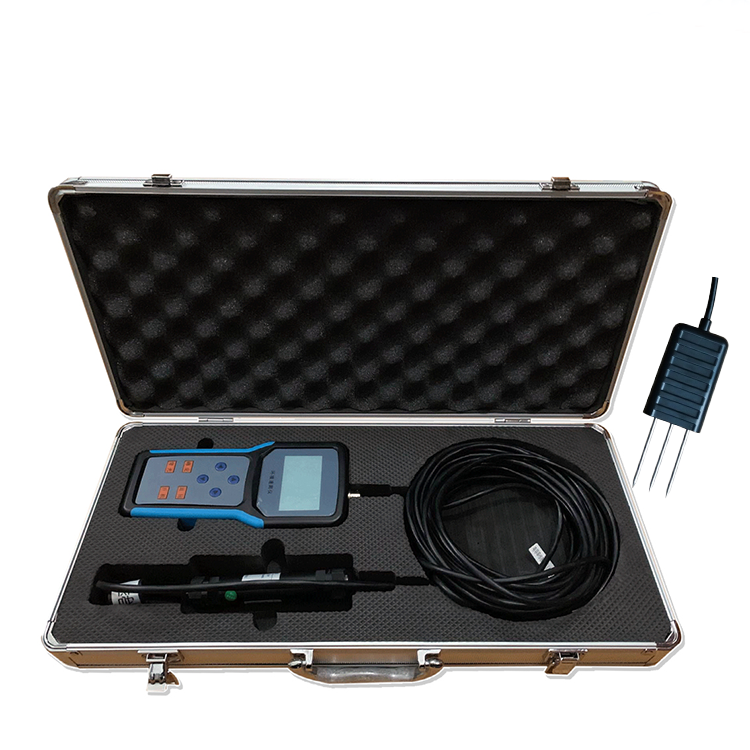
For purchasing, define the EC probe, host, cable, checking accessories, charger and case separately. The photographs show probe and kit arrangements; the delivered range and accessory list belong to the ordered combination. This prevents an illustrative kit from being treated as a guarantee that every pictured probe is included.
Only after establishing a valid relationship between the measurement methods. ECe refers to a defined extract method, while an installed or inserted probe measures under its local soil conditions. Matching mS/cm or dS/m labels alone does not make the results equivalent.
Wetting changes conductive pathways and moves dissolved ions, and the irrigation water may also contribute ions. Review moisture conditions, timing and treatment records before concluding that the field has accumulated additional salt.
No. Resolution is the display increment. Use the specified accuracy on its agreed basis, the checking method and reference uncertainty to set the tolerance. Do not reject a probe solely because two final display digits differ.
No. Confirm probe identity, calibrated span and host configuration together. A connector that fits does not establish the same measurement range, conversion or suitability for the sample.
No. EC indicates combined electrical conductivity rather than ion identity or crop requirement. Use the appropriate chemical analysis and agronomic method when a specific nutrient or treatment rate determines the decision.
Provide the medium, expected EC range, field or prepared-sample method, temperature treatment and comparison objective. Include required records, computer workflow and accessories so NiuBoL can specify a matched survey kit rather than only a host.
Use the portable soil EC meter to compare identified points under a consistent method. Match the probe and host, preserve units and temperature basis and investigate contact before applying corrections. Send NiuBoL the survey method and expected conductivity range for a suitable kit configuration.
Prev:Handheld Soil Moisture and Temperature Tester | NiuBoL
Next:Soil nutrient fertility speed tester NPK portable tester
Sensors & Weather Stations Catalog
 Agriculture Sensors and Weather Stations Catalog-NiuBoL.pdf
Weather Stations Catalog-NiuBoL.pdf
Agriculture Sensors Catalog-NiuBoL.pdf
Water Quality Sensor Catalog-NiuBoL.pdf
Related recommendations
 Multi-Depth Soil Sensor RS485
 TDR Soil Moisture Sensor
 Pyranometer Solar Radiation Sensors
 Soil ph sensor
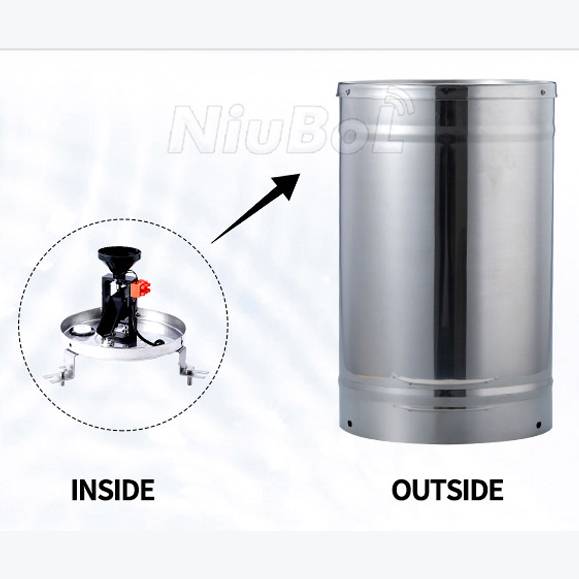 Tipping Bucket Rain Gauge
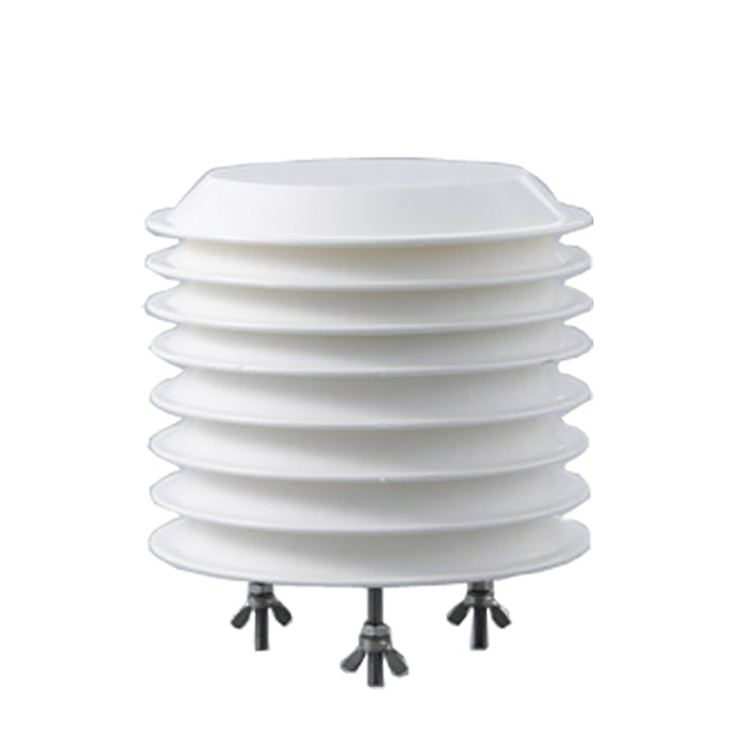 Air Temperature and Humidity Sensor

Screenshot, WhatsApp to identify the QR code
WhatsApp number:+8615367865107
(Click on WhatsApp to copy and add friends)