





— Download —
 Consumer hotline +8618073152920
WhatsApp:+8615367865107
Address:Room 102, District D, Houhu Industrial Park, Yuelu District, Changsha City, Hunan Province, China
All products


Survey soil moisture and temperature with a NiuBoL handheld tester. Compare depths, wetting patterns and USB records before specifying the kit or checking fixed probes.
Tel/WhatsApp:+8615367865107
Email:Arvin@niubol.com +Nearly 100 partner companies in more than 75 countries. We are committed to providing high-quality, practical products to meet your needs and help you solve problems. Our products comply with international standards and are certified with ISO, CE and RoHS.Product Details
Quick Answer: The NiuBoL handheld soil moisture and temperature tester measures field points, displays both variables and stores records for USB download. Select it for root-zone surveys, irrigation troubleshooting and checks around fixed monitoring points. Its moisture scale is 0-100%, with 0.1% resolution; temperature spans -50 to 100 degrees C. A useful result depends on probe contact, sensing depth and timing after irrigation, not only on the number displayed.

| Item | Specification |
|---|---|
| Measurement channels | Soil moisture and soil temperature |
| Measuring ranges | Moisture 0-100%; temperature -50 to 100 degrees C |
| Resolution | 0.1% moisture; 0.1 degree C temperature |
| Specified accuracy | Moisture +/-3%; temperature +/-0.5 degree C. Confirm the moisture accuracy basis for the supplied probe. |
| Power | 4000 mAh lithium-ion battery |
| Data transfer and storage | USB download; up to 40,960 records, depending on the selected handheld configuration |
| Display | 128 x 64 LCD; English and Chinese language selection |
| Host dimensions and weight | 200 x 105 x 28 mm; 0.5 kg |
| Host operating environment | -20 to 80 degrees C; 5-95% RH |
The probe measurement range and the host operating environment are different limits. A temperature measurement endpoint of 100 degrees C does not authorize operating the handheld unit at that temperature. Battery charging and storage also need their own permitted conditions; the host environmental range is not a charging specification.
Keep soil moisture separate from air relative humidity in the exported file. Before using a percentage for a water-balance calculation, establish the probe's moisture definition and calibration. A 0-100% display alone does not establish volumetric water content, percent saturation or the proportion of plant-available water.
A handheld survey can distinguish a problem at one emitter from a pattern across a bed. Compare points at defined distances from the emitter and at the root-zone positions relevant to the crop. Keep a nearby comparison point with similar soil and management. Sampling only the wet patch under a dripper can conceal a dry area between drippers.
Where the surface looks wet but plants show stress, investigate below the surface before increasing the irrigation duration. The useful question is whether water reaches the intended root zone and how evenly it does so. Soil temperature helps describe the conditions of the observation, but these two channels do not identify nutrient composition, soil pH or salinity.
For a contractor checking an irrigation installation, pair the survey with emitter-flow and pressure checks. An isolated dry reading could reflect a blocked emitter, a point outside the wetted volume or poor sensor contact. Repeating the measurement without checking the irrigation hardware will not separate those causes.
Soil moisture changes with depth, texture, compaction, roots, irrigation pattern and recent rainfall. A handheld tester gives fast point measurements, but one point should not be reported as the condition of an entire field. Define a route, depth and number of points before collection. Avoid changing the insertion angle between visits.
Push the probe into firm soil contact without using the cable or instrument body as a lever. Air gaps and stones can distort the moisture response or damage the probe. Where the soil is very dry or hard, prepare a pilot hole with a tool of matching geometry rather than forcing the sensing rods.
Identify the active sensing length of the selected probe before calling a reading a measurement at a particular depth. If the active rods extend through several soil layers, the response is not necessarily confined to their tips. Mark a repeatable insertion position and orientation; a longer insertion is not automatically a separate deep-layer measurement.
For a depth comparison, choose a probe and access method that place the sensing region within the intended layer without creating a loose cavity. Do not repeatedly enlarge one hole and treat each reinsertion as an undisturbed repeat. Keep the probe body and handheld unit out of any water or soil exposure for which they are not rated.
Make a pre-irrigation observation, then revisit the planned positions after a known irrigation event. Keep elapsed time with each reading. Water near the surface, water moving through the root zone and water below it represent different stages of redistribution. Comparing points measured at different stages can create an apparent distribution problem.
A shallow point that responds while the deeper point does not may indicate that the wetting front has not reached the lower location. It can also reflect different texture, contact or placement outside the wetting pattern. Check those conditions before extending a run. A deeper response is useful evidence of water movement, not proof that the entire root zone has received a required volume.
Build local wet and dry reference observations for the soil and management question. The same displayed percentage need not correspond to the same crop water availability in sand, clay and a growing substrate. Do not copy a threshold from another field simply because both instruments report percent moisture.
Separate display resolution from measurement uncertainty. A change from 24.0% to 24.1% is one display increment; it does not demonstrate a confidently resolved irrigation response. Judge a change using repeatability, the specified accuracy basis and the variation among comparable points, rather than the final digit alone.
A portable tester is useful for checking the area around a permanently installed soil moisture and temperature sensor. It is not automatically a calibration standard for that sensor. First compare the measurement definition, active volume, depth, soil condition and time of observation.
Do not remove a fixed probe merely to make room for the handheld probe. Disturbing its surrounding soil can change contact and interrupt the continuous record. Use nearby comparisons at suitable positions, then inspect the installation if the disagreement remains relevant after placement differences have been considered.
Record repeated comparisons rather than applying an offset from one pair of values. If the handheld response changes strongly with insertion pressure or position, investigate contact first. If both instruments follow the irrigation event but differ consistently in absolute value, review their calibration basis and sensing geometry before changing the controller threshold.
The internal memory and USB connection allow survey teams to retain readings instead of transcribing them. A useful export also needs plot identity, depth, time, crop stage, recent irrigation and operator notes. Without that context, thousands of stored numbers are difficult to compare. Establish a file naming and backup method before the field campaign begins.
Test one short route before a large campaign: save several identified readings, download them to the intended computer and open the file in the actual reporting workflow. Check which fields the delivered software exports. Keep a linked route sheet for any location, depth or treatment identifier not stored by the host.
Memory capacity does not imply built-in GPS, automatic plot recognition or compatibility with every computer operating system. Confirm the software, connection cable and export format with the selected kit. Preserve the original download and keep corrected identifiers or rejected observations in a separate working file.
USB is the handheld data-transfer interface, not a native RS485 Modbus connection to a PLC. For unattended control, use fixed probes with a compatible logger or RTU. The handheld unit can support commissioning and spatial checks around that network without becoming its continuous feedback channel.
Check the supplied host and probe identity, cable, charger, USB connection and carrying case against the order. Confirm that both measured channels display and save correctly. Inspect the rods for damage and the cable entry for strain before taking the kit to the field.
Use a suitable reference procedure for the delivered moisture probe and a comparable temperature reference at the measurement point. A check in air or an arbitrary soil sample is not a substitute for a defined moisture calibration. Include the sample condition and reference uncertainty when agreeing an acceptance tolerance.
Review how the probe will be cleaned between locations and protected during transport. A bent rod, adhered soil or a loose connector can affect the next survey. Arrange a repeatable fault report with saved readings, probe photographs and the comparison conditions so service staff can distinguish a host problem from a sampling problem.
It can provide soil observations, but a reading alone does not establish an irrigation volume. That decision also needs a defined moisture calibration, representative root-zone sampling, soil information and irrigation-system characteristics. Do not calculate water demand from an unidentified percentage scale.
Not necessarily. The active sensing region depends on probe construction. Confirm its length and measurement geometry, then choose a repeatable method that places that region within the layer being compared.
Record the elapsed time and revisit defined locations. A planned sequence can show wetting and redistribution, whereas unrelated readings taken at different times cannot reliably establish irrigation uniformity.
Only if its calibration and the comparison method support that role. Similar units do not establish identical sensing volumes or accuracy. Investigate placement and soil contact before adjusting either instrument from a single disagreement.
The USB data-transfer function does not establish that capability. Specify fixed digital probes and a suitable acquisition device for continuous PLC or RTU monitoring, and retain the handheld tester for attended surveys and checks.
Save and export representative records on the intended computer. Check both channels, units, timestamps where supported, identifiers and file readability. Confirm any missing field information can be maintained in a linked survey record.
Provide the soil or substrate, intended depth and access method, expected conditions, survey purpose and computer workflow. Specify the probe, cable, accessories and checking requirements so the quotation covers a usable field kit rather than the display unit alone.
Choose the handheld soil moisture and temperature tester for repeatable field observations, irrigation troubleshooting and spatial checks around fixed sensors. Define the sensing region, compare readings at known times and verify the USB workflow before deployment. Send NiuBoL the sampling conditions and field-kit requirements to review a compatible configuration.
Prev:Portable Soil pH Tester for Field Sampling and Data Logging
Next:Portable Soil EC Meter for Field Survey and Data Logging
Sensors & Weather Stations Catalog
 Agriculture Sensors and Weather Stations Catalog-NiuBoL.pdf
Weather Stations Catalog-NiuBoL.pdf
Agriculture Sensors Catalog-NiuBoL.pdf
Water Quality Sensor Catalog-NiuBoL.pdf
Related recommendations
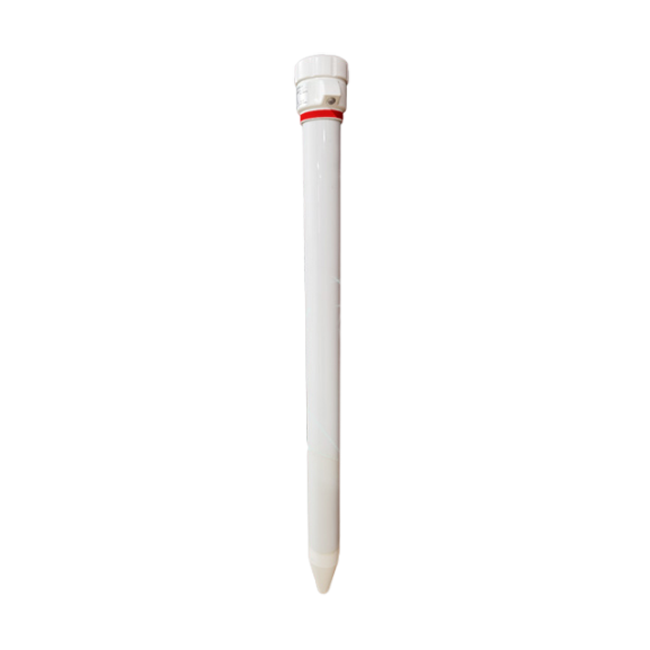 Multi-Depth Soil Sensor RS485
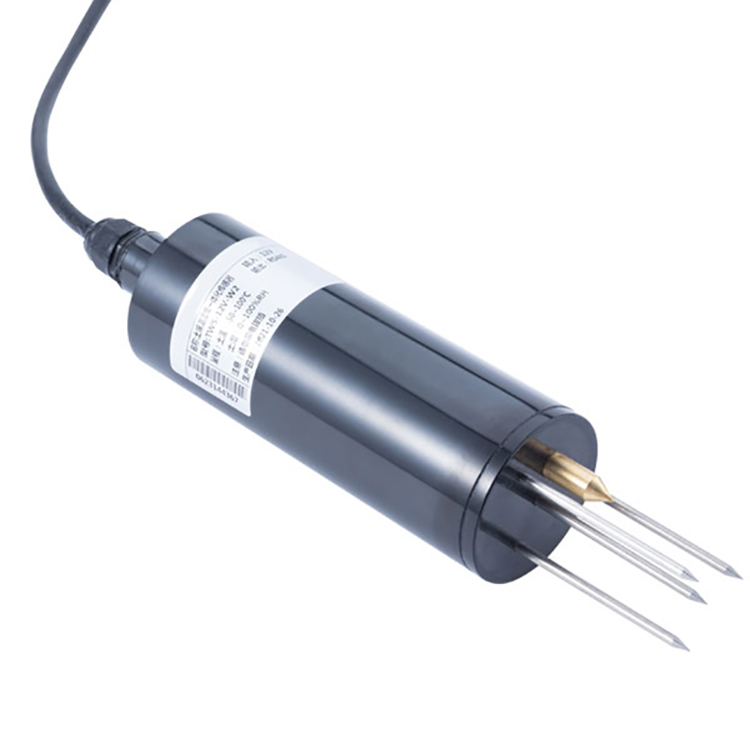 TDR Soil Moisture Sensor
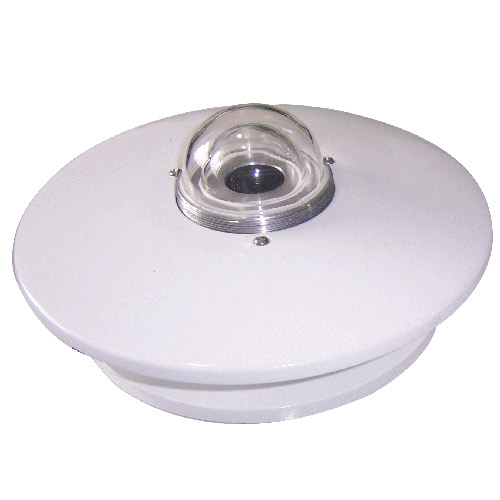 Pyranometer Solar Radiation Sensors
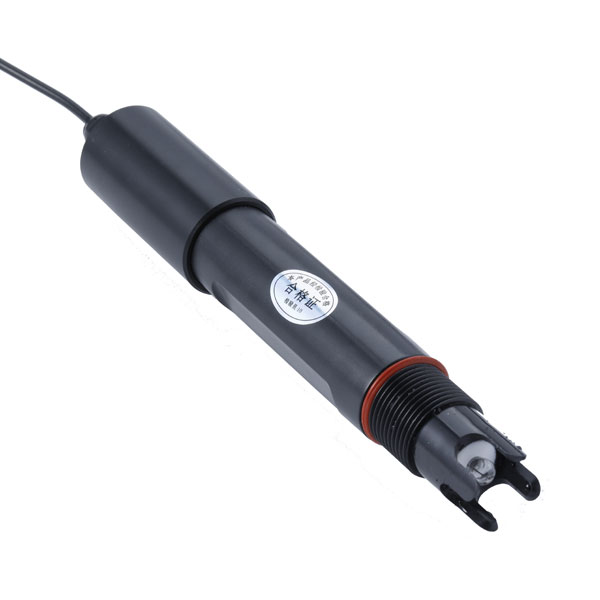 Soil ph sensor
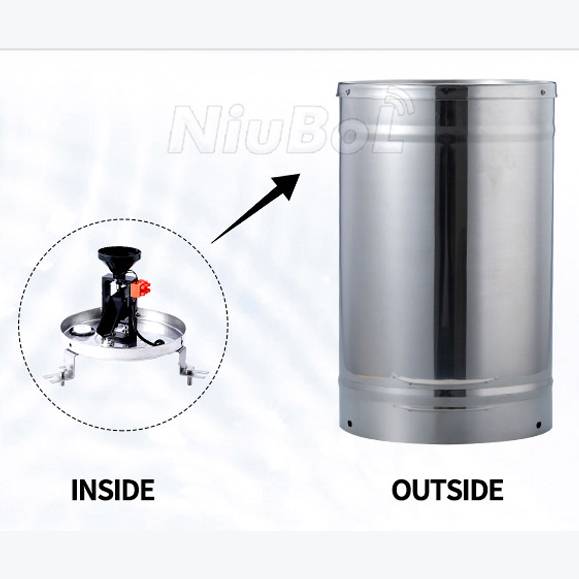 Tipping Bucket Rain Gauge
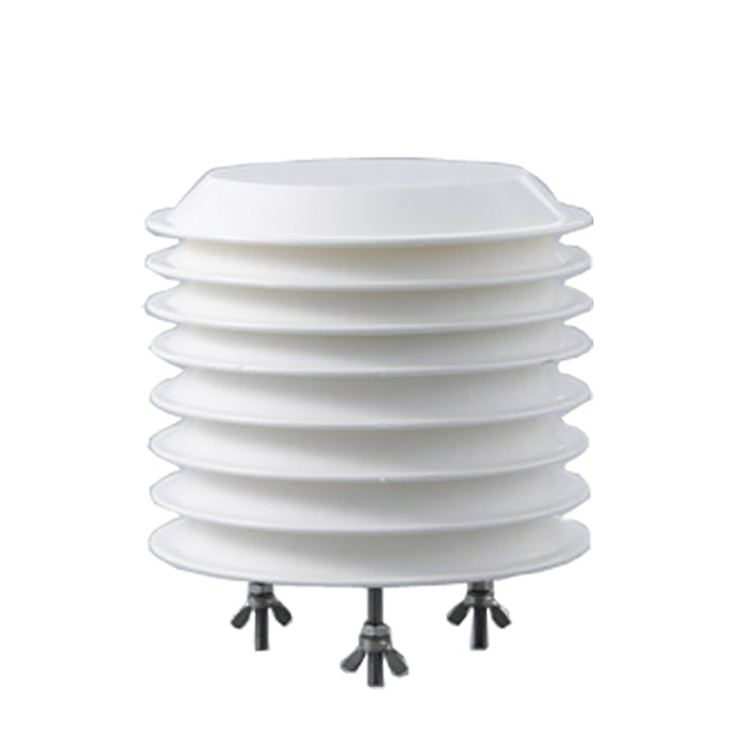 Air Temperature and Humidity Sensor


Screenshot, WhatsApp to identify the QR code
WhatsApp number:+8615367865107
(Click on WhatsApp to copy and add friends)

