





— Download —
 Consumer hotline +8618073152920
WhatsApp:+8615367865107
Address:Room 102, District D, Houhu Industrial Park, Yuelu District, Changsha City, Hunan Province, China
All products


Evaluate a NiuBoL handheld soil moisture and temperature tester for field surveys. Check probe compatibility, USB exports and kit acceptance before requesting a quote.
Tel/WhatsApp:+8615367865107
Email:Arvin@niubol.com +Nearly 100 partner companies in more than 75 countries. We are committed to providing high-quality, practical products to meet your needs and help you solve problems. Our products comply with international standards and are certified with ISO, CE and RoHS.Product Details
Quick Answer: Evaluate the NiuBoL handheld soil moisture and temperature tester as a complete field kit: host, compatible probe, charging accessories and a working USB export method. The selected configuration measures soil moisture over 0-100% and temperature over -50 to 100 degrees C. Before a larger order, use one sample kit to check repeatability, record structure, computer compatibility and the accessories that field teams actually need.

A complete portable kit includes the host, suitable soil probe, cable, charger or power accessories, USB connection, software or export method and documentation. Confirm what is included in the supplier quotation. A handheld host without the correct probe and data workflow does not complete the survey task.
For a distributor, a kit that powers up successfully can still generate support problems if its export utility does not work on the customer's computer or a replacement probe needs an undocumented calibration. For an irrigation contractor, a large memory is of little use if downloaded readings cannot be associated with the correct sampling locations. These are practical purchasing tests, not optional demonstrations after the order has been delivered.
Agree what will be tested with the sample, then use the same host version, probe combination and accessory list for the production order. If the supplier proposes a different host or probe later, repeat the affected checks. A similar case and display do not establish that the memory format, connectors and calibration are unchanged.
| Item | Selected configuration | Acceptance question |
|---|---|---|
| Measured quantities | Soil moisture and soil temperature | Are both channels present in the delivered probe and export? |
| Measurement spans | Moisture 0-100%; temperature -50 to 100 degrees C | What moisture basis and soil calibration apply? |
| Stated accuracy | Moisture +/-3%; temperature +/-0.5 degrees C | Under which test conditions was each result established? |
| Resolution | 0.1% moisture; 0.1 degree C | Do display and export preserve the stated increments? |
| Battery | 4000 mAh lithium-ion | Does a representative work session complete with the supplied charging arrangement? |
| Memory / communication | Up to 40,960 records; USB | What is stored in one record, and how is it retrieved? |
| Display | 128 x 64 LCD | Is the delivered language and field readability acceptable? |
| Host dimensions / weight | 200 x 105 x 28 mm / 0.5 kg | Is the complete carried kit suitable for the survey route? |
| Operating environment | -20 to 80 degrees C; 5-95% RH | What separate storage and battery-charging limits apply? |
| Enclosure rating / cable material | Confirm for the supplied kit | Is protection adequate for the actual field handling and cleaning method? |
Soil moisture percentage must not be confused with air relative humidity. Before comparing this tester with another instrument, establish whether the reported soil value is volumetric, gravimetric or another calibrated indication. The measurement basis, soil type and calibration method determine whether two percentages are comparable. Do not relabel a reading as volumetric water content without confirming that definition for the supplied probe.
The 0.1% display increment is not a claim of +/-0.1% accuracy. Likewise, the probe temperature span is not the operating range of the handheld host. Keep the host within its own limits during a test even if the connected probe can measure a more extreme soil temperature.
Create a small, identifiable sequence of records on the sample unit. Use several point references in a separate route sheet, include both measured channels and note the recording order. Export the sequence on the actual computer type that field staff or the customer will use. Check the values against the display and confirm whether time, point identity and units are included automatically or require a separate association.
Then disconnect the instrument, reconnect it and repeat the download. Determine whether the export contains all records or only new records, and whether the software overwrites an existing file. If two operators' files will be merged, identify how duplicate records can be recognized without discarding legitimate repeat measurements at the same point.
| Export test | What to inspect | Why it matters |
|---|---|---|
| Channel completeness | Moisture and temperature values, units and decimal precision. | A display demonstration alone does not establish usable two-channel records. |
| Record identity | Sequence, timestamp or external point-reference method. | Measurements need to remain associated with field locations. |
| File compatibility | Actual file format, character encoding and computer/software requirements. | USB describes the connection, not a guaranteed spreadsheet workflow. |
| Repeated download | All-versus-new export behavior and duplicate handling. | Repeated retrieval should not silently multiply the survey results. |
| Power-off retention | Previously recorded data after a normal shutdown and restart. | The operator needs to know when a download is essential. |
| Memory management | Meaning of one record and full-memory behavior. | Capacity alone does not explain how many complete field observations can be stored. |
Do not assume that 40,960 records means 40,960 georeferenced, two-channel observations with every field note attached. Confirm the actual storage structure and any version-dependent limit. GPS, wireless transmission and a cloud dashboard are not established by the presence of a USB connector; request those functions explicitly if the project needs them.
Run two different checks. First, leave the probe undisturbed in a stable, uniform sample and observe repeated readings. This examines short-term stability of that measurement arrangement. Next, remove and reinsert it at a consistent depth using the intended field procedure. The second check includes contact and operator effects, so it should not be interpreted as an electronics-only accuracy test.
Do not use the cable or host as a lever. Stones, hard dry soil and compacted layers can prevent contact or damage the rods. Prepare a close-fitting pilot hole when needed and keep the measurement surface in firm soil contact.
If the project requires a quantitative soil-moisture comparison, agree a suitable reference method and use matching depths and sampling volumes as far as practicable. Nearby soil can genuinely differ in moisture, and a reference sample can change through evaporation before weighing or testing. A single unmatched comparison is not enough to accept or reject the stated accuracy.
For temperature, compare under conditions that allow the probe and reference to approach a stable value. Avoid handling a sensing surface immediately before recording a comparison. Select acceptance tolerances with the uncertainty of the reference and the test arrangement in mind; do not invent a tighter field tolerance merely because the instrument displays a decimal place.
A 4000 mAh rating describes charge capacity, not a guaranteed number of operating hours. Runtime depends on the connected probe, display use, recording pattern, battery condition and temperature. Test a representative survey session with the sample kit and record the actual usage pattern. Specify the necessary charging accessories and local mains compatibility in the order.
The host's operating-temperature span must not be treated as the charging range of its lithium-ion battery. Obtain the separate charging limits and instructions. Do not charge a cold or overheated unit on the assumption that operation and charging have identical limits, and do not substitute a charger solely because its connector fits.
For a replacement probe, confirm connector, pin assignment, compatible host version and calibration handling. Ask whether any coefficients are stored in the host, in the probe or configured through software. If a swap is permitted, demonstrate it on the sample and repeat the comparison and export checks. Physical connector compatibility is not proof of measurement interchangeability.
Keep the host/probe version and accessory list consistent across the shipment. Confirm display language, export-software availability, replacement cables and the service route for a damaged probe. A sample export and a clear packing list are more useful for customer support than a broad claim that the instrument works with every computer.
Use the tester for operator-led observations around emitters and selected root depths before and after a defined irrigation event. Record elapsed time since irrigation and use a repeatable route. For continuous threshold control between visits, specify permanent soil sensors and a controller; a handheld instrument cannot provide unattended measurements simply because it stores data.
Decide whether the task is ranking wetter and drier areas or estimating an absolute moisture quantity. The latter requires greater attention to soil-specific interpretation and reference comparisons. For detailed route and insertion procedures, see the handheld soil moisture testing page; this supplier evaluation focuses on whether the delivered kit can support that procedure consistently.
When comparing handheld soil moisture tester suppliers, send each the same soil conditions, required measurement definition, number of field teams and computer/export requirements. NiuBoL can provide the matching host and probe details, accessory list and a representative export for review before a larger order. Where delivery timing or customization matters, obtain a written quotation for the defined kit instead of assuming a universal price or lead time.
Identify the exact host, compatible moisture/temperature probe, cable, carrying case, charging accessories and USB export method. Add display language, required documents, spare-probe availability and the agreed sample acceptance checks. Confirm inclusions rather than assuming every photographed accessory is standard.
Not by itself. Obtain the moisture definition and calibration applicable to the supplied probe. Soil percentage values cannot be compared correctly until their basis is known; air relative humidity is not the appropriate label for the soil-moisture channel.
No fixed runtime follows from that capacity alone. Use a sample to test the intended probe, recording pattern and display use under representative conditions. Agree the required work-session duration and charging arrangement before ordering several kits.
Verify that with an actual export file and the receiving software. USB confirms a physical connection, not a file schema or operating-system guarantee. Check units, point association, timestamps, duplicate handling and any required driver or export utility.
Only after confirming host/probe compatibility and where calibration information is held. Request the replacement procedure for the exact version and demonstrate a permitted swap. A matching connector alone is insufficient evidence.
No, when the project needs unattended trends or automatic control. The portable kit serves spot surveys and field checks. Permanent sensors with a logger or controller are needed to measure and act between operator visits.
Check both channels, a repeatable insertion procedure, normal shutdown retention, actual USB export and a representative battery session. Verify packing contents and replacement-probe handling. Approve the tested configuration so later substitutions trigger a review of the affected functions.
Only when the reference method, soil conditions, sampling depth and test uncertainty are suitable. An unmatched spot comparison mixes instrument error with real soil variation and insertion effects. Agree the test method before interpreting a difference as a pass or failure.
A handheld soil moisture and temperature tester should leave the buyer with usable field records, not just a functioning display. Approve the host and probe together, test the export on the actual computer, separate insertion variability from probe performance and verify practical charging and replacement arrangements. NiuBoL can quote a defined kit against those checks so the delivered equipment matches the team's survey work.
Prev:Handheld Soil Ph Tester For Precision agriculture, plant cultivation
Next:Portable soil EC meter Soil conductivity tester instrument for Farming Greenhouse planting
Sensors & Weather Stations Catalog
 Agriculture Sensors and Weather Stations Catalog-NiuBoL.pdf
Weather Stations Catalog-NiuBoL.pdf
Agriculture Sensors Catalog-NiuBoL.pdf
Water Quality Sensor Catalog-NiuBoL.pdf
Related recommendations
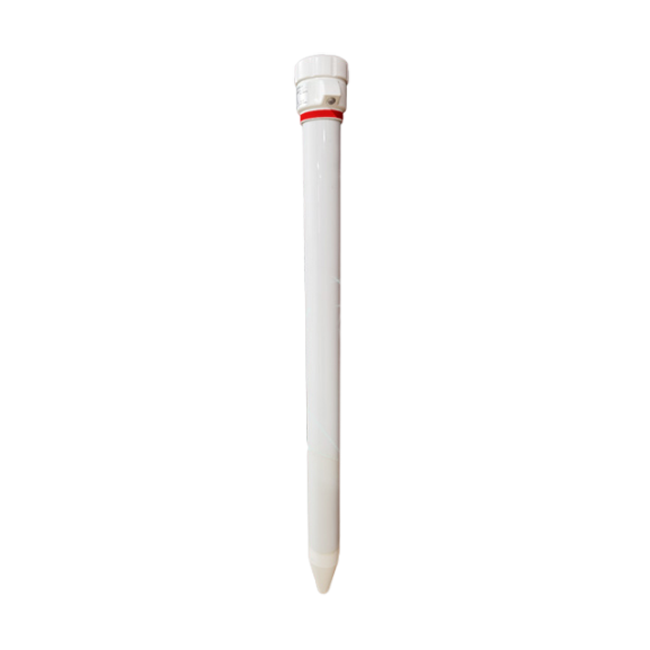 Multi-Depth Soil Sensor RS485
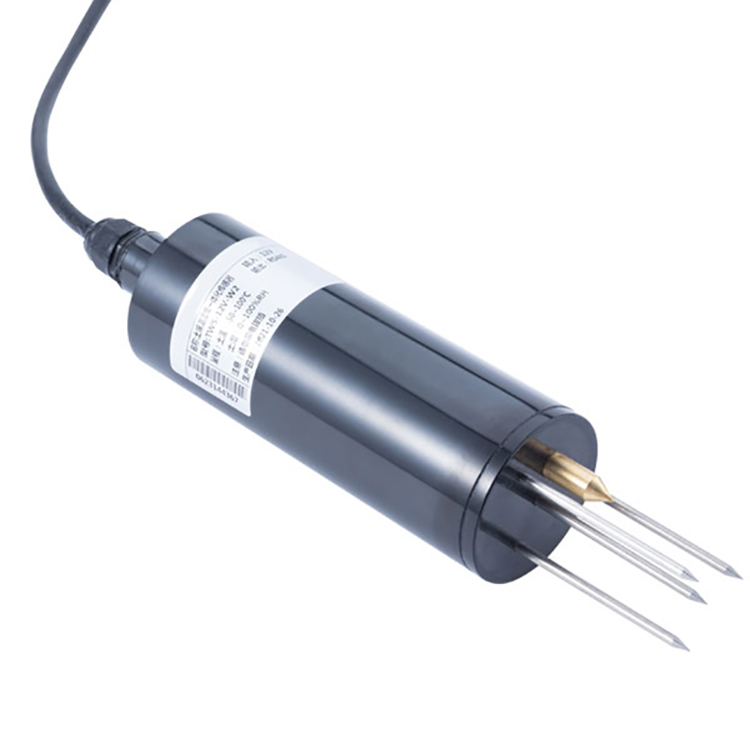 TDR Soil Moisture Sensor
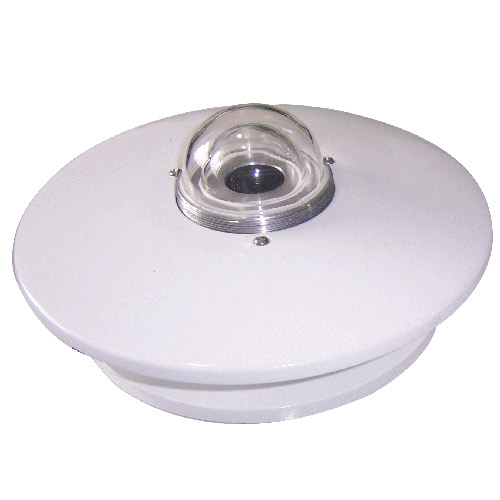 Pyranometer Solar Radiation Sensors
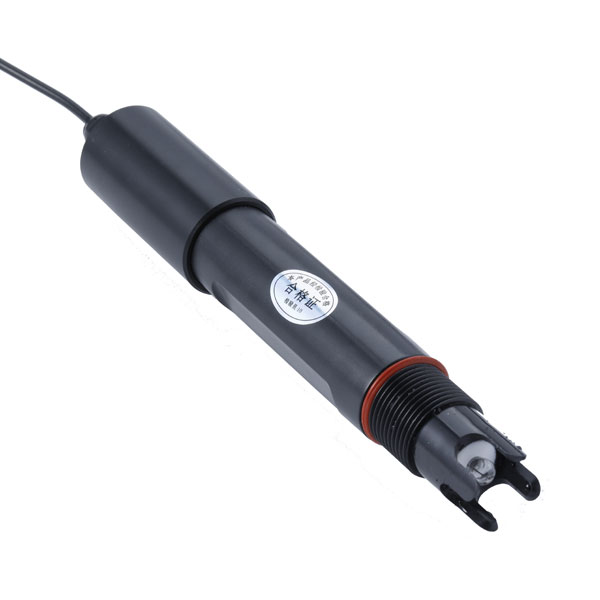 Soil ph sensor
 Tipping Bucket Rain Gauge
 Air Temperature and Humidity Sensor


Screenshot, WhatsApp to identify the QR code
WhatsApp number:+8615367865107
(Click on WhatsApp to copy and add friends)

