





— Download —
 Consumer hotline +8618073152920
WhatsApp:+8615367865107
Address:Room 102, District D, Houhu Industrial Park, Yuelu District, Changsha City, Hunan Province, China
All products
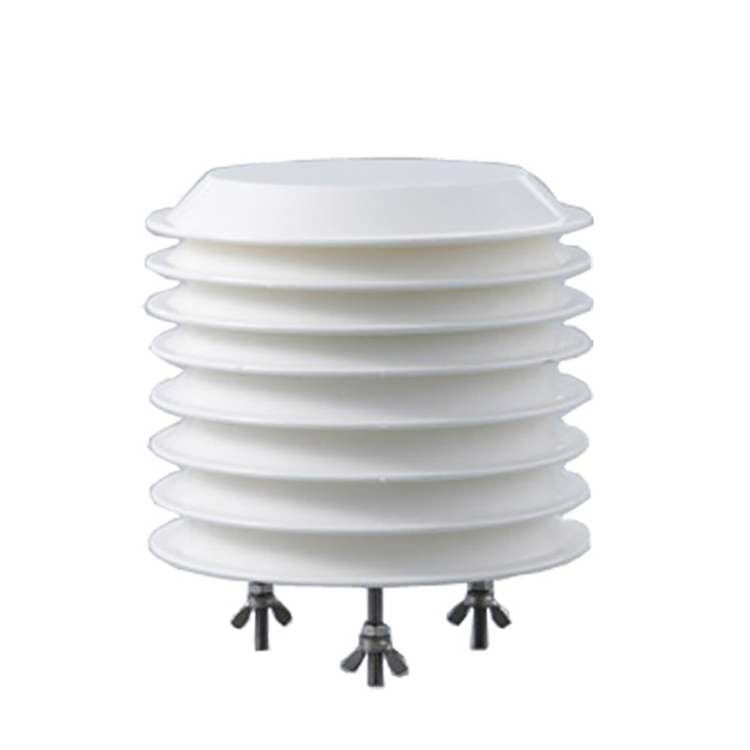
RS485 Modbus Temperature and Humidity Sensor is a fully digital, high-precision three-in-one meteorological sensor, integrating high-accuracy temperature, humidity, and atmospheric pressure detection capabilities. It can quickly and accurately measure atmospheric temperature, humidity, and pressure. The sensor has a built-in signal processing unit, supports RS485 output, and Modbus-RTU protocol, making it easy to integrate with various data acquisition systems, industrial con···
Tel/WhatsApp:+8615367865107
Email:Arvin@niubol.com +Nearly 100 partner companies in more than 75 countries. We are committed to providing high-quality, practical products to meet your needs and help you solve problems. Our products comply with international standards and are certified with ISO, CE and RoHS.Product Details
The NiuBoL NBL-W-LBTH RS485 Modbus Temperature and Humidity Sensor is a 3-in-1 environmental monitoring instrument that integrates air temperature, relative humidity and barometric pressure measurements in one compact device.
The NBL-W-LBTH measures air temperature from -40 to +80°C, relative humidity from 0 to 100% RH and atmospheric pressure from 10 to 1200 hPa. It provides RS485 Modbus RTU communication and operates with a DC 12–24 V power supply.
The integrated multi-plate radiation shield helps protect the temperature and humidity sensing elements from direct solar radiation while allowing natural airflow around the instrument.
The sensor is suitable for automatic weather stations, agricultural monitoring, greenhouses, environmental observation, research facilities and industrial IoT data acquisition.
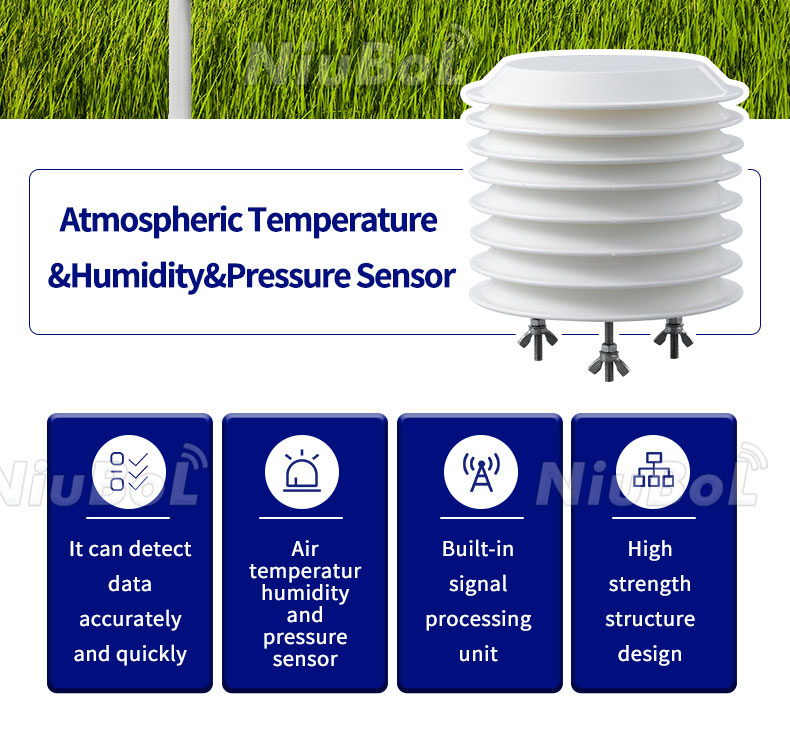
An RS485 Modbus temperature and humidity sensor measures environmental conditions and transmits digital measurement values to a compatible receiving device through a wired communication interface.
RS485 and Modbus RTU serve different functions within the communication system:
RS485: An electrical communication interface that uses differential signals to transmit serial data.
Modbus RTU: A communication protocol that defines device addressing, message structure, function codes and register access.
The NBL-W-LBTH provides three measurement channels through its RS485 Modbus RTU configuration, allowing compatible PLCs, data loggers, computers and industrial gateways to obtain temperature, humidity and pressure measurements from one instrument.
Actual communication distance and the number of connected devices depend on cable characteristics, transceiver loading, baud rate, bus topology, termination and electrical interference.
RS485 communication should therefore not be treated as a guaranteed fixed-distance connection under all installation conditions.
Three environmental measurements: Air temperature, relative humidity and atmospheric pressure in one integrated sensor.
Digital measurement output: RS485 Modbus RTU communication for compatible industrial data acquisition equipment.
Wide measurement ranges: Temperature from -40 to +80°C, humidity from 0 to 100% RH and pressure from 10 to 1200 hPa.
Louvered radiation shield: Helps reduce direct solar heating of the internal sensing components.
Simplified installation: Combines three measurement functions in one housing and communication connection.
Flexible power supply: DC 12–24 V operation for compatible monitoring systems.
Four-wire RS485 connection: Separate power supply and differential communication connections.
Modular integration: Can be combined with wind, rainfall, solar radiation and soil monitoring sensors.

| Measurement Parameter | Measurement Range | Accuracy | Resolution |
|---|---|---|---|
| Air Temperature | -40 to +80°C | ±0.5°C | 0.1°C |
| Relative Humidity | 0–100% RH | ±5% RH | 0.1% RH |
| Atmospheric Pressure | 10–1200 hPa | ±1.5 hPa | 0.1 hPa |
| Parameter | Specification |
|---|---|
| Model | NBL-W-LBTH |
| Product Type | 3-in-1 Air Temperature, Humidity and Pressure Sensor |
| Power Supply | DC 12–24 V |
| Signal Output | RS485 or 4–20 mA, Depending on Configuration |
| Communication Protocol | Modbus RTU (RS485 Version) |
| Baud Rate | 9600 bps |
| Minimum Communication Interval | 1000 ms |
| Operating Temperature | -40 to +80°C |
| Operating Humidity | 0–100% RH |
| Housing Design | Multi-Plate Louvered Radiation Shield |
| Installation Method | Bracket and Pole Mounting |
Ordering Notes: RS485 and 4–20 mA are alternative output configurations. Confirm the required output type, power supply and cable length before ordering. The communication settings and wiring information below apply specifically to the RS485 version.
Measurement resolution represents the smallest reported measurement increment and should not be confused with measurement accuracy.
The NBL-W-LBTH RS485 version uses four electrical connections for power supply and serial communication.
| Wire Color | Function |
|---|---|
| Red | Power Supply Positive (+) |
| Black | Power Supply Negative (-) |
| Yellow | RS485+ |
| Blue | RS485- |
Disconnect the power supply before wiring. Confirm the cable identification, supply voltage and RS485 terminal definitions of the receiving device before powering the sensor.
When connecting the sensor to a compatible NiuBoL weather station, use the corresponding sensor input and communication configuration.

The louvered sensor housing can be installed on a suitable mounting bracket and support pole. The RS485 output configuration is identified by the W2 selection code.
| Communication Parameter | Value |
|---|---|
| Interface | RS485 |
| Protocol | Modbus RTU |
| Baud Rate | 9600 bps |
| Data Bits | 8 |
| Parity | None |
| Stop Bits | 1 or 2, Depending on Device Configuration |
| Minimum Request Interval | 1000 ms |
| Measurement Read Function | 03 (0x03) |
| Register Offset | Measurement | Data Conversion | Unit |
|---|---|---|---|
| 0x0000 | Air Temperature | Raw Value ÷ 10 | °C |
| 0x0001 | Relative Humidity | Raw Value ÷ 10 | % RH |
| 0x0002 | Atmospheric Pressure | Raw Value ÷ 10 | hPa |
The register offsets are zero-based addresses used in the Modbus request. Some PLCs and configuration software use different register numbering conventions.
For a sensor configured with device address 01, the following command reads all three measurement values.
Request:
01 03 00 00 00 03 05 CB
Response example:
01 03 06 00 B4 01 10 27 80 8B 06
| Parameter | Hexadecimal | Decimal | Result |
|---|---|---|---|
| Air Temperature | 0x00B4 | 180 | 18.0°C |
| Relative Humidity | 0x0110 | 272 | 27.2% RH |
| Atmospheric Pressure | 0x2780 | 10112 | 1011.2 hPa |
For measurements below 0°C, confirm the negative temperature encoding of the supplied device and configure the receiving software accordingly.
For additional connection and troubleshooting information, see our RS485 temperature and humidity sensor communication guide.

The NBL-W-LBTH can be integrated into automatic weather stations to provide temperature, relative humidity and atmospheric pressure observations.
These measurements can be combined with wind speed, wind direction, rainfall and solar radiation data to support meteorological monitoring and environmental research.
Air temperature and relative humidity influence crop development, transpiration and greenhouse environmental conditions.
The sensor can provide measurements for agricultural microclimate monitoring, ventilation assessment and crop environment management.
Temperature and relative humidity measurements can also be used by compatible external software to calculate air vapor pressure deficit (VPD).
The RS485 Modbus RTU interface allows integration with compatible PLCs, RTUs, industrial computers and data acquisition devices.
Environmental measurements can support facility monitoring, storage condition assessment and industrial environmental data collection.
Air temperature, humidity and atmospheric pressure measurements provide useful environmental information for ports and coastal monitoring stations.
Installations exposed to salt spray or corrosive conditions require appropriate environmental protection and maintenance.
The sensor does not directly measure tidal levels, ocean currents or other marine parameters.
Temperature, humidity and atmospheric pressure observations are relevant to general environmental monitoring at airport facilities.
Operational aviation applications, including aircraft altimeter settings and certified aviation weather systems, require equipment that meets the applicable aviation authority and measurement requirements.
Continuous environmental measurements can support microclimate studies, agricultural research and long-term atmospheric observations.
Projects requiring specialized measurement uncertainty or traceable calibration should evaluate the sensor specifications against their individual requirements.

Correct installation is important for obtaining representative air temperature and humidity measurements.
Install the sensor on a suitable bracket or support pole.
Select a location representative of the intended monitoring environment.
Maintain natural airflow around the radiation shield.
Avoid unnecessary exposure to localized heat sources, reflective surfaces and ventilation outlets.
Choose installation height according to the application, surrounding conditions and project requirements.
Secure sensor cables and protect outdoor electrical connections.
Keep the louvered housing clean and free from obstructions.
For greenhouse monitoring, sensor height and position should reflect the crop canopy and growing environment. For meteorological observations, the installation should follow the applicable measurement procedures and site requirements.
The NBL-W-LBTH can be used as an individual environmental monitoring instrument or as part of a multi-sensor weather station.
Additional compatible instruments may include:
Wind speed and wind direction sensors.
Other agricultural and environmental monitoring instruments.

The illustrated system represents possible monitoring configurations. Communication interfaces, network connectivity and available functions depend on the selected equipment. The NBL-W-LBTH itself does not contain a cellular or Wi-Fi communication module.
The RS485 sensor can be connected to a compatible RTU or data acquisition device to collect measurements automatically.
Depending on the selected communication equipment, collected data can be transmitted through supported cellular, Ethernet or Wi-Fi connections to a monitoring platform or private server.

The standard NiuBoL cloud platform supports remote monitoring data viewing. Automatic SMS or email alerts require a compatible external alerting system.
Environmental measurements can also be displayed locally using compatible digital display instruments or data acquisition equipment.
For the RS485 version, select a display or controller that supports the appropriate Modbus RTU communication settings and measurement registers.

The above illustration shows an analog display configuration. A 4–20 mA instrument requires a compatible analog sensor output, while an RS485 sensor requires a compatible digital receiving interface. These output types are not directly interchangeable.
| Comparison | RS485 Modbus RTU | 4–20 mA |
|---|---|---|
| Signal Type | Digital Communication | Analog Current Signal |
| Measurement Channels | Multiple Parameters through Measurement Registers | Depends on the Selected Analog Configuration |
| Receiving Equipment | Modbus-Compatible PLC, RTU or Data Logger | Compatible Analog Current Input |
| Data Processing | Register Reading and Data Scaling | Current-to-Measurement Conversion |
| Typical Applications | Weather Stations and Industrial IoT Networks | Conventional Industrial Analog Monitoring |
For applications requiring all three environmental parameters through a single digital communication interface, the RS485 Modbus RTU version provides a practical integration option.
For analog monitoring systems, confirm the required measurement channels, signal scaling and wiring configuration before ordering the 4–20 mA version.
Regular inspection helps maintain representative environmental measurements and reliable communication.
Check the louvered housing for dust, insects and other obstructions.
Inspect mounting brackets, screws and cable connections.
Confirm that the supply voltage is within the specified range.
Check RS485 polarity, sensor address and serial communication settings if no data is received.
Verify register offsets and data scaling when measurements appear incorrect.
Check for duplicate device addresses when multiple sensors share one RS485 bus.
Use suitable reference instruments when measurement verification is required.
Do not disassemble the sensing components or clean them using sharp objects or corrosive liquids.
The NBL-W-LBTH measures air temperature, relative humidity and atmospheric pressure using three integrated measurement channels.
The specified temperature accuracy is ±0.5°C, relative humidity accuracy is ±5% RH and atmospheric pressure accuracy is ±1.5 hPa.
Yes. A compatible PLC with an RS485 Modbus RTU master interface can read the sensor using the appropriate device address, communication settings and register definitions.
Yes. Each sensor should have a unique device address and compatible serial communication settings. The actual number of supported devices depends on the electrical characteristics and design of the RS485 network.
RS485 and 4–20 mA are alternative output configurations. The required output type must be selected before ordering.
The louvered radiation shield is designed for ambient environmental monitoring. Correct installation, suitable environmental protection and regular inspection are necessary for reliable outdoor measurements.
The sensor provides air temperature and relative humidity measurements that can be used to calculate air vapor pressure deficit through compatible external software or a controller. VPD is not a separate direct measurement channel.
No. The RS485 sensor requires compatible data acquisition and network communication equipment to transmit measurements to a remote monitoring platform.
The sensor measures current atmospheric conditions. Its pressure, temperature and humidity measurements can support meteorological analysis, but reliable weather forecasting requires additional observations and appropriate forecasting methods.
The NiuBoL NBL-W-LBTH RS485 Modbus Temperature and Humidity Sensor provides integrated air temperature, relative humidity and atmospheric pressure measurements for agricultural, meteorological and industrial monitoring applications.
Its digital communication interface allows system integrators to collect three environmental measurements using one compatible RS485 connection.
For additional configuration options, explore the NBL-W-LBTH air temperature, humidity and barometric pressure sensor and other compatible weather station instruments.
When selecting the sensor, specify the required output interface, power supply, cable length, installation conditions and receiving equipment.
NBL-W-LBTH-Atmosphere-temperature-humidity-and-pressure-sensor-instruction-manual-V4.0.pdf
Sensors & Weather Stations Catalog
 Agriculture Sensors and Weather Stations Catalog-NiuBoL.pdf
Weather Stations Catalog-NiuBoL.pdf
Agriculture Sensors Catalog-NiuBoL.pdf
Water Quality Sensor Catalog-NiuBoL.pdf
Related recommendations
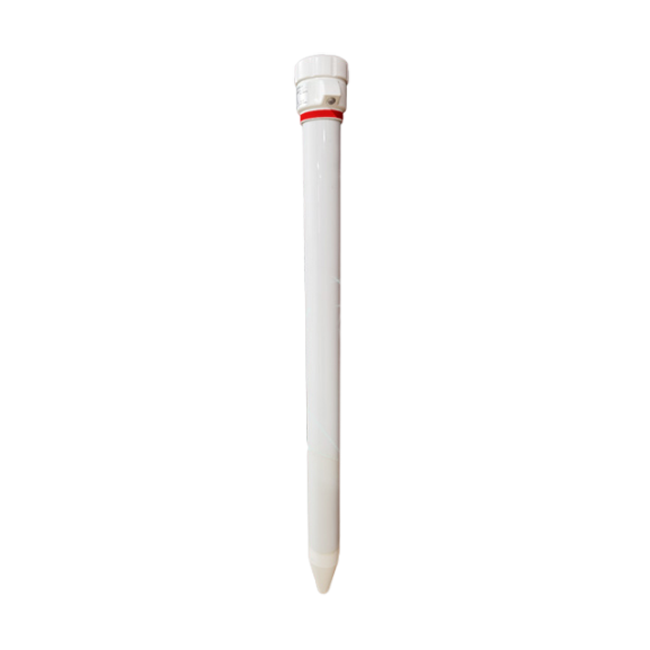 Multi-Depth Soil Sensor RS485
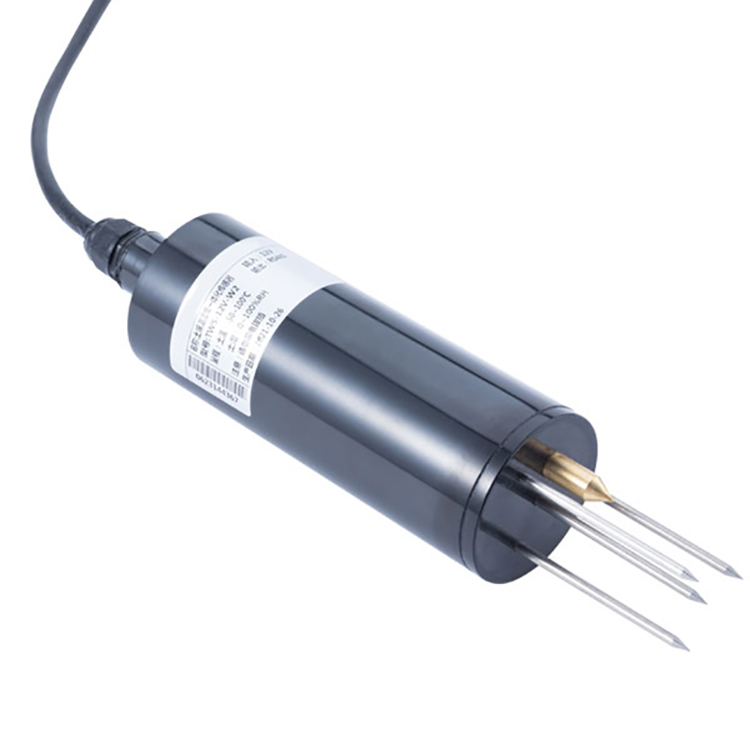 TDR Soil Moisture Sensor
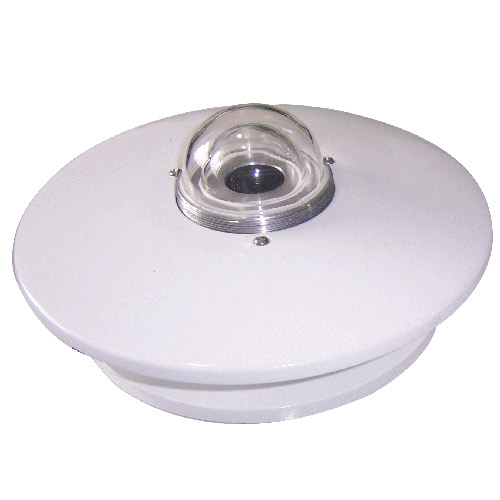 Pyranometer Solar Radiation Sensors
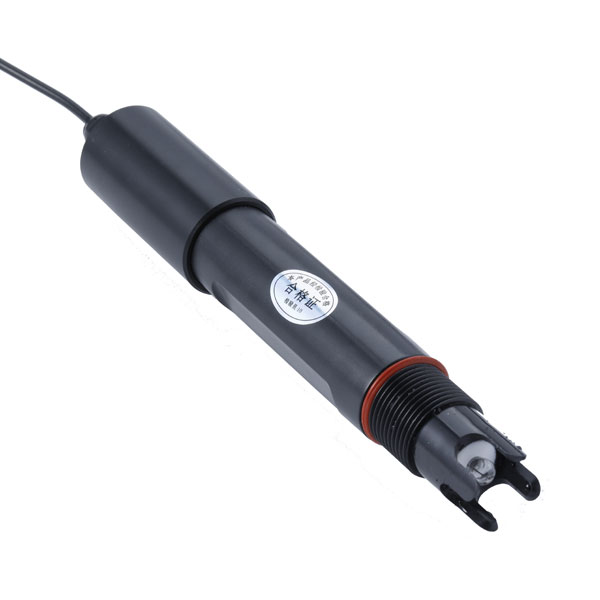 Soil ph sensor
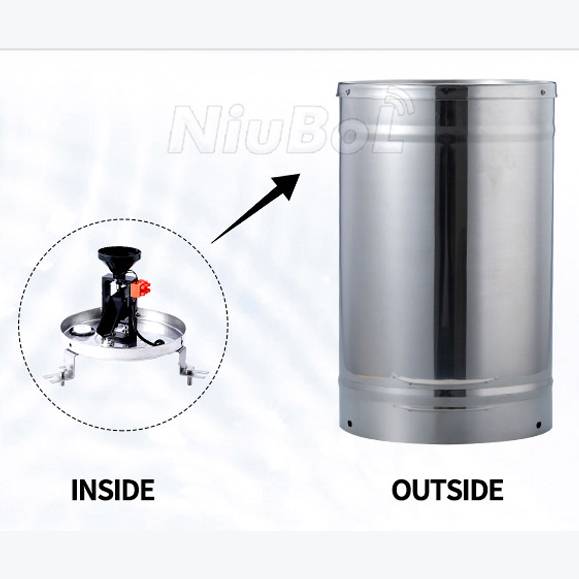 Tipping Bucket Rain Gauge - ABS and Stainless Steel
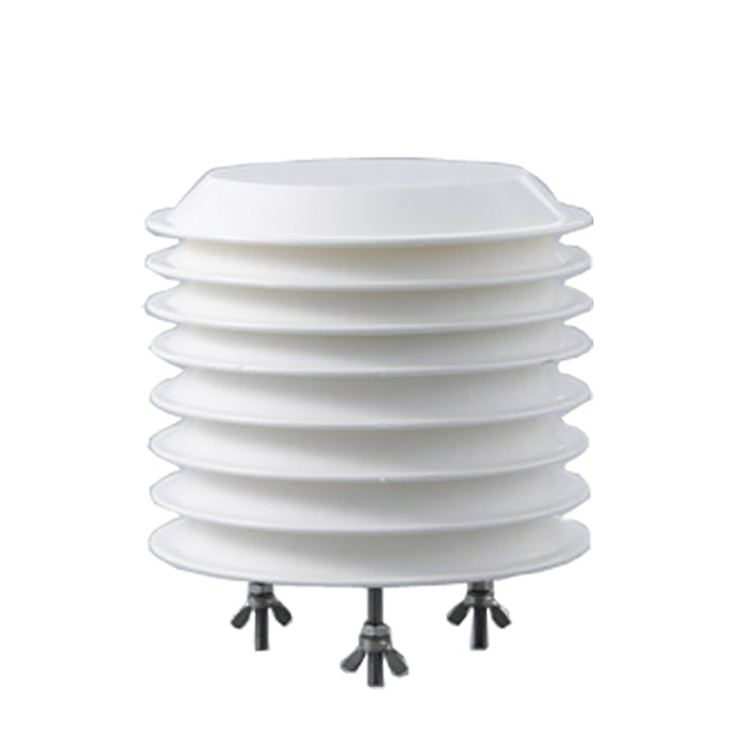 Air Temperature and Humidity Sensor


Screenshot, WhatsApp to identify the QR code
WhatsApp number:+8615367865107
(Click on WhatsApp to copy and add friends)

