





— Download —
 Consumer hotline +8618073152920
WhatsApp:+8615367865107
Address:Room 102, District D, Houhu Industrial Park, Yuelu District, Changsha City, Hunan Province, China
All products


Select NiuBoL moisture probes for irrigation using root depth and wetting profiles. Compare point and FDR profile layouts, installation and RS485 options before ordering.
Tel/WhatsApp:+8615367865107
Email:Arvin@niubol.com +Nearly 100 partner companies in more than 75 countries. We are committed to providing high-quality, practical products to meet your needs and help you solve problems. Our products comply with international standards and are certified with ISO, CE and RoHS.Product Details
Quick Answer: Choose moisture probes for irrigation according to the soil layers the project must observe. Separate point probes allow flexible locations and depths; a tubular FDR profile measures several ordered layers around one installation. Specify the actual depth list, the ground reference and the data channel for each layer before purchase. More depth channels do not compensate for installing the profile outside the representative wetted root zone.

Several independent probes offer flexible locations and replacement. A multi-depth profile measures several layers in one installation. Compare cable, logger channels, service access and the consequence of one assembly failure.
Independent points are useful when the project needs different horizontal positions, such as near an emitter and farther into the root region. A profile is useful when the question concerns the sequence of wetting through several layers at one position. Installing two profiles beside each other does not provide the same information as observing two contrasting hydraulic or soil locations.
Water content and soil-water tension also need different interpretations. Dielectric point and FDR profile devices estimate water content, while a tensiometer measures tension. For the broader measurement-method comparison, use the soil moisture sensor selection guide. Depth planning should begin after the project has chosen the quantity its irrigation method will use.
The NiuBoL NBL-S-TMSMS profile configuration uses FDR measurement and digital temperature sensing at multiple levels. A standard arrangement has 10, 20, 30 and 40 cm measurement depths; other ordered arrangements can include additional or different levels, with up to ten customized nodes. A 50 or 60 cm requirement must appear in the ordered depth list, not be assumed from the word multi-depth.
| Profile item | NBL-S-TMSMS configuration |
|---|---|
| Water measurement | Volumetric soil moisture, dry to saturated soil; FDR principle |
| Moisture performance | 0.1% resolution; stated laboratory accuracy +/-3% |
| Temperature | -40 to 80 degrees C; 0.1 degree C resolution; +/-0.5 degree C accuracy |
| Depth arrangement | Standard 10, 20, 30 and 40 cm; customized nodes as ordered |
| Supply / digital interface | 12 VDC or configured solar supply; RS485 Modbus |
| Current by operating state | Less than 1 mA during sleep; less than 70 mA during sampling |
| Working environment | -40 to 80 degrees C; 0-100% RH |
| Protection | IP67 above ground; IP68 below ground |
| Body / cable | Polymer tube with sealed sensing assembly; confirm cable jacket and termination for the ordered version |
| Remote option | 4G communication available by configuration; specify module, coverage and service separately |
The current figures refer to operating states, not the average demand of every complete wireless station. A battery calculation needs sampling duration, interval and communication demand. Likewise, a laboratory accuracy should not be presented as a guaranteed field result in every soil. Installation contact and the soil-specific relationship still require review.
Shallow sensors respond early, root-zone sensors support replenishment decisions and deeper sensors can indicate drainage. Select layers from crop roots and soil profile rather than using all available depths without a purpose.
An upper channel can show whether a short pulse has affected the surface layer. A channel within active roots supports recharge interpretation. A channel beneath the managed roots can help identify movement past the target layer. These roles depend on crop stage and the soil profile; a factory depth list does not establish root depth for the farm.
Do not average all layers into one percentage before inspecting them. A wet shallow layer and dry deeper roots can produce a plausible average while hiding the condition the irrigation team needs to address. If a combined root-zone estimate is required, define which layers each channel represents and why that weighting is justified.
In a shallow bed, a long profile can include layers irrelevant to the crop. In a deep-rooted orchard, a short profile may miss the lower part of interest. Buy the depth arrangement that resolves the question rather than selecting the largest channel count by default.
Align the probe's zero-depth mark with the intended finished soil surface. If the assembly is set too deep or the surface is later raised, every nominal layer changes its relationship to the crop. Record the reference mark, actual surface and installed layer list together. A sensor number in the database is not an adequate depth record.
Check the installation geometry before drilling. The bore should be vertical, suitable for the selected tube and free of an obstruction that would require hammering the instrument. Do not force a long profile through stones or use impact to compensate for a poorly prepared hole. Choose another representative point or an approved installation method where the soil prevents proper contact.
A tubular profile needs contact around the sensing zones. An air-filled annulus gives a different dielectric environment from the surrounding soil, while a loose vertical path can allow water to move down beside the tube. Both can produce a misleading depth response even when every digital channel is working.
Use the installation method approved for the supplied assembly. Where native-soil slurry is specified, distribute it around the tube without adding a foreign conductive or fertilizer-rich mixture. The slurry initially changes local moisture, so identify the installation period and allow the point to settle before treating the first wet readings as ordinary irrigation behavior. A valid communication reply does not establish representative soil contact.
Inspect the surface finish for ponding or a channel that directs irrigation along the tube. Keep the point's exposure representative and avoid a protective structure that changes local watering. After settling, observe a known event and compare the sequence with nearby soil inspection, rather than accepting the profile solely because all layer percentages appear reasonable.
| Observed profile behavior | Questions to investigate |
|---|---|
| Upper layer rises; deeper layers remain stable | Has water had time to reach them, and does the pulse recharge the intended roots? |
| All layers rise almost together after installation | Could water be moving along the bore, or does the soil have a real preferential path? |
| Deeper layer changes while an upper layer remains dry | Check lateral flow, soil layering, actual depth assignment and contact before declaring a failed channel. |
| No layer responds | Check delivery at the monitored position, whether it lies within the wetted volume, power and channel decoding. |
These patterns guide inspection; none proves its cause on its own. Cracks, roots, layered soil and drip geometry can produce nonuniform wetting. A profile is a local observation, not an image of the entire wetted soil volume. Check the hydraulics and installation before extending a cycle to make a particular trace rise.
Request the channel map for the actual number of nodes and firmware. Do not load a two-parameter point-probe driver into a multi-layer station: the record can include supply information and repeated moisture/temperature pairs. An extra word at the beginning can shift every layer assignment while leaving the displayed numbers plausible.
Store an explicit depth with each moisture and temperature tag. Verify the exported record against the ordered layer list, including any customized 50 or 60 cm node. RS485 Modbus is the field connection; a cellular version additionally needs the specified modem, network support and receiving platform. A 4G option is not evidence that every assembly includes 5G, GPS or local backfill storage.
For a quotation, send the root profile, required layers, soil conditions, irrigation geometry and whether the points must share one vertical location. State the RS485 or remote acquisition requirement and the power arrangement. NiuBoL can then review an appropriate profile or set of point probes instead of assuming that one standard tube fits every crop.
Use separate points when the measurements need different horizontal positions or independently chosen depths. A profile groups several levels around one tube. Choose according to the soil volume the project must observe, not simply the number of channels.
No. The NBL-S-TMSMS arrangement discussed here has standard 10, 20, 30 and 40 cm levels, with customized arrangements available. Put every required depth in the order and verify its tag. Do not assume six layers from a general product-family illustration.
Nominal depths are referenced to that mark. Burying the assembly deeper or changing the surface shifts the actual location of all sensing levels. Record the final surface and reference mark so the archived depths remain physically meaningful.
They can show that the channels respond, but they may reflect the installation material rather than undisturbed field moisture. Mark the disturbed period and verify a subsequent wetting and redistribution sequence after the point has settled under the approved method.
No. Investigate the bore contact, preferential paths, actual soil layering and layer mapping. The pattern can have several causes. A single profile trace cannot, by itself, quantify drainage across a field.
Only if a crop- and soil-specific method supports that choice. Layers can serve different purposes and contain different soils. A drainage-observation layer should not automatically use the same start condition as an active-root layer.
Not automatically. Confirm sampling, timestamping, local storage, network bands and recovery behavior for the supplied station. A modem connection alone does not establish that measurements are retained during an outage.
Provide layer depths, crop roots, soil profile, installation constraints, power and acquisition requirements. Ask for the matching channel map, tube dimensions, installation tools and communication scope so the delivered assembly can be installed and decoded as specified.
Moisture probes for irrigation should reveal the layers and positions relevant to the crop. Specify the point or profile geometry, install against a clear ground reference and inspect separate depth traces before changing irrigation. A verified depth list and matching acquisition map make the measurements useful without treating every multi-layer probe as the same instrument.
Sensors & Weather Stations Catalog
 Agriculture Sensors and Weather Stations Catalog-NiuBoL.pdf
Weather Stations Catalog-NiuBoL.pdf
Agriculture Sensors Catalog-NiuBoL.pdf
Water Quality Sensor Catalog-NiuBoL.pdf
Related recommendations
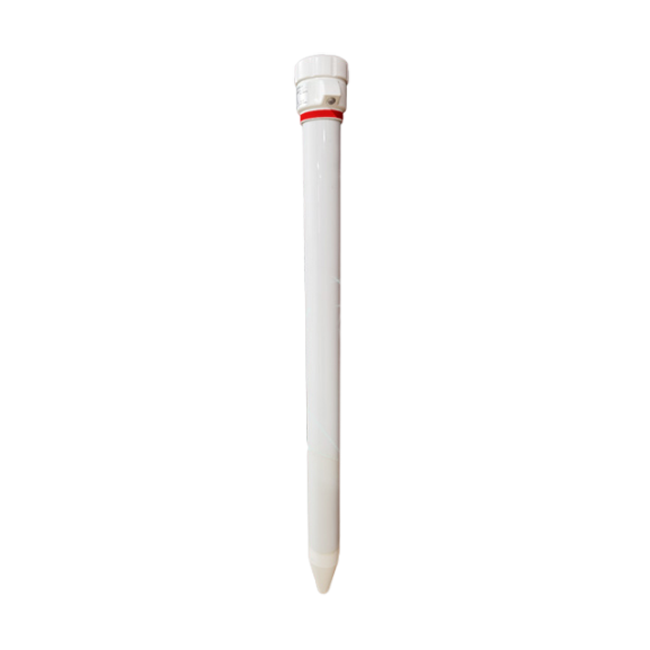 Multi-Depth Soil Sensor RS485
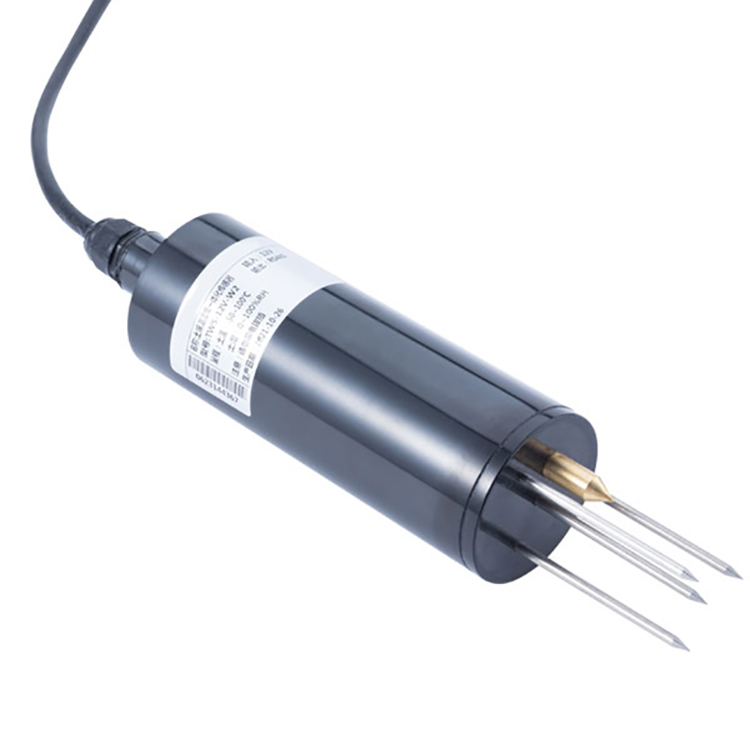 TDR Soil Moisture Sensor
 Pyranometer Solar Radiation Sensors
 Soil ph sensor
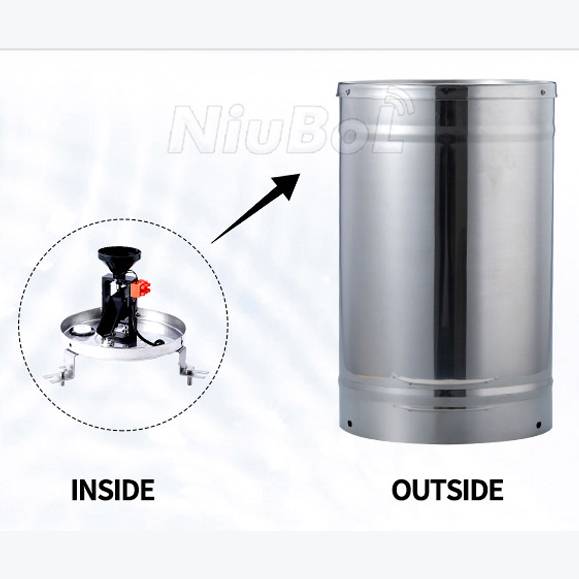 Tipping Bucket Rain Gauge
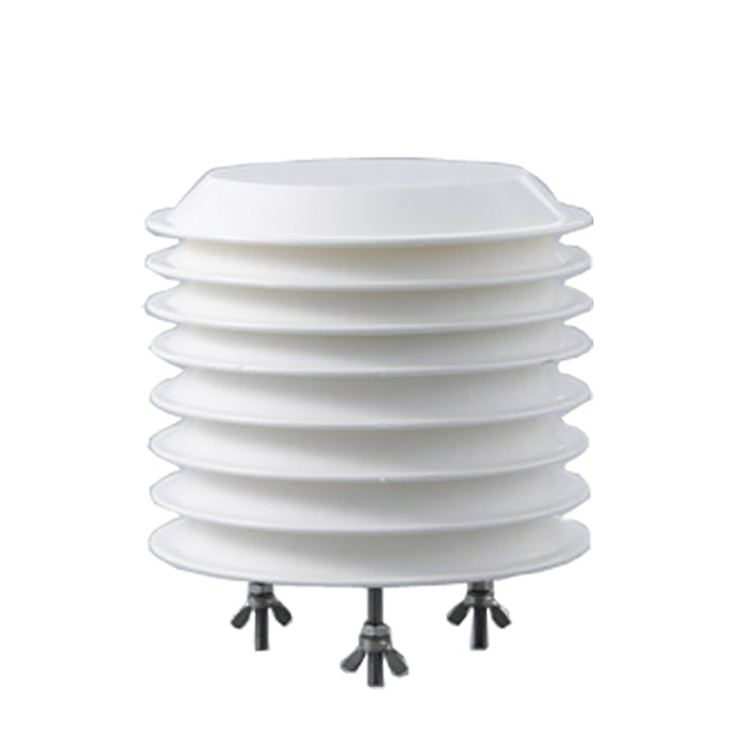 Air Temperature and Humidity Sensor


Screenshot, WhatsApp to identify the QR code
WhatsApp number:+8615367865107
(Click on WhatsApp to copy and add friends)

