





— Download —
 Consumer hotline +8618073152920
WhatsApp:+8615367865107
Address:Room 102, District D, Houhu Industrial Park, Yuelu District, Changsha City, Hunan Province, China
All products

Best soil moisture sensor can bring a lot of value to agricultural production:1. Precise irrigation: according to the monitoring data of soil moisture sensor, farmers can precisely adjust the irrigation amount and irrigation time to avoid excessive or insufficient irrigation, improve irrigation efficiency and save water resources.2. Crop management: By monitoring the soil moisture condition, farmers can better understand the growing environment of the crop root system, and ad···
Tel/WhatsApp:+8615367865107
Email:Arvin@niubol.com +Nearly 100 partner companies in more than 75 countries. We are committed to providing high-quality, practical products to meet your needs and help you solve problems. Our products comply with international standards and are certified with ISO, CE and RoHS.Product Details
Choosing the best soil moisture sensor for agriculture depends on the crop, soil type, irrigation method, measurement accuracy and monitoring system. A suitable sensor should provide reliable soil water measurements at the required root-zone depth and connect to the equipment used for irrigation management.
Common agricultural soil moisture sensors include Time Domain Reflectometry (TDR), Frequency Domain Reflectometry (FDR), capacitance sensors and soil water tension sensors. These instruments use different measurement principles and provide different types of information about soil water conditions.
For continuous field monitoring, the NiuBoL NBL-S-THR TDR soil moisture and temperature sensor is one available option. It measures soil moisture and temperature and supports RS485 Modbus RTU, 4–20mA or 0–5V output configurations for integration with compatible agricultural monitoring systems.
The most suitable sensor is not necessarily the one with the greatest number of measurement channels. It is the instrument whose measurement principle, accuracy, installation method and communication interface meet the actual requirements of the agricultural project.

Different soil moisture measurement technologies have different strengths and limitations. Selection should begin with the measurement needed for the irrigation or agricultural management decision.
| Sensor Type | Measurement Principle | Typical Application | Selection Considerations |
|---|---|---|---|
| TDR Sensor | Electromagnetic pulse response and soil dielectric properties | Agricultural monitoring, irrigation and soil research | Accuracy, soil conditions, probe contact and calibration |
| FDR Sensor | Frequency-domain dielectric response | Field monitoring, greenhouses and soil profiles | Soil type, salinity, calibration and measurement geometry |
| Capacitance Sensor | Changes in electrical capacitance | Horticulture and agricultural moisture monitoring | Calibration, soil contact and environmental conditions |
| Tensiometer | Soil water tension | Irrigation management using soil water tension | Operating tension range, maintenance and soil contact |
| Resistive Sensor | Electrical resistance or conductivity | Basic wet/dry indication | Salinity sensitivity and electrode condition |
TDR, FDR and capacitance sensors generally estimate volumetric soil water content, while tensiometers measure soil water tension. These are different physical measurements and cannot be directly substituted without considering soil water retention characteristics.
Time Domain Reflectometry measures changes in electromagnetic pulse propagation associated with the dielectric properties of soil.
Water has a higher dielectric permittivity than most dry soil minerals and air. As soil water content changes, the response of the electromagnetic signal also changes.
TDR sensors are suitable for repeated field measurements when the instrument's specifications, installation method and calibration meet the monitoring requirements.
Frequency Domain Reflectometry uses an alternating electromagnetic field to estimate the dielectric properties of soil.
FDR sensors are available in different probe designs and are commonly used in agricultural monitoring, greenhouse systems and multi-depth soil measurement.
The actual measurement performance depends on the instrument design, soil electrical properties and calibration.
Soil water tension sensors measure how strongly water is retained within the soil rather than directly reporting volumetric water content.
These measurements can be useful for irrigation management because plant water uptake is influenced by the energy required to extract water from soil.
Soil water tension and volumetric water content are related through soil-specific water retention characteristics, but they are not interchangeable values.
Agricultural monitoring projects may require more than soil moisture alone. Temperature, electrical conductivity and other soil parameters provide different types of environmental information.
For example, a soil moisture and temperature sensor measures two parameters, while a three-parameter sensor may also include electrical conductivity.
Electrical conductivity can provide information about soluble-ion conditions, but it does not directly identify the concentrations of individual nutrients.
Selecting a multi-parameter sensor is useful when the additional measurements are relevant to the project. However, the specifications of one model should not be applied to other probe configurations.

The NiuBoL NBL-S-THR combines TDR soil moisture measurement with a soil temperature channel. It is suitable for agricultural irrigation, greenhouse monitoring, field observation and compatible data acquisition systems.
| Parameter | Specification |
|---|---|
| Model | NBL-S-THR |
| Product Type | TDR Soil Moisture and Temperature Sensor |
| Moisture Measurement Principle | Time Domain Reflectometry |
| Measured Parameters | Soil Moisture and Temperature |
| Soil Moisture Range | 0–100% |
| Soil Moisture Accuracy | ±3% |
| Soil Moisture Resolution | 0.1% |
| Soil Temperature Range | −50 to +100°C |
| Temperature Accuracy | ±0.5°C |
| Temperature Resolution | 0.1°C |
| Power Supply | DC 12–24V |
| Output Options | RS485 / 4–20mA / 0–5V |
| RS485 Protocol | Modbus RTU |
| Power Consumption | Approximately 0.3W |
| Operating Temperature | −40 to +80°C |
| Protection Rating | IP68 |
The 0–100% moisture range represents the sensor's measurement scale. The actual water content of a soil depends on its pore structure and physical conditions.
Sensor resolution and accuracy are different characteristics. The 0.1% resolution describes the reported measurement increment, while the specified moisture accuracy is ±3%.
RS485, 4–20mA and 0–5V are alternative output configurations. The selected interface must be compatible with the receiving equipment.

An agricultural soil moisture sensor should be suitable for the physical conditions at its installation site.
The NBL-S-THR uses a sealed cylindrical sensor body with metal sensing rods. Its IP68-rated construction supports suitable long-term buried soil monitoring.
The sensing rods should maintain firm contact with the soil. Mechanical damage, poor installation or air gaps can affect measurement quality.
Although the sensor body has IP68 protection, external cable joints, connectors and data acquisition equipment require their own suitable environmental protection.

Installation quality has a direct influence on the reliability of soil moisture measurements.
The sensing rods must be in close contact with the surrounding soil. Stones, air gaps and loose backfilling can cause measurements that are not representative of the intended monitoring area.
For temporary soil measurements, select a representative location and avoid rocks or other objects that could damage the sensing rods.
Insert the probe into the soil at the required depth. Avoid moving the sensor repeatedly after insertion because this can create air gaps around the electrodes.
When comparing several locations, keep the measurement depth and testing procedure consistent.
For continuous monitoring, excavate a small soil pit to the desired depth and insert the probe horizontally into undisturbed soil.
Ensure close contact between the sensing rods and soil. Carefully backfill the installation area and protect the sensor cable against mechanical damage.
Record the monitoring point, depth and installation date to support future analysis and maintenance.

There is no single installation depth suitable for every agricultural application.
The appropriate depth depends on crop rooting characteristics, irrigation method, soil profile and the purpose of the measurement.
Shallow sensors can help observe water changes near the surface. Deeper sensors can provide information about moisture movement through lower sections of the root zone.
For crops with deeper roots, monitoring more than one soil layer may provide useful information about irrigation penetration and water availability.
For drip irrigation, the horizontal distance between the sensor and the irrigation emitter is also important.
A probe installed directly beneath a dripper may respond earlier to irrigation than a probe located farther from the wetted area.
The correct position should reflect whether the project aims to monitor irrigation arrival, root-zone moisture or deeper drainage.
For sprinkler irrigation, place sensors at representative crop locations rather than unusual wet spots, field boundaries or heavily compacted wheel tracks.
Where soil or irrigation conditions vary significantly, additional monitoring points may be needed.
For connected monitoring projects, electrical output compatibility is an important sensor selection requirement.
The NBL-S-THR RS485 version supports Modbus RTU communication with compatible PLCs, data loggers, RTUs and agricultural IoT gateways.
Analog configurations are also available for controllers using suitable current or voltage inputs.
| Output | Compatible Equipment | Application |
|---|---|---|
| RS485 Modbus RTU | PLC, RTU, Data Logger and Gateway | Digital agricultural monitoring |
| 4–20mA | Industrial Analog Current Input | Industrial controller integration |
| 0–5V | Analog Voltage Acquisition Input | Compatible monitoring controllers |
A soil moisture monitoring system may include soil sensors, data acquisition equipment, communication gateways, a power supply and monitoring software.
The sensor measures soil conditions, while an external gateway collects the data and transmits it through its supported network interface.
Remote communication may use a cellular, Ethernet or Wi-Fi network depending on the gateway selected for the project.
The NBL-S-THR itself is a wired measuring instrument and does not include independent Internet connectivity.

Soil moisture measurements help farmers observe root-zone water conditions before and after irrigation.
Monitoring trends can support irrigation scheduling and help identify locations where water distribution requires further investigation.
Water management decisions should also account for soil characteristics, crop water requirements and the irrigation system.
In soil-based greenhouses, moisture sensors can monitor the water conditions of crop beds and growing areas.
The measurements can be combined with temperature, humidity and light observations in a compatible environmental monitoring system.
In orchards, soil moisture sensors can be positioned at selected root-zone depths to observe water availability around trees.
Sensor placement should account for the irrigation method, emitter position and distribution of active roots.
Vegetable crops and ornamental plants may have different rooting characteristics and moisture requirements.
Soil moisture monitoring can help growers observe changes in growing conditions and evaluate irrigation practices.
Soil moisture observations can provide information about seasonal water conditions in pastures and grasslands.
These data may also be used in environmental and ecological monitoring projects.
Research institutions use soil moisture measurements to study irrigation performance, soil-water movement and environmental variation.
Consistent measurement locations, installation methods and calibration are important when comparing results between sites.

Even a sensor with suitable technical specifications may produce unrepresentative readings if the installation and measurement conditions are unsuitable.
Sandy, clay-rich and organic soils have different physical and dielectric characteristics. These properties influence the relationship between sensor response and soil water content.
Dissolved salts affect soil electrical properties. Their influence on moisture measurements depends on the measurement technology, sensor design and calibration.
Air gaps and loose soil around the sensing rods can produce readings that do not represent the surrounding soil correctly.
Firm soil contact and careful installation are essential for reliable long-term monitoring.
Measurements vary with irrigation distribution, soil depth, crop roots, slope and drainage conditions.
A sensor should be positioned where the measurement is relevant to the intended agricultural decision.
Factory calibration provides the initial measurement configuration. For demanding applications, comparison with suitable reference measurements or soil-specific calibration may be necessary.
Before choosing a sensor, identify the measurement that the monitoring project actually requires.
A soil moisture sensor measures water content, while other instruments may provide temperature, electrical conductivity, soil water tension or pH measurements.
For an irrigation project, additional measurements are useful when they support the required management decisions.
| Monitoring Requirement | Suitable Sensor Type |
|---|---|
| Soil Water Content | TDR, FDR or suitable capacitance soil moisture sensor |
| Soil Moisture and Temperature | NBL-S-THR or another suitable integrated sensor |
| Soil Water Tension | Soil water potential sensor or tensiometer |
| Soil Electrical Conductivity | Soil EC sensor |
| Measurements at Several Depths | Multiple probes or a multi-depth soil monitoring sensor |
For applications requiring soil moisture and temperature measurements, the NBL-S-THR TDR Soil Moisture and Temperature Sensor is one option.
Other agricultural measurements may require different probes. NiuBoL provides a range of agricultural sensors for monitoring soil and environmental conditions.

When selecting soil moisture sensors for an agricultural project, the following information is important:
Crop type: Identify the crops and their relevant root-zone depths.
Soil conditions: Consider soil texture, salinity, compaction and drainage.
Monitoring objective: Determine whether the project requires irrigation scheduling, research measurements or general environmental observation.
Measurement depths: Decide whether one soil layer or several depths must be monitored.
Communication: Confirm whether the receiving system requires RS485, analog current or voltage.
Power supply: Determine the available supply voltage and the power requirements of the complete system.
Sensor quantity: Select representative monitoring points according to field variability and irrigation zones.
Installation environment: Consider cable protection, buried installation and maintenance access.
For projects involving automatic irrigation, the controller, valves and hydraulic system should also be considered. A soil moisture sensor provides measurement data; it does not independently operate irrigation equipment.
NiuBoL supplies soil moisture sensors, temperature sensors, EC probes, soil pH sensors, multi-parameter agricultural sensors and data acquisition equipment.
The product range supports agricultural irrigation, greenhouse cultivation, environmental monitoring and compatible IoT system integration.
Sensor selection can be based on the measurement requirements, installation conditions, electrical interface and receiving equipment.

A1. The best choice depends on the measurement objective, soil conditions, required accuracy, installation depth and monitoring equipment. TDR and FDR sensors are commonly used for volumetric soil moisture monitoring, while tensiometers provide soil water tension measurements.
A2. Neither technology is universally superior. Both can provide useful soil moisture measurements. Performance depends on the sensor design, calibration, soil properties and installation conditions.
A3. Volumetric soil moisture describes the amount of water within a given soil volume. Soil water tension describes the energy associated with water retention in the soil. The relationship between them depends on soil properties.
A4. The NBL-S-THR measures soil moisture and soil temperature. It does not provide separate EC, pH, salinity or NPK measurement channels.
A5. Its specified soil moisture measurement range is 0–100%, with 0.1% resolution and ±3% accuracy.
A6. Yes. The RS485 Modbus RTU version can connect to compatible PLCs, data loggers and gateways. Analog versions are available for suitable current or voltage inputs.
A7. The required depth depends on crop roots, soil conditions and irrigation objectives. Multiple depths may be appropriate when monitoring water movement through the root zone.
A8. One sensor measures conditions around its installation point. Fields with different soil types, irrigation patterns or crops may require several representative monitoring locations.
A9. Soil moisture sensors provide measurements. Automatic irrigation requires a compatible external controller, control logic and suitable pumps or valves.
A10. Yes. A compatible gateway can collect measurements and transmit them to a monitoring platform or customer server through its supported communication network.
A11. The NBL-S-THR has an IP68-rated sensing body and can be used for suitable long-term buried monitoring. Proper soil contact and protection of cables and external connections are still required.
A12. Provide the crop type, soil conditions, irrigation method, desired monitoring depths, number of monitoring points, output interface, available power supply and receiving data acquisition equipment.
Download the NBL-S-THR user manual for technical specifications, wiring information, installation guidance and communication details.
NBL-S-THR-Soil-temperature-and-moisture-sensors-Instruction-Manual-V4.0.pdf
Choosing a suitable soil moisture sensor requires matching its measurement technology, accuracy, output interface and installation method to the agricultural monitoring project.
For soil moisture and temperature measurement, the NiuBoL NBL-S-THR provides TDR-based monitoring with RS485 Modbus RTU and alternative analog output configurations.
When requesting a quotation, please specify the required sensor quantity, soil conditions, crop type, measurement depth, output interface, power supply and cable length.
For detailed product information, see the NBL-S-THR TDR Soil Moisture and Temperature Sensor.
To discuss agricultural monitoring requirements or equipment selection, contact NiuBoL for technical assistance and a quotation.
Prev:IoT Soil Moisture Sensor with RS485 for Irrigation | NiuBoL
Next:Soil moisture sensor for agriculture Output 4-20mA/0-5V/RS485
Sensors & Weather Stations Catalog
 Agriculture Sensors and Weather Stations Catalog-NiuBoL.pdf
Weather Stations Catalog-NiuBoL.pdf
Agriculture Sensors Catalog-NiuBoL.pdf
Water Quality Sensor Catalog-NiuBoL.pdf
Related recommendations
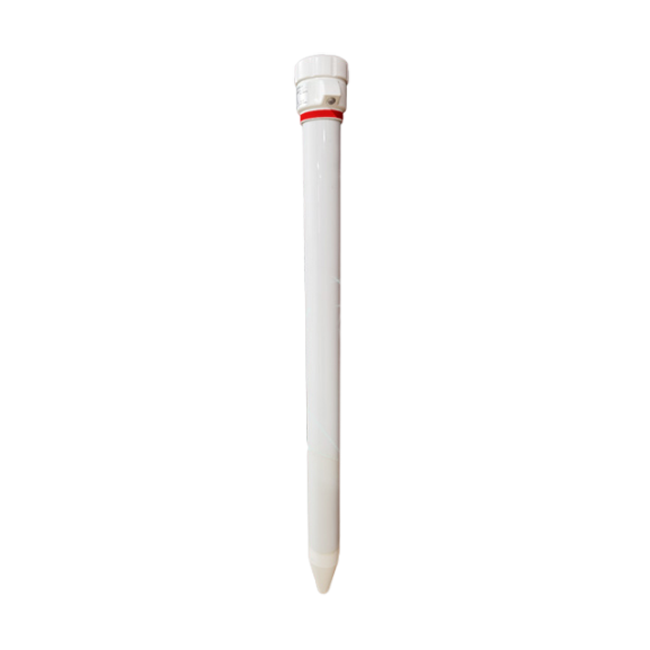 Multi-Depth Soil Sensor RS485
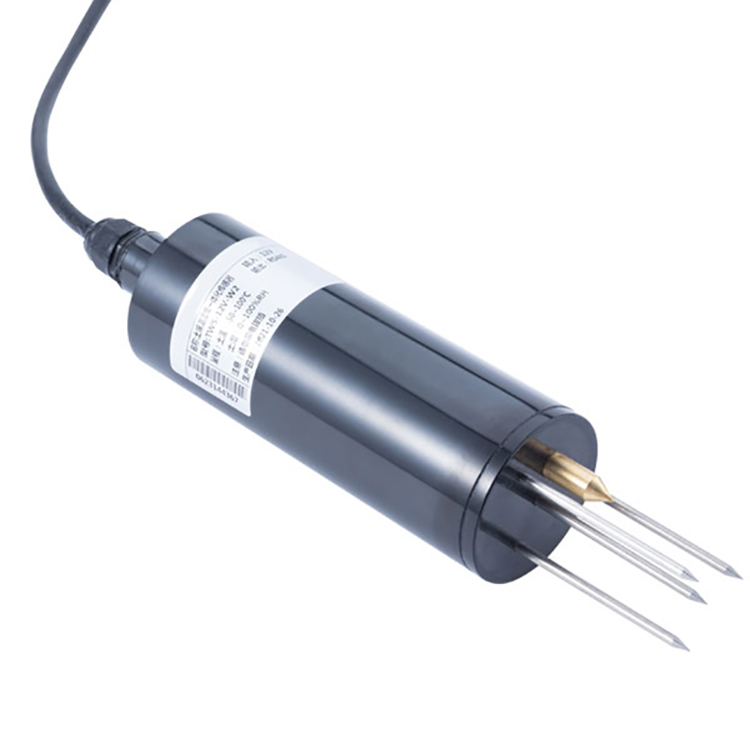 TDR Soil Moisture Sensor
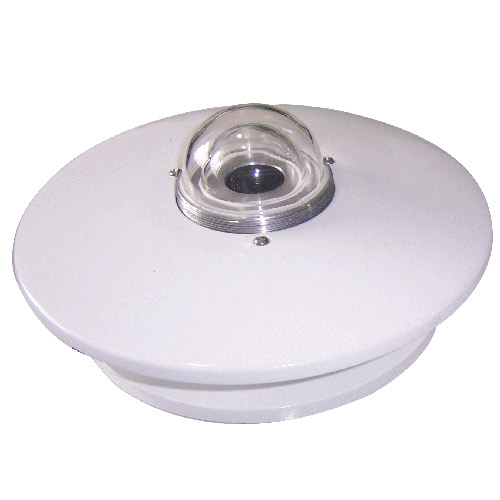 Pyranometer Solar Radiation Sensors
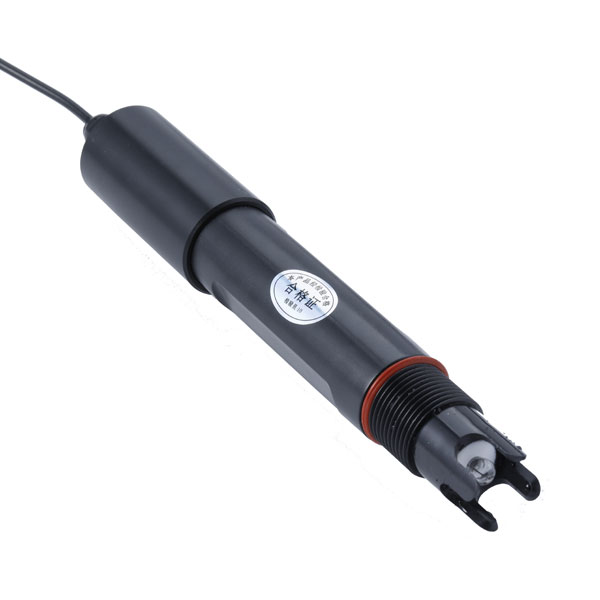 Soil ph sensor
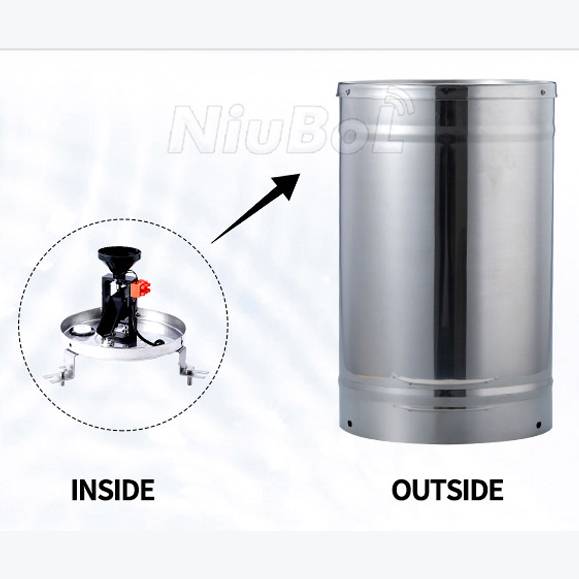 Tipping Bucket Rain Gauge
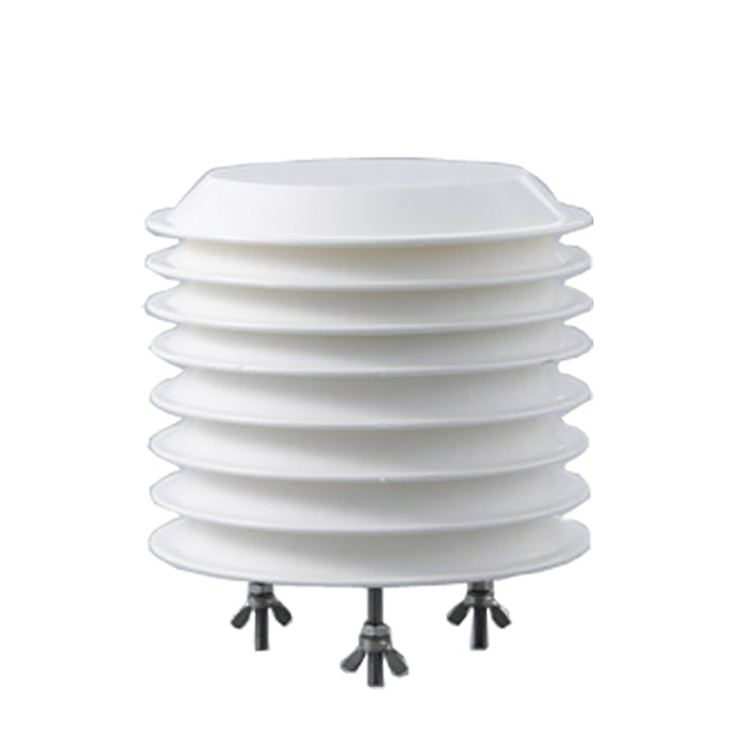 Air Temperature and Humidity Sensor


Screenshot, WhatsApp to identify the QR code
WhatsApp number:+8615367865107
(Click on WhatsApp to copy and add friends)

