





— Download —
 Consumer hotline +8618073152920
WhatsApp:+8615367865107
Address:Room 102, District D, Houhu Industrial Park, Yuelu District, Changsha City, Hunan Province, China
All products


Select a NiuBoL carbon monoxide sensor for industrial monitoring. Compare the 10 ppm CO channel with alarm and process duties before requesting a matched configuration.
Tel/WhatsApp:+8615367865107
Email:Arvin@niubol.com +Nearly 100 partner companies in more than 75 countries. We are committed to providing high-quality, practical products to meet your needs and help you solve problems. Our products comply with international standards and are certified with ISO, CE and RoHS.Product Details
Quick Answer: A carbon monoxide sensor must be selected for its actual duty: environmental trends, a qualified alarm system and process-gas analysis are not interchangeable applications. The NiuBoL four-gas ambient assembly has a 10 ppm CO channel, 0.001 ppm resolution and RS485 Modbus output. Review the expected concentration and abnormal conditions before using this narrow-range channel in an industrial project. Do not infer safety certification, alarm relays or flue-gas suitability from the presence of a CO measurement.

| Duty | What the instrument must support | Why substitution can fail |
|---|---|---|
| Ambient trend monitoring | Required concentration range, uncertainty and time-aligned records in representative air | A fine display increment does not establish the accuracy required near background. |
| Fixed area alarm or protective system | Suitable measuring range, response, approvals and complete tested alarm/control arrangement | An environmental data transmitter is not automatically a qualified protective detector. |
| Combustion or process analysis | Suitable gas range and a sampling system for the temperature, pressure and gas composition | A diffusion ambient housing cannot simply be inserted into hot or wet process gas. |
Ambient trend, room leak warning and flue gas can differ by orders of magnitude. Define expected background, alarm and credible maximum. A narrow range may saturate; a broad range may not give the needed low-level performance.
Prepare normal, elevated and credible maximum concentration requirements before comparing quotations. Include how an over-range condition will be recognized. A saturated display reports a limit, not the actual concentration above that limit.
If the project needs both environmental records and an independent protective function, specify those duties separately. They may use different instruments and locations. Sharing a gas name or a network connection does not make their acceptance requirements identical.
The NiuBoL four-gas assembly provides electrochemical CO measurement with optional additional gas and particulate channels. The following values apply to that arrangement, not to every CO instrument that may be selected for an industrial project.
| Parameter | CO monitoring configuration |
|---|---|
| CO sensing method | Four-electrode electrochemical sensing |
| CO range | 10 ppm full scale |
| CO resolution | 0.001 ppm |
| Gas accuracy | +/-5% FS |
| Supply and communication | 12 VDC; RS485 Modbus RTU |
| Gas access | Ambient diffusion |
| Operating environment | -30 to 50 degrees C; 15-90% RH |
| Protection and mounting | IP65 assembly; pole-fixed arrangement |
| System channel options | SO2, NO2, O3; optional PM2.5 and PM10 in the selected assembly |
At a 10 ppm full scale, the +/-5% FS expression corresponds to +/-0.5 ppm. This is not +/-0.001 ppm simply because the record has three decimal places. Evaluate the measurement requirement near the expected operating level, and do not extrapolate the range by changing a display setting.
Confirm any alternative range, interface or alarm hardware as a separate ordered configuration. Do not apply the ambient assembly's parameters to a bare replacement cell or assume a different-range unit keeps the same uncertainty, response and data scale.
Electrochemical response can be influenced by other gases, humidity, temperature and ageing. List fuels, solvents, combustion products and cleaning chemicals at the site and request exact cross-sensitivity data.
A gas list should describe normal operation and maintenance as well as abnormal releases. A channel that behaves acceptably in one production state may respond differently during solvent use, cleaning or fuel changes. Request the relevant interference performance for the selected cell instead of applying a generic CO correction.
The auxiliary electrode supports compensation within the sensor design; it does not turn the instrument into a gas-speciation analyzer. When a concentration change matters, use an appropriate independent check to distinguish the intended gas from a possible interfering condition.
Do not infer resistance to condensation, corrosive aerosols or direct washdown from the gas operating humidity range. Review the air reaching the inlet and the protection of the installed connections. High gas concentration and unsuitable sample conditions can require a different measuring arrangement.
Use source, ventilation and occupancy assessment to choose location. A diffusion inlet should not be hidden in a sealed panel. Pumped sampling adds tubing, flow, filters, condensation and delay.
For an ambient point, review airflow during normal production, ventilation changes and relevant equipment operation. A location selected only because power is nearby may miss the air of interest. A point in a ventilation stream can answer a different question from a point near a suspected source.
Use the site's assessment to set the mounting arrangement; do not apply one universal installation height to every room and process. Keep the inlet accessible for service and a controlled test. The observation represents air reaching that inlet, not every occupied or enclosed space nearby.
For a remote sample, the line, regulator, filter and any conditioning become part of the measurement. Confirm compatible materials, delivery flow and transport delay for the selected analyzer. A pump and tube added to a diffusion housing do not automatically provide a valid process-sampling system.
| Check | What it can establish | What it does not establish alone |
|---|---|---|
| Controlled gas-response check | The sensor responds to the applied gas under the defined test conditions | Accuracy across the whole range or suitability for every field gas mixture |
| Calibration check or calibration | Comparison with a known reference; adjustment only where the authorized procedure permits | Representative field placement or successful remote notification |
| Electrical or simulated-data test | Receiver scaling, logic or a defined part of the communication path | That the electrochemical sensing element detects CO correctly |
| Complete event-path test | Specified measurement, controller, indication and notification behavior | Regulatory approval or safety-system qualification not otherwise established |
Use a known suitable gas concentration and a controlled delivery arrangement for the selected instrument. Record the reference identity, concentration, expiry or validity information and test conditions. Avoid using exhaust or an uncontrolled release as a calibration source.
A response-only or bump test is different from a quantitative calibration check. Apply the correct procedure for the actual device and duty; do not transfer the testing schedule for a portable safety monitor to an unrelated fixed environmental transmitter without review.
A sensing cell alone does not establish compliance with worker-safety or fire requirements. Review approvals, alarm relays, response time, installation, calibration and the governing standard for the exact supplied system.
For commissioning, identify which test is being performed and what remains untested. A forced PLC value can verify an alarm program while bypassing the gas cell, inlet and transmitter. Record it as a logic test rather than a successful CO gas-response test.
The ambient four-gas assembly uses Modbus RTU at 9600 baud, eight data bits and no parity. Match the delivered serial format, address and gas-channel data definition. Do not infer the CO scale from the particulate fields or from the range of a different gas in the same reply.
Check an identified CO observation at the local receiver, stored record and exported dataset. Confirm ppm, decimal position, observation time and quality. A conversion applied twice can create plausible low values that conceal a mapping error.
If an event requires local indication, specify actual hardware and control responsibility. An RS485 concentration register is not an alarm relay. If remote notification is needed, test recipients, latency and loss of connectivity separately from gas sensing.
Test missing, stale and over-range values without substituting a genuine zero. Keep a loss-of-measurement condition distinguishable from a measured reduction in CO. Where a protective response is required, it must follow the qualified system design rather than an improvised dashboard rule.
Set zero/span checks, calibration interval, bump-test practice where applicable and cell replacement criteria. Record exposure events that may shorten sensor life.
Review an abnormal event before simply restoring the old zero or span. Exposure, unsuitable air conditions or contamination can change a cell's behavior. Investigate the cause and use the appropriate checks before returning the channel to its intended duty.
When replacing a cell or complete unit, verify compatibility, preparation, range and calibration status. Then recheck the data map and any alarm configuration. Retaining the same station name does not establish that the new measuring element has inherited the previous performance.
For an industrial CO monitoring inquiry, send NiuBoL the duty, normal and maximum concentration, gas mixture, air or sample conditions, receiver and required alarm functions. Identify the tests and approvals the project requires so an ambient channel is not quoted as a protective or process instrument by assumption.
Not by range and gas name alone. Exhaust can require a different concentration span and conditioning for temperature, moisture and composition. Select an analyzer and sampling arrangement for that process rather than applying the ambient diffusion housing directly.
No. For the 10 ppm configuration, +/-5% FS corresponds to +/-0.5 ppm. Resolution is a separate output property. Confirm that the resulting uncertainty fits the monitoring decision.
Only where the exact equipment and complete system satisfy the required duty and approvals. Do not infer qualification from a CO measurement, an enclosure rating or RS485 communication.
No. It can check selected receiver or logic functions while bypassing the sensing element. Use an appropriate gas-response procedure to check the physical measurement, and identify the scope of each test.
Calibration does not correct an unrepresentative inlet, an interfering gas, unsuitable sampling conditions or a wrong receiving scale. Investigate those separately before changing the calibration again.
Define the event condition, responsible controller, indication hardware, recipients, delay and communication-loss behavior. Test that path using the configured system. A concentration record alone does not establish a working notification service.
Provide the assembly and cell identification, range, output, operating history and reason for replacement. Confirm compatibility and preparation, then plan calibration and end-to-end checks before returning the point to service.
Select a carbon monoxide sensor by the monitoring duty, not the gas name alone. Check the 10 ppm ambient channel against range, uncertainty, gas access and the required test scope. Send NiuBoL the CO monitoring conditions and required functions to assess an appropriate configuration.
Sensors & Weather Stations Catalog
 Agriculture Sensors and Weather Stations Catalog-NiuBoL.pdf
Weather Stations Catalog-NiuBoL.pdf
Agriculture Sensors Catalog-NiuBoL.pdf
Water Quality Sensor Catalog-NiuBoL.pdf
Related recommendations
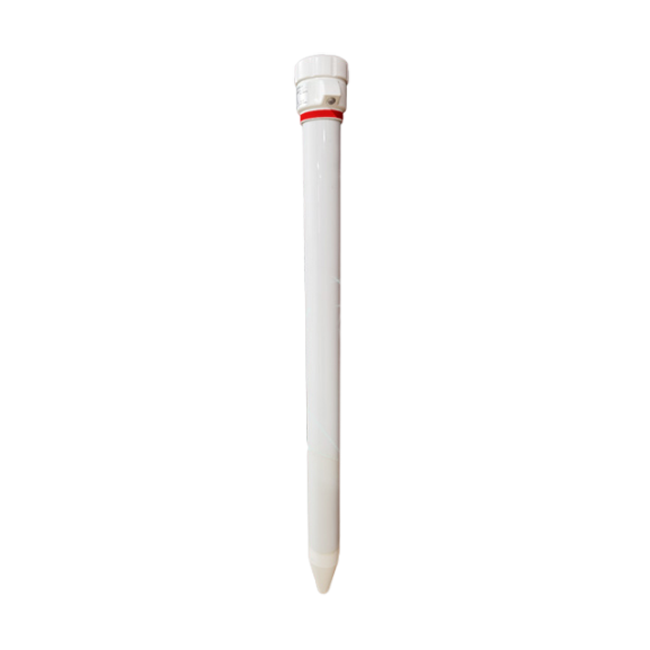 Multi-Depth Soil Sensor RS485
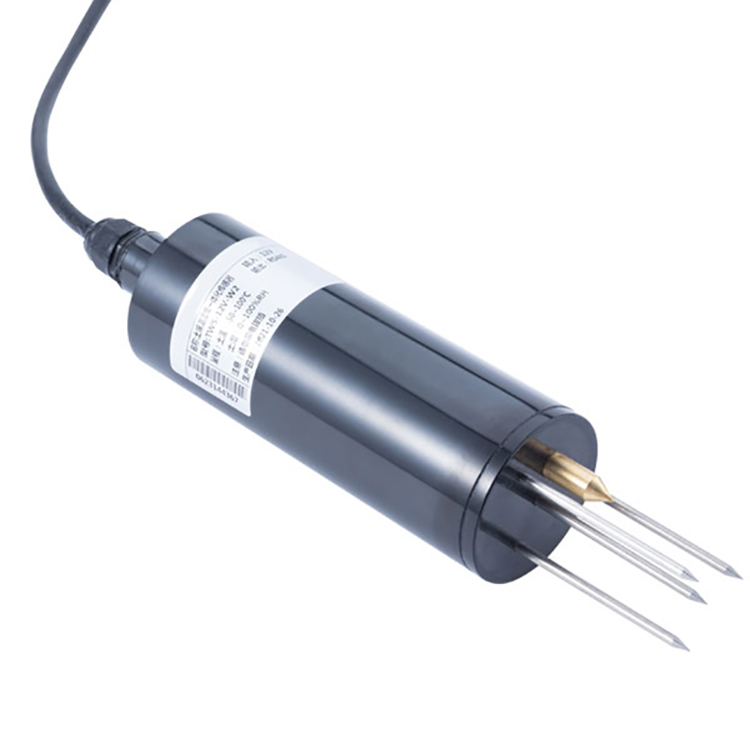 TDR Soil Moisture Sensor
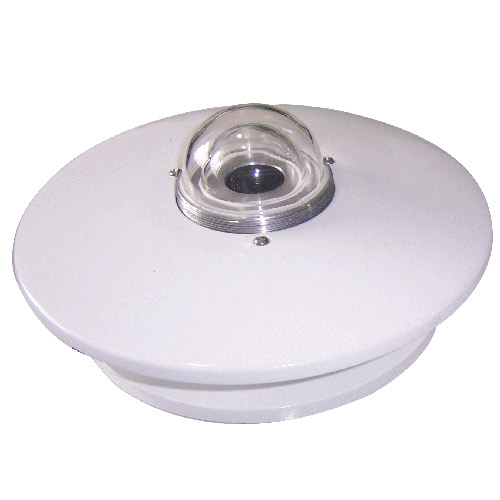 Pyranometer Solar Radiation Sensors
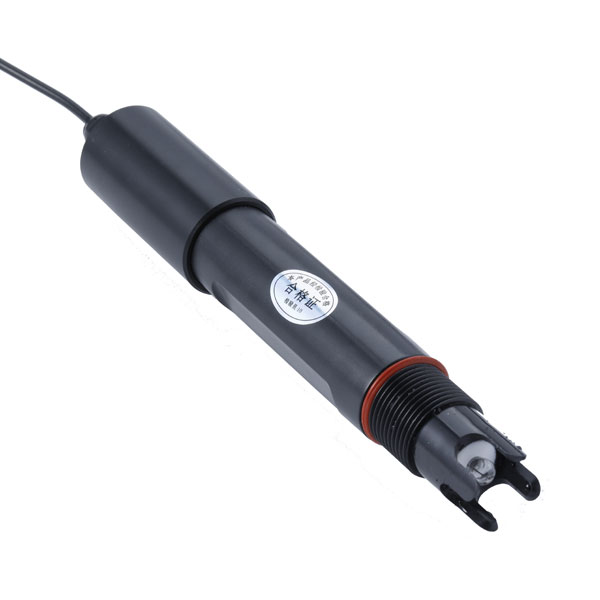 Soil ph sensor
 Tipping Bucket Rain Gauge
 Air Temperature and Humidity Sensor


Screenshot, WhatsApp to identify the QR code
WhatsApp number:+8615367865107
(Click on WhatsApp to copy and add friends)

