





— Download —
 Consumer hotline +8618073152920
WhatsApp:+8615367865107
Address:Room 102, District D, Houhu Industrial Park, Yuelu District, Changsha City, Hunan Province, China
All products
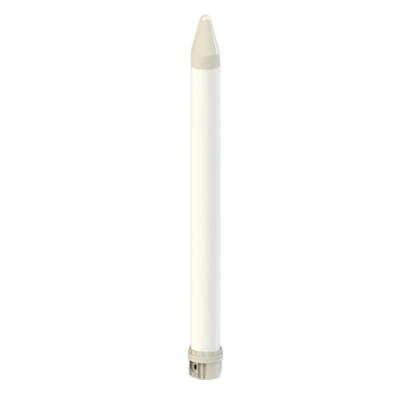
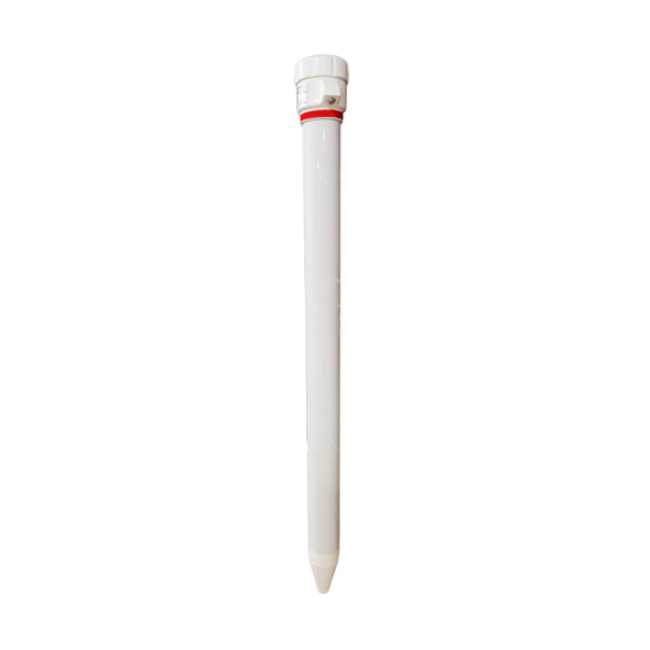
Multi-depth Soil Moisture and Temperature Sensor 60cm is a sensor for measuring soil moisture and temperature at a depth of 60cm. This sensor has an important role in agricultural production, helping farmers to better understand soil moisture and temperature conditions, so as to rationally adjust irrigation and fertiliser schedules and improve agricultural production efficiency.
Tel/WhatsApp:+8615367865107
Email:Arvin@niubol.com +Nearly 100 partner companies in more than 75 countries. We are committed to providing high-quality, practical products to meet your needs and help you solve problems. Our products comply with international standards and are certified with ISO, CE and RoHS.Product Details
The NiuBoL NBL-S-TMM multi-depth soil moisture and temperature sensor is a tubular soil monitoring instrument designed to measure volumetric water content and temperature at multiple depths within the soil profile.
The sensor uses Frequency Domain Reflectometry (FDR) technology for soil moisture measurement and digital temperature sensing elements for monitoring temperature at individual soil layers.
The 60 cm configuration is suitable for root-zone monitoring in agricultural fields, orchards, vineyards, greenhouses and precision irrigation projects. Measurement nodes can be configured according to the required monitoring depths and crop root distribution.
Unlike a conventional single-point soil moisture probe, the NBL-S-TMM collects measurements from several soil layers within one tubular assembly, allowing users to observe how water moves through the soil profile after irrigation or rainfall.
| Parameter | Specification |
|---|---|
| Model | NBL-S-TMM |
| Measured Parameters | Soil Volumetric Water Content and Temperature |
| Moisture Measurement Principle | FDR (Frequency Domain Reflectometry) |
| Soil Moisture Range | Dry Soil to Moisture-Saturated Soil |
| Soil Moisture Accuracy | ±3% Under Laboratory Conditions |
| Soil Moisture Resolution | 0.1% |
| Soil Temperature Range | -40 to +80°C |
| Soil Temperature Accuracy | ±0.5°C |
| Soil Temperature Resolution | 0.1°C |
| Standard Monitoring Nodes | 10 cm, 20 cm, 30 cm and 40 cm |
| Customized Monitoring Nodes | Up to 10 Layers, Subject to Configuration |
| Featured Monitoring Depth | 60 cm Configuration |
| Power Supply | DC 12 V or Compatible Solar-Powered Configuration |
| Sleep Current | Less than 1 mA in Documented Sleep Mode |
| Sampling Current | Less than 70 mA |
| Digital Output | RS485 Modbus RTU |
| Wireless Communication | Optional 4G Configuration |
| Tube Diameter | Φ63 mm |
| Overall Length | Depends on Measurement Node Configuration |
| Sealing Material | Epoxy Resin |
| Operating Environment | -40 to +80°C, 0–100% RH |
| Protection Rating | IP67 Above Ground; IP68 Below Ground |
| Optional Functions | GPS, Inclination Measurement and Vibration Event Reporting on Supported Versions |
Technical Notes: The 60 cm monitoring depth does not necessarily represent the overall physical length of the instrument or a fixed number of measurement layers. Confirm the required node depths and tube dimensions when ordering.
The specified soil moisture accuracy of ±3% refers to laboratory conditions. Actual field measurement uncertainty depends on soil composition, salinity, installation quality and calibration conditions.
Power supply, current consumption, wireless communication and optional functions depend on the selected configuration. Confirm the delivered instrument specifications before installation.
The NBL-S-TMM uses FDR technology to estimate volumetric soil water content at individual sensing nodes along the tubular instrument.
Soil moisture influences the dielectric properties of the surrounding medium. Because water has a significantly higher dielectric permittivity than most dry mineral soil constituents, changes in water content produce a measurable change in the frequency-domain electrical response.
The instrument converts this response into soil moisture readings for each configured depth. Integrated digital temperature sensing elements provide corresponding soil temperature measurements.
Each sensing node represents the soil conditions surrounding that particular measurement location. The resulting soil moisture profile allows users to compare water content and temperature at different depths.
Reliable measurements require appropriate contact between the sensor tube and surrounding soil. Air gaps, stones, disturbed soil structure and unusual soil electrical properties can influence the measurement response.
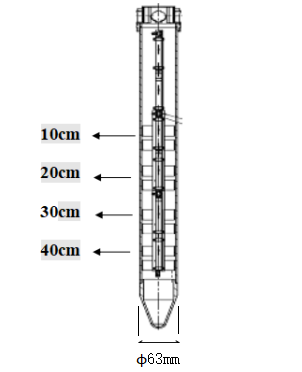
The NBL-S-TMM product series supports multiple soil moisture and temperature measurement nodes. Standard monitoring depths include 10 cm, 20 cm, 30 cm and 40 cm, while other depth combinations can be customized according to project requirements.
For a 60 cm soil monitoring application, the appropriate measurement arrangement depends on crop root distribution and the information required for irrigation management.
| Example Configuration | Measurement Depths | Potential Application |
|---|---|---|
| Three-Layer Configuration | 20, 40 and 60 cm | General Root-Zone Profile Monitoring |
| Four-Layer Configuration | 10, 20, 30 and 40 cm | Relatively Shallow Root-Zone Monitoring |
| Six-Layer Configuration | 10, 20, 30, 40, 50 and 60 cm | Detailed Soil Water Profile Assessment |
| Customized Configuration | Selected Depths According to Project | Agricultural Research and Specialized Monitoring |
These depth combinations are illustrative selection examples rather than fixed standard packages. Customized configurations must be confirmed before ordering.
The required measurement depths should reflect the actual crop root system, irrigation method, soil properties and monitoring objectives.
Multi-depth measurement: Collects soil moisture and temperature data from several soil layers within one tubular assembly.
Soil profile monitoring: Helps users observe water infiltration, root-zone drying and moisture movement into deeper layers.
Flexible measurement configuration: Supports selected monitoring depths according to project requirements.
Industrial digital communication: RS485 Modbus RTU output enables integration with compatible data loggers, PLCs and RTUs.
Low-power operation: Documented sleep and sampling modes support appropriately configured remote monitoring systems.
Protected tubular construction: Plastic housing and epoxy resin sealing are designed for suitable underground monitoring conditions.
Optional remote monitoring: Compatible 4G and solar-powered configurations are available according to system requirements.
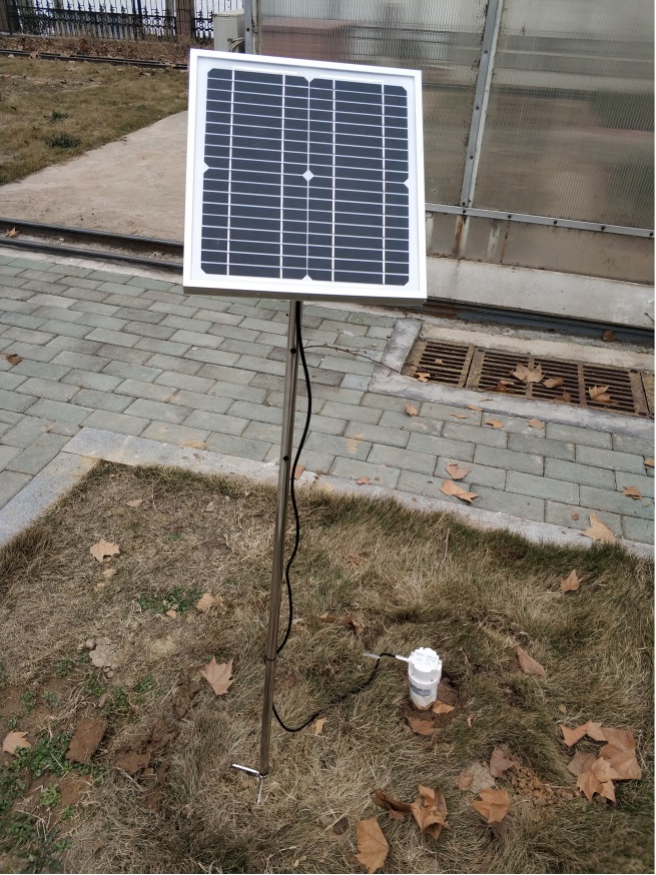
A single soil moisture measurement provides information about one selected soil volume. Multi-depth measurements provide additional information about how irrigation water moves through the root zone.
For example, a monitoring system with sensing nodes at 20 cm, 40 cm and 60 cm can help users compare moisture responses at different soil layers following irrigation.
| Observed Moisture Response | Possible Interpretation | Recommended Assessment |
|---|---|---|
| Upper Layer Moisture Increases First | Water Has Reached the Upper Soil Layer | Observe Deeper Layer Responses |
| Moisture Increases at Several Depths | Water Has Reached Multiple Monitoring Nodes | Compare with the Intended Root Zone |
| Deep Soil Moisture Continues Increasing | Possible Deep Water Movement or Drainage | Review Irrigation Duration and Soil Conditions |
| No Moisture Increase After Irrigation | Possible Delayed Wetting, Delivery or Installation Issue | Check Water Delivery and Sensor Contact |
These observations provide possible interpretations rather than definitive diagnoses. Crop root distribution, soil hydraulic properties and irrigation records should also be considered.
For irrigation system design, see Soil Moisture Sensors for Automatic Irrigation Systems.
The RS485 version can be connected to compatible agricultural data loggers, industrial controllers and IoT gateways.
| Wire Color | Function | Connection |
|---|---|---|
| Red | Power Positive | DC 12 V Positive |
| Black | Power Ground | DC Power Negative |
| Yellow | RS485+ | RS485 A |
| Blue | RS485- | RS485 B |
Disconnect power before wiring and confirm the electrical connections before applying power. Follow the wiring information supplied with the actual sensor and receiving equipment.
| Parameter | Setting |
|---|---|
| Interface | RS485 |
| Protocol | Modbus RTU |
| Baud Rate | 9600 bps |
| Data Bits | 8 |
| Stop Bits | 1 or 2 |
| Parity | None |
| Communication Interval | 1000 ms or Longer |
| Read Function Code | 0x03 |
| CRC Byte Order | Low Byte First |
The documented measurement sequence begins with a voltage register, followed by alternating moisture and temperature registers for each measurement layer.
| Register | Parameter | Conversion |
|---|---|---|
| 0x0000 | Voltage | Raw Value ÷ 1000 (V) |
| 0x0001 | Layer 1 Moisture | Raw Value ÷ 10 (%) |
| 0x0002 | Layer 1 Temperature | Raw Value ÷ 10 (°C) |
| 0x0003 | Layer 2 Moisture | Raw Value ÷ 10 (%) |
| 0x0004 | Layer 2 Temperature | Raw Value ÷ 10 (°C) |
| 0x0005 | Layer 3 Moisture | Raw Value ÷ 10 (%) |
| 0x0006 | Layer 3 Temperature | Raw Value ÷ 10 (°C) |
For a documented three-layer configuration using device address 0x01, seven consecutive registers are read starting at address 0x0000.
Request:
01 03 00 00 00 07 04 08
Example Response:
01 03 0E 2E E0 00 EA 01 1A 00 EB 01 1B 00 EC 01 1C D4 95
| Hexadecimal Data | Parameter | Decoded Value |
|---|---|---|
| 2E E0 | Voltage | 12.000 V |
| 00 EA | Layer 1 Moisture | 23.4% |
| 01 1A | Layer 1 Temperature | 28.2°C |
| 00 EB | Layer 2 Moisture | 23.5% |
| 01 1B | Layer 2 Temperature | 28.3°C |
| 00 EC | Layer 3 Moisture | 23.6% |
| 01 1C | Layer 3 Temperature | 28.4°C |
These values are communication examples from the product documentation rather than actual field measurements.
For configurations following the documented register sequence, the expected number of measurement registers is one voltage register plus two registers for each soil layer.
The requested register quantity must match the actual installed measurement nodes. Confirm register availability, invalid data handling and negative-temperature encoding for the delivered firmware before system integration.
For device address configuration and complete communication instructions, refer to the downloadable NBL-S-TMM product manual.
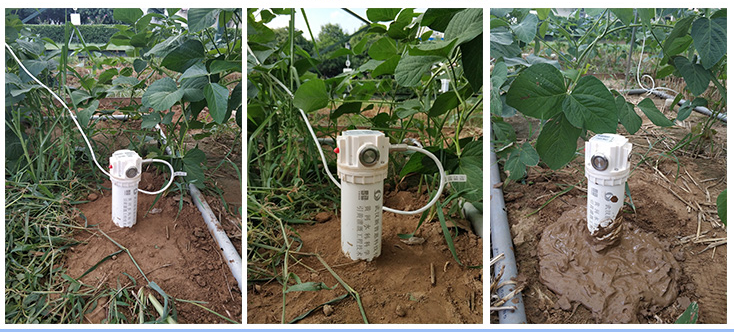
Select a representative monitoring location according to crop distribution, soil conditions and irrigation layout.
Use a suitable soil auger to prepare a vertical installation hole.
Prepare sufficient installation depth according to the sensor dimensions and installation instructions.
Prepare the soil slurry as specified in the product manual to improve contact between the instrument and surrounding soil.
Insert the sensor carefully without striking or forcing the instrument into the ground.
Align the sensor's ground-level reference mark with the soil surface.
Ensure that soil contact around the sensing tube is uniform and that large air gaps are avoided.
Connect the power supply and RS485 communication lines.
Verify that all configured measurement layers return valid readings.
Allow the disturbed soil around the instrument to settle and evaluate whether the readings are representative of surrounding field conditions.
For optional solar-powered installations, select the solar panel orientation and tilt according to local latitude, shading and seasonal sunlight conditions.
Multi-layer soil moisture monitoring helps growers evaluate changes in water content throughout the root zone and supports irrigation scheduling based on actual soil conditions.
Measurements at several soil depths provide complementary information about water availability for crops with deeper root systems.
Soil profile monitoring supports observations of irrigation response, soil temperature and water distribution within suitable growing media.
Multi-depth measurements can support studies of soil drying, rainfall infiltration and seasonal water movement in forest and ecological monitoring sites.
Researchers can collect repeated moisture and temperature measurements at selected depths for soil water dynamics, irrigation experiments and crop environment studies.
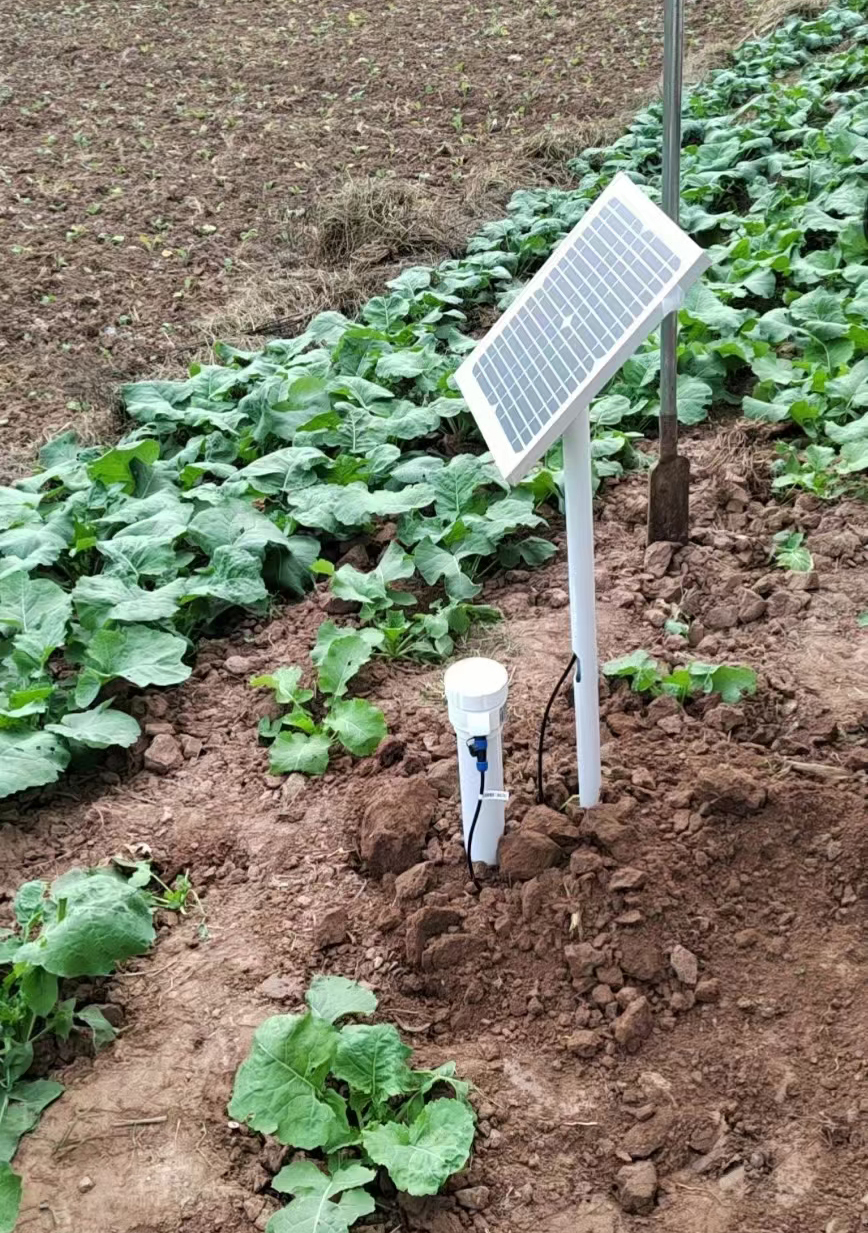
The NBL-S-TMM can be integrated into a soil monitoring station using compatible data acquisition and communication equipment.
A typical configuration includes the multi-depth soil sensor, a suitable DC power supply, a data logger or RTU, and optional remote communication equipment.
For remote agricultural installations, compatible 4G gateways and data acquisition devices can transmit measurement data to a suitable monitoring platform or customer server.
The standard NiuBoL cloud platform supports remote measurement data visualization. Automatic irrigation control and SMS or email notifications require appropriate external controllers or software.
It measures soil moisture and temperature at configured sensing nodes within the selected soil profile. The number of nodes and their exact depths depend on the ordered configuration.
No. Measurement depths and layer quantities can vary. Confirm the required node positions and number of layers before ordering.
A conventional probe usually measures one local soil volume. A tubular multi-depth sensor provides separate measurements at several configured depths within one instrument.
Yes. The documented RS485 version supports Modbus RTU communication. Its measurement sequence begins with voltage data, followed by moisture and temperature data for each sensing layer.
Yes, provided that the acquisition equipment supports the required communication protocol, register configuration and electrical load. Devices sharing an RS485 network should have appropriate unique addresses.
Compatible solar-powered configurations are available. Panel and battery capacity should be selected according to the complete system consumption, monitoring schedule and local solar conditions.
The documented protection rating is IP67 for the above-ground section and IP68 for the underground section. External connectors and communication equipment must also be protected according to their specifications.
The sensor provides soil moisture and temperature measurements. Automatic irrigation requires compatible control equipment, pump or valve interfaces and configured irrigation logic.
NiuBoL provides multi-depth soil moisture sensors, individual soil probes and compatible data acquisition equipment for precision agriculture, irrigation monitoring and environmental research.
For equipment selection, please specify the maximum monitoring depth, required measurement nodes, crop type, soil conditions, sensor quantity, communication method and power supply requirements.
Looking for a 60 cm soil profile sensor or a customized multi-layer monitoring system? Contact NiuBoL for suitable measurement configurations, Modbus RTU integration support, technical documentation and a project-specific quotation.
 NBL-S-TMM-Tubular-Multi-Layer-Soil-Moisture-Sensor-Meter.pdf
Sensors & Weather Stations Catalog
 Agriculture Sensors and Weather Stations Catalog-NiuBoL.pdf
Weather Stations Catalog-NiuBoL.pdf
Agriculture Sensors Catalog-NiuBoL.pdf
Water Quality Sensor Catalog-NiuBoL.pdf
Related recommendations
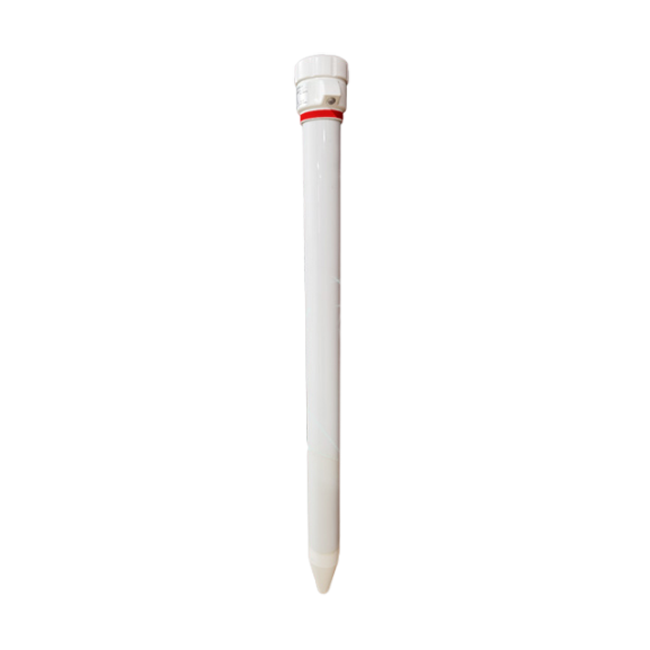 Multi-Depth Soil Sensor RS485
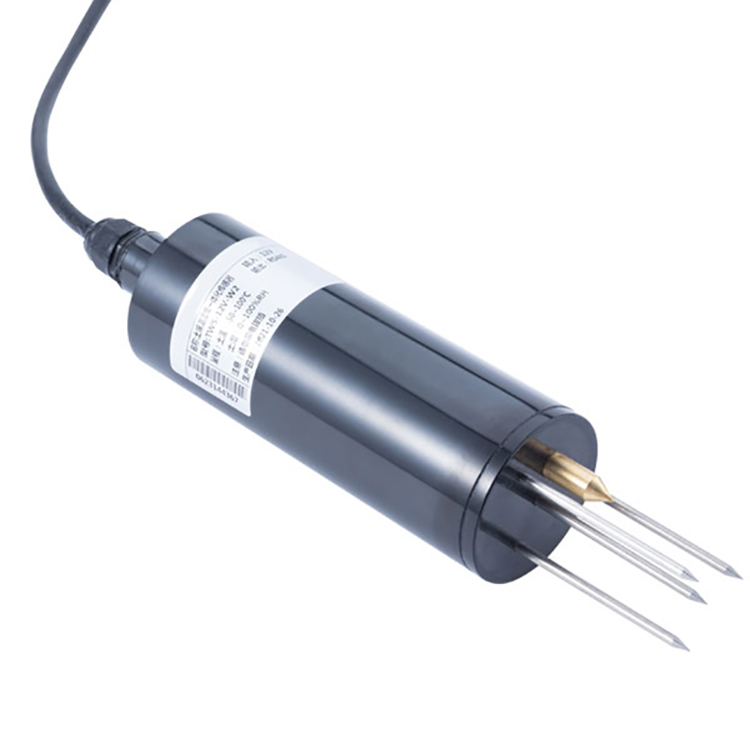 TDR Soil Moisture Sensor
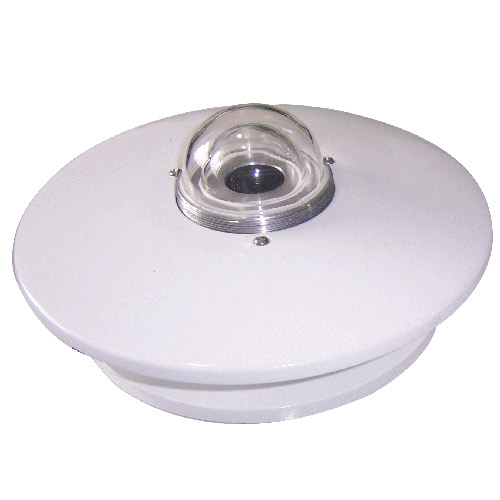 Pyranometer Solar Radiation Sensors
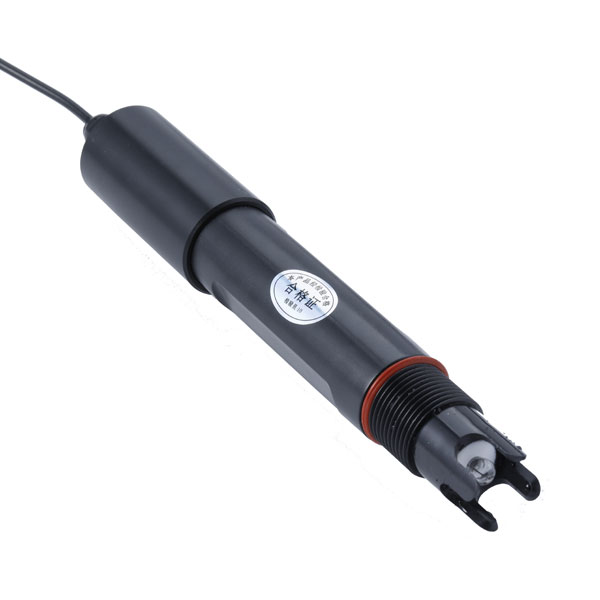 Soil ph sensor
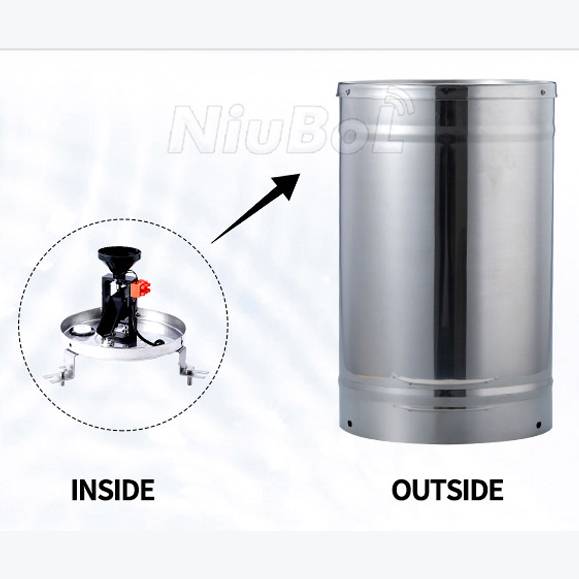 Tipping Bucket Rain Gauge - ABS and Stainless Steel
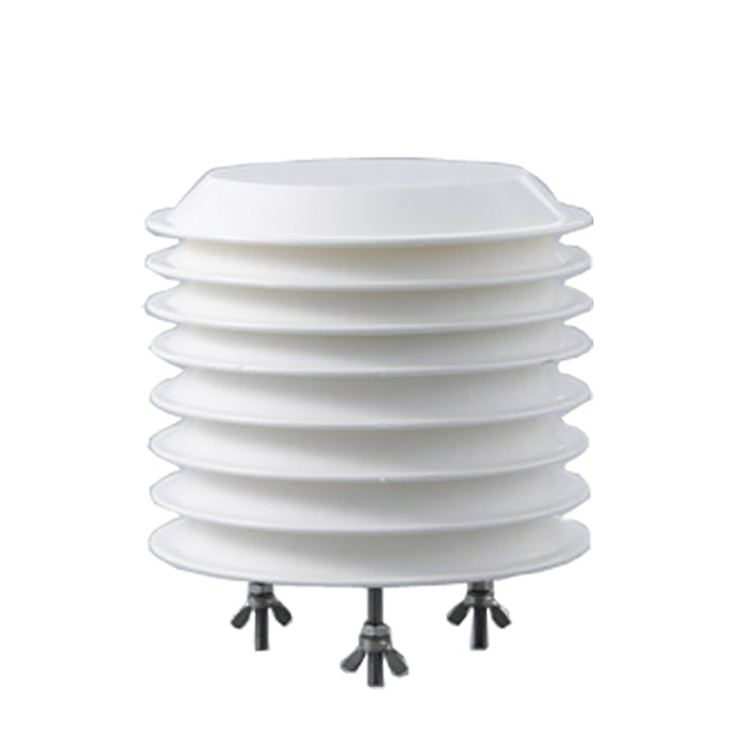 Air Temperature and Humidity Sensor


Screenshot, WhatsApp to identify the QR code
WhatsApp number:+8615367865107
(Click on WhatsApp to copy and add friends)

