





— Download —
 Consumer hotline +8618073152920
WhatsApp:+8615367865107
Address:Room 102, District D, Houhu Industrial Park, Yuelu District, Changsha City, Hunan Province, China
All products


Integrate a NiuBoL industrial NO2 sensor into a multi-gas network. Check the 5 ppm span, RS485 Modbus channel mapping and field acceptance before specifying your system.
Tel/WhatsApp:+8615367865107
Email:Arvin@niubol.com +Nearly 100 partner companies in more than 75 countries. We are committed to providing high-quality, practical products to meet your needs and help you solve problems. Our products comply with international standards and are certified with ISO, CE and RoHS.Product Details
Quick Answer: The NiuBoL industrial NO2 sensor channel can form part of a diffusion-based, four-gas monitoring assembly with optional PM2.5 and PM10 measurements. The NO2 configuration has a 0-5 ppm span, 0.001 ppm resolution and stated gas accuracy of +/-5% FS. For a multi-site network, successful integration requires both correct channel decoding and evidence that the measurement performance is suitable for the intended NO2 concentrations.

| Item | Specification | Integration significance |
|---|---|---|
| NO2 measurement | Four-electrode electrochemical; diffusion sampling | Air must reach the sensing inlet; this is not a direct hot-exhaust probe. |
| NO2 span / resolution | 0-5 ppm / 0.001 ppm | Decimal resolution is not the field detection limit. |
| Gas-channel accuracy | +/-5% FS | For a 5 ppm span, this corresponds to +/-0.25 ppm. |
| Companion channels | SO2 and O3: 0-5 ppm; CO: 0-10 ppm | Keep each gas identity and span distinct in the logger. |
| Optional particles | PM2.5: 0-1000 micrograms/m3; PM10: 0-2000 micrograms/m3 | Different principle, units and maintenance from the gas channels. |
| Electrical connection | 12 VDC; RS485 Modbus RTU | Requires compatible field acquisition and external power. |
| Serial format | 9600 bps, 8 data bits, no parity | Confirm remaining serial settings and conversion details for delivered firmware. |
| Environment / protection | -30 to 50 degrees C; 15-90% RH; IP65 housing | Protect field joints and avoid persistent condensation at the inlet. |
| Power demand / cable jacket | Specify with the ordered assembly | Required before approving remote power and exposed cable installation. |
The NO2 accuracy expression equates to 250 ppb over this 5 ppm span; the 0.001 ppm increment equates to 1 ppb. Those numbers describe different properties. If the network must resolve small differences at background concentrations, obtain suitable comparison evidence rather than treating a 1 ppb increment as a 1 ppb uncertainty. A larger network does not make this distinction less important.
A plant leak warning, traffic-pollution trend and regulatory boundary station do not use the same location or acceptance basis. State which decision follows the reading. Adding five other pollutants does not compensate for an NO2 point that fails to represent the source or receptor.
For a perimeter network, identify which locations represent the facility boundary and which represent local background or a potential receptor. Associate each with its exposure rather than assigning the nearest available pole. A roadside point and a point behind a building may both operate correctly while observing different air masses.
Wind measurements can help interpret when a boundary concentration occurs downwind of a facility, but coincidence does not prove source attribution. Keep an agreed averaging period and record known operating changes. Do not describe a small environmental sensor network as a regulatory station or a worker-protection system unless the complete method and equipment meet the relevant requirements.
The auxiliary electrode can support compensation, but temperature, humidity, ageing and cross-sensitive gases remain relevant. Send the expected gas matrix and concentration profile with the RFQ. Request cross-sensitivity and environmental data for the exact cell rather than relying on generic electrochemical claims.
In particular, ask how the selected NO2 channel behaves in the presence of the other gases expected at the site, including ozone where relevant. The fact that NO2 and O3 appear as separate output fields does not establish zero cross-response. Request the applicable cell information and compensation method, and establish whether the compensation uses another channel in the assembly.
If a correction is used, preserve the original and corrected quantities with clear labels. A software update or cell replacement can change the correction and create a discontinuity between stations. Record the applicable version and evaluate the effect before joining the old and new records into one concentration trend.
In the six-channel configuration, function 03 reads a sequence starting at zero-based register 0x0000. The order is SO2, NO2, CO, O3, PM2.5 and PM10. NO2 is the second word, not the first gas listed in every software menu or quotation. A valid CRC proves frame integrity; it does not prove the controller has assigned the words to the correct pollutant names.
| Word position from zero | Quantity | Stored engineering unit |
|---|---|---|
| 0 | SO2 | ppm |
| 1 | NO2 | ppm |
| 2 | CO | ppm |
| 3 | O3 | ppm |
| 4 | PM2.5, when fitted | micrograms/m3 |
| 5 | PM10, when fitted | micrograms/m3 |
Confirm the numeric conversion for the supplied firmware before programming the driver. The measurement resolution alone is not sufficient evidence of the transmitted multiplier. Also confirm the expected response length for a gas-only configuration rather than forcing a six-channel driver onto every assembly. Do not turn an unfitted PM channel into a genuine zero-particle result.
Connect one unit at a time for initial address assignment and driver checks. Then give each station a unique operational address where a shared bus is used. Keep the sensor address separate from the station identifier used by the data platform, so replacing one assembly does not inadvertently create a second site or overwrite another site's records.
The receiving PLC, RTU or data logger must retain channel identity and units. A gateway can transport those records to the central application, but adding a network connection does not validate the concentration conversion. Verify an actual exported record, not only the local demonstration screen.
For a multi-station project, colocate the completed units before distributing them. A short comparison under common air conditions can expose swapped channels, inconsistent scaling or configuration differences while technicians can still inspect every enclosure together. Retain that record as the network baseline.
A side-by-side comparison between identical units checks agreement, not absolute accuracy. If all units share the same bias, they can agree while remaining unsuitable for the intended task. Include a suitable reference monitor when the project needs to characterize concentration accuracy. The EPA air sensor collocation guidance explains the distinction between sensor records and reference comparison.
Choose an evaluation period that includes relevant concentration and weather variation rather than accepting an arbitrary short duration. Align the timestamps and averaging periods before comparing values. Report missing-data coverage as well as agreement; a sensor that misses important periods should not pass merely because its remaining values correlate with the reference.
| Observed problem | Checks that help locate it |
|---|---|
| NO2 and another gas appear exchanged | Compare word order, tag assignments and the delivered configuration; do not swap cables based on graph shape alone. |
| All gas values have a common decimal error | Check conversion and repeated scaling in the logger and receiving application. |
| Units agree with each other but not the reference | Review calibration, exposure, concentration range and correction assumptions. |
| Differences grow with humidity or time | Review environmental response, inlet condition and the comparison dataset before applying a blanket offset. |
PM2.5 and PM10 use laser scattering, not electrochemistry. They have different airflow, humidity and cleaning needs. Treat each channel as a separate measurement in the acceptance plan even when the enclosure and output packet are shared.
Electrochemical cells age and optical chambers become contaminated. Establish zero/span checks, comparison frequency, gas traceability, filter or fan inspection and replacement criteria before purchase. Keep maintenance events in the same time system as the measured data.
A shared enclosure does not mean every channel becomes valid at the same moment after startup or maintenance. Obtain the stabilization and service requirements for the fitted modules. Mark the affected channels while they are unavailable, and keep a maintenance event separate from an actual low concentration. Do not interpolate over an interruption and present the result as a measured NO2 record.
For network expansion, use the accepted configuration as a reference, not merely the same enclosure shape. Confirm fitted channels, firmware conversion, environmental performance and service procedure for additional units. If a revision differs, compare the new units alongside the existing network before using the records as a continuous series.
Send NiuBoL the required NO2 concentration performance, companion pollutants, station locations, power arrangement and receiving interface. Include the comparison plan and whether the order covers sensing assemblies only or complete powered, connected stations. This gives the supplier and integrator a clear basis for selecting the network package.
The diffusion electrochemical NO2 channel measures local ambient concentration over 0-5 ppm in the specified configuration. It can share an assembly with SO2, CO, O3 and optional particles. It is not automatically suitable for direct hot exhaust or a certified protective alarm.
No such accuracy follows from its resolution. The reported increment is 0.001 ppm, or 1 ppb, while the stated accuracy is +/-5% FS. For the 5 ppm span that corresponds to +/-0.25 ppm, or 250 ppb. Evaluate performance at the concentrations required by the project.
It is the second data word, at zero-based position 1 after SO2. Confirm the delivered map, numeric conversion and response length before loading the driver. A correct reply with incorrect channel names can still produce a misleading database.
Not by itself. Obtain cross-sensitivity and compensation details for the actual cells. If another channel is used in a correction, document that relationship and review the effect of maintenance or software changes on the reported NO2 value.
That comparison can find differences between units and configuration errors, but it cannot establish absolute accuracy when they share a bias. Add an appropriate reference comparison where the intended data use requires it, with matched exposure and averaging periods.
No direct server connection is established by RS485. Use a compatible logger or RTU and, when required, a network gateway. Test how the complete system preserves units, station identity, measurement time and missing-data status.
Specify concentration requirements, fitted gas and particle channels, site conditions, power, acquisition and connectivity. Include field comparison, calibration, spares and replacement handling. The number of stations alone does not define a comparable monitoring package.
An industrial NO2 sensor network needs more than identical housings and successful communications. Check whether the concentration performance fits the intended use, verify the NO2 word and its conversion, compare the units under common exposure and retain channel-specific service records. These checks make the network's pollutant records interpretable without overstating what the instruments can establish.
Prev:Carbon Monoxide Sensor Price and Project RFQ Guide
Next:Industrial Ozone Sensor Supplier and RFQ Guide | NiuBoL
Sensors & Weather Stations Catalog
 Agriculture Sensors and Weather Stations Catalog-NiuBoL.pdf
Weather Stations Catalog-NiuBoL.pdf
Agriculture Sensors Catalog-NiuBoL.pdf
Water Quality Sensor Catalog-NiuBoL.pdf
Related recommendations
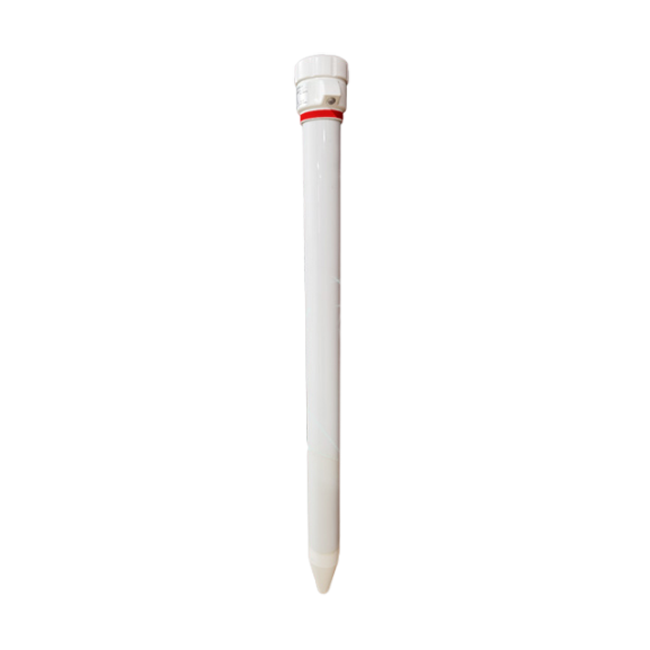 Multi-Depth Soil Sensor RS485
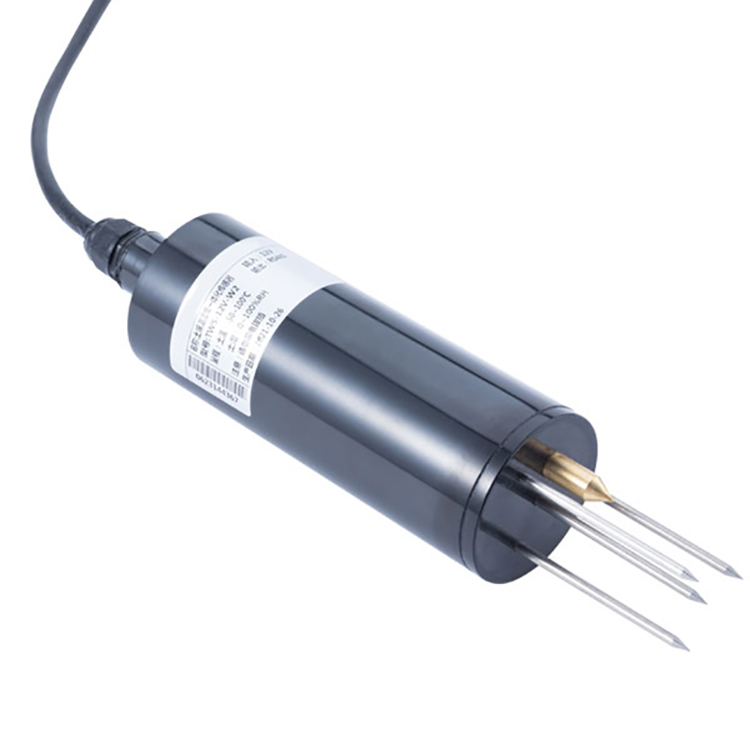 TDR Soil Moisture Sensor
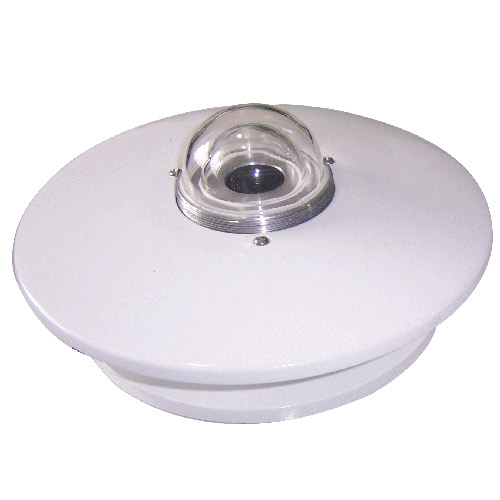 Pyranometer Solar Radiation Sensors
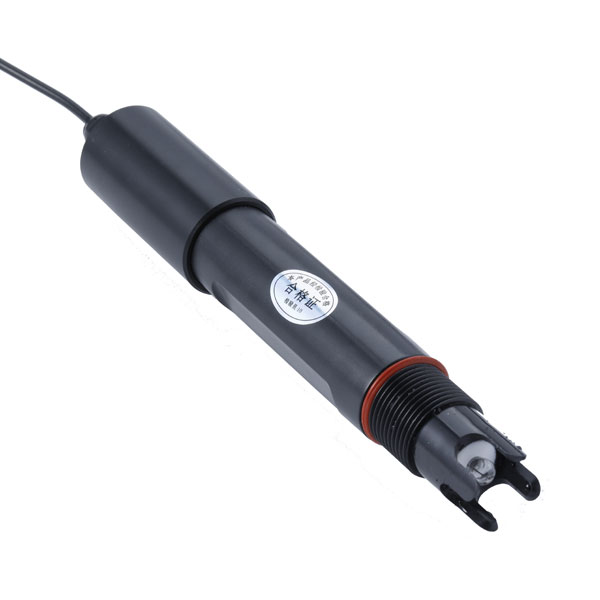 Soil ph sensor
 Tipping Bucket Rain Gauge
 Air Temperature and Humidity Sensor


Screenshot, WhatsApp to identify the QR code
WhatsApp number:+8615367865107
(Click on WhatsApp to copy and add friends)

