





— Download —
 Consumer hotline +8618073152920
WhatsApp:+8615367865107
Address:Room 102, District D, Houhu Industrial Park, Yuelu District, Changsha City, Hunan Province, China
All products
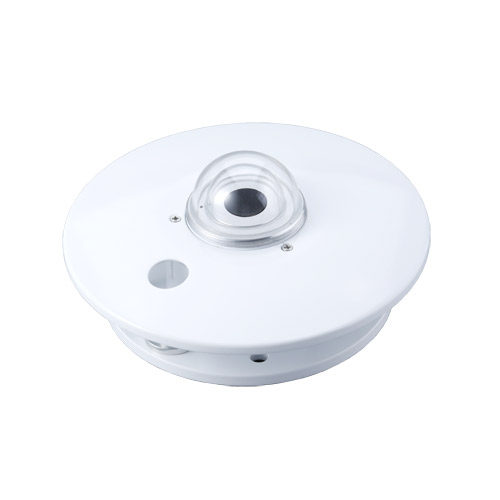
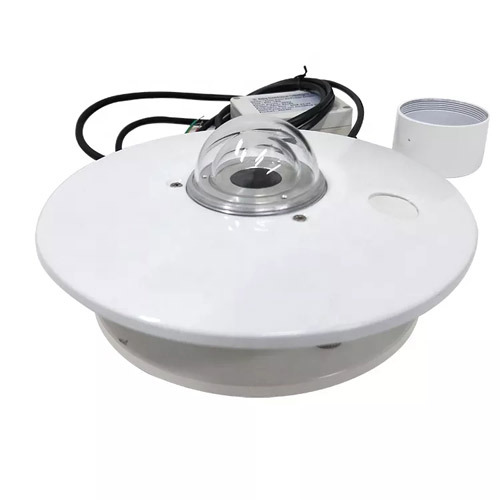
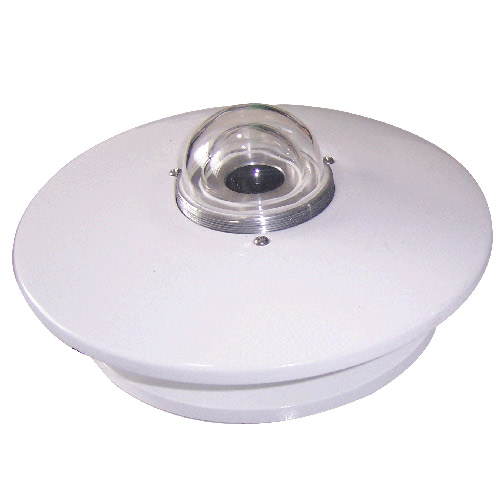
Compare a NiuBoL solar radiation sensor supplier quote for PV and weather stations. Check detector, calibration, measurement plane and logger input before ordering.
Tel/WhatsApp:+8615367865107
Email:Arvin@niubol.com +Nearly 100 partner companies in more than 75 countries. We are committed to providing high-quality, practical products to meet your needs and help you solve problems. Our products comply with international standards and are certified with ISO, CE and RoHS.Product Details
Quick Answer: Compare a solar radiation sensor supplier quotation only after fixing the radiation quantity, detector, mounting plane, output and calibration requirement. The NiuBoL NBL-W-HPRS is a thermopile option with a 0-2000 W/m2 measuring range and 0.3-3 micrometre spectral range. Its native sensitivity and its transmitter output are different specifications. A lower equipment price can describe a different measurement, not the same instrument at a lower cost.
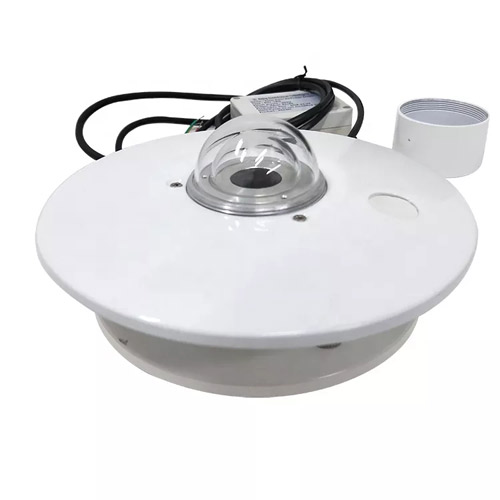
PV performance, meteorology, crop research and building studies may require different spectral response, cosine behaviour and mounting plane. Name the quantity and plane before requesting a quotation.
Horizontal global irradiance differs from plane-of-array. Reflected measurement faces downward. Diffuse measurement needs shading of the solar disc. These are system arrangements, not software labels.
For a PV quotation, identify global horizontal irradiance or plane-of-array irradiance explicitly. A sensor can be calibrated correctly and still provide the wrong project quantity when it is installed in the wrong plane. For a tilted array, state tilt, azimuth and whether the modules track the sun.
For reflected shortwave measurements, identify the downward-facing arrangement and the area viewed. For diffuse measurements, include the shading or tracking arrangement and its operating method. Those accessories change the package and maintenance; they are not a free selection in a remote menu.
For crop-light work, confirm whether the project requires irradiance or photosynthetic photon flux. A broad solar radiation channel does not become a PAR sensor by changing the unit label. Request the instrument that measures the required quantity before comparing detector prices.
| Characteristic | NBL-W-HPRS configuration |
|---|---|
| Detector | Thermopile with a glass-dome optical arrangement |
| Measuring range | 0-2000 W/m2 |
| Spectral range | 0.3-3 micrometres |
| Native sensitivity | 7-14 microvolts per W/m2; use the individual instrument coefficient |
| Response time | 35 seconds or less to 99% |
| Annual stability | Within +/-2% |
| Cosine response | 7% or less at a solar altitude of 10 degrees |
| Temperature characteristic | +/-2% from -10 to 40 degrees C |
| Operating temperature | -40 to 50 degrees C |
| Transmitter options | 12 or 24 VDC supply; 4-20mA, 0-5V or RS485 as ordered |
| Standard cable and weight | 2.5 m; 2.5 kg |
These characteristics are not one overall field-accuracy number. The annual stability entry describes change over time, and the cosine entry has an angular condition. Do not add them informally into a universal error claim or substitute one for the calibration uncertainty.
Solar altitude is the angle above the horizon. Ten degrees altitude is a low sun, not ten degrees from the vertical. Keep that distinction when evaluating morning and evening measurements or comparing angular-response statements from different offers.
The 0.3-3 micrometre band describes broadband shortwave measurement. It does not establish separate UV, visible and longwave output channels. A model name, dome or generic use list should not be used to imply additional spectral measurements.
Photovoltaic detectors can be practical for cost-sensitive monitoring but have a narrower spectral response. Thermopile pyranometers cover a broader spectrum and are used where method and accuracy justify them. The project requirement decides the tradeoff.
A photoelectric sensor and a thermopile instrument can both report W/m2 while responding differently to the incoming spectrum. Agreement under one test condition does not establish equivalence across cloud conditions, solar angles and applications. If the owner accepts either detector type, define the comparison and acceptance requirement in the inquiry.
If a project specifies a particular instrument classification, request model-specific conformity information and the applicable test basis. A classification asserted for a different product in a family does not transfer to the quoted unit. Keep the standard model and any separately specified higher-performance variant distinct.
For native thermopile output, irradiance E = U / S when U is in microvolts and S is the individual sensitivity in microvolts per W/m2. With a hypothetical coefficient of 10 microvolts per W/m2, 8000 microvolts corresponds to 800 W/m2. The coefficient is an example, not a value to program into every sensor.
The 7-14 sensitivity interval is a family characteristic, not a selectable nominal coefficient for all units. Using the midpoint or a coefficient from another serial number can introduce a scale error throughout the record. Match the calibration information to the actual sensing head and the configured acquisition chain.
Ask what the calibration record contains: instrument identity, coefficient and units, date, method, reference and relevant uncertainty information. Distinguish a calibration certificate from a generic inspection statement. For a transmitter-equipped version, establish whether the delivered scale already applies the individual sensitivity.
Retain a new coefficient and its effective date when recalibration changes the scale. Apply the new relationship prospectively or correct historical data through a clearly identified procedure. Overwriting old settings without retaining the change can make a genuine sensor adjustment look like a climate or plant change.
Native millivolt output needs a suitable low-level differential input. Transmitter voltage or current can simplify PLC acquisition. RS485 needs an exact register map and bus design. Include cable and surge protection.
A native thermopile signal is a low-level voltage, not a 0-5V transmitter output. Its input needs suitable sensitivity, impedance and noise performance. Do not apply the transmitter supply to the raw signal terminals or assume a PLC voltage channel can resolve the native signal sufficiently.
For an ordered 0-2000 W/m2 current transmitter, E = (I - 4) / 16 x 2000, with I in mA. For the corresponding 0-5V transmitter, E = V / 5 x 2000. A 12 mA or 2.5V midpoint represents 1000 W/m2 in those examples; it does not use the raw microvolt sensitivity again.
The RS485 version uses Modbus RTU, 9600 baud, eight data bits and no parity, with at least 1000 ms between communications. Match the delivered serial format and data definition. Polling more frequently cannot remove the detector's physical response time.
When comparing response times, compare the same response criterion. A time quoted to 99% is not directly equivalent to one quoted to a smaller fraction of a step. Logger sampling and server upload are different again; state each requirement separately instead of calling all three the update rate.
Identify the bracket, leveling arrangement, cable length, connector and any signal conditioning included. A horizontal measurement needs a level sensing plane, while a plane-of-array measurement needs the agreed array alignment. Include service access so the dome can be inspected and cleaned without disturbing that geometry.
Record the sky view and nearby obstacles after the installation is complete. Cables, the mast, vegetation and later-added equipment can introduce shadows that were absent in the initial drawing. A daytime comparison made during partial shading is not evidence of a calibration change.
Inspect dome condition and internal moisture indications as applicable to the selected construction. Do not cover an operating sensor and continue labeling the resulting values as valid solar measurements. Flag maintenance and unavailable periods separately, and use the agreed service procedure for the instrument.
Ask what calibration evidence is included, its date and the recommended interval. A lower purchase price may exclude a certificate, mounting or field comparison required by the owner.
For replacement or network expansion, identify whether the owner requires the same detector response and data basis as the existing stations. Buying another W/m2 output alone does not establish continuity. A supplier should be able to separate the instrument, signal conversion and accessories in the offer.
Provide NiuBoL the radiation quantity and plane, application, expected range, required classification or comparison method and logger input. Include site access, cable length, mounting, calibration requirements and any diffuse or reflected arrangement.
Evaluate optional items against the measurement, rather than accepting or rejecting every accessory by unit price. A required shading assembly, low-level acquisition module or calibration service can determine whether a nominally cheaper offer is technically comparable.
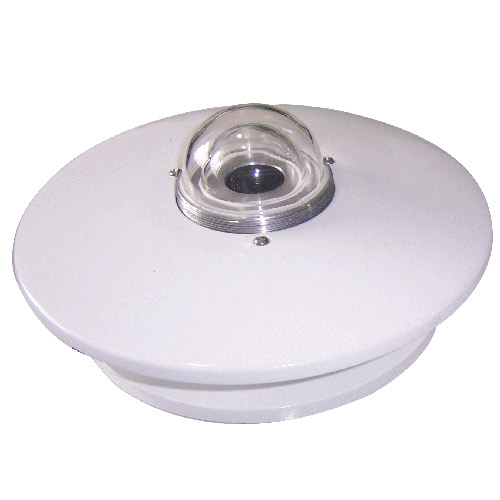
The images show the pyranometer and associated signal arrangements, not one fixed package containing every output or accessory. Confirm the actual sensing head, transmitter and connection set before purchase.
The radiation quantity, detector and mounting plane. Those determine whether the instrument measures the intended horizontal, array-plane, reflected or diffuse quantity. Output and calibration should then be matched to that instrument.
No. Native output must use the calibration coefficient associated with the actual instrument. A family interval or another serial number's coefficient is not a substitute.
No. The response specification describes the detector reaching 99% of a step. Communication and logging have separate timing requirements. Receiving a faster reply does not make the thermopile respond faster.
No. It is an angular-response characteristic at the stated solar altitude. Calibration, other response characteristics and field geometry need separate consideration for the project's uncertainty requirement.
Not simply by changing the data label. The direct solar component must be excluded through an appropriate shading or tracking arrangement and a defined measurement method.
The conversion electronics, supply arrangement, acquisition input and connection scope differ. Compare the complete channel, including any low-level input or transmitter, rather than only the sensing head.
Match instrument identity, calibration coefficient, output, supply and accessories to the order. Verify the acquisition conversion and physical condition before installation, then check alignment, exposure and the stored measurement after mounting.
A solar radiation sensor supplier comparison is useful only when it describes the same measurement and acquisition duty. Separate detector performance, individual calibration, signal conversion and mounting scope. Send NiuBoL the radiation quantity and logger requirements for a comparable quotation.
Sensors & Weather Stations Catalog
 Agriculture Sensors and Weather Stations Catalog-NiuBoL.pdf
Weather Stations Catalog-NiuBoL.pdf
Agriculture Sensors Catalog-NiuBoL.pdf
Water Quality Sensor Catalog-NiuBoL.pdf
Related recommendations
 Multi-Depth Soil Sensor RS485
 TDR Soil Moisture Sensor
 Pyranometer Solar Radiation Sensors
 Soil ph sensor
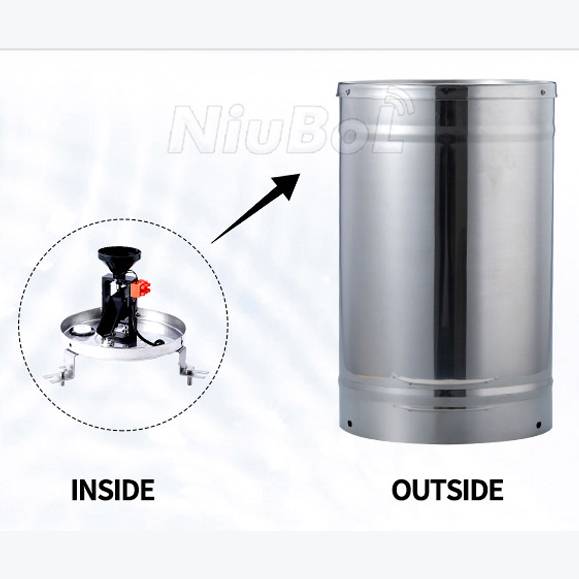 Tipping Bucket Rain Gauge
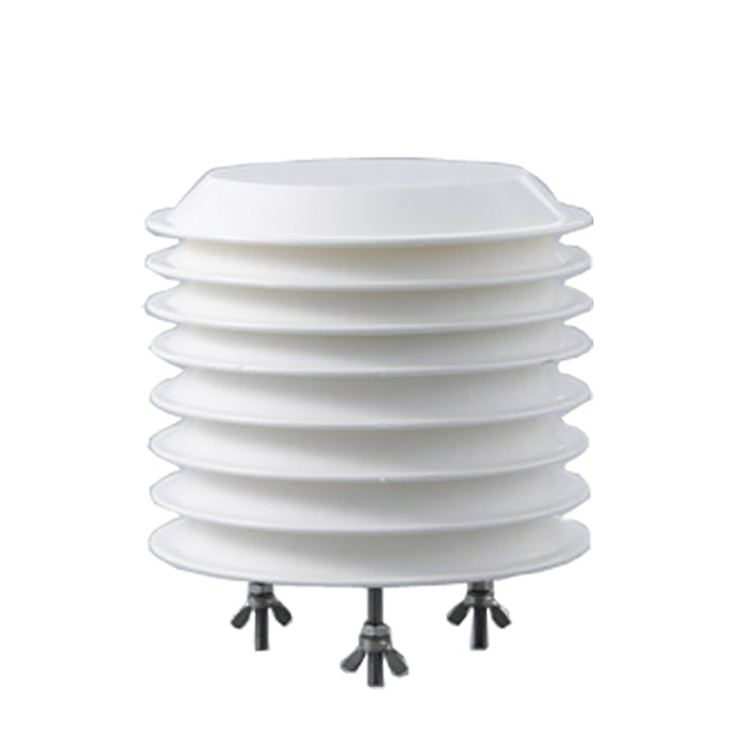 Air Temperature and Humidity Sensor


Screenshot, WhatsApp to identify the QR code
WhatsApp number:+8615367865107
(Click on WhatsApp to copy and add friends)

