





— Products —
 Consumer hotline +8618073152920
WhatsApp:+8615367865107
Address:Room 102, District D, Houhu Industrial Park, Yuelu District, Changsha City, Hunan Province, China
Ambient Sensors
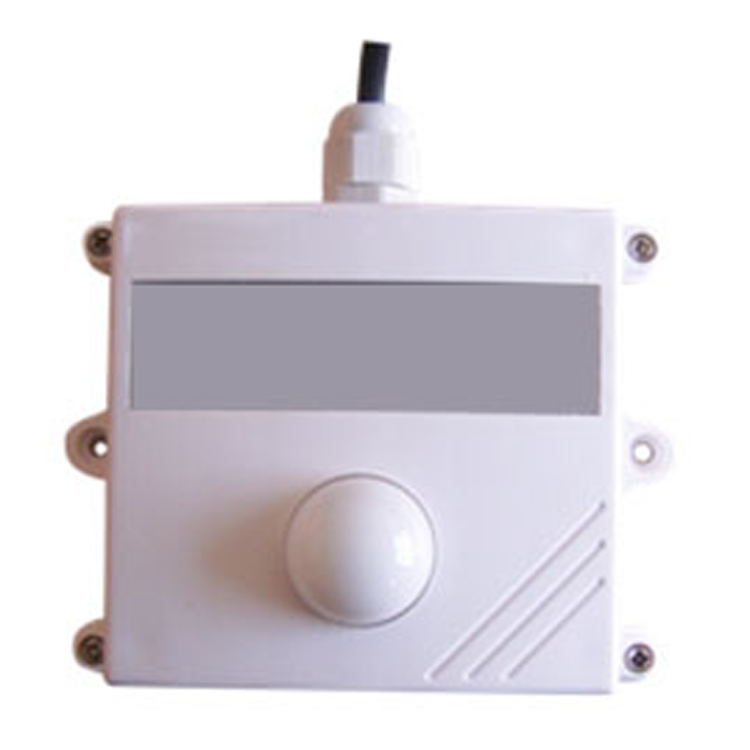
NBL-W-LUX The illuminance sensor transmitter uses a high-sensitivity silicon blue photovoltaic detector as a sensor. Users can configure different measuring ranges according to different measuring places. It has the characteristics of wide measuring range, good linearity, good waterproofness, convenient installation, and suitable for long-distance transmission. It can be widely used in agricultural greenhouses, urban lighting and other places.
Tel/WhatsApp:+8615367865107
Email:Arvin@niubol.com +Nearly 100 partner companies in more than 75 countries. We are committed to providing high-quality, practical products to meet your needs and help you solve problems. Our products comply with international standards and are certified with ISO, CE and RoHS.Product Details
The NiuBoL NBL-W-LUX Illuminance Sensor is a light intensity measuring instrument designed for greenhouse daylight monitoring, urban lighting, building automation and environmental data acquisition systems.
The sensor measures illuminance in Lux (lx), using a high-sensitivity silicon blue photovoltaic detector. It has a measurement range of 0–200,000 Lux and a specified spectral response range of 380–730 nm.
The NBL-W-LUX is available with RS485 Modbus RTU, 4–20mA and 0–5V output configurations. These interfaces allow the sensor to connect to compatible PLCs, data loggers, lighting controllers and IoT gateways.
The instrument provides illuminance measurements. It does not independently measure photosynthetic photon flux density (PPFD), ultraviolet radiation or broadband solar irradiance.
Illuminance describes the amount of visible light reaching a surface, weighted according to the sensitivity of human vision. It is expressed in Lux.
The NBL-W-LUX converts incident light into a corresponding electrical or digital measurement signal. The receiving equipment can use this information for environmental observation, lighting assessment or as an input to an external control system.
Its selectable output interfaces support different monitoring applications. For example, the RS485 version is suitable for compatible digital data acquisition equipment, while the analog versions can connect to suitable current or voltage inputs.
The instrument should be selected according to the illuminance range, installation conditions and receiving equipment requirements.
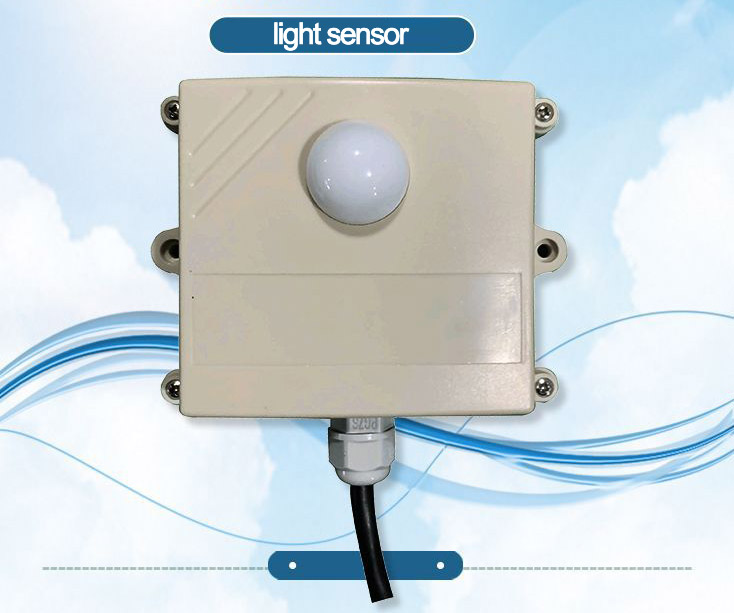
An illuminance sensor measures light incident on a surface in terms of the human visual response.
The measurement unit is Lux (lx), equivalent to one lumen per square meter.
Illuminance measurements can be used to observe variations in daylight, compare lighting conditions between locations and provide inputs to compatible lighting-management systems.
In general product descriptions, illuminance sensors are frequently called light intensity sensors or Lux sensors.
However, illuminance and luminous intensity are distinct photometric quantities.
Illuminance is measured in Lux and describes incident light on a surface. Luminous intensity is measured in candela and describes the light emitted by a source in a particular direction.
The NBL-W-LUX measures illuminance rather than the luminous intensity of an individual light source.
A reading of 10,000 Lux indicates the illuminance measured at the sensor's location.
The result describes the light reaching the sensing surface under the existing measurement conditions.
It does not directly indicate solar irradiance in W/m² or the number of photosynthetically active photons reaching plants.
Illuminance changes with the position and orientation of the sensing surface.
Measurements may differ between shaded and unshaded locations, near greenhouse walls or beneath artificial lighting fixtures.
For meaningful comparison, measurement positions and sensor orientation should be consistent.
The NBL-W-LUX uses a silicon blue photovoltaic detector to respond to incident optical radiation.
The detector produces an electrical response related to the light received. The internal measurement circuit processes this response and converts it into an illuminance value using the instrument's calibration.
The resulting measurement is provided through the selected electrical output.
The sensing element responds to incident light within its specified spectral range of 380–730 nm.
This is the spectral response range of the instrument, not a set of independent wavelength measurement channels.
The NBL-W-LUX reports an illuminance value rather than a spectrum of individual colors.
The sensor electronics process the optical response and generate a measurement signal corresponding to illuminance.
The RS485 configuration provides digital communication, while the 4–20mA and 0–5V configurations provide analog signals.
The receiving equipment must use the measurement scaling associated with the selected output type.
Measurements can be collected by compatible PLCs, environmental data loggers, lighting controllers and monitoring gateways.
An external controller may use the illuminance measurement as an input to programmed lighting or shading logic.
The illuminance sensor itself does not directly switch lighting equipment or operate greenhouse shading mechanisms.
| Parameter | Specification |
|---|---|
| Model | NBL-W-LUX |
| Product Type | Illuminance Sensor Transmitter |
| Measured Parameter | Illuminance |
| Measurement Unit | Lux (lx) |
| Measurement Range | 0–200,000 Lux |
| Spectral Range | 380–730 nm |
| Accuracy | ±7% |
| Sensing Element | Silicon Blue Photovoltaic Detector |
| Power Supply | DC 12V / DC 24V, according to configuration |
| Output Options | RS485 / 4–20mA / 0–5V |
| RS485 Protocol | Modbus RTU |
| RS485 Baud Rate | 9600 bps |
| Minimum Communication Interval | 1000 ms |
| Current Output Load | ≤300Ω |
| Voltage Output Load | ≥1kΩ |
| Operating Temperature | −10 to +70°C |
| Operating Relative Humidity | 0–80%RH |
| Standard Cable Length | 2.5 m |
| Product Weight | Approximately 170 g |
| Mounting | Two M4 Mounting Positions |
The output options are selected according to the ordered configuration. RS485, analog current and analog voltage outputs are not automatically provided simultaneously.
For applications involving condensation, frequent water spray or relative humidity above 80%RH, the installation conditions and suitability of the selected sensor configuration must be evaluated separately.
Different light and radiation sensors measure different physical quantities.
Selecting the correct instrument is particularly important for greenhouse cultivation, lighting control, solar energy monitoring and plant research.
| Instrument | Measured Quantity | Typical Unit |
|---|---|---|
| Illuminance Sensor | Visible light weighted for human vision | Lux |
| Radiometric PAR Sensor | Radiant power within the PAR spectral region | W/m² |
| Quantum Sensor | Photosynthetic Photon Flux Density (PPFD) | μmol/m²/s |
| Pyranometer | Broadband solar irradiance | W/m² |
Lux and PPFD are different measurements.
Lux is weighted according to human visual sensitivity, while PPFD describes the number of photosynthetically active photons arriving at a surface.
A conversion between these quantities depends on the spectral distribution of the light source.
There is no universal fixed conversion factor suitable for all daylight and artificial lighting conditions.
For projects requiring accurate PPFD or Daily Light Integral (DLI), a suitably calibrated quantum sensor is recommended.
Illuminance measurements can provide useful information about changes in general light conditions inside a greenhouse.
However, Lux measurements are not equivalent to a calibrated photon-based assessment of plant lighting.
For general daylight observation or lighting control, an illuminance sensor may be suitable.
For research involving photosynthesis, plant-light photon exposure or DLI, select instrumentation designed for the required quantity.
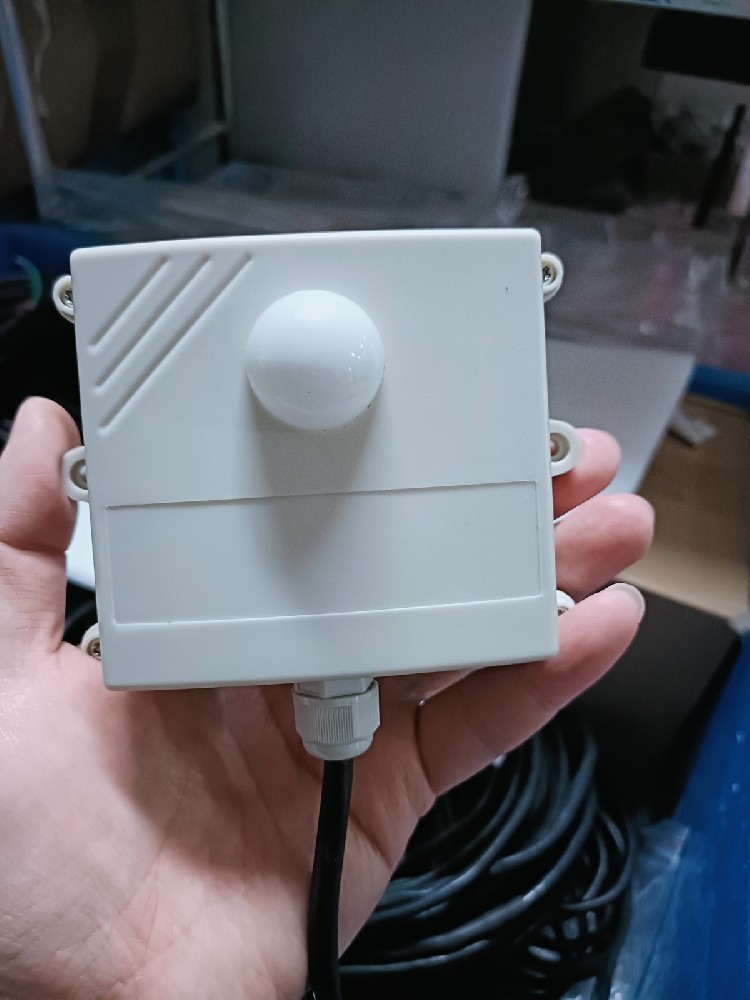
The NBL-W-LUX reports illuminance in Lux.
A pyranometer measures broadband solar irradiance in W/m².
These measurements cannot be treated as interchangeable without an appropriate spectral and calibration basis.
For solar radiation monitoring, see the NiuBoL Solar Radiation Sensor range.
The NBL-W-LUX offers different electrical outputs for integration with compatible monitoring and control systems.
The RS485 configuration is suitable for compatible PLCs, data loggers and IoT gateways supporting Modbus RTU communication.
The default baud rate is 9600 bps.
The receiving controller can read the illuminance measurement digitally and display it in Lux after applying the correct data interpretation.
The standard digital reading uses a scaling factor of 0.1 Lux per raw count.
The data acquisition system must be configured with the correct device address and communication settings.
The analog current configuration is suitable for controllers equipped with a compatible 4–20mA input.
The relationship between current and illuminance is linear over the selected measurement range.
Illuminance (Lux) = (Current in mA − 4) / 16 × Selected Measurement Range (Lux)
The receiving equipment must use the actual range specified for the ordered sensor.
The voltage output configuration can be connected to compatible 0–5V analog inputs.
The measurement scaling is:
Illuminance (Lux) = Output Voltage (V) / 5 × Selected Measurement Range (Lux)
The selected measurement range should match the supplied instrument configuration.
| Output | Signal Type | Compatible Equipment |
|---|---|---|
| RS485 Modbus RTU | Digital | PLC, RTU, Data Logger, Gateway |
| 4–20mA | Analog Current | Industrial Current Input |
| 0–5V | Analog Voltage | Compatible Voltage Input |
Electrical wiring depends on the output configuration.
Disconnect the power supply before installation and check the conductor identification before applying voltage.
| Wire Color | Voltage / Current Configuration | RS485 Configuration |
|---|---|---|
| Red | Power Positive | Power Positive |
| Black / Green | Power Negative | Power Negative |
| Yellow | Analog Output Signal | RS485 A (+) |
| Blue | Not assigned in standard analog wiring | RS485 B (−) |
Analog current and voltage configurations may use different circuit arrangements. The supplied sensor and receiving equipment must be connected according to the wiring instructions for the ordered version.
For RS485 networks containing multiple devices, assign suitable device addresses and use appropriate wiring and termination practices.
Illuminance measurements can help greenhouse operators observe general daylight conditions within selected growing areas.
The sensor can record changes associated with sunlight, shading, greenhouse covering materials and different measurement locations.
For crop-light research requiring photon-based measurements, use an appropriate PPFD sensor rather than relying solely on Lux readings.
Illuminance sensors can provide light measurements for urban lighting and outdoor lighting assessment projects.
A compatible controller may use the sensor readings to evaluate lighting conditions and operate connected equipment according to programmed rules.
Lighting control functions are performed by the external controller, not directly by the illuminance sensor.
Building monitoring systems can use illuminance measurements as inputs for daylight observation and suitable lighting-control strategies.
The sensor can connect to compatible controllers using its selected output interface.
Appropriate measurement locations depend on the intended monitored surface, room geometry and lighting system.
The NBL-W-LUX can provide visible-light illuminance measurements as part of a compatible environmental monitoring system.
Where the project requires solar radiation in W/m², a suitable pyranometer should be selected instead.
Illuminance measurements can provide supporting information about the general daylight environment in agricultural settings.
They can be collected alongside temperature, humidity and other selected environmental parameters.
The appropriate measurement unit should be selected according to the agricultural application.
Install the sensor where the incident light represents the conditions relevant to the monitoring objective.
For daylight monitoring, avoid unnecessary shading from nearby structures unless shading is the condition being measured.
For measurements of illuminance on a horizontal plane, position the sensing surface appropriately and secure the sensor in a stable orientation.
Different applications may require a different measurement plane. The sensor orientation should match the intended lighting assessment.
The NBL-W-LUX has two mounting positions designed for M4 fasteners.
Use a suitable mounting bracket and secure the sensor without obstructing the optical sensing surface.
Avoid unnecessary mechanical stress on the sensor housing and cable connection.
The specified operating temperature range is −10 to +70°C, and the operating humidity range is 0–80%RH.
High-humidity greenhouses, misting systems and locations with persistent condensation may exceed the specified operating conditions.
For such projects, evaluate the actual site exposure and select a sensor configuration suitable for those conditions.
Any protective cover should be assessed for its effect on the light reaching the sensing surface.
Check the sensor power supply and output configuration before connecting it to the receiving equipment.
Secure the cable to reduce mechanical strain and protect external electrical connections according to the installation environment.
After installation, apply the correct power supply and verify that the receiving equipment displays an illuminance value.
Observe whether the reading changes in response to changing illumination.
For a digital sensor, confirm the device address and data scaling. For an analog sensor, verify the correct input range and conversion relationship.
Dust, deposits and contamination can change the amount of light reaching the sensing element.
Inspect the optical surface periodically and clean it using a suitable method that does not damage the sensor.
Ensure that the sensor remains securely mounted in the intended orientation.
Changes in mounting position can influence the relationship between measured illuminance and the lighting conditions being evaluated.
Check the cable and connections for damage, corrosion or loose terminals.
If measurements are missing, verify the power supply and communication configuration before replacing the instrument.
For applications requiring formal measurement accuracy, compare readings using suitable reference equipment and follow the applicable calibration procedure.
It measures illuminance in Lux, which represents incident visible light weighted according to human visual sensitivity.
The specified measurement range is 0–200,000 Lux.
The NBL-W-LUX has a specified accuracy of ±7%.
Yes. An RS485 Modbus RTU output configuration is available with a default baud rate of 9600 bps.
Yes. A 4–20mA analog current configuration is available for compatible receiving equipment.
Yes. A 0–5V voltage output configuration is available.
The sensor is available for DC 12V or DC 24V supply according to the selected configuration.
No. Its standard output measures illuminance in Lux. A suitably calibrated photon-based instrument is required for accurate PPFD measurement.
No. Lux measures illuminance, while solar irradiance is radiant power per unit area expressed in W/m².
It can be used for general daylight monitoring when the actual temperature, humidity and installation conditions remain within the instrument's specified operating limits.
Yes, as a measurement input to a compatible lighting controller. Automatic switching or dimming requires external control hardware and suitable logic.
No. The standard sensor provides wired RS485 or analog outputs. Remote networking requires compatible external communication equipment.
Use the two M4 mounting positions and a suitable bracket, keeping the sensing surface oriented for the required measurement plane.
Yes. The selected sensor output must be compatible with the available PLC inputs and data format.
Please specify the measurement application, sensor quantity, required output interface, power supply, cable length, lighting conditions and installation environment.
Download the NBL-W-LUX instruction manual for technical specifications, wiring arrangements, analog output scaling, RS485 communication and installation guidance.
The NBL-W-LUX provides illuminance measurements for lighting monitoring, greenhouse daylight observation, building automation and compatible environmental data acquisition systems.
When selecting the instrument, confirm the required Lux range, output interface, power supply, installation conditions and receiving equipment.
For greenhouse monitoring projects involving additional environmental parameters, explore the NiuBoL Smart Greenhouse Monitoring Solution.
For other environmental sensors, visit the Ambient Sensors category.
To request pricing or technical information, contact NiuBoL with your project requirements.
Sensors & Weather Stations Catalog
 Agriculture Sensors and Weather Stations Catalog-NiuBoL.pdf
Weather Stations Catalog-NiuBoL.pdf
Agriculture Sensors Catalog-NiuBoL.pdf
Water Quality Sensor Catalog-NiuBoL.pdf
Related recommendations
 Combined air temperature and relative humidity sensor
 Particulate Matter Sensors (PM1, PM2.5 & PM10)
 6-in-1 Temperature, Humidity, Pressure, Illuminance, CO2, and CO Sensor
 CO2 Humidity and Temperature Sensor
 Measures air temperature and relative humidity pressure Sensor
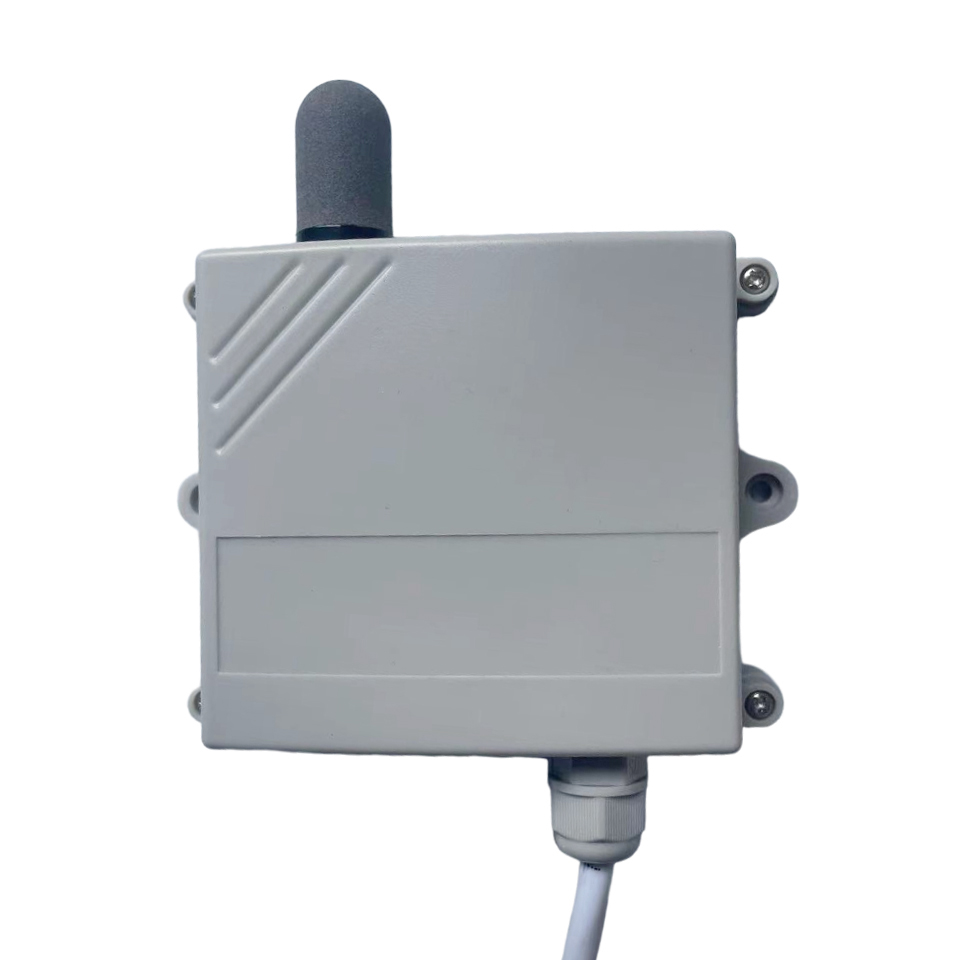 Wall-Mounted Temperature and Humidity Sensor | NBL-W-WTH


Screenshot, WhatsApp to identify the QR code
WhatsApp number:+8615367865107
(Click on WhatsApp to copy and add friends)

