

— Download —
 Consumer hotline +8618073152920
 WhatsApp:+8615367865107
Address:Room 102, District D, Houhu Industrial Park, Yuelu District, Changsha City, Hunan Province, China
All products
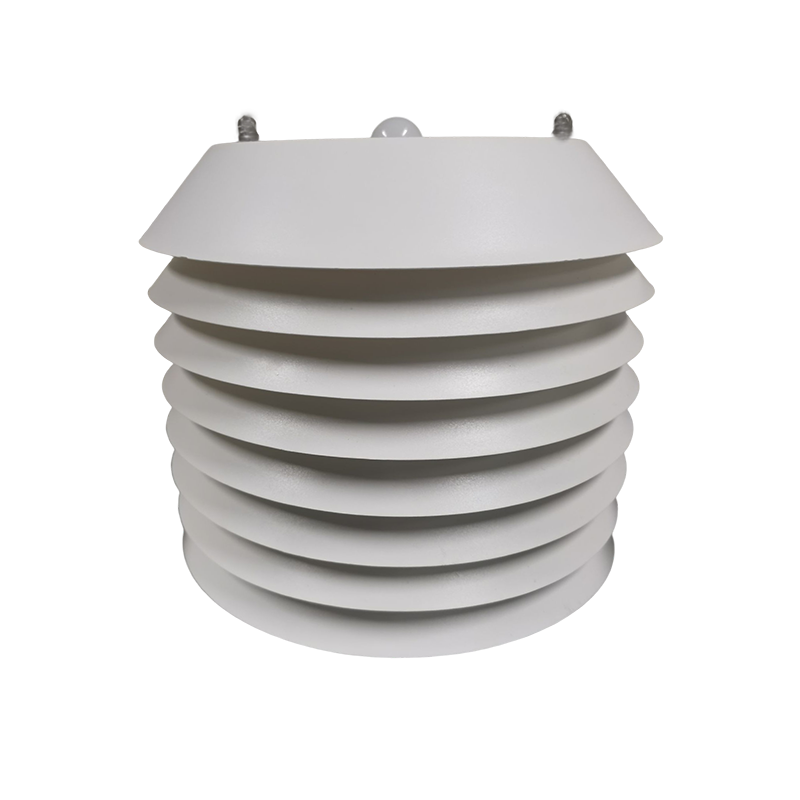
Evaluate a NiuBoL 5-in-1 integrated environmental sensor for greenhouse and weather projects. Check ranges, siting and RS485 acceptance before requesting a quote.
Tel/WhatsApp:+8615367865107
Email:Arvin@niubol.com +Nearly 100 partner companies in more than 75 countries. We are committed to providing high-quality, practical products to meet your needs and help you solve problems. Our products comply with international standards and are certified with ISO, CE and RoHS.Product Details
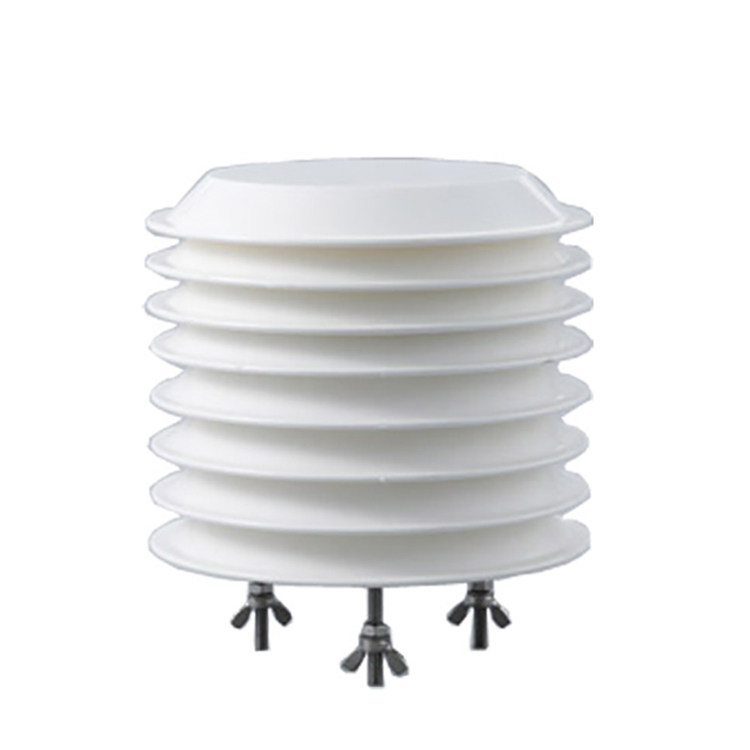
Quick Answer: The NiuBoL NBL-W-THPLC 5-in-1 integrated environmental sensor combines air temperature, relative humidity, atmospheric pressure, illuminance and CO2 in one louvered assembly. Select it when one installation position can serve the required air and light measurements. Manufacturer evaluation should identify the exact supply and output version, verify all five channel specifications and demonstrate that the receiving logger assigns each value to the right quantity.
One louvered unit reduces brackets, cables and addresses. It is useful when the same representative air location suits temperature, humidity, pressure and CO2, with illuminance measured at that point. Integration does not make the five quantities interchangeable.
The NBL-W-THPLC is not an ultrasonic wind instrument. A five-parameter weather sensor elsewhere in a station can have a different channel set, such as wind speed and wind direction instead of illuminance and CO2. Write the five measured quantities into the equipment schedule rather than ordering by the expression 5-in-1 alone.
The shared unit can reduce field connections when a compact environmental point is appropriate. It does not eliminate a data logger, provide every weather measurement or establish that all five quantities are equally representative at the selected height. Confirm the measurement purpose before replacing several separate instruments with one assembly.
| Measurement | Range | Accuracy / resolution |
|---|---|---|
| Air temperature | -50 to 100 degrees C | +/-0.5 degrees C / 0.1 degree C |
| Relative humidity | 0-100% RH | +/-5% RH / 0.1% RH |
| Atmospheric pressure | 10-1100 hPa | +/-0.3 hPa / 0.1 hPa |
| Illuminance | 0-200000 lux | +/-7% / 10 lux |
| CO2 | 0-2000 ppm | +/-(40 ppm + 2% FS) / 1 ppm |
| Assembly item | Selection requirement |
|---|---|
| Supply version | 12 VDC or 24 VDC as ordered; confirm the permitted input for the delivered unit |
| Digital output | RS485 Modbus RTU |
| Serial communication | 9600 bps, 8 data bits, no parity; match the delivered stop-bit setting and allow at least 1000 ms between requests |
| Operating conditions | -50 to 80 degrees C; 0-100% RH |
| Power demand and enclosure rating | Specify for the ordered assembly and site; do not assign values from a different louvered product |
| Cable and mounting | Order the required length, suitable jacket, termination and compatible support |
The temperature measurement span does not extend the assembly's operating limit above 80 degrees C. Illuminance resolution is 10 lux, not +/-7%; the percentage is the accuracy expression. For the 2000 ppm CO2 span, the stated fixed-plus-full-scale expression corresponds to +/-80 ppm. These distinctions matter when comparing instruments or specifying acceptance tolerances.
Mount in ventilated air away from walls, exhaust, fresh-air jets, heaters and direct local CO2 sources. The louver protects air channels from direct radiation, but the illuminance channel still needs an appropriate view.
In a greenhouse, a position useful for mixed-air temperature and CO2 may be shaded by beams, crop canopy or movable screens. That light reading describes illumination at that point, not necessarily illumination over the crop area. If lighting control needs a different plane or position, a separate light sensor can be preferable to forcing the integrated unit into an unsuitable location.
For a compact weather installation, inspect mast shadows and nearby heated surfaces. Keep air exchange around the louvers and evaluate the light detector's view separately. Do not place the entire assembly in a sealed protective cabinet: the air channels would then measure the cabinet environment rather than the intended outside air.
Illuminance in lux is also different from solar irradiance in W/m2 and photosynthetically active radiation. Select the quantity the application uses. A fixed lux-to-irradiance conversion cannot turn this channel into a pyranometer, and an illuminance reading alone does not establish plant-lighting photon exposure.
The RS485 version returns temperature, humidity, pressure, illuminance and CO2 in that order in its five-word measurement sequence. Read function 03 from start address 0x0000 with five registers for this configuration. Match the delivered firmware before configuring the receiving PLC, RTU or data logger.
Temperature, humidity and pressure use 0.1-unit conversion; illuminance uses 10 lux per count, while CO2 uses 1 ppm per count. A light count of 86 therefore represents 860 lux. Copying the CO2 multiplier to the illuminance field would produce a tenfold error without preventing communication.
A combined reply does not prove that all five elements update or stabilize at the same rate. Request the relevant update and response information when a control sequence uses rapidly changing light together with CO2 or humidity. Reading the bus more frequently cannot create a faster physical response, and the receiving application should not assume identical channel behavior solely because the values arrive together.
Commission the temperature sign convention when negative conditions are relevant. Keep pressure in hPa, light in lux and CO2 in ppm in the tag names or metadata. Where the station includes a separate communication gateway, verify the same units after export; transport should not silently apply another conversion.
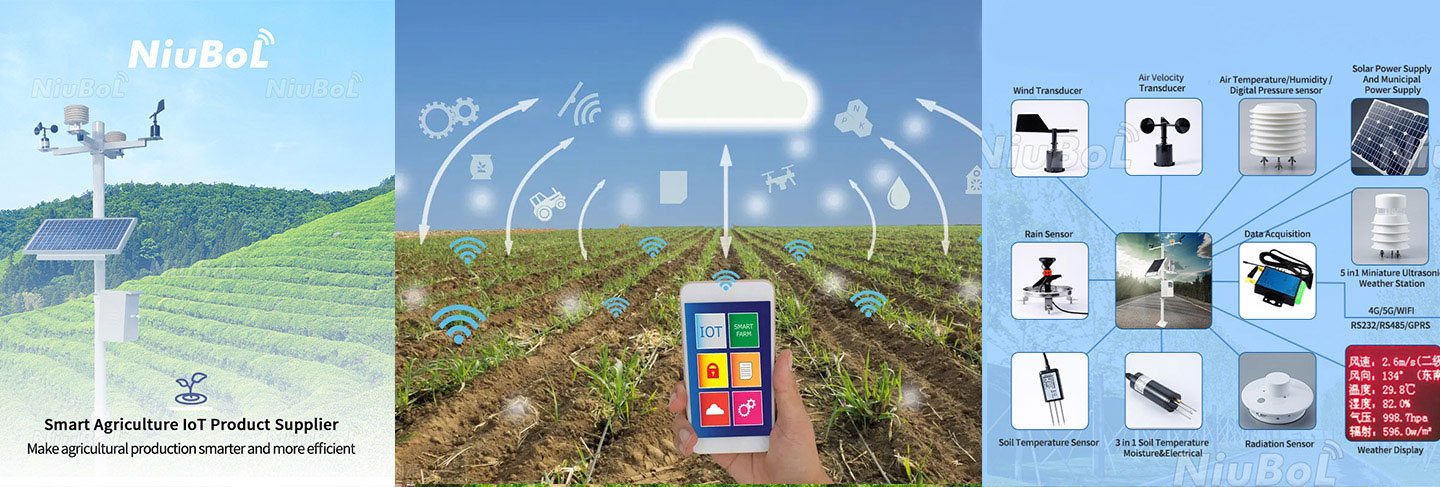
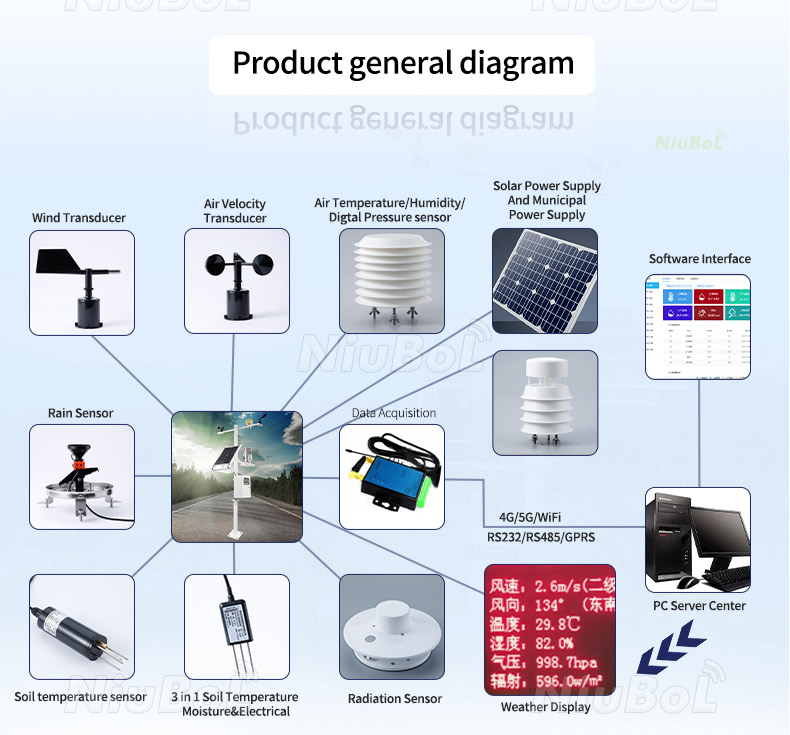
The system diagram above includes optional instruments and acquisition equipment. It is not a claim that the NBL-W-THPLC measures wind, rainfall or soil conditions, and those illustrated items are not automatically part of a five-channel sensor order.
| Channel | Useful verification | What the check cannot establish alone |
|---|---|---|
| Temperature and RH | Compare with a suitable reference in comparable, stabilized air exposure. | Agreement at one indoor condition does not verify the complete environmental span. |
| Pressure | Compare actual local pressure using the same pressure definition. | A sea-level-adjusted weather report is not automatically comparable with station pressure. |
| Illuminance | Compare detector position, light direction and a suitable illuminance reference. | Covering the detector demonstrates response, not calibrated accuracy. |
| CO2 | Use an approved reference comparison or controlled calibration procedure. | Breathing on the housing is not a concentration calibration. |
During a comparison, let the instruments observe the same condition and account for stabilization and reference uncertainty. Sequential readings taken across a changing vent or lighting cycle may differ even if both instruments function correctly. Record the comparison conditions so the manufacturer and integrator can interpret a discrepancy.
A shared communication port does not make a passing temperature check an acceptance of the CO2 or light channel. Check channel identity and performance separately, then verify the combined record at the logger. This is particularly useful for distributors approving a sample before ordering several assemblies.
Likewise, having pressure and temperature channels in the same housing does not establish a particular CO2 compensation algorithm. If an application depends on compensation across changing environmental conditions, specify the required behavior and obtain confirmation for the actual assembly. Do not derive that capability from the parameter count or a shared packet format.
High humidity can create condensation on electronics or optical surfaces. Choose drainage, orientation and enclosure interfaces for the site and inspect after weather transitions.
Shared power or electronics can interrupt several measurements together. Decide whether the application can tolerate that outage and whether an exchange assembly is more practical than on-site work. If one quantity has a different maintenance need or critical availability requirement, a separate instrument may make the system easier to service.
When replacing the unit, identify the supply, output and all five channel specifications again. A similar louvered housing is not enough to establish interchangeability. Restore the required address and tag mapping, then repeat the affected checks rather than assuming a replacement is identical because its mounting holes fit.
Request exact model, wiring, register map, cable, mounting, calibration evidence, production test and replacement procedure. A five-parameter label alone is not enough for system acceptance.
Send NiuBoL the five required quantities, operating bands, intended mounting position and receiving equipment. State whether the inquiry includes only the sensing assembly or also the mast, acquisition, power and remote connection. Identify any acceptance method required by the owner so it can be reviewed before the order is confirmed.
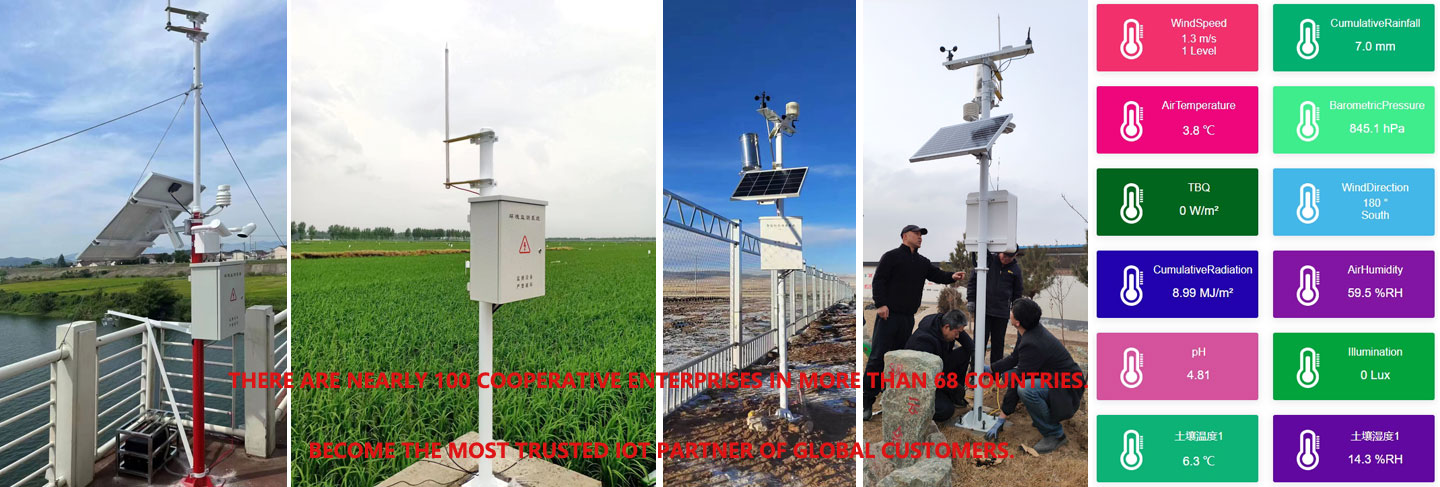
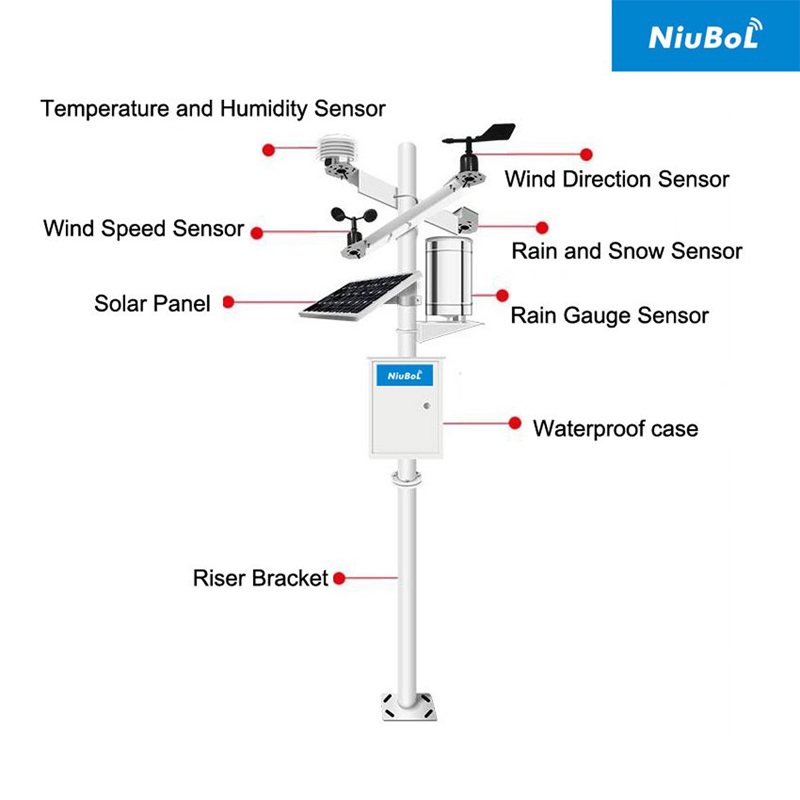
The weather-station layout below illustrates how separate instruments can be arranged around a field enclosure. It does not add wind or rain measurement to the NBL-W-THPLC. Use separate components where exposure or performance requirements cannot be met at the common sensing point.
No. The NBL-W-THPLC combines temperature, RH, pressure, illuminance and CO2. Other five-parameter assemblies can contain wind measurements instead. Specify the actual quantities, not only the number of parameters.
No. The air channels need suitable air exposure, while the light detector needs the view required by the application. If one position cannot serve both tasks, use a separate light or air instrument rather than accepting an unexplained compromise.
It measures lux, not irradiance in W/m2. Use a suitable radiation sensor where solar-energy calculations require irradiance. A fixed conversion from the lux reading does not establish an equivalent pyranometer measurement.
Confirm the permitted input of the delivered version. The supply choices are 12 VDC or 24 VDC as ordered; they should not be interpreted as an unqualified continuous wide-voltage rating.
Verify each quantity against an appropriate reference or approved procedure, then check the channel order, conversion and exported units. A communication reply or a response to shading is only one part of that evaluation.
No. A compatible acquisition device reads the sensor, and separate network equipment provides remote transmission where required. Define those components and their configuration in the system quotation.
The offer should identify all five channel specifications, supply and output version, cable, mounting and acceptance scope. Include any required logger, power or gateway separately so a sensing assembly is not compared with a complete station.
A 5-in-1 integrated environmental sensor is useful when its channel set and common installation position match the project. For the NBL-W-THPLC, verify air and light exposure separately, retain the actual measurement units and accept all five functions. NiuBoL can review the sensing assembly and surrounding station equipment against those requirements without treating one housing as a complete weather or safety system.
Sensors & Weather Stations Catalog
 Agriculture Sensors and Weather Stations Catalog-NiuBoL.pdf
Weather Stations Catalog-NiuBoL.pdf
Agriculture Sensors Catalog-NiuBoL.pdf
Water Quality Sensor Catalog-NiuBoL.pdf
Related recommendations
 Multi-Depth Soil Sensor RS485
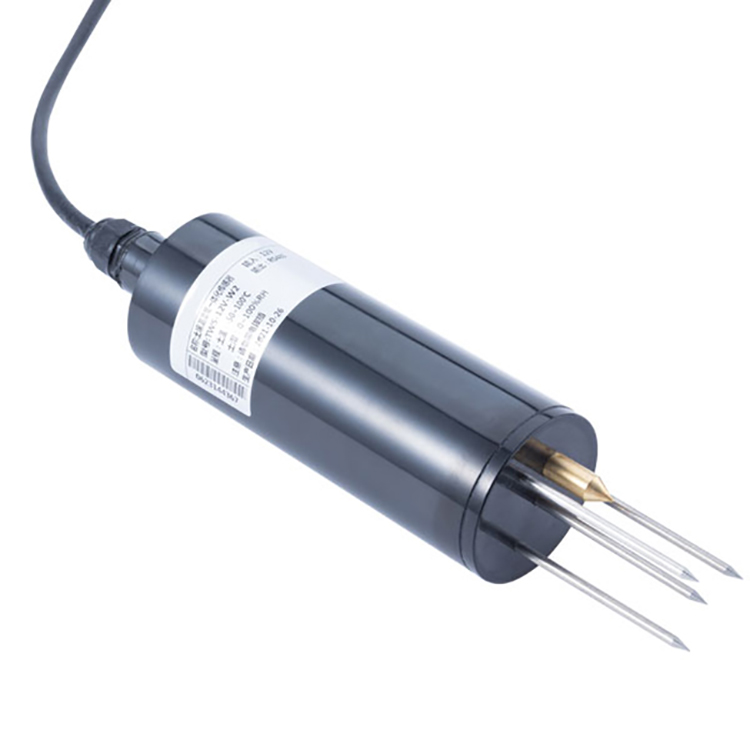 TDR Soil Moisture Sensor
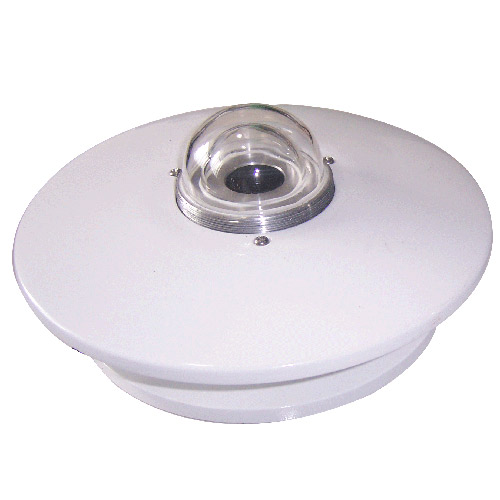 Pyranometer Solar Radiation Sensors
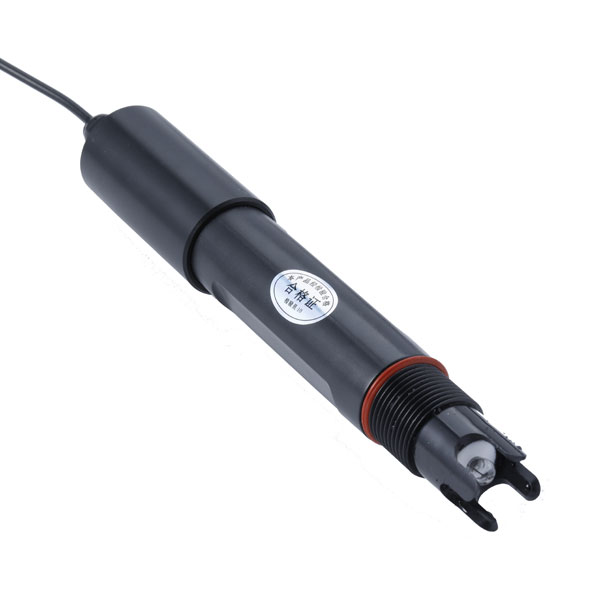 Soil ph sensor
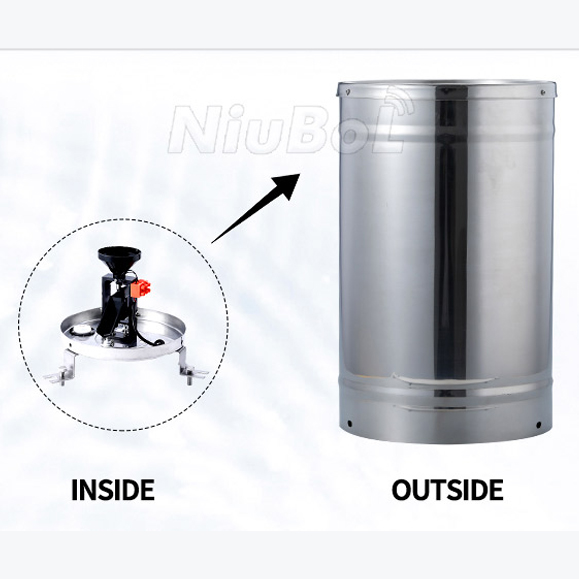 Tipping Bucket Rain Gauge
 Air Temperature and Humidity Sensor

Screenshot, WhatsApp to identify the QR code
WhatsApp number:+8615367865107
(Click on WhatsApp to copy and add friends)