





— Download —
 Consumer hotline +8618073152920
WhatsApp:+8615367865107
Address:Room 102, District D, Houhu Industrial Park, Yuelu District, Changsha City, Hunan Province, China
All products

Plan NiuBoL soil moisture detection sensor installation for irrigation projects. Check probe contact, cable routes and wetting response before accepting each field point.
Tel/WhatsApp:+8615367865107
Email:Arvin@niubol.com +Nearly 100 partner companies in more than 75 countries. We are committed to providing high-quality, practical products to meet your needs and help you solve problems. Our products comply with international standards and are certified with ISO, CE and RoHS.Product Details
Quick Answer: Soil moisture detection sensor installation succeeds when the probe has close soil contact at a position that represents the intended irrigation zone. For the NiuBoL NBL-S-THR, confirm the ordered electrical version before burial, record depth and emitter distance, protect the cable and observe a normal irrigation event. A plausible number on a display is not sufficient acceptance of a buried point.
Mark the valve or management zone, soil type, crop row, emitter position and intended depth. Avoid a low spot, wheel rut, leak or field edge unless it represents the control objective. Confirm that the cable can reach a protected junction without tension and that cultivation equipment will not cross the route.
For drip irrigation, decide whether the point should indicate the routinely wetted root zone or investigate the edge of the wetting pattern. A sensor immediately beside an emitter and one farther away can both function correctly yet show very different responses. Record the actual distance rather than relying on a sketch marked only with the crop row.
Depth should follow the root-zone question and management practice. A shallow point may respond to a small irrigation event while deeper soil remains dry. A deeper point can help observe downward wetting but may react too late to represent the upper roots. Use separate depths where the project needs both observations; one short probe does not measure a continuous vertical profile.
Do not select a convenient cabinet position first and bury the probe beside it without checking the soil. Identify materially different textures, raised beds or irrigation zones before assigning points. More probes at the same unrepresentative location do not solve the placement problem.
| Item | Specification | Installation consequence |
|---|---|---|
| Measured quantities | Soil moisture and soil temperature | Record and check the two quantities separately. |
| Moisture range / resolution | 0-100% / 0.1% | The percentage is not air relative humidity or a universal irrigation threshold. |
| Temperature range / resolution | -50 to 100 degrees C / 0.1 degree C | Measurement span does not override the assembly's operating limits. |
| Accuracy | Moisture +/-3%; temperature +/-0.5 degrees C | Poor soil contact adds installation error; decimal resolution cannot remove it. |
| Supply / power | 12-24 VDC; approximately 0.3 W | Verify voltage at the field end of the installed cable. |
| Output versions | RS485 Modbus RTU, 4-20 mA or 0-5 V | Confirm the ordered version before closing the excavation. |
| Analog load | Current: up to 250 ohms; voltage: at least 1 kohm | Check the receiver and complete connected circuit. |
| Operating environment | -40 to 80 degrees C | Assess exposed cable transitions and local extremes as well as buried soil. |
| Probe protection | IP68 | External joints, damaged cable and connectors require separate attention. |
| Cable jacket / length | Specify for the ordered cable and site route | Confirm suitability for burial, exposure and mechanical protection. |
The probe senses the soil around its rods. It does not directly measure matric tension, rooting depth or water delivered by the irrigation pipe. Those are different quantities. Commission the moisture response as a local soil observation rather than interpreting every percentage as a ready-made irrigation command.
Dielectric moisture measurement depends on the material immediately around the probe. Install into undisturbed soil where practical. If a hole is prepared, keep it close to the sensor geometry, remove stones that prevent insertion and compact backfill to approximate the surrounding density. Never leave an air cavity or hammer the electronics body.
In an excavated profile, place the rods into a suitable undisturbed face at the chosen depth where practical. Keep the sensing part away from an open excavation wall once backfilling is complete. Do not force the rods around a stone, bend them or use the cable to pull the body into position.
With a prepared opening, avoid an oversized cavity that must be packed with a visibly different mixture. Added wet slurry may close an air gap but can also create a pocket unlike the surrounding soil. Choose a method compatible with the probe and soil, and avoid treating water added during installation as the normal site baseline.
Use a consistent orientation for points intended for comparison. Record the sensing depth and method, especially when another contractor will install later points. A horizontal root-zone observation should not be compared unquestioningly with a vertically inserted probe spanning a different soil layer.
Bring the cable away from the probe without creating a path that channels surface water directly to the sensing point. Protect exposed sections in suitable conduit, provide strain relief at the enclosure and label both ends with sensor ID and depth. Seal every field joint to the environmental requirement; an IP68 probe does not make an unsealed connector waterproof.
Verify the electrical channel before burial makes the connection difficult to reach. With power isolated, check wiring against the delivered version; then power the assembled point and compare its identity and readings with the logger. Resolve duplicate RS485 addresses, swapped analog channels or an incorrect input mode at this stage.
Bring power and communication to a protected acquisition point. A suitable PLC, RTU or data logger reads the probe, while separate communication equipment provides remote access if required. The diagram below shows that wider system arrangement; it does not mean that the sensing probe contains a modem, display or irrigation-valve driver.
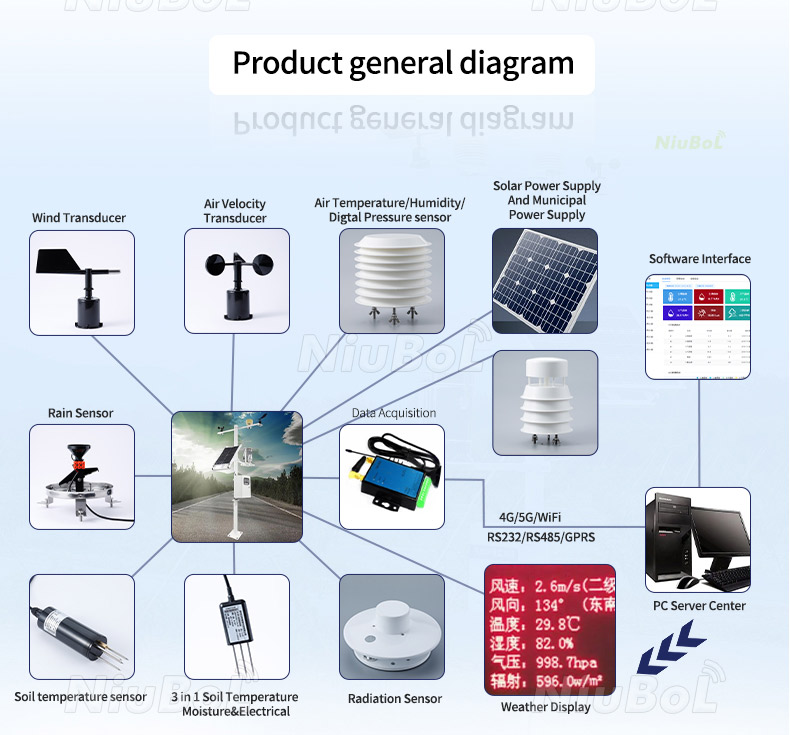
Backfilling disturbs pore structure and may temporarily change moisture distribution. Allow the point to settle, then record a baseline with notes on recent rainfall and irrigation. Compare temperature with a plausible soil reference and inspect the moisture value against actual soil condition. Communication alone is not evidence of a valid installation.
Apply a known irrigation event in the relevant zone. The response delay should be consistent with emitter distance, depth and soil texture. Observe the rise, peak and redistribution rather than demanding an instantaneous jump. A non-response can indicate wrong location, blocked irrigation, poor contact, wiring or configuration.
Use the zone's intended irrigation operation rather than pouring water directly onto the sensor to force a pass. Log start and stop times and verify that the relevant emitter or sprinkler actually operated. Continue recording through redistribution so the result describes the installed soil point, not only the instant water first reaches it.
A practical field record can list baseline, irrigation start, first sustained moisture response and the later trend. These are observations from that event, not universal response-time limits for the product. Repeat or investigate the test if rain, a pipe leak or other work makes the event difficult to interpret.
| Observed response | Checks before accepting or rejecting the point |
|---|---|
| No moisture change | Check actual water delivery, probe depth and distance, soil contact, channel identity and whether values are updating. |
| Immediate large change only at one point | Inspect proximity to an emitter, disturbed backfill and water tracking along the cable route. |
| A shallower point rises before a deeper point | Review the expected wetting movement and installation geometry; delay alone is not a fault. |
| Step change after backfilling or cable work | Check movement, contact and wiring before applying a numerical offset. |
| Temperature changes but moisture stays fixed | Confirm that both channels are genuine, current observations; inspect moisture response independently. |
A wetting event checks response and location. It does not establish calibrated accuracy across all soils. If absolute moisture is contractual, agree a suitable soil-reference method, comparison volume, sampling depth and treatment of soil density. A hand sample taken from another row or depth is not automatically comparable with the probe's immediate surroundings.
If the point reacts consistently but does not represent the crop or management zone, relocate it deliberately and establish a new baseline. If several points behave unexpectedly, investigate shared irrigation and acquisition conditions before replacing every probe. Preserve the distinction between a wiring fault, a soil-contact problem and a real difference in water movement.
For field acceptance, retain the position, depth, emitter distance, installation method and event record. Photograph the probe before covering it and the final cable route. These details allow a replacement to reproduce the measurement position instead of introducing a new location under the same software name.
Mark access for later cultivation and inspect exposed transitions after machinery or irrigation repairs. Do not repeatedly lift and reinsert a permanent probe to check it; disturbance can change the condition being investigated. For detailed output conversion, use the NBL-S-THR two-channel integration guide rather than modifying controller scales to compensate for a physical installation problem.
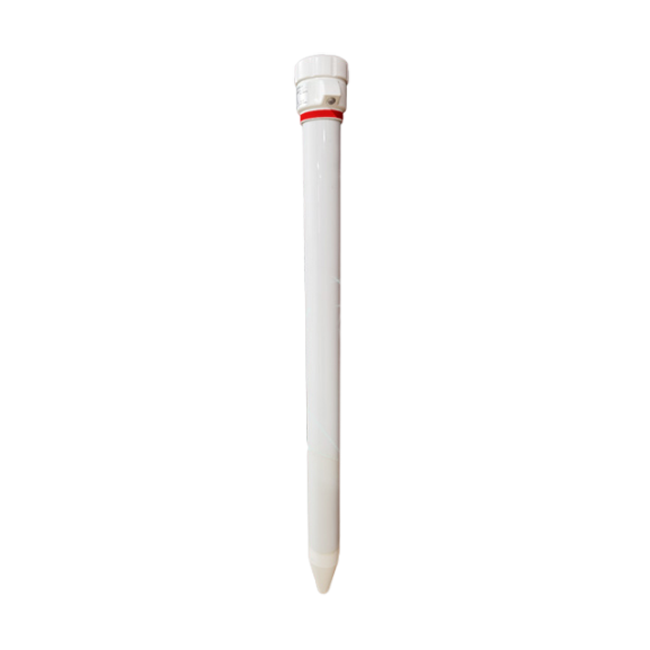
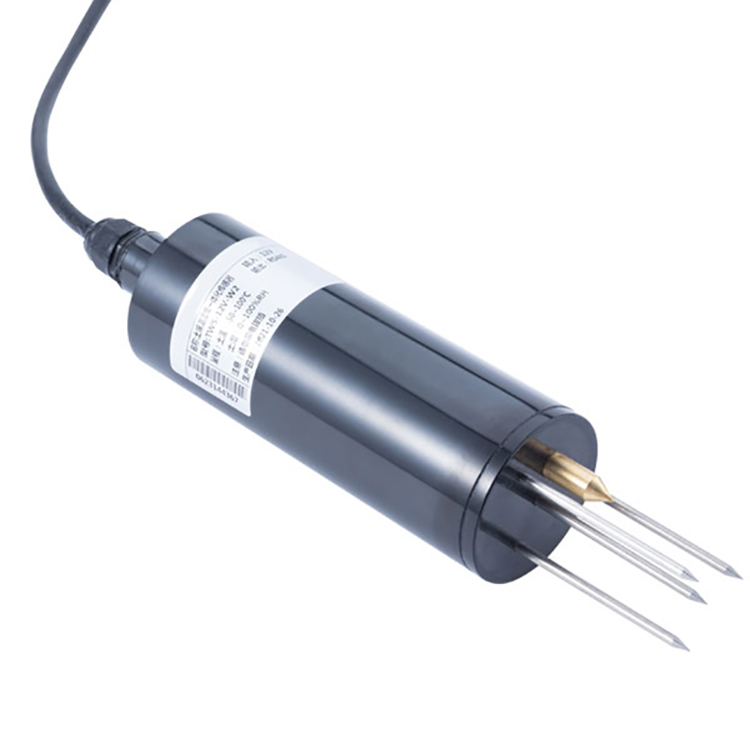
For an installation quotation, send NiuBoL the soil and irrigation layout, required depths, point count, receiver, power availability and cable distances. Include any required reference comparison. Where conductivity is also needed, specify a separate EC-capable configuration: the probe illustrated below is an additional product option, not an EC channel hidden inside the NBL-S-THR.

Choose depth from the active root zone and the observation required. Use separate depths when both upper-root drying and deeper wetting need observation. Do not apply a universal depth independently of crop, soil and irrigation layout.
Only if that location represents the intended measurement. A point very close to the emitter may stay wetter than much of the root zone. Record distance and evaluate the wetting response before using its reading for the zone.
No. Prepare a suitable close-fitting installation without striking the electronics or bending the rods. If stones prevent proper contact, choose or prepare an appropriate nearby position and document the change.
The mixture can differ from surrounding soil in structure and moisture. The aim is close contact representative of the native soil, not simply a high initial reading. Use a suitable installation method and allow disturbed conditions to settle.
There is no single field delay. Water must reach the probe through the actual soil and irrigation geometry. Verify water delivery and logging, then interpret the response using depth, emitter distance and initial moisture.
No. The probe's enclosure rating does not qualify an improvised splice, damaged sheath or unsuitable connector. Specify cable transitions and protection separately and keep accessible connections serviceable.
Provide point identity, location, depth, emitter distance, installation photographs, electrical configuration and the observed irrigation response. Include unresolved comparison results so acceptance does not depend solely on a working display.
Soil moisture detection sensor installation is a soil-contact and placement task as well as an electrical task. Install the NBL-S-THR at a documented point, protect the route and evaluate its response during normal irrigation. That work gives the owner a maintainable observation point and gives NiuBoL meaningful information when installation or replacement support is needed.
Sensors & Weather Stations Catalog
 Agriculture Sensors and Weather Stations Catalog-NiuBoL.pdf
Weather Stations Catalog-NiuBoL.pdf
Agriculture Sensors Catalog-NiuBoL.pdf
Water Quality Sensor Catalog-NiuBoL.pdf
Related recommendations
 Multi-Depth Soil Sensor RS485
 TDR Soil Moisture Sensor
 Pyranometer Solar Radiation Sensors
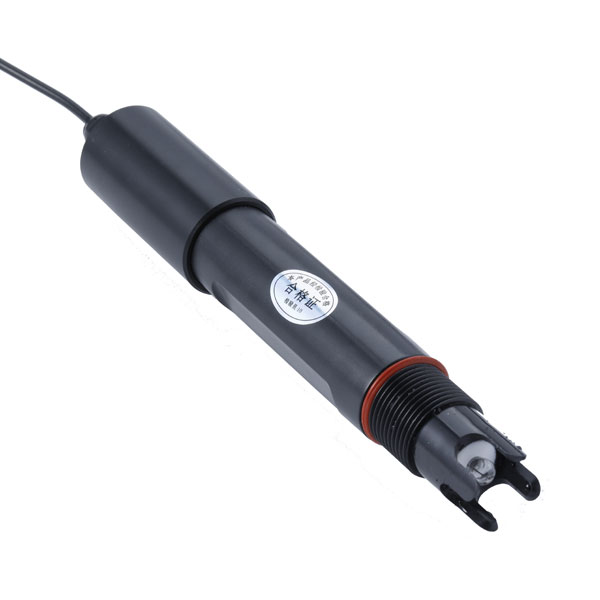 Soil ph sensor
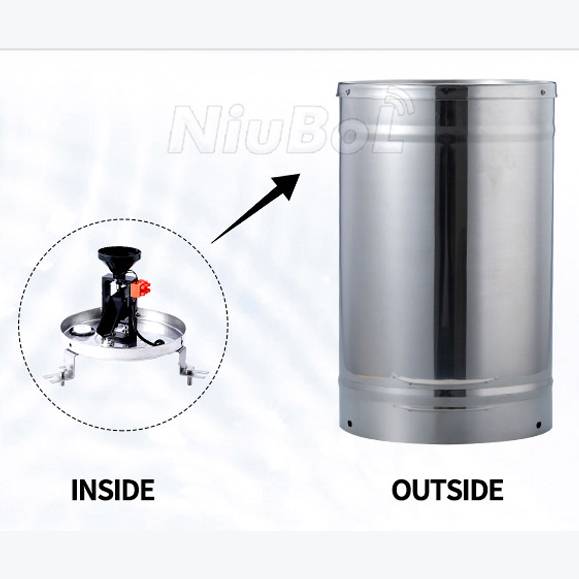 Tipping Bucket Rain Gauge
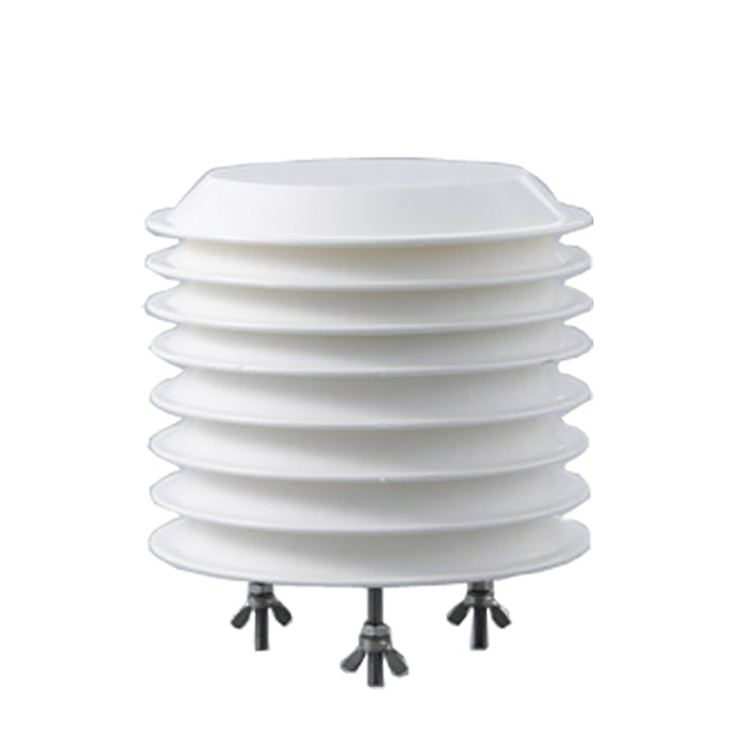 Air Temperature and Humidity Sensor


Screenshot, WhatsApp to identify the QR code
WhatsApp number:+8615367865107
(Click on WhatsApp to copy and add friends)

