





— Products —
 Consumer hotline +8618073152920
 WhatsApp:+8615367865107
Address:Room 102, District D, Houhu Industrial Park, Yuelu District, Changsha City, Hunan Province, China
Agricultural Sensors
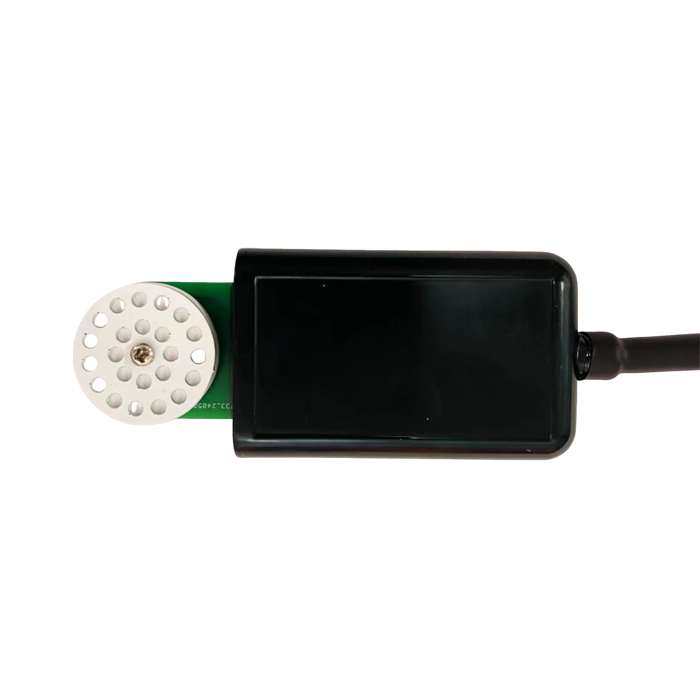
NBL-S-WPS soil water potential sensor is designed for in-situ measurement of soil water potential in irrigation, crop drought stress monitoring, soil hydraulic research and agricultural IoT projects. It does not simply report soil moisture content. It helps the buyer judge whether water in the soil can actually be extracted by plant roots.
Tel/WhatsApp:+8615367865107
Email:Arvin@niubol.com +Nearly 100 partner companies in more than 75 countries. We are committed to providing high-quality, practical products to meet your needs and help you solve problems. Our products comply with international standards and are certified with ISO, CE and RoHS.Product Details
The NiuBoL NBL-S-WPS Soil Water Potential Sensor is designed for in-situ monitoring of soil water potential in irrigation, greenhouse cultivation, orchards, crop drought research and agricultural IoT systems.
Unlike a conventional soil moisture sensor that indicates how much water is present in the soil, soil water potential describes how strongly that water is held by the soil. This provides additional information about how easily plant roots can extract water from the root zone.
The NBL-S-WPS uses a porous sensing material with a known water-retention curve. After the porous section reaches moisture equilibrium with the surrounding soil, the internal sensing element converts its moisture condition into a soil water potential value. Data is transmitted through RS485 Modbus RTU for connection to weather stations, irrigation controllers, PLCs, RTUs and IoT gateways.

| Model | NBL-S-WPS |
| Product Name | Soil Water Potential Sensor |
| Measured Parameter | Soil Water Potential |
| Measurement Range | -1500.0 to -10.0 kPa |
| Accuracy | ±1% |
| Power Supply | DC 5–24 V |
| Current Consumption | Approx. 8 mA @ 12 VDC |
| Communication | RS485 |
| Protocol | Modbus RTU |
| Default Baud Rate | 9600 bps |
| Data Bits | 8 |
| Parity | None |
| Minimum Communication Interval | 1000 ms |
| Operating Temperature | 0 to 60°C |
| Housing / Sealing Material | Black epoxy resin |
Temperature note: Measurements below the freezing point may not be accurate because freezing changes the water condition in the porous sensing material and surrounding soil.
| Comparison | Soil Moisture | Soil Water Potential |
|---|---|---|
| What It Describes | Amount of water present in the soil | Energy state of soil water and how strongly it is held |
| Typical Unit | % | kPa |
| Common Question | How much water is in the soil? | How difficult is it for roots to extract the water? |
| Irrigation Use | Monitor root-zone water-content changes | Support irrigation thresholds based on plant-available water conditions |
| Can They Replace Each Other? | Not necessarily. Many irrigation and research projects benefit from measuring both parameters. | |
Two soils can contain a similar amount of water but hold that water with different strength because of differences in texture, structure and pore distribution. This is why volumetric moisture and water potential answer different questions.
The sensing section contains a porous material with a known water-retention curve. When installed in soil, water moves between the surrounding soil and the porous material until they approach moisture equilibrium.
| 1 | The porous sensing material is placed in close contact with the surrounding soil. |
| 2 | Moisture moves between the soil and porous material until their water conditions approach equilibrium. |
| 3 | The internal sensing element measures the moisture condition of the porous material. |
| 4 | The sensor converts this condition into soil water potential according to the known water-retention curve. |
| 5 | The measured value is transmitted through RS485 Modbus RTU. |
Soil water potential is expressed as a negative pressure value in kPa. Saturated soil approaches 0 kPa. As soil becomes drier, the value becomes increasingly negative.
| Value Direction | General Meaning |
|---|---|
| Closer to 0 kPa | Soil water is held less strongly and the soil is relatively wetter. |
| More Negative | Soil water is held more strongly and the soil is relatively drier. |
A universal irrigation threshold should not be applied to every crop and soil. Appropriate thresholds depend on crop species, root depth, growth stage, soil type and irrigation strategy.
| Wide Measurement Range | -1500.0 to -10.0 kPa for monitoring a wide range of agricultural soil-water conditions. |
| RS485 Modbus | Suitable for weather stations, PLCs, RTUs, data loggers and agricultural IoT gateways. |
| Low Power Consumption | Approx. 8 mA at 12 VDC, suitable for long-term field monitoring systems. |
| Field Installation | Designed for permanent or long-term installation at a selected root-zone depth. |
| System Integration | Can be used as a standalone RS485 sensor or integrated into a complete agricultural monitoring station. |
The porous sensing section must maintain close contact with the surrounding soil. Poor contact or air gaps can slow equilibrium and reduce the representativeness of the measurement.
| Step | Action | Purpose |
|---|---|---|
| 1 | Select Location and Depth | Choose a representative position within the crop root zone. |
| 2 | Collect Local Soil | Use soil from the actual installation location. |
| 3 | Prepare Soil Slurry | Mix the collected soil with water to create a slurry. |
| 4 | Coat Porous Sensor | Completely coat the porous sensing section with the prepared soil slurry. |
| 5 | Install Sensor | Place the coated sensing section at the required depth. |
| 6 | Backfill and Compact | Remove large air gaps and maintain good contact with the surrounding soil. |
For multi-depth root-zone monitoring, several NBL-S-WPS sensors can be installed at different depths, with each RS485 device assigned a unique address.
| Wire Color | Function |
|---|---|
| Red | Power + |
| Black | Power - / GND |
| Yellow | RS485 A (+) |
| Blue | RS485 B (-) |
| Default Baud Rate | 9600 bps |
| Data Bits | 8 |
| Parity | None |
| Minimum Polling Interval | 1000 ms |
| Real-Time Read Function | 0x03 |
| Valid Device Address | 1–254 for normal data reading; 0 reserved as broadcast |
| Data Type | Signed 16-bit integer |
| Scaling | Raw value ÷ 10 = kPa |
For a sensor with device address 0x01:
Request: 01 03 00 00 00 01 25 CA
Example Response: 01 03 02 FF 17 E2 F8
| Raw HEX Value | FF17 |
| Signed Decimal Value | -233 |
| Engineering Value | -233 ÷ 10 = -23.3 kPa |
| System Component | Function |
|---|---|
| NBL-S-WPS Soil Water Potential Sensor | Measures root-zone soil water potential in kPa. |
| Soil Moisture Sensor | Optional complementary measurement of volumetric water content. |
| Data Logger / PLC / RTU | Reads RS485 Modbus measurements and applies project logic. |
| 4G / Ethernet / LoRaWAN Gateway | Provides remote communication when required. |
| Cloud / Private Server | Stores historical measurements and supports irrigation analysis. |
| Precision Irrigation | Drip Irrigation | Greenhouses |
| Orchards | Vegetable Production | Crop Drought Research |
| Soil Hydraulic Research | Agricultural Weather Stations | Agricultural IoT |
| Requirement | Better Choice |
|---|---|
| Need soil moisture percentage only | Use a dedicated soil moisture or soil temperature & moisture sensor. |
| Need EC or salinity | Use a soil EC / salinity sensor or suitable integrated soil sensor. |
| Need NPK chemical analysis | Use appropriate laboratory soil analysis for quantitative nutrient testing. |
| Frozen soil monitoring | The NBL-S-WPS measurement specification should not be relied on below freezing without project-specific validation. |
A1. It measures soil water potential in kPa, which describes the energy state of soil water and how strongly water is held by the soil.
A2. No. Soil moisture indicates how much water is present, while soil water potential indicates how strongly that water is held. The two measurements can be used together.
A3. The NBL-S-WPS measurement range is -1500.0 to -10.0 kPa.
A4. Saturated soil approaches 0 kPa. As the soil dries and water is held more strongly, water potential becomes more negative.
A5. It can provide the measurement used by an irrigation controller, but the appropriate irrigation threshold should be defined according to crop type, growth stage, root depth, soil and agronomic strategy.
A6. Soil slurry improves contact between the porous sensing material and the surrounding soil, helping the sensor reach moisture equilibrium with the measured soil.
A7. Yes. Each sensor should use a unique address and the RS485 wiring, power supply and polling interval should be designed correctly.
A8. The sensor provides RS485 Modbus RTU. A compatible data logger or IoT gateway can collect the measurement and transmit it to a private server through supported communication protocols.
 NBL-S-WPS-Soil-Water-Potential-Sensor-Data-Sheet.pdf
The NBL-S-WPS Soil Water Potential Sensor provides an RS485 Modbus measurement for projects that need to monitor how strongly water is held in the root zone rather than relying only on soil moisture percentage.
For quotation and system selection, specify crop type, soil type, installation depth, number of measurement points, cable length, power supply, host device and whether the sensor will connect to a NiuBoL weather station or a third-party monitoring system.
Prev:7-in-1 Soil Sensor for Android USB-Type-C
Next:NBL-S-TM-MD Multi-Layer Soil Moisture Temperature Salinity Sensor | RS485 Modbus
Sensors & Weather Stations Catalog
 Agriculture Sensors and Weather Stations Catalog-NiuBoL.pdf
Weather Stations Catalog-NiuBoL.pdf
Agriculture Sensors Catalog-NiuBoL.pdf
Water Quality Sensor Catalog-NiuBoL.pdf
Related recommendations
 TDR Soil Moisture & Temperature Sensor for irrigation| RS485 |4-20mA| NBL-S-THR
 Soil pH sensor RS485 soil Testing instrument soil ph meter for agriculture |NBL-S-PH
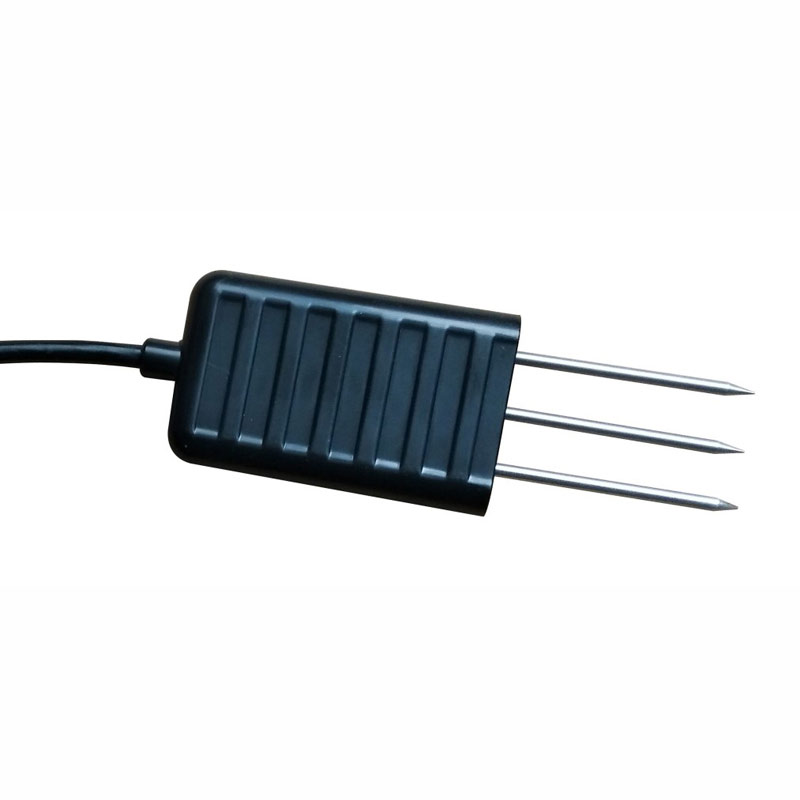 Soil NPK Sensor RS485 Modbus | NBL-S-NPK | NiuBoL
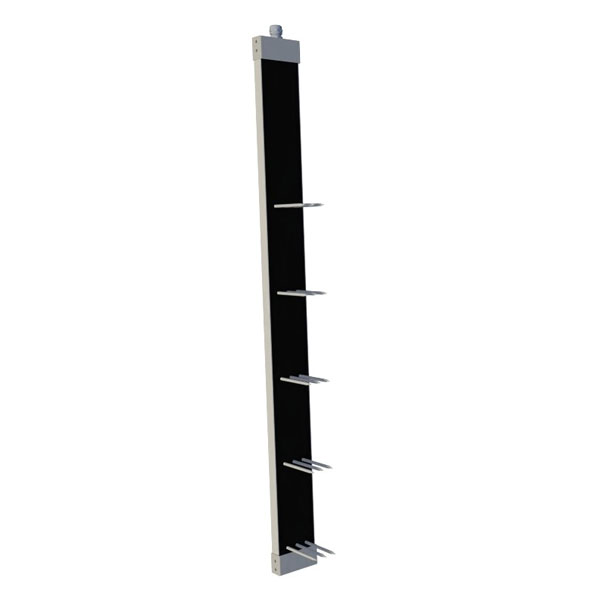 NBL-S-TM-MD Multi-Layer Soil Moisture Temperature Salinity Sensor | RS485 Modbus
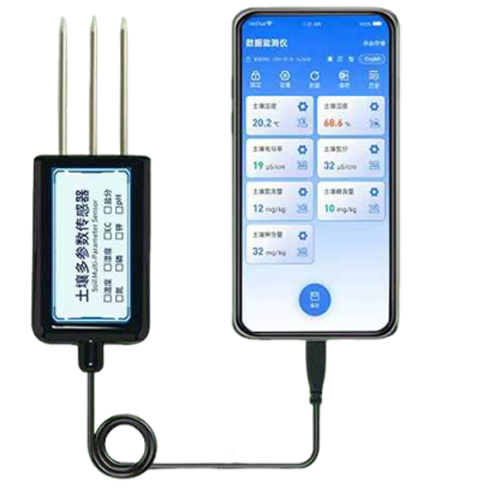 7-in-1 Soil Sensor for Android USB-Type-C
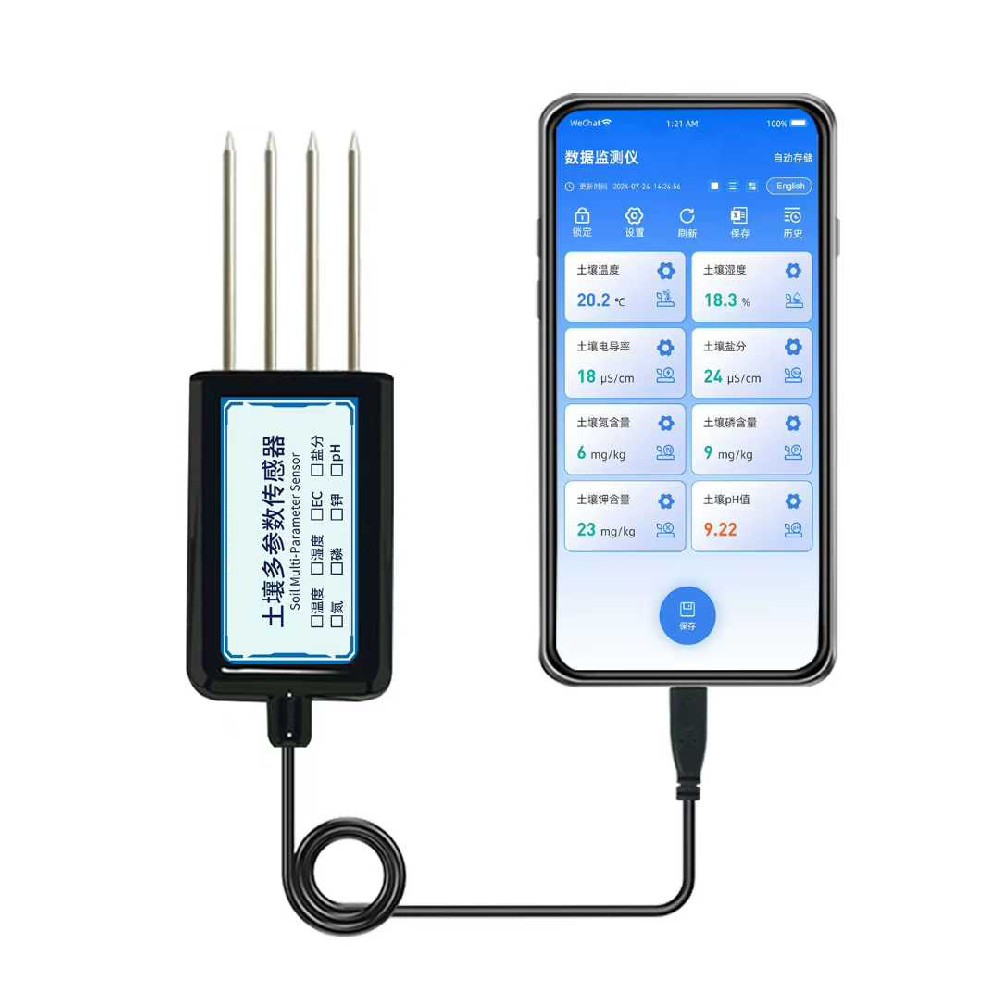 8-in-1 Portable Soil Sensor for Android Type-C/USB Soil Multi-Parameter Tester & Analyzer

Screenshot, WhatsApp to identify the QR code
WhatsApp number:+8615367865107
(Click on WhatsApp to copy and add friends)

