

— Products —
 Consumer hotline +8618073152920
 WhatsApp:+8615367865107
Address:Room 102, District D, Houhu Industrial Park, Yuelu District, Changsha City, Hunan Province, China
Agricultural Sensors
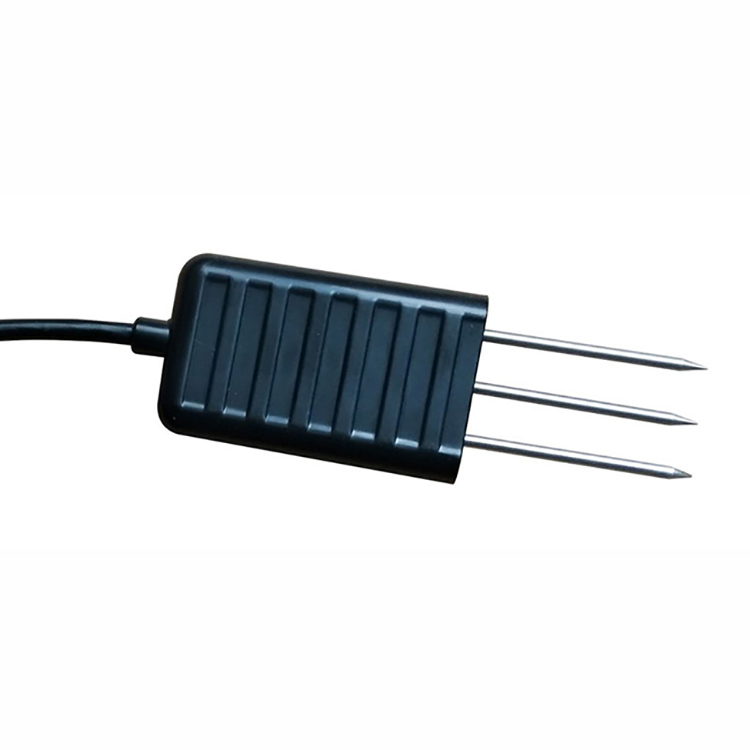
NBL-S-TM soil moisture temperature sensor It can monitor soil temperature and humidity at different levels in real time, realize dynamic observation of moisture content in soil at each soil layer, visualize soil salt accumulation, and can monitor soil temperature and humidity at different soil layers, quickly and accurately. Soil parameter quick test instrument is widely used in the field of soil testing in smart agriculture, orchard nursery, demonstration park, smart city, e···
Tel/WhatsApp:+8615367865107
Email:Arvin@niubol.com +Nearly 100 partner companies in more than 75 countries. We are committed to providing high-quality, practical products to meet your needs and help you solve problems. Our products comply with international standards and are certified with ISO, CE and RoHS.Product Details
The NiuBoL NBL-S-TM Soil Temperature & Moisture Sensor is an integrated soil sensor designed to simultaneously measure soil temperature and volumetric soil moisture. It uses FDR technology for soil moisture measurement and provides RS485 Modbus RTU output for connection to data loggers, PLCs, irrigation controllers and agricultural IoT gateways.
The fully sealed IP68 probe can be inserted directly into soil or installed underground for continuous monitoring. It is suitable for agricultural irrigation, greenhouses, orchards, flowers and vegetables, grassland, plant cultivation, soil research and other applications requiring reliable root-zone temperature and moisture data.
| Model | NBL-S-TM |
| Product Name | Soil Temperature & Moisture Sensor |
| Measured Parameters | Soil Temperature + Soil Moisture |
| Soil Temperature Range | -40 to 80°C |
| Temperature Resolution | 0.1°C |
| Temperature Accuracy | ±0.5°C |
| Soil Moisture Range | 0–100% volumetric soil moisture |
| Moisture Resolution | 0.1% |
| Moisture Accuracy | ±5% |
| Moisture Measurement Principle | FDR (Frequency Domain Reflectometry) |
| Power Supply | DC 5–24 V; some configurations DC 12–24 V |
| Signal Output | RS485 |
| Communication Protocol | Modbus RTU |
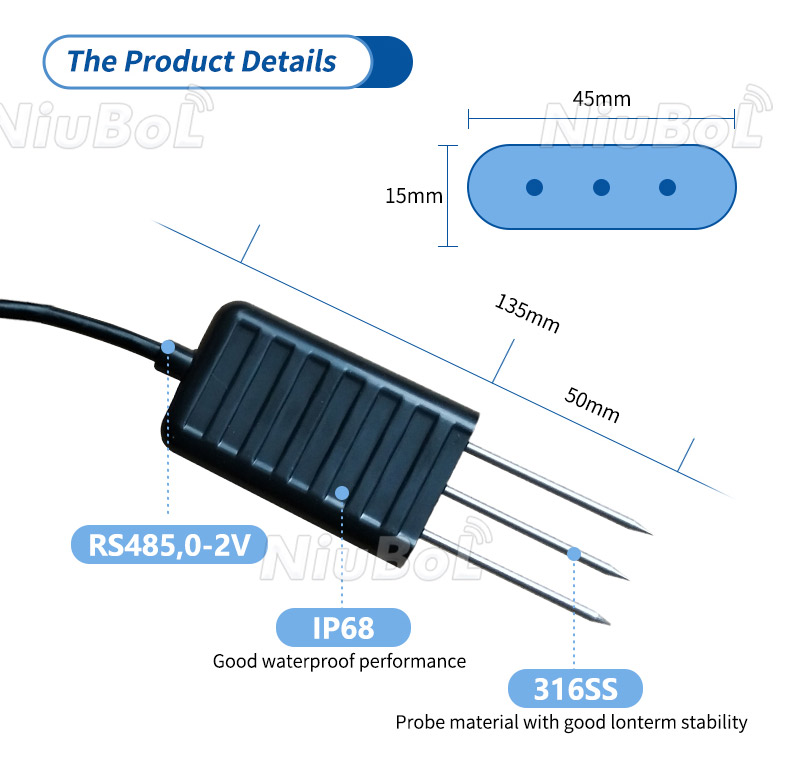
| Protection Rating | IP68 |
| Operating Environment | -40 to 85°C |
| Probe Material | Anti-corrosion special electrode |
| Sealing Material | Black flame-retardant epoxy resin |
| Installation | Fully buried or probes inserted into the measured soil |
| Dimensions | 45 × 15 × 135 mm |
| Electrode Length | 50 mm |
| Standard Cable Length | 5 m, customizable |
| Connection | Pre-installed cold-pressed terminals |
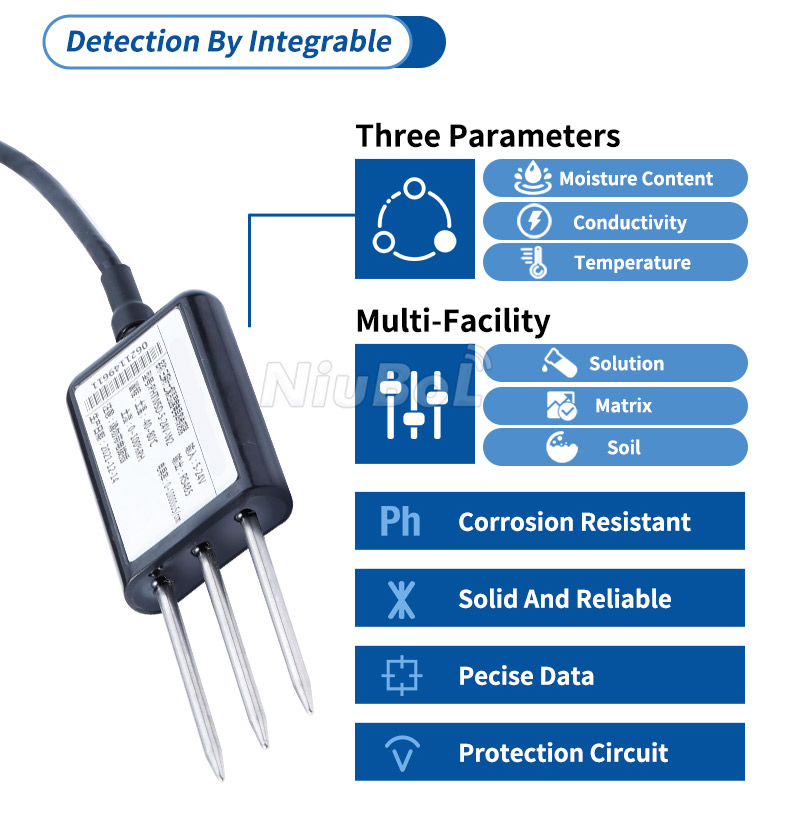
| 2-in-1 Measurement | Measures soil temperature and volumetric soil moisture from one probe. |
| FDR Technology | Determines changes in soil moisture by measuring the dielectric response of the surrounding soil. |
| RS485 Modbus | Suitable for integration with PLCs, RTUs, data loggers and agricultural monitoring systems. |
| Fully Sealed | Epoxy-sealed construction provides protection for long-term soil monitoring. |
| Corrosion-Resistant Electrodes | Specially treated electrodes provide resistance to impact and common soil environments. |
| Long-Term Monitoring | Suitable for buried installation when continuous soil temperature and moisture measurements are required. |
The NBL-S-TM Soil Temperature & Moisture Sensor uses FDR (Frequency Domain Reflectometry) to measure soil moisture. The sensing electrodes create an electromagnetic field in the surrounding soil and detect changes in its dielectric properties.
Water has a substantially different dielectric constant from dry soil and air. As soil water content changes, the electrical response around the sensing electrodes also changes. The sensor electronics process this response and convert it into a volumetric soil moisture percentage.
Soil texture, density, salinity and probe-to-soil contact can influence dielectric-based measurements. For long-term comparison, the sensor should be installed consistently with good contact between the electrodes and surrounding soil.
| Measurement Method | Installation | Typical Use |
|---|---|---|
| Quick Measurement | Insert the three electrodes vertically into representative soil and maintain close contact. | Field surveys, spot measurements and comparison between locations. |
| Buried Measurement | Insert the sensor horizontally into an undisturbed soil wall at the required depth and compact the soil carefully. | Continuous irrigation and root-zone monitoring. |
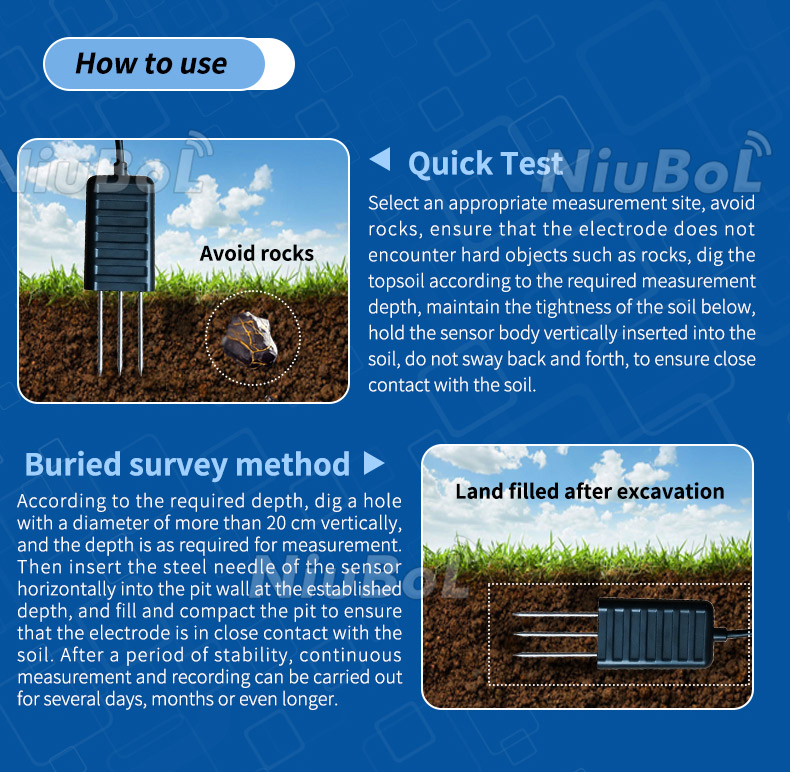
| Measurement Location | Select representative soil and avoid stones, large roots and unusual wet or dry locations. |
| Probe Contact | The sensing electrodes should remain in close contact with the surrounding soil. |
| Avoid Shaking | Do not shake the probe back and forth after insertion because this may create air gaps around the electrodes. |
| Hard Soil | Prepare a suitable pilot hole before insertion. Do not hammer the sensing electrodes into hard ground. |
| Outdoor Sunlight | Avoid exposing the black sensor housing to strong direct sunlight because solar heating can affect the temperature reading. |
| Interface | RS485 |
| Protocol | Modbus RTU |
| Default Baud Rate | 9600 bps |
| Data Bits | 8 |
| Parity | None |
| Device Address | 0–255 configurable |
| Communication Interval | At least 1000 ms |
| Wire Color | Function |
|---|---|
| Red | Power + |
| Black | Power - |
| Yellow | RS485 A+ |
| Blue | RS485 B- |
Wiring note: Confirm the wire identification supplied with the sensor before installation, particularly when customized cables or connectors are used.
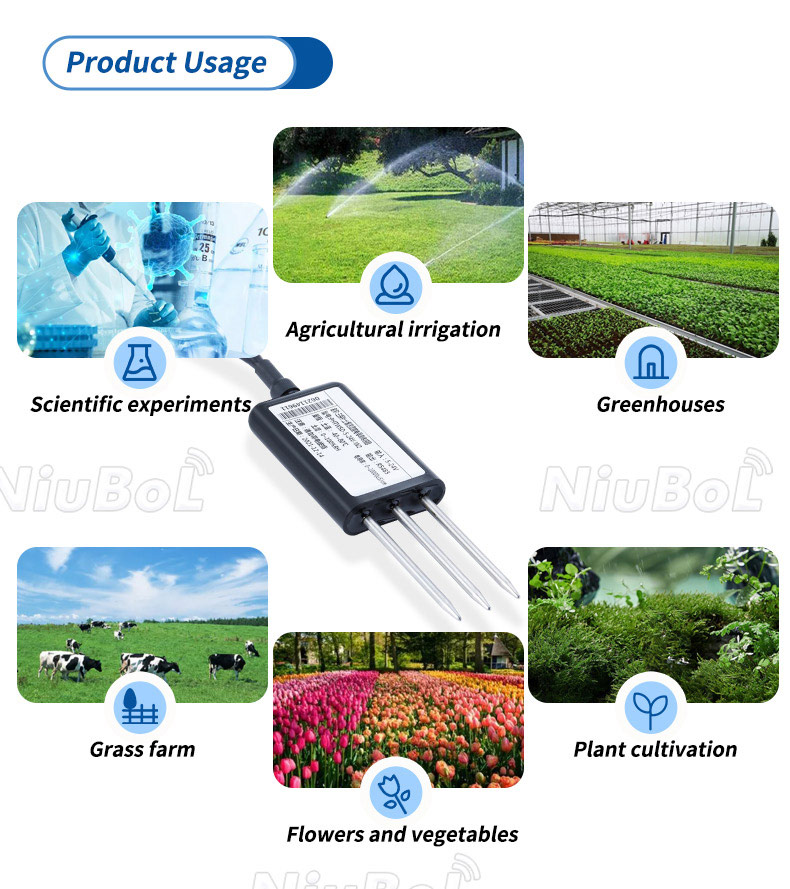
| Agricultural Irrigation | Greenhouses | Orchards |
| Flowers & Vegetables | Grassland & Pasture | Plant Cultivation |
| Soil Moisture Monitoring | Scientific Experiments | Agricultural IoT |
The RS485 Modbus output allows the NBL-S-TM Soil Temperature & Moisture Sensor to operate as part of a larger irrigation or agricultural IoT monitoring system.
| System Component | Function |
|---|---|
| NBL-S-TM Soil Temperature & Moisture Sensor | Measures root-zone soil temperature and moisture. |
| RS485 Bus | Transfers Modbus RTU data to the controller or data logger. |
| Data Logger / PLC | Reads, records and processes sensor measurements. |
| 4G / LoRaWAN / Ethernet Gateway | Provides optional remote communication according to the monitoring system. |
| Cloud / Private Server | Stores and displays long-term soil monitoring data. |
Irrigation thresholds should be selected according to crop type, soil texture, root depth and local agronomic requirements. One universal soil moisture threshold should not be applied to every crop or soil condition.
| Factor | Possible Influence |
|---|---|
| Probe-to-Soil Contact | Air gaps around the electrodes can reduce measurement consistency. |
| Soil Texture | Sand, loam and clay have different dielectric and water-retention characteristics. |
| Soil Density | Differences in soil compaction can affect the surrounding measurement environment. |
| Soil Salinity | High ionic concentrations can influence dielectric-based soil moisture measurements. |
| Measurement Depth | Temperature and moisture conditions can differ substantially between soil layers. |
| Direct Sunlight | Heating of an exposed black sensor housing can affect temperature measurements. |
| Feature | NBL-S-TM Soil Temperature & Moisture Sensor | NBL-S-THR TDR Soil Moisture & Temperature Sensor |
|---|---|---|
| Measured Parameters | Temperature + Moisture | Temperature + Moisture |
| Moisture Principle | FDR | TDR |
| Moisture Accuracy | ±5% | ±3% |
| Output | RS485 Modbus | RS485 / 4–20 mA / 0–5 V options |
| Typical Application | General agricultural and IoT soil monitoring | Applications requiring TDR measurement or additional output options |
A1. It simultaneously measures soil temperature and volumetric soil moisture at one measurement location.
A2. The NBL-S-TM Soil Temperature & Moisture Sensor uses FDR (Frequency Domain Reflectometry) for soil moisture measurement.
A3. No. The sensor measures volumetric soil moisture as a percentage. %RH is a relative-humidity unit used for air humidity and is not the correct unit for this soil moisture measurement.
A4. No. NBL-S-TM measures only soil temperature and moisture. If EC measurement is required, the NBL-S-TMC Soil Temperature, Moisture & EC Sensor is a more suitable option.
A5. No. One sensor measures conditions around one installation point. Multiple sensors or a multi-depth soil moisture sensor should be used when several depths need to be monitored simultaneously.
A6. Yes. The IP68 sensor can be installed in soil for continuous monitoring when the electrodes maintain good contact with the surrounding soil.
A7. Yes. Multiple sensors can be used on a compatible RS485 Modbus network when each sensor is configured with an appropriate device address and the power supply and communication wiring are correctly designed.
A8. Yes. The RS485 output can connect to a compatible data logger or IoT gateway for remote transmission through 4G, Ethernet, Wi-Fi, LoRaWAN or other supported communication systems.
 NBL-S-TM-Soil-temperature-and-moisture-sensor-Instruction-Manual-4.0.pdf
The NBL-S-TM Soil Temperature & Moisture Sensor provides a practical FDR and RS485 Modbus solution for agricultural irrigation, greenhouse monitoring and agricultural IoT projects. It is designed for applications requiring continuous measurement of root-zone soil temperature and moisture without adding EC, salinity, pH or nutrient channels.
For projects requiring additional measurements such as EC, salinity, pH, NPK or multiple soil depths, other NiuBoL soil sensor configurations can be selected according to the required monitoring parameters.
Prev:Soil NPK Sensor RS485 Modbus | NBL-S-NPK | NiuBoL
Next:TDR Soil Moisture & Temperature Sensor for irrigation| RS485 |4-20mA| NBL-S-THR
Sensors & Weather Stations Catalog
 Agriculture Sensors and Weather Stations Catalog-NiuBoL.pdf
Weather Stations Catalog-NiuBoL.pdf
Agriculture Sensors Catalog-NiuBoL.pdf
Water Quality Sensor Catalog-NiuBoL.pdf
Related recommendations
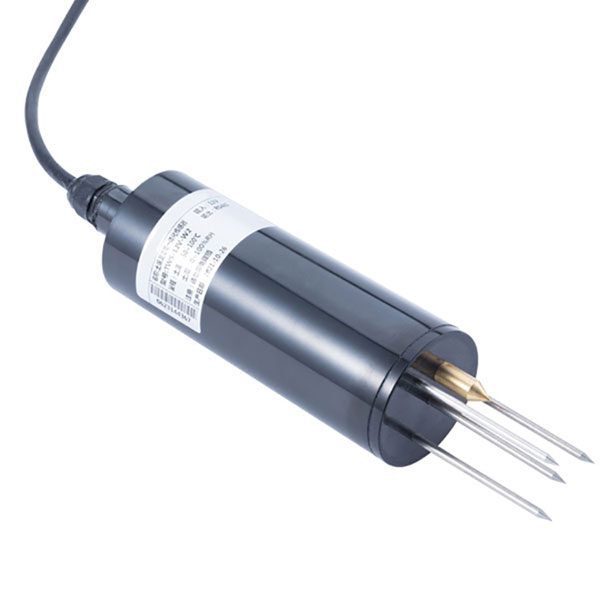 TDR Soil Moisture & Temperature Sensor for irrigation| RS485 |4-20mA| NBL-S-THR
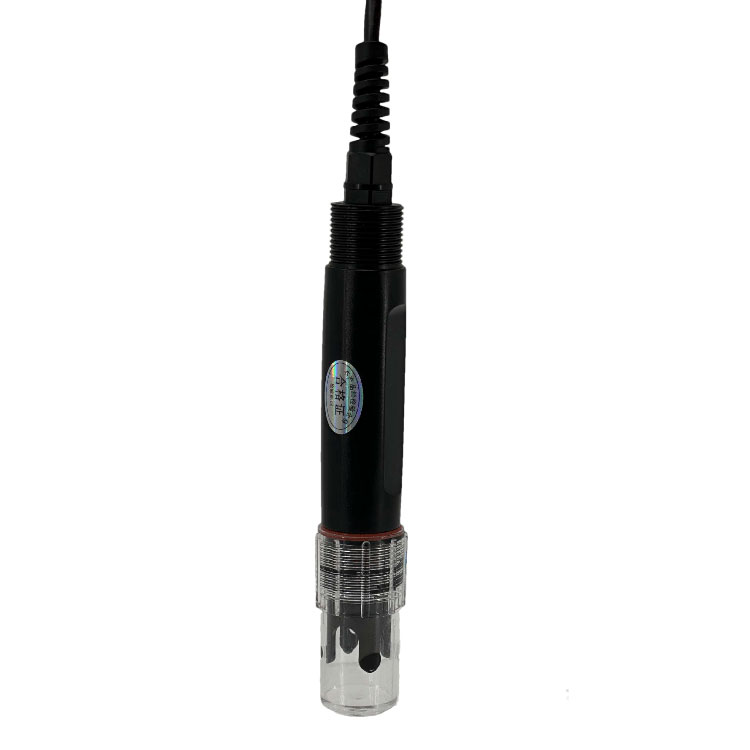 Soil pH sensor RS485 soil Testing instrument soil ph meter for agriculture |NBL-S-PH
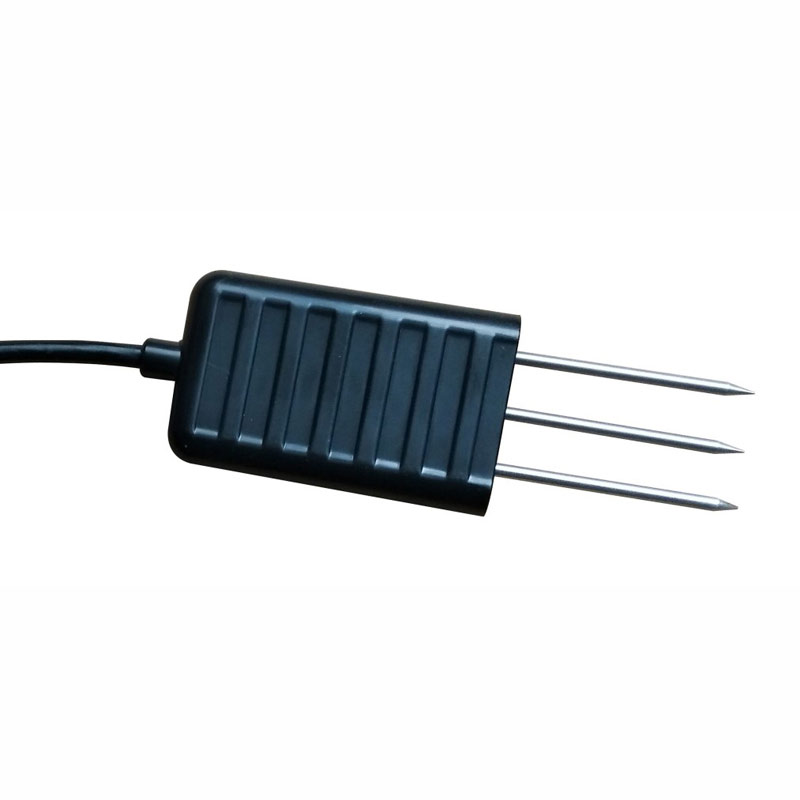 Soil NPK Sensor RS485 Modbus | NBL-S-NPK | NiuBoL
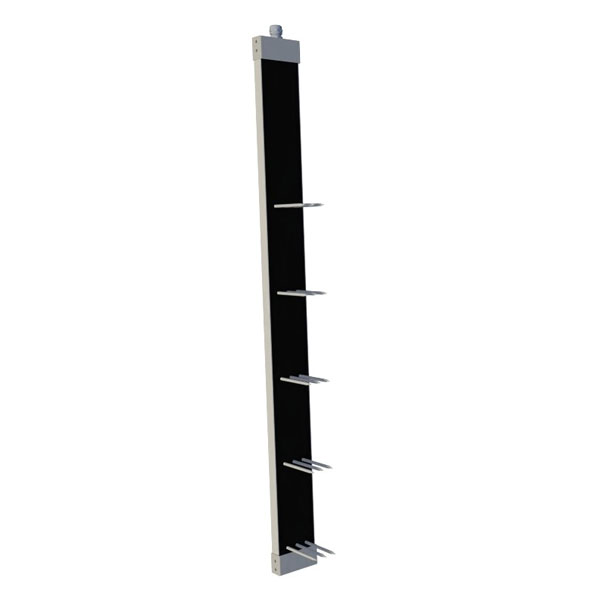 NBL-S-TM-MD Multi-Layer Soil Moisture Temperature Salinity Sensor | RS485 Modbus
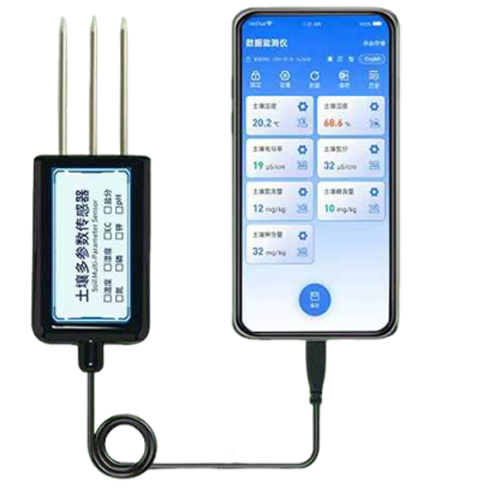 7-in-1 Soil Sensor for Android USB-Type-C
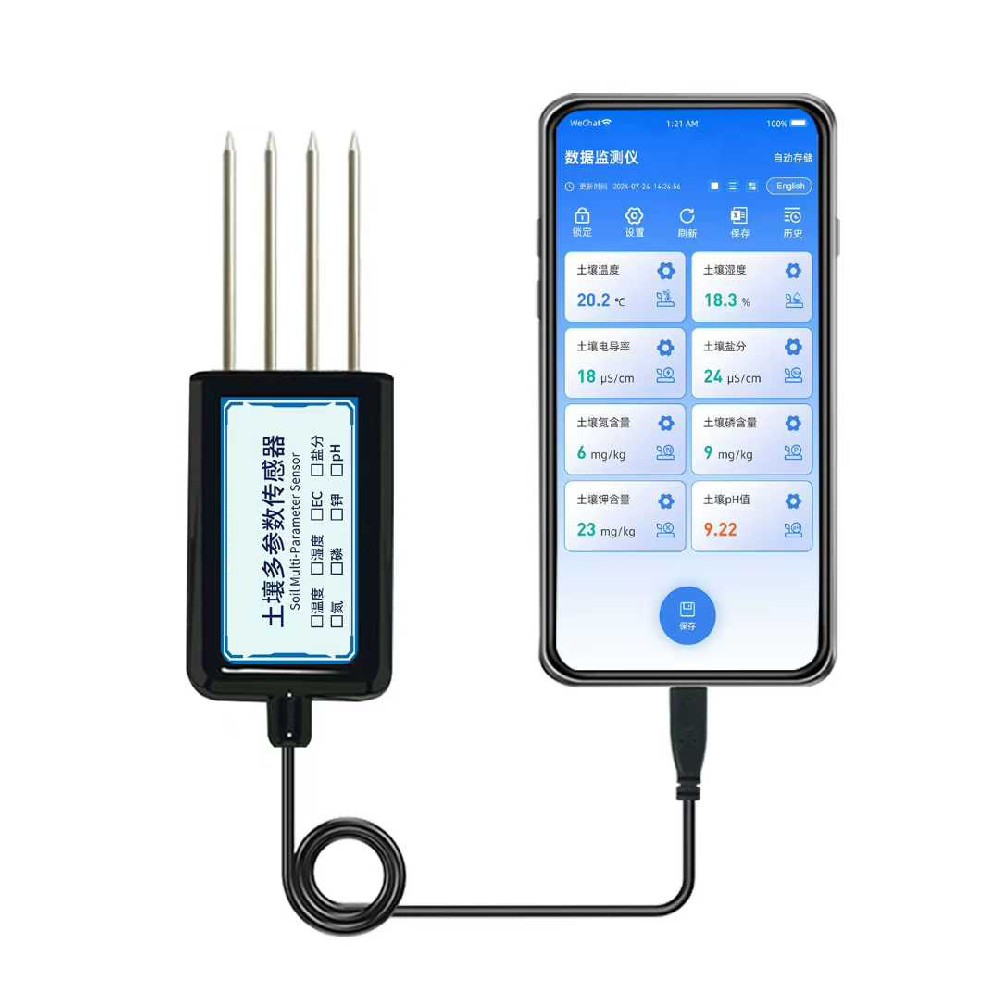 8-in-1 Portable Soil Sensor for Android Type-C/USB Soil Multi-Parameter Tester & Analyzer

Screenshot, WhatsApp to identify the QR code
WhatsApp number:+8615367865107
(Click on WhatsApp to copy and add friends)