





— Products —
 Consumer hotline +8618073152920
 WhatsApp:+8615367865107
Address:Room 102, District D, Houhu Industrial Park, Yuelu District, Changsha City, Hunan Province, China
Agricultural Sensors
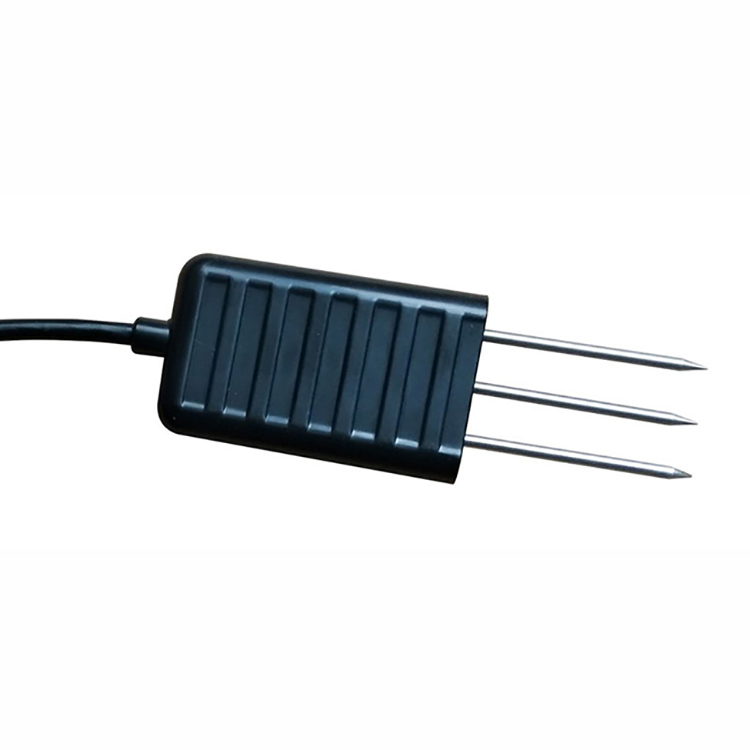
NBL-S-TMC The soil moisture temperature conductivity sensor is suitable for soil moisture monitoring, scientific experiments, agricultural irrigation, greenhouses, flowers and vegetables, grassland and pastures, soil rapid testing, plant cultivation and other occasions.
Tel/WhatsApp:+8615367865107
Email:Arvin@niubol.com +Nearly 100 partner companies in more than 75 countries. We are committed to providing high-quality, practical products to meet your needs and help you solve problems. Our products comply with international standards and are certified with ISO, CE and RoHS.Product Details
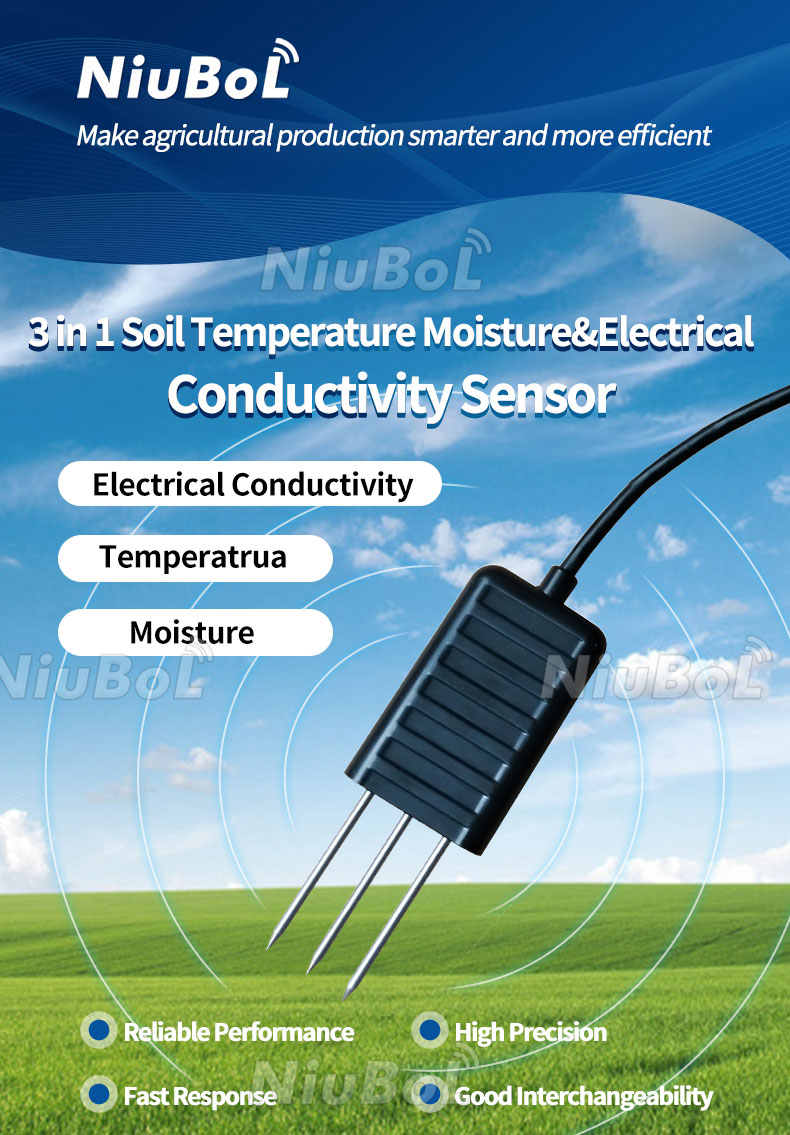
The NiuBoL NBL-S-TMC is a 3-in-1 soil sensor designed to measure soil temperature, soil moisture and electrical conductivity (EC) from one probe. It is suitable for irrigation, fertigation, greenhouse cultivation, soil salinity monitoring, precision agriculture, research and agricultural IoT systems.
The soil moisture channel uses FDR (Frequency Domain Reflectometry) technology, while the electrical conductivity channel uses an AC bridge measurement method. The sensor integrates all three parameters into one IP68 probe and transmits measurement data through RS485 Modbus RTU.
The three measurements provide complementary information about root-zone conditions. Soil moisture indicates water availability, soil temperature provides thermal context, and EC reflects the overall conductivity produced by soluble ions and salts in the soil solution.
Soil EC does not identify individual nutrients. An EC measurement cannot independently determine nitrogen, phosphorus or potassium concentrations because many different dissolved ions contribute to electrical conductivity.
| Model | NBL-S-TMC |
| Measured Parameters | Soil Temperature + Soil Moisture + Soil EC |
| Soil Temperature Range | -40 to 80°C |
| Temperature Resolution | 0.1°C |
| Temperature Accuracy | ±0.5°C |
| Soil Moisture Range | 0–100% |
| Moisture Resolution | 0.1% |
| Moisture Accuracy | ±5% |
| Soil EC Range | 0–10000 μS/cm |
| EC Resolution | 1 μS/cm |
| EC Accuracy | ±5% within 0–10000 μS/cm |
| EC Temperature Compensation | Built-in, 0–50°C compensation range |
| Moisture Measurement Principle | FDR (Frequency Domain Reflectometry) |
| EC Measurement Principle | AC Bridge Method |
| Power Supply | DC 5–24 V or DC 12–24 V depending on configuration |
| Output | RS485 |
| Protocol | Modbus RTU |
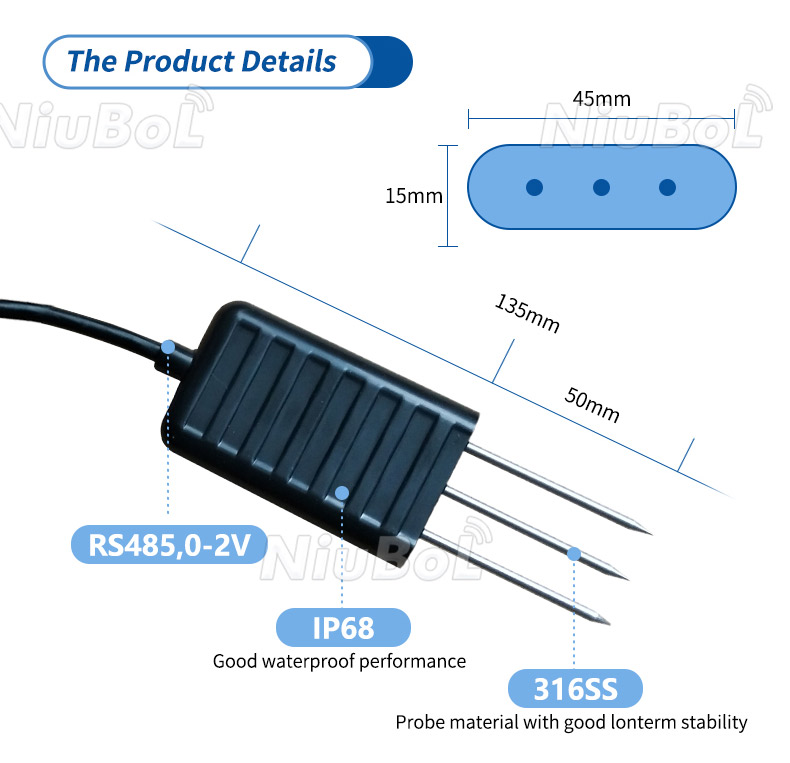
| Protection | IP68 |
| Operating Environment | -40 to 85°C |
| Probe Material | Special anti-corrosion electrode |
| Sealing Material | Black flame-retardant epoxy resin |
| Dimensions | 45 × 15 × 135 mm |
| Electrode Length | 50 mm |
| Standard Cable Length | 5 m |
Note: Product configuration, power supply and cable length can be selected according to project requirements.
The NBL-S-TMC combines three root-zone measurements that are particularly useful for irrigation, fertigation and salinity monitoring.
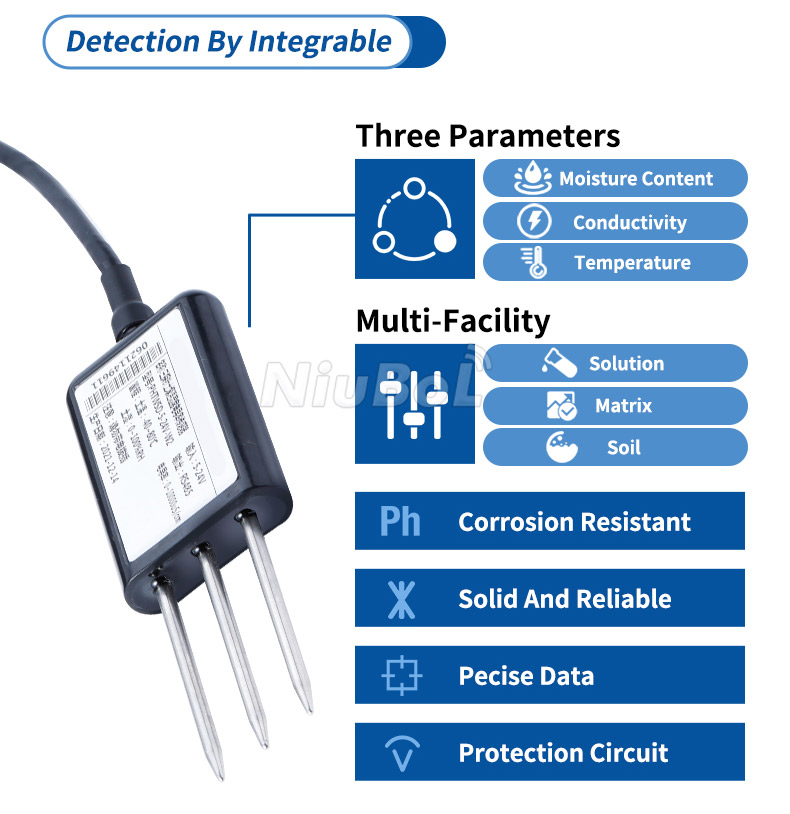
Soil temperature influences seed germination, root activity, microbial activity and nutrient processes in the root zone. Temperature measurement also provides useful context when interpreting moisture and EC data.
Soil moisture indicates the water condition around the crop root zone. The NBL-S-TMC uses FDR technology to determine soil moisture from changes in the dielectric properties of the surrounding soil.
Soil EC measures the electrical conductivity produced by dissolved ions in the soil solution. It is influenced by soluble salts, fertilizer concentration, irrigation water, soil moisture, temperature and soil characteristics.
Electrical conductivity indicates how easily electrical current passes through the soil solution. Dissolved ions such as salts and fertilizer ions increase the conductivity of the solution.
Soil EC monitoring can help identify:
Changes in soluble salt concentration
Fertilizer accumulation trends
Root-zone salinity conditions
Changes before and after irrigation
Differences between cultivation zones
Fertigation-related conductivity trends
EC is not a direct nutrient analysis. The same EC value can result from different combinations of dissolved ions. Individual nutrient concentrations require appropriate nutrient-specific or laboratory analysis.
| Measurement | What It Represents |
|---|---|
| Soil EC | Overall electrical conductivity of dissolved ions in the soil solution |
| Nitrogen | Individual nutrient measurement or estimate |
| Phosphorus | Individual nutrient measurement or estimate |
| Potassium | Individual nutrient measurement or estimate |
The NBL-S-TMC provides soil EC as an independent measurement channel. It does not output nitrogen, phosphorus or potassium values.
The soil moisture channel uses FDR (Frequency Domain Reflectometry) technology.
The probe generates an electromagnetic field around the sensing electrodes and measures the dielectric response of the surrounding soil. Water has a significantly higher dielectric constant than air and dry soil material, so changes in soil water content produce measurable changes in the dielectric response.
The sensor electronics process this response and convert it into a volumetric soil moisture percentage.
The EC channel uses an AC bridge measurement method. The electrodes measure the electrical conductivity generated by soluble ions in the soil or other suitable measured medium.
Because conductivity changes with temperature, the NBL-S-TMC includes built-in EC temperature compensation over a 0–50°C compensation range.
Soil conductivity depends on dissolved ions and the water pathways that allow electrical current to move between the electrodes. Very dry soil can therefore produce EC values that are less representative of the soluble salt condition of the root zone.
When volumetric soil moisture is above approximately 20%, dissolved ions can form a more continuous conductive pathway in the soil, making EC readings more representative of soluble salt conditions.
The 20% value should be treated as a measurement reference rather than a universal irrigation threshold. Soil texture, crop type, substrate, irrigation method and monitoring objectives should also be considered when interpreting EC data.
For trend monitoring, measurements collected under reasonably consistent soil-moisture conditions provide better comparability over time.
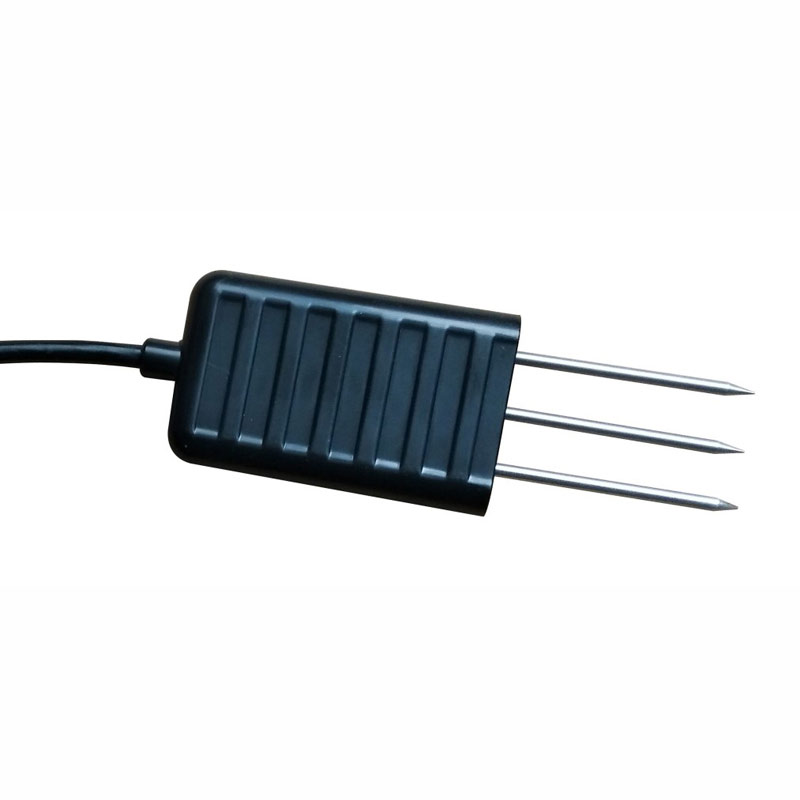
The sensor uses three corrosion-resistant electrodes and a sealed epoxy housing designed for direct contact with soil, substrates and suitable conductive media.
For soil measurement, all three electrodes should be inserted fully into the measured medium and kept in close contact with the surrounding soil.
The NBL-S-TMC supports RS485 Modbus RTU and can connect to compatible PLCs, RTUs, agricultural data loggers and IoT gateways.
| Interface | RS485 |
| Protocol | Modbus RTU |
| Default Baud Rate | 9600 bps |
| Data Bits | 8 |
| Parity | None |
| Device Address | 0–255 configurable |
| Communication Interval | At least 1000 ms |
The RS485 sensor returns three measurement values for soil temperature, moisture and electrical conductivity.
| Data Order | Parameter | Resolution |
|---|---|---|
| 1 | Soil Temperature | 0.1°C |
| 2 | Soil Moisture | 0.1% |
| 3 | Electrical Conductivity | 1 μS/cm |
Example measurement values:
| Parameter | Example Value |
|---|---|
| Soil Temperature | 27.2°C |
| Soil Moisture | 17.6% |
| Soil EC | 1568 μS/cm |
| Wire Color | Function |
|---|---|
| Red | Power + |
| Black | Power - |
| Yellow | RS485 A+ / TX |
| Blue | RS485 B- / RX |
Installation note: Wiring should follow the identification supplied with the sensor, especially where customized cables or connectors are used.
Select a representative measurement location and avoid stones, large roots and other hard objects.
Insert all three electrodes fully into the soil and maintain close contact between the electrodes and the surrounding soil. Avoid rocking the sensor from side to side because this can create air gaps around the probes.
For representative field measurements, several readings can be taken within a small area and compared or averaged where appropriate.
For continuous monitoring, dig to the required measurement depth and insert the sensor horizontally into an undisturbed soil wall.
Backfill and compact the soil carefully so the three electrodes remain in close contact with the surrounding soil.
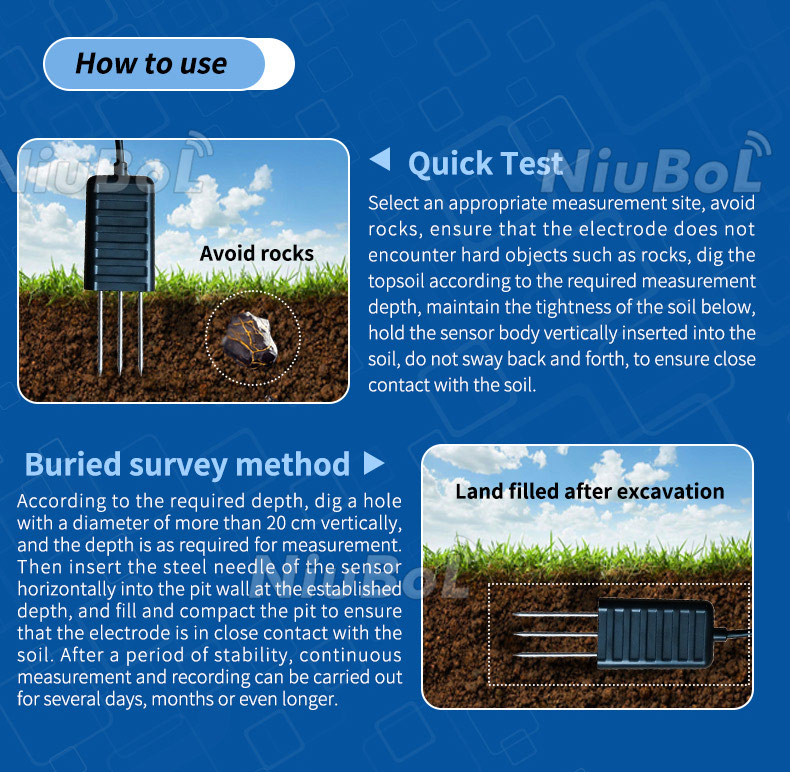
For hard soil, prepare an appropriate pilot hole before inserting the sensor. The probe should not be hammered or subjected to strong impact.
The NBL-S-TMC is particularly suitable for projects where irrigation water status and soluble salt conditions need to be monitored together.
NBL-S-TMC → RS485 → Irrigation Controller / Data Logger → 4G / Ethernet → Cloud or Private Server
The three measurement channels support different aspects of root-zone management:
| Parameter | Monitoring Purpose |
|---|---|
| Soil Moisture | Monitor root-zone water conditions and irrigation response |
| Soil EC | Monitor soluble salt and conductivity trends |
| Soil Temperature | Monitor root-zone thermal conditions and support EC compensation |
Suitable EC ranges and management thresholds depend on crop species, growth stage, soil or substrate, irrigation water quality, fertilizer program and measurement method.
The conductivity channel can also be used for suitable water-fertilizer solutions, nutrient solutions and cultivation substrates within the specified measurement range.
For nutrient-solution applications, confirm that the expected conductivity remains within 0–10000 μS/cm and that the installation, cleaning and measurement conditions are suitable for continuous operation.
Multiple sensors can share one RS485 communication bus when each sensor has a unique Modbus device address.
Assign a unique Modbus address to each sensor.
Use twisted-pair cable for RS485 A/B communication.
Prefer daisy-chain wiring where practical.
Use a suitable DC power supply.
Calculate voltage drop for long cable runs.
Use appropriate termination where required.
Record the sensor address, installation position and measurement depth.
A clear monitoring-point identification format can simplify system maintenance and data analysis:
Field A → Zone 03 → Depth 30 cm → Modbus Address 07
| Factor | Effect on EC Measurement |
|---|---|
| Soil Moisture | Very dry soil reduces continuous conductive pathways between dissolved ions and electrodes |
| Temperature | Conductivity changes with temperature; built-in compensation reduces this influence |
| Fertilizer Application | Additional dissolved ions can increase soil EC |
| Irrigation Water | Salts present in irrigation water contribute to the measured conductivity |
| Soil Texture | Different soil types retain water and soluble ions differently |
| Measurement Depth | Salt concentration and water content can vary through the soil profile |
| Probe Contact | Air gaps and poor contact can reduce measurement stability |
Smart irrigation
Fertigation monitoring
Greenhouse cultivation
Soil salinity monitoring
Precision agriculture
Vegetable production
Fruit orchards
Grassland and pasture monitoring
Scientific experiments
Plant cultivation
Soil research
Agricultural IoT systems
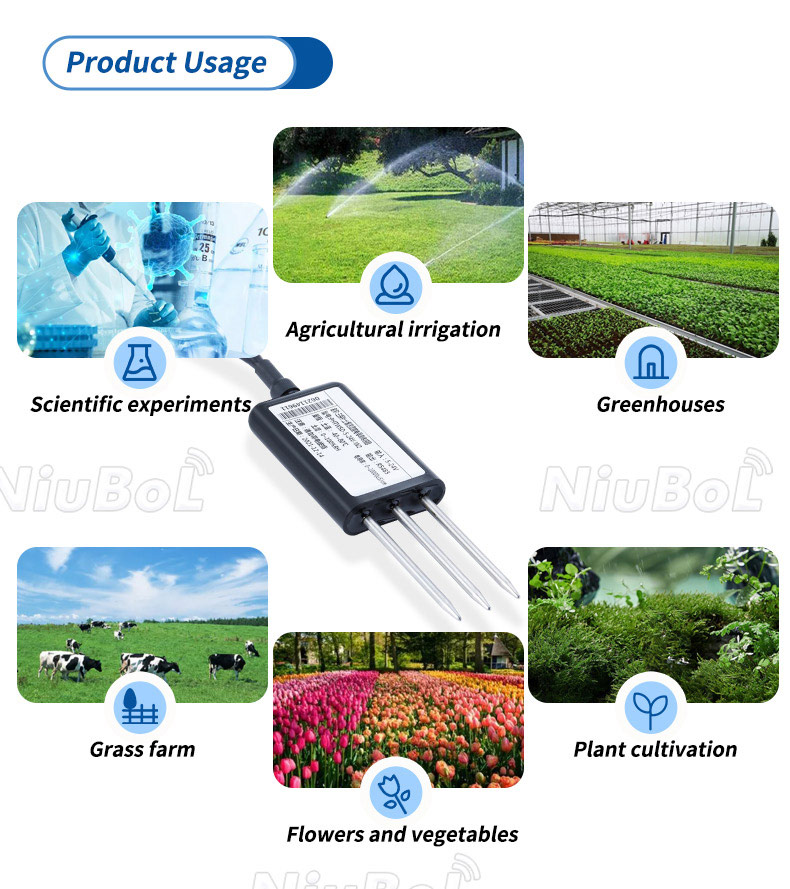
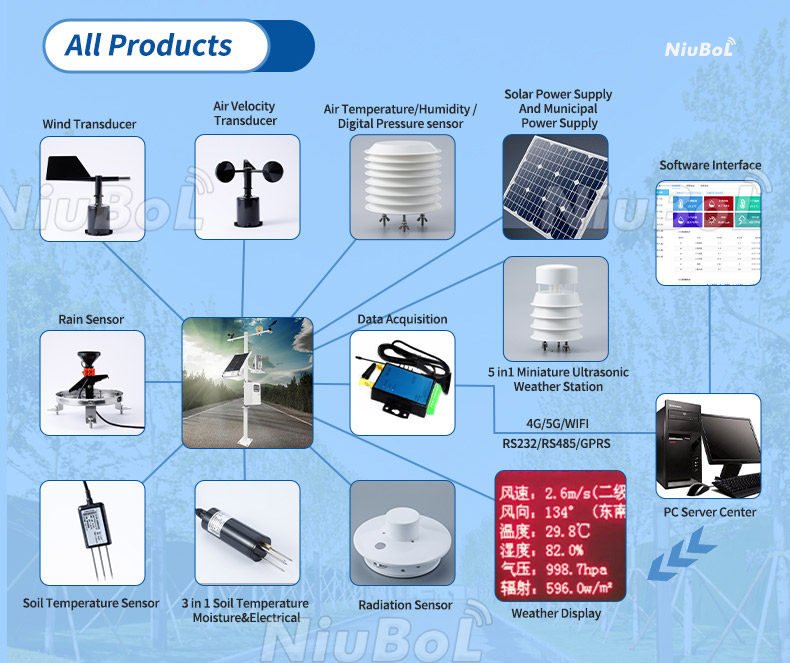
Combining soil EC, moisture and temperature measurements with weather and irrigation data provides a more complete view of root-zone conditions.
Rainfall + Irrigation + Soil Moisture + Soil EC + Soil Temperature → Root-Zone Monitoring
The NBL-S-TMC can connect to the same data-acquisition system as compatible weather sensors, allowing soil and meteorological data to be viewed together on a cloud platform or customer-owned server.
| Measurement Requirement | Recommended Sensor |
|---|---|
| Soil Moisture + Temperature | NBL-S-THR |
| Soil Moisture + Temperature + EC | NBL-S-TMC |
| Soil Moisture + Temperature + EC + Salinity | NBL-S-TMCS |
| Dedicated Soil pH | NBL-S-PH |
| NPK Reference Monitoring | NBL-S-NPK |
| Temperature + Moisture + EC + pH + NPK | 7-in-1 Soil Sensor |
| Temperature + Moisture + EC + Salinity + pH + NPK | 8-in-1 Soil Sensor |
Interpreting EC as an individual N, P or K measurement
Comparing EC readings collected under very different soil-moisture conditions
Ignoring the salinity of irrigation water
Measuring immediately beside concentrated fertilizer
Leaving air gaps around the electrodes
Using one monitoring point to represent a highly variable field
Ignoring installation depth
Using duplicate Modbus addresses on the same RS485 network
Failing to document measurement location and irrigation conditions
A1. The NBL-S-TMC simultaneously measures soil temperature, soil moisture and electrical conductivity.
A2. The EC measurement range is 0–10000 μS/cm with 1 μS/cm resolution.
A3. The specified EC accuracy is ±5% within the 0–10000 μS/cm measurement range.
A4. The soil moisture channel uses FDR (Frequency Domain Reflectometry) technology.
A5. No. It measures electrical conductivity rather than individual nitrogen, phosphorus or potassium concentrations.
A6. EC and salinity are related but are not identical measurements. EC measures electrical conductivity and is commonly used as an indicator of soluble salt conditions.
A7. Dissolved ions conduct electricity through soil water. Very dry soil provides a less continuous conductive pathway, so EC values should be interpreted together with moisture conditions.
A8. Yes. The EC channel includes built-in temperature compensation over a specified 0–50°C range.
A9. Yes. The IP68 probe is suitable for long-term monitoring when installed correctly and good contact with the measured soil or substrate is maintained.
A10. Yes. Each sensor requires a unique Modbus address, and the RS485 wiring, power supply and termination should be designed correctly.
A11. Yes. The EC channel can be used for suitable nutrient solutions and water-fertilizer applications when conductivity remains within the specified 0–10000 μS/cm measurement range.
A12. Yes. The RS485 sensor can connect to a compatible data logger or IoT gateway, which can transmit measurements through MQTT, HTTP or TCP depending on the system configuration.
 NBL-S-TMC-Soil-temperature-and-moisture-conductivity-sensor.pdf
The NBL-S-TMC can be supplied for individual monitoring points or larger multi-sensor agricultural systems. Selection should consider sensor quantity, cable length, installation depth, expected EC range, communication distance and the required data-acquisition system.
For irrigation and fertigation projects, the sensor can be integrated with PLCs, irrigation controllers, RS485 data loggers, LoRaWAN nodes, 4G gateways and private monitoring platforms.
Sensors & Weather Stations Catalog
 Agriculture Sensors and Weather Stations Catalog-NiuBoL.pdf
Weather Stations Catalog-NiuBoL.pdf
Agriculture Sensors Catalog-NiuBoL.pdf
Water Quality Sensor Catalog-NiuBoL.pdf
Related recommendations
 TDR Soil Moisture & Temperature Sensor for irrigation| RS485 |4-20mA| NBL-S-THR
 Soil pH sensor RS485 soil Testing instrument soil ph meter for agriculture |NBL-S-PH
 Soil NPK Sensor RS485 Modbus | NBL-S-NPK | NiuBoL
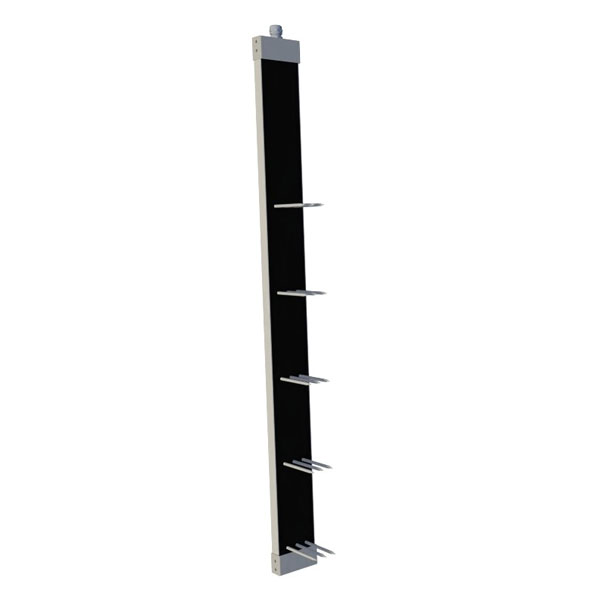 NBL-S-TM-MD Multi-Layer Soil Moisture Temperature Salinity Sensor | RS485 Modbus
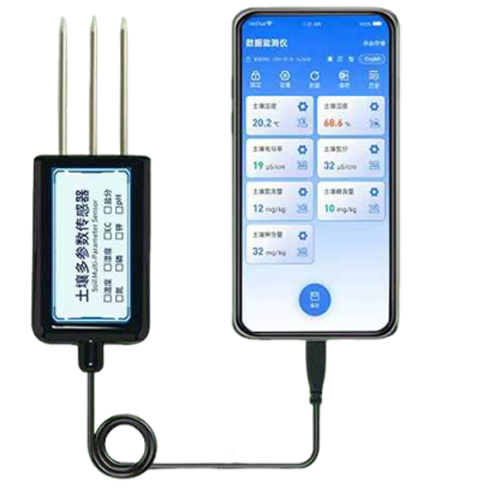 7-in-1 Soil Sensor for Android USB-Type-C
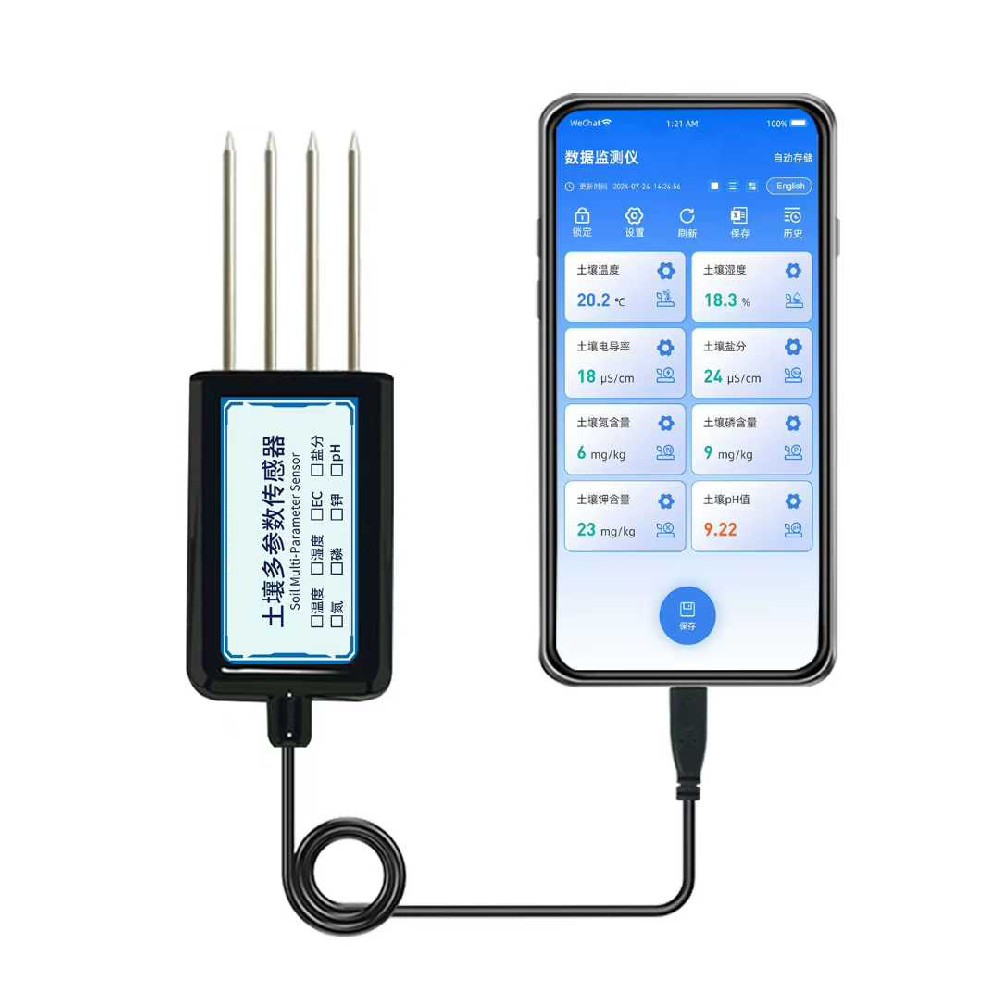 8-in-1 Portable Soil Sensor for Android Type-C/USB Soil Multi-Parameter Tester & Analyzer

Screenshot, WhatsApp to identify the QR code
WhatsApp number:+8615367865107
(Click on WhatsApp to copy and add friends)

