





— Download —
 Consumer hotline +8618073152920
WhatsApp:+8615367865107
Address:Room 102, District D, Houhu Industrial Park, Yuelu District, Changsha City, Hunan Province, China
All products


Select a NiuBoL NBL-W-CO2 sensor for greenhouse or building monitoring. Compare 2000 and 5000 ppm versions, outputs and batch checks before requesting a quotation.
Tel/WhatsApp:+8615367865107
Email:Arvin@niubol.com +Nearly 100 partner companies in more than 75 countries. We are committed to providing high-quality, practical products to meet your needs and help you solve problems. Our products comply with international standards and are certified with ISO, CE and RoHS.Product Details
Quick Answer: Select the NiuBoL NBL-W-CO2 sensor by the required concentration span and receiving interface, not the housing or family name alone. The 0-5000 ppm version has stated accuracy of +/-(50 ppm + 3% of reading); the 0-2000 ppm version uses +/-(40 ppm + 2% of full scale). Both provide 1 ppm resolution, but their range and accuracy expressions must remain tied to the ordered version.
| Item | 0-2000 ppm version | 0-5000 ppm version |
|---|---|---|
| Concentration range | 0-2000 ppm | 0-5000 ppm |
| Accuracy expression | +/-(40 ppm + 2% FS) | +/-(50 ppm + 3% of reading) |
| Resolution | 1 ppm | 1 ppm |
| Supply | 12-24 VDC | 12-24 VDC |
| Output choices | 4-20 mA or RS485 | 4-20 mA or RS485 |
| Standard cable | 2.5 m | 2.5 m |
| Current-output load | 250 ohms maximum | 250 ohms maximum |
| Power / weight | 0.2 W / 140 g | 0.2 W / 140 g |
| Operating conditions | -10 to 50 degrees C; 0-100% RH | -10 to 50 degrees C; 0-100% RH |
| IP rating / cable jacket | Specify for the delivered installation | Specify for the delivered installation |
For the 2000 ppm span, 2% of full scale is 40 ppm, so the complete expression is +/-80 ppm. For the 5000 ppm version, the percentage term changes with the reading. Do not substitute 3% of full scale, and do not assume the larger span means the same error at every concentration.
| Concentration used for comparison | 2000 ppm version expression | 5000 ppm version expression |
|---|---|---|
| 1000 ppm | +/-80 ppm | +/-80 ppm |
| 2000 ppm | +/-80 ppm at the span limit | +/-110 ppm |
| 4000 ppm | Outside the measurement range | +/-170 ppm |
These values are arithmetic evaluations of the stated expressions, not field comparison results or additional guarantees. Reference uncertainty and installation conditions still matter. They show why a manufacturer comparison should use the expected operating concentration instead of ranking products by the number of displayed digits.
For a greenhouse compartment, provide normal concentration, intended operating targets and the highest concentration the monitoring task needs to distinguish. Ventilation and dosing can create local gradients. A span selected only from the average target can be inadequate when the instrument must also identify excursions or investigate a dosing problem.
For building monitoring, identify the rooms or air zones the transmitter represents and the receiving building-control interface. CO2 can be one input to ventilation management, but it does not measure every indoor pollutant or establish acceptable overall air quality by itself. Keep the monitoring purpose separate from any required protective detection function.
Confirm how the selected version behaves above range. A reading at the maximum is not proof that the concentration cannot be higher. If the application needs concentrations beyond 5000 ppm, request another suitable configuration rather than extending the displayed scale in software.
Use 4-20mA for a dedicated PLC loop or RS485 for addressed digital acquisition. Do not add a converter when the controller already supports the ordered signal.
For the current-output versions, the same electrical value can represent different concentrations. At the 12 mA midpoint, the 2000 ppm version corresponds to 1000 ppm, while the 5000 ppm version corresponds to 2500 ppm. An unchanged controller configuration can therefore produce a substantial error after a transmitter is exchanged for another range.
A batch schedule should identify each destination point, ordered span, output and receiver channel. Keep analog and RS485 assemblies distinguishable through packing, bench checks and installation. A family model name without an explicit span and interface is insufficient for approving an interchangeable spare.
For multi-point orders, label each NBL-W-CO2 transmitter with its intended location, output and controller channel before dispatch. The field team can then install and test one defined channel at a time without confusing analog and RS485 versions.
For RS485, request the matching Modbus RTU information and commissioning requirements. The detailed address and decoding work belongs with the digital CO2 integration instructions. The purchasing decision here is to ensure that the offered transmitter, delivered version and receiving driver describe the same product.
Approve a sample against the same specification intended for the production order. Check its label, range, output, cable and received values, then retain the accepted configuration with the purchasing record. If the manufacturer proposes a changed version, review the affected specification rather than assuming that identical mounting hardware makes it equivalent.
For a response comparison, use a suitable reference and comparable air conditions after stabilization. A brief high reading caused by someone's breath demonstrates a local change, not a calibrated concentration. Do not establish acceptance tolerances from that type of demonstration or from two instruments observing different air streams.
Keep the factory or laboratory concentration check separate from an electrical input simulation. Injecting a known current can verify the receiver scale but cannot show whether the sensing assembly measures CO2 correctly. When concentration accuracy is part of acceptance, identify the reference values, applicable range, stabilization conditions and results required for the ordered units. Such tests must use an approved procedure and qualified personnel, not an uncontrolled release into an occupied room.
For a mixed-range order, make the test and configuration records distinguish the two spans. A result or controller setting approved for one version must not be copied to the other without checking what it actually establishes.
Where an identified sensing principle or a particular calibration policy is required, state it in the technical inquiry and obtain confirmation for the ordered version. Do not infer automatic baseline correction, pressure compensation or a specific optical module from a generic CO2 product description. Those functions need an explicit configuration statement if the project depends on them.
Avoid breath, dosing nozzles, fresh-air diffusers, exhausts and stagnant cabinets unless intentionally monitored. Large spaces or greenhouse compartments may need several points.
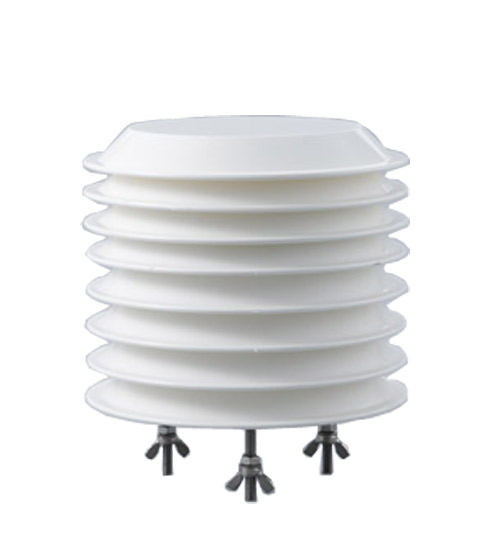
The louvered appearance does not establish the same operating conditions as another environmental sensor. Both NBL-W-CO2 versions in the table operate over -10 to 50 degrees C. Do not transfer a wider temperature rating or enclosure protection claim from a different louvered assembly.
A relative-humidity span reaching 100% is not a guarantee of unrestricted operation with persistent condensation, water spray or chemical contamination. Review the actual exposure and mounting arrangement. For a greenhouse near misting equipment or a washdown area, resolve protection and representative air access before ordering the transmitter.
Arrange access for inspection and replacement without moving the point into an unrepresentative corner. If an extension is needed beyond the standard 2.5 m cable, specify the connection and receiving circuit with the manufacturer or integrator. Do not assume any field splice preserves the assembly's original protection or signal performance.
Request ordered datasheet, wiring, output scale, cable, production test, serial traceability, calibration or comparison procedure and replacement support.
For a repeat order, reference the approved range and output, not only the previous housing photograph. Identify whether replacements are supplied as complete transmitters and what comparison or configuration work is needed after exchange. Keep the old and new identities associated with the installation so a changed span is not mistaken for a real concentration shift.
Ask for a current quotation covering the defined hardware, quantities, cable arrangement and required checks. Delivery timing and any customization should be confirmed for that order. There is no useful universal price or lead time for every combination of transmitter, acquisition equipment and commissioning service.
NiuBoL inquiries are most actionable when they include the operating concentrations, required output, receiving equipment and installation environment. Add the point list for multi-unit orders and the sample acceptance requirements. This supports a consistent product selection instead of a mixed batch that looks identical but needs different controller settings.
The application illustration below shows broad monitoring settings, not proof that one environmental CO2 transmitter is approved for every airport, marine or industrial safety duty. Evaluate the actual operating and project requirements before specifying those uses.
Select the span that covers the concentrations the project must measure, including relevant excursions. Compare the accuracy expression at those concentrations and confirm above-range behavior. A 2000 ppm unit should not be software-scaled to measure 5000 ppm.
Do not make that assumption from span alone. The two versions use different expressions. At 1000 ppm, both expressions evaluate to +/-80 ppm; at 2000 ppm the 5000 ppm version evaluates to +/-110 ppm. These are specification calculations, not field test results.
No. It is the reported increment. The stated accuracy contains larger fixed and percentage terms. Use the complete expression and a suitable reference when agreeing acceptance criteria.
The concentration conversion can be wrong while the electrical signal appears normal. For example, 12 mA represents 1000 ppm on a 2000 ppm span and 2500 ppm on a 5000 ppm span. Verify the receiver configuration whenever a transmitter is replaced.
No. RS485 Modbus RTU provides local data acquisition through compatible equipment. Storage and remote transmission require the specified logger, gateway and receiving system where those functions are needed.
Obtain the calibration policy and any automatic correction settings for the exact version. Do not assume a function is present or appropriate because another CO2 product has it. Persistent elevated concentrations can make baseline assumptions important to review.
Confirm span, output, supply, cable and labels against the approved sample, then verify received values with a suitable procedure. Keep each unit tied to its intended installation and make any proposed substitution subject to the relevant specification review.
Provide concentration requirements, range, output, quantity, receiver details, cable distances and exposure conditions. Include required documents, comparison work and delivery scope. Those details let NiuBoL quote a defined version and identify the appropriate acquisition accessories.
Select an NBL-W-CO2 sensor with its concentration span, accuracy expression and output kept together. Verify the installed environment and approve a consistent sample before a larger order. Clear version identification helps a manufacturer, distributor and integrator deliver interchangeable equipment without confusing a changed transmitter scale with a change in the monitored air.
Prev:Solar Panel Temperature Sensor Installation Guide
Next:LoRaWAN Gateway 8 Channel for Home & Office &Farming&Industrial IoT
Sensors & Weather Stations Catalog
 Agriculture Sensors and Weather Stations Catalog-NiuBoL.pdf
Weather Stations Catalog-NiuBoL.pdf
Agriculture Sensors Catalog-NiuBoL.pdf
Water Quality Sensor Catalog-NiuBoL.pdf
Related recommendations
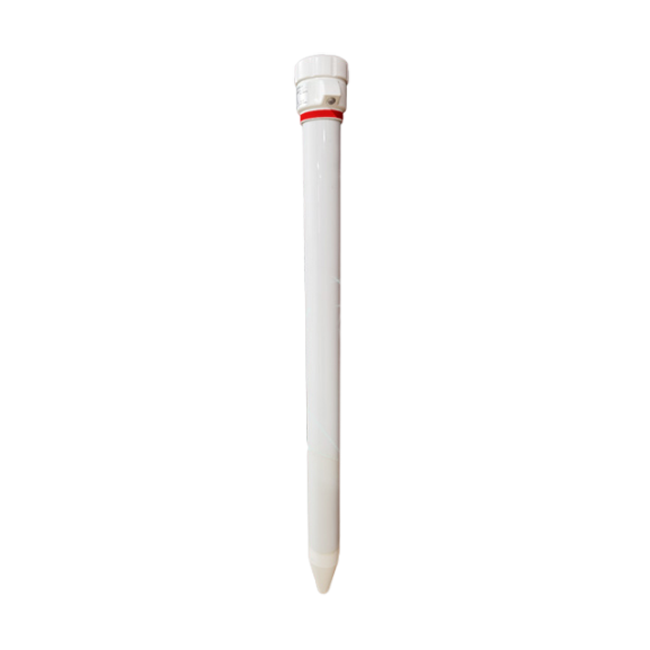 Multi-Depth Soil Sensor RS485
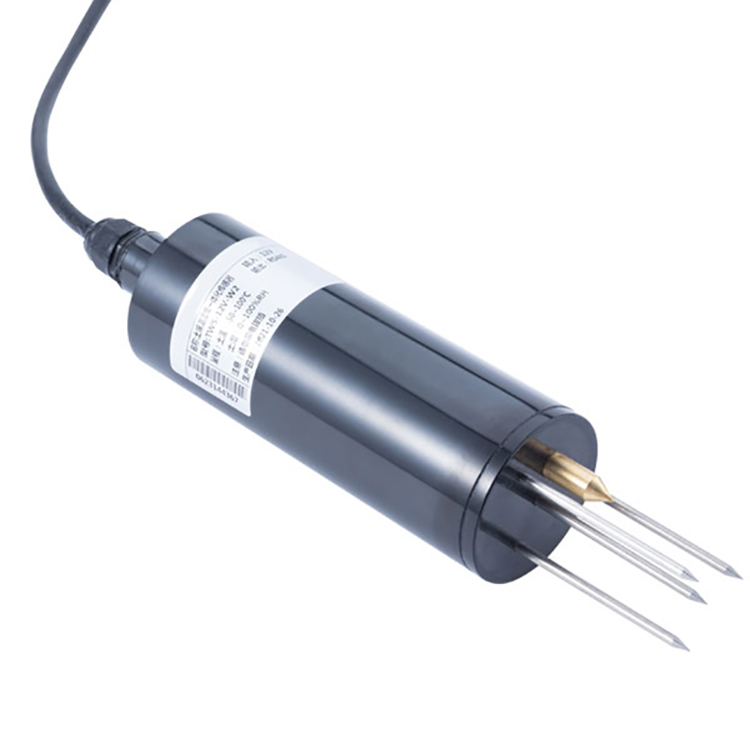 TDR Soil Moisture Sensor
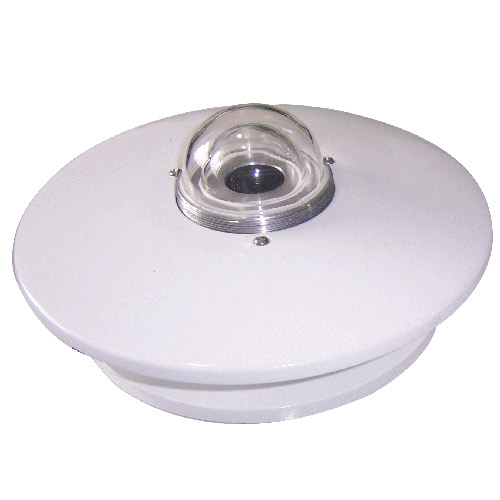 Pyranometer Solar Radiation Sensors
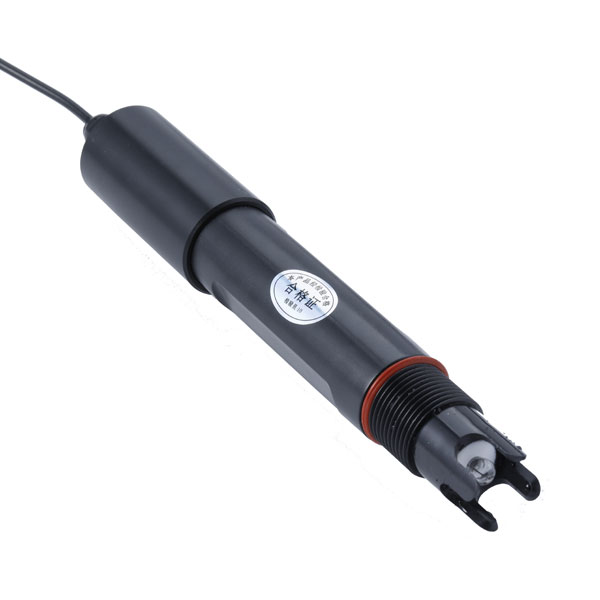 Soil ph sensor
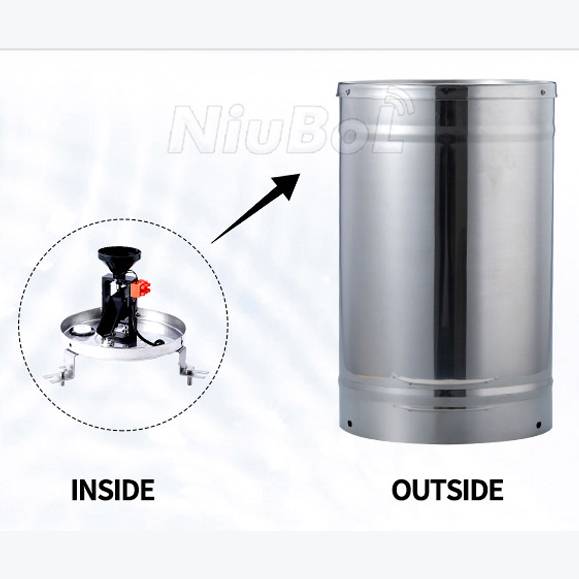 Tipping Bucket Rain Gauge
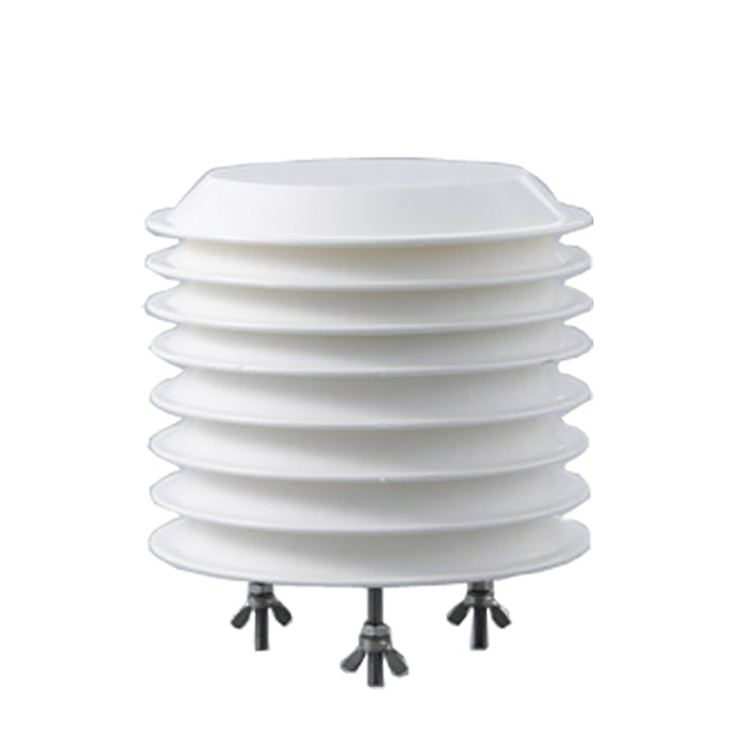 Air Temperature and Humidity Sensor


Screenshot, WhatsApp to identify the QR code
WhatsApp number:+8615367865107
(Click on WhatsApp to copy and add friends)

