





— Products —
 Consumer hotline +8618073152920
WhatsApp:+8615367865107
Address:Room 102, District D, Houhu Industrial Park, Yuelu District, Changsha City, Hunan Province, China
Water Quality Sensors


NiuBoL NBL-WQ-NHN-302 is an industrial-grade multi-parameter online ammonia nitrogen sensor that adopts advanced Ion Selective Electrode (ISE) technology, with built-in triple compensation algorithms for potassium ion, pH, and temperature. It effectively solves the pain point of ion interference in industrial wastewater monitoring. It supports RS485 Modbus-RTU protocol and has IP68 protection rating, making it a highly reliable choice for system integrators to achieve automat···
Tel/WhatsApp:+8615367865107
Email:Arvin@niubol.com +Nearly 100 partner companies in more than 75 countries. We are committed to providing high-quality, practical products to meet your needs and help you solve problems. Our products comply with international standards and are certified with ISO, CE and RoHS.Product Details
The NiuBoL NBL-WQ-NHN-302 is a multi-parameter online ammonia nitrogen sensor designed for continuous water quality monitoring and industrial data acquisition. It uses a PVC-membrane ammonium ion-selective electrode (ISE) together with potassium ion (K+), pH and temperature measurements to support compensation for selected measurement interferences.
The sensor provides separate RS485 Modbus RTU data channels for ammonium (NH4+), ammonia (NH3), combined NH3+NH4+ concentration, potassium (K+), pH and water temperature. These outputs allow compatible PLCs, RTUs and data loggers to collect several related parameters from one instrument.
The NBL-WQ-NHN-302 is intended for applications such as wastewater treatment, freshwater aquaculture, surface water monitoring and selected industrial water systems. Sensor selection should consider the required concentration range, dissolved-ion composition, operating conditions and reporting units.

Multi-parameter monitoring: Separate channels for NH4+, NH3, NH3+NH4+, K+, pH and temperature.
Potassium interference compensation: Integrated K+ measurement supports compensation for an important interfering ion in ammonium ISE applications.
pH compensation: Built-in pH measurement with a specified compensation range of pH 4–10.
Automatic temperature compensation: Pt1000 temperature measurement and compensation.
RS485 Modbus RTU: Digital interface for integration with compatible industrial controllers and monitoring systems.
Industrial construction: PVC/POM housing, IP68 protection rating and 3/4-inch NPT installation connection.
Electrode maintenance: Two-point calibration and electrode servicing according to the product manual.
| Parameter | Specification |
|---|---|
| Brand | NiuBoL |
| Model | NBL-WQ-NHN-302 Multiparameter Online Ammonia Nitrogen Sensor |
| Measurement Principle | PVC-membrane ion-selective electrode (ISE) |
| NH4+ Measurement Range | 0–100 mg/L or 0–1000 mg/L |
| NH3 Measurement Range | 0–15 mg/L or 0–150 mg/L |
| NH3+NH4+ Output | Separate concentration channel; independent measurement range not specified |
| K+ Measurement Range | 0–1000 mg/L |
| pH Measurement Range | 0–14 pH |
| Temperature Measurement Range | 0–35°C |
| NH4+ Resolution | 0.1 mg/L |
| NH4+ Accuracy | ±5% (manual specification) |
| NH3 / Total Ammonia Nitrogen Accuracy | ±5% (manual specification) |
| K+ Accuracy | ±5% (manual specification) |
| pH Precision | 0.1 pH (manual specification) |
| Temperature Precision | 0.5°C (manual specification) |
| Temperature Compensation | Automatic, Pt1000 |
| pH Compensation Range | 4–10 pH |
| K+ Compensation Range | 0–1000 mg/L |
| Calibration Method | Two-point calibration |
| Signal Output | RS485 Modbus RTU |
| Power Supply | 12–24 VDC |
| Operating Temperature | 0–35°C |
| Operating Pressure | < 0.1 MPa |
| Storage Temperature | −5 to 65°C |
| Housing Material | PVC / POM |
| Protection Rating | IP68 |
| Installation Connection | 3/4-inch NPT pipe thread |
| Standard Cable | 5 m |
| Electrode Service Life | 6–12 months as stated in the manual; actual lifetime depends on operating conditions |
Measurement range selection: The NH4+ ranges of 0–100 mg/L and 0–1000 mg/L represent alternative configurations. The corresponding NH3 ranges are listed separately. Confirm the required configuration before ordering.
Accuracy information: The accuracy figures above are specified in the product manual. The percentage calculation basis and performance under all possible water compositions are not fully defined in the published documentation.
The NBL-WQ-NHN-302 uses an ammonium-sensitive PVC membrane that responds to ammonium ion activity in water. The electrode generates an electrical potential related to the ammonium activity, which is processed by the instrument to produce a concentration-related reading.
Ion-selective measurement depends on the condition of the electrode membrane, calibration, water temperature and the ionic composition of the sample. Other dissolved ions can influence the electrode response.
Potassium is an important interfering ion for ammonium ISE measurement. The NBL-WQ-NHN-302 includes an integrated potassium measurement channel and a compensation function intended to account for potassium-related interference.
The built-in pH and temperature measurements provide additional information used by the instrument's measurement system.
These compensation functions should not be interpreted as complete immunity to chemical interference. When measuring complex industrial wastewater, nutrient-rich water or samples containing high dissolved salt concentrations, comparison with an appropriate reference method may be necessary.

Ammonia in water exists mainly in two forms: ammonium ion (NH4+) and un-ionized ammonia (NH3). Their relative proportions depend on pH and temperature.
The NBL-WQ-NHN-302 provides separate Modbus channels for NH4+, NH3 and NH3+NH4+. It also provides K+, pH and temperature measurements.
| Output Channel | Description | Manual Unit |
|---|---|---|
| NH4+ | Ammonium concentration output based on the ion-selective measurement system | mg/L |
| NH3 | Ammonia concentration output | mg/L |
| NH3+NH4+ | Combined ammonia and ammonium concentration output | mg/L |
| K+ | Potassium concentration measurement and compensation input | mg/L |
| pH | Water acidity or alkalinity | pH |
| Temperature | Water temperature and compensation input | °C |
Total ammonia nitrogen (TAN) is commonly defined as the nitrogen present in both ammonium and un-ionized ammonia, expressed on a nitrogen-mass basis such as mg/L as N.
The NBL-WQ-NHN-302 manual identifies a combined NH3+NH4+ concentration output, but it does not fully specify the chemical mass basis used for all the concentration channels.
Therefore, the combined output should not automatically be interpreted as TAN expressed in mg/L as N without confirming the reporting convention.
When integrating sensor data into laboratory comparison systems, regulatory monitoring databases or aquaculture management platforms, users should distinguish between NH4+, NH4-N, NH3, NH3-N and TAN-N.
The instrument's documented measurement principle is based on an ammonium ion-selective electrode, supported by potassium, pH and temperature measurements.
The manual also provides separate NH3 and NH3+NH4+ outputs. However, it does not establish that NH3 is measured by an independent direct ammonia electrode or fully describe the internal concentration calculations.
Applications that require a particular analytical definition should verify the output calculation before incorporating the data into acceptance criteria or control algorithms.
The integrated potassium compensation function is useful in ammonium ISE applications, but the water matrix remains an important factor in determining measurement suitability.
The product manual identifies potentially interfering ions, including potassium and sodium. The extent of interference depends on the ammonium concentration and the concentrations of other ions in the sample.
| Water Condition | Potential Effect | Recommended Check |
|---|---|---|
| High potassium concentration | Interference with the ammonium-selective membrane | Evaluate compensation performance in the actual sample |
| High sodium or mixed dissolved salts | Changes in electrode response and sample matrix effects | Check ionic composition and compare with reference measurements |
| Changing pH | Changes the distribution between NH4+ and NH3 | Review pH and ammonia-related outputs together |
| pH outside the compensation range | Compensation performance is not specified outside pH 4–10 | Confirm suitability before using ammonia-related results |
| Changing temperature | Affects electrode response and ammonia equilibrium | Verify the temperature channel |
| Membrane contamination | May cause unstable readings or drift | Inspect and clean the electrode |
| Electrode aging | May reduce sensitivity and calibration performance | Perform calibration checks and service the electrode when required |
Seawater applications: The IP68 protection rating and PVC/POM housing do not independently establish measurement accuracy or long-term suitability in seawater. High salinity and complex ionic composition may affect ammonium ISE performance. Marine applications require additional compatibility and measurement assessment.
The NBL-WQ-NHN-302 uses a four-core shielded cable and requires an external 12–24 VDC power supply.
Correct wiring is essential before connecting the sensor to an industrial controller or data logger.
| Wire Color | Function | Connection |
|---|---|---|
| Red | Power Positive | 12–24 VDC + |
| Black | Power Negative | GND |
| Blue | RS485 A | Controller RS485 A |
| White | RS485 B | Controller RS485 B |
Check all connections before applying power. External cable joints should be waterproofed and protected against moisture ingress, especially for submerged or outdoor installations.

The sensor provides RS485 Modbus RTU output for connection to compatible PLCs, RTUs, industrial computers and data loggers.
A typical integration arrangement is:
NBL-WQ-NHN-302 Sensor → RS485 Modbus RTU → PLC / RTU / Data Logger → Communication Gateway → Monitoring System
The sensor itself does not include built-in 4G, Wi-Fi or Ethernet communication. Remote transmission requires a compatible external data acquisition or communication device.
Several Modbus RTU sensors can share a properly designed RS485 bus when each device has a unique address and the electrical loading, termination and wiring arrangements are suitable.
| Parameter | Default Value |
|---|---|
| Physical Interface | RS485 |
| Protocol | Modbus RTU |
| Default Slave Address | 6 |
| Baud Rate | 9600 bps |
| Data Bits | 8 |
| Parity | None |
| Stop Bits | 1 |
| Read Function Code | 03 |
| Configuration Write Function | 06, for supported registers |
The communication settings above are factory defaults. If a sensor has been reconfigured, the actual device address and serial settings must be checked before communication.
The NBL-WQ-NHN-302 provides separate holding-register groups for each measurement channel. The following register addresses are taken from its model-specific user manual.
| Measurement | Holding Register | Hex Start Address | Register Quantity |
|---|---|---|---|
| NH4+ and Temperature | 40001 | 0x0000 | 4 |
| K+ | 40005 | 0x0004 | 2 |
| pH | 40007 | 0x0006 | 2 |
| NH3 | 40009 | 0x0008 | 2 |
| NH3+NH4+ | 40011 | 0x000A | 2 |
All the measurement groups use Modbus Function Code 03. The hexadecimal start addresses are zero-based register offsets used in Modbus request frames. The 4xxxx values are conventional holding-register references.
The measurement registers use separate 16-bit integer values for the measurement and its number of decimal places. The data should not be decoded as an IEEE 754 Float32 value.
The conversion is:
Measurement Value = Raw Integer / (10 ^ Decimal Places)
For example, a raw integer of 98 with one decimal place represents 9.8. A raw integer of 725 with two decimal places represents 7.25.
The NH4+ and temperature measurement group contains four registers:
| Hex Address | Register Description |
|---|---|
| 0x0000 | NH4+ measurement integer |
| 0x0001 | NH4+ decimal-place count |
| 0x0002 | Temperature measurement integer |
| 0x0003 | Temperature decimal-place count |
The other measurement groups use two registers: one for the measurement integer and one for the decimal-place count.
The manual indicates a default decimal-place count of one for K+, NH3 and NH3+NH4+, and two for pH. For reliable integration, the host should read the decimal-place register rather than assume that every channel always uses a fixed scaling factor.
The following example is documented in the NBL-WQ-NHN-302 user manual using slave address 6.
Request:
06 03 00 00 00 04 45 BE
Example response:
06 03 08 00 62 00 01 01 01 00 01 60 59
Decoded NH4+:
Raw measurement: 0x0062 = 98
Decimal places:  0x0001 = 1
Displayed value: 98 / 10 = 9.8 mg/L
Decoded temperature:
Raw measurement: 0x0101 = 257
Decimal places:  0x0001 = 1
Displayed value: 257 / 10 = 25.7°C
These values are protocol examples from the user manual, not measurements from a particular monitoring installation.
The following request frames use slave address 6. The CRC16/Modbus values have been checked for the specified frame contents.
| Measurement | Modbus RTU Request (Hex) |
|---|---|
| NH4+ and Temperature | 06 03 00 00 00 04 45 BE |
| K+ | 06 03 00 04 00 02 84 7D |
| pH | 06 03 00 06 00 02 25 BD |
| NH3 | 06 03 00 08 00 02 44 7E |
| NH3+NH4+ | 06 03 00 0A 00 02 E5 BE |
The NH4+, K+ and pH request examples are provided in the manual. The NH3 and NH3+NH4+ request frames use the documented register addresses with independently calculated CRC values.
When the slave address or register quantity changes, generate a new CRC for the actual request.
The manual identifies holding-register reference 48195, corresponding to hexadecimal address 0x2002, for configuring the sensor address.
The factory-default address is 6. The documented configurable address range is 1–255.
For systems containing several RS485 sensors, assign a unique address to each device and verify the response before connecting the complete network.
Calibration and reset functions are also documented in the manual. These operations change stored device settings and should only be performed using the appropriate procedure for the delivered sensor.
Ion-selective electrodes require periodic inspection and calibration checks. The frequency depends on water composition, electrode condition and the accuracy required by the monitoring application.
The NBL-WQ-NHN-302 is calibrated before shipment according to its manual. Recalibration should be performed when verification shows that the measurement exceeds the required tolerance, rather than automatically at an arbitrary interval.
The manual describes conditioning the electrode in a mixed solution containing 10 mg/L ammonium ion standard and 10 mg/L potassium ion standard for 24 hours before measurement.
This procedure is intended to condition the sensitive membrane. Protect the membrane against physical damage during preparation and handling.
The product supports zero-point and slope calibration. The manual specifies that K+ and pH should be calibrated first, followed by NH4+.
Check the condition of the electrode and calibration solutions.
Verify the existing measurements before deciding whether recalibration is needed.
Check and calibrate the potassium electrode when required.
Check and calibrate the pH electrode when required.
Calibrate the ammonium electrode using suitable standards for the configured measurement range.
Verify the measurements against an appropriate reference solution.
Record calibration results and any device configuration changes.
For the NH4+ channel, the calibration register table specifies the following standards:
| NH4+ Range | Low Standard | High Standard |
|---|---|---|
| 0–100 mg/L | 1 mg/L | 10 mg/L |
| 0–1000 mg/L | 10 mg/L | 100 mg/L |
For pH calibration, the manual describes pH 6.86 for the zero-point calibration and pH 4.00 or pH 9.18 for slope calibration, depending on the application.
Calibration commands must be matched to the correct standard solutions and sensor configuration. Incorrect write operations may change stored calibration values and affect subsequent measurements.
Inspect the electrode membrane and protective housing for deposits, fouling or physical damage.
For deposits on the sensitive membrane, rinse carefully with distilled or deionized water according to the manual.
Avoid prolonged immersion in distilled water or protein-containing solutions.
Prevent silicone grease from contacting the sensitive membrane.
Keep electrical terminals dry. If terminals are contaminated, the manual permits cleaning with anhydrous alcohol followed by thorough drying.
For periods of non-use exceeding two weeks, follow the manual's dry-storage instructions and protect the sensing element with its cap.
If measurement errors remain after suitable cleaning and calibration, inspect the electrode for deterioration and arrange replacement where necessary.
The manual lists an electrode life of approximately 6–12 months. Actual service life depends on operating conditions, water chemistry, contamination and maintenance practices.

The NBL-WQ-NHN-302 has a 3/4-inch NPT installation connection and is designed for installation arrangements compatible with its mechanical dimensions and operating limits.
The product manual illustrates side-wall, top-flange, pipe, submerged and flow-through mounting arrangements.
The sensor must not be installed horizontally or upside down. The manual specifies an installation angle greater than 15 degrees relative to the horizontal plane.
This requirement helps prevent trapped air bubbles from affecting the electrode membrane and measurement stability.
Before installation, inspect the sensing head for air bubbles. If bubbles are present, follow the manual's procedure to release them from the membrane area.
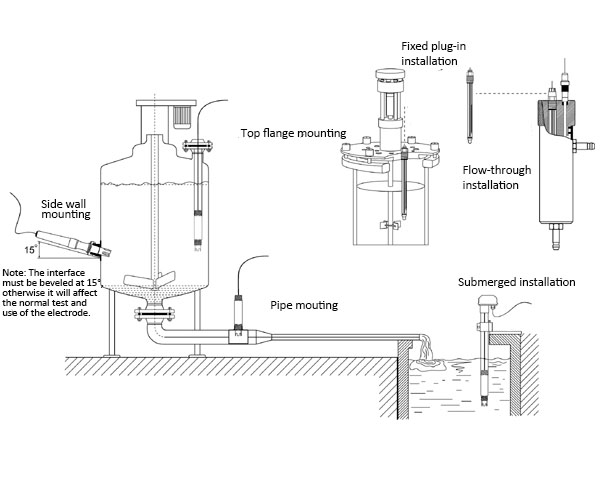
Use mounting components compatible with the specified 3/4-inch NPT connection.
The manual also identifies an M66×3 thread associated with the protective housing. Confirm the required mechanical connection before designing an adapter.
Keep the sensing head exposed to representative water during measurement.
Avoid excessive sediment accumulation, trapped air and mechanical impact near the sensing area.
Maintain operating temperature within 0–35°C and pressure below 0.1 MPa.
Provide access for inspection, calibration, cleaning and electrode replacement.
Protect external cable joints against water ingress and corrosion.
For flow-through or pipeline applications, confirm the mounting arrangement and process pressure before installation. IP68 protection does not imply suitability for operation above the specified pressure limit.
The NBL-WQ-NHN-302 can provide ammonia-related concentration trends in suitable municipal or industrial wastewater treatment processes.
Its measurements can be collected by a PLC or monitoring system to support operational review, trend analysis and investigation of changes in nitrogen-related water quality.
When the results are used for process control or discharge monitoring, verify the measurement basis, sample composition and comparison method.
In freshwater aquaculture, the proportion of un-ionized ammonia depends strongly on pH and temperature. The NBL-WQ-NHN-302 provides ammonia-related output channels together with pH and temperature information.
The measurements may be useful for observing changing water conditions, provided the concentration reporting basis and application-specific requirements are correctly established.
The sensor can be incorporated into river, lake and reservoir monitoring stations where the concentration range and operating conditions are suitable.
An external data logger or RTU can collect the Modbus measurements for recording or remote transmission. Installation planning should consider water-level changes, sediment, debris and access for maintenance.
Industrial and nutrient-rich water may contain changing concentrations of potassium, sodium and other dissolved substances.
The integrated potassium channel provides information relevant to compensation of ammonium ISE interference. For complex chemical matrices, evaluate the actual sample conditions and verify measurement performance against an appropriate reference method.
| Problem | Possible Cause | Recommended Check |
|---|---|---|
| No Modbus response | Incorrect power, wiring, address or serial settings | Check 12–24 VDC, RS485 A/B, address 6 and 9600 8N1 defaults |
| Incorrect concentration display | Wrong register or decimal-place decoding | Read the measurement and decimal-place registers separately |
| Unstable NH4+ readings | Air bubbles, membrane contamination or changing water composition | Check installation orientation, electrode condition and sample chemistry |
| Measurement drift | Electrode aging, deposits or calibration changes | Inspect the electrode and verify calibration |
| Unexpected NH3 output | Changing pH, temperature or output interpretation | Review the related measurements and reporting convention |
| Difference from laboratory results | Different reporting units, sample matrix or analytical method | Confirm the measured species, mass basis and comparison procedure |
Before selecting the NBL-WQ-NHN-302, identify the actual chemical parameter and measurement requirements.
| Selection Item | Information Required |
|---|---|
| Target Parameter | NH4+, NH4-N, NH3, NH3-N or TAN |
| Concentration Range | Normal and maximum expected concentration |
| Water Type | Freshwater, aquaculture, municipal wastewater or industrial process water |
| Water Chemistry | pH, temperature, potassium, sodium, salinity and interfering substances |
| Installation | Tank, pipeline, flow-through chamber, river or other location |
| Data Interface | RS485 Modbus RTU and receiving PLC / RTU / data logger |
| Verification | Required calibration and laboratory comparison method |
| Order Details | Measurement range, cable length, quantity and destination country |
For applications requiring basic ammonium monitoring without integrated K+ and pH measurement, the NBL-WQ-NHN online ammonium sensor is a separate model for consideration.
The technical specifications and compensation functions of the two models are different and should not be interchanged.
For projects involving additional parameters, see the NiuBoL water quality sensor range, including pH, conductivity, dissolved oxygen, turbidity and other monitoring sensors.
A1. The sensor provides separate concentration output channels for NH4+, NH3, NH3+NH4+ and K+, together with pH and water temperature measurements. Its main sensing principle is based on an ammonium ion-selective electrode with supporting compensation measurements.
A2. Potassium ions can interfere with ammonium ion-selective electrodes. The NBL-WQ-NHN-302 includes an integrated potassium measurement channel and a compensation function covering 0–1000 mg/L K+. This helps address potassium-related interference but does not eliminate every source of measurement error.
A3. Not necessarily. The manual identifies an NH3+NH4+ concentration channel but does not fully define the mass basis used for every output. If a project requires TAN expressed in mg/L as N, the instrument's reporting convention should be confirmed.
A4. The documented measurement principle uses an ammonium ion-selective electrode. The instrument also provides an NH3 output, but the manual does not establish an independent direct NH3 sensing electrode or fully define the calculation method.
A5. Yes. It uses RS485 Modbus RTU. The default settings are slave address 6, 9600 bps, 8 data bits, no parity and one stop bit. The controller must use the correct registers and measurement scaling.
A6. The model-specific manual specifies RS485 Modbus RTU. It does not document a built-in 4–20 mA output. A system requiring analog input would need a separately confirmed interface solution.
A7. Seawater measurement suitability has not been established by the published specifications. High ionic strength and interfering salts can affect ammonium ISE measurement. Marine applications require a separate compatibility and measurement assessment.
A8. Calibration should be based on verification results, electrode condition and the accuracy required by the application. The manual advises against unnecessary recalibration when measurements remain within tolerance.
A9. No. The manual states that horizontal and inverted installation are not permitted. The sensor should be installed at an angle greater than 15 degrees relative to the horizontal plane to reduce the risk of trapped air near the sensing membrane.
A10. A common integration issue is incorrect register scaling. The NBL-WQ-NHN-302 uses separate measurement integer and decimal-place registers. These should not be decoded directly as a Float32 value.
The product manual provides the technical specifications, dimensional drawings, installation requirements, electrical wiring, electrode maintenance procedures, calibration information and RS485 Modbus RTU register definitions.
 NBL-WQ-NHN-302 Industrial-grade Multi-parameter Online Ammonia Nitrogen Sensor.pdf
For a quotation or system integration review, please provide the required quantity, water type, target ammonia-related parameter, expected concentration range, pH, temperature, potassium concentration and any known interfering substances.
Please also specify the installation arrangement, cable length, receiving PLC or data logger, and destination country.
If your project requires NH4-N, NH3-N or TAN results in mg/L as N, include the required reporting convention and reference method so the measurement requirements can be reviewed before ordering.
Prev:UV Fluorescence Oil-in-Water Sensor 0–40 ppm | NBL-WQ-OIL-2A
Next:Dual-Wavelength UV Online COD & Turbidity Sensor | NBL-WQ-COD
Sensors & Weather Stations Catalog
 Agriculture Sensors and Weather Stations Catalog-NiuBoL.pdf
Weather Stations Catalog-NiuBoL.pdf
Agriculture Sensors Catalog-NiuBoL.pdf
Water Quality Sensor Catalog-NiuBoL.pdf
Related recommendations
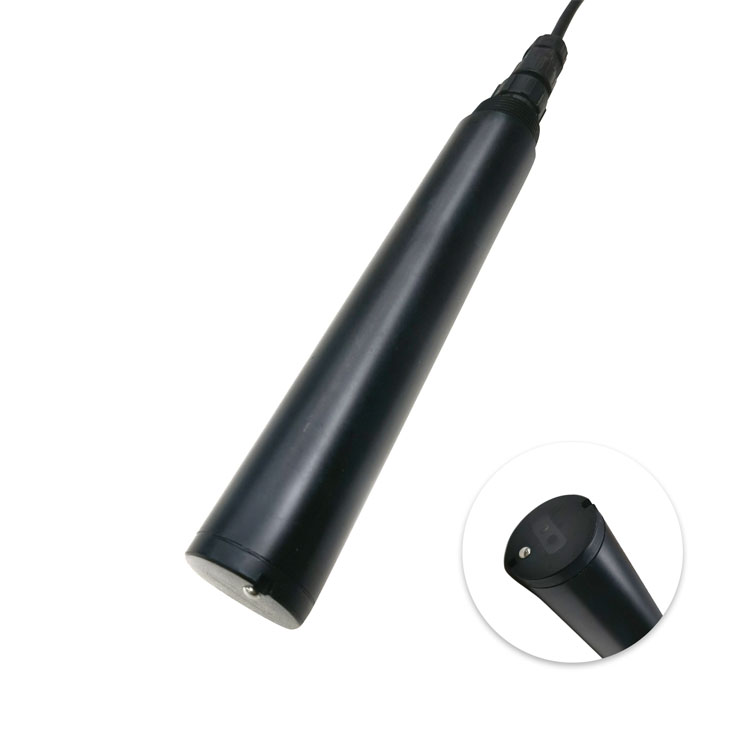 Online Turbidity Sensor RS485 Modbus | NBL-WQ-TS
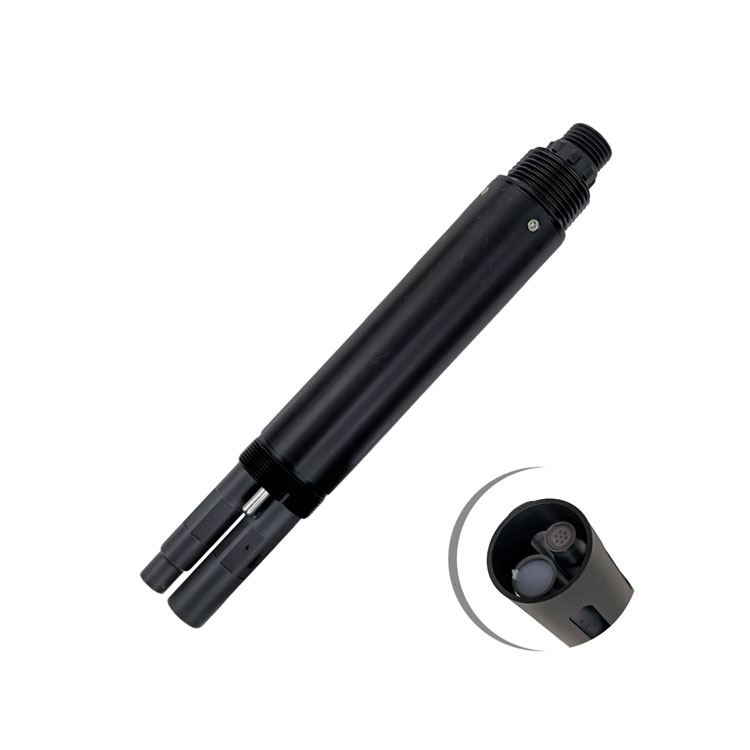 Online Ammonia Nitrogen Sensor (Ammonium ISE) | NBL-WQ-NHN
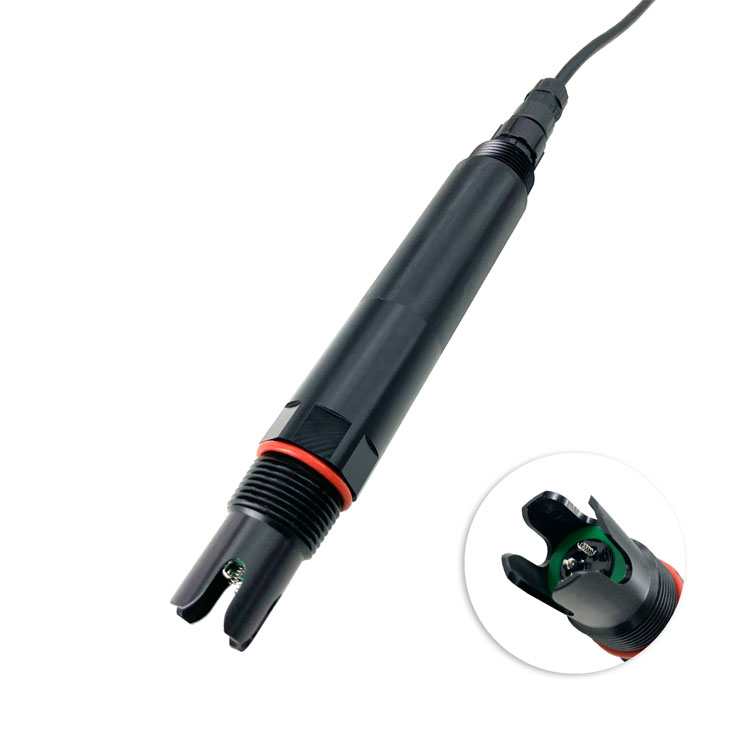 Online Residual Chlorine Sensor (HOCl) RS485 | Water Quality Sensor| NBL-WQ-CL
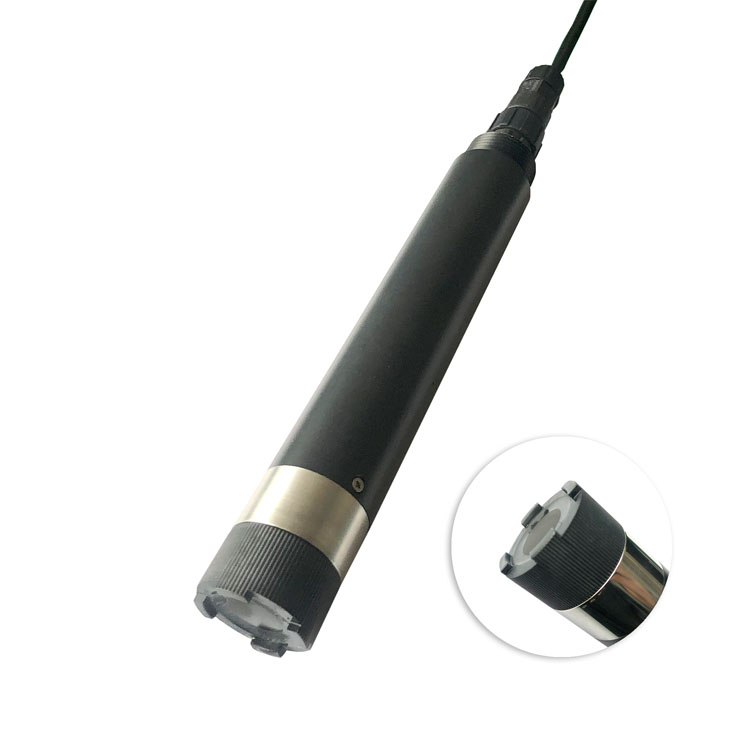 NBL-WQ-DO Online Fluorescence Dissolved Oxygen Sensor
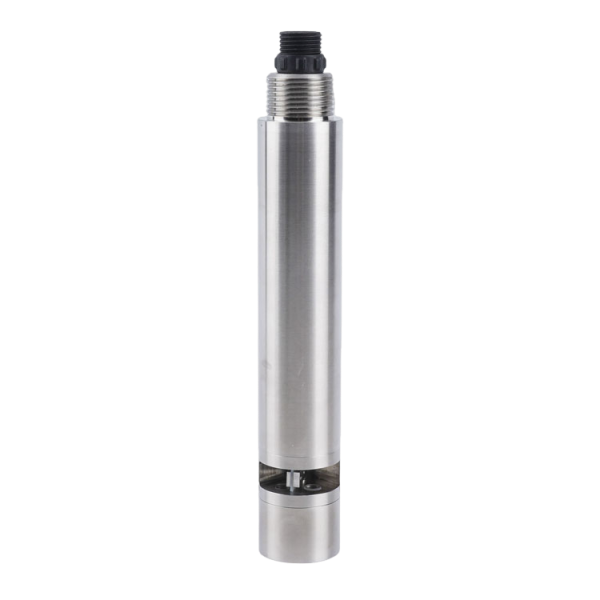 NBL-WQ-COD Online COD Water Quality Sensor
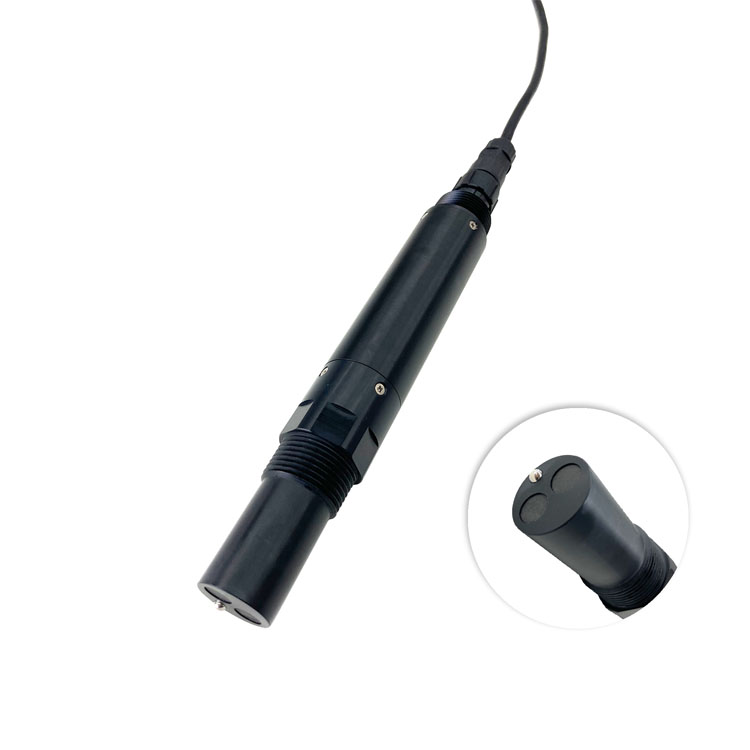 Water Conductivity EC Sensor RS485 Modbus IP68 | NBL-WQ-EC


Screenshot, WhatsApp to identify the QR code
WhatsApp number:+8615367865107
(Click on WhatsApp to copy and add friends)

