





— Products —
 Consumer hotline +8618073152920
WhatsApp:+8615367865107
Address:Room 102, District D, Houhu Industrial Park, Yuelu District, Changsha City, Hunan Province, China
Water Quality Sensors
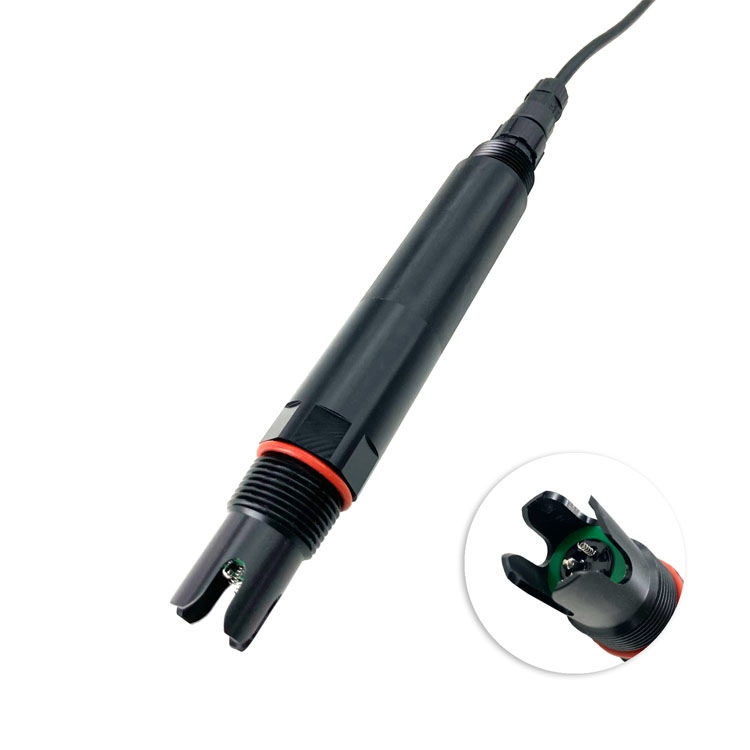
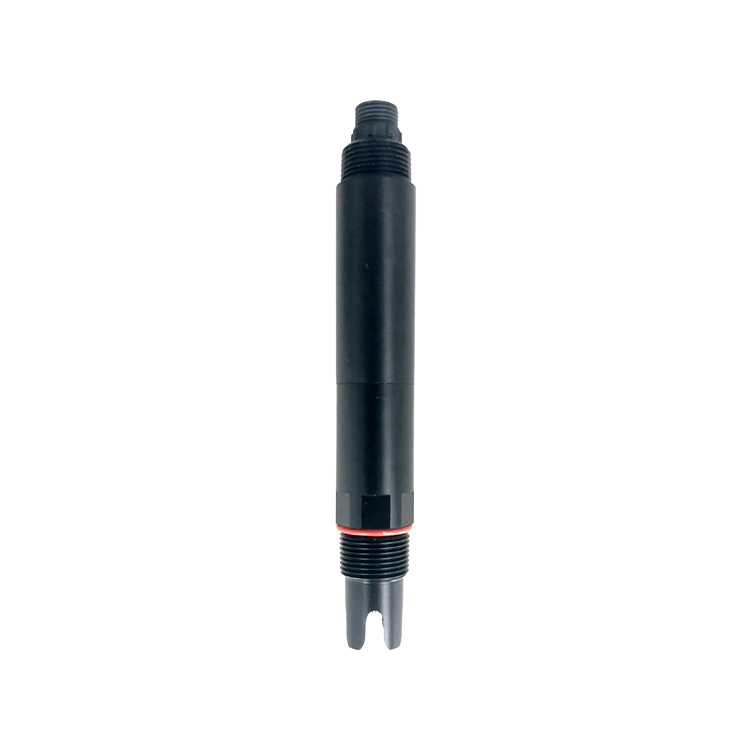
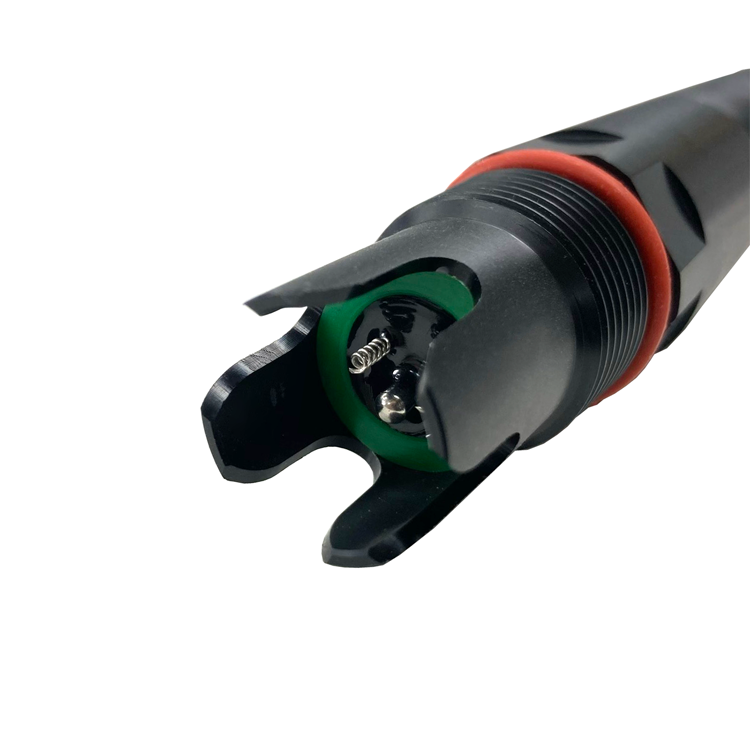
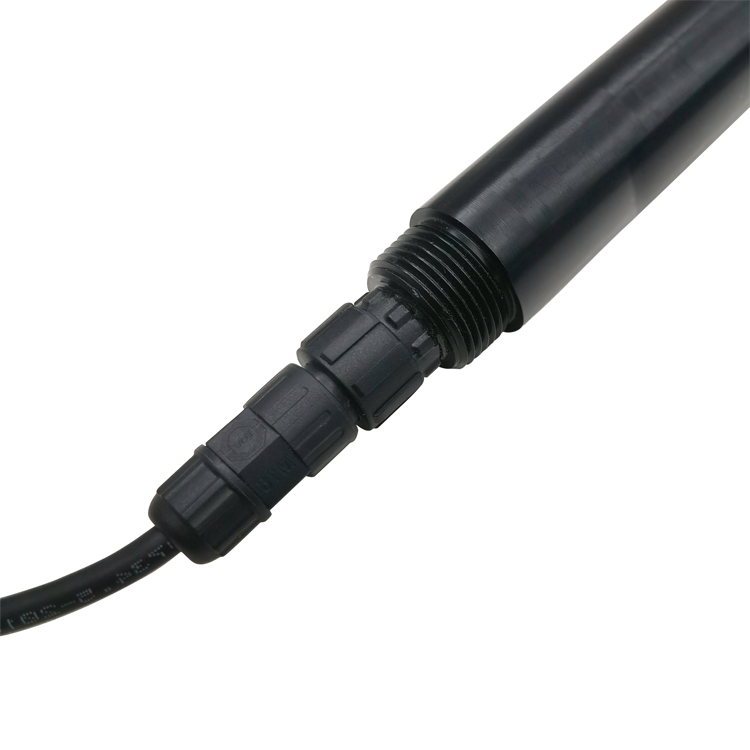
NiuBoL NBL-WQ-CL residual chlorine sensor for treatment systems: RS485 Modbus RTU and 0-2.000 mg/L HClO. Check flow-cell conditions and request a project configuration.
Tel/WhatsApp:+8615367865107
Email:Arvin@niubol.com +Nearly 100 partner companies in more than 75 countries. We are committed to providing high-quality, practical products to meet your needs and help you solve problems. Our products comply with international standards and are certified with ISO, CE and RoHS.Product Details
The NiuBoL NBL-WQ-CL is an online residual chlorine sensor designed for continuous hypochlorous acid (HOCl) monitoring in water treatment and disinfection applications. It uses a constant-voltage electrochemical measurement principle to provide chlorine-related concentration readings from 0 to 2.000 mg/L.
The sensor features an RS485 Modbus RTU interface, automatic Pt1000 temperature compensation and a flow-cell installation arrangement. A stable sample flow of 30–60 L/h is recommended for continuous monitoring.
Typical applications include drinking water treatment, distribution network sampling, swimming pools and compatible industrial cooling-water systems. The measurement should be selected according to the required chlorine parameter, water chemistry and operating conditions.

Constant-voltage electrochemical measurement: Uses platinum sensing electrodes and a reference electrode to measure chlorine-related electrochemical current.
HOCl concentration measurement: Measurement range of 0–2.000 mg/L.
0.001 mg/L resolution: Provides digital chlorine-related concentration readings.
Response time below 30 seconds: Supports continuous measurement under suitable operating conditions.
Automatic temperature compensation: Integrated Pt1000 temperature element.
RS485 Modbus RTU: Connects to compatible PLCs, RTUs, data loggers and monitoring systems.
Flow-cell installation: Recommended sample flow rate of 30–60 L/h.
Two-point calibration: Supports zero-point and slope calibration.
IP68 protection: Protected sensor housing for compatible water-monitoring installations.
Industrial power supply: 12–24 VDC operation with 0.2 W consumption at 12 VDC.
| Technical Parameter | Specification |
|---|---|
| Product Identification and Measurement | |
| Brand | NiuBoL |
| Model | NBL-WQ-CL Online Residual Chlorine Sensor (HOCl) |
| Product Type | Online Electrochemical Residual Chlorine Sensor |
| Measurement Principle | Constant-Voltage Electrochemical Method |
| Measured Parameter | Hypochlorous Acid (HOCl / HClO) |
| Measurement Range | 0–2.000 mg/L HOCl |
| Resolution | 0.001 mg/L |
| Measurement Accuracy | ±5% or ±0.05 mg/L |
| Response Time | <30 s |
| Temperature Accuracy | ±0.5°C |
| Temperature Compensation | Automatic, Pt1000 |
| Calibration Method | Two-Point Calibration (Zero and Slope) |
| Electrical and Communication Specifications | |
| Digital Signal Output | RS485 Modbus RTU |
| Power Supply | 12–24 VDC ±10% |
| Power Consumption | 0.2 W @ 12 VDC |
| Default Modbus Address | 10 (0x0A) |
| Default Baud Rate | 9600 bps |
| Serial Format | 8 Data Bits, No Parity, 1 Stop Bit |
| Modbus Read Function | 03 |
| Configuration Write Function | 06 |
| Mechanical and Operating Specifications | |
| Operating Temperature | 5–50°C |
| Operating Pressure | <0.1 MPa |
| Medium pH Range | 4–9 pH |
| Recommended Sample Flow | 30–60 L/h |
| Wetted Materials | POM and Fluoropolymer Components |
| Protection Rating | IP68 |
| Installation Method | Matching Circulation Flow Cell |
| Threaded Connection | 3/4-inch NPT |
| Nominal Body Diameter | 30 mm |
| Standard Cable Length | 5 m, Customizable |
| Cable Outer Diameter | Approximately 6 mm |
Application requirements: The measurement is intended for HOCl monitoring. The operating pH, temperature, sample flow and pressure should remain within the specified ranges for reliable operation.
The NBL-WQ-CL uses a constant-voltage electrochemical measurement principle. Its electrode system includes two platinum electrodes and a reference electrode.
A controlled electrical potential is maintained at the sensing electrodes. Electrochemical reactions involving chlorine-related substances generate an electrical current, which is processed using calibration information to provide a concentration reading.
The measurement depends on electrode condition, water composition, pH, temperature and the flow of water across the sensing area.
A stable sample supply is important because changes in flow can influence the electrochemical measurement conditions.
The sensor includes automatic Pt1000 temperature compensation. This helps account for temperature-dependent electrode behavior but does not eliminate the effect of changing water chemistry.

When selecting a residual chlorine sensor, it is important to identify the exact chlorine parameter required by the monitoring project.
Chlorine in water can exist in different chemical forms. The relative amounts of these forms depend on water pH, temperature and other chemical conditions.
Hypochlorous acid (HOCl), also written as HClO, is one of the main components of free chlorine in water.
The NBL-WQ-CL provides a concentration reading associated with HOCl over a range of 0–2.000 mg/L.
Free chlorine generally consists of hypochlorous acid (HOCl) and hypochlorite ion (OCl-).
The balance between these forms depends strongly on pH and temperature.
The chemical equilibrium is:
HOCl ⇌ H+ + OCl-
At lower pH, a greater proportion of free chlorine is generally present as HOCl. As the pH increases, the proportion of OCl- increases.
Combined chlorine includes chlorine present in combined chemical forms, such as chloramines.
Total chlorine is the sum of free chlorine and combined chlorine determined by the relevant measurement method.
| Chlorine Parameter | Description | Measurement Consideration |
|---|---|---|
| HOCl | Hypochlorous Acid | The Target Parameter of the NBL-WQ-CL |
| Free Chlorine | HOCl and OCl- | Requires the Correct Free-Chlorine Reporting Basis |
| Combined Chlorine | Chlorine Present in Combined Chemical Forms | Requires an Appropriate Analytical Method |
| Total Chlorine | Free Chlorine Plus Combined Chlorine | Not Directly Determined by an HOCl-Specific Reading |
Measurement selection: An HOCl reading is not automatically equivalent to total chlorine or to free chlorine expressed as mg/L Cl2. Confirm the required chlorine parameter and reporting units before integrating the measurement into a control or compliance system.
Water pH affects the balance between HOCl and OCl-. This makes pH an important consideration when interpreting online chlorine measurements.
The NBL-WQ-CL operates within a specified medium pH range of 4–9.
The sensor's automatic temperature compensation addresses selected temperature-related measurement effects. It does not independently control pH or maintain a constant ratio between HOCl and OCl-.
For water treatment systems with changing pH, monitoring pH alongside HOCl can provide useful information when interpreting changes in chlorine-related water quality.
Where a project specifically requires total free chlorine, establish the appropriate analytical and reporting basis before defining alarm limits or dosing-control thresholds.
The NBL-WQ-CL can be installed at suitable water treatment sampling points for continuous HOCl monitoring.
Stable sample flow, water pH and temperature are important for maintaining consistent measurement conditions.
The sensor can provide chlorine-related data to a compatible PLC or data acquisition system for monitoring and operational review.
Water distribution systems may require monitoring at selected pipeline sampling points.
The NBL-WQ-CL can be connected to an appropriate sampling line with a compatible circulation flow cell.
Where the supply pressure exceeds the sensor's operating limit, suitable pressure reduction and flow regulation are required before the water reaches the measurement cell.
Continuous chlorine monitoring can provide information about changes in pool-water disinfection conditions.
The NBL-WQ-CL may be considered where HOCl measurement, the 0–2.000 mg/L range and the operating conditions are suitable.
For installations requiring a specific free-chlorine or total-chlorine measurement standard, confirm the required parameter before selecting the sensor.
Industrial cooling-water systems may use chlorine-based treatment chemicals.
The NBL-WQ-CL can provide online HOCl-related data in compatible monitoring applications.
Water temperature, pressure, pH and the presence of other treatment chemicals should be considered when selecting the measurement point.
The sensor can be integrated with PLCs, RTUs, data loggers and other industrial monitoring equipment through RS485 Modbus RTU.
For automatic chlorine dosing applications, a separate controller and compatible dosing equipment are required to process sensor data and operate the dosing system.
The NBL-WQ-CL uses a matching circulation flow cell to maintain suitable water flow around the measuring electrodes.
The recommended sample flow rate is 30–60 L/h.
The sensor should be mounted securely so that the measurement section is positioned near the flow-cell inlet and is continuously exposed to representative sample water.
A stable flow rate helps maintain consistent electrochemical measurement conditions.
| Installation Parameter | Requirement |
|---|---|
| Installation Method | Circulation Flow Cell |
| Recommended Flow Rate | 30–60 L/h |
| Maximum Operating Pressure | <0.1 MPa |
| Water Temperature | 5–50°C |
| Water pH | 4–9 |
| Sensor Thread | 3/4-inch NPT |
| Sampling Requirement | Stable and Representative Water Flow |
Use a matching flow cell for continuous monitoring.
Install the sensor securely and keep the sensing area exposed to flowing water.
Maintain a stable sample flow of 30–60 L/h.
Ensure the operating pressure remains below 0.1 MPa.
Keep the water temperature within 5–50°C.
Maintain sample pH within the specified range of 4–9.
Avoid trapped air bubbles and irregular flow around the electrodes.
Protect the sensor from mechanical impact and cable strain.
Waterproof all external cable connections.
Provide access for calibration, inspection and maintenance.
For installation in a pressurized distribution network, the sampling arrangement should maintain the correct water pressure and flow rate at the sensor.

The NBL-WQ-CL operates from a 12–24 VDC power supply and communicates through RS485 Modbus RTU.
The sensor uses the following electrical connections:
| Wire Color | Function | Connection |
|---|---|---|
| Red | Power Positive | 12–24 VDC + |
| Black | Ground | GND |
| Blue | RS485 A | Controller RS485 A |
| White | RS485 B | Controller RS485 B |
| Bare Shield Wire | Cable Shield | Shield Connection According to System Design |
Check the wiring carefully before applying power. Incorrect electrical connections may prevent communication or damage connected equipment.
External cable joints should be protected against moisture. The cable outer diameter is approximately 6 mm.

The NBL-WQ-CL communicates with compatible controllers using RS485 Modbus RTU.
Typical system connection: NBL-WQ-CL Sensor → RS485 Modbus RTU → PLC / RTU / Data Logger → Monitoring System.
An external gateway can be used for remote data communication when required.
For systems containing multiple Modbus instruments, each device should have a unique address and the RS485 network should use suitable cable routing and termination.
| Communication Parameter | Default Setting |
|---|---|
| Interface | RS485 |
| Protocol | Modbus RTU |
| Default Slave Address | 10 (0x0A) |
| Default Baud Rate | 9600 bps |
| Data Bits | 8 |
| Parity | None |
| Stop Bits | 1 |
| Measurement Read Function | 03 |
| Configuration Write Function | 06 |
| Configurable Device Address Range | 1–255 |
For PLC and data logger integration, the following holding registers provide access to chlorine-related measurement data and sensor configuration functions.
| Holding Register | Hex Address | Function | Access |
|---|---|---|---|
| 40001 | 0x0000 | HOCl Concentration and Temperature, 4 Registers | Read |
| 44097 | 0x1000 | Zero Calibration | Read / Write |
| 44101 | 0x1004 | Slope Calibration | Read / Write |
| 44113 | 0x1010 | Temperature Correction | Read / Write |
| 48195 | 0x2002 | Modbus Device Address | Read / Write |
| 48225 | 0x2020 | Restore Default Calibration Values | Write |
The 4xxxx values are conventional holding-register references. Hexadecimal addresses are the zero-based offsets used in Modbus RTU request frames.
The measurement block begins at address 0x0000 and contains four consecutive 16-bit registers.
| Hex Address | Register Content |
|---|---|
| 0x0000 | Chlorine Measurement Integer |
| 0x0001 | Chlorine Decimal-Place Count |
| 0x0002 | Temperature Measurement Integer |
| 0x0003 | Temperature Decimal-Place Count |
Measurement data is transmitted as a numerical integer and a separate decimal-place count.
Engineering Value = Raw Integer / (10 ^ Decimal Places)
The measurement and decimal-place registers should be decoded separately rather than treated as an IEEE 754 Float32 value.
The following example uses the factory-default Modbus address 10 to read four holding registers.
Read request:
0A 03 00 00 00 04 45 72
Example response:
0A 03 08 01 67 00 03 01 6F 00 01 D3 D8
HOCl concentration:
Raw Integer:    0x0167 = 359
Decimal Places: 0x0003 = 3
Result:         359 / 1000 = 0.359 mg/L
Water temperature:
Raw Integer:    0x016F = 367
Decimal Places: 0x0001 = 1
Result:         367 / 10 = 36.7°C
The example demonstrates how to obtain correctly scaled chlorine-related and temperature readings from the Modbus registers.
The sensor's Modbus slave address can be configured using register 0x2002.
The factory-default address is 10, and the configurable address range is 1–255.
When multiple instruments share the same RS485 network, assign a unique address to each device and verify the connection after configuration.
The NBL-WQ-CL supports electrode activation and two-point calibration for maintaining measurement performance.
Before initial use or after long-term storage, immerse the electrode in clean tap water for approximately 24 hours to activate the sensing system.
After activation, check the electrode condition and install it in the matching flow cell with an appropriate sample flow.
Prepare chlorine-free reference water.
Place the sensing electrode in the reference water.
Allow the reading to stabilize.
Check the zero reading.
Perform zero-point calibration when adjustment is necessary.
The zero-calibration register is 0x1000.
Slope calibration uses a reference solution with a known HOCl concentration. A concentration of approximately 1–2 mg/L is suitable for the specified calibration procedure.
Prepare a suitable HOCl reference solution.
Ensure the sensing electrodes and flow cell are clean.
Introduce the reference solution into the flow cell.
Maintain stable flow and allow the reading to stabilize.
Compare the reading with the established reference concentration.
Perform slope calibration if adjustment is required.
Verify the measurement after calibration.
The slope-calibration register is 0x1004. The calibration concentration is written using the reference concentration multiplied by 1000.
For example, a 2.000 mg/L HOCl reference corresponds to a numerical calibration value of 2000.
Calibration should be performed using a suitable verified chlorine reference and a consistent concentration reporting basis.
Routine inspection and maintenance are important for stable electrochemical chlorine measurement.
Electrode deposits, changes in sample flow and contamination of the flow cell can affect the sensor response.
Inspect the electrode measuring surface for contamination or deposits.
Check the flow cell for sediment and other accumulated material.
Verify that sample flow remains within 30–60 L/h.
Remove air bubbles that may affect the electrode measurement area.
Inspect the cable and waterproof electrical connections.
Compare the measurement with a suitable reference method when required.
Perform recalibration when the measured deviation exceeds the required tolerance.
The sensor is calibrated before shipment. Field calibration should be performed by personnel familiar with chlorine reference solutions and electrochemical measurement procedures.
| Problem | Possible Cause | Recommended Check |
|---|---|---|
| No Modbus Response | Incorrect power, wiring or serial settings | Check 12–24 VDC, address 10, 9600 8N1 and RS485 A/B |
| Incorrect Chlorine Reading | Wrong register offset or decimal scaling | Read the numerical and decimal-place registers separately |
| Unstable Measurement | Changing sample flow, bubbles or electrode contamination | Check flow rate, flow cell and electrode condition |
| Measurement Drift | Electrode deposits, aging or calibration changes | Inspect electrodes and verify against a reference measurement |
| Difference from Free Chlorine Results | Different chlorine measurement definition or changing pH | Confirm HOCl, free chlorine and reporting units |
| Calibration Does Not Stabilize | Reference solution, flow or electrode condition | Check reference preparation, flow cell and electrode activation |
Before selecting the NBL-WQ-CL, identify the exact chlorine parameter and the conditions of the water sampling system.
| Selection Item | Project Information Required |
|---|---|
| Target Measurement | HOCl, Free Chlorine or Total Chlorine |
| Concentration Range | Normal and Maximum Expected Chlorine Concentration |
| Water Application | Drinking Water, Swimming Pool, Distribution Network or Industrial Cooling Water |
| Water pH | Expected pH Range, Within 4–9 |
| Water Temperature | Operating Temperature, Within 5–50°C |
| Sampling Pressure | Pressure at the Measurement Cell, Below 0.1 MPa |
| Sample Flow | Stable Flow of 30–60 L/h |
| Communication | RS485 Modbus RTU and Receiving PLC / RTU / Data Logger |
| Reference Method | Required Measurement Units and Reference Analysis |
| Ordering Details | Flow Cell Requirements, Cable Length, Quantity and Destination Country |
For alternative residual chlorine sensor configurations, see the NBL-WQ-CL-4A Online Residual Chlorine Sensor and the NBL-WQ-CL-4S Residual Chlorine Sensor.
These products have different configurations and should be compared according to their individual specifications.
A1. The NBL-WQ-CL uses a constant-voltage electrochemical method for HOCl monitoring. Its measurement range is 0–2.000 mg/L.
A2. No. HOCl is one component of free chlorine. Free chlorine also includes hypochlorite ion (OCl-), and the relative proportions depend on water pH and temperature.
A3. The NBL-WQ-CL is designed for HOCl-related measurement. Total chlorine requires an appropriate method that accounts for both free and combined chlorine.
A4. The sensor has a measurement range of 0–2.000 mg/L HOCl and a resolution of 0.001 mg/L.
A5. Yes. The balance between HOCl and OCl- depends on water pH. The operating pH range for the NBL-WQ-CL is 4–9.
A6. Yes. The sensor provides RS485 Modbus RTU communication with factory-default settings of address 10, 9600 bps and 8N1.
A7. A stable sample flow of 30–60 L/h is recommended through the matching circulation flow cell.
A8. The NBL-WQ-CL uses a matching flow-cell installation. For pressurized water supplies, the sampling arrangement must maintain the sensor pressure below 0.1 MPa and provide the required sample flow.
A9. The sensor is calibrated before shipment and supports two-point calibration. Additional calibration should be performed when verification indicates that adjustment is necessary.
A10. The sensor provides measurement data through RS485 Modbus RTU. Automatic dosing requires a separate compatible controller and dosing equipment.
A11. Regularly inspect the measuring electrodes, clean the flow cell, verify sample flow and check the measurement against a suitable reference when required.
A12. Please provide the required chlorine parameter, expected concentration, water type, pH, temperature, sampling pressure, flow rate, communication interface, cable length and quantity.
Download the product manual for technical specifications, dimensional drawings, electrical wiring, calibration procedures, flow-cell installation and Modbus RTU register information.
 NBL-WQ-CL Online Residual Chlorine Sensor User Manual.pdf
Choosing a suitable online residual chlorine sensor depends on the required chlorine parameter, concentration range, pH, water temperature, sample pressure and flow-cell arrangement.
For drinking water treatment, swimming pools, industrial cooling water or distribution-network monitoring, NiuBoL can review the sensor configuration and integration requirements.
For technical information or a quotation, please provide your water application, required chlorine measurement, expected concentration, operating pH and temperature, sample flow and pressure, receiving controller, cable length and quantity.
Please contact NiuBoL with your project requirements to discuss the appropriate residual chlorine sensor configuration.
Prev:Online Ammonia Nitrogen Sensor (Ammonium ISE) | NBL-WQ-NHN
Next:NBL-WQ-ORP Industrial-grade Online ORP Sensor: Water Quality Monitoring RS485 Modbus-RTU
Sensors & Weather Stations Catalog
 Agriculture Sensors and Weather Stations Catalog-NiuBoL.pdf
Weather Stations Catalog-NiuBoL.pdf
Agriculture Sensors Catalog-NiuBoL.pdf
Water Quality Sensor Catalog-NiuBoL.pdf
Related recommendations
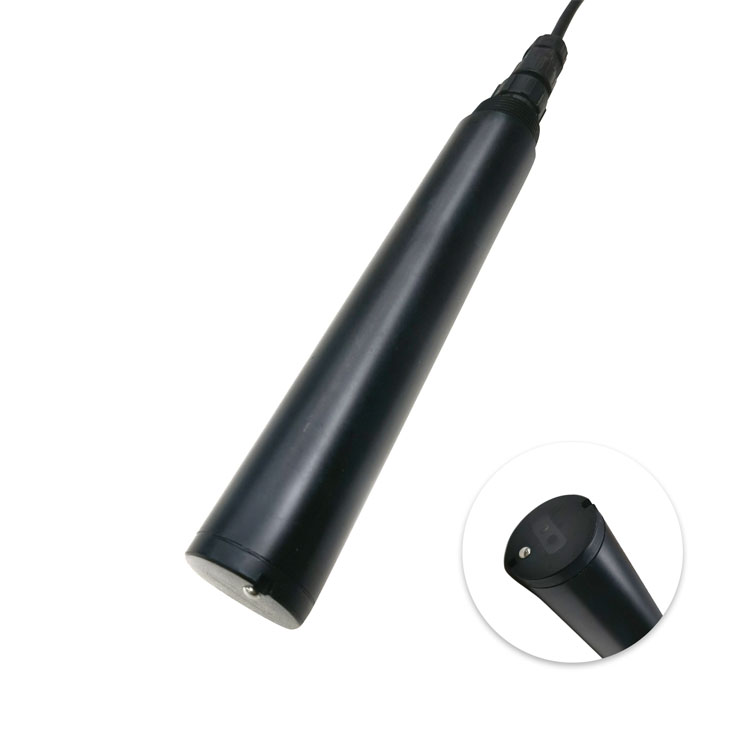 Online Turbidity Sensor RS485 Modbus | NBL-WQ-TS
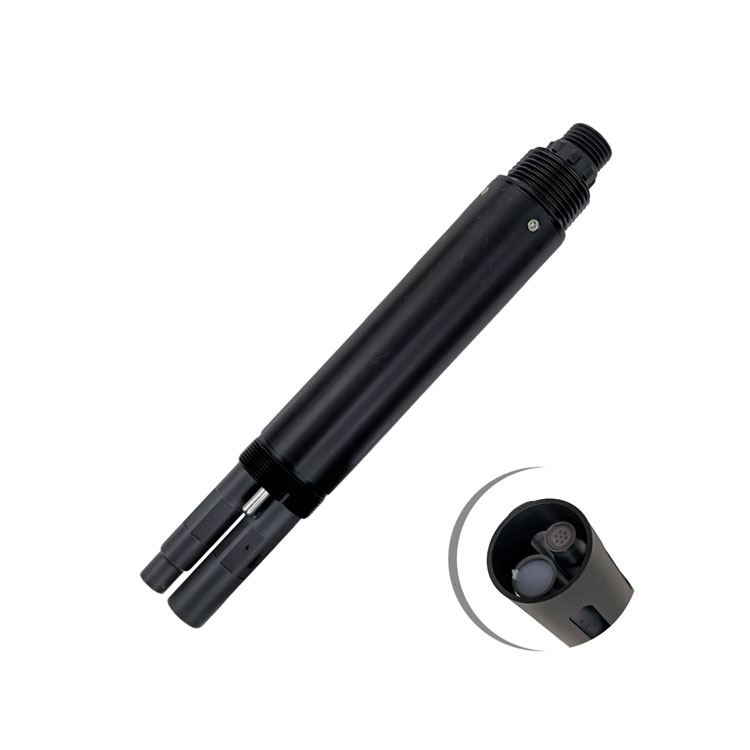 Online Ammonia Nitrogen Sensor (Ammonium ISE) | NBL-WQ-NHN
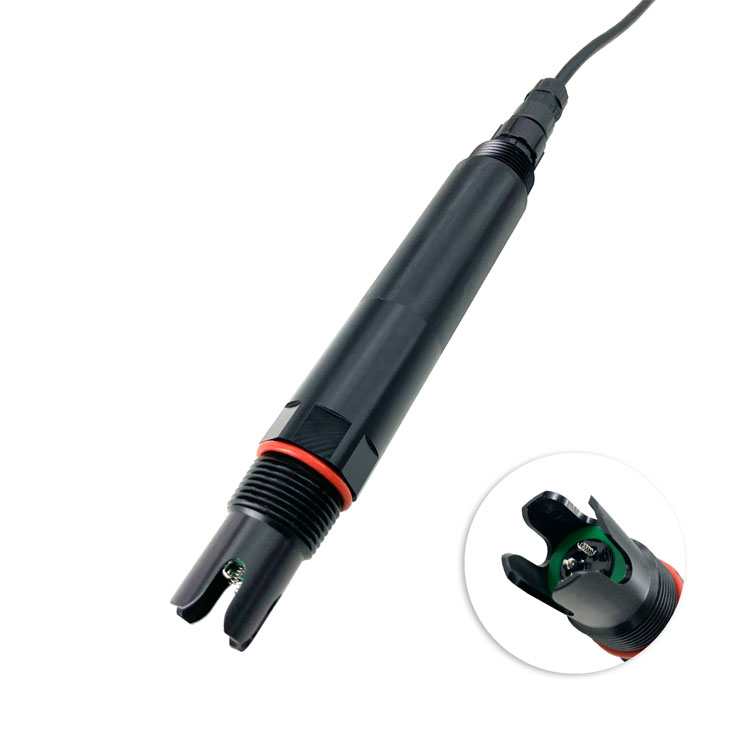 Online Residual Chlorine Sensor (HOCl) RS485 | Water Quality Sensor| NBL-WQ-CL
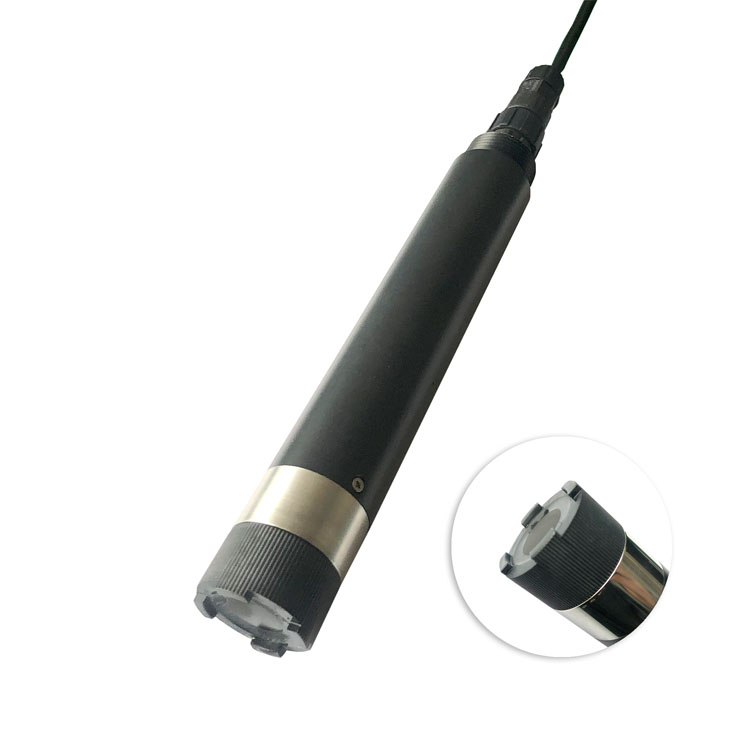 NBL-WQ-DO Online Fluorescence Dissolved Oxygen Sensor
 NBL-WQ-COD Online COD Water Quality Sensor
 Water Conductivity EC Sensor RS485 Modbus IP68 | NBL-WQ-EC


Screenshot, WhatsApp to identify the QR code
WhatsApp number:+8615367865107
(Click on WhatsApp to copy and add friends)

