





— Products —
 Consumer hotline +8618073152920
 WhatsApp:+8615367865107
Address:Room 102, District D, Houhu Industrial Park, Yuelu District, Changsha City, Hunan Province, China
Agricultural Sensors
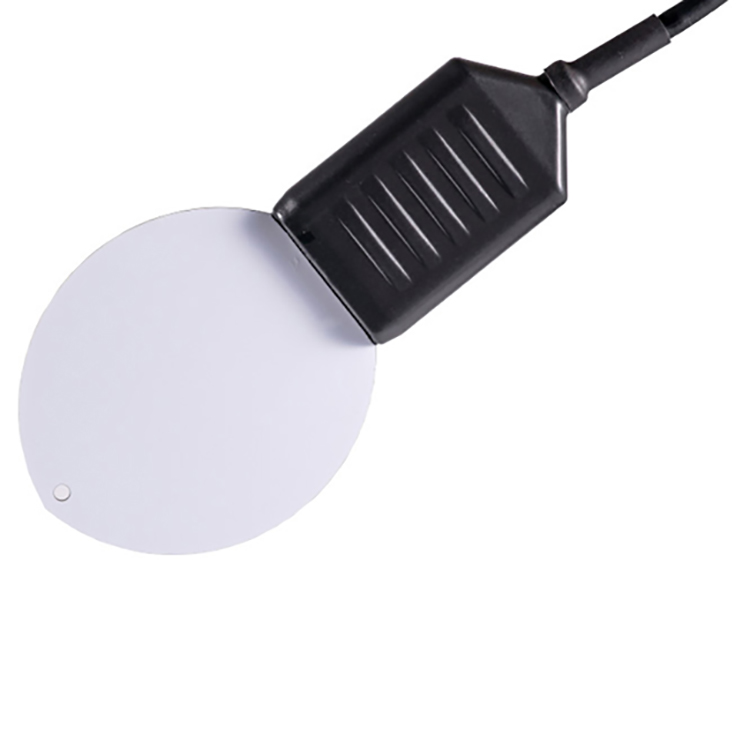
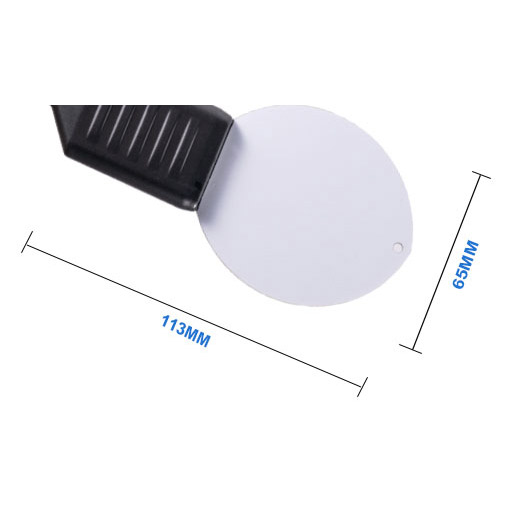
NBL-W-LM The leaf wetness sensor can accurately measure the leaf surface humidity, and can monitor the trace moisture or ice crystal residue on the leaf surface. The shape of the sensor adopts the imitation blade design, which simulates the characteristics of the page, so it can more accurately reflect the situation of the leaf environment.
Tel/WhatsApp:+8615367865107
Email:Arvin@niubol.com +Nearly 100 partner companies in more than 75 countries. We are committed to providing high-quality, practical products to meet your needs and help you solve problems. Our products comply with international standards and are certified with ISO, CE and RoHS.Product Details
The NiuBoL NBL-W-LM Leaf Wetness & Temperature Sensor is designed to monitor moisture conditions on plant leaf surfaces together with surface temperature. Its leaf-shaped sensing surface responds to trace moisture, dew, fog, rain residue and icing conditions, providing useful field data for crop disease-risk assessment, greenhouse monitoring, spray irrigation research and plant-environment studies.
Unlike a conventional air relative-humidity sensor, the NBL-W-LM focuses on the condition of the simulated leaf surface. Moisture on the sensing surface changes its dielectric properties, while the integrated temperature channel provides additional information for interpreting wet, cold and possible frost conditions.
The sensor provides RS485 communication, operates from DC 12–24 V and has low power consumption, making it suitable for connection to agricultural weather stations, data loggers, PLCs and IoT monitoring systems.

| Model | NBL-W-LM |
| Product Type | Leaf Wetness & Temperature Sensor |
| Measured Parameters | Leaf Surface Wetness / Humidity + Temperature |
| Supply Voltage | DC 12–24 V |
| Communication | RS485 |
| Default Baud Rate | 9600 bps |
| Temperature Range | -40 to 80°C |
| Temperature Accuracy | ±0.5°C |
| Leaf Surface Humidity Range | 0–100%RH |
| Humidity Accuracy | ±5%RH |
| Peak Power Consumption | 120 mW |
| Standby Power Consumption | 72 mW |
| Working Environment | -40 to 85°C |
| Communication Interval | 1000 ms or longer |

The sensing surface is designed to simulate the shape and exposure of a plant leaf. When water droplets, dew, fog, rain residue or ice form on the surface, the dielectric properties of the sensing area change. The sensor detects this change and converts it into a leaf-surface humidity or wetness value.
The integrated temperature measurement provides additional information about the thermal condition of the sensing surface. Combining surface wetness and temperature can help distinguish ordinary wet conditions from conditions associated with freezing or frost.
The sensor does not measure atmospheric relative humidity in the same way as a conventional air temperature and humidity probe. It is intended to represent the moisture condition of a leaf-like surface exposed to the same crop microclimate.
| Monitoring Purpose | How Leaf Wetness Data Helps |
|---|---|
| Disease-Risk Assessment | Many fungal and bacterial infection processes are influenced by how long leaf surfaces remain wet. Wetness-duration data can be combined with temperature and crop-specific disease models. |
| Dew & Condensation | Identifies when surface moisture forms even when there has been no rainfall. |
| Rain Residue | Shows how long a leaf-like surface remains wet after rainfall. |
| Spray Irrigation | Provides surface-wetness information that can be considered when evaluating sprinkler or misting schedules. |
| Pesticide Research | Can support studies of droplet retention and drying time on crop surfaces. |
| Crop Microclimate Research | Adds leaf-surface condition data to air temperature, humidity, rainfall and other meteorological measurements. |
| Comparison | Leaf Wetness Sensor | Air Humidity Sensor |
|---|---|---|
| Measurement Object | Moisture condition on a leaf-like surface | Water vapor in the surrounding air |
| Typical Phenomena | Dew, condensation, rain residue, surface water and icing | Ambient relative humidity |
| Typical Application | Wetness duration and crop disease-risk monitoring | Weather and greenhouse climate monitoring |
| Can One Replace the Other? | No. High air humidity does not always mean that the leaf surface is wet, and leaf surfaces can become wet through dew or condensation under specific microclimate conditions. | |
| Leaf-Shaped Design | Designed to experience rainfall, dew and evaporation conditions similar to surrounding foliage. |
| Wetness + Temperature | Measures surface wetness/humidity together with temperature from one sensor. |
| Low Power Consumption | 72 mW standby and 120 mW peak power consumption support long-term field monitoring. |
| RS485 Output | Suitable for connection to weather stations, data loggers, PLCs and agricultural gateways. |
| Outdoor Monitoring | Sealed construction is intended for greenhouse and outdoor agricultural monitoring. |
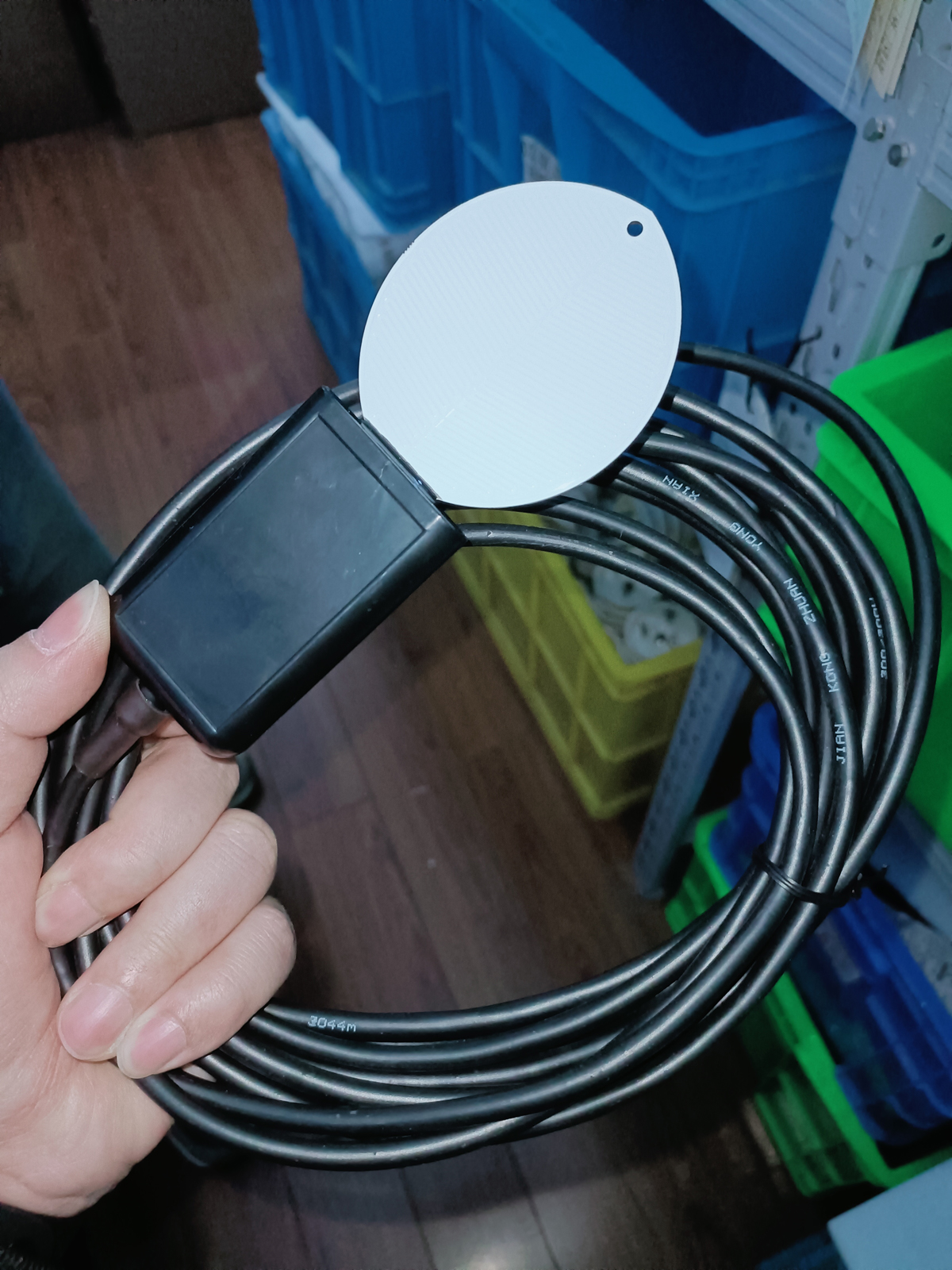
| Simple Installation | The mounting hole allows the sensor to be positioned close to representative crop leaves. |
| Installation Item | Recommendation |
|---|---|
| Location | Install close to representative crop leaves in the same microclimate rather than at an unrelated location. |
| Mounting | Pass a non-metallic wire through the mounting hole and secure the sensor to a branch, stalk, support or suitable agricultural structure. |
| Orientation | Position the sensing surface so that it experiences rainfall, dew and drying conditions representative of the crop canopy. |
| Avoid Obstruction | Do not install where roofs, pipes, supports or other structures shield the sensor from normal moisture exposure. |
| Maintenance | Keep the sensing surface reasonably clean so dust, residues or biofilm do not change its wetting and drying behavior. |
| Wire Color | Function |
|---|---|
| Red | Power + (12–24 V) |
| Black | GND / Power - |
| Yellow | RS485 A+ |
| Blue | RS485 B- |
| Interface | RS485 |
| Default Baud Rate | 9600 bps |
| Data Bits | 8 bits |
| Parity | None |
| Stop Bits | 1 or 2 bits |
| Device Address | 0–255 configurable |
| Read Function | Modbus Function Code 03 |
| Data Scaling | Returned temperature and humidity values are divided by 10 after decoding |
| System Component | Role |
|---|---|
| NBL-W-LM Leaf Wetness & Temperature Sensor | Measures leaf-surface wetness and temperature conditions. |
| Air Temperature & Humidity Sensor | Provides ambient atmospheric conditions for comparison with leaf-surface data. |
| Rain Gauge | Identifies rainfall events that may cause prolonged leaf wetness. |
| Data Logger / Weather Station | Collects and stores sensor measurements. |
| 4G / LoRaWAN / Ethernet Gateway | Provides optional remote data transmission. |
| Cloud / Private Server | Displays historical wetness duration and other environmental data. |
| Greenhouse Monitoring | Orchards | Vineyards |
| Crop Disease Research | Dew Monitoring | Spray Irrigation |
| Agricultural Weather Stations | Plant Physiology Research | Agricultural IoT |
| Factor | Why It Matters |
|---|---|
| Installation Position | A sensor outside the representative crop canopy may experience different condensation and drying conditions. |
| Sensor Angle | Orientation affects how water accumulates and evaporates from the sensing surface. |
| Surface Contamination | Dust, pesticide residue and biological material can change wetting behavior and dielectric response. |
| Crop Canopy | Upper and lower canopy positions can experience different wetness durations. |
| Disease Model | The sensor provides environmental data; disease-risk thresholds depend on crop and pathogen-specific models. |
A1. It measures the wetness or humidity condition of a simulated leaf surface together with surface temperature.
A2. No. Air relative humidity describes water vapor in the atmosphere, while leaf wetness describes water, dew, condensation or similar moisture present on a surface.
A3. Yes. Moisture forming on the sensing surface changes its dielectric response, allowing dew and other surface moisture conditions to be monitored.
A4. The sensor responds to moisture or ice on the sensing surface and also measures temperature, providing information that can be used to interpret freezing or frost conditions.
A5. No. It supplies leaf wetness and temperature data. Disease-risk assessment normally combines wetness duration, temperature and crop- or pathogen-specific models.
A6. Yes. The RS485 interface can connect to compatible NiuBoL weather stations, data loggers, PLCs or third-party Modbus-compatible systems.
A7. No. It should be installed near representative crop foliage so its sensing surface experiences similar rainfall, condensation and evaporation conditions.
A8. Routine inspection is recommended. If dust or residue accumulates, clean the surface gently so contamination does not alter its wetting and drying behavior.
 NBL-W-LM-Leaf-Temperature-and-Humidity-Sensor-Instruction-Manual.pdf
The NBL-W-LM Leaf Wetness & Temperature Sensor provides RS485-based monitoring of leaf-surface moisture and temperature for greenhouses, orchards, vineyards, agricultural weather stations and crop research projects. When combined with rainfall, air temperature and humidity data, it can provide a more complete record of crop microclimate and leaf wetness duration.
Prev:Soil pH sensor RS485 soil Testing instrument soil ph meter for agriculture |NBL-S-PH
Next:Soil heat flux sensor used to measure Soil energy balance and thermal conductivity of soil layers
Sensors & Weather Stations Catalog
 Agriculture Sensors and Weather Stations Catalog-NiuBoL.pdf
Weather Stations Catalog-NiuBoL.pdf
Agriculture Sensors Catalog-NiuBoL.pdf
Water Quality Sensor Catalog-NiuBoL.pdf
Related recommendations
 TDR Soil Moisture & Temperature Sensor for irrigation| RS485 |4-20mA| NBL-S-THR
 Soil pH sensor RS485 soil Testing instrument soil ph meter for agriculture |NBL-S-PH
 Soil NPK Sensor RS485 Modbus | NBL-S-NPK | NiuBoL
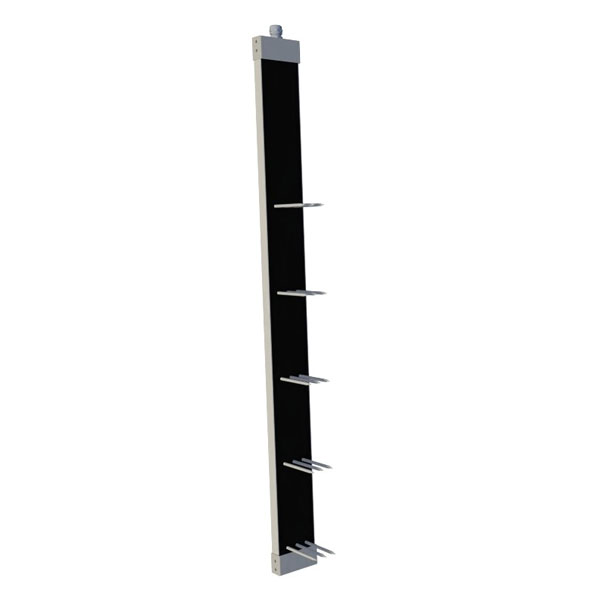 NBL-S-TM-MD Multi-Layer Soil Moisture Temperature Salinity Sensor | RS485 Modbus
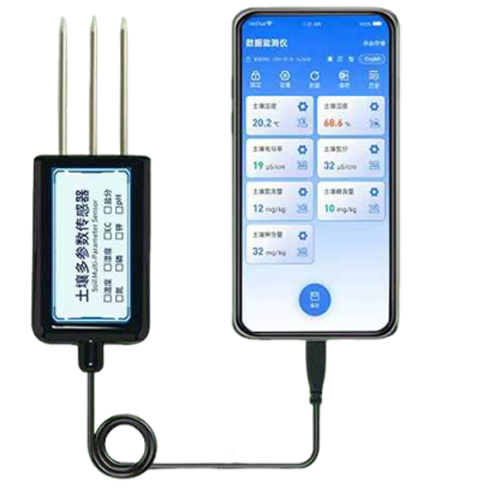 7-in-1 Soil Sensor for Android USB-Type-C
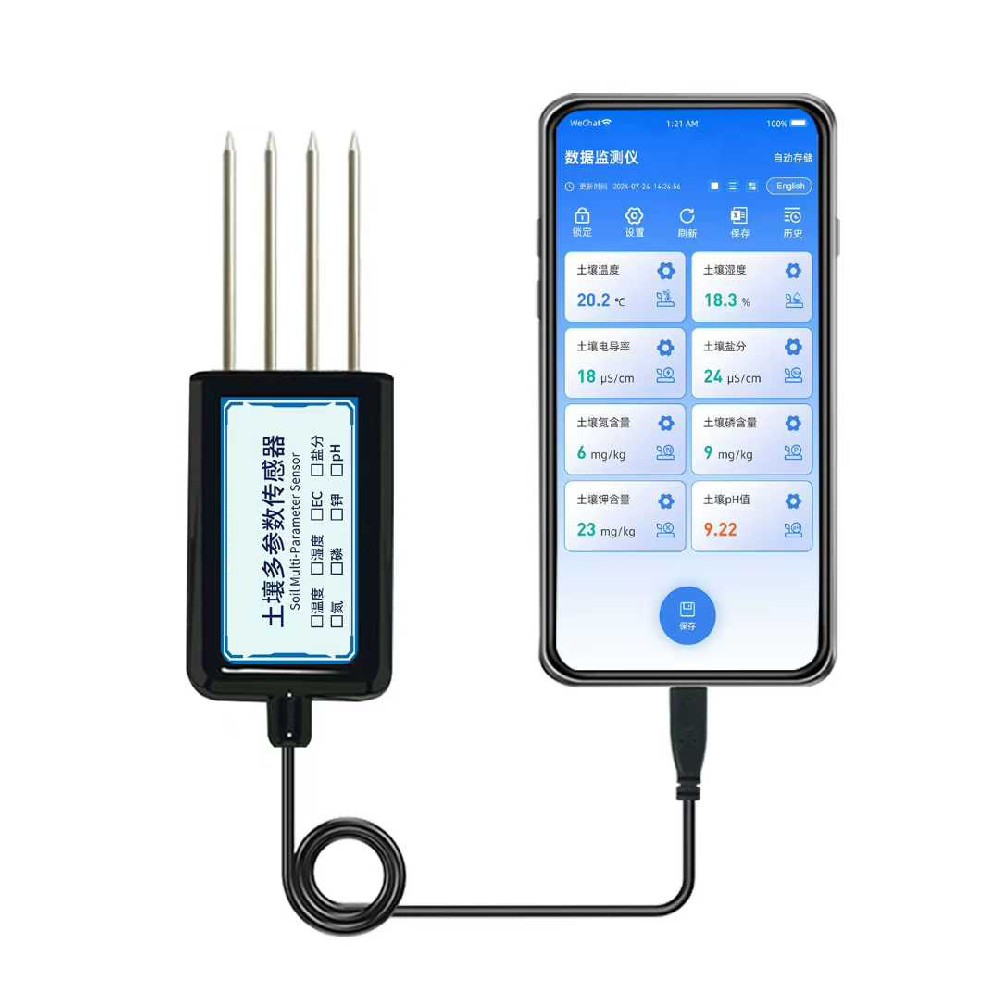 8-in-1 Portable Soil Sensor for Android Type-C/USB Soil Multi-Parameter Tester & Analyzer

Screenshot, WhatsApp to identify the QR code
WhatsApp number:+8615367865107
(Click on WhatsApp to copy and add friends)

