





— Products —
 Consumer hotline +8618073152920
WhatsApp:+8615367865107
Address:Room 102, District D, Houhu Industrial Park, Yuelu District, Changsha City, Hunan Province, China
Weather Stations

NBL-W-ES Evaporation sensor is used to observe the water surface evaporation in different time change rule of the instrument, can be used directly with the evaporation bucket to monitor the water surface evaporation. This sensor is a new generation of high-precision sensors, with a large measuring range, accuracy, high resolution, reverse polarity protection and current limitation protection, safety and explosion-proof features. The sensor has a variety of signal output forms···
Tel/WhatsApp:+8615367865107
Email:Arvin@niubol.com +Nearly 100 partner companies in more than 75 countries. We are committed to providing high-quality, practical products to meet your needs and help you solve problems. Our products comply with international standards and are certified with ISO, CE and RoHS.Product Details
The NiuBoL NBL-W-ES Evaporation Sensor is designed to monitor water-level changes in an evaporation pan or evaporation tank. By recording changes in the water surface level over time, the sensor provides measurement data for calculating water evaporation under controlled observation conditions.
With a 0–1000 mm measurement range, 0.1 mm resolution and selectable RS485, 4–20 mA or 0–5 V output, the NBL-W-ES can be integrated into automatic weather stations, agricultural irrigation monitoring systems, hydrological observation equipment and environmental research installations.
The sensor operates from DC 12–24 V with a power consumption of approximately 177.6 mW. It is designed to work with an evaporation pan or tank, allowing monitoring systems to collect water-level records without relying exclusively on manual readings.
| Parameter | Specification |
|---|---|
| Model | NBL-W-ES |
| Product Name | Evaporation Sensor |
| Measurement Application | Water-level monitoring in evaporation pans and tanks |
| Measurement Range | 0–1000 mm |
| Measurement Accuracy | ±0.5% (0 to +50°C) |
| Resolution | 0.1 mm |
| Power Supply | DC 12–24 V |
| Output Options | RS485 / 4–20 mA / 0–5 V |
| Power Consumption | 177.6 mW |
| Operating Temperature | -20 to 85°C |
| Environmental Humidity | Up to 100% RH |
| Standard Cable Length | 5 m |
| Sensor Weight | Approximately 330 g |
| Evaporation Tank Weight | Approximately 1.84 kg |
| Typical Installation | Evaporation pan / tank with mounting frame |
The 0–1000 mm range describes the sensor measurement range. The evaporation amount over a selected observation period is determined from water-level changes, with corrections for rainfall, added water and other relevant water inputs or losses.
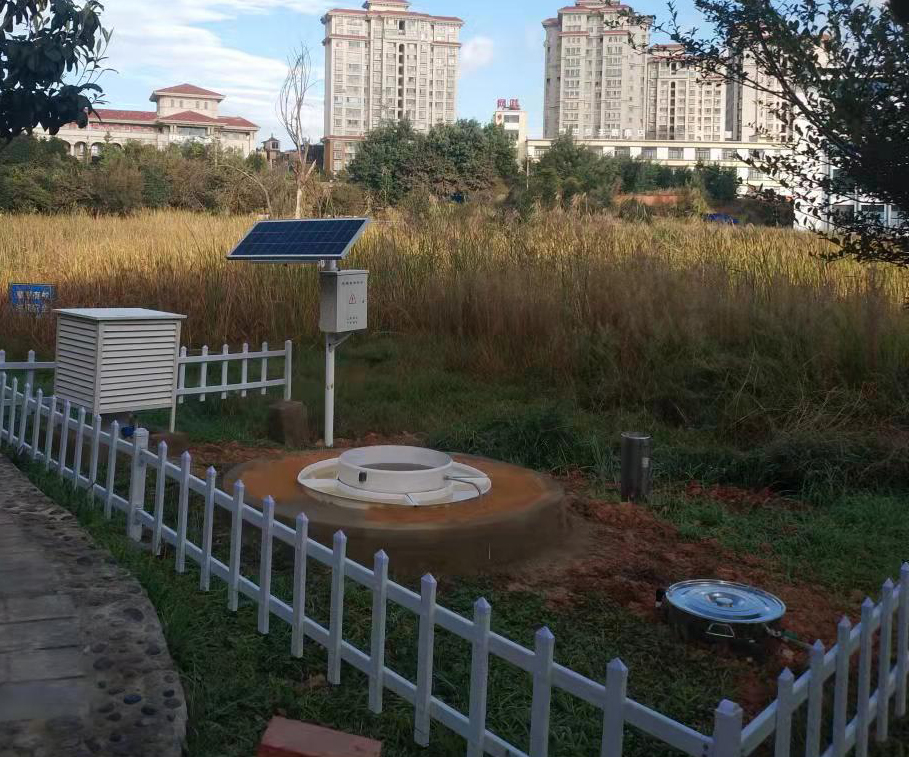
Water evaporates from an exposed surface as liquid water changes into water vapor. The rate of evaporation depends on atmospheric conditions, including solar radiation, air temperature, relative humidity and wind speed.
The NBL-W-ES Evaporation Sensor monitors the water surface level inside an evaporation pan or tank. As evaporation occurs, the water level decreases. By recording the water level at different times, the monitoring system can calculate the decrease over a defined observation period.
If there is no rainfall, water addition, drainage or leakage during the observation period, the reduction in water level represents the evaporation depth. When additional water enters or leaves the tank, those changes must be accounted for to calculate evaporation accurately.
For an evaporation tank with no rainfall or manual water addition during the measurement period:
| Measurement | Example Value |
|---|---|
| Starting Water Level | 485.0 mm |
| Ending Water Level | 479.0 mm |
| Calculated Evaporation | 6.0 mm |
Evaporation Depth = Starting Water Level − Ending Water Level
In this example, a reduction from 485.0 mm to 479.0 mm represents 6.0 mm of water evaporation under the stated conditions. If the observation period is 24 hours, the result represents 6.0 mm of evaporation over that day.
An open evaporation pan also collects rainfall. During a rainy period, the water level can increase even when evaporation continues. For this reason, a decrease or increase in water level alone cannot always be interpreted as the actual evaporation amount.
When rainfall occurs, the measurement system should record precipitation using a rain gauge and account for any manual filling, water removal, leakage or overflow. These factors are important when producing daily evaporation records from an open pan.
| Condition | Effect on Measurement |
|---|---|
| Evaporation | Generally lowers the water level. |
| Rainfall | Raises the water level and requires correction when calculating evaporation. |
| Manual Refilling | Raises the water level; the added water must be recorded. |
| Leakage or Drainage | Lowers the water level independently of evaporation. |
| Overflow | Causes an unrecorded water loss unless measured separately. |
0–1000 mm Range
Supports water-level monitoring across a wide measurement range.
0.1 mm Resolution
Provides fine-resolution readings for monitoring water-level changes.
Multiple Outputs
Available with RS485, 4–20 mA or 0–5 V output configurations.
Low Power Consumption
Approximately 177.6 mW for continuous monitoring applications.
Outdoor Monitoring
Designed for use with evaporation observation equipment in outdoor environments.
Data Logger Integration
Can connect to compatible data acquisition systems for automated recording.
The NBL-W-ES is installed together with an evaporation pan or tank. The mounting position and water level should be set according to the sensor's marked measurement range and the observation requirements of the installation.
| Installation Item | Recommendation |
|---|---|
| Observation Location | Select an open, representative location away from abnormal shading, water splashing and artificial heat sources. |
| Evaporation Tank | Install the evaporation tank securely and keep the tank level. |
| Tank Height | For the described installation, position the tank opening approximately 10–20 cm above the surrounding ground. |
| Sensor Mounting | Secure the sensor using the appropriate stainless steel support or mounting frame. |
| Initial Water Level | Fill the tank until the water surface reaches the high-level reference mark. |
| Refilling | Refill the tank when the water level reaches the low-level reference mark, and record the refill event for evaporation calculations. |
| Power and Output | Connect DC 12–24 V power and the selected signal output to the monitoring equipment. |

The NBL-W-ES Evaporation Sensor provides different signal output configurations to meet the requirements of meteorological stations, PLC systems and environmental data loggers.
| Output | Typical Application |
|---|---|
| RS485 | Compatible weather stations, digital data loggers, industrial controllers and monitoring systems with an RS485 interface. |
| 4–20 mA | Industrial PLC analog input modules and remote data acquisition systems. |
| 0–5 V | Controllers and data loggers with compatible voltage input channels. |
The output interface should be selected according to the receiving equipment. For digital systems, the RS485 communication settings and data register definitions are required. For analog systems, the signal-to-measurement scaling must match the supplied output configuration.
The NBL-W-ES can be used together with rainfall, air temperature, relative humidity, wind speed and solar radiation sensors in a meteorological monitoring system. These measurements help explain the atmospheric conditions associated with changes in water evaporation.
| System Component | Function |
|---|---|
| NBL-W-ES Evaporation Sensor | Monitors water-level changes in the evaporation tank. |
| Rain Gauge | Records precipitation for water-balance corrections. |
| Air Temperature and Humidity Sensor | Provides atmospheric temperature and humidity conditions. |
| Wind Speed Sensor | Measures wind conditions that influence evaporation. |
| Solar Radiation Sensor | Measures incoming solar energy affecting the water surface. |
| Data Logger / IoT Gateway | Collects sensor data and supports recording or remote transmission. |
| Monitoring Platform | Stores historical measurements and supports evaporation analysis. |
Evaporation Sensor + Rain Gauge + Weather Sensors → Data Logger → Monitoring Platform
Where a cloud platform or private server is required, the sensor can be connected through a compatible communication gateway. The RS485 or analog output from the sensor is not itself a direct 4G or internet connection.
| Application | Monitoring Value |
|---|---|
| Automatic Weather Stations | Provides evaporation-pan observations alongside temperature, humidity, rainfall, wind and solar radiation measurements. |
| Agricultural Irrigation | Supplies evaporation data as one input for water-balance assessment and irrigation planning. |
| Water Resource Management | Supports studies of evaporative water losses and seasonal changes in water availability. |
| Hydrological Research | Records evaporation-pan measurements for water-cycle and hydrometeorological observations. |
| Climate Research | Provides long-term observation data for examining evaporation under different atmospheric conditions. |
| Environmental Monitoring | Supports studies of water-surface evaporation in representative observation environments. |
Water evaporation and soil moisture are related to agricultural water management, but they are different measurement parameters.
| Comparison | Evaporation Sensor | Soil Moisture Sensor |
|---|---|---|
| Measurement Object | Water level in an evaporation pan or tank | Water content of soil around the probe |
| Typical Unit | mm | % volumetric water content |
| Main Use | Water-surface evaporation studies | Root-zone moisture monitoring and irrigation management |
| Can Replace the Other? | No. Evaporation-pan data does not directly measure soil water content or crop evapotranspiration. | |
In agricultural monitoring systems, evaporation measurements can be combined with soil moisture, weather and crop data to support more complete irrigation analysis.
Regular maintenance is important because evaporation measurement depends on stable water-level observation conditions and correct operation of the evaporation tank.
| Maintenance Item | Recommended Procedure |
|---|---|
| Water Quality | Use water representative of the intended observation conditions. Natural water may be used where appropriate; clean well water or tap water may be used when necessary. |
| Water Cleanliness | Remove floating debris, insects, algae and other contaminants that may affect water-surface conditions. |
| Water Replacement | Replace water as needed; approximately monthly replacement is a useful routine under ordinary conditions. |
| Temperature During Refilling | Use replacement water with a temperature close to that of the existing tank water when practical. |
| Tank Leakage | Inspect the evaporation tank regularly for leaks, especially before and after seasonal operation. |
| Mounting Stability | Check that the tank remains level and properly positioned. |
| Freezing Conditions | Where prolonged freezing occurs, discontinue normal liquid-water observations and follow the appropriate cold-season observation procedure. |
| Water-Level Records | Record refilling, cleaning, water replacement and other maintenance events to prevent errors in evaporation calculations. |
| Problem | Recommended Check |
|---|---|
| Unexpected Water-Level Increase | Check rainfall, manual water addition and maintenance records. |
| Unusually High Water Loss | Inspect the tank for leakage, overflow, accidental drainage or water splashing. |
| Unstable Measurements | Check water-surface disturbance, tank stability, sensor mounting and electrical connections. |
| No Output Signal | Check DC 12–24 V power, output wiring and compatibility with the data acquisition equipment. |
| Incorrect Logged Data | Confirm data scaling, measurement units, recording intervals and maintenance-event handling. |
A1. It monitors water-level changes in an evaporation pan or tank. These measurements can be used to calculate water-surface evaporation over a selected observation period.
A2. The sensor has a measurement range of 0–1000 mm with a resolution of 0.1 mm.
A3. Yes. The NBL-W-ES is designed for use with an evaporation pan or tank and suitable mounting components.
A4. The sensor continues to monitor water-level changes. However, rainfall adds water to the tank and must be accounted for when calculating evaporation. A rain gauge can provide the necessary precipitation data.
A5. No. It monitors water-level changes in an evaporation pan. Soil moisture requires a separate soil moisture sensor.
A6. The NBL-W-ES is available with RS485, 4–20 mA or 0–5 V output configurations. The required output should be specified when ordering.
A7. Yes. The sensor can connect to a compatible data logger or IoT gateway that collects the readings and transmits them using the required communication method.
A8. No. Pan evaporation represents water loss from an exposed water surface. Crop evapotranspiration includes evaporation from soil and transpiration from plants. Additional meteorological data and appropriate coefficients or models are needed to estimate crop water use.
A9. Inspect water cleanliness, remove debris, check for leakage and keep the tank level. Water replacement, refilling and other maintenance events should be recorded.
 NBL-W-ES-Evaporation-Sensor-Instruction-Manual-V3.0.pdf
The NiuBoL NBL-W-ES Evaporation Sensor provides an automated solution for observing water-level changes in evaporation pans. With a 0–1000 mm measurement range, 0.1 mm resolution and selectable RS485 or analog outputs, it can be integrated into meteorological, agricultural and hydrological monitoring systems.
For project selection and quotation, specify the required output interface, evaporation tank configuration, installation location, data logging interval, power supply and remote communication requirements.
Prev:6-in-1 Ultrasonic Weather Station Sensor with Rainfall | NBL-W-61MUWS
Next:Atmospheric Visibility Sensor | NBL-W-VS| 5m–10km RS485
Sensors & Weather Stations Catalog
 Agriculture Sensors and Weather Stations Catalog-NiuBoL.pdf
Weather Stations Catalog-NiuBoL.pdf
Agriculture Sensors Catalog-NiuBoL.pdf
Water Quality Sensor Catalog-NiuBoL.pdf
Related recommendations
 Wind Speed sensor Output Modbus/RS485/Analog/0-5V/4-20mA
 Tipping bucket rain gauge for weather monitoring auto rainfall sensor RS485/Outdoor/stainless steel
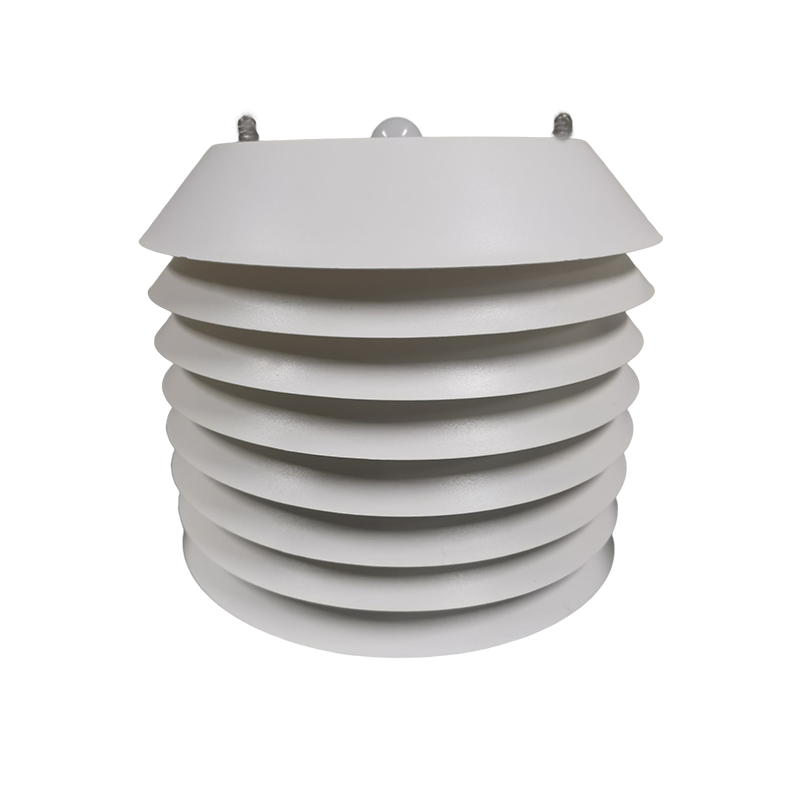 5-in-1 Temperature, Humidity, Air Pressure, Illumination, CO2 Sensor
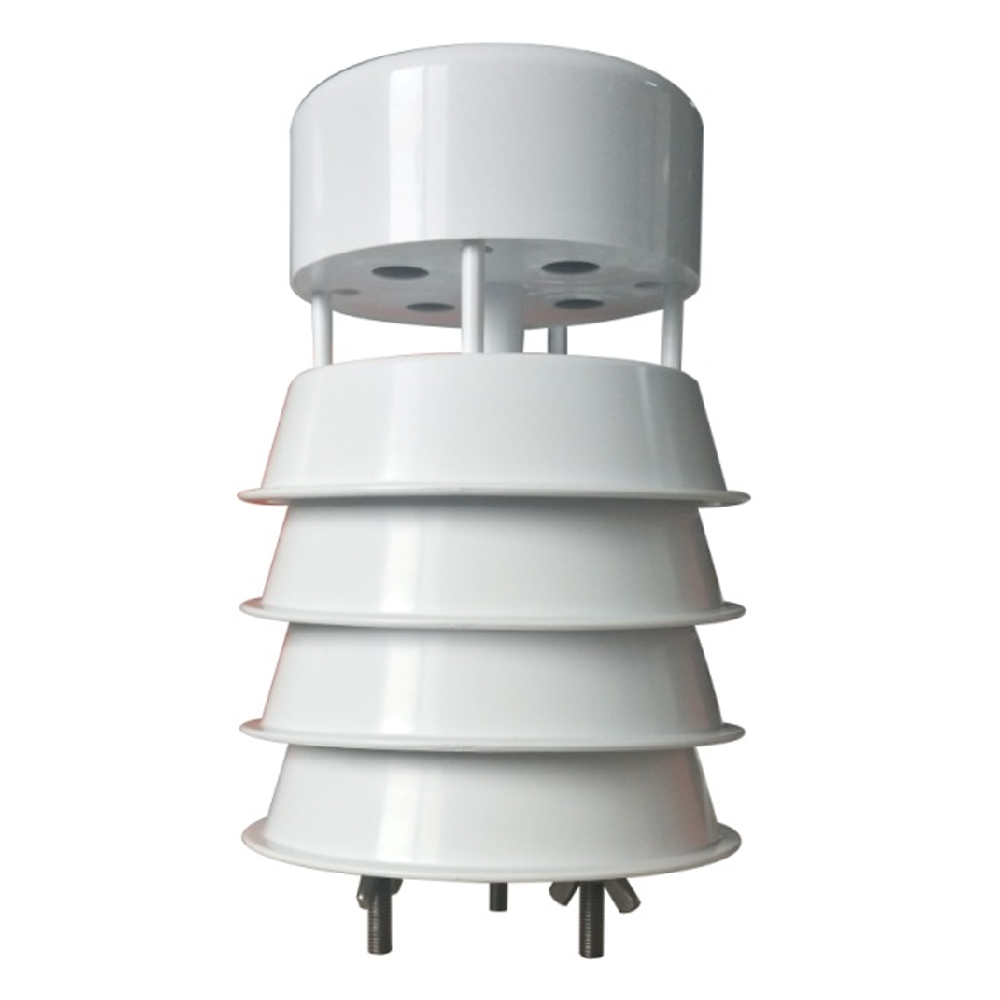 5-in-1 Ultrasonic Weather Station Sensor RS485 | NBL-W-51MUWS
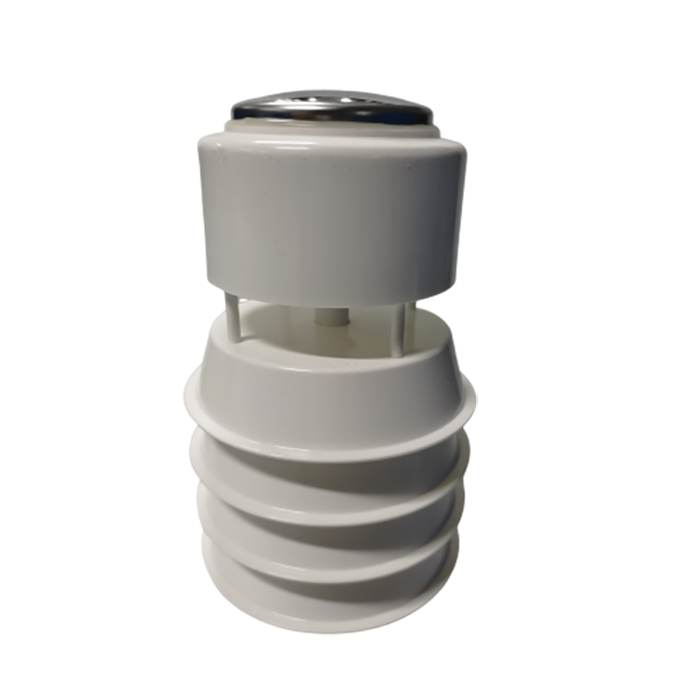 6-in-1 Ultrasonic Weather Station Sensor with Rainfall | NBL-W-61MUWS 7-in-1 Ultrasonic Weather Sensor with Rainfall & illuminance | NBL-W-71MUWS


Screenshot, WhatsApp to identify the QR code
WhatsApp number:+8615367865107
(Click on WhatsApp to copy and add friends)

