





— Blogs —
—Products—
 Consumer hotline +8618073152920
 WhatsApp:+8615367865107
Address:Room 102, District D, Houhu Industrial Park, Yuelu District, Changsha City, Hunan Province, China
Product knowledge
Time:2023-08-30 14:03:21 Popularity:2115
Application scenarios and uses of rainfall sensors
Rainfall sensors are devices used to measure precipitation, and they are widely applied in fields such as meteorology, water resources management, agriculture, and urban planning. They are used to collect and record the quantity and intensity of rainfall, providing critical meteorological data and facilitating the efficient utilization of water resources.
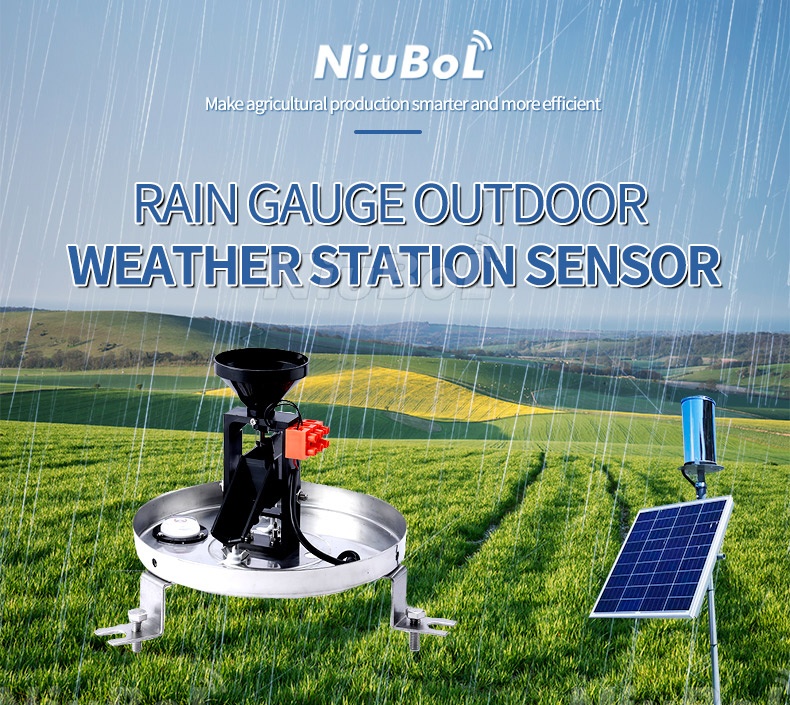
In meteorology, rainfall sensors are fundamental tools for obtaining accurate precipitation data. They are extensively employed in building weather forecasting models, studying climate change, and monitoring and warning of weather disasters such as floods and heavy rainfalls. Rainfall sensors not only provide real-time rainfall information but also record long-term precipitation trends, offering essential data support for scientists and meteorologists.
Rainfall sensors play a crucial role in water resources management. They help monitor and assess changes in water levels in reservoirs, rivers, and lakes, providing insights into water accumulation and flow. Such data is vital for water resource planning, water supply management, and flood prevention measures.
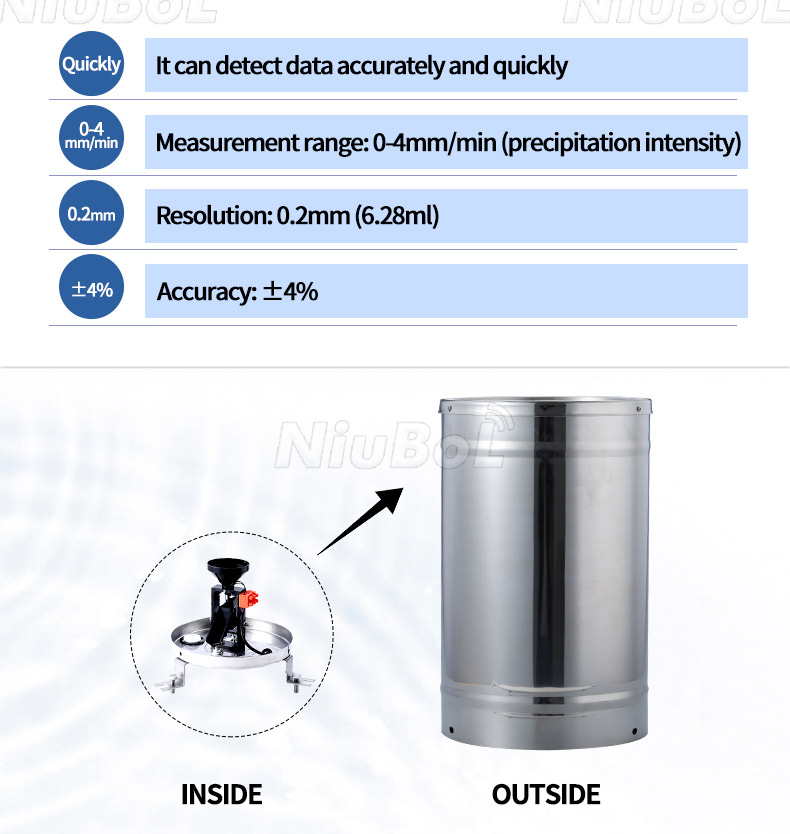
Agriculture relies on rainfall sensors to optimize irrigation systems and crop management. Accurate rainfall data assists farmers in planning irrigation schemes, improving water resource utilization efficiency, and providing appropriate water conditions for crop growth. Furthermore, rainfall sensors can also be used to monitor soil moisture and soil erosion, providing comprehensive data for agricultural management decisions.
In urban planning, rainfall sensors contribute to assessing the capacity and effectiveness of urban drainage systems. By collecting precipitation data, one can evaluate the adequacy of urban drainage pipe designs and predict the risk of urban flooding. This is crucial for rational urban development planning and enhancing urban infrastructure.
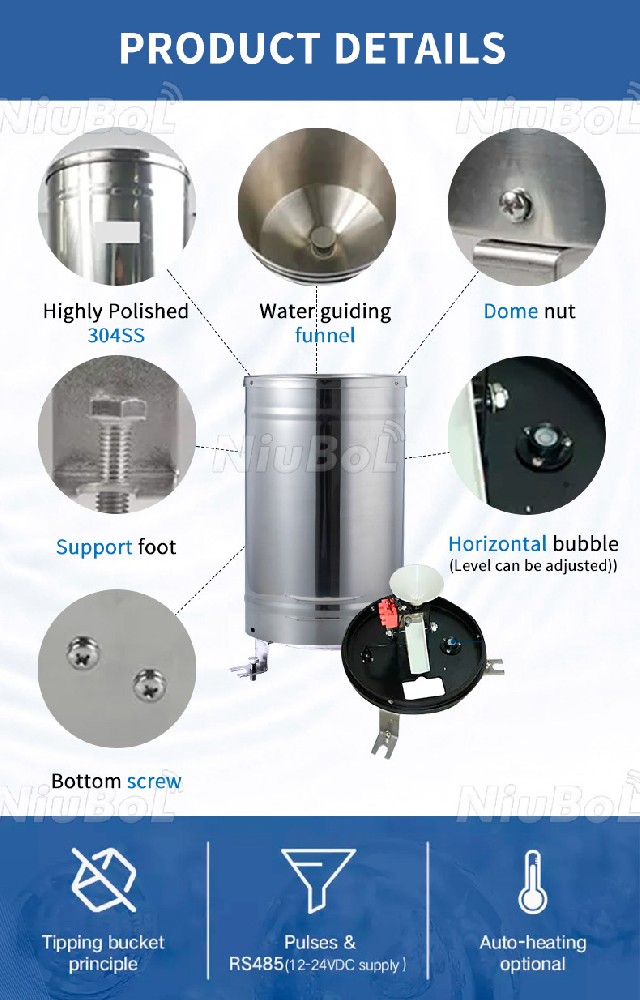
In summary, rainfall sensors play essential roles in various fields. They provide real-time and accurate precipitation data for meteorology, water resources management, agriculture, and urban planning, facilitating informed decision-making and resource utilization optimization. With advancing technology, rainfall sensors' accuracy and performance continue to improve, enabling them to better meet diverse application scenarios and bring greater convenience to people's lives and work.
Related recommendations
Sensors & Weather Stations Catalog
 Agriculture Sensors and Weather Stations Catalog-NiuBoL.pdf
Weather Stations Catalog-NiuBoL.pdf
Agriculture Sensors Catalog-NiuBoL.pdf
Water Quality Sensor Catalog-NiuBoL.pdf
Related products
 Combined air temperature and relative humidity sensor
 TDR Soil Moisture & Temperature Sensor for irrigation| RS485 |4-20mA| NBL-S-THR
 Soil pH sensor RS485 soil Testing instrument soil ph meter for agriculture |NBL-S-PH
 Wind Speed sensor Output Modbus/RS485/Analog/0-5V/4-20mA
 Tipping bucket rain gauge for weather monitoring auto rainfall sensor RS485/Outdoor/stainless steel
 Pyranometer Solar Radiation Sensor 4-20mA/RS485

Screenshot, WhatsApp to identify the QR code
WhatsApp number:+8615367865107
(Click on WhatsApp to copy and add friends)

