





— Blogs —
—Products—
 Consumer hotline +8618073152920
 WhatsApp:+8615367865107
Address:Room 102, District D, Houhu Industrial Park, Yuelu District, Changsha City, Hunan Province, China
Product knowledge
Time:2026-09-26 12:00:00 Popularity:17
For hydroponic water quality monitoring, the buyer needs a testable control point rather than a parameter name and a generic alarm.
Limits, delays, and alarm recipients should be chosen after the team understands how quickly the water changes after an operating action.
| Check | Requirement | Evidence |
|---|---|---|
| Live value — focus: Hydroponic Water Quality Monitoring EC, pH and Nutrient Control | pH shown at the installed point | Local display and host screen captured together. |
| Alarm or event | adjust nutrient concentration | Alarm route or process response tested and recorded. |
| Site evidence | the probe should sit after mixing, not beside a fresh dosing stream | Photo, note, or service record kept with the project file. |
| Owner handover — application: Hydroponic Water Quality Monitoring | operator check and data review owner named | Responsible team written into the startup record. |
| Point to define | Project detail | Why it changes the result |
|---|---|---|
| Control action | adjust nutrient concentration | State whether the value starts equipment, stops dosing, raises alarm, or only records a trend. |
| Sensor position | sensor too close to dosing | Avoid measuring a local slug before the water is mixed. |
| Response and delay | pH trend speed | Agree alarm delay or control deadband before commissioning. |
| Fallback action | dose acid or alkali | Operators need a manual response when signal quality is doubtful. |
A useful supplier request for hydroponic water quality monitoring names normal and alarm values, shows the sample point, and states the controller or logger model before asking for price.
The working environment for hydroponic water quality monitoring is usually hydroponic nutrient tanks, return lines, or greenhouse irrigation where EC and pH guide crop work. That detail decides whether the reading is used to dose acid or alkali or kept as a trend.
A pH trend is only useful when the owner can trace it back to the sample route and the action taken after an alarm. For Hydroponic Water Quality Monitoring EC, pH and Nutrient Control, record this requirement in the model-selection sheet before quotation.
If the site may see poor mixing, the hydroponic water quality monitoring quote should show how the probe is mounted, how the point is reached, and how cleaning is checked after startup.
| Host or data path | Set before commissioning | Proof to keep |
|---|---|---|
| PLC input | fixed slave address, baud rate, register, data type, and scale; tag tied to hydroponic water quality monitoring | wet test beside the local display |
| RTU cabinet | power recovery, grounding, surge path, and missing-data alarm; tag tied to hydroponic water quality monitoring | restart record and uploaded trend |
| data logger | sample interval, memory depth, clock source, and export format; tag tied to hydroponic water quality monitoring | downloaded CSV or platform trend |
| SCADA screen | tag name, unit, decimal place, alarm class, and operator note; tag tied to hydroponic water quality monitoring | screen capture with live value |
The data path for hydroponic water quality monitoring should be proven from controller to PLC, RTU, logger, or platform. For each hydroponic channel, document the slave address, register, scaling, engineering unit, greenhouse zone, and alarm label so EC and pH cannot be interchanged.
Bring up the hydroponic water quality monitoring signal one channel at a time. This makes wrong scaling, wrong tag names, and swapped alarm text easier to catch.
| NiuBoL item | Documented or selectable basis | Project role |
|---|---|---|
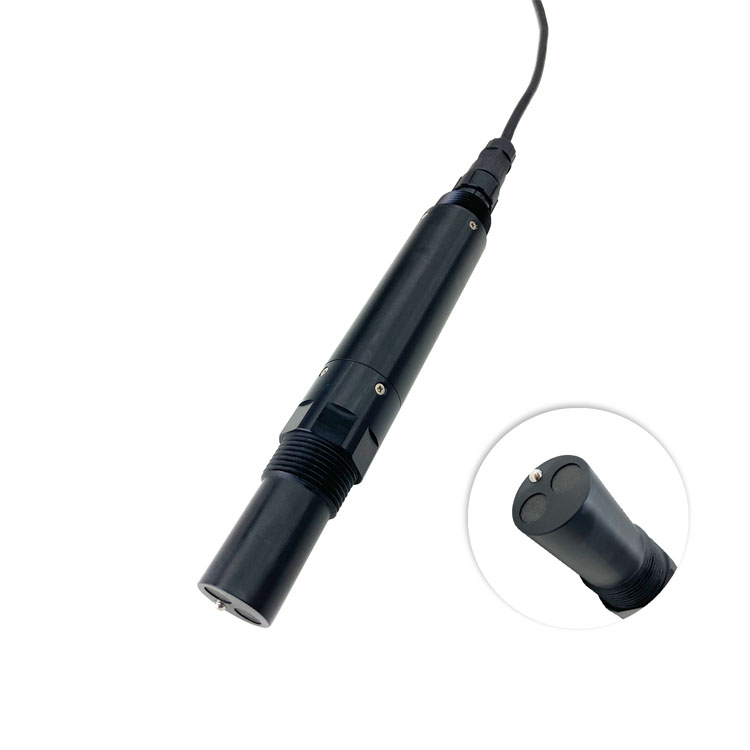
| NiuBoL item">NBL-WQ-EC online conductivity sensor | 0-20.00uS/cm low-range option for hydroponic water quality monitoring; 0-200.0uS/cm low-range option in the control scope; RS485 Modbus RTU output in the control scope; IP68 probe in the control scope | Fits points where pH supports nutrient strength, pH correction, crop-zone separation, and irrigation control review for this control scope. |
| NBL-WQ-PH online pH sensor | 0-14 pH range for hydroponic water quality monitoring; 12-24VDC supply in the control scope; IP68 probe body in the control scope; RS485 Modbus RTU output in the control scope | Fits points where pH supports nutrient strength, pH correction, crop-zone separation, and irrigation control review for this control scope. |
| NiuBoL water quality monitoring system | multi-sensor station layout for hydroponic water quality monitoring; controller, logger, gateway, and cabinet options in the control scope; RS485 Modbus RTU sensor bus in the control scope; solar or mains power depending on site in the control scope | Fits points where pH supports nutrient strength, pH correction, crop-zone separation, and irrigation control review for this control scope. |
| Mounting, controller, logger, gateway, cabinet, or power option | Selected from site layout, cable distance, enclosure, host, and access requirement | Keeps hydroponic water quality monitoring from being quoted as a loose probe when the job needs an installed package. |
The comparison should separate NBL-WQ-EC online conductivity sensor from a larger package. Confirm the range, output, supply, and installation basis before NBL-WQ-PH online pH sensor is added to the offer.
For hydroponic water quality monitoring, keep the confirmed data apart from field choices.
Keep the hydroponic water quality monitoring record practical. Name the selected product and location, then add wiring, host value, alarm test, and unresolved NiuBoL items.
A control point for hydroponic water quality monitoring is not ready until the host action has been observed, named, and saved with the process condition that caused it.
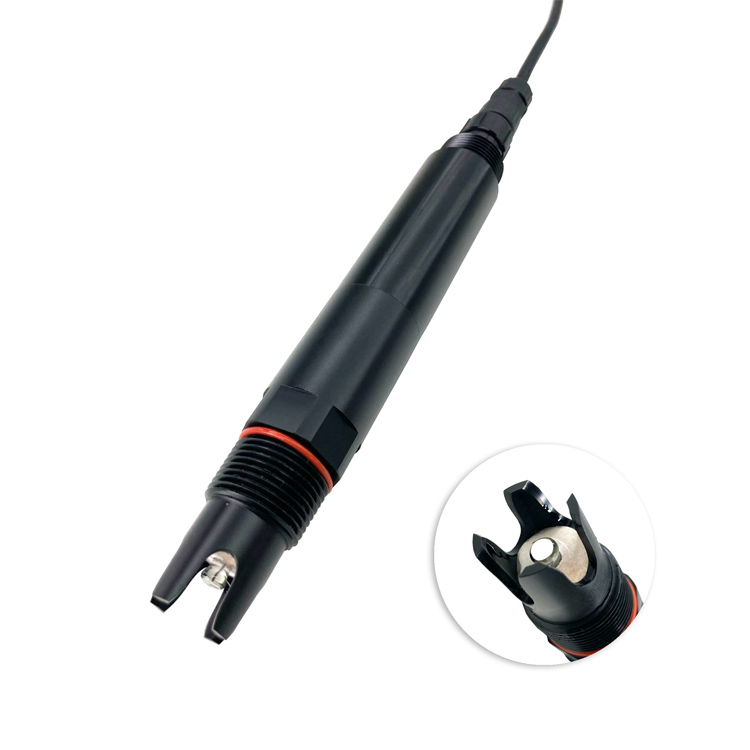
The buyer should be able to tell whether pH is for automatic control, alarm-assisted response, or trend review.
For hydroponic water quality monitoring, open RFQ items are measuring range for hydroponic water quality monitoring; cable distance; mounting hardware; host signal; check solution; field comparison record.
The hydroponic water quality monitoring control note should name the action that follows the value.
Keep related process context near hydroponic water quality monitoring.
A control-focused hydroponic water quality monitoring scope needs a testable limit, a response path, and a record showing the process moved after the output changed.
For hydroponic water quality monitoring, the control value should be tested with the process state written beside it. Record the reading before the action, the alarm or output state, the expected delay, and the water condition after response. This is more useful than a single stable number because it shows whether pH can support the real operating decision.
A control-focused RFQ should ask NiuBoL for output options, response expectations, cable length, controller need, and any limit on the selected model. It does not need a universal service checklist.
For hydroponic water quality monitoring, a stable number is not enough. The test should show that the alarm, relay, PLC tag, or operator message appears at the right time and uses the right unit.
For Hydroponic Water Quality Monitoring: EC, pH and Nutrient Control for Greenhouses - Location Around Dosing Or Process Change, control language should stay practical. Name the normal band, the response threshold, who receives the event, and what action is taken when the value returns to normal.
For water-quality monitoring system - Location Around Dosing Or Process Change, if the process has a long mixing delay, write it into the control note. Without delay, operators may chase a value that has not had time to respond to dosing or aeration.
A1: For the control loop, name the action first. For hydroponic water quality monitoring, the reading may start aeration, adjust dosing, hold discharge, warn an operator, or only create a trend for later review.
A2: Before an alarm limit is accepted, place the probe where water is mixed enough for the control action but early enough to respond. A point too close to chemical injection can drive false correction. Apply this decision specifically to Hydroponic Water Quality Monitoring.
A3: During the first operating run, specify RS485 Modbus RTU, controller relay, analog input if required, gateway, or PLC mapping. The host must show the same unit and scale as the local controller. Apply this decision specifically to Hydroponic Water Quality Monitoring.
A4: For hydroponic water quality monitoring, write the normal band, alarm limit, delay, reset behavior, and who responds. A limit without action is only a number on a screen.
A5: For Hydroponic Water Quality Monitoring, for the control loop, automatic control is suitable only when the point is stable, representative, and maintained. If the water changes fast or the probe fouls quickly, alarm-assisted operator action may be safer.
A6: Before an alarm limit is accepted, run a controlled startup check with the process state recorded. Apply this decision specifically to Hydroponic Water Quality Monitoring.
A7: During the first operating run, review related values such as pH, flow, dosing state, blower output, turbidity, conductivity, or weather depending on the site. A control value without context is easy to tune incorrectly. Apply this decision specifically to Hydroponic Water Quality Monitoring.
A8: For hydroponic water quality monitoring, send the control action, expected range, process delay, host device, output need, alarm recipient, mounting point, and service access. NiuBoL can then confirm the proper configuration.
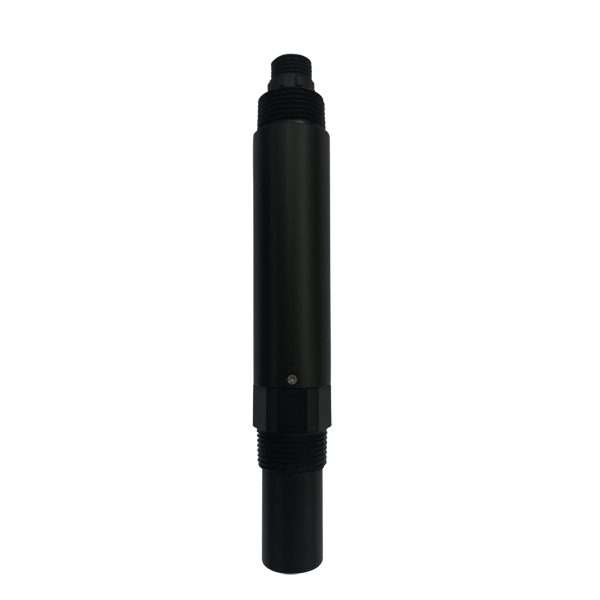
For hydroponic water quality monitoring, pH has value only when it is tied to a real control choice instead of being treated as an isolated number on a display.
Prev:Electroplating Wastewater Monitoring: ORP, pH and Treatment Control
Next:Mining Wastewater Monitoring: pH, Turbidity and Conductivity for Runoff Control
Related recommendations
Sensors & Weather Stations Catalog
 Agriculture Sensors and Weather Stations Catalog-NiuBoL.pdf
Weather Stations Catalog-NiuBoL.pdf
Agriculture Sensors Catalog-NiuBoL.pdf
Water Quality Sensor Catalog-NiuBoL.pdf
Related products
 Combined air temperature and relative humidity sensor
 TDR Soil Moisture & Temperature Sensor for irrigation| RS485 |4-20mA| NBL-S-THR
 Soil pH sensor RS485 soil Testing instrument soil ph meter for agriculture |NBL-S-PH
 Wind Speed sensor Output Modbus/RS485/Analog/0-5V/4-20mA
 Tipping bucket rain gauge for weather monitoring auto rainfall sensor RS485/Outdoor/stainless steel
 Pyranometer Solar Radiation Sensor 4-20mA/RS485

Screenshot, WhatsApp to identify the QR code
WhatsApp number:+8615367865107
(Click on WhatsApp to copy and add friends)

