





— Blogs —
—Products—
 Consumer hotline +8618073152920
WhatsApp:+8615367865107
Address:Room 102, District D, Houhu Industrial Park, Yuelu District, Changsha City, Hunan Province, China
Product knowledge
Time:2026-11-09 10:16:36 Popularity:6
A multiparameter water quality sonde combines several electrochemical and optical channels in one immersed body, so its acceptance test is per-channel drift, not a single accuracy figure. Resolution, accuracy and stability describe different things, and a week of immersion changes them in different ways for each channel.
For a multiparameter water quality sonde, a weekly check against a prepared standard solution is the simplest way to see drift before it becomes a compliance problem. The table below is a shortened record from one sonde with four channels, checked on day 1 and day 7 against the same reference.
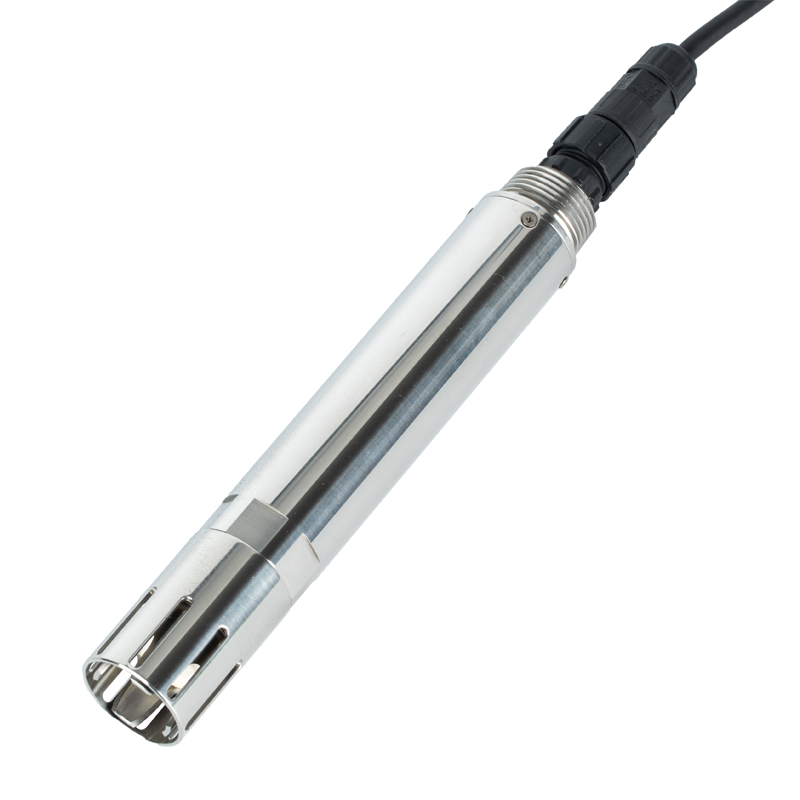
Figure 1. NBL-WQ-PH-4 Online pH Sensor Glass Electrode Method RS-485 Modbus-RTU for Industrial IoT Water….
On a multiparameter water quality sonde, the pH channel moved far more than its 0.01 pH reporting increment would suggest. A reading to two decimal places does not establish accuracy to 0.01 pH, and the day-7 offset of +0.28 pH is nearly three times a commonly stated ±0.1 pH error. The ORP channel drifted from +4 mV to +31 mV while temperature stayed flat, which points at the electrode rather than at the water.
A quality-control routine for automatic water monitoring uses weekly standard-solution checks with relative error within ±10% of the recommended value and relative standard deviation within ±5%; outside those bounds the baseline has drifted and the instrument needs recalibration. Those are acceptance limits for the check procedure, not datasheet accuracy specifications, so record them separately.
The chloride channel is worth reading differently. Its specification is ±5% of reading, not ±5% of full scale, so a +6.8% deviation at day 7 has moved outside the stated envelope regardless of where in the 0–3500.0 mg/L range the check was made. Mixing "of reading" and "of full scale" conventions in one acceptance table makes this comparison meaningless.
pH is an activity, defined as pH = −log10 a(H+), where a(H+) is the dimensionless hydrogen-ion activity relative to a standard state. It is not a concentration of hydrogen ions. For a stated ±0.1 pH error, a 0.1-unit difference corresponds to an activity factor of approximately 10^0.1, or 1.26. That is a relationship between logarithms and activity, not a 26% uncertainty in chemical-feed quantity.
A base-model online pH instrument in this product class covers 0–14 pH at 0.01 pH resolution and 0–65 °C. Its stated conditions also include pressure below 0.2 MPa, a POM wetted body, 12–24 VDC supply and RS485 Modbus RTU output. Confirm the mounting option — immersion or 3/4 NPT — against the ordered configuration. The 0–14 pH range does not establish compatibility with every acid, and IP68 at the probe does not provide an environmental rating for exposed connections or the cabinet.
ORP uses a platinum electrode with a reference system. One ORP-4 series is specified at 0–50 °C and pressure <0.1 MPa for preliminary screening. It runs on 12–24 VDC, outputs RS485 Modbus RTU with optional 4–20 mA, and comes in POM/ABS or POM/316L construction. Any additional module brings the same problem: a fine display increment on a residual-chlorine channel does not establish that it can discriminate at a near-zero action level. List fitted modules explicitly, because an unfitted channel can still return a default register value.
The chloride channel uses a solid-membrane ion-selective method, offered as 0–3500.0 mg/L at 0.1 mg/L or 0–35000 mg/L at 1 mg/L, with ±5% of reading accuracy. Its sample conditions are pH 2–12 and pressure at or below 0.2 MPa. The probe takes 12–24 V DC, outputs RS485 Modbus RTU with optional 4–20 mA, and is supplied with a standard 5 m cable. The pH 2–12 condition is part of the sample specification, not a footnote.
Biofilm, silt and oil on the sensing surface of a multiparameter water quality sonde change the local chemistry the electrode sees. A pH bulb coated with biofilm responds slowly and reads the film's environment rather than the bulk water. An optical window clouded by sediment attenuates the light path and biases a turbidity or fluorescence channel upward. Neither effect appears as an electronic fault, so a sonde can pass a self-diagnostic while reporting wrong numbers.
Immersion depth is part of the installation. Mount each fitted sensor below the lowest expected water level, with the sensing surface still accessible for cleaning. Shallow mounting exposes the sensing surface to bubbles and surface films, and a probe that periodically breaks the surface produces a repeating step that looks like a process event. No recalibration removes that step.
Cable joints are the other weak point. IP68 at the probe says nothing about a junction box or a connector above the waterline. Protect cable joints and keep the optical region both accessible and immersed, so cleaning can actually be performed without lifting the whole assembly out of service.
Consider a multiparameter water quality sonde whose pH channel has a stated ±0.1 pH error. A weekly check standard reads 7.00 pH and the instrument reports 7.28 pH on day 7. The offset is +0.28 pH, which is 2.8 times the stated error. In activity terms, 10^0.28 is about 1.9, so the reported hydrogen-ion activity differs from the standard by nearly a factor of two — but that factor is an activity ratio, not a dosing error.
Now compare with the check-procedure limits. If the routine requires relative error within ±10% of the recommended value and relative standard deviation within ±5%, the operator should run at least three replicate standard readings, compute both statistics, and only then decide whether to recalibrate. A single reading of 7.28 pH is evidence of drift, not proof of its magnitude.
Illustrative calculation based on assumed site values, not a measured field record. The 7.00 pH standard, the 7.28 pH reading and the ±0.1 pH error are worked example values. Use the current datasheet for your instrument and the accepted check-solution value for your site, and state whether the quoted error is of reading or of full scale before setting a recalibration limit.
The practical output of this calculation is a decision rule, not a number: recalibrate when the replicate mean exceeds the stated error, record the pre- and post-calibration offsets, and keep the raw values from the drifted period flagged rather than silently replacing them. A dataset rewritten by a calibration adjustment destroys the evidence that the drift occurred.
There are questions a multiparameter water quality sonde cannot answer. A drift check says how a channel behaves against a standard; it says nothing about whether the water reaching the probe represents the discharge. An optical BOD module is a separate instrument with its own validated optical relationship and its own error convention. Folding its estimate into the sonde's per-channel drift record turns two different measurements into one column, so keep separately mounted modules in separate tables.
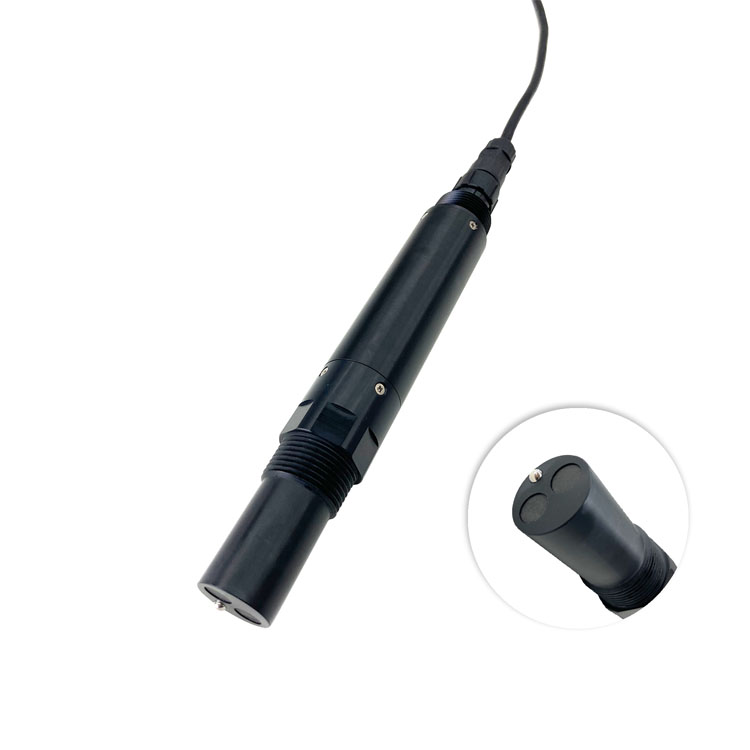
Figure 2. Water Conductivity EC Sensor RS485 Modbus IP68 — NBL-WQ-EC.
Response time is another boundary. A fouled pH bulb responds slowly, so a short excursion can be flattened into the weekly drift check rather than appear as an event at all. Compare electrode response time against the shortest process excursion the site needs to see, and state that response-time budget in the alarm design instead of assuming the standard-check interval captures it.
Finally, a wide operating range is not a chemical compatibility statement. A 0–14 pH channel does not prove suitability for every acid or every cleaning agent, and an IP68 rating at the probe says nothing about a junction box above the waterline. Where sample pH falls outside 2–12 for the chloride channel, pressure exceeds 0.1 MPa for the ORP channel or 0.2 MPa for the pH and chloride channels, or the optical region is not fully immersed, the specification no longer describes the measurement.
RS485 Modbus RTU can carry selected numerical sensor values, but the fitted modules of a multiparameter water quality sonde must be listed explicitly. Specify the register format and units against the ordered device information, and separate unavailable channels from unchanged water. A register that holds a default value for an unfitted module looks like a measurement until someone checks the configuration.
For integration, confirm the device address, baud rate, parity, register layout and numerical scaling for each channel, and agree the 4–20 mA signal scale if that output is ordered. A 0–5 V or 4–20 mA option scales a measured value against a selected full measuring range, so an incorrect range setting shifts every reading by the same factor — an error that no amount of calibration replication will reveal.
List the fitted modules and their ranges, and mark unfitted channels as unavailable in the record.
Run at least three replicate standard checks for pH, ORP and chloride before the first field value is accepted.
Record pre- and post-calibration offsets, and flag rather than overwrite the drifted period.
Verify immersion depth against the lowest expected water level, and protect above-water cable joints.
Agree the 4–20 mA or 0–5 V scaling and the full measuring range used by the receiving equipment.
Set a cleaning interval from observed fouling rate, and log each cleaning as a dated event.
Re-run the standard check after any firmware change, since a silent scaling revision moves every historical comparison.
Q1. Does 0.01 pH resolution mean 0.01 pH accuracy?
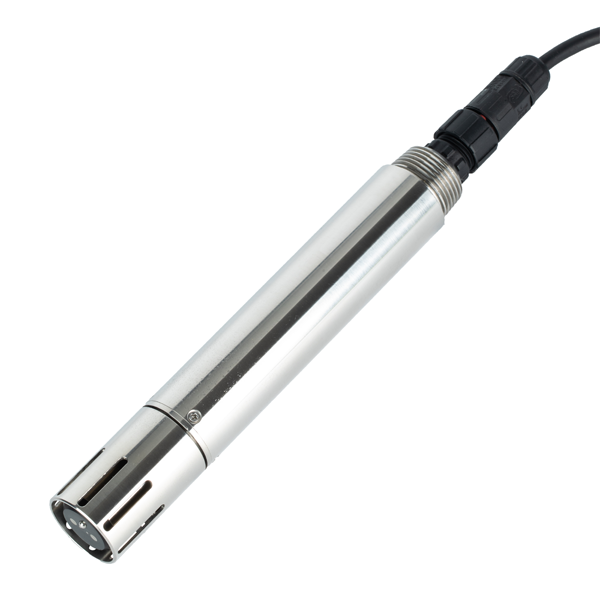
Figure 3. NiuBoL stainless steel salinity probe with a threaded mounting connection.
No. Resolution is the reporting increment; accuracy is the error bound under stated conditions. In the worked seven-day record, a pH channel with 0.01 pH resolution drifted to +0.28 pH against a check standard, nearly three times a commonly stated ±0.1 pH error. A reading to two decimal places does not establish accuracy to 0.01 pH. A multiparameter water quality sonde needs a per-channel acceptance test, not one figure for the body.
Q2. How often should a sonde be checked against a standard?
A weekly standard-solution check is a common quality-control routine, with relative error within ±10% of the recommended value and relative standard deviation within ±5% as recalibration triggers. Run at least three replicates and compute both statistics. Those are check-procedure limits, not datasheet accuracy specifications, so keep them in separate columns.
Q3. Can an optical BOD module be checked like a sonde channel?
No. An optical BOD estimate rests on a validated relationship with fluorescent organic matter, while a laboratory BOD determination follows a defined incubation method. They belong to different instruments and different acceptance records, and a sonde drift check cannot validate either one. Ask for the optical relationship and the laboratory method separately.
Q4. Why did the chloride channel drift look worse than the others?
Its specification is ±5% of reading, so a +6.8% day-7 deviation is outside the envelope at any point in the 0–3500.0 mg/L range. The sample conditions matter too: pH 2–12, pressure at or below 0.2 MPa. State whether each channel's accuracy is of reading or of full scale before comparing them in one table.
Q5. Can IP68 at the probe cover the whole installation?
No. IP68 at the probe does not provide an environmental rating for exposed connections or the cabinet. Protect above-water cable joints, keep each sensing surface accessible and immersed, and mount every fitted sensor below the lowest expected water level to avoid surface films and bubbles.
Q6. What should happen to data recorded during a drift period?
Flag it and keep the raw values. Recalibration that silently rewrites the series removes the evidence that drift occurred and makes later audits impossible. Record pre- and post-calibration offsets with dates, and state which values were adjusted so a reviewer can reconstruct the original record.
A multiparameter water quality sonde is only as good as the weakest channel's drift record. The seven-day check showed pH, ORP and chloride moving at different rates while temperature stayed flat, which is exactly why a single accuracy figure cannot describe the body. Keep the per-channel ranges, error conventions and sample conditions in one register map, check against standards on a fixed schedule, and never overwrite a drifted period. Before accepting the first field value, ask for three replicate standard readings and the pre-calibration offsets — that is the record that makes later data defensible.
Keeping the channels honest
A multiparameter water quality sonde is a set of channels with separate failure modes, not one instrument with one accuracy figure. In the seven-day check the pH channel moved by +0.28 pH while its reporting increment was 0.01 pH, ORP by +31 mV and chloride by +6.8% of reading — three drift rates against three different error conventions. Biofilm, silt and immersion depth change what the electrode sees. Accept each fitted module separately, keep procedure limits apart from datasheet error terms, and clean before recalibrating so the drift record describes the instrument rather than the fouling layer.
Specifying fitted modules for a water quality sonde? Send the parameters, sampling depth and cleaning access in a message via our contact page, and we will help you set a per-channel drift check.
Prev:Construction Dust Monitor: PM10/PM2.5 Fence-Line Alarms
Next:no more
Related recommendations
Sensors & Weather Stations Catalog
 Agriculture Sensors and Weather Stations Catalog-NiuBoL.pdf
Weather Stations Catalog-NiuBoL.pdf
Agriculture Sensors Catalog-NiuBoL.pdf
Water Quality Sensor Catalog-NiuBoL.pdf
Related products
 Combined air temperature and relative humidity sensor
 TDR Soil Moisture & Temperature Sensor for irrigation| RS485 |4-20mA| NBL-S-THR
 Soil pH sensor RS485 soil Testing instrument soil ph meter for agriculture |NBL-S-PH
 Wind Speed sensor Output Modbus/RS485/Analog/0-5V/4-20mA
 Tipping bucket rain gauge for weather monitoring auto rainfall sensor RS485/Outdoor/stainless steel
 Pyranometer Solar Radiation Sensor 4-20mA/RS485


Screenshot, WhatsApp to identify the QR code
WhatsApp number:+8615367865107
(Click on WhatsApp to copy and add friends)

