





— Blogs —
—Products—
 Consumer hotline +8618073152920
 WhatsApp:+8615367865107
Address:Room 102, District D, Houhu Industrial Park, Yuelu District, Changsha City, Hunan Province, China
Technical Support
Time:2026-09-07 16:27:34 Popularity:428
Quick Answer: Water quality sensor installation must keep the sensing surface in representative water while allowing safe cleaning and removal. Use fixed immersion for a defined position, a buoy for a defined depth below a changing surface, a flow cell for accessible sample measurement, or direct pipeline mounting only when the complete assembly is rated for the process. IP68 protection is not a pipeline pressure rating.
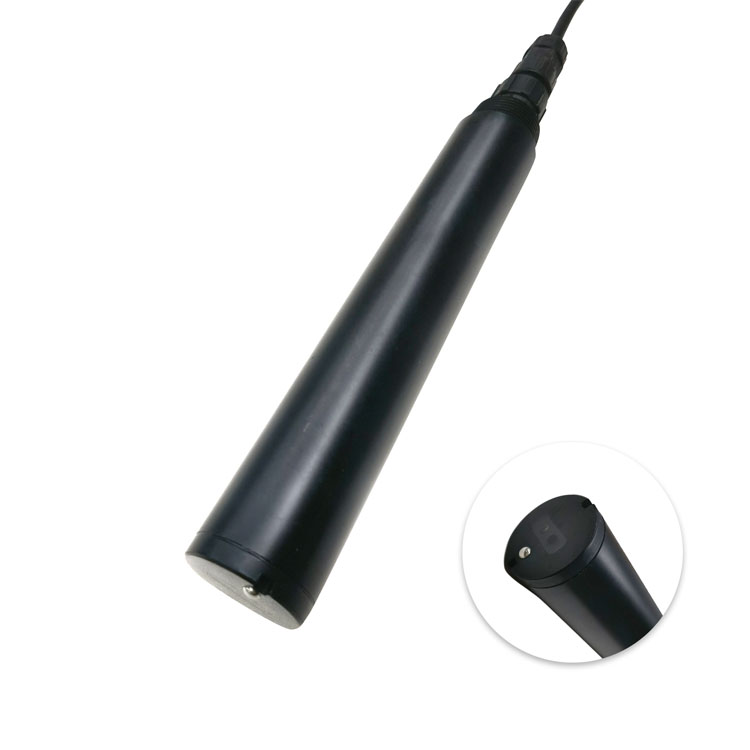
Water quality sensors require different installation methods in laboratory vessels, rivers, aquaculture tanks and pressurized pipelines. Proper installation requires both adequate contact of the sensitive surface with the representative water sample and protection of the probe from deposition, bubbles and mechanical shock.
A threaded probe can fit a bracket without being suitable for the water at that bracket. Check the normal and maximum water level, pressure, temperature, deposits, flow direction and access route. Include abnormal operating conditions such as pump shutdown, draining and flushing. A good installation remains measurable and serviceable through those conditions, or clearly identifies when its data are invalid.
| Installation | Where it fits | What must be checked |
|---|---|---|
| Fixed immersion | Tanks, channels and accessible river points | Minimum water cover, maximum immersion pressure, sediment clearance and retrieval access |
| Float or buoy | Water bodies with significant level changes | Depth relative to the surface, mooring movement, cable strain and collision clearance |
| Flow-through cell | Accessible sampling panels and treated-water lines | Sample transit time, bubbles, flow stability, pressure control and drainage |
| Direct pipeline | Processes with a suitable pressure-rated fitting | Probe and fitting pressure limits, wetted materials, insertion geometry and safe isolation |
The probe is directly immersed in water and is suitable for rivers, lakes, reservoirs, aquaculture pools and conditioning tanks. Avoid locations close to walls, bottom sediment or an inlet jet unless that local condition is the intended monitoring target. A sensor next to a dosing point can describe an unmixed chemical plume instead of the bulk process.
Use a rigid holder or a suitable retrieval assembly to maintain position. Do not suspend a probe by its signal cable unless the assembly is specifically designed for that load. Allow removal without pulling on the connector. Mark insertion depth on the support so maintenance staff can return the sensor to the same location after cleaning.
Protect optical windows and DO caps from contact with the holder. Leave access for cleaning and any wiper movement. Sediment accumulating on the sensing surface can produce a gradual error even when communication remains healthy. Check the site after high-flow events or tank cleaning, when the original clearance may have changed.
For NBL-WQ-PH, keep the sensing end downward; do not mount it horizontally or upside down. Maintain at least a 15-degree downward inclination from horizontal. The holder should allow both the measuring glass and reference junction to contact the water without an air pocket.
For NBL-WQ-EC-1.0 and the specified EC/S-SI versions, maintain at least 2 cm clearance from the bottom and sidewalls during installation and testing. This is not a universal clearance for all water-quality sensors. Different electrode geometries, optical paths and protective guards need their own space. Confirm the exact probe version before fabricating a close-fitting chamber.
A float or buoy can hold the probe at a relatively stable depth below the water surface as the level rises and falls. That is useful when the monitoring objective is near-surface water. It is unsuitable when the requirement is to measure continuously at a fixed elevation above the reservoir bed without additional positioning control.
Allow for waves, current, debris and mooring movement. Keep the probe clear of the buoy structure throughout its movement, provide cable strain relief, and route enough cable for the expected travel without allowing a loose loop to snag. Equipment on the buoy needs its own environmental protection; an immersed probe rating does not protect an exposed data logger.
Before leaving the station, observe the assembly through a representative change in water movement where practicable. Check that the sensor stays submerged, does not strike the frame and can be retrieved from a safe position. If water level falls below the required depth, flag the data rather than treating an exposed probe as a valid water measurement.
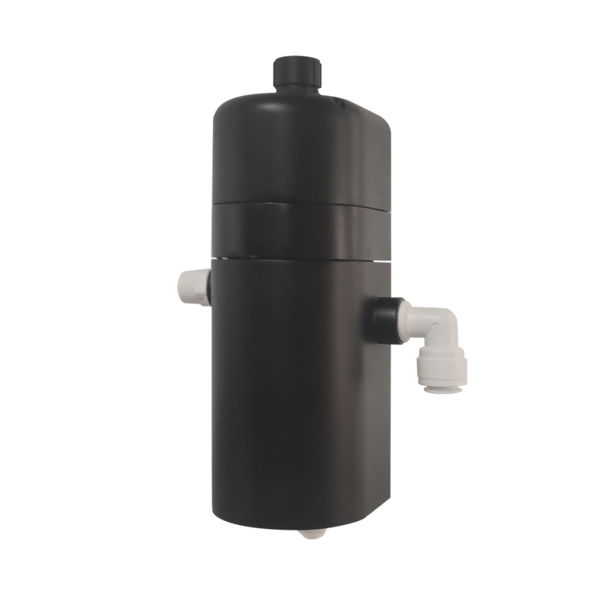
A continuous bypass brings water from the process into an accessible measuring chamber. This can simplify cleaning and calibration, but the tubing, valves and chamber become part of the measurement. Long stagnant lines, gas exchange, settling or deposits may change the sample before it reaches the probe.
Keep the sampling route short where possible and avoid unnecessary dead volume. For DO measurement, prevent aeration or degassing between the sampling point and the sensing cap. For turbidity, avoid arrangements that selectively settle out the particles being measured. Do not add a fine filter merely to keep a turbidity chamber clean: removing particles also changes the measurement.
Estimate transport delay before setting alarms. For example, a sample line and cell holding 0.6 L at 0.2 L/min have a nominal volume-to-flow transit time of 3 minutes. Mixing, sensor response and filtering can add further delay. This calculation is an illustration, not a response-time specification. A faster communication interval cannot remove hydraulic delay.
| Item | NBL-WQ-TSA-4 | Installation consequence |
|---|---|---|
| Measuring range | 0-10.000 NTU; resolution 0.001 NTU | Intended for low-range turbidity measurement, not an unrestricted solids-loading range |
| Accuracy | +/-5% or +/-0.02 NTU, whichever is greater | Assess the decision threshold using accuracy, not resolution alone |
| Water conditions | 0-60 C; pressure at or below 0.2 MPa | Reduce upstream pressure when necessary and include transient conditions |
| Mounting and protection | Wall mounted; IP65 | Keep the housing out of floodwater; this is not an immersion probe |
| Sample discharge | Recommended flow below 300 mL/min | Keep the drain route straight and unobstructed; establish steady sample flow |
| Electrical supply and output | 12-24 VDC; 0.2 W at 12 V; RS485 Modbus RTU; optional 4-20 mA | Specify the output version and keep electrical connections protected from leaks |
Mount the unit where the chamber can be serviced without bending the sampling tubes sharply. Provide pressure and flow regulation suited to the upstream supply. Check the drain after installation and after panel maintenance: a pinched outlet can alter the chamber conditions even if the inlet adjustment has not changed.
A no-flow condition needs attention in the control system. A chamber containing old water may continue to return plausible values. Confirm sample flow independently during commissioning and provide a flow-status input or an inspection procedure appropriate to the consequence of a missed event.
IP68 describes enclosure protection under specified immersion conditions. It does not establish that a probe can withstand the pressure, temperature or mechanical loads of any pipeline. A threaded connection is also not proof that a complete assembly is suitable for live insertion or removal.
NBL-WQ-PH has an operating-pressure limit below 0.2 MPa, while NBL-WQ-EC specifies below 0.6 MPa and NBL-WQ-ORP below 0.1 MPa. Do not use the EC limit for a shared chamber containing a lower-rated probe. Fittings, seals, tubing and valves may impose an even lower limit. Include pump transients and the operating temperature when choosing the assembly.
Provide isolation and a safe depressurization route. Removal must not depend on unscrewing a pressurized probe. Where online withdrawal is required, use a purpose-designed, pressure-rated retractable assembly and its prescribed procedure. Do not improvise one from a threaded tee and an immersion holder.
Check thread compatibility rather than forcing similar-looking fittings together. The pH, EC and ORP examples use 3/4 NPT connections, but sealing materials must still be compatible with the water chemistry and temperature. Keep sealing compounds away from electrodes, reference junctions and optical surfaces.
Route sensor cables away from moving parts and protect them at clamps and sharp edges. Keep joints above the expected flood level where possible. When a submerged connection is unavoidable, specify a connection system rated for that service; wrapping an ordinary terminal joint does not extend the probe's IP rating to the cable assembly.
Check supply voltage at the probe under operating load, then establish communication with one sensor before connecting the complete RS485 bus. Record its device address and verify measurement units at the data logger. Mechanical installation and digital configuration are separate acceptance checks: either can produce an incorrect trend.
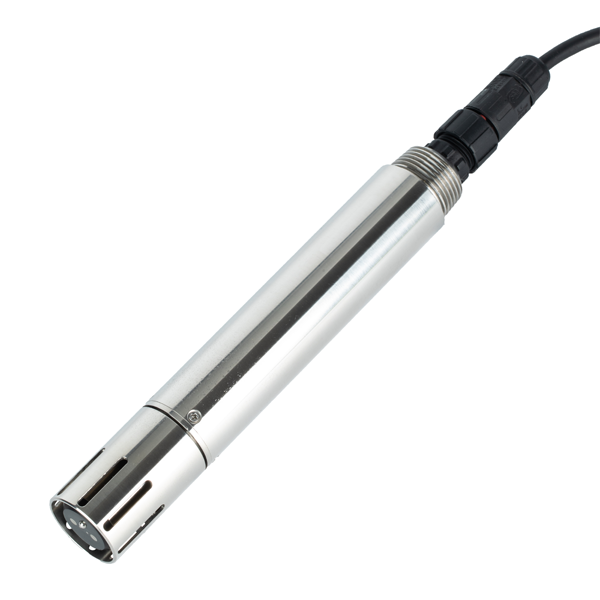
No. Bottom contact can block the sensing area, collect deposits and expose the probe to mechanical damage. Mount it with the clearance required by its geometry and the site's sediment conditions. A reading from settled sludge is not automatically representative of the overlying water.
Investigate entrained air, disturbed deposits and changing sample flow before recalibrating. Compare the event with pump timing and inspect the optical chamber. If the disturbance is real suspended material, suppressing it with excessive filtering would hide an actual process change.
Only if the cell satisfies all probe clearances, orientation, pressure and sample requirements. Electrodes and optical surfaces must not obstruct each other. A compact chamber is not useful if it traps bubbles or cannot be opened for cleaning.
No. Check pressure at depth, the complete connector assembly, cable mechanical support and retrieval method. A longer cable does not increase the probe's pressure rating or make its cable suitable for supporting the equipment weight.
Provide a drawing or photographs showing the measurement point, water-level range, pipe size if applicable, pressure, temperature, medium and available access. Identify the exact sensor model and whether maintenance can interrupt the process. NiuBoL can then assess the holder or sampling arrangement against that installation.
Choose water quality sensor installation by the sample that must be measured and the way the probe will be serviced. Fixed immersion, buoys, flow cells and pipeline fittings solve different problems. Confirm orientation, hydraulic conditions and pressure limits before fabrication, then verify the reading after the assembly is installed.
Prev:Solar Radiation Sensor Installation, Cleaning, Calibration and Abnormal Data Checks
Next:Field Sensor Troubleshooting: RS485, 4-20mA and Abnormal Data
Related recommendations
Sensors & Weather Stations Catalog
 Agriculture Sensors and Weather Stations Catalog-NiuBoL.pdf
Weather Stations Catalog-NiuBoL.pdf
Agriculture Sensors Catalog-NiuBoL.pdf
Water Quality Sensor Catalog-NiuBoL.pdf
Related products
 Combined air temperature and relative humidity sensor
 TDR Soil Moisture & Temperature Sensor for irrigation| RS485 |4-20mA| NBL-S-THR
 Soil pH sensor RS485 soil Testing instrument soil ph meter for agriculture |NBL-S-PH
 Wind Speed sensor Output Modbus/RS485/Analog/0-5V/4-20mA
 Tipping bucket rain gauge for weather monitoring auto rainfall sensor RS485/Outdoor/stainless steel
 Pyranometer Solar Radiation Sensor 4-20mA/RS485

Screenshot, WhatsApp to identify the QR code
WhatsApp number:+8615367865107
(Click on WhatsApp to copy and add friends)

