





— Blogs —
—Products—
 Consumer hotline +8618073152920
WhatsApp:+8615367865107
Address:Room 102, District D, Houhu Industrial Park, Yuelu District, Changsha City, Hunan Province, China
Technical Support
Time:2026-09-07 16:27:35 Popularity:456
Customization should close a defined gap between a standard product and the project interface; it does not mean that every parameter can be changed without technical limits. The earlier the requirements are converted into verifiable technical conditions, the lower the risk later.
5V, 3.3V, 3.6V, 12V and 24V are not just another label. Low voltage power supply will change the regulated voltage, current margin, reverse protection and long line voltage drop design. When a low-voltage version is required, the minimum/maximum voltage, peak current and line length should be specified.
RS485, 4-20mA and 0-5V require different circuits. The fact that a model supports RS485 does not necessarily mean that the 4-20mA can be made directly. When Modbus, SDI-12, special registers or custom frames are required, it is also necessary to define how the master device accepts them.
9600bps is a common default setting, but projects may require 4800 or 19200 bps. Some models can be preset with different baud rates, and some models support on-site writing; in batch projects, the final serial port parameters should be written into the technical specifications and factory test points.
Cable length, aviation plug, thread, shell material, 316L bracket, three anti-paint, etc. are all project-level customization. When IP rating, salt-spray resistance, pressure rating or high/low temperature requirements are involved, both test standards and acceptance methods should be defined.
For Sensor Customization: Power, Output, Protocol, Housing and Acceptance - Power supply customization, rS485 adopts differential communication and strong anti-interference ability, which is suitable for long-distance wiring and multi-device bus. With Modbus RTU, an interface can poll multiple sensors by address and read digital quantities directly. It fits PLC, RTU, edge gateways, agricultural IoT and automated weather stations.
For environmental monitoring system - Power supply customization, 4-20mA is a current signal without Modbus registers. After the collector reads the current, it is converted linearly according to the range. 4mA usually represents the lower limit of the range, and 20mA represents the upper limit of the range. Current loops are very common in industrial sites. The advantages are simple lines, good anti-interference ability, and "less than 4mA" itself can be a break or fault diagnosis clue.
For environmental monitoring system - Power supply customization, 0-5V is a voltage analog. The controller must have a corresponding voltage input channel and be scaled according to the range. For long-distance wiring, voltage drop, ground potential difference, and electromagnetic interference generally have a more pronounced effect on voltage signals than current loops, and are therefore more suitable for systems with shorter distances and cleaner environments.
For environmental monitoring system - Power supply customization, it indicates that the product has passed the production and functional inspection specified by the manufacturer and is suitable for general quality control. It does not automatically certify that measurements can be traced back to national or international metrological standards.
For environmental monitoring system - Power supply customization, third-party test reports are issued by independent institutions based on designated standards or test items. Common test items include precision, protection level, and electromagnetic compatibility (EMC). Whether the report is applicable to bidding, the qualification of the testing organization, test standards, product model and scope of application of the report should be checked.
For environmental monitoring system - Power supply customization, calibration emphasizes the magnitude-value relationship and traceability between the instrument under test and the reference standard. It is often used in projects with high measurement credibility requirements such as wind speed, radiation, temperature and humidity, and pressure. Calibration certificates are not equivalent to product certifications.
For environmental monitoring system - Power supply customization, match each technical requirement to a specific model, datasheet, third-party report or calibration certificate, and indicate the test conditions. This prevents the project team from discovering after manufacture that a specified accuracy or IP rating requires third-party evidence.
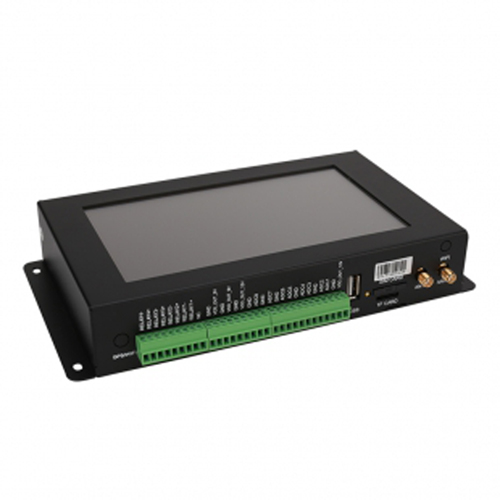
For environmental monitoring system - Power supply customization, the Data Logger/Data Acquisition Unit is responsible for reading data from field devices such as RS485, RS232, 4-20mA, 0-5V, pulses or digital inputs, and adding timestamps, storage, protocol conversion and upload functions. Located between sensors and servers, it is a central device in unattended weather, agriculture, water quality and industrial IoT systems.
For environmental monitoring system - Power supply customization, the sampling period determines the amount of data and the power consumption. Minute-level meteorological data and second-level scientific research data have completely different storage requirements. The network loss scenario also confirms the local cache capacity, whether the data is cycled over, and whether the network can be retransmitted after recovery.
For environmental monitoring system - Power supply customization, on-site Ethernet cable is preferred; no fixed network is available 4G; local area wireless can be combined with Wi-Fi or LoRaWAN. When going up to the self-built server, the MQTT, HTTP/ HTTPS, TCP and other protocols and data formats should be determined in advance.
For environmental monitoring system - Power supply customization, fixed weather station coordinates are usually unchanged after installation and can be entered on the platform; continuous GPS is required for mobile devices. Whether remote parameter configuration, OTA and remote diagnostics are required should also be specified during the project design phase.
For environmental monitoring system - Power supply customization, the NiuBoL data collector product covers multiple serial ports, analog volume, switching volume, local storage and other configurations. Some RTU models offer RS485/RS232, 4-20mA/ 0-5V analog inputs, 16MB local storage and TF card expansion for meteorological, agricultural, water quality and industrial IoT systems. Product reference: NiuBoL Data Collector; Data Collector RTU.
For environmental monitoring system, the project file should connect the measurement objective, field location, interface, maintenance access and acceptance method.
A1: Only products clearly labeled with a wide voltage range are allowed. The customization capability of one version should not be assumed for all models.
A2: Only items that can be achieved by real hardware and testing should be written into the final specification. In particular, accuracy, IP and environmental ratings require verifiable evidence.
A3: Complete the acceptance of the sample according to the final wiring, protocol and environmental conditions, and then enter batch production.
For environmental monitoring system - Power supply customization, a4: A sensor with 4-20mA output does not output Modbus RTU data by itself. If the system requires Modbus, the conversion can be done by the acquisition module with analog inputs and Modbus outputs.
For environmental monitoring system - Power supply customization, a5: Because each parameter usually corresponds to an independent current output channel. For example, three analog inputs may be required for three parameters: temperature, humidity, and air pressure.
For environmental monitoring system - Power supply customization, a6: Accuracy depends first and foremost on the sensing element and the transmitting circuit. The digital transmission avoids the secondary conversion error of the analog quantity on the line, but it cannot simply equate the interface type with the sensor body accuracy.
For environmental monitoring system - Power supply customization, a7: No. The specification is the product specification, and the calibration certificate is the calibration result of a specific device or model under the reference standard.
A8: Generally no. Provide the document type and issuing-body qualification stated in the tender requirements. Measurement-point record for environmental monitoring system: Record the agreed range, alarm response, interface check and maintenance evidence in the commissioning or acceptance file.

Sensor customization should be frozen in an approved schedule covering supply voltage, output, communication settings, register definition, housing, cable and acceptance evidence. A sample or pilot unit should be checked with the intended controller before batch production so electrical, mechanical and protocol assumptions do not become site rework.
Prev:Field Sensor Troubleshooting: RS485, 4-20mA and Abnormal Data
Next:How to Connect Multiple RS485 Modbus Sensors to One IoT Gateway
Related recommendations
Sensors & Weather Stations Catalog
 Agriculture Sensors and Weather Stations Catalog-NiuBoL.pdf
Weather Stations Catalog-NiuBoL.pdf
Agriculture Sensors Catalog-NiuBoL.pdf
Water Quality Sensor Catalog-NiuBoL.pdf
Related products
 Combined air temperature and relative humidity sensor
 TDR Soil Moisture & Temperature Sensor for irrigation| RS485 |4-20mA| NBL-S-THR
 Soil pH sensor RS485 soil Testing instrument soil ph meter for agriculture |NBL-S-PH
 Wind Speed sensor Output Modbus/RS485/Analog/0-5V/4-20mA
 Tipping bucket rain gauge for weather monitoring auto rainfall sensor RS485/Outdoor/stainless steel
 Pyranometer Solar Radiation Sensor 4-20mA/RS485


Screenshot, WhatsApp to identify the QR code
WhatsApp number:+8615367865107
(Click on WhatsApp to copy and add friends)

