





— Blogs —
—Products—
 Consumer hotline +8618073152920
WhatsApp:+8615367865107
Address:Room 102, District D, Houhu Industrial Park, Yuelu District, Changsha City, Hunan Province, China
Technical Support
Time:2026-09-08 12:16:20 Popularity:398
RS485 is widely used in weather stations, soil monitoring, water quality, hydrology and industrial measurement because a single differential communication bus can connect several field devices. Modbus RTU is then used to identify each device and request its measurement registers. This makes it possible to connect a weather sensor, pyranometer, soil sensor, water level sensor and other instruments to one gateway instead of installing a separate gateway for every sensor.
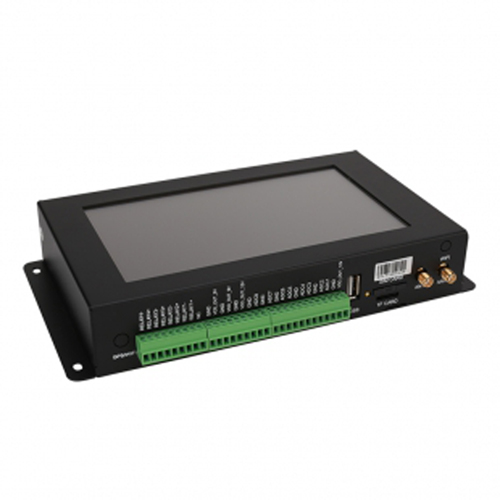
A typical architecture is: field sensors use RS485 Modbus RTU, the gateway polls each device, and the gateway then sends processed data to a cloud platform, customer server, PLC or SCADA system through Ethernet or cellular communication.
RS485 defines the electrical communication layer: the A/B differential pair, voltage behavior and multi-drop bus. Modbus RTU defines the message structure used on that bus. A system may therefore have physically correct RS485 wiring but still fail if the Modbus address, function code, register or data type is wrong.
| Item | What It Controls |
|---|---|
| RS485 | Physical communication layer and A/B wiring |
| Modbus address | Which field device should answer |
| Baud rate / parity / stop bits | Serial communication timing and framing |
| Function code | What type of Modbus data is requested |
| Register address | Where the required measurement is stored |
| Data type / scaling | How the returned register value becomes an engineering value |
The most important Modbus rule is that two devices sharing one bus should not use the same slave address. If two instruments answer the same request, the gateway can receive overlapping or invalid responses. The result may look like random data loss, CRC errors, unstable values or one device disappearing when another is connected.
A practical example is to assign the weather sensor address 1, solar radiation sensor address 2, soil sensor address 3 and water level sensor address 4. The exact address is not important as long as it is valid for the devices and unique on that RS485 segment.
A gateway serial port normally operates with one set of communication parameters at a time. Sensors on that port should therefore use the same baud rate, data bits, parity and stop bits. A common Modbus RTU configuration is 9600 bps, 8 data bits, no parity and 1 stop bit, but the correct values must always follow the actual sensor protocol.
For a small group of nearby devices, connecting all A terminals together and all B terminals together may work well. As the number of devices and cable length increase, a bus or daisy-chain layout becomes more important. The communication cable should follow a main route through the devices with short branches rather than several long branches radiating from one point.
For long or electrically noisy installations, cable type, grounding, shielding, termination and surge protection should be considered as part of the complete design. Do not treat a successful short desktop test as proof that the same wiring will remain stable over hundreds of meters outdoors.
There is no useful universal answer such as five, ten or thirty-two devices for every project. A small group of five or ten Modbus sensors is common, but the practical limit depends on the RS485 transceivers, cable length, baud rate, response speed, polling strategy, topology, electrical noise and power distribution. As the network grows, splitting devices across multiple RS485 ports or gateways can improve maintainability and fault isolation.
One Modbus address does not mean one measurement. A compact weather sensor can provide wind speed, wind direction, air temperature, humidity and pressure through one RS485 connection. A soil sensor may provide moisture, temperature and EC. The gateway reads different registers or data items from the same device address and maps them to separate variables.
A standard Modbus register is 16 bits. A 16-bit integer normally occupies one register, while a 32-bit integer or 32-bit floating-point value normally occupies two consecutive registers. If the gateway is configured to read only one register for a float value, the result will be incomplete or incorrect.
Byte and word order must also match the sensor protocol. Common 32-bit arrangements are described with patterns such as ABCD, CDAB, BADC or DCBA. If communication is successful but the numerical value is unrealistic, check data type, register count, byte order and scaling before assuming the sensor is defective.
A common field problem is that every sensor works when tested individually, but some values disappear after all devices are connected. One cause is polling that is too aggressive for slower instruments. The gateway may issue the next request before a previous device has fully completed its response.
In one verified multi-sensor commissioning case, communication became stable after increasing the communication timing to give slower devices more response time. A frame interval of 400 ms and command interval of 200 ms worked in that case. These values are a troubleshooting example, not a universal rule. The correct timing depends on the sensors, baud rate and number of requested registers.
RS485 A/B wires carry communication, not sensor power. Many environmental sensors require 12 VDC or 12–24 VDC. Some gateways provide auxiliary power outputs, but the available current must be checked before several sensors are powered from the gateway. For long cables, voltage drop may become a problem even when the RS485 communication distance itself is acceptable.
When a remote sensor intermittently disappears, measure the actual voltage at the sensor under load. Do not only measure voltage at the gateway cabinet.
If a computer serial tool reads the sensor correctly but the gateway does not, the sensor is probably not the first suspect. Check gateway device ID, function code, register, register count, data type, serial port selection, polling timing and whether the configuration was actually saved and applied. This distinction prevents unnecessary sensor replacement.
A1: Yes. Multiple sensors can share one RS485 bus when their addresses are unique and their serial settings are compatible.
A2: Yes, devices sharing one bus should normally use unique addresses so the gateway can identify and poll them correctly.
A3: Normally not on a fixed serial-port configuration. Use matching serial parameters or separate ports/gateways. Acceptance check for sensor-system integration: Record the agreed range, alarm response, interface check and maintenance evidence in the commissioning or acceptance file.
A4: There is no single fixed number. Practical capacity depends on bus loading, cable length, timing, device response speed and system design.
A5: Check address conflicts, command timing, power supply, bus topology, cable quality and the gateway polling configuration.
A6: No. One physical sensor can expose many measurement parameters through different registers under one device address.
A7: Yes. A gateway can collect Modbus RTU data and forward it using MQTT, HTTP or another supported upstream protocol. Measurement-point record for sensor-system integration: Record the agreed range, alarm response, interface check and maintenance evidence in the commissioning or acceptance file.
A8: Yes. They can be read directly where suitable, or a gateway can convert or expose the data through Modbus TCP, OPC UA or other industrial interfaces.

Prev:Sensor Customization: Power, Output, Protocol, Housing and Acceptance
Next:MQTT vs HTTP vs Modbus TCP vs OPC UA for Industrial IoT Gateways
Related recommendations
Sensors & Weather Stations Catalog
 Agriculture Sensors and Weather Stations Catalog-NiuBoL.pdf
Weather Stations Catalog-NiuBoL.pdf
Agriculture Sensors Catalog-NiuBoL.pdf
Water Quality Sensor Catalog-NiuBoL.pdf
Related products
 Combined air temperature and relative humidity sensor
 TDR Soil Moisture & Temperature Sensor for irrigation| RS485 |4-20mA| NBL-S-THR
 Soil pH sensor RS485 soil Testing instrument soil ph meter for agriculture |NBL-S-PH
 Wind Speed sensor Output Modbus/RS485/Analog/0-5V/4-20mA
 Tipping bucket rain gauge for weather monitoring auto rainfall sensor RS485/Outdoor/stainless steel
 Pyranometer Solar Radiation Sensor 4-20mA/RS485


Screenshot, WhatsApp to identify the QR code
WhatsApp number:+8615367865107
(Click on WhatsApp to copy and add friends)

