





— Blogs —
—Products—
 Consumer hotline +8618073152920
WhatsApp:+8615367865107
Address:Room 102, District D, Houhu Industrial Park, Yuelu District, Changsha City, Hunan Province, China
Product knowledge
Time:2026-09-26 08:00:00 Popularity:347
Low-concentration water quality monitoring should be accepted at the concentration where the project makes its decision, not only at a convenient mid-range standard. Compare the detection limit, absolute error term, sample blank and reference uncertainty with the required separation. More decimal places or stronger averaging cannot establish a capability the measuring method has not demonstrated.
An integrator asked to monitor a low residual or trace change first needs the normal region, the decision threshold and the consequence of a wrong classification. A range beginning at zero does not prove useful performance near zero. Ask whether the system must detect presence, quantify concentration, distinguish two operating states or support a pass/fail decision.
These duties require different evidence. A trend sensor may show a substantial increase without resolving the normal background accurately. A release decision close to that background needs an appropriate reference and an agreed decision rule. The supplier should know which duty is being purchased before the model is selected.
| Specification | What it describes | What it does not establish |
|---|---|---|
| Resolution | The displayed or transmitted increment | The smallest reliably detected change in actual water |
| Detection limit | A separately defined low-level detection capability | Accurate quantification or an acceptable decision at every value above it |
| Reading-based accuracy | A term related to the measured value, under applicable conditions | Freedom from an absolute floor, blank or matrix limitation |
| Full-scale accuracy | A term related to the selected measuring span | The same percentage of a very small reading |
| Repeatability | Agreement among repeated observations under defined conditions | Absence of a common bias affecting all observations |
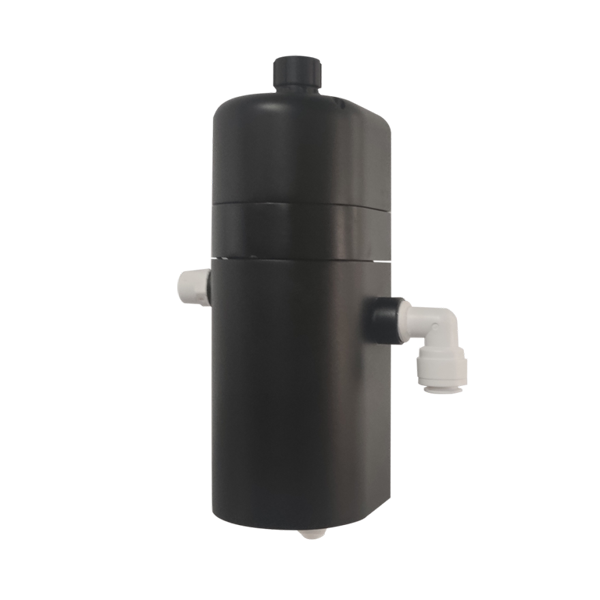
The NiuBoL NBL-WQ-TSA-4 illustrates why these distinctions matter. Its range is 0–10.000 NTU and its resolution is 0.001 NTU, while the selected specification lists accuracy of ±5% or ±0.02 NTU, whichever is greater, and a separate 0.1 NTU detection limit. Those figures cannot be condensed into a claim of 0.001 NTU accuracy.
For an illustrative 0.10 NTU observation, a 5% term is 0.005 NTU, so the 0.02 NTU term is larger. At a hypothetical decision limit of 0.11 NTU, the difference between the observation and limit is only 0.01 NTU. The listed error term alone therefore exceeds that separation. This example is not a regulatory threshold or a complete uncertainty calculation.
| TSA-4 item | Selected configuration | Low-range consequence |
|---|---|---|
| Method and arrangement | 90° scattered light; integrated flow-through cell; wall mounting | Provide a controlled sample rather than treating it as a submerged probe. |
| Range and low-level figures | 0–10.000 NTU; 0.001 NTU resolution; listed detection limit 0.1 NTU | Verify the decision region; display increments are not detection evidence. |
| Accuracy | ±5% or ±0.02 NTU, whichever is greater; temperature ±0.3 °C | Include the applicable absolute term in the comparison. |
| Working exposure | Selected 0–50 °C configuration; pressure ≤0.2 MPa; IP65 | Condition the sample and protect the wall-mounted assembly from immersion. |
| Power and output | 12–24 VDC; 0.2 W at 12 V; RS485 Modbus RTU; optional 4–20 mA | Verify the delivered output and host scaling using low-region values. |
| Construction and connection | Composite housing; standard 5 m cable; shielded wiring | Specify cable jacket, wet connections, sample fittings and safe drainage. |
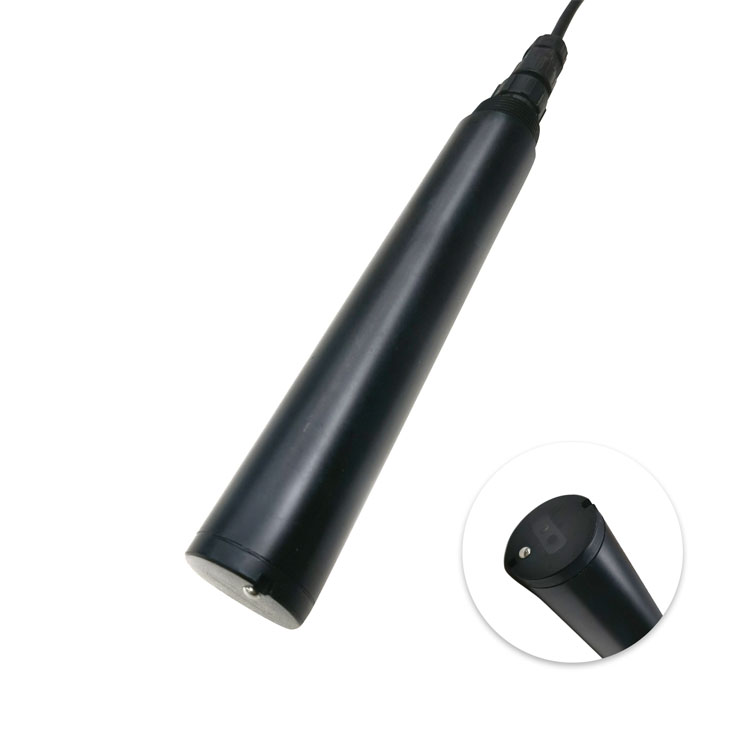
The immersion turbidity probe below is a different configuration. Its mounting and specification must be assessed separately; the TSA-4 figures do not transfer to it. Choose the required measuring arrangement before comparing prices, especially when a flow controller, fittings and sample preparation are needed.
A clean reference container does not test contamination from an installed intake, tubing or measuring cell. Use a suitable method-specific blank or low reference, and compare the measuring assembly with the complete installed sample route where the procedure permits. Do not call ordinary tap water a zero standard for every parameter.
If the result changes after passing through the route, inspect deposits, trapped material, cleaning residues and sample handling before adjusting zero. For optical measurements, also investigate bubbles and the condition of the window. The aim is to locate the contribution rather than hide it with an offset.
Preserve the as-found result before cleaning. Recheck after the approved cleaning and renewal procedure. A change caused by service is useful diagnostic information, but repeatedly resetting zero can conceal an unresolved route problem.
Agree how results close to the limit will be handled: additional sampling, review or another approved action. The decision rule should consider the complete measurement and reference uncertainty. Simply subtracting a single manufacturer's accuracy term is not a universal acceptance method.
At the PLC or data logger, verify units, decimal scaling and configured span with representative values. If 4–20 mA is used, check the receiving channel's contribution and whether the configured span gives adequate discrimination. Digital output avoids that analog conversion but does not remove sensor error or sample bias.
Averaging can reduce some random variation while delaying a real change. It cannot correct a constant offset, resolve a method mismatch or justify reporting below an established capability. Keep the averaging interval with the trend and preserve unavailable or out-of-range states instead of forcing them to zero.
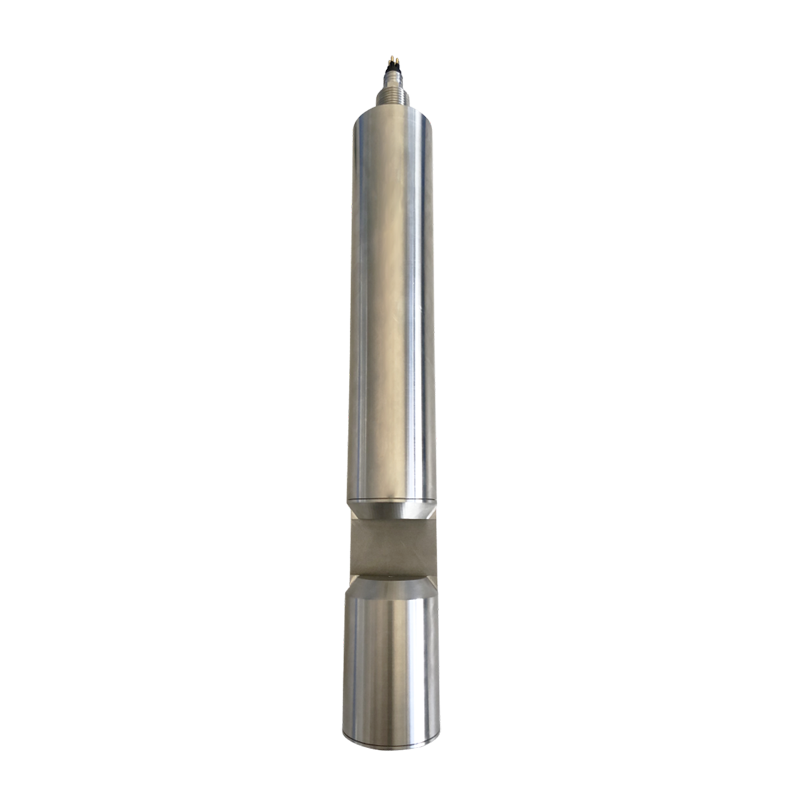
The FUV-408 instrument below provides separate full-spectrum estimates. Its range and full-scale terms require their own low-region review; several parameter labels do not establish trace-level analysis. For a detailed color example, the online water color comparison guide distinguishes resolution, detection and reference-method agreement.
No. Review detection, quantification, applicable error terms and sample effects at the actual decision concentration.
No. The displayed increment can be much smaller than the measurement uncertainty. Demonstrate the required separation with an appropriate reference and representative samples.
It can reduce some random variation but not systematic bias or missing analytical capability. Assess the added response delay as well.
Only after investigation establishes that the approved calibration procedure calls for it. Sample contamination, bubbles or a reference mismatch need their own correction.
Provide the parameter, normal and decision concentrations, required reporting method, sample chemistry and the consequence of a wrong decision. Include the complete sampling and receiving-system arrangement.
Do not accept the duty from resolution alone. Review another range, measuring method or independent test arrangement, and establish performance before committing to the decision.
Low-concentration water quality monitoring requires demonstrated capability, not display precision alone. Test the full sample route and compare performance where the decision is made. Select the method, reference and acceptance rule together before relying on a low reading for process release.
Related recommendations
Sensors & Weather Stations Catalog
 Agriculture Sensors and Weather Stations Catalog-NiuBoL.pdf
Weather Stations Catalog-NiuBoL.pdf
Agriculture Sensors Catalog-NiuBoL.pdf
Water Quality Sensor Catalog-NiuBoL.pdf
Related products
 Combined air temperature and relative humidity sensor
 TDR Soil Moisture & Temperature Sensor for irrigation| RS485 |4-20mA| NBL-S-THR
 Soil pH sensor RS485 soil Testing instrument soil ph meter for agriculture |NBL-S-PH
 Wind Speed sensor Output Modbus/RS485/Analog/0-5V/4-20mA
 Tipping bucket rain gauge for weather monitoring auto rainfall sensor RS485/Outdoor/stainless steel
 Pyranometer Solar Radiation Sensor 4-20mA/RS485


Screenshot, WhatsApp to identify the QR code
WhatsApp number:+8615367865107
(Click on WhatsApp to copy and add friends)

