





— Blogs —
—Products—
 Consumer hotline +8618073152920
WhatsApp:+8615367865107
Address:Room 102, District D, Houhu Industrial Park, Yuelu District, Changsha City, Hunan Province, China
Product knowledge
Time:2026-09-25 13:00:00 Popularity:297
Quick Answer: Reading pH, ORP and conductivity together helps distinguish an acid-base change, a change in dissolved ions and a change in redox conditions. The three channels are diagnostic clues, not three independent votes proving one cause. Compare water from the same process location, account for response delays, and check temperature and instrument condition before using a combined trend to change chemical dosing.
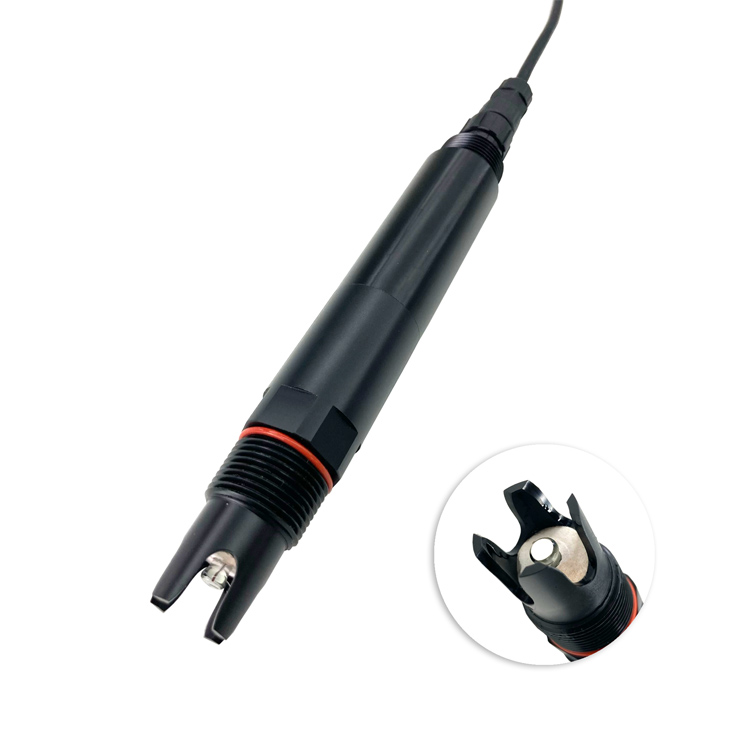
pH describes the water's acid-base condition. ORP describes the potential developed by a measuring electrode and its reference system in the water. Conductivity responds to the movement of dissolved ions. A process change can affect one, two or all three signals, but the direction and size of those changes depend on the water chemistry.
The useful question is not whether the readings agree numerically. They have different units and cannot be averaged into one quality score without a separately validated method. Ask instead which explanation is consistent with the observed pattern, and which additional check would distinguish it from another explanation.
For example, a pH excursion accompanied by increased conductivity may be consistent with an acid or alkali entering a process stream. It is not proof of which chemical entered, how much was added or whether the water is safe to discharge. Production records and a representative sample provide the next evidence. Combined measurement narrows the investigation; it does not identify every contaminant.
Combined pH, ORP and conductivity signals improve process decisions only when the three channels use aligned timestamps, representative sampling points and known response delays. A pH shift changes the chemical context of the ORP value, while conductivity can help distinguish a change in ionic composition from an isolated electrode response. This relationship is useful only if the sensors are observing comparable water.
A shared logger timestamp is insufficient when one probe is immersed and another receives water through a long sample tube. Record the sampling arrangement for each channel. Compare changes after allowing for transport time, mixing and sensor response. During rapidly changing production, a delayed ORP response should not automatically be interpreted as a second chemical event.
Use a consistent conductivity temperature convention. If one value is temperature-compensated and another is not, a temperature change can resemble a concentration change. Keep measured temperature available alongside the EC trend and retain the selected compensation settings. Temperature compensation for a pH electrode likewise does not remove every temperature-dependent change in the water's chemistry.
| Observed pattern | Possible interpretation | Next useful check |
|---|---|---|
| pH changes and EC rises | An ionic chemical addition or a different process stream may have arrived | Review transfer and dosing records; compare a sample from the same point |
| EC rises while pH remains steady | Salt concentration or water blending may have changed; buffering may limit the pH response | Check source water, temperature convention and relevant ion analysis |
| ORP changes with a pH shift | The redox reading may be responding partly to the new acid-base condition | Review the relevant residual test and reaction conditions before changing dose |
| Only ORP drifts slowly | Redox chemistry, coating or reference-system condition may have changed | Inspect the electrode and perform a suitable standard check |
| All channels stop updating together | A common power, bus, logger or sample-flow problem is possible | Check timestamps, communication status and actual flow before process adjustment |
The table gives competing explanations, not automatic diagnoses. Stable pH does not rule out a substantial chemical change in buffered water. Stable conductivity does not rule out a contaminant present at a concentration too low to make a useful EC change. Evaluate the magnitude relative to each instrument's uncertainty and the site's ordinary variation.
Consider a rinse-water event in which pH changes first, EC rises, and ORP shifts later. Begin with the earliest valid change and compare it with production transfers. If the ORP sensor has a longer sample path, correct for that delay before concluding that a second discharge occurred.
Next, inspect whether the new pattern persists at the downstream mixed-water point. A short local dosing plume can create a large instrument response without describing the whole tank. If the pH channel returns to normal but EC stays elevated, the ionic content may remain changed after neutralization. Restoring pH alone does not remove dissolved salts.
An ORP electrode responds to the redox-active species and conditions at its surface. It does not selectively measure chlorine, dissolved oxygen or a metal concentration. The USGS guidance on reduction-oxidation potential discusses the interferences and limitations that affect interpretation. Treat an ORP trend as specific to the process and electrode system in use.
When comparing two ORP instruments, check the reference electrode convention and whether either system converts its value to another reference scale. A consistent offset may have an explanation other than failed calibration. During acceptance, use the same reference basis and an appropriate standard at the applicable temperature. Avoid importing a millivolt setpoint from another plant without verifying the reaction and measurement basis.
If the operating decision concerns dissolved oxygen itself, add a dedicated DO measurement where warranted. The NiuBoL fluorescence DO probe measures oxygen concentration; it is not an ORP probe and should not share an ORP tag or alarm limit. DO can be relevant to an aerated biological stage, while pH and EC describe different aspects of the same water.
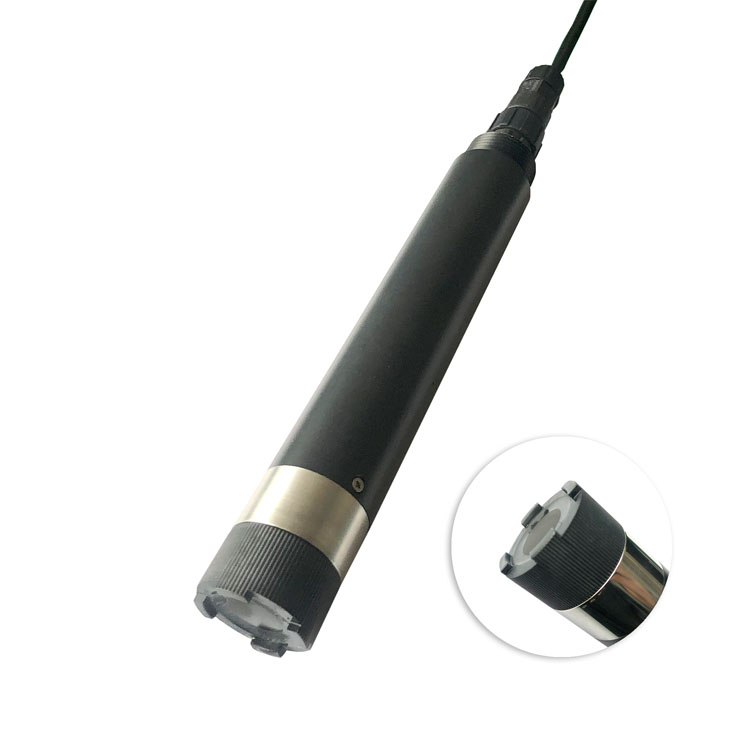
The NBL-WQ-PH has a 0-14 pH range, 0.01 pH resolution and +/-0.1 pH accuracy. The NBL-WQ-ORP-4A and ORP-4S family has a -2000 to +2000 mV range, 1 mV resolution and +/-6 mV accuracy. A visible change of one display increment does not by itself establish a significant process change. Trend interpretation must account for these specifications and field comparison results.
| Selection item | pH channel | ORP or EC channel |
|---|---|---|
| Supply and interface | NBL-WQ-PH: 12-24 VDC; RS485 Modbus RTU | ORP-4 family: 12-24 VDC; RS485 Modbus RTU; optional 4-20 mA |
| Power | 0.2 W at 12 V | ORP-4 family: 0.2 W at 12 V; include the controller separately |
| Mechanical duty | pH: POM body, IP68, 0-65 C and pressure below 0.2 MPa | Choose the ORP housing version and its ordered pressure and temperature limits for the actual liquid |
| Cable and mounting | pH: standard 5 m cable and 3/4-inch NPT connection | ORP-4 family: standard 5 m cable and 3/4-inch NPT connection |
| Conductivity selection | Do not infer EC range from the pH span | NBL-WQ-EC range options include 0-20, 0-200 and 0-5000 uS/cm, or 0-200 mS/cm |
For conductivity, compare the offered accuracy basis with the normal variation you need to resolve. A high-range probe may accommodate a chemical upset yet offer insufficient discrimination around a low normal value. Where both needs matter, consider separate measurement duties rather than presenting one broad-range channel as equally useful everywhere.
Mechanical compatibility also matters. Match wetted materials and seals to the liquid, including cleaning chemicals and abnormal conditions. A common cable connector or identical thread does not establish chemical compatibility. Keep the exact model and version associated with its calibration record so a replacement probe does not silently change the measurement characteristics.
Display pH, ORP in mV, EC in its actual engineering unit and sample temperature on a shared time axis. Show dosing commands, pump or mixer state and production mode where they explain the trend. Separate the current value from its age. A held value should remain identifiable during calibration or communication loss.
For RS485 Modbus RTU integration, check the measured-value register and any accompanying decimal-place information. Verify signed ORP decoding with an approved negative-value simulation or suitable reference procedure. A negative result interpreted as an unsigned integer can look like an extreme process event even though the serial communication is operating correctly.
Do not use a majority-vote alarm that declares the water normal whenever two of the three parameters remain within their bands. A process can have a meaningful single-parameter excursion. Each alarm needs its own duty, with combined conditions used only when the treatment design supports that logic. Keep trend-based advisory diagnostics separate from protection functions.
For procurement, a useful demonstration uses representative water and a realistic change to the measuring condition, not merely three stable displays in clean standards. Ask for channel-specific comparison results, the register map and the assembled sampling layout. NiuBoL can help select compatible pH, ORP and EC options when the expected water chemistry and receiving controller are identified.
No. Water can contain substantial dissolved salts while remaining near neutral pH. Neutralization changes acid-base conditions but does not generally remove the resulting ions. Use conductivity for its own process purpose rather than treating it as a confirmation of the pH value.
Not by itself. Several redox-active constituents and changes in pH can affect ORP. Use the trend to direct sampling and review production records. Chemical identification or a required residual concentration needs an appropriate selective method.
They need to represent the same intended water condition, but their mounting and flow requirements may differ. Nearby immersed positions or separately regulated sample branches can work. Document the delay and avoid comparing one tank's pH with another stream's EC as though they describe one sample.
Only by changing the measurement task. DO measures dissolved oxygen, while ORP reflects redox conditions at an electrode. Select DO for an oxygen-dependent decision and ORP for a validated redox-related task. Their units, calibration and interpretation are different.
Check reference conventions, electrode condition, stabilization, temperature and sample exposure. A satisfactory standard check helps assess the instrument but does not make a complex process sample behave like that standard. Resolve these differences before applying a calibration offset.
State the process point, expected ranges, smallest useful change, liquid chemistry, mounting conditions and host interface. Explain which results will only be logged and which will affect control. This separates sensor requirements from the additional controller and sampling work needed for a usable combined display.
Use pH, ORP and conductivity together to narrow a process investigation, not to assign a universal water-quality score. Comparable sampling, correct units and process records make the combined trends useful. Select each NiuBoL channel for the change it must resolve, and retain independent tests wherever a specific chemical concentration or final-water requirement determines the decision.
Prev:Chlorine Monitoring During Disinfectant Changeover: Free or Total?
Next:Low-Concentration Water Quality Monitoring: Can the Result Support Acceptance?
Related recommendations
Sensors & Weather Stations Catalog
 Agriculture Sensors and Weather Stations Catalog-NiuBoL.pdf
Weather Stations Catalog-NiuBoL.pdf
Agriculture Sensors Catalog-NiuBoL.pdf
Water Quality Sensor Catalog-NiuBoL.pdf
Related products
 Combined air temperature and relative humidity sensor
 TDR Soil Moisture & Temperature Sensor for irrigation| RS485 |4-20mA| NBL-S-THR
 Soil pH sensor RS485 soil Testing instrument soil ph meter for agriculture |NBL-S-PH
 Wind Speed sensor Output Modbus/RS485/Analog/0-5V/4-20mA
 Tipping bucket rain gauge for weather monitoring auto rainfall sensor RS485/Outdoor/stainless steel
 Pyranometer Solar Radiation Sensor 4-20mA/RS485


Screenshot, WhatsApp to identify the QR code
WhatsApp number:+8615367865107
(Click on WhatsApp to copy and add friends)

