





— Blogs —
—Products—
 Consumer hotline +8618073152920
WhatsApp:+8615367865107
Address:Room 102, District D, Houhu Industrial Park, Yuelu District, Changsha City, Hunan Province, China
Product knowledge
Time:2026-09-24 12:00:00 Popularity:204
Online water color measurement should be compared with a reference using the same sample condition and reporting method. A compensated immersion reading is not automatically equivalent to laboratory true color after particle removal. Define the color scale, sample preparation and intended water type before adjusting calibration or assigning a treatment alarm.

A treatment engineer may see a stable online color trend while a laboratory reports a different value. First check whether the laboratory removed particles, changed pH or used a different optical method. The two results may describe different observations rather than a defective sensor.
The Australian guidance on true color distinguishes particle-removed true color from apparent color that includes particulate effects. That distinction is useful for specifying the comparison. It does not make every compensated optical instrument a true-color method or establish acceptance for a particular industrial discharge.
| Comparison question | Information to retain | Consequence if omitted |
|---|---|---|
| Was the sample tested as received? | Particle removal, settling or other preparation | The reference may exclude material still present at the online point. |
| Which color scale and optical method were used? | Hazen/Pt-Co basis or another specified method | A common word such as color can hide different analytical definitions. |
| Did sample chemistry change? | pH, treatment and handling where relevant | The sample's optical response can change before comparison. |
| Were the observations simultaneous? | Collection time and online acquisition time | A real process change can look like instrument error. |
The NiuBoL NBL-WQ-COL-408-S uses dual-wavelength visible-light absorption, with a 470 nm measuring light and a reference path for turbidity-related compensation. It provides color and associated turbidity observations. Compensation is a numerical correction; it does not physically filter the sample.
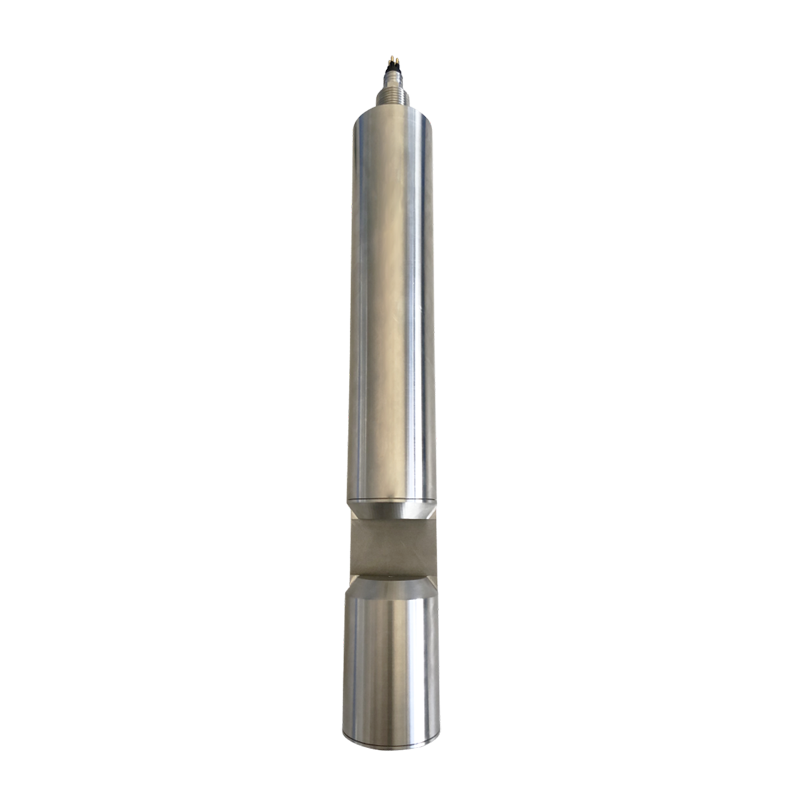
A separate turbidity probe can add particle information where the process needs another measuring point. The TS instrument below is not the COL color sensor. A rising NTU trend can support investigation of a color disagreement, but NTU is not a color unit and cannot be relabeled as Hazen.
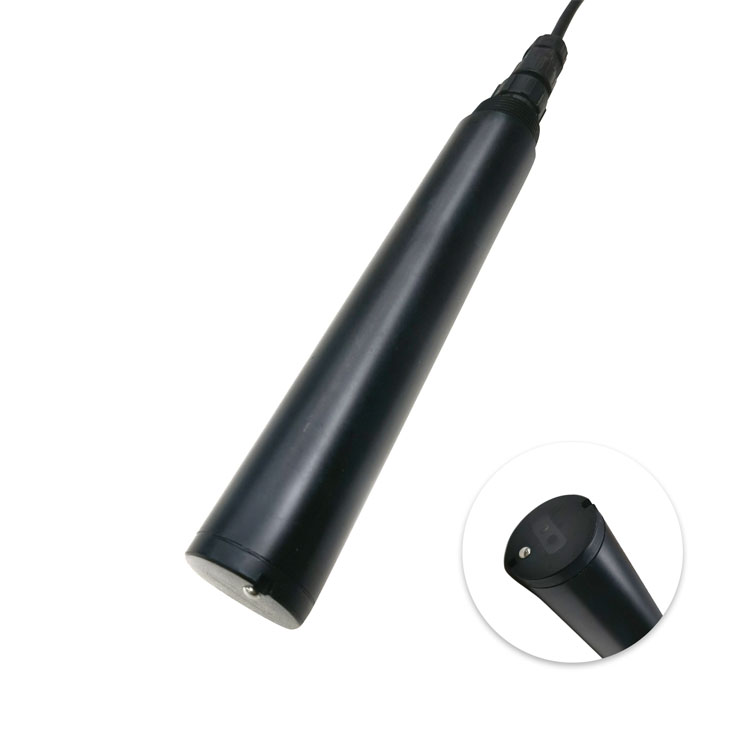
| COL-408-S item | Specification | Comparison implication |
|---|---|---|
| Color range and accuracy | 0–500 Hazen; ±5% of reading | Apply the stated basis to the selected configuration and appropriate test conditions. |
| Resolution and listed detection limit | 0.1 Hazen and 2 Hazen respectively | Do not infer low-level capability from the display increment. |
| Associated turbidity | 0–200 NTU; resolution 0.1 NTU | Review particle conditions and the limits of compensation. |
| Response | T90 below 30 s | Sample transport, host acquisition and averaging add to observed system delay. |
| Supply and communication | 12–24 VDC; 0.2 W at 12 V; RS485 Modbus RTU; optional 4–20 mA | Confirm selected outputs and the final unit at the receiver. |
| Exposure and construction | 0–45 °C; pressure <0.1 MPa; 316L; IP68 | Keep the instrument within its exposure limits and allow cleaning access. |
| Installation and cable | Immersion no deeper than 2 m; at least 30 cm below the lowest expected level; standard 5 m cable | Specify cable jacket and protected joints; avoid bubbles and optical-surface damage. |
At an illustrative reading of 100 Hazen, a 5%-of-reading term is 5 Hazen. That arithmetic does not establish accuracy below the stated detection limit or agreement with a different laboratory method. Check the complete comparison, including sample preparation and the reference uncertainty.
A full-spectrum instrument such as FUV-408 uses a different optical system and lists color accuracy on a full-scale basis. Do not transfer its percentage definition to COL-408-S or treat the two product families as the same calibration. Select the actual method and model for the water being evaluated.
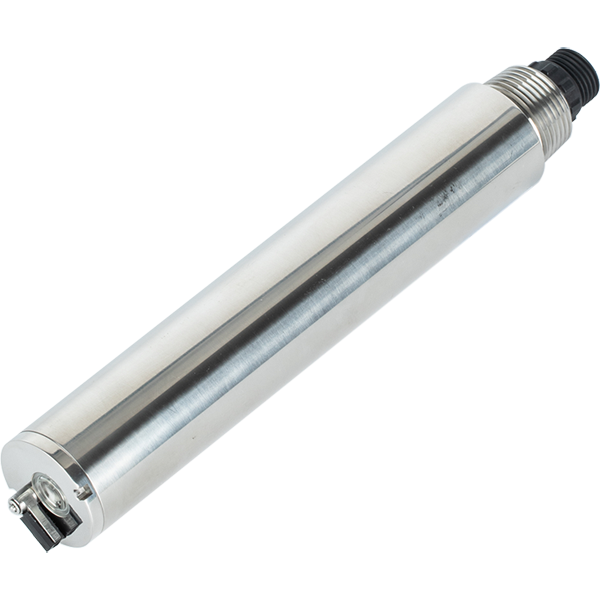
The stainless-steel turbidity probe below is another particle-monitoring configuration, not a second color method. Any companion probe needs its own sampling position and range. Its presence does not remove the need to compare the color channel on a consistent basis.
A Hazen-scale optical result should not be assumed to describe every strongly colored industrial mixture equally well. Different absorbing compounds can produce different spectral responses. Provide representative water, the reference method and the intended decision when requesting a trial for dye-bearing or chemically variable streams.
A successful check in an assigned color standard establishes an instrument response under that condition. It does not independently establish sample-specific equivalence after a production change. Keep the water types used for approval with the comparison record and review them when the process chemistry changes.
At the PLC or data logger, retain the actual color unit and method designation. Keep the turbidity channel separate and mark service or unavailable observations. A generic tag named water quality is insufficient when several optical observations arrive through the same RS485 bus.
For a NiuBoL inquiry, provide the water source, color scale and reference method, expected range, turbidity conditions and preparation used for comparison. State whether the instrument is immersed or supplied through a sample arrangement. This supports a useful trial and quotation without promising agreement between different measurement definitions.
No. Compensation changes interpretation of the optical signal; it does not perform the reference method's physical sample preparation. Demonstrate agreement for the required result.
No universal conversion applies. Turbidity and color describe different optical properties. Preserve separate values and units.
No. The COL configuration lists a 2 Hazen detection limit. Resolution, accuracy and useful low-level performance are different specifications.
Particle content and absorbing compounds can change the relationship with the reference. Include conditions representative of the actual treatment or production duty.
Only correct a demonstrated acquisition-conversion error there. A sample or method mismatch requires investigation, not an unexplained software multiplier.
Supply representative samples, process conditions, expected color and turbidity, and the reference procedure. Define the intended acceptance decision before reviewing the results.
Online water color measurement becomes useful when its result is clearly defined. Match the sample and reference method, keep turbidity separate, and use the COL or full-spectrum specification appropriate to the offered configuration. Verify representative water before treating disagreement as a calibration fault.
Prev:Total Nitrogen and Total Phosphorus Monitoring: Sample Time and Result Age
Next:Online Water Hardness Monitoring: Softener Changeover Tests
Related recommendations
Sensors & Weather Stations Catalog
 Agriculture Sensors and Weather Stations Catalog-NiuBoL.pdf
Weather Stations Catalog-NiuBoL.pdf
Agriculture Sensors Catalog-NiuBoL.pdf
Water Quality Sensor Catalog-NiuBoL.pdf
Related products
 Combined air temperature and relative humidity sensor
 TDR Soil Moisture & Temperature Sensor for irrigation| RS485 |4-20mA| NBL-S-THR
 Soil pH sensor RS485 soil Testing instrument soil ph meter for agriculture |NBL-S-PH
 Wind Speed sensor Output Modbus/RS485/Analog/0-5V/4-20mA
 Tipping bucket rain gauge for weather monitoring auto rainfall sensor RS485/Outdoor/stainless steel
 Pyranometer Solar Radiation Sensor 4-20mA/RS485


Screenshot, WhatsApp to identify the QR code
WhatsApp number:+8615367865107
(Click on WhatsApp to copy and add friends)

