





— Products —
 Consumer hotline +8618073152920
WhatsApp:+8615367865107
Address:Room 102, District D, Houhu Industrial Park, Yuelu District, Changsha City, Hunan Province, China
Water Quality Sensors
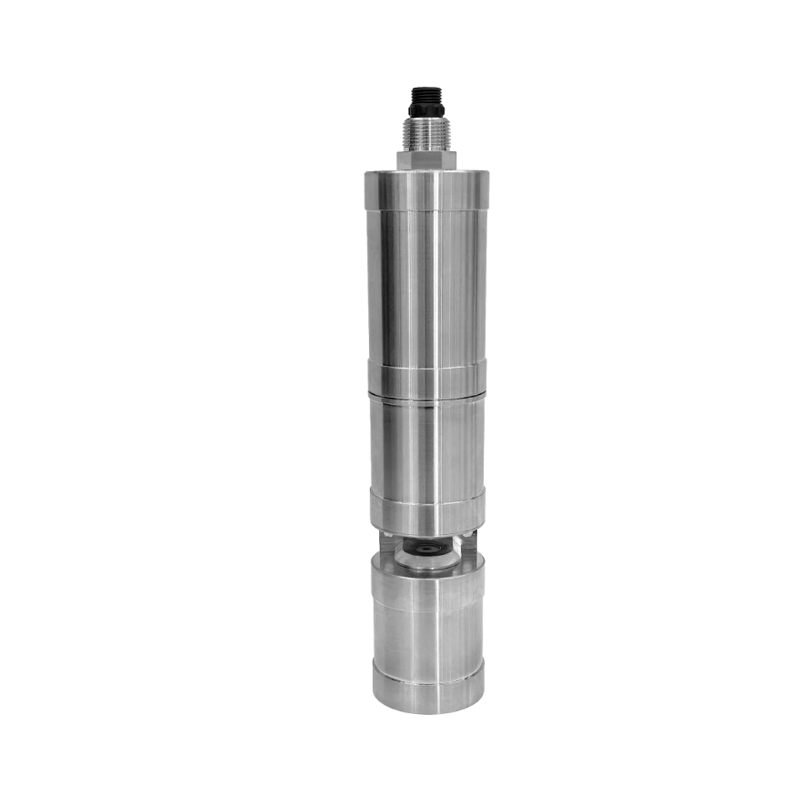

NiuBoL NBL-WQ-FUV-408 online full-spectrum multi-parameter sensor is an industrial-grade water quality spectral analyzer that adopts full-spectrum absorption method. It measures multiple water quality parameters such as COD, BOD, TOC, chroma, turbidity, TP, TN, NH3-N, nitrate, and nitrite in one go. It features built-in turbidity compensation algorithm and automatic cleaning brush, RS485 Modbus RTU protocol, low power consumption, and IP68 protection. It is suitable for long-···
Tel/WhatsApp:+8615367865107
Email:Arvin@niubol.com +Nearly 100 partner companies in more than 75 countries. We are committed to providing high-quality, practical products to meet your needs and help you solve problems. Our products comply with international standards and are certified with ISO, CE and RoHS.Product Details
Product Overview: The NiuBoL NBL-WQ-FUV-408 is an online full-spectrum multiparameter water quality sensor designed for continuous spectral monitoring in wastewater, industrial water and environmental applications. It uses a xenon light source and a miniature fiber-optic spectrometer to collect optical absorption information across a broad wavelength range. The sensor provides calibrated spectral estimates for COD, BOD, TOC, turbidity, water color, total nitrogen, total phosphorus, ammonia nitrogen, nitrate and nitrite. It supports RS485 Modbus RTU communication, a 12 VDC power supply and IP68 protection.
Water quality monitoring often requires information about several related parameters. Traditional monitoring systems may use separate electrodes, optical probes or laboratory analyzers for different measurements.
The NBL-WQ-FUV-408 uses a different measurement approach. It collects a broad optical absorption spectrum from one water sample and applies calibration models to estimate multiple water quality indicators.
The sensor uses a xenon lamp as its light source and a miniature fiber-optic spectrometer to collect spectral information extending from the near-ultraviolet toward the near-infrared region.
Different dissolved substances and suspended particles affect light absorption and transmission in different ways. The instrument processes the collected spectrum to generate calibrated parameter values.
This approach allows several optical water quality indicators to be reported through one digital sensor assembly.
However, parameters such as COD, BOD, TOC, total nitrogen and total phosphorus are derived from spectral calibration models. They are not independently determined by separate laboratory digestion or biochemical test procedures inside the sensor.
For wastewater applications, measurement suitability depends on the water composition, calibration model and required agreement with reference analytical methods.

Full-spectrum optical measurement: Collects broad spectral absorption information using a xenon lamp and miniature spectrometer.
Multiple water quality indicators: Supports calibrated outputs for COD, BOD, TOC, color, turbidity and selected nitrogen and phosphorus parameters.
Reagent-free routine measurement: Does not consume chemical digestion reagents during normal optical measurement.
Spectral calibration: Uses calibration models to convert optical information into parameter estimates.
Turbidity compensation: Includes algorithms intended to reduce some interference from suspended particles.
RS485 Modbus RTU: Digital output for compatible PLCs, RTUs and data loggers.
Two data representations: Supports scaled integer registers and 32-bit floating-point measurement registers.
Automatic cleaning system: Cleaning-brush maintenance is supported for the documented sensor assembly.
316L stainless steel housing: Designed for compatible immersion applications.
IP68 protection: For immersion within the specified operating conditions.
12 VDC power supply: The complete instrument has a specified consumption of 5 W at 12 V.
Standard 5-meter cable: Other cable lengths can be specified according to installation requirements.
The NBL-WQ-FUV-408 provides multiple spectral-model outputs from one optical measurement system.
The following ranges describe the documented water quality indicators. The listed accuracy values are manufacturer specifications based on full scale.
| Parameter | Measurement Range | Accuracy | Resolution |
|---|---|---|---|
| COD | 0–200 mg/L KHP Equivalent | ±5% F.S. | 0.1 mg/L |
| BOD | 0–150 mg/L | ±5% F.S. | 0.1 mg/L |
| TOC | 0–150 mg/L | ±5% F.S. | 0.1 mg/L |
| Water Color / Chroma | 0–500 Hazen | ±5% F.S. | 0.1 Hazen |
| Turbidity | 0–400 NTU | ±5% F.S. | 0.1 NTU |
| Total Phosphorus (TP) | 0–15 mg/L | ±5% F.S. | 0.1 mg/L |
| Total Nitrogen (TN) | 0–100 mg/L | ±5% F.S. | 0.1 mg/L |
| Ammonia Nitrogen (NH3-N) | 0–80 mg/L | ±5% F.S. | 0.1 mg/L |
| Nitrate | 0–15 mg/L | ±5% F.S. | 0.01 mg/L |
| Nitrite | 0–10 mg/L | ±5% F.S. | 0.01 mg/L |
Measurement interpretation: These values are generated from a common full-spectrum optical measurement and associated calibration models. They should not be considered ten independent laboratory determinations.
For COD, the measurement range is expressed on a potassium hydrogen phthalate (KHP) equivalent basis.
For nitrate, nitrite and ammonia nitrogen, the concentration reporting units should be matched to the required reference method before integrating the readings into a monitoring system.
| Parameter | Specification |
|---|---|
| Brand | NiuBoL |
| Model | NBL-WQ-FUV-408 Full-Spectrum Multiparameter Water Quality Sensor |
| Product Type | Online Full-Spectrum Water Quality Spectral Sensor |
| Measurement Principle | Full-Spectrum Optical Absorption |
| Light Source | Xenon Lamp |
| Spectral Detection | Miniature Fiber-Optic Spectrometer |
| Calibration | Spectral Calibration and Parameter-Specific Model Adjustment |
| Digital Output | RS485 Modbus RTU |
| Measurement Data Formats | Scaled 16-Bit Integers and 32-Bit Floating-Point Values |
| Default Modbus Address | 100 (0x64) |
| Default Baud Rate | 9600 bps |
| Serial Format | 8 Data Bits, No Parity, 1 Stop Bit |
| Power Supply | 12 VDC |
| Power Consumption | 5 W @12 VDC |
| Operating Temperature | 0–45°C |
| Operating Pressure | <0.1 MPa |
| Storage Temperature | -5 to 65°C |
| Housing / Wetted Material | 316L Stainless Steel |
| Protection Rating | IP68 |
| Installation Method | Immersion Installation |
| Maximum Installation Depth | 2 m |
| Recommended Orientation | Horizontal, Securely Mounted |
| Approximate Overall Length | 334 mm |
| Approximate Body Diameter | 68 mm |
| Mounting Connection | 3/4-inch NPT |
| Electrical Connector | M16 Waterproof Male Connector |
| Cable | 4-Core Shielded Cable |
| Standard Cable Length | 5 m; Custom Lengths Available |
The complete NBL-WQ-FUV-408 assembly is specified for 12 VDC and 5 W power consumption. A suitable power supply should be selected for the entire instrument rather than using the consumption value of a single-parameter water quality probe.
The NBL-WQ-FUV-408 uses optical absorption spectroscopy.
A xenon lamp emits light over a broad wavelength range. The light passes through the water in the sensor's optical measurement region.
Substances in the water absorb different amounts of light at different wavelengths. Suspended particles can also scatter and attenuate the transmitted light.
A miniature fiber-optic spectrometer collects the spectral information after interaction with the sample.
The instrument processes the spectrum using calibration models and compensation algorithms.
Different model outputs may be associated with organic matter, color, suspended particles or nutrient-related water quality characteristics.
Because these outputs are calculated from the same spectral measurement, their accuracy depends on the suitability of the calibration model for the water being monitored.
Full-spectrum measurement provides more optical information than a single-wavelength measurement, but the larger wavelength range does not automatically guarantee better agreement with every laboratory parameter.
The NBL-WQ-FUV-408 reports multiple water quality indicators using spectral calibration models.
These outputs should be distinguished from reference analytical methods.
| Parameter | Measurement Consideration |
|---|---|
| COD | A spectral COD-equivalent estimate rather than a chemical digestion measurement. |
| BOD | A model-based estimate rather than a direct biochemical incubation test. |
| TOC | A spectral estimate rather than direct carbon quantification by a separate TOC analytical method. |
| Total Nitrogen | A model-derived result that requires suitable reference correlation for the water being measured. |
| Total Phosphorus | A model-derived result rather than direct chemical digestion and colorimetric phosphorus analysis. |
| Nitrate / Nitrite / Ammonia Nitrogen | Nutrient-related spectral outputs whose interpretation and accuracy depend on calibration and sample composition. |
For projects requiring agreement with specified laboratory methods, evaluate the online measurements using representative water samples.
This is especially important when industrial wastewater composition changes with production processes, raw materials or treatment chemicals.
Full-spectrum water quality sensors and modular multiparameter probes use different measurement architectures.
A full-spectrum sensor uses one optical spectrum and associated models to calculate multiple indicators.
A modular multiparameter probe combines separate sensing elements, such as dissolved oxygen, pH, ORP, conductivity and turbidity sensors, into one integrated assembly.
| Selection Factor | Full-Spectrum Sensor | Modular Multiparameter Probe |
|---|---|---|
| Measurement Architecture | One optical spectrum with parameter models | Multiple dedicated sensor modules |
| Main Measurements | Spectral estimates for COD, BOD, TOC, nutrients and related indicators | Selected pH, DO, ORP, EC, turbidity and other dedicated measurements |
| Calibration | Spectral and parameter-model calibration | Calibration of the individual installed modules |
| Measurement Verification | Reference comparison for model-derived parameters | Reference verification for each sensor measurement principle |
| Data Output | RS485 Modbus RTU | RS485 Modbus RTU for compatible models |
The better choice depends on the parameters required, water chemistry, reference methods, maintenance requirements and monitoring objective.
For a comparison between UV254 COD and full-spectrum monitoring, read UV254 COD Sensor vs Full-Spectrum Sensor for Variable Effluent.
A full-spectrum water quality sensor can provide several optical indicators at a wastewater treatment monitoring point.
The NBL-WQ-FUV-408 may be considered for observing changes in organic-related and nutrient-related water quality conditions.
For process evaluation, the online readings should be interpreted alongside operating conditions and suitable laboratory reference results.
The instrument does not independently establish compliance with all discharge requirements.
Industrial wastewater composition can change with production schedules, raw materials and treatment processes.
The NBL-WQ-FUV-408 can provide continuous spectral information that may help characterize changing water quality conditions.
For industrial applications, the calibration relationship should be evaluated over representative low, normal and high process-loading conditions.
Where the wastewater contains strongly variable dyes or chemicals, the relationship between spectral outputs and reference analytical values may change.
Full-spectrum measurements can provide supplementary information about changing water quality in rivers and surface waters.
For field deployment, select a representative location and account for water-level variation, sediment, bubbles and fouling.
Where the monitoring program requires specific laboratory-equivalent parameters, the selected spectral outputs should be verified against the applicable reference method.
Water intakes may experience variations in dissolved organic matter, color, turbidity and other water characteristics.
The NBL-WQ-FUV-408 may be used as part of a monitoring system to observe changes in spectral water quality indicators.
The data can support investigation of water-source changes but does not independently determine drinking water safety.
For monitoring applications requiring reliable quantitative comparisons, it is useful to evaluate the sensor using representative samples from the intended installation site.
The relationship between the spectral model and laboratory measurements can depend on the source and composition of the water.
A field evaluation can be organized around the following steps:
Define the required water quality parameters and reference analytical methods.
Identify the normal and maximum expected concentration of each parameter.
Install the sensor at a representative location and verify its communication settings.
Collect paired online readings and representative water samples.
Analyze the water samples using the reference methods required by the project.
Compare the spectral estimates with the reference results across relevant operating conditions.
Evaluate whether the agreement is suitable for the intended monitoring objective.
Repeat verification when the water composition changes significantly.
For example, if COD is being monitored during an industrial wastewater treatment process, samples collected under different process-loading conditions can help evaluate the stability of the optical COD relationship.
The required number of samples and acceptable deviation should be defined according to the project rather than assuming that one calibration point is sufficient for every water source.
The NBL-WQ-FUV-408 is designed for immersion installation.
The recommended mounting position is horizontal, with the optical measurement region facing the water flow where appropriate.
The sensor should be installed no deeper than 2 meters below the water surface.
To accommodate changing water levels, keep the instrument at least 30 cm below the lowest expected water level.
| Installation Item | Requirement |
|---|---|
| Installation Method | Immersion |
| Recommended Orientation | Horizontal, Securely Mounted |
| Maximum Installation Depth | 2 m |
| Minimum Submergence | 30 cm Below the Lowest Expected Water Level |
| Operating Temperature | 0–45°C |
| Operating Pressure | <0.1 MPa |
Avoid locations where persistent air bubbles can obstruct the optical measurement region.
Secure the sensor against water movement and contact with nearby structures.
Provide sufficient access for optical-window inspection, cleaning and calibration.
For seawater or chemically aggressive wastewater, evaluate the compatibility of the complete wetted assembly, including seals, optical components and cable connections.

The NBL-WQ-FUV-408 sensor assembly includes a cleaning system for maintaining the optical measurement region.
During continuous monitoring, sediment, biological growth and other deposits can accumulate on optical surfaces and affect the measured spectrum.
The cleaning mechanism can help reduce some deposit-related effects, but periodic inspection remains necessary.
Routine maintenance should include checking the optical window, cleaning brush, housing, cable and waterproof connections.
Clean the sensor exterior with clean water. When deposits remain, gently wipe accessible surfaces with a soft, damp cloth.
Do not use abrasive tools or apply excessive force to the optical measurement region.
For continuous operation, maintenance of the cleaning mechanism and dynamic sealing components should follow the applicable service schedule.
The sensor is not maintenance-free. Cleaning, calibration verification and inspection frequency should reflect actual water conditions.
The NBL-WQ-FUV-408 provides RS485 Modbus RTU communication through a four-core shielded cable.
| Wire Color | Function |
|---|---|
| Red | 12 VDC Positive |
| Black | Power Ground (GND) |
| Blue | RS485 A |
| White | RS485 B |
Use a suitable regulated 12 VDC power supply for the complete instrument.
The specified power consumption is 5 W at 12 VDC.
For solar-powered monitoring stations, include the spectrometer, cleaning mechanism, data logger and communication gateway when sizing the complete power system.
Verify the wiring and waterproof connections before applying power.
The NBL-WQ-FUV-408 supports RS485 Modbus RTU for connection to compatible PLCs, RTUs and data loggers.
| Communication Parameter | Default Setting |
|---|---|
| Interface | RS485 |
| Protocol | Modbus RTU |
| Baud Rate | 9600 bps |
| Data Bits | 8 |
| Parity | None |
| Stop Bits | 1 |
| Default Device Address | 100 (0x64) |
| Read Function Code | 03 |
| Write Function Code | 06 |
The digital interface includes both scaled-integer and floating-point measurement registers.
The PLC or data logger should use one compatible decoding method for each required measurement channel.
The scaled-integer register area stores each parameter using two 16-bit registers: the measurement value and its decimal-place scaling.
The alternative floating-point area provides two-register 32-bit floating-point data for each corresponding parameter.
| Parameter | Scaled Integer Address | Floating-Point Address |
|---|---|---|
| COD | 0x0000 | 0x0200 |
| BOD | 0x0002 | 0x0202 |
| TOC | 0x0004 | 0x0204 |
| Turbidity | 0x0006 | 0x0206 |
| Chroma | 0x0008 | 0x0208 |
| Nitrate Nitrogen | 0x000A | 0x020A |
| Nitrite | 0x000C | 0x020C |
| Total Nitrogen | 0x000E | 0x020E |
| Total Phosphorus | 0x0010 | 0x0210 |
| Ammonia Nitrogen | 0x0012 | 0x0212 |
Each scaled-integer starting address represents two consecutive 16-bit registers.
Each floating-point starting address represents two consecutive registers forming a 32-bit value.
The floating-point format is documented as little-endian. When configuring a PLC or SCADA system, verify that the selected byte and word ordering correctly decodes the returned measurements.
Some additional registers are documented in the communication protocol. Their availability and measurement specifications should be established for the ordered configuration before they are included in the monitoring system.
For example, if the COD measurement registers return:
Raw value: 0x0362
Decimal places: 0x0001
The raw value is 866 in decimal notation. With one decimal place, the displayed result is 86.6 mg/L.
The same scaling method applies to the other parameters in the scaled-integer measurement area.
The NBL-WQ-FUV-408 supports spectral calibration and parameter-specific calibration functions.
Before performing spectral calibration, the optical measurement region should be fully immersed in suitable deionized water with no trapped bubbles.
The sensor's spectral calibration function is associated with Modbus register 0x1000.
The communication protocol also defines separate calibration and model-adjustment registers for individual parameter outputs.
For monitoring applications that require agreement with specific laboratory values, suitable reference samples can be used to evaluate the parameter models.
Changes to calibration values or model coefficients should be made using the appropriate procedure for the configured parameter and reference method.
Incorrect calibration settings may affect several reported values and reduce the reliability of subsequent measurements.
When evaluating a full-spectrum water quality sensor, first identify which measurements are important for the monitoring objective.
A larger number of available output parameters does not automatically mean the instrument is the best choice for every application.
| Selection Factor | Information Required |
|---|---|
| Required Parameters | COD, BOD, TOC, turbidity, color, nitrogen, phosphorus or other specified outputs |
| Water Type | Municipal wastewater, industrial wastewater, river, reservoir or another water source |
| Expected Ranges | Normal and maximum values for every required parameter |
| Reference Method | Required laboratory or contractual analytical method |
| Water Composition | Organic compounds, suspended particles, color, salinity and relevant process chemicals |
| Installation | Water depth, pressure, mounting position, optical fouling and maintenance access |
| Power Supply | Suitable 12 VDC source for a 5 W instrument and associated station equipment |
| Communication | RS485 Modbus RTU and the required integer or floating-point data format |
| Order Information | Quantity, cable length and destination country |
For industrial wastewater containing changing organic compounds or variable nutrient composition, consider a representative sample evaluation before defining final measurement acceptance criteria.
A1. The sensor uses full-spectrum optical absorption to provide calibrated estimates for COD, BOD, TOC, turbidity, water color and selected nutrient-related parameters.
A2. No. The instrument uses one spectral measurement system and associated calibration models to generate several outputs.
A3. Not automatically. The optical estimates and reference laboratory methods use different measurement principles. Agreement should be evaluated for the monitored water and project requirements.
A4. It may be suitable for compatible industrial wastewater applications. Water composition, required parameters, expected ranges and reference comparison requirements are important selection factors.
A5. No. The instrument includes compensation algorithms, but changes in suspended particles and optical conditions may still influence the measurements.
A6. The complete NBL-WQ-FUV-408 instrument is specified for 12 VDC, with power consumption of 5 W at 12 V.
A7. The documented default address is 100 (0x64), with a baud rate of 9600 bps and serial format 8N1.
A8. The sensor provides scaled-integer measurement registers and 32-bit floating-point registers for the documented parameter channels.
A9. The documented sensor assembly includes a cleaning system. Routine inspection of the optical window, cleaning brush and sealing components remains necessary.
A10. The sensor provides RS485 Modbus RTU. Remote cellular transmission requires a separate compatible data logger or communication gateway.
A11. Yes. A compatible PLC can read the Modbus registers using the documented serial settings and the appropriate data decoding format.
A12. Provide the required parameters, water type, expected ranges, reference testing requirements, installation conditions, data acquisition interface, cable length and quantity.
Download the NBL-WQ-FUV-408 user manual for technical specifications, installation dimensions, electrical wiring, spectral calibration and Modbus register addresses.
 NiuBoL NBL-WQ-FUV-408 online full-spectrum multi-parameter sensor.pdf
For product selection, system integration or quotation, please provide:
Application: Municipal wastewater, industrial wastewater, surface water or another monitoring environment.
Required measurements: Specify which spectral parameter outputs are needed.
Expected concentrations: Normal and maximum ranges for each parameter.
Reference testing: Laboratory methods and acceptable differences, if quantitative agreement is required.
Water composition: Known organic substances, suspended solids, dyes or other relevant process chemicals.
Installation: Immersion depth, temperature, pressure, mounting method and maintenance access.
Power supply: Available 12 VDC power and monitoring-station configuration.
Communication: PLC, RTU, data logger or gateway model, including the preferred Modbus data representation.
Order details: Cable length, quantity and destination country.
For projects requiring reference-method agreement, please include the relevant analytical requirements so the suitability of the spectral measurement approach can be evaluated.
Contact NiuBoL for product specifications, communication documentation and configuration information for your water quality monitoring project.
Explore additional NiuBoL Online Water Quality Sensors for optical COD, turbidity, pH, dissolved oxygen and multiparameter monitoring applications.
Sensors & Weather Stations Catalog
 Agriculture Sensors and Weather Stations Catalog-NiuBoL.pdf
Weather Stations Catalog-NiuBoL.pdf
Agriculture Sensors Catalog-NiuBoL.pdf
Water Quality Sensor Catalog-NiuBoL.pdf
Related recommendations
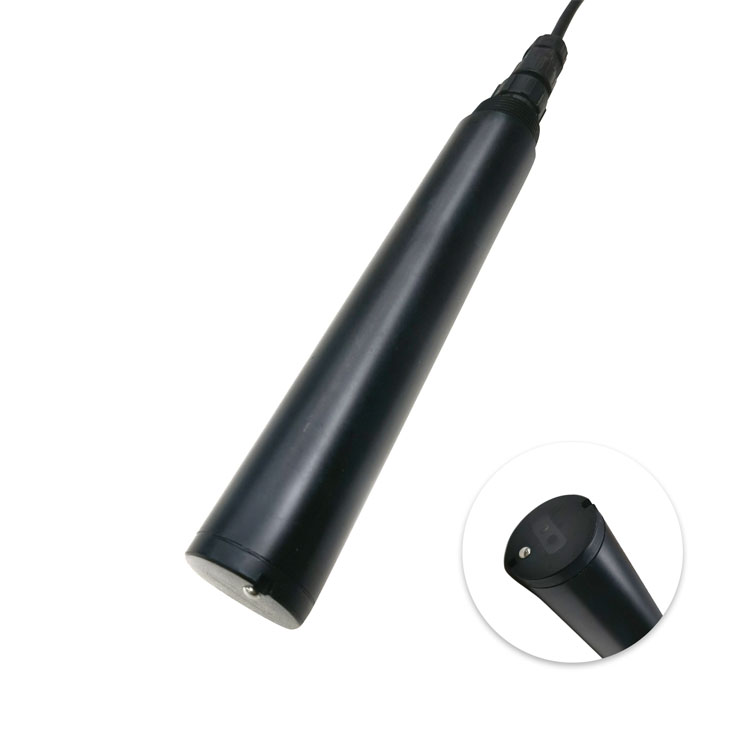 Online Turbidity Sensor RS485 Modbus | NBL-WQ-TS
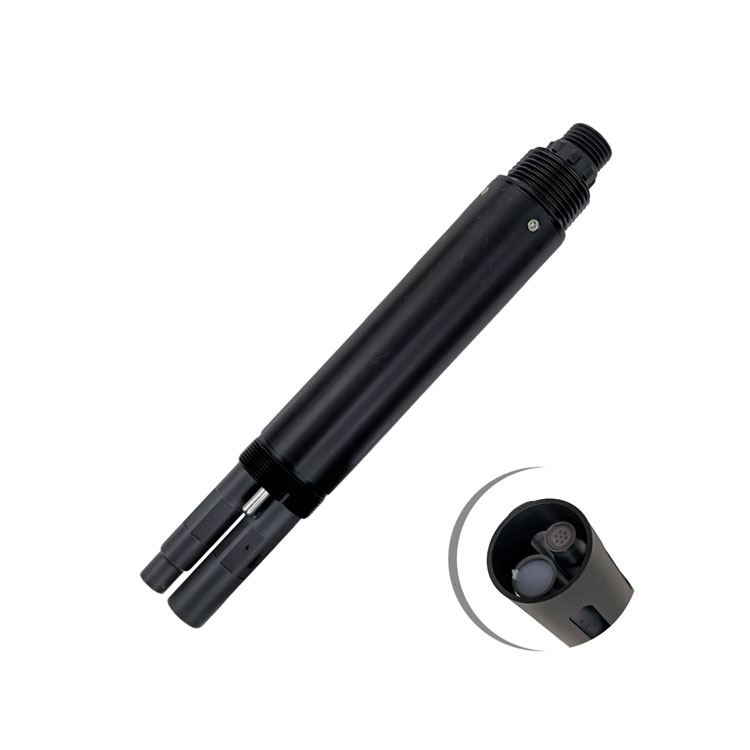 Online Ammonia Nitrogen Sensor (Ammonium ISE) | NBL-WQ-NHN
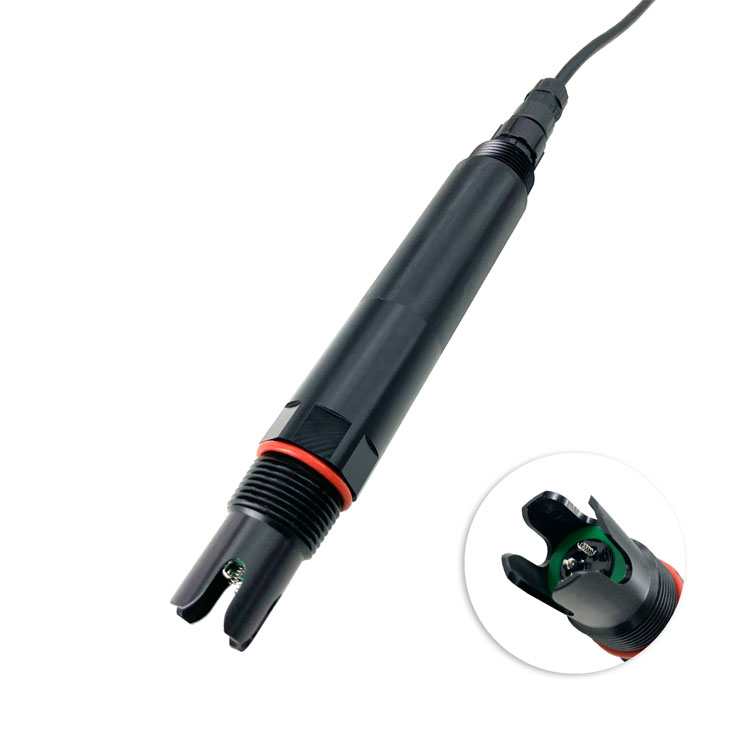 Online Residual Chlorine Sensor (HOCl) RS485 | Water Quality Sensor| NBL-WQ-CL
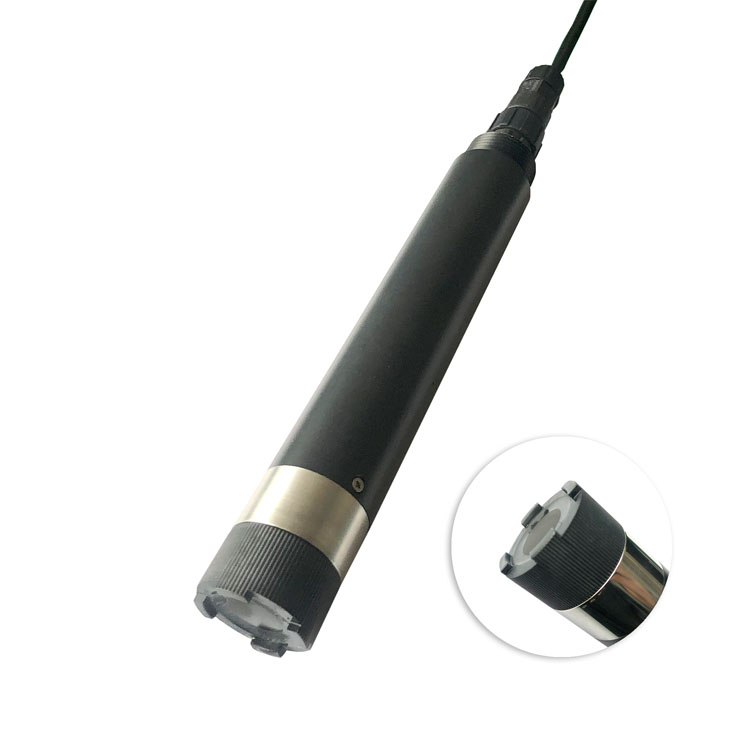 NBL-WQ-DO Online Fluorescence Dissolved Oxygen Sensor
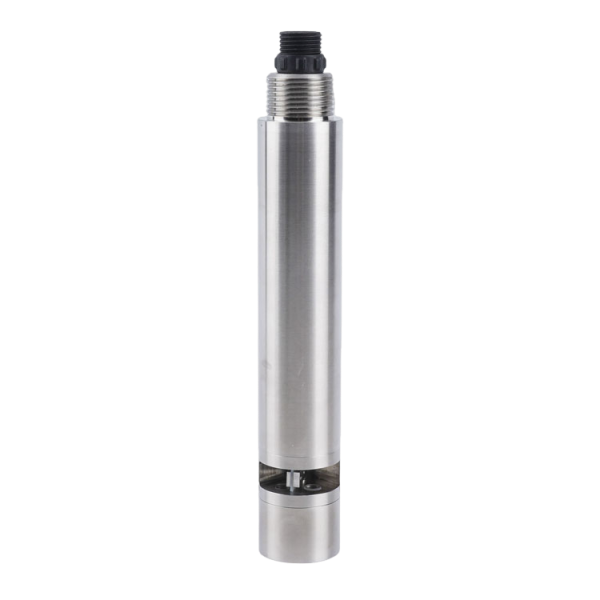 NBL-WQ-COD Online COD Water Quality Sensor
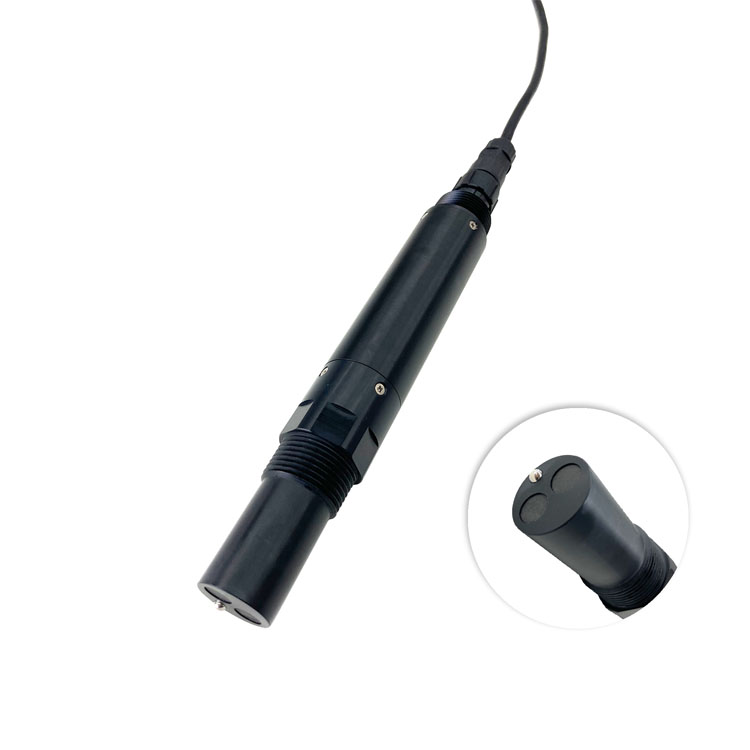 Water Conductivity EC Sensor RS485 Modbus IP68 | NBL-WQ-EC


Screenshot, WhatsApp to identify the QR code
WhatsApp number:+8615367865107
(Click on WhatsApp to copy and add friends)

