





— Blogs —
—Products—
 Consumer hotline +8618073152920
WhatsApp:+8615367865107
Address:Room 102, District D, Houhu Industrial Park, Yuelu District, Changsha City, Hunan Province, China
Product knowledge
Time:2026-09-26 09:00:00 Popularity:216
Quick Answer: Outdoor water quality monitoring in heat and humidity requires separate checks for the water-contact sensor, exposed connections and instrument cabinet. Water temperature, air temperature, internal cabinet temperature and storage ratings are not interchangeable. Select each component for its actual conditions, then verify operation through hot daytime exposure, rain and overnight cooling.
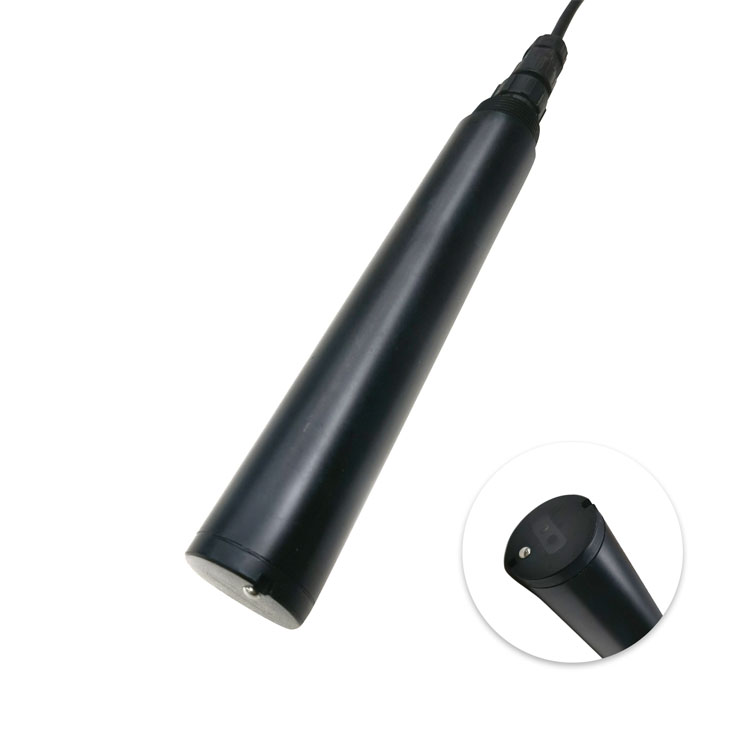
An immersed turbidity probe can remain in relatively cool river water while its cable junction and data logger sit in direct sun. Conversely, a shaded cabinet does not protect a probe exposed to an excessively hot process-water discharge. Record the conditions at each part of the installation instead of assigning one ambient temperature to the entire system.
During a site survey, distinguish measured water temperature, shaded air temperature, cabinet internal temperature and any exposed connector temperature relevant to its rating. Use these observations and credible seasonal conditions to review the installed equipment. A storage limit is not a permission to operate continuously at that temperature.
| Part of the installation | Exposure to assess | Decision affected |
|---|---|---|
| Immersed sensing head | Water temperature, pressure, chemistry, sediment and fouling | Probe model, material and immersion arrangement |
| Above-water cable and connector | Sunlight, splash, rain, mechanical strain and chemical exposure | Cable suitability, routing and connection protection |
| Controller or data logger | Actual cabinet temperature and condensation conditions | Operating rating and enclosure thermal design |
| Battery and power conversion | Local temperature, load changes and charging conditions | Permitted operating conditions and the available energy budget |
| Sample line, where fitted | Sun heating, stagnation and changes during transport | Whether the delivered sample still represents the water being monitored |
A weatherproof enclosure can still become too hot. Solar input and heat from electronics must be considered alongside the cabinet's ability to lose heat. Position, shading and an appropriate enclosure design can reduce exposure, but there is no universal temperature reduction that applies to every site.
Condensation is a different mechanism. Moist air can deposit water on a surface cooled to its dew point. The National Weather Service explanation of dew point describes this temperature relationship. An enclosure may therefore develop internal moisture during cooling even without an obvious rain leak.
Inspect seals, cable entries and internal conditions rather than assuming a high ingress rating prevents every condensation event. Any pressure-equalizing vent, drainage arrangement, humidity control or anti-condensation device needs to be appropriate to the enclosure and installation. An improvised hole can defeat the intended protection.
Heating to reduce condensation risk is not the same as cooling an overheated cabinet. A continuously energized heater can worsen daytime heat and increase a solar station's load. Choose the method and controls from the actual temperature and moisture conditions, with the enclosure designer checking the complete arrangement.
The NBL-WQ-MPS-5A and NBL-WQ-MPS-5B are different multi-parameter configurations. Do not copy the power requirement from one to the other, or assume that every optional sensing channel has the same requirements as a separate probe with a similar name.
| Example configuration | Relevant technical data | What to check at the site |
|---|---|---|
| NBL-WQ-MPS-5A | 12 V DC +/-5%; stated consumption 5 W at 12 V; RS485 Modbus RTU; automatic cleaning | Regulated supply at the sensor and the actual installed channel configuration |
| NBL-WQ-MPS-5B | 12 V DC; stated consumption 2 W at 12 V; working conditions 0-50 degrees C, no higher than 0.2 MPa | Water conditions and supply arrangement, separately from cabinet air temperature |
| MPS-5B housing and protection | POM and 316L stainless steel; IP68 | Chemical compatibility, installation depth and protection of all external connections |
| Separate NBL-WQ-DO configuration | 0-20 mg/L; +/-2% FS; working temperature 0-45 degrees C; 12-24 V DC; IP68 | Use that configuration's operating limit and compensation settings rather than another model's rating |
| Communication path | RS485 Modbus RTU for these configurations | Host register interpretation, valid data status and behavior during power recovery |
The MPS-5B storage range of -5 to 65 degrees C is not its working range. Similarly, a probe's immersion protection does not establish a thermal rating for the gateway, battery or junction box. Keep these ratings separate in the equipment schedule.
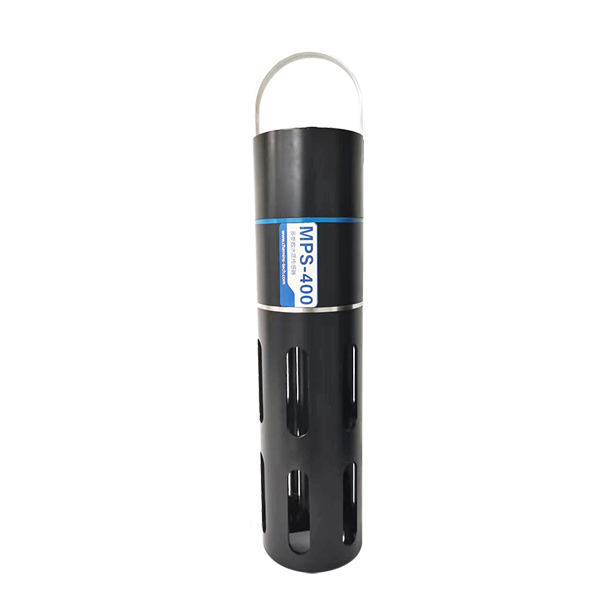
For an immersed station, allow the probe to remain at a representative submerged point across normal water-level changes. Secure the mount independently of the cable and retain access for cleaning. Do not move a sensor into a poorly mixed sheltered corner solely because the location is easier to protect from rain.
A sample line exposed to sun can warm the water before it reaches a cabinet instrument. Long transit and stagnation may also change oxygen or disinfectant conditions. Shade and route the sample path appropriately, quantify transport delay and compare the delivered sample with the original point when those changes matter.
Temperature compensation addresses a defined measurement effect within a sensor's supported conditions. It does not reverse every change that happened in the sample line, restore a lost disinfectant residual or extend the instrument's operating range. Record whether a displayed conductivity value is compensated to a reference temperature or represents the actual water temperature.
For illustration, a continuous 5 W load uses 120 Wh over 24 hours. That calculation describes the energy corresponding to the MPS-5A's stated power value; it is not the total daily consumption of a finished station. A controller, radio, power-conversion losses and environmental controls add further loads.
Measure the intended operating duty, including cleaning cycles and communication activity. Then size a solar and battery arrangement using site energy availability and the actual equipment's permitted temperature conditions. Do not choose a panel wattage or autonomy period from sensor power alone.
At the sensor, verify the DC voltage during relevant load transitions. A logger that restarts during communication or cleaning may be experiencing a power problem rather than a probe failure. The data record should reveal the interruption instead of presenting the last received value as a fresh measurement.
A short indoor bench check cannot establish that an outdoor station will remain functional through its heat and moisture cycle. Commission the electrical and communication path first, then observe the installed system over representative exposure and operation.
The result should identify an actual corrective action. For example, an excessive cabinet temperature calls for thermal review; a stable cabinet with a wet connector calls for a different investigation. Replacing the sensing head without locating the failure can leave the station with the same recurring problem.
For a NiuBoL outdoor water quality monitoring quotation, provide water-temperature records, shaded-air conditions, cabinet location and photos of the exposed connections. Include the installed channel list, power source and communication duty. Those details allow the sensor configuration to be reviewed separately from the weather protection and power system.
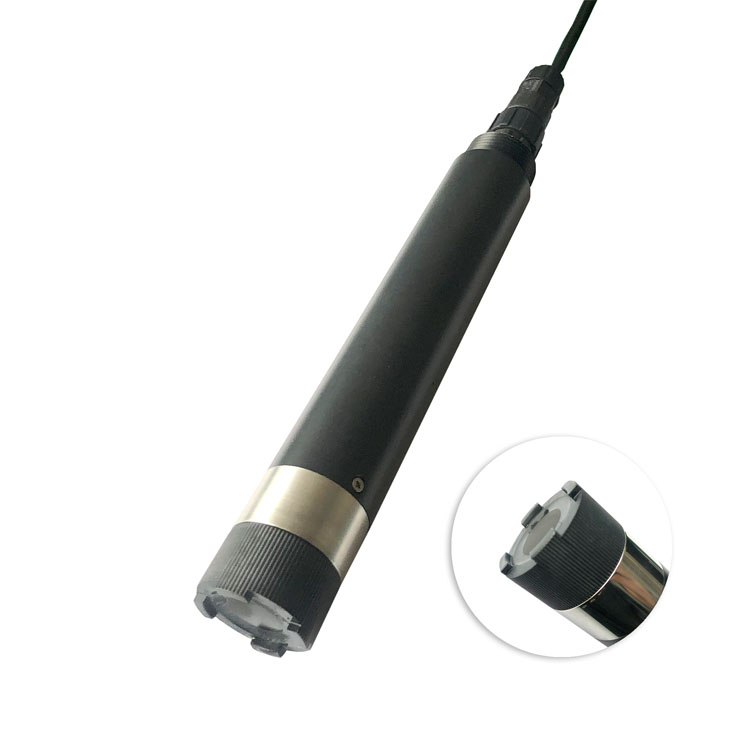
No. The rating applies to the specified device under its applicable conditions. The cabinet, cable joints, connector arrangements and power equipment require their own environmental assessment. A single exposed connection can fail while the immersed probe remains intact.
No. Storage and operation are different conditions. For example, the MPS-5B working range is 0-50 degrees C. Assess the actual operating conditions of the selected configuration rather than substituting its wider storage range.
No. Compensation applies within the model's supported measurement and operating conditions. It does not extend a pressure or temperature limit, and it cannot undo every chemical or physical change in a transported sample.
Not necessarily. Moisture already inside can condense during cooling, and the complete sealing and cable-entry arrangement matters. Identify the moisture source and evaluate an appropriate enclosure solution rather than assuming either sealing or ventilation alone is always sufficient.
Do not assume so. Their stated power values differ, and the installed supply requirements must be checked. Review the actual configuration, cleaning duty and other station loads before reusing a solar or cabinet power design.
Compare the timing of the fault with cabinet temperature, water temperature, supply voltage and operating events. A daytime restart, a wet connection after overnight cooling and a genuine water-temperature change require different checks. Preserve data-quality status so these events are not confused.
Provide the model and configuration, actual temperature records, photos of seals and connections, supply observations and the failure timing. These help distinguish a sensor limitation from a cabinet, wiring or power problem before new equipment is ordered.
Outdoor water quality monitoring in heat and humidity works when the immersed measurement, exposed wiring and cabinet environment are designed separately and tested together. Apply the actual NiuBoL model limits, preserve representative water conditions and investigate heat, moisture and power faults individually. A broader temperature label is not a substitute for that installation review.
Prev:Low-Concentration Water Quality Monitoring
Next:Semiconductor Water Quality Monitoring: Utility Sensors and UPW Limits
Related recommendations
Sensors & Weather Stations Catalog
 Agriculture Sensors and Weather Stations Catalog-NiuBoL.pdf
Weather Stations Catalog-NiuBoL.pdf
Agriculture Sensors Catalog-NiuBoL.pdf
Water Quality Sensor Catalog-NiuBoL.pdf
Related products
 Combined air temperature and relative humidity sensor
 TDR Soil Moisture & Temperature Sensor for irrigation| RS485 |4-20mA| NBL-S-THR
 Soil pH sensor RS485 soil Testing instrument soil ph meter for agriculture |NBL-S-PH
 Wind Speed sensor Output Modbus/RS485/Analog/0-5V/4-20mA
 Tipping bucket rain gauge for weather monitoring auto rainfall sensor RS485/Outdoor/stainless steel
 Pyranometer Solar Radiation Sensor 4-20mA/RS485


Screenshot, WhatsApp to identify the QR code
WhatsApp number:+8615367865107
(Click on WhatsApp to copy and add friends)

