





— Products —
 Consumer hotline +8618073152920
WhatsApp:+8615367865107
Address:Room 102, District D, Houhu Industrial Park, Yuelu District, Changsha City, Hunan Province, China
Water Quality Sensors


NiuBoL NBL-WQ-MPS-5B online multi-parameter self-cleaning digital sensor is an industrial-grade water quality monitoring solution that adopts RS485 Modbus RTU protocol. It supports simultaneous measurement of multiple parameters including dissolved oxygen, pH, ORP, conductivity/salinity, and turbidity. It features a built-in automatic cleaning brush to effectively reduce maintenance costs and is suitable for long-term stable operation in scenarios such as wastewater treatment···
Tel/WhatsApp:+8615367865107
Email:Arvin@niubol.com +Nearly 100 partner companies in more than 75 countries. We are committed to providing high-quality, practical products to meet your needs and help you solve problems. Our products comply with international standards and are certified with ISO, CE and RoHS.Product Details
Product Overview: The NiuBoL NBL-WQ-MPS-5B is an online self-cleaning multiparameter water quality sensor designed for integrated water monitoring. It supports configurable measurement modules for dissolved oxygen (DO), pH, ORP, electrical conductivity or salinity, and turbidity, together with temperature measurement. Depending on the ordered configuration, up to six parameters, including temperature, can be monitored simultaneously.
The integrated probe features an automatic cleaning brush, RS485 Modbus RTU communication, a 12 VDC power supply and IP68 protection. It is intended for suitable wastewater treatment, aquaculture, environmental and industrial water monitoring projects.
Monitoring several water quality parameters at one location normally requires multiple measurement channels, calibration procedures and maintenance activities.
The NBL-WQ-MPS-5B integrates selected water quality sensing modules into one multiparameter probe assembly. This can reduce the number of separate sensor mounting positions and external cables required at a monitoring point.
The probe supports optional modules for dissolved oxygen, pH, oxidation-reduction potential (ORP), conductivity or salinity, and turbidity. Temperature is included among the available measurement channels.
The exact measurement combination depends on the selected modules and the physical configuration of the probe. Not every NBL-WQ-MPS-5B is automatically supplied with every available measurement module.
The integrated cleaning brush can operate at configurable intervals to help remove deposits from the sensing region. The protective cover includes openings that provide water access while offering mechanical protection to the installed sensing modules.
The sensor communicates using RS485 Modbus RTU and can be connected to compatible PLCs, data loggers, industrial RTUs and other Modbus master equipment.

Configurable multiparameter monitoring: Select measurement modules according to the required water quality parameters.
Up to six measurement parameters: Maximum documented combination includes temperature.
Integrated automatic cleaning brush: Adjustable cleaning interval and cleaning cycles.
RS485 Modbus RTU: Supports communication with compatible industrial data acquisition systems.
Modular sensor arrangement: Individual measurement modules can be selected according to project requirements.
Slotted protective cover: Provides mechanical protection while permitting water contact with the installed sensors.
POM and 316L construction: Housing materials specified for the probe assembly.
IP68 protection: Designed for suitable immersion applications.
12 VDC supply: Specified power input for the complete probe assembly.
2 W power consumption: Manufacturer-specified value at 12 VDC.
Standard 5-meter cable: Supplied with a shielded communication cable.
Maintenance access: Designed for inspection, cleaning and servicing of applicable sensor modules.
The NBL-WQ-MPS-5B supports the following measurement modules. These are available sensor configurations, not a guarantee that every parameter is included in the standard purchase package.
| Measurement Module | Available Range and Resolution |
|---|---|
| Dissolved Oxygen (DO) | 0–20.00 mg/L; 0.01 mg/L resolution |
| Turbidity | 0–20.00 NTU; 0.01 NTU resolution |
| Turbidity | 0–200.0 NTU; 0.1 NTU resolution |
| Turbidity | 0–1000.0 NTU; 0.1 NTU resolution |
| Electrical Conductivity | 0–200.0 mS/cm; 0.1 mS/cm resolution |
| Salinity | 0–70.0 PSU; 0.1 PSU resolution |
| pH | 0–14.00 pH; 0.01 pH resolution |
| ORP | -1500 to +1500 mV; 1 mV resolution |
| Temperature | 0–50.0°C; 0.1°C resolution |
Configuration note: Conductivity and salinity are described as alternatives within the conductivity/salinity sensor family. Customers requiring both reported values should confirm that the selected module and firmware support the requested outputs.
The available turbidity ranges are alternative module configurations. The appropriate range must be specified when selecting the turbidity module.
COD, ammonia nitrogen and other parameters not included in the current NBL-WQ-MPS-5B optional-module specification should not be assumed to be available for this model without separate confirmation.
| Parameter | Manufacturer Accuracy Specification |
|---|---|
| Dissolved Oxygen | ±2% |
| Turbidity 0–20 NTU | ±3% or ±1.5 NTU, whichever is greater |
| Turbidity 0–200 NTU | ±3% or ±2 NTU, whichever is greater |
| Turbidity 0–1000 NTU | ±5% or ±3 NTU, whichever is greater |
| Conductivity / Salinity | ±1.5% |
| pH | ±0.1 pH |
| ORP | ±6 mV |
| Temperature | ±0.3°C |
Accuracy clarification: The values above follow the NBL-WQ-MPS-5B manufacturer manual. The percentage calculation basis is not fully defined for every measurement module. Formal acceptance testing should use the appropriate confirmed accuracy definition for the selected module.
Measurement resolution and measurement accuracy are different. The displayed resolution does not establish the minimum detectable concentration or the accuracy of an installed sensor.
| Parameter | Specification |
|---|---|
| Brand | NiuBoL |
| Model | NBL-WQ-MPS-5B |
| Product Type | Self-Cleaning Multiparameter Water Quality Sensor |
| Maximum Measurement Parameters | Up to 6, including temperature |
| Module Configuration | Selected according to the application |
| Digital Interface | RS485 |
| Communication Protocol | Modbus RTU |
| Cleaning Method | Integrated Automatic Cleaning Brush |
| Default Cleaning Interval | 30 minutes |
| Adjustable Cleaning Interval | 6–6000 minutes |
| Default Cleaning Cycles | 3 rotations |
| Adjustable Cleaning Cycles | 0–10 rotations |
| Power Supply | 12 VDC |
| Power Consumption | 2 W @ 12 V |
| Operating Temperature | 0–50°C |
| Operating Pressure | ≤0.2 MPa |
| Storage Temperature | -5 to 65°C |
| Housing Material | POM and 316L Stainless Steel |
| Protection Rating | IP68 |
| Installation Method | Immersion Installation |
| Mounting Method | Lifting Rings / Three M8 Threaded Mounting Points |
| Approximate Overall Length | 400 mm, according to the manual drawing |
| Approximate Maximum Body Diameter | 100 mm, according to the manual drawing |
| Cable Type | 4-Core Shielded Twisted-Pair Cable |
| Standard Cable Length | 5 m |
| Connector | Waterproof Marine-Type Connector |
Power supply note: These specifications apply to the complete NBL-WQ-MPS-5B assembly. The required supply is 12 VDC, with a stated power consumption of 2 W at 12 V. Do not substitute the 12–24 VDC or lower power ratings of standalone water quality sensors for this assembly.
Mechanical note: The approximate dimensions come from the manufacturer drawing. Verify the drawing and ordered configuration before manufacturing mounting brackets or protective housings.
The NBL-WQ-MPS-5B uses separate sensing modules integrated into a common probe structure.
Each selected module measures its corresponding water quality parameter using the relevant sensing principle and its own measurement and calibration information.
The probe collects data from the installed modules and makes the results available through a common RS485 Modbus RTU interface.
Different water quality parameters represent different physical or chemical properties:
Dissolved Oxygen: The amount of oxygen dissolved in water.
pH: The acidity or alkalinity of the water.
ORP: Oxidation-reduction potential expressed in millivolts.
Electrical Conductivity: The ability of water to conduct electrical current.
Salinity: Salt-related water characteristics reported according to the selected sensor configuration.
Turbidity: Optical scattering associated with suspended particles.
Temperature: Water temperature within the specified measurement range.
These measurements provide complementary information about water conditions. They do not independently determine all pollutants, microbial safety, chemical composition or compliance with every water quality standard.

The NBL-WQ-MPS-5B includes an automatic cleaning brush to help reduce deposits on the installed sensing region.
In water containing suspended matter or biological growth, deposits can accumulate on exposed sensing surfaces and influence measurement performance.
The cleaning brush is designed to operate periodically according to configured cleaning intervals and rotation cycles.
It may reduce the need for some manual cleaning activities, but it does not eliminate inspection, calibration or sensor-module maintenance.
The automatic cleaning interval can be configured through Modbus register 0x1300.
The documented default interval is 30 minutes, and the configurable range is 6–6000 minutes.
The number of cleaning rotations can be configured through register 0x1301.
The documented default is three rotations, and the configurable range is 0–10 rotations.
| Cleaning Setting | Value |
|---|---|
| Interval Register | 0x1300 |
| Default Interval | 30 minutes |
| Interval Range | 6–6000 minutes |
| Rotation Register | 0x1301 |
| Default Rotations | 3 |
| Rotation Range | 0–10 |
| Restore Cleaning Defaults | Register 0x2020 |
Cleaning limitation: Automatic brushing cannot guarantee that all deposits, microbial growth or chemical fouling will be removed under every water condition.
Maintenance frequency should be adjusted according to the actual monitored water and the condition of each measurement module.

The NBL-WQ-MPS-5B incorporates a protective housing with openings that allow water contact with the installed measurement modules.
The cover is intended to protect internal sensors from mechanical contact with larger suspended material and debris.
The manufacturer also describes a copper-containing protective component as part of its fouling-reduction design. Actual wetted materials and protective component construction should be confirmed for the ordered assembly.
The protective cover and automatic brush can help reduce certain maintenance demands. They do not guarantee complete prevention of biofouling or an unrestricted period of unattended operation.
The combination of sensing modules should be selected according to measurement requirements, mounting space and expected maintenance conditions.

Municipal and industrial wastewater treatment projects may require monitoring of several parameters at the same location.
The NBL-WQ-MPS-5B can combine selected channels such as dissolved oxygen, pH, ORP, turbidity and conductivity within one probe assembly.
The appropriate combination depends on the process stage and monitoring objective. For example, aeration monitoring may prioritize dissolved oxygen, while other process points may require pH, ORP or conductivity.
Online readings can support process observation and investigation. Discharge compliance and automatic process control require additional procedures and compatible equipment.
Water temperature, dissolved oxygen, pH and salinity-related conditions can be important for aquaculture operation.
The NBL-WQ-MPS-5B may be configured with relevant modules to provide integrated monitoring at a suitable location in a fish pond, aquaculture tank or recirculating water system.
The monitoring system may use the collected readings for visualization or analysis through a compatible external data logger or controller.
Automatic aeration, feeding, pumping or alarm notification requires additional equipment and software.
Environmental monitoring projects may need several water quality measurements from one sampling location.
A multiparameter probe can reduce the number of separate sensor installations required at that point.
Suitable parameter combinations may include temperature, dissolved oxygen, pH, ORP, turbidity and conductivity.
For field installations, consider changing water levels, sediment, fouling, mounting stability, electrical power and maintenance access.
The probe may be considered for compatible industrial water applications where multiple water quality variables need to be monitored.
Selection must account for the actual water composition, temperature, pressure, required parameters and wetted-material compatibility.
The probe should not automatically be treated as suitable for all chemicals, high-temperature water or high-pressure pipelines.
The NBL-WQ-MPS-5B can be incorporated into a monitoring station using a suitable mounting assembly, power supply and RS485 data acquisition equipment.
Remote transmission may be added through a separate compatible data logger or communication gateway.
For buoy or floating-platform installations, additional evaluation of mounting loads, cable protection, power availability and maintenance access is necessary.
Not every monitoring station requires every available water quality parameter.
Choosing the necessary modules helps define the appropriate hardware configuration, maintenance requirements and quotation.
| Application | Parameters to Consider |
|---|---|
| Aquaculture | DO, temperature, pH and conductivity/salinity as required |
| River Monitoring | Temperature, pH, DO, turbidity and EC |
| Wastewater Treatment | DO, pH, ORP, turbidity and conductivity according to process point |
| Industrial Water | Conductivity, pH, ORP and other compatible required channels |
| Brackish Water | Salinity, temperature, DO and pH according to monitoring objective |
These are selection examples, not fixed product packages. The final number of simultaneously installed modules must remain within the documented capacity and the confirmed physical configuration.
Before requesting a quotation: Specify every required measurement parameter, range and output unit. For conductivity/salinity and turbidity, include the preferred range and whether separate reported values are needed.
A multiparameter probe can simplify installation when several measurements are required at the same location. However, separate sensors may be more suitable when measurement points or operating conditions differ.
| Selection Factor | Consideration |
|---|---|
| Single Measurement Location | An integrated probe may reduce external wiring and mounting points. |
| Different Measurement Depths | Separate sensors may offer more flexibility. |
| Maintenance | An integrated probe can simplify access, but each measurement module still requires suitable maintenance. |
| Power Supply | The complete MPS-5B requires a suitable 12 VDC supply. |
| Communication | An integrated probe provides a shared RS485 Modbus interface. |
| Project Expansion | Additional measurement modules require compatibility and available assembly capacity. |
For dedicated applications requiring a specific measurement range, flow-through installation or independent replacement schedule, a separate single-parameter sensor may be preferable.
The NBL-WQ-MPS-5B is designed for immersion installation.
The manual recommends securing the probe using lifting rings or the three M8 threaded mounting positions on the top cover.
The mounting arrangement should support the weight and mechanical load of the probe rather than applying tension directly to the electrical cable.
Choose a representative water monitoring location.
Secure the probe using suitable mounting hardware.
Use the lifting rings or documented M8 threaded mounting points.
Do not support the complete assembly by the cable alone.
Keep the installed sensing modules submerged during normal operation.
Avoid locations where heavy sediment or debris may obstruct the sensing region.
Maintain an appropriate clearance from surrounding structures.
Protect the probe from severe mechanical impact.
Keep water temperature within 0–50°C.
Keep operating pressure at or below 0.2 MPa.
Provide suitable waterproof protection for cable connections.
Ensure sufficient space for removal, inspection and servicing.
The IP68 rating does not establish suitability for unlimited water depth, all seawater conditions or every chemically aggressive liquid.
For long-term marine or industrial wastewater applications, verify the wetted materials, protective cover, connector, seals and cable assembly for the actual environment.

The NBL-WQ-MPS-5B uses a four-core shielded communication cable.
The complete assembly requires 12 VDC power, with a manufacturer-specified power consumption of 2 W at 12 V.
| Wire Color | Function |
|---|---|
| Red | 12 VDC Positive |
| Black | Power Ground (GND) |
| Blue | RS485 A |
| Brown | RS485 B |
Important wiring note: The MPS-5B manual specifies a brown wire for RS485 B. Do not apply the wiring colors of other water quality sensor models without verification.
The user manual specifies 12 VDC for the complete MPS-5B assembly. Do not connect a higher supply voltage merely because some standalone water quality sensors support 12–24 VDC.
Before powering the sensor, verify the supply polarity, RS485 wiring and waterproof connector arrangement.
For solar-powered or battery-operated monitoring stations, size the power system according to the complete monitoring assembly, data logger and communication equipment rather than the individual measurement modules alone.
The NBL-WQ-MPS-5B supports Modbus RTU communication through its RS485 interface.
| Communication Parameter | Default Setting |
|---|---|
| Interface | RS485 |
| Protocol | Modbus RTU |
| Baud Rate | 9600 bps |
| Data Bits | 8 |
| Parity | None |
| Stop Bits | 1 |
| Default Device Address | 6 |
| Configurable Address Range | 1–127 |
| Read Function Code | 03 |
| Write Function Code | 06 |
The available measurement registers depend on the supported channels and installed modules.
Integrators should configure the receiving PLC or data logger with the correct device address, data types and decimal scaling.
| Register Address | Measurement Channel |
|---|---|
| 0x0000 | Temperature |
| 0x0006 | Conductivity / Salinity |
| 0x0008 | pH |
| 0x000A | ORP |
| 0x000C | Dissolved Oxygen |
| 0x0010 | Turbidity |
Each listed measurement channel is described using two consecutive 16-bit registers: one for the measurement value and one for its decimal-place scaling.
The register definitions describe available channels. They do not imply that every channel is active when the corresponding module has not been installed.
| Register | Function |
|---|---|
| 0x1300 | Cleaning interval setting |
| 0x1301 | Cleaning rotation setting |
| 0x2000 | Sub-sensor address selection |
| 0x2002 | Main Modbus device address |
| 0x2020 | Restore cleaning brush factory settings |
The manual also provides individual calibration registers for temperature, conductivity/salinity, pH, ORP, dissolved oxygen and turbidity.
Calibration caution: The calibration register descriptions include module-specific scaling requirements. Some wording in the ORP slope calibration section appears inconsistent with the parameter name. Confirm the applicable instructions before writing calibration values.
Register 0x2020 on this model is described as restoring cleaning brush settings. Do not assume it has the same function as register 0x2020 on unrelated standalone sensor models.
The NBL-WQ-MPS-5B provides water quality measurements through RS485 Modbus RTU.
A typical monitoring architecture is:
MPS-5B Sensor → RS485 Modbus RTU → PLC / RTU / Data Logger → Monitoring Software
For remote monitoring, a compatible external communication gateway can be used to transmit the acquired data over an available network.
The multiparameter probe does not independently provide cellular communication, cloud hosting, email notifications, SMS alerts or automatic treatment control.
These functions require separately selected and configured equipment or software.

The integrated cleaning brush may help reduce surface deposits, but each installed measurement module still requires the maintenance and calibration procedure appropriate to its measurement principle.
Inspect the sensing surfaces, protective cover, cleaning brush, housing, cable and connectors.
Check whether any deposits, biological growth or mechanical damage could affect measurement performance.
Clean the sensor exterior with tap water. If deposits remain, gently wipe the surface with a soft damp cloth.
For stubborn dirt, a suitable mild cleaning solution may be used when compatible with the sensor components.
Use the maintenance method appropriate to each installed sensor module. Optical windows and electrochemical sensing surfaces may require different cleaning techniques.
The manufacturer manual describes single-point or two-point calibration depending on the selected sensing module.
Use the appropriate standard solutions and the corresponding module calibration instructions.
Different parameters cannot be calibrated using one universal standard or procedure.
The manufacturer does not establish one universal inspection interval suitable for every water environment.
Frequency depends on fouling, water chemistry, cleaning effectiveness and the measurement quality required by the project.
Highly contaminated water may require more frequent inspection than relatively clean water.
Maintenance limitation: The automatic cleaning brush does not eliminate the need for calibration, replacement of consumable components or periodic mechanical inspection.
| Problem | Recommended Check |
|---|---|
| No Modbus Communication | Verify 12 VDC supply, RS485 A/B connections, device address and baud rate. |
| Unexpected Reading | Check the installed module, calibration, water conditions and register scaling. |
| Unstable Measurement | Inspect sensing surfaces, bubbles, fouling and sample representativeness. |
| Cleaning Brush Problem | Check cleaning settings, brush condition and the corresponding maintenance instructions. |
| Missing Measurement Channel | Confirm that the relevant module is installed and correctly configured. |
| Incorrect Parameter Units | Verify the selected measurement configuration, output unit and decimal scaling. |
A1. It is a self-cleaning multiparameter water quality probe that combines selected sensing modules and RS485 Modbus RTU communication in one integrated assembly.
A2. The current user manual specifies up to six parameters, including temperature. The actual available channels depend on the ordered configuration.
A3. No. DO, pH, ORP, conductivity/salinity and turbidity modules are selectable. Confirm the included modules and ranges in the quotation.
A4. Yes. The manufacturer manual specifies an integrated cleaning brush with adjustable cleaning intervals and rotations.
A5. The cleaning interval is configured through Modbus register 0x1300. The default is 30 minutes, with an adjustable range of 6–6000 minutes.
A6. Register 0x1301 sets the cleaning rotations. The default is three, and the configurable range is 0–10 rotations.
A7. No. The cleaning brush can help reduce deposits, but the installed sensing modules still require inspection, cleaning and calibration according to operating conditions.
A8. The complete NBL-WQ-MPS-5B assembly requires 12 VDC. The manufacturer specifies 2 W power consumption at 12 V.
A9. Yes. The default settings are 9600 baud, 8 data bits, no parity, 1 stop bit and device address 6.
A10. The current MPS-5B manual identifies the brown wire as RS485 B. Verify the delivered cable before wiring.
A11. Yes. It supports connection to compatible RS485 Modbus RTU equipment using the correct communication parameters and register map.
A12. No built-in cellular or cloud communication is specified. Remote transmission requires separate compatible equipment.
A13. It may be configured for aquaculture monitoring using suitable channels such as DO, temperature, pH and conductivity/salinity. Module selection depends on the project.
A14. Seawater applications require verification of the selected modules, corrosion conditions, protective housing, connectors and cable assembly. The IP68 rating alone does not guarantee unrestricted seawater suitability.
A15. The current NBL-WQ-MPS-5B manual does not list ammonia nitrogen or COD among its confirmed optional measurement modules. Such requirements need separate product configuration verification.
A16. The probe supplies water quality measurement data. Automatic equipment control requires a separate compatible controller and appropriate control logic.
A17. Provide the required parameters, ranges, water type, installation conditions, cable length, data acquisition equipment and quantity.
The current manufacturer manual describes separate warranty periods for the main multiparameter assembly, individual sensing modules and consumable components.
The stated periods include one year for listed measurement sensors, three years for the main multiparameter probe matrix and three months for other consumables.
Actual warranty coverage, exclusions and replacement-part terms should be confirmed in the sales documentation.
The manufacturer manual identifies the following standard items:
One multiparameter sensor assembly.
One user manual.
One manufacturer certificate of conformity.
One standard 5-meter cable.
Calibration solutions according to the selected sensor configuration.
The included sensing modules, cleaning components, calibration solutions and accessories must be confirmed in the final quotation.

The official manual provides optional module specifications, installation dimensions, electrical wiring, calibration instructions, maintenance information, cleaning settings and the Modbus register map.
 NBL-WQ-MPS-5B Online Multi-Parameter Self-Cleaning Sensor User Manual.pdf
For an accurate technical proposal and quotation, please provide:
Required parameters: DO, pH, ORP, turbidity, conductivity, salinity and temperature as applicable.
Measurement ranges: Specify the expected range and required output unit for each parameter.
Water application: Wastewater, freshwater, aquaculture, industrial process water or another application.
Water conditions: Temperature, pressure, salinity, fouling conditions and relevant chemical composition.
Installation: Immersion depth, mounting structure and available maintenance access.
Cleaning requirements: Expected fouling conditions and cleaning interval requirements.
Communication: Receiving PLC, RTU, data logger or gateway model.
Power supply: Available 12 VDC supply and power system information.
Order details: Quantity, cable length and destination country.
For system integrators: Please specify whether you need only the multiparameter probe or a complete monitoring station with data logger, communication equipment, mounting hardware and power supply.
Contact NiuBoL for configuration confirmation, technical documentation and a quotation based on the selected measurement modules.
Explore additional NiuBoL Online Water Quality Sensors for dedicated single-parameter and multiparameter monitoring applications.
Sensors & Weather Stations Catalog
 Agriculture Sensors and Weather Stations Catalog-NiuBoL.pdf
Weather Stations Catalog-NiuBoL.pdf
Agriculture Sensors Catalog-NiuBoL.pdf
Water Quality Sensor Catalog-NiuBoL.pdf
Related recommendations
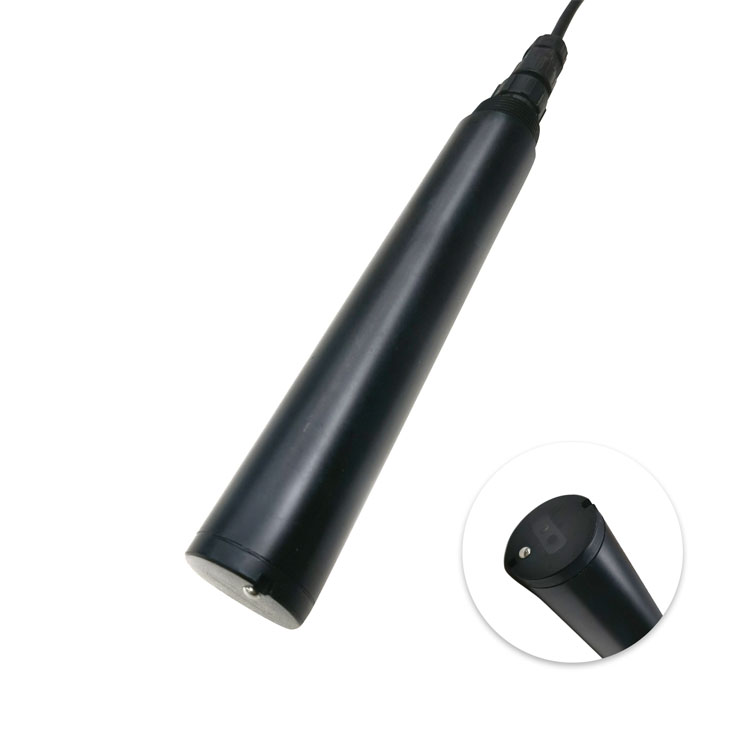 Online Turbidity Sensor RS485 Modbus | NBL-WQ-TS
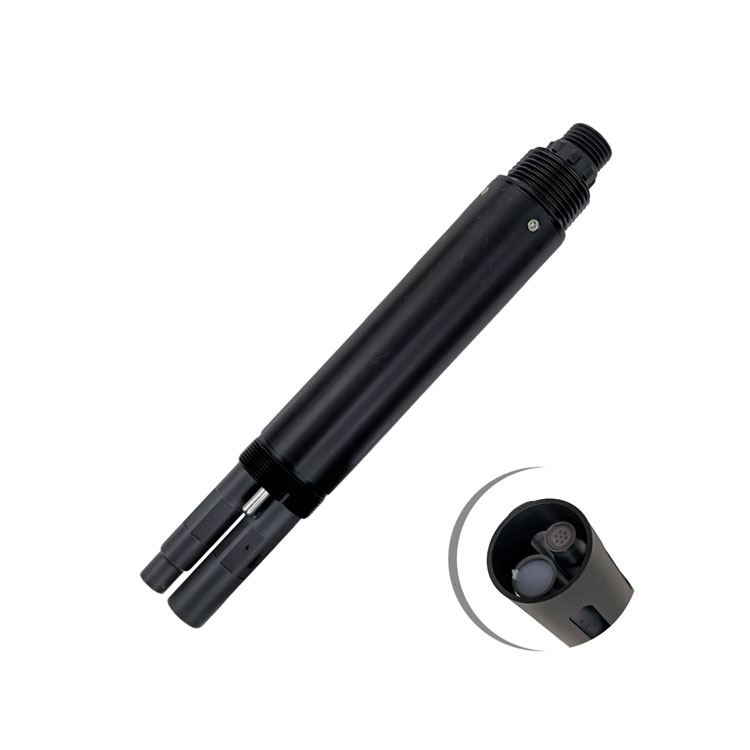 Online Ammonia Nitrogen Sensor (Ammonium ISE) | NBL-WQ-NHN
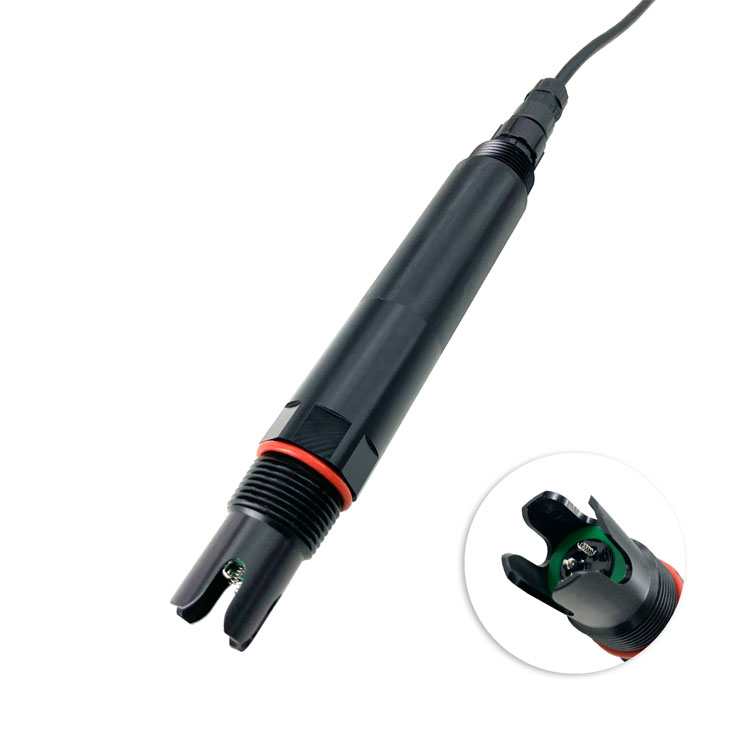 Online Residual Chlorine Sensor (HOCl) RS485 | Water Quality Sensor| NBL-WQ-CL
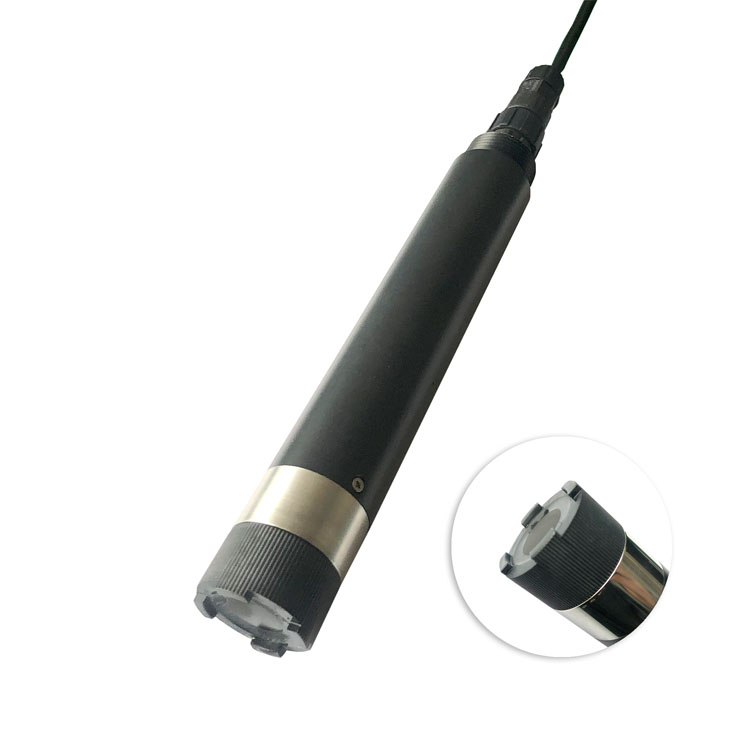 NBL-WQ-DO Online Fluorescence Dissolved Oxygen Sensor
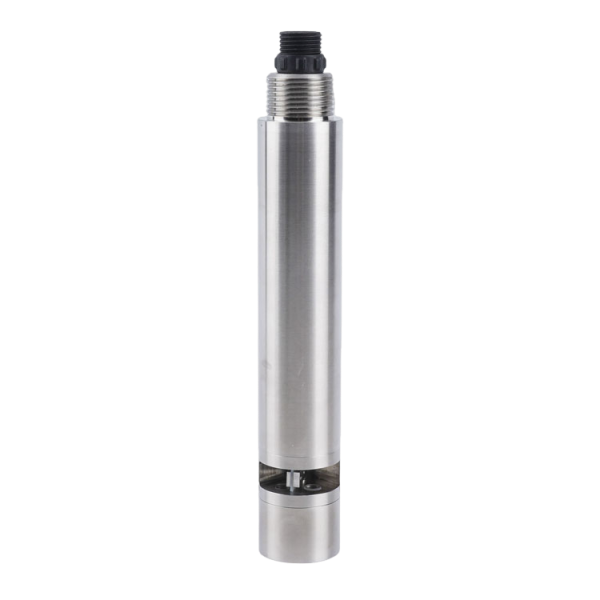 NBL-WQ-COD Online COD Water Quality Sensor
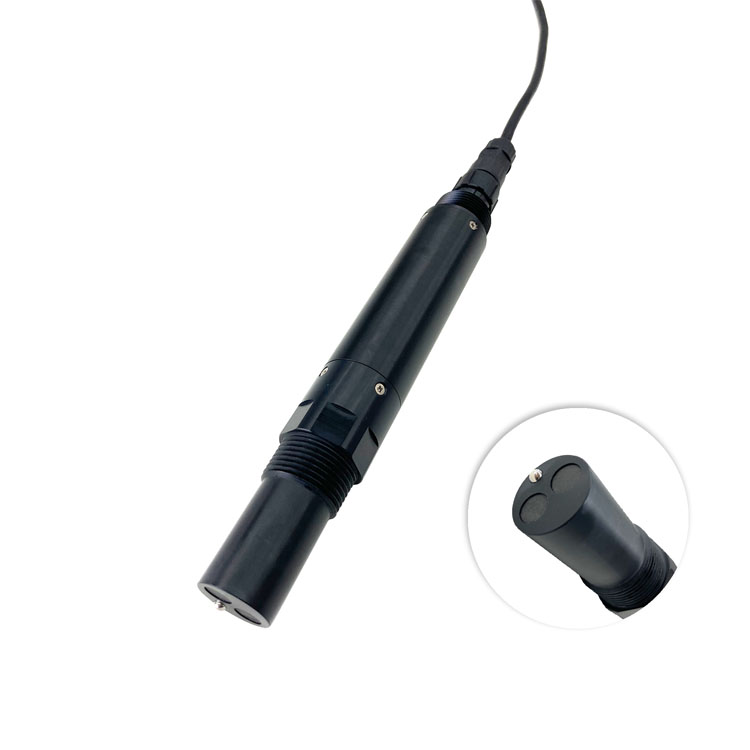 Water Conductivity EC Sensor RS485 Modbus IP68 | NBL-WQ-EC


Screenshot, WhatsApp to identify the QR code
WhatsApp number:+8615367865107
(Click on WhatsApp to copy and add friends)

